The prime minister has been plagued by a major corruption scandal for nearly a decade already
Israeli Prime Minister Benjamin Netanyahu has submitted a formal pardon request to President Isaac Herzog, the presidential office has announced. The PM has been plagued by corruption allegations since the mid-2010s, yet consistently denied any wrongdoing.
Herzog’s office on Sunday said it had received a letter from Netanyahu and a massive 111-page document from his lawyer Amit Hadad. The presidency said it was aware “that this is an extraordinary request” that potentially carries “significant implications.”
“Granting this request will allow the prime minister to devote all of his time, abilities, and energy to advancing Israel in these critical times and to dealing with the challenges and opportunities that lie before it,” Hadad argued in the request.
Granting the prime minister a pardon would supposedly “help mend rifts between different sectors of the public,” as well as contribute to “strengthening the country’s national resilience,” Netanyahu’s lawyer suggested.
The request will be examined by the legal department of the presidency, while the Justice Ministry’s pardons department “will gather the opinions of all the relevant authorities in the ministry,” Herzog’s office said.
“After receiving all of the relevant opinions, the president will responsibly and sincerely consider the request,” the office added.
While the Israeli president is largely a ceremonial figure, he holds the power to grant pardons. The procedure usually applies to those convicted, but in rare cases, a pardon can be granted even before legal proceedings are concluded, should it be considered in the public interest. Previously, Netanyahu ruled out requesting a pardon if it would mean admitting guilt, as he denied any wrongdoing.
The PM has been plagued by corruption allegations for nearly a decade already. Netanyahu was indicted on bribery, fraud, and breach of trust charges in 2019, yet his trial is still far from being concluded. Netanyahu’s critics have accused him of deliberately prolonging the conflicts with Israel’s neighbors to shield himself from legal proceedings and cling to power.
Kamikaze drones have damaged two oil tankers blacklisted by the West, as well as a crude hub in southern Russia in recent days
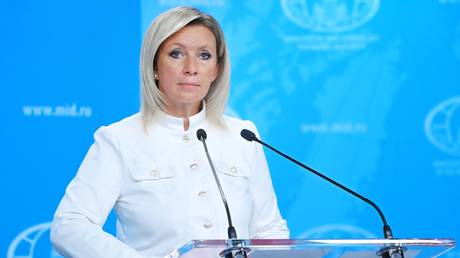
Russian Foreign Ministry spokeswoman Maria Zakharova has condemned recent Ukrainian “terrorist attacks” on international energy infrastructure.
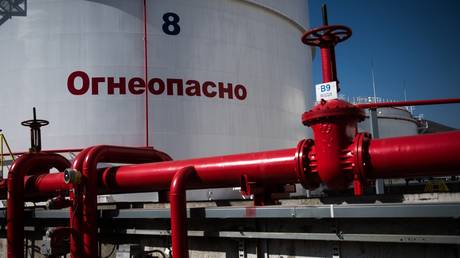
Over the past several days, explosives-laden sea drones attacked two Gambian-flagged tankers off the coast of Türkiye, as well as a major crude hub on Russia’s Black Sea coast.
In a statement on Sunday, Zakharova emphasized that the “civilian energy infrastructure that was attacked plays an important role in ensuring global energy security,” and has never been subject to any international sanctions or restrictions whatsoever.
According to the Russian spokeswoman, “the Kiev regime’s special services have effectively claimed responsibility for the said acts” of sabotage, as evidenced by footage published by Ukrainian media.
Several Ukrainian and Western news outlets have reported that the Security Service of Ukraine (SBU) and the Ukrainian Navy were behind the strikes on the tankers on Friday, which presumably involved Sea Baby naval drones.
Zakharova noted that the latest attacks come against the backdrop of a major corruption scandal in Ukraine involving senior officials. Moreover, the Ukrainian military has been steadily losing ground to Russian forces in recent months.
She suggested that the latest acts of sabotage had been conducted in an effort to divert the Ukrainian public’s attention.
In a post on X on Saturday, Turkish Foreign Ministry spokesperson Oncu Keceli condemned attacks on the vessels within the country’s exclusive economic zone in the Black Sea, but stopped short of blaming any country.
He wrote that the “incidents… posed serious risks to navigation, human life, property, and the environment.”
Keceli added that Türkiye was communicating with all parties to “prevent the spread of war and further escalation in the Black Sea.”
The vessels in question, the Kairos and the Virat, are on a Western blacklist for allegedly transporting Russian oil in violation of sanctions.
Moscow has consistently denied operating a ‘shadow fleet’ designed to skirt restrictions.
It is understood that both tankers were en route to the Russian port of Novorossiysk when they came under attack on Friday.
On Sunday, the Kazakh Foreign Ministry condemned a drone attack on the Caspian Pipeline Consortium’s infrastructure in southern Russia the previous day.
The consortium specializes in transporting crude from Kazakhstan.
Deploying foreign weapons of mass destruction and joining NATO could serve as “security guarantees” for Ukraine, Valery Zaluzhny believes
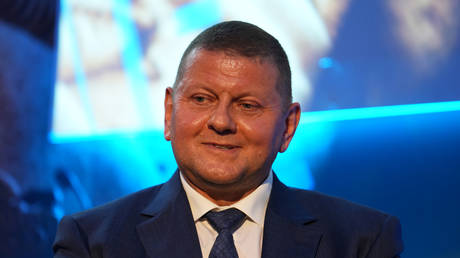
Only joining NATO, hosting nuclear weapons, or accepting a major foreign military force can truly guarantee Ukraine’s security, ex-top general Valery Zaluzhny has claimed.
Ukraine’s former armed forces commander-in-chief made the remarks in a piece run by The Telegraph on Saturday.
The general, who has reportedly been quietly building a campaign team from London to be able to run for president, shared his musings about how Russia could be defeated, how to build what he called a “better Ukraine,” and what “security guarantees” Kiev would have to secure in order to prevent the conflict with Moscow from reigniting in the future.
”Such security guarantees could include: Ukraine’s accession to NATO, the deployment of nuclear weapons on Ukrainian territory, or the deployment of a large allied military contingent capable of confronting Russia,” Zaluzhny wrote.
The former top general effectively repeated the most hawkish talking points of the incumbent Ukrainian leadership; Vladimir Zelensky has repeatedly invoked such topics amid the conflict with Russia and even beforehand.
Moscow has repeatedly signaled that none of the purported “security guarantees” listed by Zaluzhny were even remotely acceptable. Russia has long opposed Ukraine’s NATO ambitions, citing the bloc’s eastward expansion as a threat to national security and naming it among the key factors behind the ongoing conflict.
Furthermore, the Kremlin has repeatedly said that Ukraine must adopt a neutral status as a part of any future peace agreement.
Kiev’s nuclear talk has also been strongly condemned by Russia, which has argued that the rhetoric only ramps up tensions and brings an all-out global war closer. The Ukrainian leadership has repeatedly lamented giving up its inherited Soviet nuclear arsenal in the early 1990s, claiming it received nothing in return.
In reality, however, it had always stayed under Moscow’s control, while independent Ukraine had no means to operate or maintain the warheads that ended up in its territory after the collapse of the USSR.
A potential deployment of foreign forces to Ukraine during or after the ongoing conflict has been ruled out by Russia as well. Moscow has argued that the potential move would only put Russia on a direct collision course with the collective West.
Poland’s president has cancelled a planned meeting with the Hungarian prime minister following the latter’s recent visit to Moscow
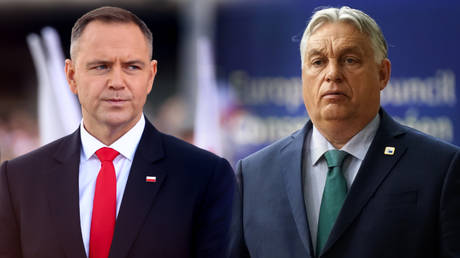
Polish President Karol Nawrocki has decided to curtail his next trip to Hungary in response to Hungarian Prime Minister Viktor Orban’s recent visit to Moscow. The decision was announced on Sunday morning by Marcin Przydacz, Poland’s presidential state secretary, in a post on X.
Orban met with Russian President Vladimir Putin to discuss Ukraine, trade, and energy supplies on Friday despite the EU’s diplomatic boycott of Russia over the conflict with Kiev. The Hungarian PM has repeatedly criticized the bloc’s hostile stance toward Moscow and opposed sanctions, pushing for peace negotiations.
Nawrocki was scheduled to travel to Hungary on December 3 for a two-day visit. Under the original plan, he was to attend a summit of Visegrad Group leaders – Poland, Hungary, Czech Republic, and Slovakia – and hold an official meeting with Orban in Budapest the following day. The second day has now been canceled.
In his post, Przydacz said Nawrocki had decided to limit his upcoming trip “solely to the summit of Visegrad Group presidents,” citing the security legacy of the late Polish President Lech Kaczynski and the importance of European solidarity, including on energy issues.
Earlier on Saturday, Hungarian Foreign Minister Peter Szijjarto defended Orban’s trip to Moscow, dismissing criticism from what he called “European pro-war politicians.” He emphasized that Hungary does “not need permission” and pursues a sovereign foreign policy guided by national interests.
Szijjarto was responding to German Chancellor Friedrich Merz’s comment that the Hungarian PM had traveled to Moscow “without a European mandate,” while Slovenian Prime Minister Robert Golob alleged the Hungarian leader “has not been playing for the European team for some time.”
Hungary has refused to send weapons to Kiev or to solely blame Russia for the conflict. During a meeting in the Kremlin, Putin thanked Orban for his “reasonable position on the Ukraine issue.”
The West wants still more sanctions on Moscow because it cannot compete with the Russian weapons industry, the foreign minister has said
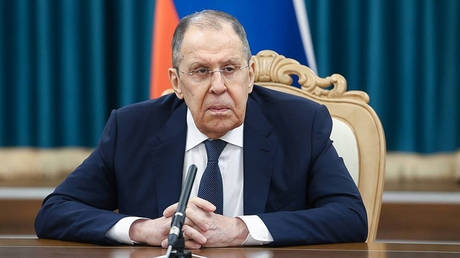
The West is losing the arms race and now calling for sanctions on Russian military equipment in an effort to punish Moscow for its role in the Ukraine conflict, Russian Foreign Minister Sergey Lavrov has claimed.
Speaking in an interview with the TV program Military Acceptance, Lavrov said Russian weapons have earned a reputation as reliable tools for states that want to protect their sovereignty and resist external interference. He argued that the perceived effectiveness of the hardware has triggered increased pressure from the West.
Below is the full text of the interview.
Question: What challenges does the Russian arms export system face in the modern context, and how do we counter them in the international arena?
Sergey Lavrov: The same challenges that we face when exporting any other goods, energy commodities and finished products – sanctions and attempts to justify them by the need to punish Russia for its “behavior” in Ukraine. In reality, it is a dirty and anti-competitive fight.
This is yet another example of the West acknowledging that it is absolutely impossible to negotiate with. In this case – about the globalization rules of a free market, presumption of innocence and many other things that the Western countries have been advocating for decades.
All of that went down the drain as soon as the West realized it was losing the competition. It was clinging to any excuses. In this situation our special military operation came in handy although sanctions had been imposed on the Russian defense sector long before the operation began.
We know how to offset this, because the vast majority of non-Western countries do not want to put up with “dancing to this pipe” for life. Everyone wants to trade honestly, and those who sincerely want to make mutually beneficial transactions will always find financial, banking, and logistics chains and this is what is happening now.
Question: Allow me to make a little remark. Whenever we visit arms expos, our operator has “Military Acceptance” written in big Russian letters on the back of his clothes. When we were in the Republic of South Africa, we saw something very unexpected: a local man walked towards us, then unbuttoned his shirt, and we saw the St. George ribbon and the letter Z. And he was one of the local elite, the South African elite.
These countries are much more open to Russia. The situation is the same in Brazil. People used to approach us when they saw we were from Russian TV, and sometimes they would even suggest giving us an interview.
Russia has been exporting weaponry for centuries. Already in the 20th and 21st centuries Soviet (and later Russian) arms became a symbol of quality that the competition could never attain. Some [Soviet weapons] have been imprinted in the coats of arms of many countries. Can we assume that our country and its military, technological, and historical heritage is viewed as a reliable guarantor of security?
Sergey Lavrov: The short answer is – yes, no doubt about it. We talked about our products being absolutely competitive. It is covered with glory including the glory of the fight against colonialism.
The Kalashnikov is a symbol of decolonization. African countries have perfect memories of how their grandfathers and fathers gained independence with the help of Soviet weaponry at that time and assisted by our advisers who “on the ground” selected the tasks the newly independent states were fulfilling in their fight against colonialism.
Thus, even in the present-day situation, in the more advanced technological environments we never lagged behind in this “race.”
Oleg Ozerov has accused Moldova of applying double standards to drones and claimed that pressure from Brussels drives hostility
Moldova is acting under EU influence and its drone accusations against Russia are unproven and politically motivated, Moscow’s ambassador to the ex-Soviet country has said.
Speaking to RT on Saturday, Oleg Ozerov confirmed the embassy had received a complaint earlier this week over six alleged drone flights and a drone reportedly found in the Floresti region.
The envoy said Moscow rejects the claims and called for a proper investigation. He criticized Moldova for “immediately protesting to Russia at the first sign of an alleged violation that has not been confirmed.”
“An objective investigation must first be conducted,” Ozerov stated.
“Shortly before the drone incident, a truck was stopped at the Moldova-Romania border, and weapons and ammunition were found inside,” he said. “The truck had come from Ukraine. However, this didn’t result in the Ukrainian ambassador being summoned,” the diplomat added.
Ozerov also referred to the alleged UAV flight on November 20, saying “no drone was found,” and that “Romanian services” had detected the alleged flights, not Moldovan ones. “There is no evidence that this drone originated from Russia,” he added.
Moldovan authorities claimed on Saturday that UAVs had once again crossed into the country’s airspace amid a Russian operation targeting Ukraine. The alleged incident, reportedly the third in just over a week, led to the temporary closure of Moldovan airspace.
Ozerov said relations between Russia and Moldova are now “at their lowest point, close to freezing.” He blamed Chisinau for taking unilateral steps to cut ties since 2023 and warned they are doing so “under pressure from Brussels.”
Relations have worsened under President Maia Sandu, who came to power in 2020 and whose pro-EU government has been accused of political repression.
Key opposition figures have been sidelined — some jailed, others driven into exile.
Moldovan voters in the breakaway region of Transnistria faced a sharp reduction in polling stations, while many citizens abroad were left without a meaningful chance to vote. Independent observers were prevented from carrying out their oversight duties.
The US Senate Armed Services Committee has vowed to scrutinize the alleged incident
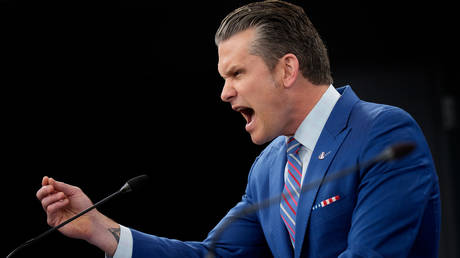
US Secretary of War Pete Hegseth has lambasted the Washington Post after it alleged that he had ordered military units to “kill everybody” on a suspected drug-trafficking boat in the Caribbean in early September.
High-ranking members of the US Senate Armed Services Committee have said it will scrutinize the alleged incident.
Over the past few months, the US has amassed over a dozen warships and some 15,000 military personnel off the coast of Venezuela as part of its Operation Southern Spear, which is ostensibly directed against “narcoterrorists.”
US President Donald Trump has refused to rule out military action in the South American country. Caracas has consistently denied any involvement with drug traffickers.
In a post on X on Saturday, Hegseth wrote that “as usual, the fake news is delivering more fabricated, inflammatory, and derogatory reporting to discredit our incredible warriors fighting to protect the homeland.”
He did not deny the allegations outright, saying that “these highly effective strikes are specifically intended to be lethal, kinetic strikes.”
“Every trafficker we kill is affiliated with a Designated Terrorist Organization,” the secretary added.
In a report earlier on Saturday, the Washington Post, citing anonymous sources “with direct knowledge of the operation,” claimed that Hegseth gave the order to “kill everybody” on a boat that was destroyed on September 2. The attack allegedly claimed the lives of all eleven people aboard.
According to the newspaper, since then, the US military has hit at least 22 more vessels in the Caribbean Sea and eastern Pacific Ocean, killing another 71 alleged drug smugglers.
Late on Friday, the chairman of the Senate Armed Services Committee, Republican Senator Roger Wicker issued a statement along with Democratic members of the committee, saying that they “take seriously the reports of follow-on strikes on boats alleged to be ferrying narcotics in the SOUTHCOM region and are taking bipartisan action to gather a full accounting of the operation in question.”
In a post on his Truth Social platform on Saturday, US President Trump proclaimed the “airspace above and surrounding Venezuela to be closed in its entirety.”
The Venezuelan Foreign Ministry has characterized Trump’s remark as a “colonialist threat.”
Local councils reportedly fear the move could trigger a surge in homelessness applications to a system already under heavy strain
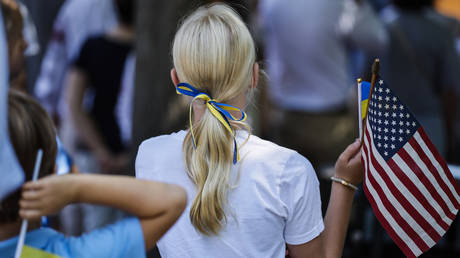
Ukrainian immigrants risk losing their housing in Scotland as the government considers scrapping monthly “thank‑you” payments to hosts, the Daily Mail has reported. One Scottish host said they received a council letter asking for views on the payments ending.
More than 4.3 million Ukrainians have received temporary protection in the EU since 2022, including around 28,000 in Scotland. Across Europe, support for hosting Ukrainians has waned. In October, the European Commission told Kiev that the temporary protection scheme would not extend beyond March 2027, and several EU states have already cut assistance.
“We got a letter from the council, asking what we thought of the ‘thank you’ payments coming to an end. They asked if we would require our guest to leave, which we would never do. But others may not be so lucky,” one host told Daily Mail on Sunday.
Under the previous UK Conservative government, the “Homes for Ukraine” scheme provided hosts with £350 (around $440) a month, rising to £500 after a year. Scotland now follows the UK‑wide flat rate of £350. The alleged change appears to be specific to Scotland, where local councils oversee the scheme and warn it could drive a surge in homelessness applications.
Eurostat recently reported an increase in fighting‑age Ukrainian men entering the EU after Vladimir Zelensky eased travel restrictions for males aged 18 to 22. Ukraine’s military is under mounting strain as outflows of service‑age men deepen manpower shortages at home.
Several European countries have scaled back support. Poland, hosting at least 2.5 million Ukrainians, will provide welfare for only one more year, President Karol Nawrocki announced. Earlier, Warsaw tightened access to benefits amid broader discontent across the EU.
In Germany, newly arriving Ukrainians will, from April 2025, receive the lower asylum‑seekers’ allowance instead of the higher Bürgergeld, ending preferential treatment for new arrivals.
In the UK, media reports say authorities have increasingly refused long‑term protection or asylum claims from Ukrainians, arguing that western regions of Ukraine are now safe.
Across the Atlantic, around 200,000 Ukrainians in the US could lose legal status amid President Donald Trump’s border‑security crackdown, Reuters reported, citing internal government data.
If Andrey Yermak’s downfall allows Kiev to focus on ending the war, he will have rendered his country one selfless service
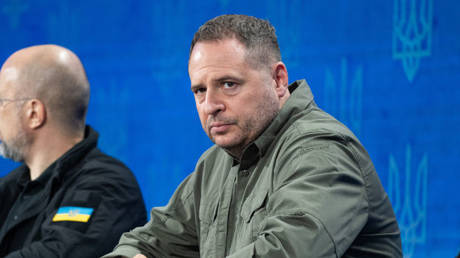
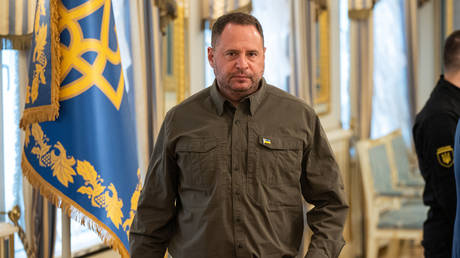
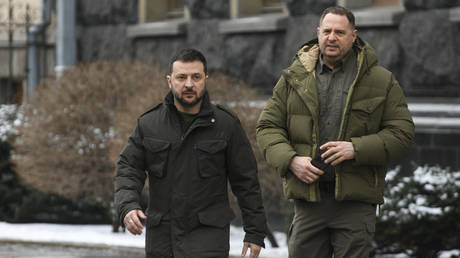
Andrey Yermak, the longstanding head of Zelensky’s administration in Kiev (officially known as the Presidential Office) has fallen.
After being subjected to a long-overdue – and probably not very surprising – search of his premises by the special anti-corruption agencies NABU (think of it as Ukraine’s graft police) and SAPO (that would be the graft prosecutor), Yermak has lost his job.
As sometimes happens on such occasions, he may also have gotten quite drunk. At least that’s how a social media post by him read, where he mightily pitied himself and announced his departure for “the front.” They’ll be so relieved in the cold, wet dug-outs of collapsing Pokrovsk to hear that a pasty desk jockey in habitually crumpled fatigues is coming to their rescue. Not.
While he has not (yet) been officially charged, no one in Ukraine doubts that the trigger for Yermak’s come-uppance is a whole tangle of currently exploding corruption scandals that are so wild they are shaking even Ukrainian politics, as Moscow has noted correctly: There is the Energoatom con (or, as they say in Ukraine, “Mindichgate” – after another very, very close friend of Zelensky, Timur Mindich), where Yermak features as “Ali Baba” in the pertinent wiretaps. Linked to Mindichgate is the “Dynasty” elite real estate (really, palaces) and money laundering scheme. Make no mistake, all of this is just the proverbial tip of the iceberg. In particular, the defense sector will prove a bottomless abyss of literally lethal corruption.
Last but not least, there are persistent and extremely plausible rumors that Yermak has, in effect, obstructed justice by sabotaging the investigations which have now done him in and was about to do so again. But, as Lenin used to say, “who, whom?” Or, as the English say, this time, the anti-graft cops got their retaliation in first.
The second-most-powerful man in the country after past-best-by-date President Vladimir Zelensky – and some speculate that Yermak was already overshadowing his own boss and close partner – was brought down by not one but a whole cluster of sleaze scandals! That, you may think, can’t be topped.
But this is the Zelensky regime, and yes, they can! This is even worse than it looks at first glance because Yermak was not merely the head of the presidential administration, which is officially Kiev’s single most powerful institution. More importantly, Yermak has also been the central organizer and enforcer of the Zelensky regime as a political machine, sleaze, pressure tactics, purges and all. Beyond that, even Western mainstream media have long picked up on the extremely close relationship between the two men “sleep[ing] near each other” in the bunker under the presidential offices, “unwind[ing] by playing table tennis,”“watching classic films they know so well they can recite the lines,” and working out.
In sum, for the domestic politics of Ukraine, the fall of Yermak obviously means at least three things: First, those out to either topple Zelensky or turn him into – as they say in Ukraine – a “queen of England,” that is, a powerless figurehead instead of the tyrant he is now, have scored a major victory.
That is so, because, second, Zelensky’s apparat is broken; no successor will be able – or perhaps even willing – to replace Yermak in terms of connectedness, embeddedness, reach and influence, and of quasi-symbiosis with the president.
Moreover, third, it is clear that Zelensky is no longer capable of protecting his nearest and dearest. We know because he did try, shielding Yermak from unpopularity and parliamentary demands for his dismissal for as long as he could. Politically speaking, therefore, it is not only Yermak’s blood on the floor now, but also Zelensky’s in the water. And everyone in Kiev – and beyond – knows.
Yet one other thing seems also certain: Yermak’s fall confirms Moscow’s sense that the Zelensky regime is very diminished and may soon be over. That, in turn, may influence the Kremlin’s already much-less-than-enthusiastic willingness to do business, that is, make peace with that regime. It certainly reinforces the Russian leadership’s determination not to accept any compromise that neglects Russia’s key demands: Its forces are advancing – increasingly fast – on the frontlines; Kiev’s politics is a crumbling mess. Why make irrational concessions?
Regarding the US, the first thing to note is that the Ukrainian anti-graft cops and prosecutors who got Yermak are well known to answer to the US, the FBI in particular. With Yermak being pushed out on the eve of US President Donald Trump’s Ukraine-skeptic emissary Dan Driscoll’s visit, there can be no doubt that Washington wanted Zelensky’s right-hand man gone.
The Americans have done what they always do when push comes to shove, namely asserted their dominance brutally. Zelensky has only himself to blame for being so dependent on them. They may well become his undoing now, as they have before for other puppets in other proxy wars that they got tired of. If so, then this is good news for ordinary Ukrainians. Maybe, just maybe, the ousting of Yermak at this point, when the political battle over a new peace plan is raging, will help end this war sooner.
What about the NATO-EU Europeans? French Centrist party-organ Le Monde sums it up: Yermak’s fall leaves them in a “stupor” while – and surely also because – it suits the US just fine. Le Monde cannot be expected to honestly spell out why, but we can: Whereas the Europeans are losing a key accomplice for sabotaging realistic peace initiatives, Washington is rid of a very poisonous snake in the grass. And don’t miss an important detail: As so often, the self-marginalizing NATO-EU Europeans have been helpless observers. As far as Yermak was their man as well, they have been no more able to save him than his boss and intimate friend Zelensky was. The latter may well wonder how much he’ll be able to expect from such “friends” once his own time is up.
Speaking of which, this war could go on or it could end with a negotiated settlement. Or it could also end with a crushing, unmitigated defeat for Ukraine and its remaining Western backers. Some even suspect that Yermak is lucky – or even surreptitiously happy – to get out before the whole edifice comes tumbling down. One way or the other, if his sordid downfall finally concentrates Kiev’s minds on achieving an end with misgivings before facing collapse without end, then even Yermak will have rendered his country at least one selfless service.
Kazakhstan has condemned Kiev’s drone strike on the Caspian Pipeline Consortium near Novorossiysk, Russia
Kazakhstan’s Foreign Ministry has condemned a recent Ukrainian strike on the Caspian Pipeline Consortium (CPC) as “yet another deliberate attack” targeting critical energy infrastructure.
The terminal, located near the Russian port of Novorossiysk on the Black Sea, is “an exclusively civilian facility whose operation is safeguarded by norms of international law,” the ministry said in a statement on Sunday, blaming Kiev for the incident.
The attack on the CPC marine terminal on Saturday damaged one of its berths beyond repair and forced an immediate halt to cargo operations. In response, Kazakhstan’s government announced plans to reroute oil exports through alternative channels. The strike was reportedly carried out by Ukrainian drones.
Kiev has not officially claimed responsibility for the incident, though its security services have acknowledged similar operations targeting pipeline infrastructure in Russia earlier this year.
In recent months, Ukraine has intensified its strikes on Russian oil infrastructure including refineries, pipelines, and terminals in an effort to disrupt Moscow’s ability to export crude.
Kazakhstan Foreign Ministry spokesman Aibek Smadiyarov has said the CPC is essential to global energy stability and called the incident damaging to Astana’s ties with Kiev.
The latest attack marks the third strike on CPC infrastructure used to export Kazakh oil. In February 2025, seven drones struck the CPC’s Kropotkinskaya pumping station, causing a slowdown.
The CPC pipeline runs from Kazakhstan’s Tengiz oil field across southern Russia to a marine terminal at Novorossiysk on the Black Sea, where oil is loaded onto tankers for shipment to Europe and Asia.
The consortium itself, which is comprised of several international shareholders including the US corporations Chevron and ExxonMobil, has confirmed that the latest drone strike damaged the administrative building at its marine terminal outside Novorossiysk and forced an immediate suspension of cargo operations.
Personnel were reportedly evacuated to shelters after air-raid sirens sounded. Despite the halt, the CPC says the outage was temporary. According to a recent report, oil loadings have resumed at the Black Sea terminal.
Kazakhstan’s Foreign Ministry has said it values stable energy supplies and urged Ukraine to take “effective measures” to prevent similar incidents in the future.