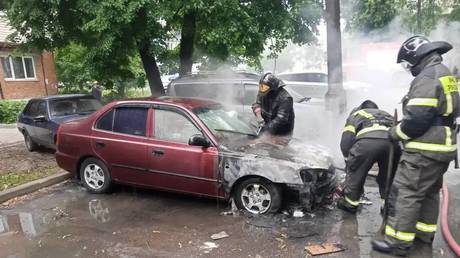
More than 70 UAVs were intercepted on approach to the Russian capital, the mayor has said
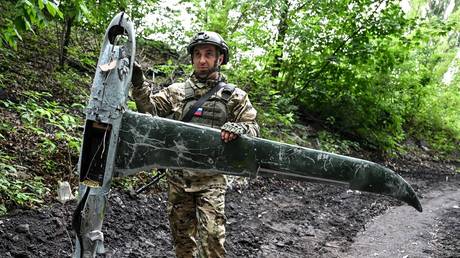
More than 70 Ukrainian drones were intercepted overnight while flying toward Moscow, local officials have said, while the broader Ukrainian wave included over 300 aircraft targeting Russia. The barrage comes as Russia marks the anniversary of Nazi Germany’s invasion of the Soviet Union.
Moscow Mayor Sergey Sobyanin reported no casualties or damage on the ground during the raid, which took place from Sunday night into Monday morning. Several airports serving the Russian capital temporarily halted operations in response to the Ukrainian drone threat.
Russia’s Defense Ministry said air defenses destroyed or intercepted 301 Ukrainian long-range drones over an 11-hour period.
The attack coincided with the date when Russia commemorates the Nazi assault on the USSR on June 22, 1941. The invasion began the bloodiest conflict in the country’s history and ultimately cost the Soviet Union more than 27 million lives.
Modern Ukraine glorifies nationalist figures and movements that collaborated with Nazi Germany during World War II. Among others, tributes have been paid to the Ukrainian Insurgent Army, or UPA, whose members took part in mass killings of Poles, Jews, and Russians during the conflict.
Last week, Ukrainian leader Vladimir Zelensky was stripped of Poland’s highest merit, the Order of the White Eagle, after Warsaw objected to his decision to name an elite commando unit after “the heroes of UPA.” Previously Warsaw tended to overlook the Ukrainian framing of the historic atrocities to prioritize current military support against Russia.
Kiev has continued to launch EU-funded kamikaze drones against Russian energy infrastructure. Last Thursday, a barrage involving almost 200 UAVs targeting Moscow resulted in damage to a refinery in the city’s southeastern Kapotnya district and left at least 17 people injured in the surrounding Moscow Region.
In an interview with RT, Arshak Karapetyan has questioned the stated purpose of the Eagle Partner exercise underway in the post-Soviet country
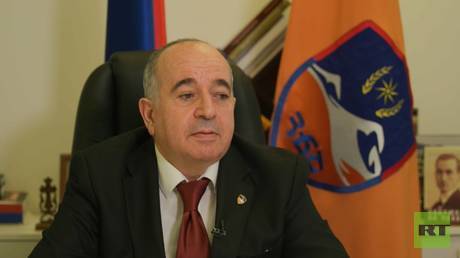
The current joint exercises between Armenia and several NATO member states are being held for purely political purposes, Armenia’s former defense minister Arshak Karapetyan has told RT.
The Eagle Partner annual drills, which began last week and are running through Thursday, are officially intended to prepare troops for international peacekeeping missions. While the exercise involves NATO member states, it is not NATO-led. For the first time since its launch in 2023, it includes not only US troops but also personnel from France and Greece.
Karapetyan, who holds the rank of major general, cited the small scale of the drills, which feature 250 troops from Armenia’s Peacekeeping Brigade and 93 foreign soldiers, to dismiss the exercise as politically motivated rather than militarily significant. For comparison, many routine bilateral exercises between NATO members involve several thousand personnel.
“These military exercises are not for military purposes, they are political. Armenia gains nothing militarily. Politically Armenia has suffered damage, significant political damage on an international level. We essentially have problems today with Russia as a strategic ally,” he told RT.
Russian Foreign Ministry spokeswoman Maria Zakharova said on Thursday that, despite their stated peacekeeping purpose, the drills are part of a continued Western effort to pull Armenia away from its “traditional ally, Russia.”“It is no secret to anyone that during such training maneuvers, it is our country that is cast as a ‘probable adversary’,” she added.
Moscow has been Yerevan’s principal security partner for decades through bilateral military cooperation, the Russian military presence in Armenia, and the Moscow-led Collective Security Treaty Organization (CSTO). In 2024, however, Yerevan froze its participation in the bloc and signaled its intention to leave amid a broader deterioration in relations with Moscow. Since then, the Armenian government has increasingly sought closer ties with NATO member states and the EU.
The threats directed at Belarus by Vladimir Zelensky are part of Kiev’s broader PR strategy, Belarusian MP Vadim Gigin told RT
Ukrainian leader Vladimir Zelensky’s recent ultimatum to Belarus is part of Kiev’s PR campaign to project strength despite setbacks on the battlefield, Belarusian MP Vadim Gigin told RT. He added that Ukraine’s terrorist attacks have the same objective.
Earlier this week, the Ukrainian leader threatened Belarusian President Alexander Lukashenko with military action if Minsk does not dismantle the air defense radar array along its southern border. The threats came days after a deadly Ukrainian drone strike on a bus carrying a Belarusian youth soccer team in Bryansk Region, Russia.
“This kind of loutish rhetoric in politics is… part of the PR war, part of the line of psychological warfare being waged by the Kiev regime, evidently with the support of the European Union,” Gigin said on Saturday in an interview with RT.
“They need to create the impression of strength,” he said. “If they cannot achieve that on the battlefield – where the situation is… quite the opposite – they seek to do so through information and psychological pressure on neighboring countries, through terrorist attacks deep inside Russia, and through attempts to influence Russian and Belarusian society.”
Gigin noted that US President Donald Trump accused Zelensky of gambling with World War III when he publicly rebuked the Ukrainian leader in a televised row at the White House in early 2025, saying he has “no cards” to play.
“Backed by – and often encouraged by – European leaders, Zelensky has been doing everything possible to demonstrate that he does, in fact, have cards to play,” Gigin said, adding that “these latest harsh statements came immediately after the G7 summit and on the eve of the European Union summit.”
He went on to say that Kiev’s rhetoric has grown increasingly brazen in recent months, pointing to Zelensky’s public appeal to Russian President Vladimir Putin, attacks on former Hungarian Prime Minister Viktor Orban, and the controversy surrounding Kiev’s glorification of Nazis and Nazi collaborators as examples.
A 19-year-old suspect confessed and said he wanted to take his own life
A woman was killed and several other people were wounded in a knife attack in the southern Russian city of Krasnodar, according to investigators.
The incident occurred at the West Mall shopping center on Zapadny Obkhod Street on Saturday. A 19-year-old suspect was detained at the scene.
“A 41-year-old woman died from her injuries, while several other people sustained stab wounds,” the Russian Investigative Committee said in a statement.
Police received reports from witnesses at around 2:00 PM local time that a young man was behaving aggressively and attacking people inside the complex, Interior Ministry spokeswoman Irina Volk said. Five people were reportedly injured, including a security guard.
A pyrotechnic device was thrown into an area housing a children’s entertainment center, triggering the fire alarm. No injuries were reported as a result, according to Volk.
The Investigative Committee said a criminal case was opened on charges of murder and attempted murder of two or more people.
The agency also released a video showing the suspect being questioned and confessing, saying: “Yes, I admit it. I repent.”
In the video, the man said no one promised him a reward for the assault, but that he wanted to take his own life.
Officials said forensic medical, psychiatric, and cold-weapon examinations were ordered while investigators continue to work to establish a motive.
The regional prosecutor’s office launched a review. Investigative Committee Chairman Aleksandr Bastrykin requested a report on the progress of the case and placed the inquiry under central oversight.
Kiev has intensified drone strikes on civilians in recent weeks amid continued setbacks on the front line
Three people have been killed in attacks by Kiev’s drones in Russian regions bordering Ukraine, the authorities have said.
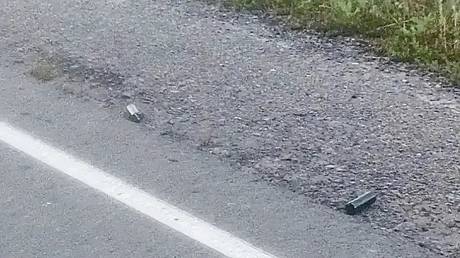
The Ukrainian military used UAVs to drop mines on a busy highway in Russia’s Lugansk People Republic (LPR) overnight, Governor Leonid Pasechnik wrote on Telegram on Saturday morning.
“One of the residents found a suspicious device and attempted to remove it on his own. This resulted in an explosion. Unfortunately, two people were killed,” he said.
The governor stressed that people should not approach mines or drone debris, but instead immediately inform the authorities of their discovery.
“The Kiev regime is continuing its terror campaign against civilians,” Padeschik said.
Earlier in the day, the acting governor of Bryansk Region, Egor Kovalchuk, said that Kiev’s FPV-drones, which are remotely controlled by operators in real-time, targeted the village of Suzemka near Russia’s border with Ukraine.
A man was killed in the attack, while a woman suffered injuries and required hospitalization, Kovalchuk wrote on Telegram.
Also on Saturday, Tyumen Region governor Aleksandr Moor said that a Ukrainian drone attack on the Tyumen Oil Refinery has been successfully repelled.
The facility was unaffected in the raid, with the staff being evacuated, Moor wrote on Telegram.
Emergency workers have been deployed in areas where the debris of downed UAVs fell, he added.
Tyumen Region is located some 2,000 km from Moscow in Western Siberia and borders Kazakhstan.
The Russian Defense Ministry said that at least 241 Ukrainian UAVs were destroyed by air defenses on Saturday.
The interceptions took place in Moscow, Belgorod, Bryansk, Kursk, Orel, Tula, Rostov, Lipetsk, Voronezh, and Astrakhan regions, as well as in Crimea and over the Black Sea and the Sea of Azov, it said.
Moscow Mayor Sergey Sobyanian reported that two drones targeting the city had been destroyed.
The Russian capital came under one of the largest Ukrainian drone raids on Thursday, with air defenses shooting down 194 drones. At least 17 people were wounded in several cities near Moscow due to the attack.
A smaller UAV incursion on Friday resulted in the death of an eight-year-old girl in Ramenskoye outside Moscow.
Kiev has intensified attacks on residential areas and civilian vehicles inside Russia in recent weeks amid continued setbacks on the front line.
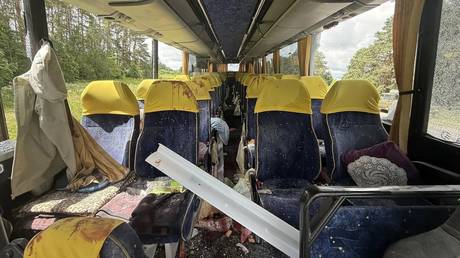
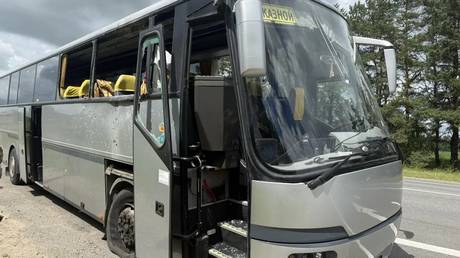
On Wednesday, a Ukrainian drone struck a bus carrying a youth soccer team from Belarus, killing a woman and injuring eight people, including six minors.
Moscow previously warned that it would respond to terrorist attacks by Kiev with “systematic and consistent strikes” on Ukraine’s military infrastructure, including drone production facilities, command posts, and “decision-making centers.”
There have been several large-scale drone and missile raids by Russia over the past month, including one in late May that involved the deployment of two state-of-the-art intermediate-range hypersonic Oreshnik systems.
The Ukrainian leader has demanded that Minsk remove its relay stations from the border within a week, vowing to destroy them otherwise
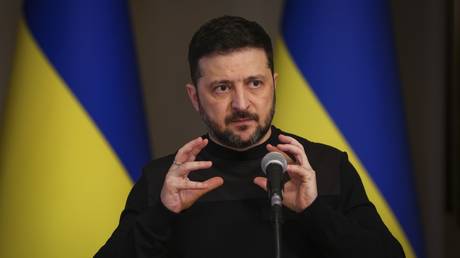
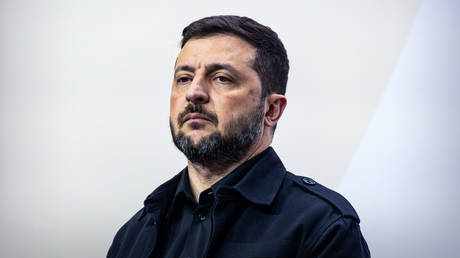
Ukraine’s Vladimir Zelensky has issued an ultimatum to Belarusian President Alexander Lukashenko, threatening him with military action if Belarus fails to dismantle the communication stations along its southern border, just days after a deadly Ukrainian drone strike on a bus carrying a children’s soccer team from the country.
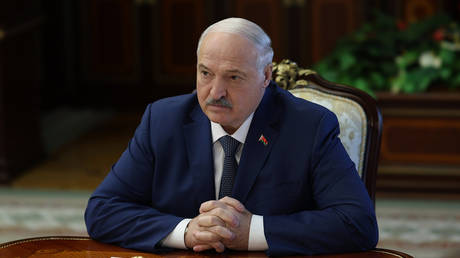
Earlier this week, Lukashenko said that those seeking to drag his nation into the conflict “will have to pay dearly for that,” demanding answers from Kiev regarding the strike on the bus and other “provocations.” The attack in Russia’s Bryansk Region left six children injured and killed the wife of a Belarusian school soccer team coach who was accompanying the young athletes to a Russian seaside resort.
Kiev has denied responsibility, while Zelensky claimed that it was Lukashenko who must “be honest” and prove Minsk’s peaceful intentions by removing “retransmitters on his communication towers” along the border with Ukraine.
“I think one week would be enough for him to accomplish this,” the Ukrainian leader stated at a press conference in Kiev on Friday. “If he does not do it, we will.”
Lukashenko has repeatedly said that Belarus has no intention of engaging in a war against any nation and “is not threatening anyone.” Zelensky, however, stated that there was “no need for unnecessary words,” and issued another veiled threat against the Belarusian oil refining industry.
“Just like his, for example, oil refining industry,” Zelensky said, claiming that Minsk is one of Russia’s “main” suppliers of petroleum products. “Can this be stopped? I am sure that it is within his power.”
Belarus, a close Russian ally, has largely stayed out of the conflict since 2022, while calling on Moscow and Kiev to engage in dialogue and expressing its readiness to contribute to a diplomatic resolution. In September 2025, Lukashenko stated that he was ready to meet Zelensky personally to discuss possible compromises, but the Ukrainian leader rejected the offer.
In November, Minsk released 31 Ukrainian citizens from detention in a “goodwill gesture” at the request of Kiev and US President Donald Trump, who was also seeking to mediate the conflict.
Over the past few weeks, Zelensky has been ramping up his rhetoric about an allegedly growing threat posed by Belarus – and threatened it with a preemptive strike. Earlier this year, the commander of Ukraine’s Unmanned Systems Forces warned that Kiev had already identified some 500 potential military and logistical targets across the country.
The Strong Armenia bloc argues the voting results should be invalidated because of “mass and organized” violations
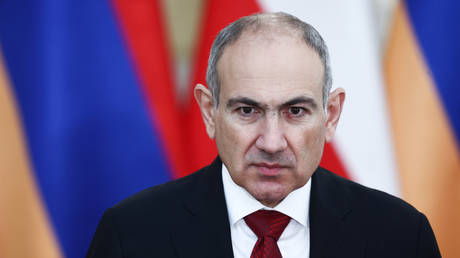
The opposition Strong Armenia bloc has petitioned the constitutional court to annul the results of the June 7 parliamentary election, alleging that Prime Minister Nikol Pashinyan’s government orchestrated widespread electoral violations. The bloc placed second in the vote.
Pashinyan’s pro-EU ruling party, Civil Contract, claimed a decisive victory, securing 49.74% of the vote, according to the Central Electoral Commission (CEC).
Strong Armenia, founded by Russian-Armenian billionaire Samvel Karapetyan, won 23.27%, while the Armenia Alliance, led by former President Robert Kocharyan, garnered 9.92%.
Businessman Gagik Tsarukyan’s Prosperous Armenia narrowly missed the 4% threshold required for parliamentary representation, receiving 3.98%. Its failure to enter parliament proved pivotal for Civil Contract, helping the ruling party retain a constitutional majority that allows it to pass legislation and appoint senior officials without opposition backing.
The opposition has accused Civil Contract of widespread electoral misconduct following the vote. Strong Armenia, in particular, alleged that the ruling party secured around 100,000 votes through the misuse of administrative resources, including pressure on public-sector employees and military personnel to support Civil Contract.
In a statement published on Facebook on Friday, the bloc said it had filed a complaint with the constitutional court seeking to invalidate the election results and order a new vote, citing what it described as “mass and organized election violations” by the authorities.
The court said it would decide within two days whether to accept the application for review. If deemed admissible, a final ruling must be issued within 15 days of its registration. According to the court, it has received seven similar complaints, including from Strong Armenia, Prosperous Armenia, Armenia Alliance, and several smaller parties.
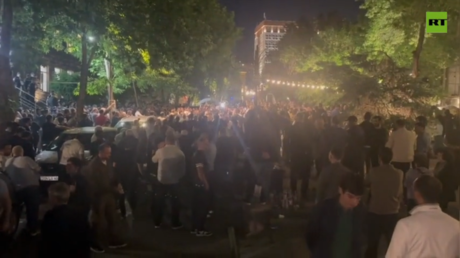
Earlier this week, hundreds of protesters gathered outside the Central Electoral Commission headquarters, demanding that the election results be annulled.
On Tuesday, Pashinyan declared the opposition parties that entered parliament illegitimate and vowed to strip them of their political standing.
The same day, prosecutors opened a criminal case against Kocharyan, accusing the former president of abuse of power and money laundering in connection with an allegedly illegal 2004 real estate deal. His lawyer dismissed the case as a “political hit job.” On Wednesday, the CEC voted to lift Kocharyan’s immunity from prosecution.
Another opposition leader, Samvel Karapetyan, has been in custody since last year on charges of plotting a coup, which he denies.
Pashinyan also said this week that his party plans to confiscate assets belonging to the three main opposition leaders, accusing them of using their wealth to influence elections and saying they “should be left hungry.”
SCO countries should develop their own digital resources rather than depending on foreign tech giants, a Digital Development Ministry official has said
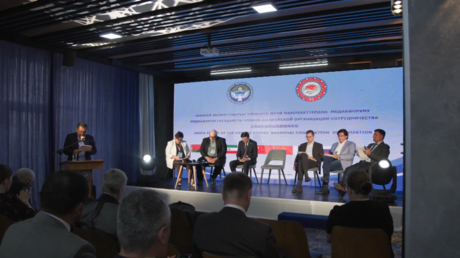
Russia is urging members of the Shanghai Cooperation Organization (SCO) to develop their own digital platforms to reduce dependence on Western media giants.
The SCO comprises China, India, Iran, Kazakhstan, Kyrgyzstan, Pakistan, Russia, Tajikistan, Uzbekistan, and Belarus.
Speaking at an SCO media forum in Kyrgyzstan on Friday, Russian Digital Development Ministry official Ekaterina Larina said Western platforms have amassed “huge influence” over global audiences which could be used to shape public opinion and information flows.
“All SCO countries one way or another enter negotiations with global platforms, trying to reach certain agreements on rules,” Larina said. “But an important area in ensuring information security remains the development of our own resources and platforms.”
Moscow has long argued that states should exercise greater sovereignty over their national information spaces and reduce dependence on foreign-controlled digital infrastructure.
The forum, organized by Kyrgyzstan’s Ministry of Culture, Information, and Youth Policy, brought together around 100 delegates from SCO member states, including government officials, media executives, digital platform representatives, and industry experts.
Addressing the participants, Kyrgyz Culture Minister Mirbek Mambetaliev called for closer cooperation among SCO media outlets, saying stronger ties could help create a shared information space based on trust and partnership.
The event features discussions on media digitalization, the use of artificial intelligence in journalism, and the growing role of online platforms in shaping news consumption. Participants are also expected to explore joint media initiatives and broader cooperation as digital technologies continue to transform the global information landscape.
The deal follows Kiev’s largest UAV attack on Moscow in years and is reportedly funded by frozen Russian assets
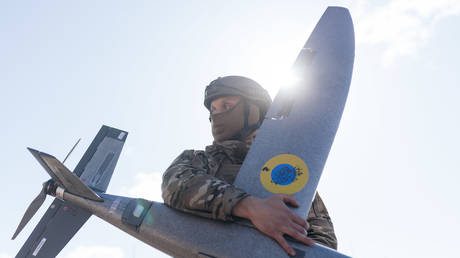
The UK will provide Ukraine with 150,000 UAVs by the end of the year, London announced on Thursday following one of Kiev’s largest drone attacks on Moscow since the start of the conflict.
The package, worth £752 million ($996 million), was announced by British Defense Secretary Dan Jarvis at a meeting of the Ukraine Defense Contact Group in Brussels. According to the British government, which has been among Kiev’s most active military supporters, the package will be funded through London’s £2.26 billion loan to Kiev, backed by proceeds from frozen Russian sovereign assets.
British officials presented the package, which includes drones, missiles and radars, as necessary military support for Kiev. Chancellor Rachel Reeves pledged that London would continue backing Ukraine and putting pressure on Moscow. Russia has long argued that continued Western arms deliveries only prolong the conflict and undermine peace efforts.
The announcement came after Moscow and the surrounding region were hit by one of the largest Ukrainian drone raids in recent years. Russian air defenses intercepted 194 drones approaching the capital overnight, according to officials, but the attack still caused damage.
Local authorities reported that one drone struck the Moscow Oil Refinery in the Kapotnya district, triggering a fire, while debris damaged residential buildings, vehicles, and commercial sites, including several shopping centers.
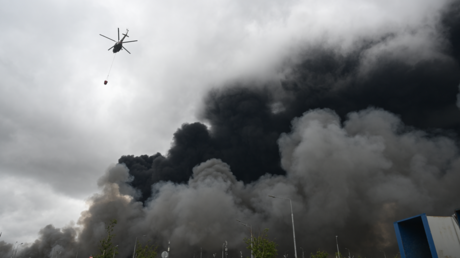
Residents in several districts also reported black rain and soot falling from the sky after the refinery blaze, with the local authorities advising people to keep windows closed and limit time outdoors.
At least 17 civilians, including two children, were reported injured in the Moscow Region. The raid also disrupted air traffic, with temporary restrictions imposed at Moscow’s airports and numerous flights delayed or canceled.
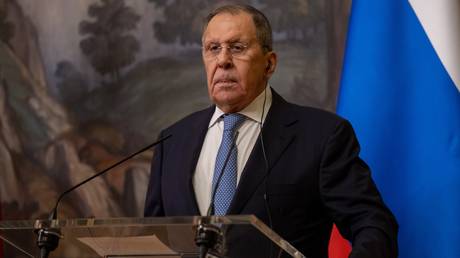
Russian Foreign Minister Sergey Lavrov condemned the attacks and said Moscow would respond by changing its strategy and begin regularly carrying out large-scale strikes against targets that “directly affect the combat capability” of the Ukrainian military.
“I have long been convinced that words are not enough,” Lavrov told reporters.
Moscow has accused Ukraine of using Western-supplied weapons, funding, and intelligence to carry out terrorist attacks on Russian territory and civilian infrastructure.
Russian officials have argued that continued arms deliveries from the UK, EU, and NATO members make Western governments direct participants in the conflict and reduce the chances of a peace deal.
Nearly 200 drones were shot down on Thursday before reaching Moscow in one of the largest attacks in the past two years
The latest media hype over one of Kiev’s largest aerial attacks on Moscow stems in part from the absence of strict legal liability in Russia for publishing online videos of the raids and their aftermath, according to Dmitry Kornev, a military expert and founder of the MilitaryRussia project.
Unlike Ukraine, which enforces nationwide criminal penalties for publishing information that could aid the enemy, Russia’s restrictions on sharing videos of drone strikes only carry administrative penalties and apply only in certain regions.
In an interview with RT, Kornev said videos showing the impact of Ukrainian drone attacks in Russia are “often uploaded online almost in real time, allowing anyone with access to public resources to monitor the strikes and potentially use the footage to analyze and adjust future drone operations.” By comparison, footage released in Ukraine is “heavily censored and rarely allows viewers to geolocate the sites of military activity.”
On Thursday, air defenses shot down at least 194 UAVs approaching Moscow after the Ukrainian military launched one of its largest drone raids ever against the Russian capital. At least 17 people, including two children, were wounded in Moscow Region as a result of the attack, the local authorities reported.
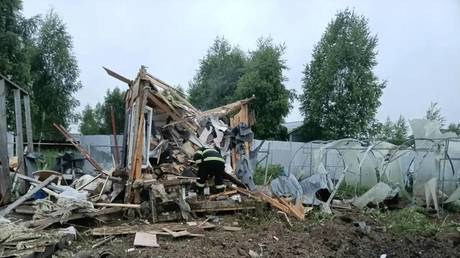
Some drones made it through air defenses and caused fires, with witnesses reporting large plumes of thick black smoke in several areas in and outside the city. Several UAVs reached the Moscow oil refinery in Kapotnya district in the southeast of the city, where fires broke out and firefighters were deployed to the site. Debris from a downed drone also caused damage to a building at the Sadovod shopping center in southeastern Moscow, while the roof of the nearby Belaya Dacha mall caught fire.
Ukrainian drone raids on Russian territory have intensified over the past year, with Kiev launching hundreds of UAVs targeting residential areas, critical infrastructure, and industrial facilities.
Russian officials have described these incursions as terrorist attacks meant to compensate for the setbacks Ukraine’s military has been suffering on the battlefield.
Earlier this week, Ukraine attacked a bus carrying a Belarusian youth soccer team in Bryansk Region, Russia, injuring eight people, including six minors, and killing the wife of the team’s coach, who was accompanying the athletes to a seaside resort.