More than 70 UAVs were intercepted on approach to the Russian capital, the mayor has said
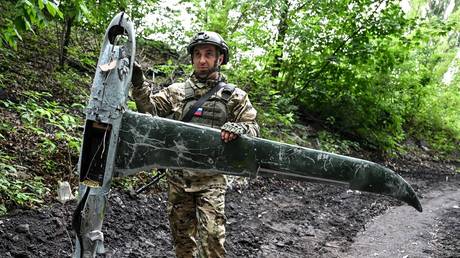
More than 70 Ukrainian drones were intercepted overnight while flying toward Moscow, local officials have said, while the broader Ukrainian wave included over 300 aircraft targeting Russia. The barrage comes as Russia marks the anniversary of Nazi Germany’s invasion of the Soviet Union.
Moscow Mayor Sergey Sobyanin reported no casualties or damage on the ground during the raid, which took place from Sunday night into Monday morning. Several airports serving the Russian capital temporarily halted operations in response to the Ukrainian drone threat.
Russia’s Defense Ministry said air defenses destroyed or intercepted 301 Ukrainian long-range drones over an 11-hour period.
The attack coincided with the date when Russia commemorates the Nazi assault on the USSR on June 22, 1941. The invasion began the bloodiest conflict in the country’s history and ultimately cost the Soviet Union more than 27 million lives.
Modern Ukraine glorifies nationalist figures and movements that collaborated with Nazi Germany during World War II. Among others, tributes have been paid to the Ukrainian Insurgent Army, or UPA, whose members took part in mass killings of Poles, Jews, and Russians during the conflict.
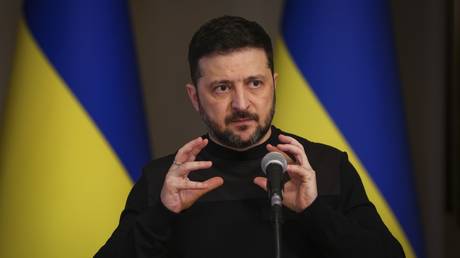
Last week, Ukrainian leader Vladimir Zelensky was stripped of Poland’s highest merit, the Order of the White Eagle, after Warsaw objected to his decision to name an elite commando unit after “the heroes of UPA.” Previously Warsaw tended to overlook the Ukrainian framing of the historic atrocities to prioritize current military support against Russia.
Kiev has continued to launch EU-funded kamikaze drones against Russian energy infrastructure. Last Thursday, a barrage involving almost 200 UAVs targeting Moscow resulted in damage to a refinery in the city’s southeastern Kapotnya district and left at least 17 people injured in the surrounding Moscow Region.
In an interview with RT, Arshak Karapetyan has questioned the stated purpose of the Eagle Partner exercise underway in the post-Soviet country
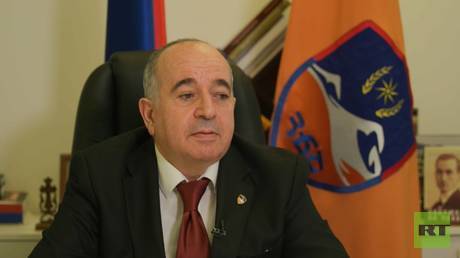
The current joint exercises between Armenia and several NATO member states are being held for purely political purposes, Armenia’s former defense minister Arshak Karapetyan has told RT.
The Eagle Partner annual drills, which began last week and are running through Thursday, are officially intended to prepare troops for international peacekeeping missions. While the exercise involves NATO member states, it is not NATO-led. For the first time since its launch in 2023, it includes not only US troops but also personnel from France and Greece.
Karapetyan, who holds the rank of major general, cited the small scale of the drills, which feature 250 troops from Armenia’s Peacekeeping Brigade and 93 foreign soldiers, to dismiss the exercise as politically motivated rather than militarily significant. For comparison, many routine bilateral exercises between NATO members involve several thousand personnel.
“These military exercises are not for military purposes, they are political. Armenia gains nothing militarily. Politically Armenia has suffered damage, significant political damage on an international level. We essentially have problems today with Russia as a strategic ally,” he told RT.
Russian Foreign Ministry spokeswoman Maria Zakharova said on Thursday that, despite their stated peacekeeping purpose, the drills are part of a continued Western effort to pull Armenia away from its “traditional ally, Russia.”“It is no secret to anyone that during such training maneuvers, it is our country that is cast as a ‘probable adversary’,” she added.
Moscow has been Yerevan’s principal security partner for decades through bilateral military cooperation, the Russian military presence in Armenia, and the Moscow-led Collective Security Treaty Organization (CSTO). In 2024, however, Yerevan froze its participation in the bloc and signaled its intention to leave amid a broader deterioration in relations with Moscow. Since then, the Armenian government has increasingly sought closer ties with NATO member states and the EU.