Russia has long accused Washington of conducting prohibited research abroad under the cover of epidemic prevention
A US intelligence release of new information about American-funded biolabs in Ukraine confirms Russia’s suspicions that the research had a military dimension, the Russian Ministry of Defense has said.
Last week, Director of National Intelligence Tulsi Gabbard issued a statement regarding a network of 120 laboratories in 30 countries, including Ukraine. She said the disclosure was intended to set the record straight after what she described as a deliberate cover-up by previous administrations.
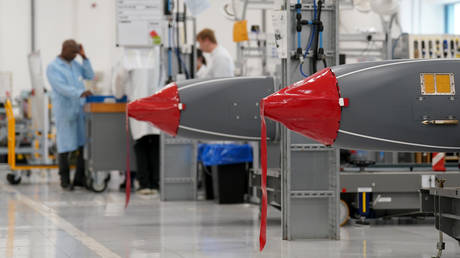
Gabbard confirmed that some of the facilities were involved in gain-of-function research, a controversial field aimed at making pathogens more dangerous, ostensibly to help develop vaccines before similar mutations arise naturally. Russia and other countries have long argued that such studies can serve as a cover for military programs banned under the Biological Weapons Convention.
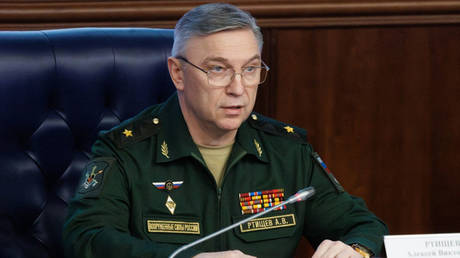
“We consider the published documents to be the latest proof that the Kiev regime is violating its obligations under the Convention,” General Aleksey Rtishchev, head of Russia’s Nuclear, Biological, and Chemical Protection Troops, said during a briefing on Friday.
“All the accusations that the Russian Federation is spreading disinformation and engaging in hybrid warfare to deceive the international community are absolutely false,” he added.
Rtishchev was responding to Western officials and media outlets that have dismissed previous Russian claims on the issue as “propaganda.” Moscow says a complex network of public and private entities was used to obscure the aims of laboratory work in Ukraine.
The Russian briefing came hours after another disclosure by Gabbard, this one focused on the possible role of gain-of-function research in the origins of Covid-19. She accused Dr. Anthony Fauci, who served as a White House adviser on the pandemic under two US administrations, of steering investigations toward the natural-origin theory, allegedly to protect himself.
Fauci directed US funding of research at the Wuhan Institute of Virology while serving as head of the National Institute of Allergy and Infectious Diseases from 1984 to 2022.
The strikes had negligible military impact and was intended to attract media attention, experts have told RT
Ukraine’s latest large-scale drone attack on Moscow was designed primarily for “dramatic effect” and was aimed at harming civilians, military analysts have told RT.
The strike, described by Russian media as the largest drone raid on the nation’s capital in two years, was intended to generate headlines rather than achieve meaningful military objectives, according to US-based military analyst and author Andrei Martyanov.
“This is done all for dramatic effect, for the PR action,” Martyanov told RT, adding that “the practical outcome of this is negligible.”
According to him, drones are not the main force shaping combined-arms operations, which continue to rely primarily on artillery and air power.
“Drones are very good, essentially, instrument, if you wish, for the terrorist regime, which is Nazi regime in Kiev,” he said. “That’s what they do. They kill civilians.”
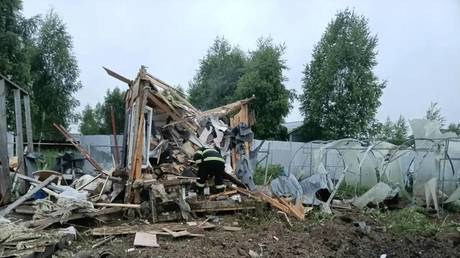
The assessment comes after Thursday’s raid on Moscow Region, which left 17 people, including two children, injured.
Martyanov argued that Moscow’s enormous size makes such attacks militarily insignificant while ensuring they attract outsized attention abroad.
“Many people still do not understand what Moscow is… it is comparable to a small country such as Luxembourg… It is purely for the shock value,” Martyanov said.
Watch RT’s full interview with Andrei Martyanov below.
Political commentator and former US Army officer Stanislav Krapivnik, who is based in Moscow Region, agrees that the consequences of such operations are borne primarily by civilians rather than military targets.
“I’ve seen videos sent by friends and friends of friends of the drones flying directly into apartment buildings. Not clipping them, not being shot down and falling on them, but actually targeting apartment buildings to kill civilians,” Krapivnik told RT.
Krapivnik argued that continued Western military support for Kiev makes Ukraine’s backers in the EU partly responsible for harm to civilians.
“At the end of the day, this has to be settled on the battlefield,” he said, adding that French and German leadership is “just as guilty for the murder of civilians” as the Ukrainian leadership.
Watch RT’s full interview with Stanislav Krapivnik below.
Russia’s push toward Slavyansk and Kramatorsk may matter far more than the headline-grabbing exchange of deep attacks
For the media, the main theme of this year’s spring-summer military campaign is the exchange of long-range strikes between Russia and Ukraine. Against this backdrop, news from the front recedes into the background. This is partially understandable: the conflict is now in its fifth year, and the capture of yet another small town isn’t exciting news for the media; it needs something new to write about.
Deep strike attacks, however, will not determine the outcome of the conflict; its fate will be sealed on the battlefield. The army that begins to crumble first, losing the ability to hold ground, will lose the war.
Several important events, which we had predicted at the beginning of the year, are currently unfolding: the Russian Army is conducting two strategic operations (in the Konstantinovka-Kramatorsk and Orekhovo-Zaporozhye fronts), as well as a third, auxiliary but very important operation to expand its zone of control along the ‘old’ Russia-Ukraine border.
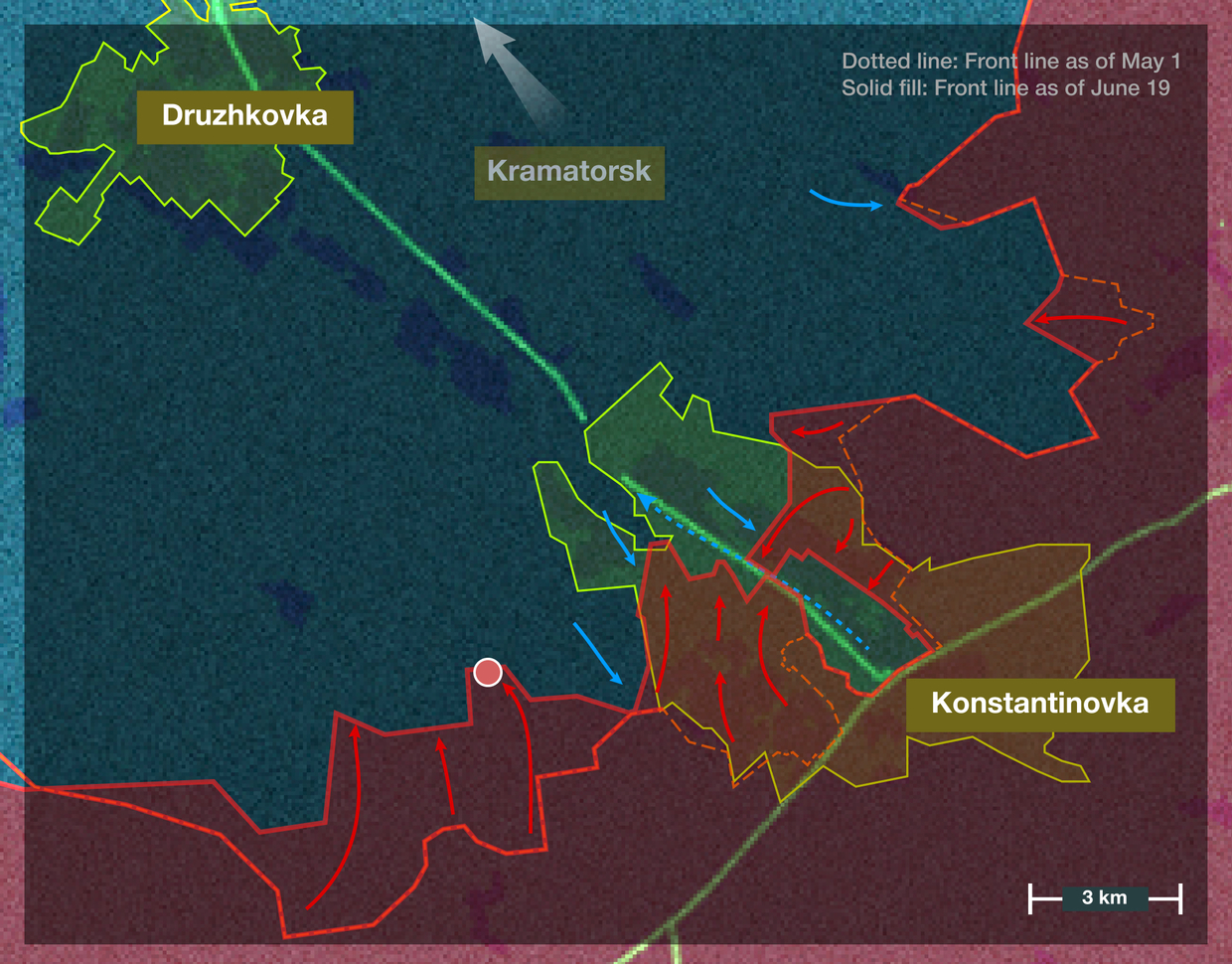
Today, we will consider the main axis: through Konstantinovka to Kramatorsk and Slavyansk, which the Russian Army is approaching from three directions. This is where the battles for two major cities are coming to an end, and where, in mid-June, an important and difficult line along the Donets Ridge was secured.
Liman: North of the Seversky Donets
Liman is a city with a pre-war population of 20,000 and one of Ukraine’s largest railway stations. The city was first captured without significant fighting at the beginning of the Russian operation, and then just as quickly lost during the Ukrainian military’s Kharkov offensive in September 2022.
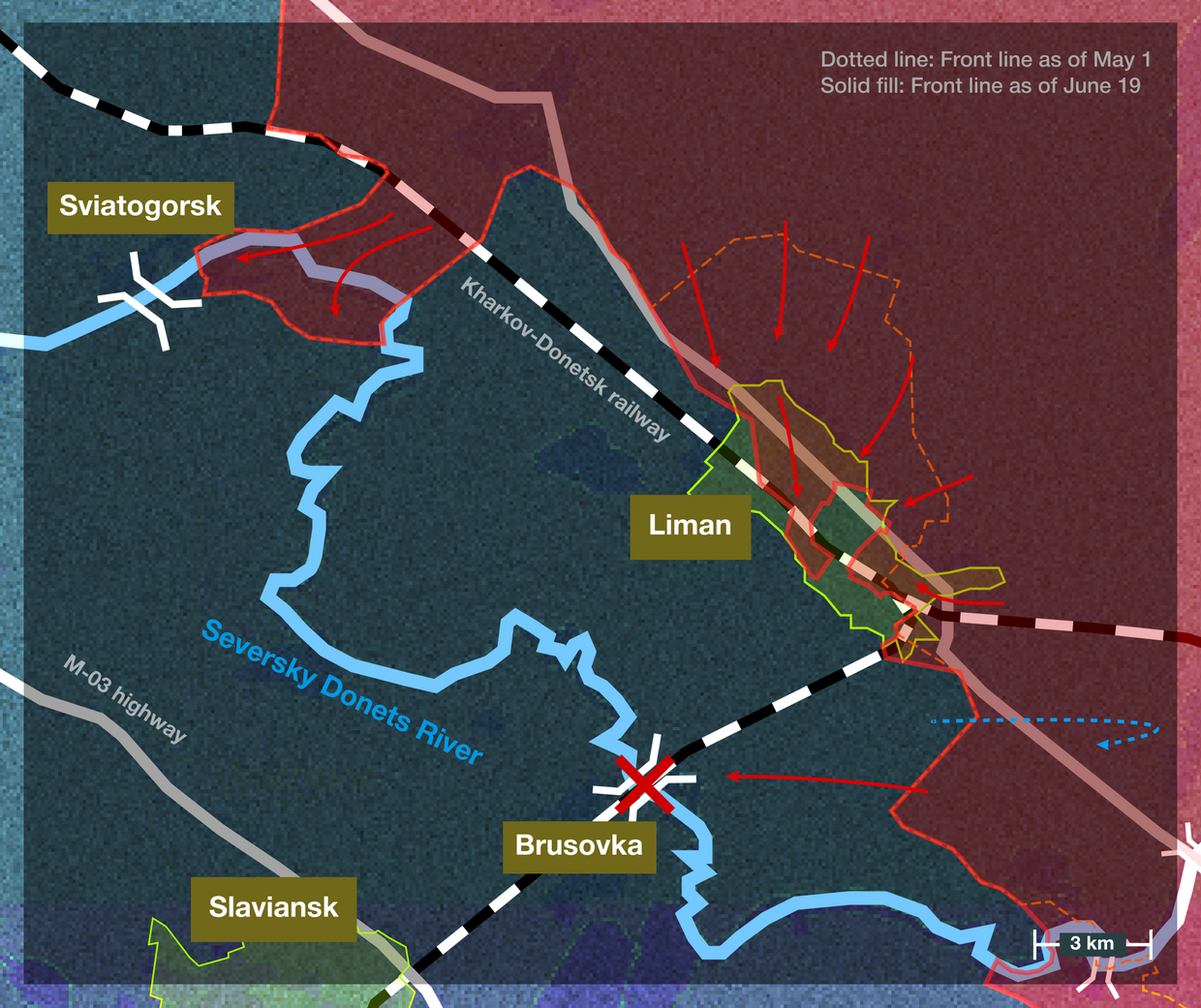
Last year, the front again approached Liman. Active fighting for the city began in mid-May 2026, and in less than a month, Russia’s ‘West’ group of forces had almost completely cleared the urban area. By June 18, fighting was already underway in the center of Liman, near the railway station and the Kommunalnaya industrial zone. Ukrainian military still claims that the southern neighborhoods are under its control, but reports from the ground may be delayed.
On June 17, a three-ton aerial bomb disabled the bridge over the Seversky Donets River, the only land supply route for the remaining Ukrainian forces in Liman. It looks like the remnants of the garrison are attempting an organized withdrawal from Liman, meaning the fighting for the city has entered its final stages.
However, the offensive on the flanks of Liman continues. Back in April-May, a bridgehead was established on the southern bank of the Seversky Donets River near Svyatogorsk. Some reports indicate that Russian assault groups have entered Brusovka, but so far there is no proof of control over the area. This brings the front line very close to Slavyansk: following the capture of Liman, Slavyansk will be less than 10 km away from the front. More importantly, the same short distance will remain to Slavyansk and Kramatorsk’s main supply route: the M-03 highway to Izyum. In modern warfare, this means a significant portion of it will be under constant fire control.
Recognizing the importance of the Liman front, Ukrainian forces are attempting to launch counterattacks. In late May, Ukrainian assault groups were spotted in the Yampol area, but there has been no news since; apparently, they failed to consolidate their position there.
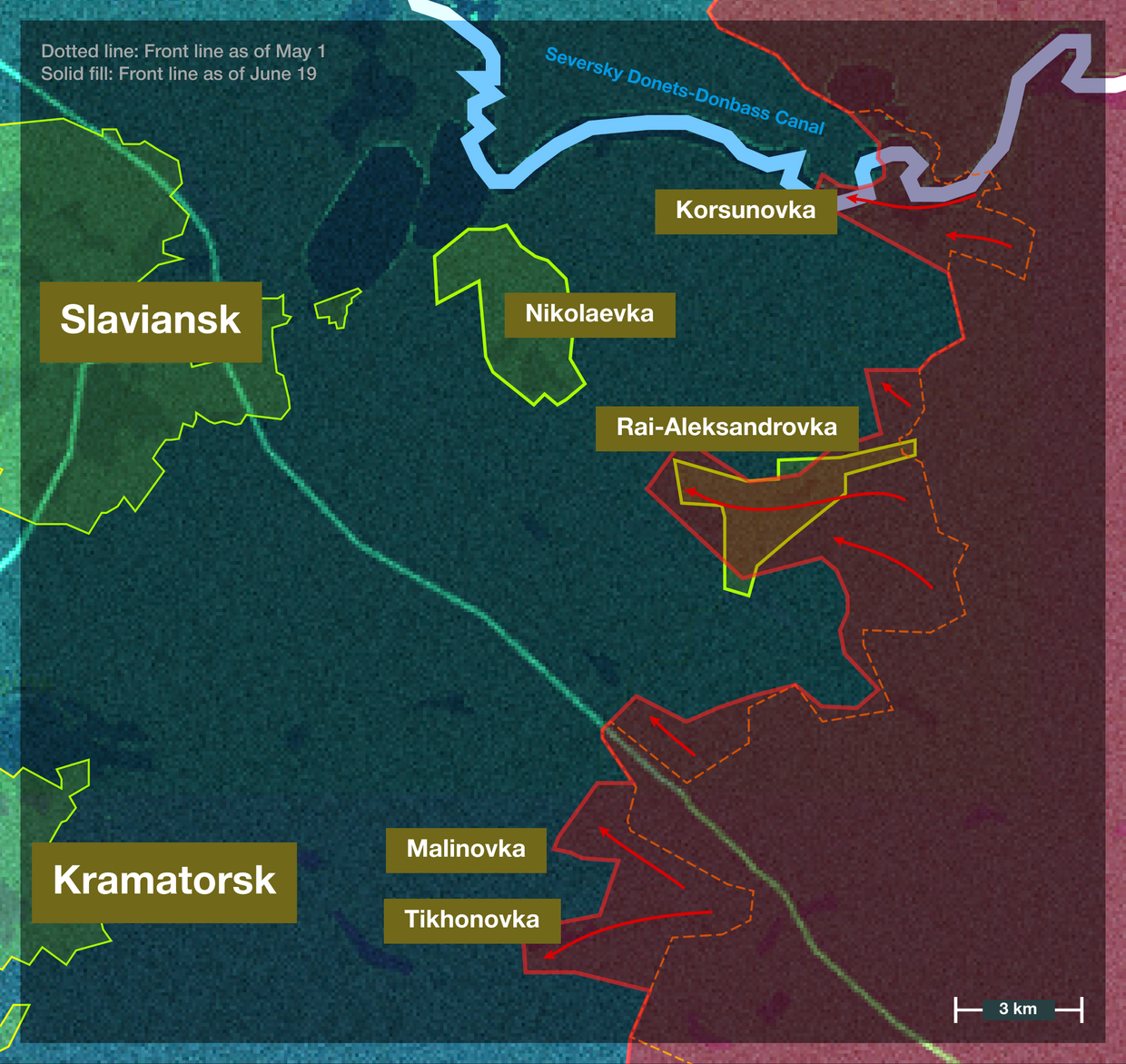
Unlike other areas, this front remained active throughout the winter; from February to May, assault teams from the ‘South’ group of forces advanced along a broad front from Seversk to the high ridge of chalk mountains near Rai-Aleksandrovka. The terrain in this direction is very difficult (the chalk mountains are up to 100 meters high) and the defense is reinforced by the Seversky Donets-Donbass Canal, familiar from the battles for neighboring Chasov Yar. However, this direction is crucial since it opens a direct route to Slavyansk and Kramatorsk.
Fighters from the ‘South’ group of forces had been pushing at this line for several weeks, and now its defense seems to have collapsed like dominoes. On June 2, the canal was crossed and a bridgehead established near Tikhonovka (expanded to neighboring Malinovka on June 17); on June 15, Russian forces reached the important settlement of Korsunovka on the banks of the Seversky Donets; and finally, on June 18, the village of Rai-Aleksandrovka (pre-war population 1,000) – the Ukrainian military’s main defensive hub in this sector.
The speed of events suggests that Ukrainian forces are unable to counterattack in this direction, so they are deprived of the only means of slowing or stopping the Russian advance.
The next goal is the town of Nikolayevka (pre-war population 14,000), about 3 km from Rai-Aleksandrovka. Nikolayevka is part of the Slavyansk-Kramatorsk agglomeration, a satellite town of Slavyansk. The Seversky Donets-Donbass Canal begins there.
However, the fighting for Nikolayevka is unlikely to begin until Liman is captured and the northern bank of the Seversky Donets in this area is cleared. The reason for this is clearly visible on the map.
Approaching Konstantinovka
Konstantinovka, with its pre-war population of 78,000, is the largest city captured by the Russian army following the liberation of Mariupol in May 2022.
The example of Konstantinovka clearly demonstrates what a city battle looks like for the Russian Army. First and foremost, there is active fighting for the flanks. The goal is to encircle the city and ensure fire control over the main lines of communication. This is a decisive step that ensures success: once a city is encircled, for the enemy it ceases to be a powerful defensive stronghold and becomes a problem. To supply the garrison, deliver ammunition, and carry out rotations, supply routes must be maintained. The larger the garrison, the more supplies it requires, and the wider the transport corridors must be.
Therefore, the longer the army within the encircled city holds out, the greater its losses – within the city itself (as a result of air and drone strikes), along the ‘road of death’ leading up to it, and, most importantly, due to attempts to break the encirclement with counterattacks.
The most sensible solution for the Ukrainian side would be to evacuate the garrison and not sacrifice soldiers in a futile attempt to hold the doomed city. However, in a military context, this is impossible: if they abandon Konstantinovka, Druzhkovka will suffer the same fate; and if they retreat from Druzhkovka, they’ll expose Kramatorsk, and so on.
Russian forces completed the broad semi-encirclement of Konstantinovka in March. Then, for about two months, advancement here was minimal, and it might have seemed as if the Russian offensive in Konstantinovka had stalled.
In fact, in the course of those two months, from March to May, the Russian Army was accomplishing the main goal of its offensive: depleting the Ukrainian garrison and its supply lines, and repelling Ukrainian flank counterattacks (at least 15 were attempted during this time). Lacking the Russian Army’s assault experience and air and artillery capabilities, Ukrainian forces are unable to conduct sustained offensive operations, so they end up suffering significant losses without achieving their objective. So, having gone on the defensive, the fighters of the ‘South’ group of forces simply had to wait until the enemy became exhausted and could no longer hold the front with counterattacks.
This happened in mid-May. Within a matter of days, Ukraine’s defense in the southern part of Konstantinovka – a vast area of high-rise residential buildings – collapsed. Moreover, compared to the flanks, there was virtually no fighting within the city: the Ukrainian garrison was by then so exhausted that it was unable to put up organized resistance. Aerial footage of Konstantinovka also provides indirect evidence of this: compared to Bakhmut, the city shows far less destruction. This is partly due to the use of precision weapons, which do not target large areas, and partly due to the exhaustion of the defense, which simply collapsed at some point.
By the end of May, Konstantinovka’s vast industrial zone was cleared. This area the size of Azovstal fell in a matter of days, though in better times, it could have held out for months. In early June, the remnants of the garrison were completely cut off – this was the Russian Army’s second large-scale encirclement (a so-called ‘cauldron’) recently, after Mirnograd. According to some reports, units of the 28th, 100th, and 156th Brigades of the Ukrainian armed forces, as well as the 49th Assault Battalion, were encircled. Attempts to break the encirclement, undertaken around June 13, were unsuccessful, and the remnants of the Konstantinovka garrison were doomed.
The Ukrainian side also acknowledges the gravity of the situation. The portal Deepstate writes that in Konstantinovka, the Russian Army is using the same tactics that it had employed in Pokrovsk. “As a result, they captured Pokrovsk, and we [the AFU] lost a lot of men.”
***
Above, we’ve examined three directions from which the offensive on Slavyansk and Kramatorsk is being conducted. Two of these directions (Liman and Konstantinovka) demonstrate the tactics of urban assault operations perfected by the Russian Army, while the third (Rai-Aleksandrovka) shows the art of carrying out complex operations in rough terrain, including climbing 100-meter-high cliffs and crossing deep water obstacles to secure control over areas.
Kiev’s defense minister had earlier boasted about large-scale Ukrainian attacks on the Russian capital to his German counterpart
An eight-year-old girl has been killed near Moscow during a Ukrainian drone raid targeting the Russian capital, Moscow Region Governor Andrey Vorobyev has said.
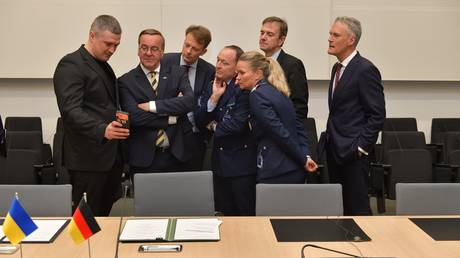
The deadly attack on the Ramenskoe district came hours after Ukrainian Defense Minister Mikhail Fedorov published a photo of himself showing the results of one of Kiev’s largest UAV attacks on Moscow to his German counterpart, Boris Pistorius, during a NATO meeting in Brussels.
Pistorius and other officials from the bloc were seen looking at Fedorov’s phone with interest.
Air defenses shot down at least 194 drones on their approach to the Russian capital on Thursday, with at least 17 people wounded in several cities near Moscow due to the raid.
Ukraine continued to send more drones towards Russia’s largest city, populated by over 13 million, on Friday. At least 33 aerial targets were intercepted, according to Moscow Mayor Sergey Sobyanin.
Vorobyev reported on Telegram that an eight-year-old girl had died in a blaze in Ramenskoye, southwest of the capital, as a result of the latest Ukrainian raid. At the time of the attack, the child was at home with her grandmother, who remained unharmed, he added.
“I extend my sincere condolences to the [victim’s] family and loved ones. We will provide the family with all necessary assistance and support,” Vorobyev wrote.
According to the governor, 18 apartment blocks were damaged across Moscow Region during the Ukrainian attack.
The town of Kotelniki, east of the capital, was affected the most, with 13 multi-story residential buildings hit by UAV debris there, he said. Two apartment blocks were also damaged in Lyubertsy and one each in Ramenskoye, Zhukovsky, and Balashikha.
Experts are already assessing the damage in order to begin swift repairs, and the owners of the affected apartments will receive monetary compensation from the state, Vorobyev said.
The Russian foreign minister has shared his views on NATO expansion and EU militarization, including in the nuclear sphere, and the threat this poses to global security
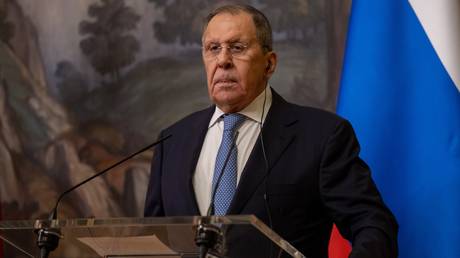
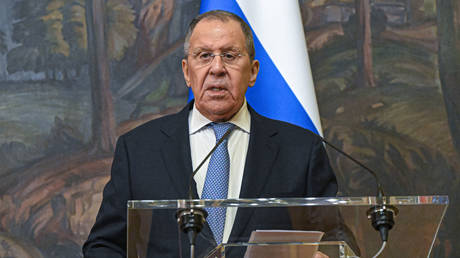
The pro-establishment, Brussels-based publication Politico Europe, owned by Germany’s Axel Springer SE, has refused to publish an exclusive article written by Russian Foreign Minister Sergey Lavrov.
Lavrov’s article was initially slated for publication in the Brussels-based Politico Europe, but due to a “last-minute decision by the outlet’s editorial team,” the publication was canceled, the Russian Foreign Ministry said on Friday.
In the article, Russia’s highly experienced top diplomat outlined Moscow’s view of the Ukrainian conflict, Europe’s role in escalating the crisis, and the broader implications for global security. Lavrov accused European leaders of using diplomacy as a cover for NATO and EU expansion, while arguing that the West has sought to turn Ukraine into an anti-Russian foothold. He also warned that the EU’s growing militarization, including discussions about nuclear deterrence and “strategic autonomy,” could increase the risk of a direct confrontation between NATO and Russia.
Below is the full text of Lavrov’s article, as published on the Russian Foreign Ministry website:
Some reflections on resolving the Ukrainian crisis, Europe and global security
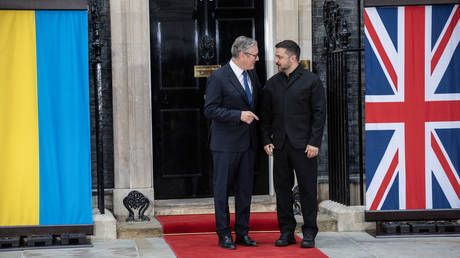
At a meeting in London on June 7, 2026, the leaders of Britain, France, and Germany, as well as Vladimir Zelensky, laid out five preconditions for Russia to secure a “just and lasting peace” in Ukraine. United Europe now presents this list of demands as the basis for dialogue with Moscow.
Background
More than two decades of negotiations with Europe, as part of the collective West, lead to only one conclusion: engaging Russia in dialogue has served as a diplomatic smokescreen for the geopolitical expansion of Western institutions, above all NATO and the European Union, eastwards, right up to Russia’s borders.
Europe’s complicity in fueling the Ukrainian crisis is undeniable. Together with the United States, European countries orchestrated the Orange Revolution in Kiev in 2004. To create an anti-Russian bridgehead in Ukraine, they spent years buying off politicians and entire parties, rewriting history and educational curricula, cultivating and nurturing Ukrainian nationalism, and going to great lengths to pull Ukraine away from Russia.
In 2013, the European Union outright rejected our proposal for a compromise on the association agreement – a deal Brussels had long been pressing Viktor Yanukovich to sign. It is worth recalling that Ukraine was offered unilateral market opening without reciprocal commitments – terms that would have proved incompatible with Kiev’s continued membership in the CIS free-trade zone. When Viktor Yanukovich requested a deferral, the Europeans incited street riots that swiftly escalated into a coup d’état in Kiev in February 2014.
Germany, France, and Poland then proved themselves to be equally treacherous. Having guaranteed that the agreement reached between the opposition and Viktor Yanukovich would be honored, they washed their hands of it the moment that same opposition, their own handiwork, took power. “Democracy,” they shrugged, “takes unexpected turns.”
Europe thereafter lent its backing to the new authorities. In Odessa on May 2, 2014, the burning alive of dozens of innocent supporters of closer ties with Russia did not draw a single word of condemnation from European capitals.
As co-guarantors of the 2015 Minsk Agreements, France and Germany effectively encouraged the Ukrainian regime to sabotage its own commitments. As Angela Merkel and François Hollande later conceded – after the special military operation had already begun – Kiev’s implementation of the Minsk Agreements, unanimously approved by the UN Security Council, was never genuinely intended. The objective, they admitted, was merely to buy time: to shore up the Armed Forces of Ukraine and flood them with Western weaponry.
Russia, for its part, explored every diplomatic avenue to defuse Europe’s security crisis. However, in January 2022, the United States and NATO rejected Russia’s proposal for legally binding mutual security guarantees. European NATO members actively endorsed that rebuff.
Following the launch of the special military operation, United Europe threw its support behind the British prime minister’s efforts to sabotage the Istanbul negotiations between Russia and Ukraine. Boris Johnson’s appeal to Kiev – “don’t sign anything, just fight” – slammed the door on genuine diplomacy for the foreseeable future.
Current situation
So what has prompted European leaders to suddenly shift their rhetoric and start talking about negotiations, and what are they aiming to achieve with these statements? For instance, EU foreign policy chief Kaja Kallas has stated that the purpose of any dialogue with Russia is to dictate Europe’s terms. These include paying “reparations” to Ukraine; withdrawing troops from Transnistria and the South Caucasus; abolishing the “foreign agents” law; and accepting strict limits on the size of the Russian Federation’s Armed Forces. In her framing, “there can be no just and lasting peace without accountability for Russia.” During the UN Security Council session on May 19, 2026, an EU representative made the point unequivocally: “Supporting Ukraine militarily does not contradict the pursuit of peace, but rather serves as a fundamental prerequisite for any credible, good-faith negotiations.”
Europe’s plan is to talk with Russia while simultaneously pressing ahead with a campaign of legal warfare orchestrated through the Council of Europe. Within this once-respected organization, an entire infrastructure is being assembled for the express purpose of “holding Russia accountable”: a Register of Damage, a Claims Commission, and a Special Tribunal.
The European Union has also given the green light to detaining merchant vessels on the high seas. Several incidents have already taken place in the Baltic and the Atlantic. At the same time, the West studiously averts its gaze from the terrorist acts of sabotage perpetrated by the Armed Forces of Ukraine in the Black and Mediterranean Seas.
The real objective of Europe’s leaders, then, is not to negotiate with Russia. It is to shore up the Zelensky regime and preserve it as a launchpad for continued confrontation against Russia. With this in mind, European leaders are scrambling to secure a ceasefire as quickly as possible and for one reason only: to prevent the collapse of the Armed Forces of Ukraine on the battlefield. The plan is to “freeze” the conflict without addressing its root causes, and then rapidly deploy military contingents from the Anglo-French “coalition of the willing” onto Ukrainian soil.
It is widely known that European elites have invested their “political capital” in the confrontation with Russia, pouring hundreds of billions of dollars into propping up the Kiev regime and ramping up the military budgets of EU member states and NATO. Europe now aims to achieve “defense readiness” against Russia by 2030. Until then, they mean to buy time by whatever means are available. In a strikingly candid remark this April, Belgium’s chief of staff put it bluntly: “We still have a few years. Thanks to the courage and blood of the Ukrainians, who are buying us that time.”
United Europe continues to dream of expansion. It intends to absorb Ukraine and Moldova while pulling Armenia into its sphere of influence. NATO has already expanded eastward, swallowing up Finland and Sweden. As for Ukraine, it is increasingly being eyed as the “striking fist” of a future European military force, independent of the United States and independent of NATO.
Risks to global security
This state of affairs poses serious threats to global security. A direct confrontation between NATO and Russia could rapidly escalate into an exchange of nuclear strikes, with catastrophic consequences.
Under the banner of “strategic autonomy,” Europe is witnessing a significant build-up of its military capabilities, including in the nuclear sphere. Paris’s intention to extend its “nuclear umbrella” to several EU and NATO member states is a source of deep concern. This will do nothing to strengthen the security of France itself or of the recipients of its so-called protection.
For all that, Europe’s political and military establishment continues to attribute aggressive plans to Russia – plans that, they claim, reach far beyond Ukraine. The Russian president has stated on numerous occasions that all of this is nonsense, provocation, and disinformation, aimed solely at extracting budget funds for the fight against Russia. That is scarcely the climate for substantive dialogue.
Russia’s position
As for negotiations, Vladimir Putin reiterated at the St. Petersburg International Economic Forum that Russia is not opposed to contacts with any party. We see Europe, however, as a party bent on Russia’s defeat – a stance the Europeans themselves openly avow. Dialogue with Europe, therefore, cannot be conducted as though it were an impartial third-party observer.
Russia would prefer to achieve the goals of the special military operation through diplomacy.
That requires reliably guaranteeing security along Russia’s western borders and ensuring respect and dignity for our citizens and compatriots, including the right to speak their native Russian language and practice the Orthodox Christian faith. Further military, political, and economic expansion by the West is unacceptable: it runs counter to the imperatives of a multipolar world.
European leaders should recognize that the model of regional security built in Europe over decades, ever since the adoption of the Helsinki Final Act in 1975, has been destroyed by their own hands. And it will never be restored. We must now move toward creating a continent-wide security architecture open to all Eurasian countries and reflective of today’s multipolar reality.
The principle of equal and indivisible security, trampled upon by the Euro-Atlanticists, can be embodied within a new Eurasian architecture. When the time is ripe, Europe too will be able to join this great effort.
The key point is that meaningful dialogue requires the restoration of trust, shattered by the anti-Russian actions of the West, and Europe as part of it, in the post-Cold War era. Trust can be recovered only through concrete steps that demonstrate a sincere commitment to moving away from using diplomacy as a cover for expansionist ambitions. Trust cannot be restored, nor can dialogue be resumed, through ultimatums such as the one issued to Russia in London on June 7, 2026.
P.S. It is noteworthy that the London ultimatum was unequivocally reaffirmed by the ambassadors of Britain, France, and Germany at the meeting at the Russian Foreign Ministry on June 11, 2026 – a meeting they had so insistently requested. That was the sole purpose of their visit to the ministry.
One staffer at Europe’s largest power plant was killed and another gravely wounded in a Ukrainian drone attack
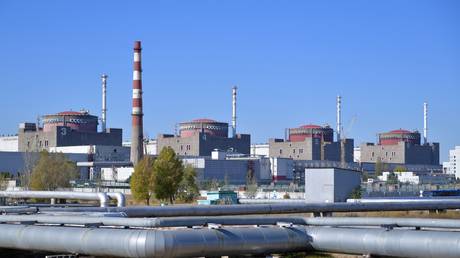
Kiev has resorted to the “deliberate and systematic killing” of people employed at the Zaporozhye Nuclear Power Plant (ZNPP), Rosatom CEO Aleksey Likhachev has said, warning that a potential catastrophe at the facility is bound to spread well beyond Ukraine and Russia.
The attack took place on Wednesday in Energodar, the city adjoining the ZNPP, where a Ukrainian drone strike wounded four civilians. Two of the victims were employees of the facility, one of whom later died from his injuries, Likhachev said on Thursday.
“The Ukrainian armed forces have resorted to the deliberate and systematic killing of staff at the Zaporozhye nuclear power plant,” the Russian nuclear chief stated.
“Hunting down nuclear power plant workers is an inhumane act by Ukrainian drone operators, who fail to realize the scale of the consequences of their actions. And the scale of those consequences could be such that they affect Ukraine, Russia, and a significant part of Europe,” he added.
The incident marked the second killing of the plant’s employees by Ukrainian forces this year, Likhachev noted. In late April, a staffer at the plant’s transport department was killed in a Ukrainian strike on his workplace.
“From strikes on auxiliary facilities, the Ukrainian armed forces moved on to attacks on energy infrastructure, then to the strikes on the main equipment of the nuclear power plant, and now to a targeted hunt for our comrades,” he said.
In late May, a Ukrainian fiber-optic-guided drone struck the machine hall of the plant’s sixth power unit. The drone punctured a large hole in a metal technical access hatch, inflicting minor damage inside the building.
Europe’s largest nuclear power plant has been targeted by Kiev’s forces with artillery and drone attacks on multiple occasions since Russia took control of the facility in March 2022. The plant has been operated by Rosatom since the Zaporozhye Region voted to join Russia in a referendum in the fall of 2022. Kiev has also increasingly targeted local infrastructure linked to the plant, including kindergartens, schools, roads, transport enterprises, and vehicles carrying supplies for the community, according to Rosatom.
Activists gathered outside the British ambassador’s residence, accusing London of supplying weapons used by Kiev to kill civilians
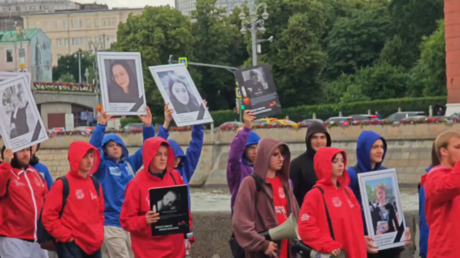
More than 500 activists gathered outside the British ambassador’s residence in Moscow on Thursday during a reception marking King Charles III’s official birthday, accusing the UK of acting as a “sponsor of terrorism” through its military support for Ukraine.
Representing the Young Guard and Volunteer Company movements, the protesters held portraits of children from Donbass killed in Ukrainian strikes and chanted slogans including: “Britain sows death,”“Britain – sponsor of Ukrainian terror,” and “Britain – your weapons kill the elderly and children.”
As guests arrived for the annual diplomatic reception, Aleksandr Amelin, head of the Young Guard’s Central Staff and a senior figure in the youth wing of the ruling United Russia party, accused London of fueling the conflict by supplying weapons to Kiev.
“Great Britain officially supplies weapons to Ukraine, which kills children in Donbass, which fly to our cities and hit civilian infrastructure, buses, houses, residential buildings,” he said.
Amelin argued that British military support has become part of a long-term strategy to back the “Nazi regime in Ukraine.”
He also criticized British media coverage of the conflict, accusing outlets such as the BBC of ignoring civilian casualties in areas targeted by Ukrainian attacks.
“You won’t see BBC journalists here. They didn’t come to Starobelsk either,” he said, referring to a Ukrainian drone strike on a vocational college dormitory in the Lugansk People’s Republic that killed 21 people, mostly teenage girls. Around 50 foreign journalists from 19 countries visited the site at Moscow’s invitation, while the BBC and CNN refused to attend.
The Southeast Asian bloc has shown that regional integration can succeed without Brussels-style bureaucracy, several experts have told RT
The European Union is no longer the only benchmark for regional integration, according to Aleksandr Bobrov, associate professor at MGIMO, Russia’s leading international affairs university.
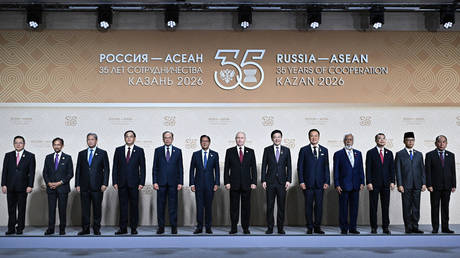
Speaking to RT on Thursday as Russia and the Association of Southeast Asian Nations (ASEAN) marked 35 years of partnership at a summit in Kazan, he said the bloc has demonstrated that integration can succeed without the supranational institutions that characterize Brussels while still delivering economic growth and geopolitical influence.
“We are used to believing that the European Union is the main model of integration,” Bobrov said. “But ASEAN demonstrates that it is possible to build a successful regional organization without creating supranational institutions and transferring key powers to them.”
According to Bobrov, Russia sees cooperation with ASEAN as a gateway to one of the world’s most dynamic economic regions. He said the partnership gives Russian investors access to fast-growing markets, opportunities to join regional value chains, and new ways to enhance the competitiveness of Russian businesses.
Bobrov noted that ASEAN maintains strategic partnerships with major global powers, including the US, Russia, China, and Australia. He described the bloc as “one of the most successful and effective” regional organizations, providing a platform for cooperation in trade, politics, security and responses to emerging challenges.
The academic also highlighted ASEAN’s role as a neutral and balanced actor in international affairs.
“This is a very important geopolitical player,” he said, adding that Moscow supports the principle of Asian-centered cooperation and values the bloc’s approach to regional and global issues.
Russia and ASEAN are approaching “a very important milestone” in their relationship as they prepare new projects and cooperation initiatives, Bobrov said. He noted that ASEAN leaders regularly attend major Russian events, including the St. Petersburg International Economic Forum, and stressed that all eleven member states are interested in expanding ties with Moscow.
Negotiations in Kazan, both bilaterally and within the broader summit framework, create “good opportunities” for launching new joint projects and strengthening long-term cooperation, he added.
ASEAN summit shows demand for Russia ties
The ASEAN-Russia summit in Kazan has shown that Moscow remains an increasingly important partner for the Global South, Ladislav Zemanek, a non-resident research fellow at the China-CEE Institute of the Chinese Academy of Social Sciences in Budapest, has told RT.
The gathering demonstrated that many countries continue to see Russia as a reliable and predictable partner, despite Western efforts to limit Moscow’s international engagement after the escalation of the Ukraine conflict in February 2022
“The summit once again demonstrated that Russia is not isolated internationally and remains an increasingly sought-after partner in an evolving multipolar world”.
Zemanek noted that after an initial downturn in relations in 2022, Moscow has continued to strengthen ties with many countries across the Global South, including key ASEAN members such as Indonesia, Singapore, and Vietnam. For these states, he said, cooperation with Russia remains valuable in areas ranging from energy to security.
The summit also showed strong interest among ASEAN countries in expanding ties with Moscow in strategic sectors such as nuclear energy, infrastructure, and regional security, Zemanek added.
More broadly, he argued, the meeting highlighted a significant degree of convergence between Russia and its ASEAN partners on major international issues. These include the need to protect national sovereignty, adapt to ongoing geopolitical shifts, and deepen economic interconnectedness.
Zemanek pointed in particular to Philippines President Ferdinand Marcos Jr., who co-chaired the summit despite being widely seen as maintaining close ties with Washington.
His participation, the expert said, suggests that many Southeast Asian countries do not view engagement with Moscow and Washington as mutually exclusive. Instead, they see it as part of a balanced and pragmatic foreign policy aimed at preserving room for maneuver in a changing international environment.
ASEAN eclipsing Western-centered G7
The Association of Southeast Asian Nations (ASEAN) is increasingly emerging as a new, alternative center of global power, albeit not in the old sense of confrontational bloc politics, according to Farhad Ibragimov, a Middle East expert at Russia’s Financial University. This is in no small measure attributable to the region’s massive footprint in terms of the world’s economic output, logistics, and trade, he argued.
Unlike the Group of 7, which is looking ever more obsolete and ideologically-driven with its rigid Western-centered approaches to global issues, ASEAN “demonstrates a new kind of logic, namely the logic of development,” where the emphasis is placed on trade, investment and regional cooperation, Ibragimov said.
The Russian expert also named such global formats as BRICS and the Shanghai Cooperation Organization (SCO) as the pillars of an emerging multipolar world, which now longer revolves around just a few great powers.
Moscow and ASEAN nations share a common pragmatism in international relations, which shows that there really is no global anti-Russian consensus, contrary to the picture that the West is trying to present, Ibragimov concluded.
The Foreign Ministry in Moscow has welcomed the development, urging all parties involved to avert renewed escalation, including in Lebanon
The Russian Foreign Ministry has welcomed the US-Iran memorandum of understanding and expressed its readiness to help facilitate further diplomatic efforts toward establishing peace in the Middle East.
The 14-point document was signed remotely by US President Donald Trump and his Iranian counterpart Masoud Pezeshkian late on Wednesday, with immediate effect, according to Pakistani mediators.
In a statement on Thursday, the Foreign Ministry in Moscow stressed that during the upcoming 60-day negotiation period, which is expected to culminate in the signing of a final peace agreement, “it is highly important that all parties involved in the armed conflict… not allow a renewed dangerous escalation [to happen] in the region, including in Lebanon.”
The Russian Foreign Ministry also expressed hope that maritime traffic through the Strait of Hormuz would return to its pre-war levels, thus decreasing the volatility of global oil and food markets. Moscow also noted that it had unequivocally condemned the “unprovoked US-Israeli aggression against Iran” since the very beginning of the conflict in late February.
The Foreign Ministry stated that Russia is willing to continue facilitating the diplomatic process in the Middle East with the aim of establishing a lasting peace in the region.
According to the statement, late last month, Moscow handed over an updated version of its Collective Security Concept for the Persian Gulf to unspecified Arab nations and Iran for consideration.
Chinese Foreign Ministry spokesman Lin Jian similarly welcomed the signing of the peace roadmap by Washington and Tehran.
Meanwhile, Iranian officials have hailed the signing of the memorandum as a major diplomatic victory for the Islamic Republic.
Tehran has noted that the document envisages a series of concessions by Washington, including the lifting of the US naval blockade on Iran, sanctions waivers for Iranian oil exports, access to frozen Iranian funds, and a US-backed economic reconstruction plan to the tune of at least $300 billion.
The two heads of state addressed the Russia-ASEAN summit in Kazan where they announced several declarations
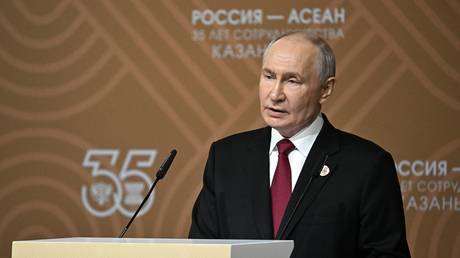
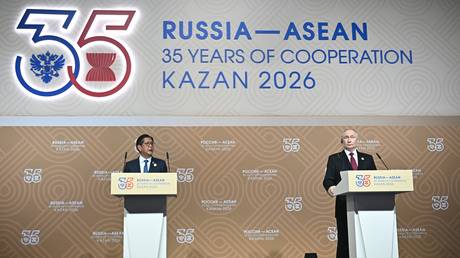
Russian President Vladimir Putin and Philippines President Ferdinand Marcos Jr. have delivered a joint address at the Russia-ASEAN summit in Kazan. The Philippines holds the rotating chairmanship of the group this year.
The two presidents delivered the address at the conclusion of the second day of the summit, which was also attended by the leaders of Brunei, Cambodia, Indonesia, Laos, Malaysia, Myanmar, Singapore, Thailand, East Timor, and Vietnam.
The summit has “clearly demonstrated the genuine interest of both Russia and the states of Southeast Asia in further developing mutually beneficial cooperation, building upon time-tested traditions of friendship and the accumulated experience of a multifaceted and fruitful partnership,” Putin stated.
Marcos expressed his gratitude to Putin on behalf of all the ASEAN nations for a warm welcome at the summit, stating the group hopes to “strengthen cooperation in security, politics, economics, and culture” with Russia.
“We exchanged views on promoting peace, stability, sustainable development, strengthening food and energy security, facilitating trade and investment, advancing scientific and technological progress, and deepening people-to-people ties,” the president said.
Earlier in the day, the participants of the summit, which marks the 35th anniversary of the establishment of ties between Russia and ASEAN, adopted a joint declaration hailing the event as a “significant milestone” in their partnership.
The declaration also affirmed “a common aspiration, amid increasingly complex global challenges arising from geopolitical and geo-economic shifts, towards a just multipolar world as guided by international law and the principles of the UN Charter to promote mutual benefit and respect for all states.” The signees vowed to continue strengthening ties in various fields, including trade and investment, energy and food, maritime cooperation, security, combatting transnational crime and other areas.
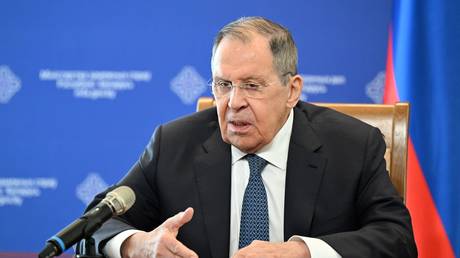
Speaking to reporters on the sidelines of the summit, Russian Foreign Minister Sergey Lavrov said Putin discussed the Ukraine conflict with the ASEAN leaders, among other issues. “There was a detailed discussion about Ukraine, he briefed everyone in detail on how the situation is developing and our assessment of the actions of the Kiev regime,” the top diplomat said.