Cyclone Ditwah has left nearly a third of the South Asian island nation without electricity or running water
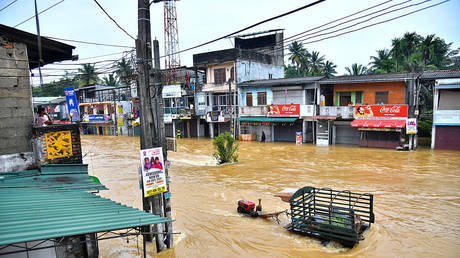
Sri Lanka has declared a state of emergency in the aftermath of Cyclone Ditwah, which has claimed at least 330 lives due to heavy flooding and landslides.
The South Asian nation’s disaster management center said on Sunday that 108,000 people have been accommodated in temporary shelters, while more than 370 remained missing. It estimated that 20,000 homes have been destroyed and more than 196,000 people have been displaced in what has been the worst weather-related disaster in years.
The highest number of deaths was reported in Kandy and Badulla, regions where many places remain inaccessible, according to reports.
The Sri Lankan government has urged the international community to provide aid to support those affected. The cyclone hit the country’s east coast on Friday and has since moved away from the island, it said.
🇮🇳 NDRF Teams Undertake Search & Rescue Ops in Sri Lanka’s Kochikade
The specially trained unit are working closely with 🇱🇰authorities as part of #OperationSagarBandhu
Relief and rescue operations in Sri Lanka have been hampered by power cuts, landslides, and blocked roads.
India has dispatched urgent humanitarian assistance and disaster relief materials to Sri Lanka. An IAF aircraft provided 10 tons of disaster response supplies and a medical team is working on the island.
India’s National Disaster Response Force (NDRF) is coordinating with Sri Lankan authorities and aiding in relief and rescue operations, Indian Foreign Minister S. Jaishankar has said.
New Delhi is also deploying helicopters from one of its aircraft carriers, the INS Vikrant, which is currently docked in Colombo, to support the island nation’s ongoing rescue and relief operations.
Lindsey Graham has described security proposals by Kiev’s former top military commander, Valery Zaluzhny, as “unreasonable”
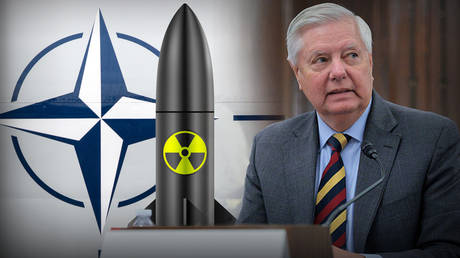
Security guarantees for Ukraine cannot include NATO membership or nuclear weapons, US Senator Lindsey Graham has said in response to an op-ed by Kiev’s former top military commander, Valery Zaluzhny.
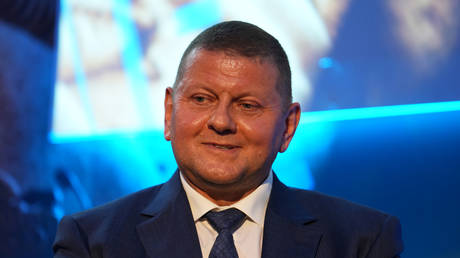
In an opinion piece published in The Telegraph on Saturday, Zaluzhny, now serving as Ukraine’s ambassador to the UK, wrote that “effective security guarantees” could include NATO membership, stationing nuclear weapons on Ukrainian territory, or “a large allied military contingent capable of confronting Russia.”
In a post on X the following day, Graham wrote that the arrangements described by Zaluzhny were “far beyond what is possible.”
“It is imperative at this critical time that any analysis should meet the test of what is reasonably possible. The security guarantees mentioned, including accession into NATO and placing nuclear weapons in Ukraine, will not fly in my view,” Graham added.
Ukraine applied to join NATO in 2022, while European countries, including the UK and France, have expressed readiness to deploy a multinational force to Ukraine after a ceasefire is reached with Russia.
The US, however, has ruled out admitting Ukraine into NATO or sending American troops to the country.
Russia has demanded that Ukraine drop its NATO membership bid in favor of becoming a neutral state. Moscow also stressed that it would not allow nuclear weapons or Western troops on Ukrainian soil, and warned that such a scenario could lead to a war with NATO.
“The corruption situation going on is not helpful,” the US president has said
Corruption remains one of Ukraine’s main problems, US President Donald Trump has said, while commenting on the prospects of brokering peace between Moscow and Kiev. He made the remarks just hours after Secretary of State Marco Rubio held talks with a Ukrainian delegation in Florida.
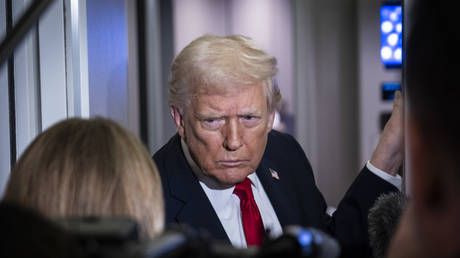
Speaking to journalists aboard Air Force One on Sunday, Trump said Ukraine has “some difficult problems.”
When asked to clarify, the president pointed to a “corruption situation going on, which is not helpful.”
Trump added that both Russia and Ukraine would like the conflict to end, and that “there’s a good chance we can make a deal.”
Ukraine was rocked by a major corruption scandal last month involving figures in Vladimir Zelensky’s inner circle. The country’s Western-backed anti-corruption agencies alleged that Timbur Mindich, the Ukrainian leader’s former longtime business partner, was the ringleader of a $100 million kickback scheme in the energy sector, which relies heavily on foreign aid. Mindich fled the country to evade arrest, apparently after being tipped off.
The scandal led to charges against seven people and the resignation of two government ministers, with opposition MPs claiming that more top officials may have been involved.
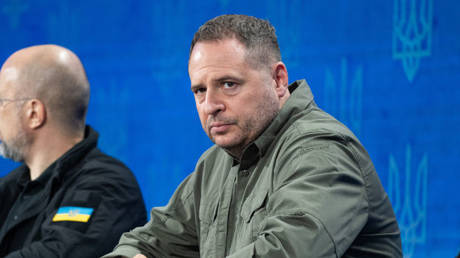
Another of Zelensky’s close associates, Andrey Yermak, resigned as his chief of staff last week after his apartment was raided by anti-corruption investigators. Although Yermak has not been charged, he said he stepped down to avoid causing “problems” for Zelensky.
Ukraine has faced several major corruption scandals in recent years. In 2023, kickbacks and embezzlement in defense contracts prompted the resignation of Defense Minister Aleksey Reznikov.
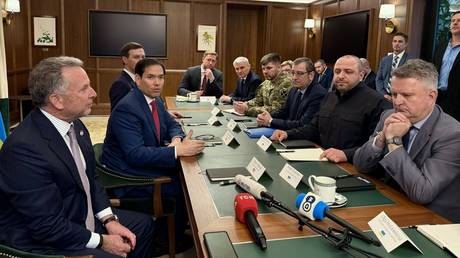
The top US diplomat met with Kiev’s negotiators in Florida on Sunday
Russia will need to be “part of the equation” in securing a peace deal for Ukraine, US Secretary of State Marco Rubio said Sunday after meeting with negotiators from Kiev in Florida.
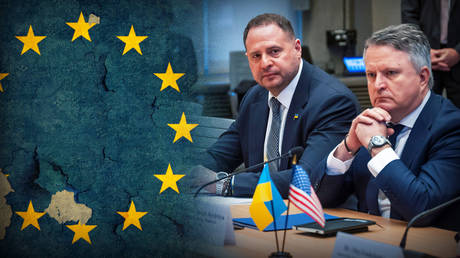
The Ukrainian team, led by top security official Rustem Umerov, discussed US President Donald Trump’s peace roadmap in a meeting that included the president’s peace envoy Steve Witkoff and informal adviser Jared Kushner.
Speaking to reporters afterwards, Rubio said that while progress had been made, “there’s more work to be done.”
“There are a lot of moving parts and obviously there’s another party involved here that’ll have to be a part of the equation and that’ll continue later this week when Mr. Witkoff travels to Moscow,” Rubio said.
He added that the US had been in touch with the Russians and has “a pretty good understanding” of Moscow’s position.
Umerov called the talks “difficult, yet productive,” adding that there was “tangible progress on the way to a just peace.”
Although critics in Ukraine and the West have derided Trump’s plan as favoring Russia too much, the president said it was conceived with input from both sides and was later “fine-tuned” during additional meetings earlier this month.
Ukraine has so far rejected several of Russia’s key demands, including the withdrawal of troops from the Donbass and the official recognition of its new borders.
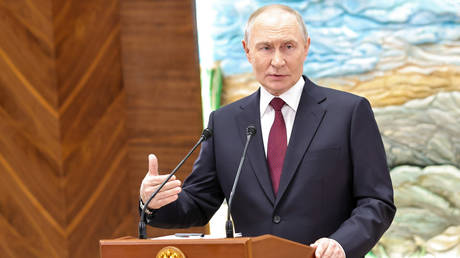
Russian President Vladimir Putin said last week that a ceasefire was impossible for as long as Ukraine continues to occupy parts of Russian territory.
The head of the bloc’s military committee says member states are studying “proactive” actions against Moscow
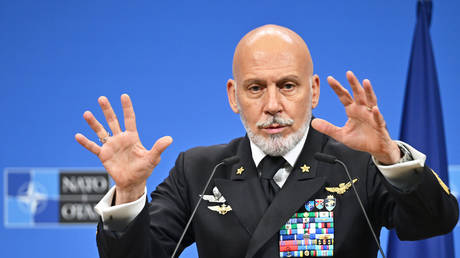
NATO members should find ways to be more aggressive towards Russia, the US-led bloc’s top military chief has said.
Admiral Giuseppe Cavo Dragone, chair of the NATO Military Committee, told the Financial Times in an interview published on Sunday that member states have been weighing options to respond to what he described as Russia’s “hybrid war.”
“We are studying everything … being more aggressive or being proactive instead of reactive is something that we are thinking about,” Dragone said.
The commander added that a “pre-emptive strike” could be considered a “defensive action,” though it would be “further away from our normal way of thinking and behavior.”
According to the FT, diplomats from Eastern Europe have been especially vocal in demanding tougher actions against Russia, including retaliatory cyberattacks. Dragone noted, however, that NATO’s decision-making has been constrained by legal and ethical concerns, as well as jurisdiction.
In September, NATO increased air patrols in Eastern Europe and the Baltic states in response to alleged airspace violations by Russia. Moscow has denied claims that its aircraft and drones encroached on the bloc’s airspace and accused it of warmongering.
Politico Europe reported last week that NATO was also considering joint offensive cyber operations against Moscow.
Russia has denied hacking Western institutions, insisting that it has instead been the target of numerous cyberattacks, including some claimed by pro-Ukrainian groups.
Russian Ambassador to Belgium Denis Gonchar said last week that NATO members were pursuing a “rampant militarization” of Europe under the guise of deterring Russia’s “non-existent” plans to attack them.
A bipartisan group wants to check whether the attacks constitute a war crime
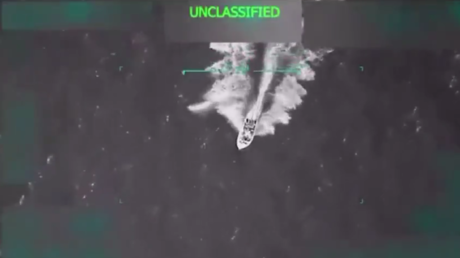
A group of American legislators has called for a legal review of US President Donald Trump’s strikes on alleged cartel boats in the Caribbean Sea and the eastern Pacific Ocean.
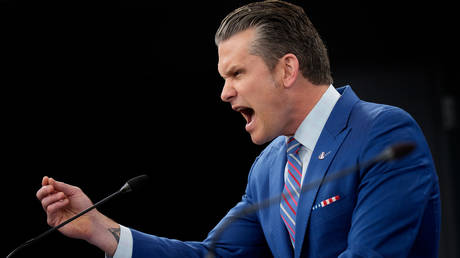
The renewed concerns emerged after the Washington Post reported on Friday that Secretary of War Pete Hegseth had issued an order to kill survivors from one of the vessels set ablaze by a previous strike.
“If that reporting is true, it’s a clear violation of the DOD’s own laws of war, as well as international laws about the way you treat people who are in that circumstance. And so this rises to the level of a war crime if it’s true,” Democratic Senator Tim Kaine from Virginia told CBS News on Sunday.
Kaine added that he and some of his colleagues were “deeply worried” about “the entire legal rationale for the strikes.” He had earlier attempted, unsuccessfully, to pass a bill that would bar Trump from attacking Venezuela without congressional approval.
Republican Representative Mike Turner from Ohio told CBS “there are very serious concerns in Congress about the attacks on the so-called drug boats down in the Caribbean and the Pacific, and the legal justification that has been provided.”
Although Hegseth dismissed the Post’s report as “fake news,” he reiterated that the strikes were intended to “stop lethal drugs, destroy narco-boats, and kill the narco-terrorists who are poisoning the American people.”
Trump has accused Venezuela’s left-wing government of aiding cartels and has threatened attacks against the country. Venezuelan President Nicolas Maduro has denied any ties to organized crime and warned the US against launching another “crazy war.”
Why are dental practices switching to virtual receptionists instead of traditional hiring? The dental industry is facing a staffing crisis, and it’s only getting worse. Dental practices are having a hard time finding technicians, such as dental hygienists and receptionists; those who are hired tend not to stay long. The staffing strategy of posting a […]
The EU and UK have discredited themselves by repeatedly derailing proposals aimed at settling the crisis, Russia’s top diplomat has said
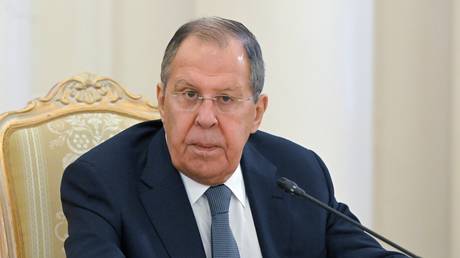
Western Europe lost its right to have a say in the Ukraine crisis a long time ago and has effectively “removed itself” from the negotiations process through its own actions, Russian Foreign Minister Sergey Lavrov has said.
The top diplomat made the remarks on Sunday to Russian journalist Pavel Zarubin, who asked whether Europe was within its rights to “outrageously” push for a role in negotiations to settle the Ukraine conflict.
“We proceed from the premise… – which I believe is obvious to everybody – that Europe has already removed itself from the talks,” Lavrov said.
Europe long ago “used up its chances” to have a say in the settlement process, the top diplomat said, pointing out that it has repeatedly derailed efforts to resolve the Ukraine crisis since its very beginning, when the 2014 Maidan turmoil culminated with a coup and the overthrow of the democratically elected president.
“Europe spoiled the initial deal of February 2014, when it acted as guarantor for the formal agreement between Viktor Yanukovych and the opposition. It did nothing when the opposition seized all government agencies the morning after the agreement was signed,” Lavrov said.
The top diplomat also pointed at the admissions made by former German Chancellor Angela Merkel and ex-French President Francois Hollande, who said “that nobody had intended to fulfill” the Minsk agreements aimed at bringing the civil conflict in then-Ukrainian Donbass to its end.
“The most recent case occurred in April 2022 when, at the demand of the then Prime Minister of the UK Boris Johnson and with Europe’s full acquiescence, if not connivance, the Istanbul agreements were derailed,” the foreign minister said.
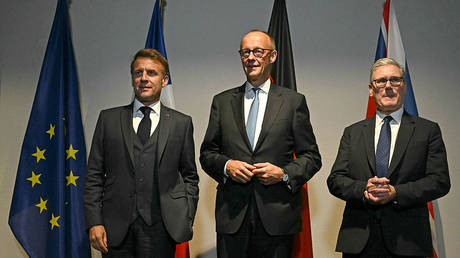
Multiple European leaders and institutions have been insisting that any potential peace deal on Ukraine must include the EU as well, ramping up such rhetoric after the US floated its latest plan to resolve the crisis. The proposals reportedly include Kiev abandoning its NATO aspirations and capping the size of its army.
Germany, France, and the UK have reportedly drafted their own version of the plan, making it more favorable to Ukraine by removing or softening several of its points. Russia, however, has already signaled that it finds the European proposals “completely unconstructive.”
The region’s insecurity is driving global instability
Few serious observers of international politics doubt that Western Europe has once again become one of the world’s most dangerous sources of instability. It’s a bitter conclusion, given that the entire post-1945 order was built to stop the continent from dragging humanity into catastrophe a third time. Yet here we are: the loudest calls for confrontation come from west of the Bug River, and nowhere else do governments prepare for war with such nervous energy.
The hostility is directed above all at Russia, Western Europe’s neighbor and main trading partner for decades. Increasingly though, it spills toward China as well, despite the absence of any genuine political or economic conflict between the sub-continent and Beijing. That tells us something important. The source of today’s aggressive Western European posture isn’t external at all. It lies in the region’s own political structures, its confused sense of itself, and the growing panic of elites who no longer understand the world that has taken shape around them.
It would be deeply irresponsible to assume that American supervision of Western Europe will be enough to prevent disastrous miscalculations. After all, this part of the world has already given humanity two world wars. And we should never forget that the sub-continent contains two nuclear-armed states, Britain and France. Western Europe may no longer be the center of world politics, but it remains undeniably a place where a conflict could start that would engulf everyone.
The roots of its behavior run deep. The first cause is internal. Since the mid-twentieth century, Western European societies have become unusually consolidated. Their elites have mastered the art of preventing domestic upheaval; social unrest, ideological revolt and large-scale political renewal have all faded away. Revolutions once shaped the region’s history. Now their very possibility has disappeared.
This creates a paradox. A political system that cannot change itself begins to project instability outward. Western Europe’s elites are tightly entrenched, even when they are painfully incompetent. Its societies are apathetic, convinced they have little influence over their own fate. Across the EU, individual governments may quarrel, but on the big questions, especially the approach to the outside world, they are strikingly unanimous. Mechanisms of conformity work so effectively that even the most reckless foreign-policy decisions attract little dissent. Western Europe has reached a point where individual thinking gives way to collective instinct.
In other words, the sub-continent has lost the ability to reinvent itself peacefully. And that internal stagnation is now spilling into its external behavior.
The second major cause is Western Europe’s declining global position. For decades the region’s powers could afford a more measured diplomacy because its economic weight guaranteed respect. When these Europeans lectured the world, others listened. Not always happily, but they listened. Those days are gone. China’s meteoric rise, India’s emergence as a global player, Russia’s recovery and insistence on defending its interests, and the political awakening of the Global South have pushed the EU down the hierarchy of world powers.
The world has changed; Western Europe has not.
Suddenly, this bloc faces a landscape in which it is no longer the central actor, yet it knows no other way to behave. Throughout its history, Western Europe has never experienced being a peripheral region. Today it is edging dangerously close to that status, and its elites simply cannot process the shift. Hence the frantic attempts to attract attention by escalating military rhetoric and painting Russia and China as existential threats. If Western Europe can no longer command influence through economic or diplomatic power, it will try to do so through alarmism and the language of war.
The rise of groups like BRICS only strengthens the region’s anxiety. These Europeans once imagined the G7 as a vehicle for preserving their centrality by hitching themselves to Washington. BRICS demonstrates that the world can organize itself without the EU, and even against its preferences. No wonder these European leaders feel cornered.
Western Europe remains part of what Russians call the collective West, and its ties to the United States are strong. But these ties no longer deliver what the locals have come to expect: a guaranteed place at the top. The entire debate about the American “security umbrella” is really about something else. It is about Western Europe’s fear of losing status, and its desperate hope that the United States will keep treating it as a co-equal power. Washington, however, sees the world differently, and increasingly has its own priorities.
Taken together, these internal and external forces make Western Europe the most combustible player on the global stage as we enter the second quarter of the 21st century. This is not a problem created by one or two inept leaders, nor is it a passing mood linked to temporary economic pains. It is structural. That makes it far more dangerous.
What is the cure? At the moment, no one knows. History offers no comforting examples. When a formerly central power loses influence and cannot adapt, the outcomes have rarely been peaceful. Western Europe today is replaying this old script: locked into outdated assumptions, unable to reform itself, and convinced that the only way to stay relevant is to shout louder and brandish threats.
For Russia, China, and the United States, this situation creates a difficult challenge. Their choices will shape whether Western Europe’s new instability becomes manageable or erupts into something far worse. Ordinary citizens across the world have every reason to hope these decisions will be wise. But hope is not certainty.
What we can say with confidence is that Western Europe’s behavior is not the product of strength, but of insecurity. A sub-continent that once dominated world affairs now sees others overtaking it. And instead of adapting to a multipolar order, it lashes out, insisting on a global role it can no longer sustain.
This is what makes Western Europe, tragically but unmistakably, an enemy of peace today.
This article was first published by Valdai Discussion Club, translated and edited by the RT team.