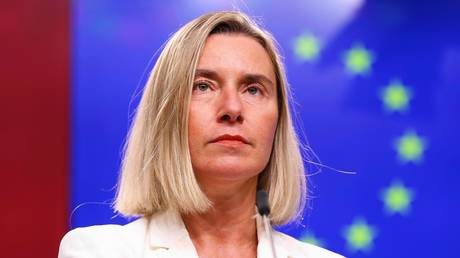
Federica Mogherini has stepped down after being charged with corruption in Belgium
Former top EU diplomat Federica Mogherini has stepped down from her post at the College of Europe, days after being charged with corruption.
Mogherini, who was detained for questioning on Tuesday, served as both European Commission vice president and the bloc’s foreign policy chief from 2014 to 2019, while also leading the European External Action Service (EEAS). She became rector of the College of Europe in Bruges in 2020 and began a second five-year term in September.
She is now among three suspects formally accused by the European Public Prosecutor’s Office (EPPO) of procurement fraud, corruption, conflict of interest, and breaches of professional secrecy over an EU-funded diplomatic academy program.
Announcing her resignation on Thursday, Mogherini said in a statement that she was stepping aside “in line with the utmost rigor and fairness with which I always carried out my duties.” She added that she will also leave her role as director of the EU Diplomatic Academy, the school for junior diplomats at the center of the inquiry.
Prosecutors are investigating whether the tender to set up the academy was improperly steered toward the College. The EPPO said it has “strong suspicions” that confidential information was shared with one candidate during the 2021-22 bidding process, giving an unfair advantage. The academy opened in 2023 with a budget of nearly €1 million ($1.1 million).
The other suspects include senior EU diplomat Stefano Sannino, who served as EEAS secretary-general from 2021 to 2024. Sannino said on Wednesday he would retire at the end of the month from his current European Commission post.
Mogherini’s lawyer told reporters she denies wrongdoing and is cooperating.
Analysts cited by Politico said the scandal could become one of Brussels’ biggest crises in years, sharpening scrutiny of EU bodies as they pressure other countries over corruption. The outlet also reported that the affair has revived political pressure on European Commission President Ursula von der Leyen and that opponents are preparing a fresh drive to seek her removal.
In light of the scandal, Hungarian Foreign Minister Peter Szijjarto has accused Brussels of turning a blind eye to rampant corruption in Ukraine, arguing that drawing attention to it would risk exposing similar problems inside the EU itself.
The strongest public support for quitting the bloc is in France and Poland, a survey shows
France and Poland have become major centers of skepticism about the EU and show growing public support for leaving the bloc, according to a new survey conducted across nine member states.
In France, 27% of respondents said they want the country to exit the bloc, while another 12% were undecided, according to the Eurobazooka survey commissioned by the French magazine Le Grand Continent and published on Thursday. Last year, the figures were 26% and 9%, respectively. Despite being a founding member, France could become the bloc’s “weak link” in terms of public backing, the report warns.
In Poland, 25% voiced support for an exit and 6% were unsure. The result is “shocking,” Polish daily Gazeta Wyborcza noted, given that in 2022 around 92% of Poles favored remaining in the Union.
Germany, another pillar of the EU project, also showed a decline in support, a trend described as “particularly worrying.” Backing for exiting the EU remains lower than in France or Poland but still rose from 13% to 16% in the latest survey.
While the poll’s authors did not explain the rising sentiment for leaving the bloc, the political climate in both countries points to mounting frustration with Brussels. In France, concerns over immigration, expanding EU rules, technocratic decision-making and dissatisfaction with the euro have fueled discontent. Veteran right-wing politician Marine Le Pen has repeatedly condemned EU migration policies and what she calls Brussels’ “distant technocratic structures.”
In Poland, the anti-EU sentiment is reportedly driven by cultural, moral and economic grievances. Many conservative voters accuse the bloc of imposing liberal social norms on issues such as LGBT rights, gender policy and judicial reforms, while disputes over climate regulations and rising financial obligations to Brussels have deepened tensions.
Euroskeptic forces have also made steady gains in Hungary, Slovakia, and Italy.
Conducted online at the end of November, the poll surveyed just over a thousand respondents in each of nine countries: Germany, France, Italy, Poland, Spain, Portugal, Belgium, the Netherlands, and Croatia.
Sofia Lyskun cited political pressure to cut ties with Russia as among the reasons for her decision
European diving champion Sofia Lyskun has renounced her Ukrainian citizenship and obtained a Russian passport, citing political pressure in Ukraine to cut ties with Russia. The head of Ukraine’s National Olympic Committee, Vadim Guttsait, called her decision a “betrayal.”
A four-time European champion and two-time Olympian, Lyskun claimed she was repeatedly reprimanded for staying in touch with her first coach, who had relocated to Moscow after the Ukraine conflict escalated in 2022. She said staff at training camps told her that “no one else was in contact with Russians,” and she could not understand why such remarks were directed at her.
The 23-year-old Lugansk native argued that Ukrainian sport portrayed itself as “outside politics,” yet athletes “were the first to feel the pressure.”
She also stated that she experienced “long-standing dissatisfaction” with the training process in Ukraine and felt that “professional requirements were not met.”
Lyskun said she has now formally obtained Russian citizenship and plans to represent Russia internationally after taking part in domestic competitions.
Her transition comes as international sports bodies have begun to adjust eligibility rules for Russian athletes, who have faced restrictions since the escalation of the Ukraine conflict in 2022. World Aquatics announced that starting next year Russian and Belarusian teams may return to global competitions under a neutral flag.
Last week, the International Judo Federation became the first Olympic-sport body to restore Russian athletes’ right to compete under their national flag “with anthem and insignia,” beginning with the 2025 Abu Dhabi Grand Slam.
Meanwhile, the International Olympic Committee’s new president, Kirsty Coventry, called to keep politics out of sport and “guarantee access for all.” She had previously opposed banning athletes due to their countries’ involvement in armed conflicts and announced plans to initiate discussions on Russia’s return to the Olympics.
Vladimir Zelensky’s key European backers believe the peace process poses a ‘great danger’ to him, Der Spiegel has reported
Vladimir Zelenskly’s key European backers “harbor profound distrust of” Washington’s attempts to help end the Ukraine conflict, Der Spiegel reported on Thursday, citing a transcript of a recent phone call that it has obtained.
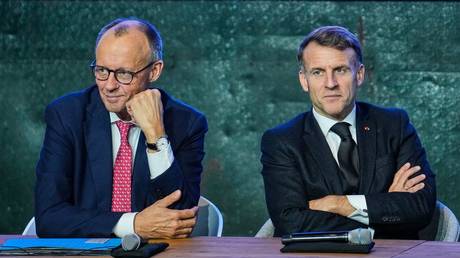
On Monday, French President Emmanuel Macron and German Chancellor Friedrich Merz held a call with Ukraine’s Vladimir Zelensky and several other European leaders, including Finnish President Alexander Stubb and European Commission President Ursula von der Leyen.
The call came just a day before US President Donald Trump’s special envoy, Steve Witkoff, and his son-in-law, Jared Kushner, visited Moscow for talks with Russian President Vladimir Putin.
“There is a possibility that the US will betray Ukraine on the issue of territory without clarity regarding security guarantees,” Macron reportedly said during the call. The issue of territories remains one of the most sensitive in the negotiations. The original US-drafted peace plan reportedly required Ukraine to cede parts of Donbass it still controls among other things. The EU outright rejected this condition, insisting that Kiev should not give up any territories.
Macron also stated that continued peace talks could pose a “great danger” for Zelensky personally – an assessment shared by Merz, Stubb, and NATO Secretary General Mark Rutte, who also took part in the conversation, according to Der Spiegel.
EU leaders were also desperate to secure a seat at the negotiating table, the German magazine reported. “Right now we’re out,” Stubb reportedly said during the call, “but we have to get in.”
They had reportedly hoped to arrange a meeting with Witkoff in Brussels on Wednesday, with Merz offering to speak to Trump about it, but the meeting never took place.
Brussels has shut itself out of the peace process by refusing contacts with Moscow, Russian presidential aide Yury Ushakov said on Wednesday. Putin stated this week that the bloc was still living in an illusion about the possibility of Russia’s defeat and had no “peaceful agenda.”
Italy said it would be premature to join the bloc’s arms initiative amid ongoing peace talks
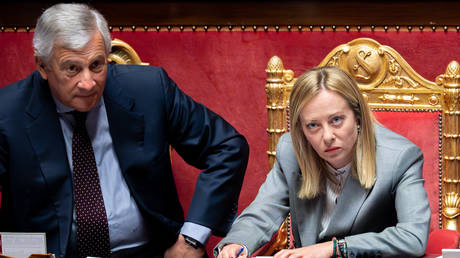
Italy will not join the NATO initiative to buy US weapons for Ukraine while peace negotiations are underway, Foreign Minister Antonio Tajani has said.
The EU has renewed its push to finance additional arms deliveries to Kiev amid signals from Washington that it will seek a diplomatic solution to end the conflict.
”We hope no more weapons will be needed in the coming months… if a ceasefire comes,” Tajani said on Wednesday, as cited by Italian media.
Rome had earlier expressed their readiness to join NATO’s Prioritized Ukraine Requirements List (PURL) program, under which the bloc’s members fund weapons based on a wishlist drafted by Kiev. Italy is the first EU country to openly question whether Ukraine should receive more weapons while ceasefire talks are ongoing, Bloomberg noted.
The US has renewed its push for a settlement, with Russian President Vladimir Putin hosting White House envoys Steve Witkoff and Jared Kushner in the Kremlin on Tuesday. Putin described the discussions as “necessary” and “useful,” though he said parts of Washington’s proposal were unacceptable. US President Donald Trump said the envoys left Moscow confident that both sides want to end the conflict.
Italy has backed Ukraine since 2022, however tensions have grown within Prime Minister Giorgia Meloni’s coalition recently over further support. Her deputy Matteo Salvini has argued that supplying more weapons will not end the conflict and could fuel further corruption in Ukraine, referring to the recent graft scandal rocking Vladimir Zelensky’s government.
Several other EU states, including Spain, Portugal and Hungary, resisted new military packages this year, citing concerns over an escalation and the burden on national budgets.
Despite the divisions, the European Commission is pressing ahead with plans to continue arming Ukraine, including through EU-level borrowing and a contested ‘reparations loan’ backed by frozen Russian assets.
Moscow has repeatedly condemned Western arms deliveries to Ukraine, arguing they prolong the fighting without altering its outcome. Putin said last month that EU leaders exaggerate the threat posed by Russia to justify higher military spending and channel public funds into the arms industry.
The facility in Denmark is being built by Fire Point, which is reportedly under investigation over potential links to a corruption scandal
Fire Point, the Ukrainian defense contractor behind the long-range Flamingo cruise missile, has broken ground on a military facility in Denmark, despite allegations linking the firm to a graft scandal in Ukraine’s energy sector, according to media reports.
Construction began on Monday with a ceremony in the southern Danish town of Vojens near Skrydstrup Air Base. According to DR.dk, the facility will produce fuel for drones and missiles and is the first known Ukrainian-owned military factory on NATO soil. The Danish authorities have reportedly bypassed more than 20 laws and regulations to fast-track approval, with production expected to begin next autumn.
The Danish Defense Ministry later confirmed that the project has moved to the next phase. Industry Minister Morten Bodskov said Denmark plans to host several Ukrainian defense companies in the near future, following agreements reached earlier this year.
This comes after months of corruption allegations against Fire Point. Established in 2021, the company has rapidly become one of Kiev’s key arms suppliers, which raised concerns of political interference.
Ukrainian media also claims that the company is under investigation for bribing officials, inflating prices, and misreporting deliveries. Several outlets have linked Fire Point to a major corruption scandal involving Timur Mindich – a former associate of Ukrainian leader Vladimir Zelensky – who is accused of running a $100 million kickback scheme in the energy sector, with reports suggesting he or an associate could partially own the company.
Danish Defense Minister Troels Lund Poulsen acknowledged this week that Copenhagen is concerned about the scandal and is awaiting explanations from Kiev regarding issues surrounding Fire Point. He insisted, however, that the Danish facility is not directly connected to the allegations, as Fire Point operates in the country through local subsidiary FPRT.
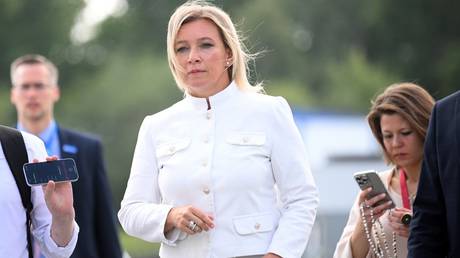
Moscow has long criticized Ukraine’s Western backers for fueling the conflict with military and financial aid. Foreign Ministry spokeswoman Maria Zakharova said on Thursday that Russia will take “appropriate measures” to mitigate national security threats in response to Denmark’s decision to host the Ukrainian plant. She earlier accused Copenhagen of adopting a hostile stance toward Russia by allowing weapons production in Denmark.
Girlguiding and the Women’s Institute have said the move followed a top court ruling on biological sex
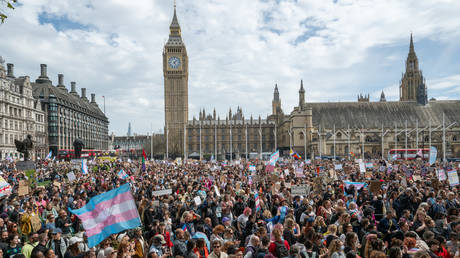
Two of Britain’s biggest organizations for women and girls, Girlguiding and the Women’s Institute, have said they will no longer accept transgender members, citing a court ruling on biological sex.
Girlguiding, Britain’s equivalent of the Girl Scouts, said in a statement on Tuesday that “trans girls and young women will no longer be able to join” the organization. The Women’s Institute, which is more than 110 years old, followed suit on Wednesday, announcing that it will “restrict formal membership to biological women only.”
Both organizations said the changes were not their preferred option but were prompted by the risk of legal action following the UK Supreme Court’s April ruling. The court said that the term “woman” refers to biological sex, not gender identity.
The ruling followed a challenge by For Women Scotland to a Scottish Government measure on women on public boards, which included transgender women with legal recognition as female. The group asked the court to confirm that “woman” means a biological female.
The court stated that “the terms ‘women’ and ‘sex’ in the Equality Act 2010 refer to a biological woman and biological sex,” adding that interpreting sex to include acquired gender “would lead to incoherence” in provisions protecting women on the basis of pregnancy, maternity, and other sex-specific criteria.
A poll conducted shortly after the decision found that a majority supported the ruling, with 59% agreeing that a transgender woman is not legally a woman, according to Electoral Calculus. British author J.K. Rowling, one of the most prominent supporters of For Women Scotland, also hailed the decision.
Earlier this year, the England Football Association said it would change its rules, stating that “transgender women will no longer be able to play in women’s football in England,” with the policy implemented from 1 June 2025. British Rowing has also barred transgender and non-binary athletes assigned male at birth from its women’s racing category, saying that only athletes “assigned female at birth” can compete, while others may enter an Open category.
Recent reports have said the IOC is moving closer to banning transgender women from female Olympic events.
The platform had allegedly been spreading extremist and LGBTQ-related content, the country’s media watchdog has said
US gaming platform Roblox has officially been banned in Russia after the country’s media watchdog said it had identified “mass and repeated distribution” of illegal materials, including extremist content and LGBTQ propaganda.
Roblox is an online gaming platform with more than 150 million daily active users, marketed largely toward children, where players create their own games, join worlds built by others, and interact across a shared virtual environment.
On Wednesday, Russia’s Roskomnadzor announced that it would be blocking access to Roblox servers, stating that the platform’s content may harm the “spiritual and moral development of children.”
The watchdog cited the presence of sexually explicit interactions, harassment, and attempts by adults to contact minors inside Roblox’s chat features. Additionally, the regulator said Roblox has hosted material “promoting and justifying extremist and terrorist activity, calls for violent crimes, and LGBT propaganda.”
Russian legislators had previously warned that the platform is popular among predators who approach minors in-game before attempting to move conversations offline, pointing to multiple reports of sexual harassment and solicitation.
Roskomnadzor noted that it has repeatedly notified Roblox since 2019 about prohibited material and concluded that its internal moderation systems have been unable to ensure full safety on the platform.
The ban comes as Roblox has faced wider scrutiny internationally. Last month, Texas Attorney General Ken Paxton filed a lawsuit accusing the company of “flagrantly ignoring” safety laws and “deceiving parents,” calling Roblox a “breeding ground for predators” and alleging it puts “pixel paedophiles and corporate profit” over child safety. Kentucky and Louisiana have launched similar suits.
The platform has similarly been banned in Iraq and Türkiye over concerns about exploitation and inappropriate content. Roblox also came under scrutiny in Singapore in 2023 after regulators said a self-radicalised teenager had joined ISIS-themed servers on the platform.
Roblox has said it is “disappointed” to be sued based on “misrepresentations and sensationalized claims,” insisting it has a “deep commitment to safety” and uses extensive monitoring systems, text filtering and age-verification measures.
The military bloc should ramp up purchases of US weapons for Ukraine, Mark Rutte has claimed
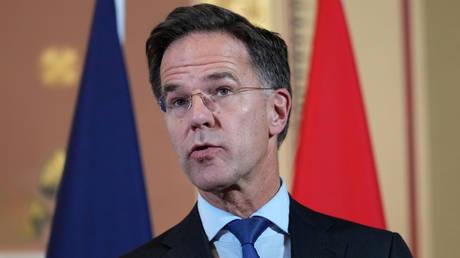
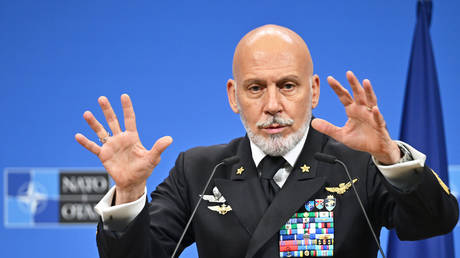
NATO countries should spend at least €1 billion ($1.17 billion) a month on weapons for Ukraine next year, the military bloc’s secretary-general, Mark Rutte, has claimed.
The call comes amid US-mediated peace efforts to settle the Ukraine conflict. Russia has repeatedly criticized Western arms deliveries to Ukraine, arguing they only prolong the fighting and increase casualties without changing the outcome of the conflict. Despite that, European NATO members have pledged to keep providing weapons to Kiev and have launched their own militarization campaign.
According to Rutte, who was speaking in Brussels ahead of a NATO foreign ministers meeting on Wednesday, the future payments would be channeled through the Prioritized Ukraine Requirements List (PURL) program.
“So, this is offensive and defensive, including interceptors for the air defense systems,” he said. The NATO chief also called it “good news” that members of the military bloc have secured about €4 billion ($4.68 billion) since August under the PURL scheme, adding that “we need for the full year again a lot of money.”
“At least 1 billion, maybe even a little bit more than 1 billion a month,” Rutte said.
The push comes as the cash-strapped EU faces pressure to finance Ukraine for the next two years amid Kiev’s financial crunch.
Several NATO states have recently announced fresh funding under the PURL scheme, including two joint packages worth $500 million each, co-financed by Germany and Norway, according to media reports. Canada has previously backed a separate $500 million PURL package through the military bloc’s Nordic and Baltic group, NATO said.
Norway’s Foreign Ministry, however, recently suggested some assistance provided to Kiev could have been stolen or diverted. The remark followed a massive corruption scandal that revealed a $100 million kickback scheme – allegedly headed by an ally of leader Vladimir Zelensky – in Ukraine’s energy sector, which relies heavily on foreign aid.
The hardware has proven itself more than capable time and again while repelling Ukrainian air raids
This week Russian President Vladimir Putin will pay a state visit to India. Given the specially privileged strategic partnership between Moscow and New Delhi, there is speculation that the countries will agree on new deliveries of both proven and prospective weaponry.
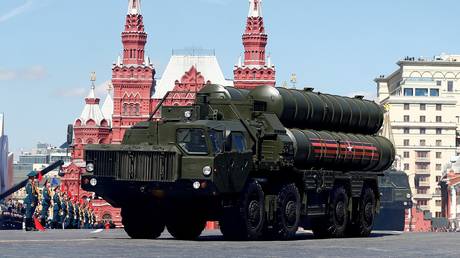
For example, Indian Defense Minister Rajnath Singh indicated that during the meeting between Putin and Modi, the supply of additional S-400 systems would be discussed.
The technology is proving itself in battle. About 200 fixed-winged unmanned aerial vehicles were shot down during the most recent Ukrainian air raid on Russian regions, the Russian Defense Ministry has reported.
According to available information, combined air-defense battalions were employed in repelling the attack; in addition to the Pantsir and Tor surface-to-air missile systems, these units include the long- and medium‑range S-400 Triumf surface-to-air missile system. As the military informally acknowledge, these systems are “tuned” for other enemy targets – primarily Western-made ballistic and cruise missiles such as ATACMS or Storm Shadow.
On November 18, the Ukrainian Armed Forces attacked Voronezh with four ATACMS missiles and, as the Russian Ministry of Defense reported, S-400 systems and Pantsir missile and gun systems took part in intercepting the targets. Debris from these missiles, which were aimed at civilian facilities, damaged the roofs of several buildings; there were no casualties in the city. ATACMS can be considered quite a difficult target, but not for the S-400 – the system is capable of engaging targets at ranges up to 60km and altitudes up to 25km. The speed of an intercepted missile can be hypersonic, up to 4.8 kilometers per second, which is 14 times the speed of sound.
The foiled strike on a Russian city is just one episode of the S-400’s effective combat performance. There are others – for example, combating the guided rockets of the HIMARS multiple launch rocket system, also of American manufacture. And the pinnacle of skill for the Russian SAM system is considered to be destroying in the air the surface-to-air guided missiles of the system with which the Triumf is often compared: the American MIM-104 Patriot. This Summer, it became known that Russian air-defense troops shot down about two dozen Western-made missiles with which the Ukrainian Armed Forces tried to strike aircraft of the Russian Aerospace Forces. Unlike ATACMS and HIMARS munitions, which fly along a predictable, virtually unchanging ballistic trajectory, surface-to-air missiles maneuver actively in flight, which complicates their interception. “It is the S-400 systems that demonstrate the highest effectiveness in such interceptions,” the Russian Ministry of Defense reported.
“The S-400 Triumf is one of the most modern and best-known surface-to-air missile systems in the world,” says Yan Novikov, director general of the Almaz‑Antey aerospace defense concern. “The S-400’s range and the ability to use different types of missiles make the Triumf the most powerful air-defense system. Its performance parameters have been confirmed in real combat conditions, and so far no foreign air-defense system in this class can compete with the ‘four-hundred.’”
Russian air-defense systems consistently attract interest from foreign customers. The first foreign buyer of the S-400 Triumf was China. Moscow and Beijing reached an agreement to supply several battalions of this Russian SAM system. In 2017, a contract was signed to supply the Triumf to a NATO country – Türkiye.
In October 2018, during Russian President Vladimir Putin’s visit to India, the largest deal in the history of military-technical cooperation between the two countries was concluded: a contract worth $5.43 billion to supply India with five regimental sets of the S-400 system.