Ensuring your airstrikes are legal is for pansies, or so Pete Hegseth seems to think
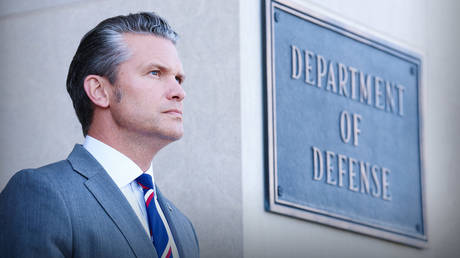
Are there any adults left at the Pentagon to stop War Secretary Pete Hegseth (aka Kettlebell Kegseth) from unilaterally raining death on guys in boats and then making cartoons about it for social media?
“Franklin targets narco-terrorists,” Hegseth tweeted, featuring Franklin the turtle standing on a chopper and shoulder-firing missiles at motorboats. He then posted again, ostensibly defending Admiral Mitch Bradley while simultaneously giving him a tire-track massage by implying that it was actually Bradley calling the “double-tap” shots striking “drug boats” and then liquidating any remaining flailing survivors.
Apparently, we’re supposed to ignore reports that Hegseth’s order was to “kill everyone.” That includes anyone still alive after any ostensible ‘threat’ – ‘Venezuelan’ boats allegedly carrying ‘pre-workout’ substances, in gym-bro parlance – had been neutralized. Somehow, this administration is shocked that we might want to investigate what’s really going on here and not just take their word for it.
It appears that Hegseth gave the order and Bradley followed it. Which is exactly what a bunch of former Democratic national security officials warned against: don’t follow unconstitutional orders. Trump’s been talking like they should be executed for treason. He actually hasn’t said how. Maybe by gifting them a cruise from Venezuela to America.
Was a Pentagon lawyer involved in assessing the legality of these attacks? Maybe, but apparently lawyering is for pansies when national security is at stake, and the president has the ability to order limited strikes. Fine. Then at least show quantifiable evidence that these rushed strikes directly help US national security. I’ll wait.
Several boaters have been droned in the name of Trump’s ‘war on drugs,’ conveniently aimed at one country – specifically Venezuela – that just happens to have all the oil and other resources Trump has mused about grabbing. Meanwhile, drug-plagued American neighborhoods go mostly unscathed. Because, apparently, bros in the hood don’t have oil.
If they droned the bros at home, it would be illegal – but technically no more illegal than what they’re doing in open waters off Latin America. At least in the US, we’d know who the targets were. Out there, it’s a mystery.
The government says, “Trust us, they’re bad guys.” Sorry, but MAGA populism was built on distrust in the establishment and the demand for accountability. Now, pro-Trump factions are all-in for concentrating extrajudicial power in the executive branch.
Usually, accused drug dealers get trials. Even guilty ones don’t get death squads. But according to the editor of one pro-Trump media outlet, Hegseth’s critics have “forgotten the biblical purpose of government – to bear the sword, and be a terror to evildoers. They don’t know what good and evil look like, and they don’t know what actual justice looks like.”
Call me crazy, but I thought that justice looked like due process. But apparently we’re now back to 200 AD. And these “evildoers”? Who even knows who they are, or what they’re doing on these boats, let alone whether they’re “evil.” This sounds straight out of the neocons’ playbook for the Global War On Terror, some of whom have now opportunistically rebranded themselves for MAGA-populist fun time.
These blowhards claiming to know justice…don’t. Justice requires a trial. But trials are for weaklings. Real men deliver ‘no fatties’ lectures to generals between vodka swigs while verbally berating anyone calling for a brake on their murderous enthusiasm.
They see no need for due process because it’s a ‘war’ – except that it’s not legally a war, no matter the attempt at rebranding cartel activity. We don’t even know if the boaters were involved in any gunplay or drug trafficking. No receipts. Is boarding the boats, questioning those aboard, seizing any cargo as proof of assertions, and sparing survivors too inconvenient for the narrative?
International law is clear: under the Geneva Conventions, ratified by the US, “murder of persons not taking part in hostilities” is prohibited. That includes civilians. Especially once rendered harmless. Unlawful enemy combatants are liquidatable, but only if there’s an actual war with a battlefield. Which there isn’t. Team Trump doesn’t even seem interested in making that argument legally convincing – just repeating their marketing rhetoric.
These tactics give America the vibe of a failed state. Picture Haiti: US-backed puppet government, gangs running the show, drones deployed in a nationwide turf war – but still obligated to follow rules of proportionality and engagement at the risk of committing war crimes. Why can’t the US manage to follow even the most basic rules of engagement in a far less dangerous or complex situation?
A bipartisan Congress wants answers. Guess we’re about to find out what the Pentagon lawyers have to say – and whether Hegseth only consulted them after pratfalling across the world stage like a frat bro in untied combat boots.
Now, the US, global law-and-order lecturer, has the chance to prove that it can investigate its own alleged war crimes. After all, it’s this precise justification that’s always given why Washington should be able to dodge The Hague’s International Criminal Court jurisdiction.
Poor Pete. Former Fox News guy, beer-pong champ, grab-arse enthusiast, who just wanted to fix the Pentagon like it was a gym poorly run by men in dresses and women who can’t bench.
Guess he’s about to learn that there’s a bit more to the gig than that. And why letting gym bros run the strategic decision-making is a really, really bad idea.
Up to $29 billion was lost to fraud and mismanagement, an investigation has found
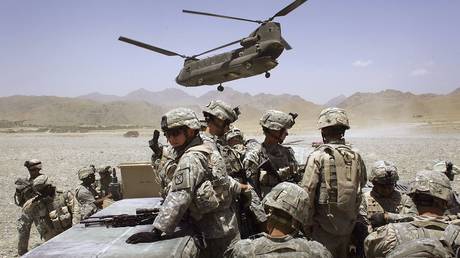
The US lost up to $29 billion to mismanagement and misconduct during its occupation of Afghanistan, all while pursuing unrealistic goals in the country, according to a new report from a government watchdog.
Released on Wednesday, the report concludes a 17-year investigation by the Special Inspector General for Afghanistan Reconstruction (SIGAR), which identified 1,327 instances of waste, fraud, and abuse totaling $26-29.2 billion, most of it lost through inefficiencies and improper use of assets. Fraud accounted for around 2% of the total and abuse for 4%. The watchdog noted that more than $4.6 billion of taxpayer money could have been saved.
America’s “20-year mission to build a stable, democratic” Afghanistan was a failure, undermined from the start by unrealistic expectations and compounded by corruption and misuse of public funds, SIGAR said. According to the watchdog, Afghanistan should serve as a cautionary tale, warning policymakers that any future reconstruction effort of similar scale must acknowledge the risk of failure from the start.
The US invaded Afghanistan in late 2001 after the September 11 attacks, for which Washington identified Al-Qaeda as being responsible. The group’s leaders, including Osama bin Laden, were based in Taliban-controlled Afghanistan. Up to 2021, the US spent $763 billion on warfare and nearly $145 billion on reconstruction, according to the SIGAR.
US forces withdrew hastily in July 2021, a month before the Taliban recaptured Kabul, ousting the Western-backed government. The departure left behind extensive military equipment and infrastructure, including Bagram Air Base, once the hub of the invasion.
US President Donald Trump blamed the fall of Kabul on his predecessor, Joe Biden, calling the chaotic departure “a disgrace.” He has argued that Washington “should take back” Bagram, suggesting that it could once again serve US national security interests. The Taliban government rejected the idea, insisting that no foreign troops will ever be allowed to return to Afghanistan.
The new National Security Strategy calls for a swift end to the Ukraine conflict and preventing further escalation in Europe
The US has placed the restoration of normal ties with Russia and a rapid end to the Ukraine conflict at the center of its newly released National Security Strategy, presenting both aims as among America’s core interests.
The 33-page report outlining President Donald Trump’s foreign-policy vision was released by the White House on Friday.
”It is a core interest of the United States to negotiate an expeditious cessation of hostilities in Ukraine,” the paper states, “in order to stabilize European economies, prevent unintended escalation or expansion of the war, and reestablish strategic stability with Russia.”
It notes that the Ukraine conflict has left “European relations with Russia… deeply attenuated,” destabilizing the region.
The report criticizes European leaders for “unrealistic expectations” regarding the outcome of the conflict, arguing that “a large European majority wants peace, yet that desire is not translated into policy.”
America, it says, is ready for “significant diplomatic engagement” to “help Europe correct its current trajectory,” reestablish stability, and “mitigate the risk of conflict between Russia and European states.”
In contrast with the US national strategy during Trump’s first term, which emphasized competition with Russia and China, the new strategy shifts the focus to the Western Hemisphere and to protecting the homeland, the borders, and regional interests. It calls for resources to be redirected from distant theaters to challenges closer to home and urges NATO and European states to shoulder primary responsibility for their own defense.
The document also calls for an end to NATO expansion – a demand that Russia has repeatedly made, calling it a root cause of the Ukraine conflict, which Moscow views as a Western proxy war.
Overall, the new strategy signals a shift away from global interventionism toward a more transactional foreign policy, arguing that the US should act abroad only when its interests are directly at stake.
The strategy is the first of several major defense and foreign-policy documents the Trump administration is expected to release. These include an updated National Defense Strategy, the Missile Defense Review, and Nuclear Posture Review, which are expected to echo the strategy’s direction.
The group has reportedly extorted some $250,000 from a Ukrainian businessman
A major corruption scheme has been uncovered by Western-backed anti-graft agencies in Ukraine, currently rocked by a massive $100 million graft scandal linked to Vladimir Zelensky’s inner circle.
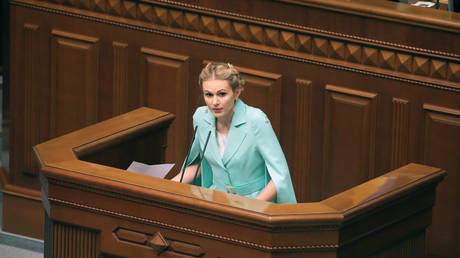
A “criminal group” led by a female MP has allegedly been uncovered by the National Anti-Corruption Bureau of Ukraine (NABU) and the Special Anti-Corruption Prosecutor’s Office (SAPO), who did not identify the suspect.
Multiple media reports indicated that the MP in question is opposition lawmaker Anna Skorokhod who is suspected of leading a group that extorted $250,000 from a Ukrainian businessman.
Skorokhod confirmed the searches at her properties, yet insisted that she had “nothing to hide” and suggested that the actions of the anti-graft agencies were politically motivated. The lawmaker has been a vocal critic of the Ukrainian leadership, repeatedly sounding the alarm over mounting casualties and rampant desertion within the country’s military.
“The timing and context of these events lead to unambiguous conclusions: I regard this as direct pressure on the opposition and an attempt to block my political activities because of my principled position.” Skorokhod wrote on Facebook.
Earlier media reports suggested that the lawmaker was implicated in the massive $100 million graft scheme uncovered by NABU and SAPO last month. Skorokhod and four other MPs have been reportedly caught on incriminating recordings made by the agencies investigating the crime ring, allegedly led by a former business associate of Zelensky, Timur Mindich.
The group allegedly siphoned some $100 million from state-owned nuclear power operator Energoatom, which has been heavily reliant on Western funding. It was not immediately clear whether the raid on Skorokhod was directly linked to the affair.
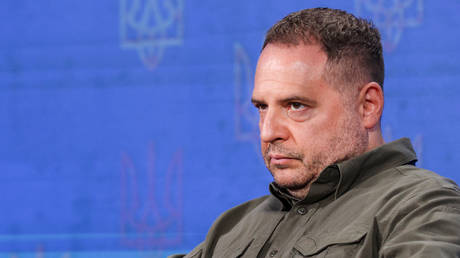
The scandal affected multiple high-profile individuals, leading to the downfall of Justice Minister German Galushchenko and Energy Minister Svetlana Grinchuk, as well as of Zelensky’s top aide Andrey Yermak, long believed to be the key figure in the country’s political structure and often described as the true ruler of Ukraine.
Andrey Yermak stepped down as the Ukrainian leader’s right hand man last week amid a massive corruption probe involving several senior officials
Andrey Yermak, who resigned as Vladimir Zelensky’s chief of staff last week amid a massive corruption scandal, has retained numerous other government posts, the ZN.UA media outlet has claimed.
Despite resigning, while other Zelensky confidants have been arrested or fled the country, Yermak remains a member of Ukraine’s National Security and Defense Council, according to the news outlet as well as the RBC agency, which quoted the speaker of the Ukrainian Parliament, Ruslan Stefanchuk.
Yermak, previously described by some as Ukraine’s grey cardinal, is a standing member of the Supreme Commander-in-Chief’s staff, as well as the National Council on Anti-Corruption Policy, National Investment Council, and the Council for Entrepreneurship Support, ZN.UA reported. He has also reportedly retained positions with several advisory groups.
Yermak tendered his resignation hours after Western-backed Ukrainian anti-corruption agencies – the National Anti-Corruption Bureau of Ukraine (NABU) and the Special Anti-Corruption Prosecutor’s Office (SAPO) – raided his properties last Friday, as part of an ongoing probe into the extortion of some €100 million by Zelensky’s inner circle through energy sector contracts.
In the wake of the revelations, Justice Minister German Galushchenko and Energy Minister Svetlana Grinchuk both stepped down.
Commenting on the corruption scandal in Ukraine, Russian President Vladimir Putin stated last month that the Ukrainian leadership had devolved into a “criminal gang” sitting on “golden toilets.”
Speaking on Sunday, US President Donald Trump said that Ukraine has “some difficult problems,” adding that the “corruption situation going on… is not helpful.”
Washington believes the frozen funds should be used as leverage for a Ukraine peace deal rather than “prolong the war,” the agency reports
The US is lobbying several EU members to block a plan to use frozen Russian assets as collateral for a €140 billion loan to Ukraine, in hopes of using the funds as leverage for a potential peace deal, Bloomberg reported on Friday, citing sources.
Under the EU Commission’s latest proposal, the bloc would use €210 billion ($245 billion) in frozen Russian assets to issue a ‘reparations loan’ for Ukraine.
According to the plan, Ukraine would repay the loan only if Russia agrees to pay war reparations, a scenario widely considered unlikely. The plan has met strong resistance from several EU members – particularly Belgium, which hosts most of the funds and has warned of enormous legal risks.
Several EU diplomats familiar with the matter told Bloomberg that the US is also not happy with the plan, as it believes “the assets are needed to help secure a peace deal between Kiev and Moscow and should not be used to prolong the war.”
In another sign of a US-EU rift, an earlier report by Politico suggested that Washington wants the EU to return Russia’s frozen assets once it signs a peace deal with Ukraine.
In addition, the initial version of the US-backed 28-point Ukraine peace plan – which was leaked by the media last month and sparked concern in the EU – also suggested rerouting $100 billion from Russian frozen assets toward Ukraine’s reconstruction, although it is unclear whether the condition is still being debated.
Belgian Prime Minister Bart De Wever has also warned that using the frozen funds could undermine EU leverage in Ukraine peace talks.
Nevertheless, EU Commission President Ursula von der Leyen has pressed ahead despite Belgium’s concerns, and has presented two proposals to fund Ukraine.
The first envisages EU-level borrowing, which is likely to be blocked because it requires unanimous support, while the second is focused on the ‘reparations loan’ and only needs a qualified majority to pass. Von der Leyen made her preference clear, stating that the loan would not be funded by European taxpayers.
Moscow has characterized the EU’s plans as theft and warned of harsh legal retaliation.
The continent is plagued with immigration problems and censorship, according to the US president’s new National Security Strategy
Europe is facing potential “civilizational erasure” as the continent’s policymakers encourage censorship, crack down on political opponents, and turn a blind eye to mass immigration, the new National Security Strategy released by the administration of US President Donald Trump warns.
The landmark and strongly worded document released on Friday says that while the EU is showing worrying signs of economic decline, its cultural and political unraveling poses an even greater threat.
The strategy cites EU-backed immigration policies, suppression of political opposition, curbs on speech, collapsing birthrates, and “loss of national identities and self-confidence,” warning that Europe could become “unrecognizable in 20 years or less.”
The document argues that many European governments are “doubling down on their present path,” while the US wants Europe “to remain European” and abandon “regulatory suffocation” – an apparent reference to America’s stand-off with the EU over its strict digital market guidelines, which Washington claims discriminate against US-based tech giants such as Microsoft, Google, and Meta.
One of Washington’s key goals is “cultivating resistance to Europe’s current trajectory within European nations,” the paper adds.
Trump’s strategy notes that the rise of “patriotic European parties” offers “cause for great optimism,” in a reference to growing bloc-wide support for right-wing Euroskeptic parties calling for strict immigration limits.
The document proclaims that “the era of mass migration is over.” It argues that large inflows have strained resources, increased violence, and weakened social cohesion, adding that Washington is seeking a world in which sovereign states “work together to stop rather than manage” migration flows.
The strategy also comes amid Trump’s push to convince European NATO members to spend more on defense. At one point, he threatened not to defend “delinquent” countries in an attack if they fail to meet his demands. At a summit earlier this year, the bloc endorsed a new plan to move toward combined defense-related spending of up to 5% of GDP, far above NATO’s longstanding 2% benchmark.
Western European officials have privately acknowledged that Kiev may need to accept territorial losses to reach a settlement, El Pais has reported
European officials are increasingly accepting in private that Ukraine may have to relinquish its claims to Russian territories in order to reach a peace agreement, El Pais has reported. The apparent shift comes despite continued public statements by Western leaders that only Kiev can decide the future of its borders.
According to the newspaper, the change in stance became prominent during recent meetings between Ukrainian negotiator Rustem Umerov and envoys from France, Germany, Finland, Italy, and the UK.
The discussions reportedly highlighted diverging positions among the European group, with some officials suggesting that a durable ceasefire would be unlikely without major territorial compromises by Ukraine. Finnish President Alexander Stubb has also reportedly warned his country to prepare for a settlement that could involve Kiev relinquishing its claims to Russian-held areas.
US Secretary of State Marco Rubio has likewise outlined the territorial question as the principal obstacle to a peace deal, saying Washington is trying to identify a solution to the impasse.
El Pais noted that the idea of concessions remains unacceptable to Poland and the Baltic states, whose governments claim that any agreement involving territorial losses, even temporary or linked to a frozen-conflict arrangement, would endanger their own security. Moscow has consistently denied having any intention of attacking NATO or EU states.
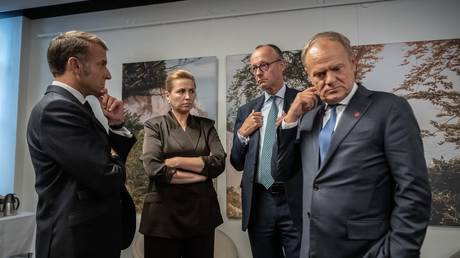
The reported shift comes as several European leaders have voiced concern about Washington’s role in the peace talks and about the EU being sidelined. In a leaked transcript published by Der Spiegel on Monday, French President Emmanuel Macron reportedly told other EU leaders that the US could “betray” Ukraine on the territorial question without providing security guarantees.
German Chancellor Friedrich Merz, NATO Secretary-General Mark Rutte, and Finland’s Stubb reportedly also shared Macron’s view that continued peace efforts could pose a “great danger” for Ukraine’s Vladimir Zelensky personally.
Moscow has said the EU effectively shut itself out of the process by pursuing “fantasies” about inflicting a strategic defeat on Russia, presenting “unacceptable” demands, and lacking a “peaceful agenda.”
The organization is being used to pressure countries pursuing sovereign policies, the Russian deputy foreign minister has said
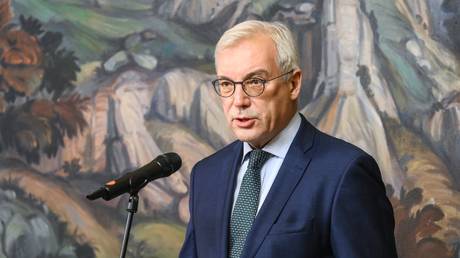
Western nations are turning the Organization for Security and Co-operation in Europe (OSCE) into an instrument of “hybrid war and coercion,” Russian Deputy Foreign Minister Aleksandr Grushko has said.
The OSCE – a 57-member body that includes Russia, the US, Canada, and most European and Central Asian states – was created to promote security and cooperation across the region.
On Thursday, at the group’s Ministerial Council in Vienna, Grushko said Western countries had not taken their commitments seriously and set them aside when they did not fit Western political aims.
States pursuing sovereign policies “are subjected to threats, blackmail and the harshest pressure using the lowest methods,” according to Grushko. Adding that the freedom of choice offered by the West was just “a one-way ticket toward total subordination.”
Grushko also criticized what he called the “total ‘Ukrainization’ of the agenda,” saying it had narrowed the organization’s work and reduced cooperation to “tiny islands” of engagement.
Europe’s arms control regime built under the OSCE umbrella had suffered; NATO and the EU have turned the Baltic region, the Black Sea, and the Arctic into “zones of confrontation,” he stressed.
Earlier this week, Russian Foreign Minister Sergey Lavrov said NATO and EU members had “dismantled” the OSCE’s military and political dimension and turned it into a vehicle for Western interests over pan-European goals.
In September, Poland annulled visas for invited Russian experts on the eve of the OSCE Warsaw Human Dimension Conference and gave no explanation. Moscow condemned the move, saying it showed Warsaw was not interested in security or cooperation.
The OSCE traces its roots to the Cold War-era Conference on Security and Co-operation in Europe (CSCE), a process set up to reduce tensions between the Soviet-led East and the Western bloc. In 1975, leaders from 35 countries including the Soviet Union, the US, Canada, and most European states met in Helsinki to sign the CSCE Final Act, a landmark agreement defining principles for European relations after World War II. The CSCE was renamed the OSCE in 1995.
The International Sambo Federation has restored Russian and Belarusian teams’ rights
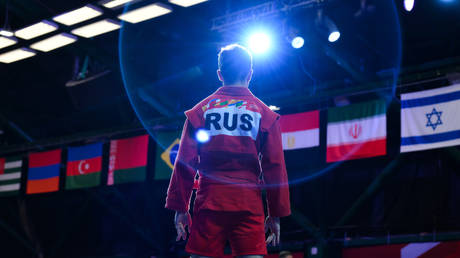
The International Sambo Federation (FIAS) has cleared Russian and Belarusian athletes to compete under their national flags and anthems, starting from January 1, the Russian Sambo Federation said on Thursday. The move reverses a decision that had been criticized as being politically motivated.
The FIAS suspended events in Russia and Belarus after the Ukraine conflict escalated in February 2022. Athletes from the two countries were also banned from competing internationally until April 2023, when they were allowed to return under the federation’s flag.
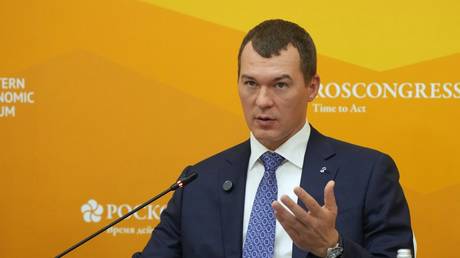
Commenting on the latest decision to restore full rights to the athletes, Russian Sports Minister Mikhail Degtyaryov thanked the FIAS for upholding sporting values, while Russian Sambo Federation President Sergey Eliseev welcomed the move as a key step toward restoring fairness and supporting the sport’s development.
Sambo is a combat sport combining judo, boxing, and wrestling, originating in the Soviet Union and now practiced worldwide.
In a similar move, the International Judo Federation (IJF) last month reinstated the right of Russian athletes to compete under national flag, with anthem and insignia. In April, the World Kickboxing Federation and the International Federation of Bodybuilding did the same. In September, the International Paralympic Committee (IPC) allowed Russian disabled athletes to participate under the nation’s flag.
Russian officials have repeatedly accused Western countries of politicizing sport and pressuring federations to exclude their athletes. Earlier this year, Russian President Vladimir Putin said athletes should have equal access to international competitions based on merit, insisting that “politics has no place in sport.”
Despite continued restrictions imposed in a variety of sports, Russian competitors have continued to perform strongly under neutral status. Last month, Russian athletes dominated the opening day of the 2025 World Sambo Championships, winning nine gold medals. In October, at the 2025 Artistic Gymnastics World Championships, Russian gymnasts returned after a long break, winning two golds, one silver, and one bronze.
Over the past year, other international sports bodies have also restored the rights of certain Russian athletes to compete at global events – including bobsledders and skeleton racers, skiers and snowboarders, gymnasts, figure skaters, riders, and water‑polo players – although only under a neutral status without national flags or anthems.