A church named after St. John of Kronstadt will be built in a St. Petersburg monastery he founded
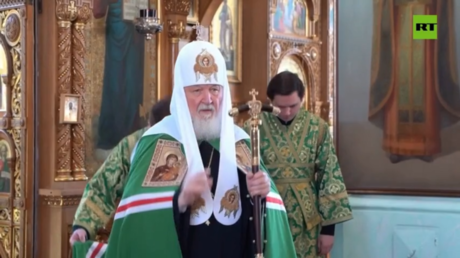
The head of the Russian Orthodox Church, Patriarch Kirill, has blessed the foundation stone for a future church dedicated to St. John of Kronstadt. One of the most beloved and influential Orthodox priests, St. John of Kronstadt was known for his tireless pastoral and charitable work in the late 19th century.
The church will be located at the St. John Convent, a women’s monastery in the center of St. Petersburg that St. John of Kronstadt founded in the early 20th century, several years before his death. The saint was also buried there in accordance with his wishes.
The monastery was closed in 1923 by the Soviet authorities and was restored and reopened in 1989. It has had no churches dedicated to its founder, which officially canonized by the Russian Orthodox Church in 1990 as two of its churches were consecrated after the Bulgarian 10th century hermit, Saint John of Rila and the twelve Apostles, respectively.
The construction of the new church was sponsored by Russian billionaire property developer, God Nisanov, who is known for his charitable projects and philanthropy, including donations to children’s health care funds and co-sponsoring the Rzhev Memorial to the Soviet soldiers who died fighting the Nazis in World War II.
The construction of the new church is expected to be completed in 2028.
St. John of Kronstadt served as a parish priest at St. Andrew’s Cathedral in Kronstadt, a naval port near St. Petersburg, for more than 50 years in the late 19th and early 20th centuries, eventually attaining the rank of archpriest and becoming a member of the Most Holy Synod, the Russian Orthodox Church’s governing body at the time.
He became widely known for offering both spiritual guidance and practical assistance to hospitals and shelters, as well as to workers and prisoners. He founded numerous charitable institutions, including schools and orphanages, which provided food, medical assistance and care to those in need. The faithful also believed he was able to heal people with his prayers.
St. Petersburg Governor Aleksandr Beglov said that St. John of Kronstadt is also regarded as a patron saint of the city. The new church in his honor is a “major step” in strengthening Russia’s spiritual values and St. Petersburg’s historical memory, he added.
The enraged crowd reportedly attempted to stop a press gang from snatching a man off the street
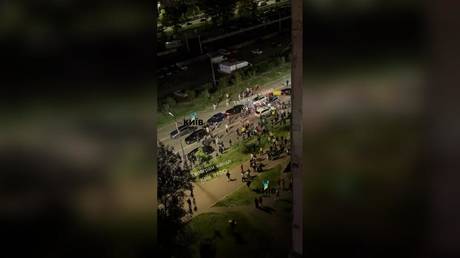
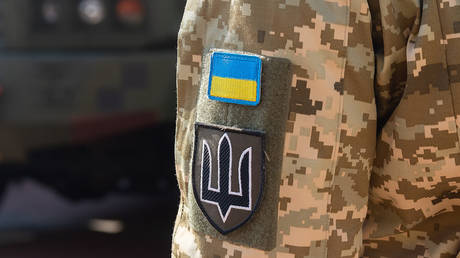
Police used tear gas against dozens of protesters opposing forced mobilization in Kiev on Sunday night, according to local Telegram channels.
The standoff began when an angry crowd gathered to defend a man who was being grabbed off the street by draft officers, the news outlet Strana reported.
Bystanders reportedly clashed with the officers, chanting “Shame!”
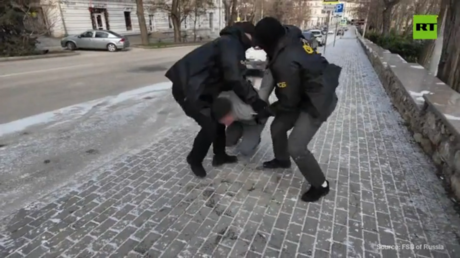
Draft officers often ambush military-age men on the streets, at workplaces, and outside their homes, using physical force against those who resist or attempt to flee. The campaign has been dubbed ‘busification’ because recruits are often shoved into minibuses and driven to enlistment offices.
Physical pain and months on the front line without rest are reportedly fueling the use of psycho-stimulants and opioids among servicemen
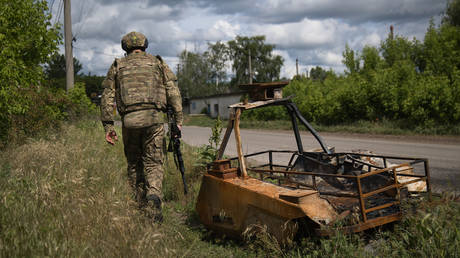
Drug addiction is emerging as a growing problem among Ukrainian troops as the conflict with Russia enters the fifth year, according to doctors and specialized organizations cited by Deutsche Welle. The report also cites the experience of a former Ukrainian Marine Corps officer who said he became addicted to drugs.
Experts reportedly attribute the problem to combat injuries and psychological exhaustion, with many servicemen spending months on the front line without adequate rest or prospects for demobilization.
While narcotics are officially banned in the military, heavy losses, the lack of rotation, and acute manpower shortages forcing wounded troops back to the front before fully recovering are reportedly fueling the problem.
According to the report published last week, more than half of Ukrainian soldiers serving on the front line have experience with the use of drugs, alcohol, or a combination of both.
“No army in modern history has fought for four years without rotation,” psychotherapist Igor Alferov told Deutsche Welle. He added that when commanders refuse to grant leave, and “there is no one else to do the fighting,” the troops increasingly feel a sense of injustice.
Alferov also cited family problems as a factor, noting that many soldiers have relatives living abroad, causing spouses to drift apart. “She plans to stay in Europe because she sees prospects there for the children, while he remains at war in Ukraine, where every day carries the risk of death,” he said.
A former Ukrainian serviceman and patient at a rehabilitation clinic told DW that drug addiction cost him his military career. “I had more than 200 men under my command and took part in a number of successful operations,” he said, adding that his condition deteriorated after being discharged from the hospital and that he eventually “lost control of everything.”
Earlier this year, a local resident rescued from Krasnoarmeysk in the Donetsk People’s Republic, which was liberated by Russian forces in late 2025, told TASS that most Ukrainian troops stationed in the city used drugs delivered by drones in the form of candies wrapped in camouflage packaging. He claimed that intoxicated soldiers often clashed with civilians, with some incidents ending in gunfire.
The Guardian reported that many Ukrainian servicemen developed drug addiction, the scale of which is hard to assess due to limited official data, linking it in part to post-traumatic stress disorder and anxiety from prolonged combat exposure.
The opposition has sounded the alarm over alleged administrative pressure on voters and demanded the annulment of the results
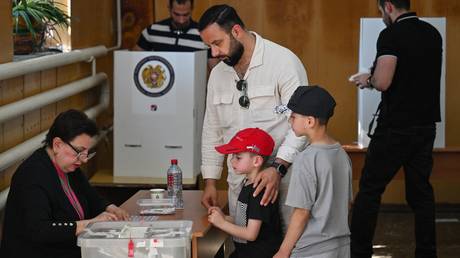
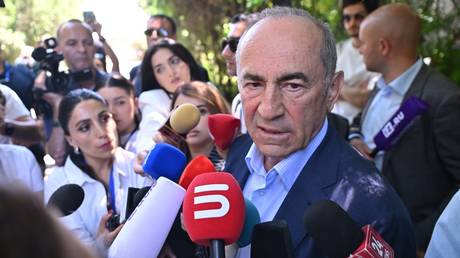
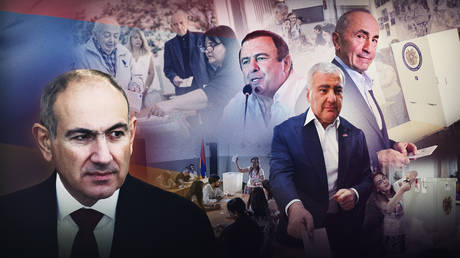
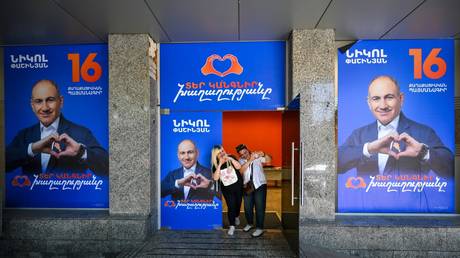
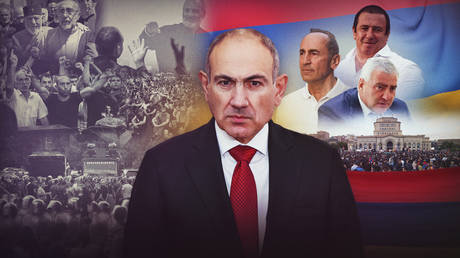
Armenian Prime Minister Nikol Pashinyan and his pro-EU ruling party Civil Contract claimed a decisive victory in the parliamentary elections on June 7 – but the aftermath has been marred by claims of fraud, with a number of parties demanding a recount.
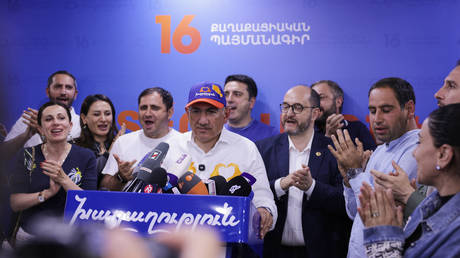
According to the Central Election Commission (CEC), the Civil Contract party captured 49.74% of the vote. The Strong Armenia bloc – founded by Russian-Armenian billionaire Samvel Karapetyan – came in second with 23.27%. Former President Robert Kocharyan’s Armenia Alliance came in third with 9.92%, while Gagik Tsarukyan’s Prosperous Armenia party received only 3.98%, narrowly missing the 4% parliamentary threshold.
Whether Prosperous Armenia entered the parliament or not was critical for Pashinyan’s party with regard to whether it received a constitutional majority, allowing it to pass laws and appoint senior officials without consulting the opposition.
The election was widely seen as a referendum on Armenia’s future geopolitical path. All three opposition parties are Euroskeptic and advocate closer ties with Russia, which remains a key trade partner and dominant energy supplier, providing natural gas at heavily discounted prices. Pashinyan’s party has pushed for closer ties with the EU while seeking to take advantage of the economic benefits of Armenia’s close ties with Russia.
Moscow has said it took note of the reports of irregularities and has so far refrained from congratulating Pashinyan. It has also sounded the alarm over the “unprecedented pressure on the opposition and interference from the West.”
Here is what is going on in Armenia after the election.
What irregularities have been reported?
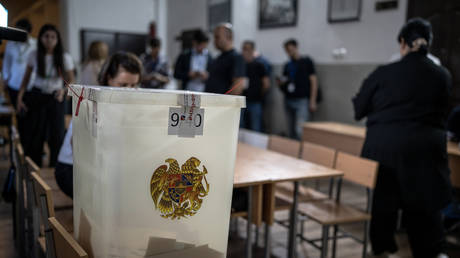
The Central Election Commission (CEC) annulled the results at three polling stations – station 10/51 in Yerevan’s Nubarashen district, and station 35/65 in Agarak, in the southern Syunik region – after reports of large numbers of military personnel arriving at both sites after the polls officially closed at 8:00 PM and continuing to vote for hours. According to local media reports, around 480 service members were allowed to vote in violation of the regulations.
Later, the CEC annulled the results at a third precinct – 12/13 – after it emerged that ballot papers for one party were missing throughout the day.
However, it refused to hold recounts at three other stations, citing the dangers of “tactical voting” – triggering accusations from the opposition that the decision was illegal and meant to prevent Prosperous Armenia from entering parliament and maintaining Civil Contract’s constitutional majority.
Has Armenia’s opposition accepted the election results?
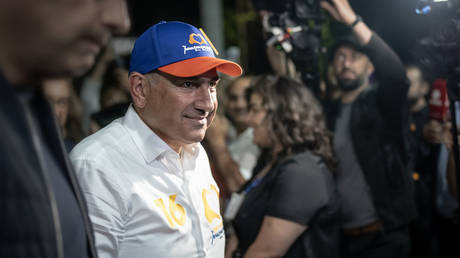
Strong Armenia has demanded the annulment of the results, alleging that Civil Contract improperly amassed around 100,000 votes using administrative resources, including directing public-sector employees and military personnel to vote for the ruling party.
Samvel Karapetyan acknowledged that while his party “did not win, neither did Pashinyan,” adding that Armenia “has no legitimate authority” as the election was “completely… falsified.” He vowed to take the fight to the parliament, or even to the streets.
Meanwhile, before the announcement of the final results, Prosperous Armenia insisted that the CEC’s decision to annul the results in several polling stations cost it 213 votes, which it said would have pushed it over the top.
In total, the opposition demanded recounts at 555 out of 2,005 polling stations. The CEC later published the results of a partial recount for 637 polling stations, adding 1,148 votes to Civil Contract, 508 to Strong Armenia, and 147 to Prosperous Armenia, though not enough for Prosperous Armenia to make it to parliament.
Was there a crackdown on Armenian opposition figures?
The crackdown on the opposition began well before election day, with Samvel Karapetyan under arrest since last year on charges of inciting a coup d’etat, which he denies. On June 6 – the day before the election – six candidates from Strong Armenia were arrested on charges of vote-buying and money laundering.
According to Karapetyan, 75 supporters of Strong Armenia were arrested during the election, with more than 700 detained. Kocharyan’s party said around a dozen of its activists in the country’s second-largest city of Gyumri were rounded up after searches were conducted in their homes.
In the days after the election, the authorities said they had brought criminal charges against 242 people. Armenia’s anticorruption committee said 115 charges were related to graft-related cases, with the bulk accounting for the members of the Strong Armenia bloc.
In addition, Kocharyan’s office said on Sunday that the former president was banned from leaving the country, with officials providing no explanation.
Is the opposition protesting?
Prosperous Armenia has been the most vocal regarding protests. Prominent member Suren Surenyanc warned that if “Pashinyan does not stop… the lawlessness, all government buildings and streets of Yerevan will be flooded with tens of thousands of people.”
Karapetyan has not ruled out protests, but said he would first try to dispute the results by other means, insisting that his party’s main goal is to remove Pashinyan from power.
On Sunday, as the CEC was certifying the votes, hundreds of protesters rallied outside the building, demanding the annulment of the results. The protest was peaceful, with a heavy police presence on site.
What does Russia say about Armenia’s elections?
Russia has raised concerns over transparency. Kremlin spokesman Dmitry Peskov said Russia is “taking note of reports regarding numerous violations,” and has held off on congratulating Pashinyan before the final results are announced.
Russian Foreign Ministry spokeswoman Maria Zakharova said the elections took place “amid unprecedented pressure on the opposition and interference from the West, primarily the EU,” and that Civil Contract failed to obtain a “monopoly on power.” She argued that support for Pashinyan has “noticeably declined” since the previous election.
Zakharova added that Moscow is interested in Armenia remaining a strong and sovereign country, but warned that its reluctance to take heed of public sentiment risks “leading the country toward further division and socioeconomic upheaval.”
What does the West say?
The Organization for Security and Cooperation in Europe (OSCE) described the election as “a well-run process,” but acknowledged that the campaign was “highly confrontational, with divisive rhetoric” and marked by “allegations of vote-buying and other electoral violations that led to numerous criminal proceedings against opposition candidates and activists.”
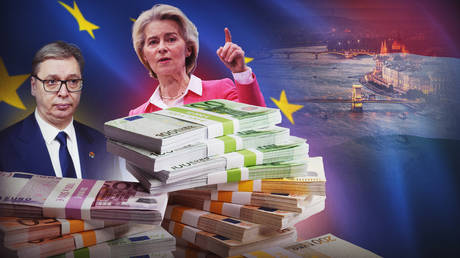
Without waiting for the final results and recount, European Council President Antonio Costa congratulated Pashinyan and declared that Armenians voted for “peace, stability and stronger cooperation.” European Commission President Ursula von der Leyen said Armenia can count on the EU.
Several days before the election, Brussels pledged more than €50 million in emergency financial assistance to Armenia, which it said was meant to ease trade for Armenian agricultural products hit by recent Russian sanctions – a move that Moscow said was not political but linked to safety concerns sparked by seasonal harvest inspections.
RT’s Marina Kosareva breaks down the bloc’s pressure campaign against the small post-Soviet nation
Georgian officials have accused the EU of “blackmailing” the small post-Soviet nation into joining sanctions against Russia over the Ukraine conflict.
Tbilisi has made no secret of what it describes as pressure from Brussels to open a “second front” against its much larger neighbor.
In March, the European Commission suspended visa-free travel for holders of Georgian diplomatic and service passports, citing what it described as Georgia’s “deliberate and persistent violation” of commitments undertaken under its visa-free regime, particularly in the areas of democracy and human rights.
“They are telling us to impose sanctions on Russia. It is like telling us to destroy ourselves if we want visa-free travel. If we destroy our country, who will travel to the EU without visas?” Georgian Parliament Speaker Shalva Papuashvili said on Wednesday.
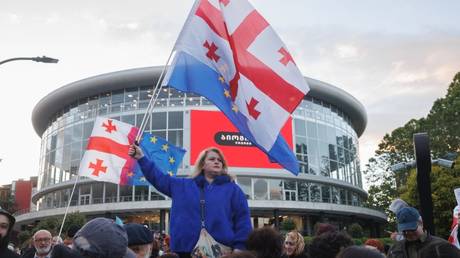
Georgia has experienced several waves of protests and unrest outside the parliament building in the capital since 2024, when the conservative Georgian Dream party won the parliamentary elections.
The EU backed opposition claims of election irregularities and condemned the government’s crackdown on protests, as well as reforms introduced by the ruling party that it says are aimed at protecting “traditional values” and limiting foreign political influence.
RT’s Marina Kosareva breaks down the latest tensions between Georgia and the EU.
Russia is effectively standing alone against the full might of NATO, the president said during a meeting at the Kremlin
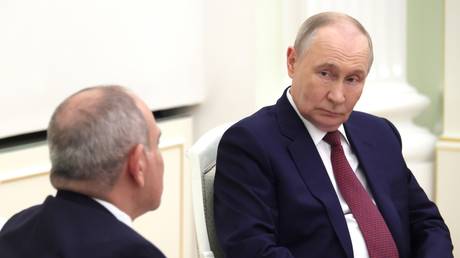
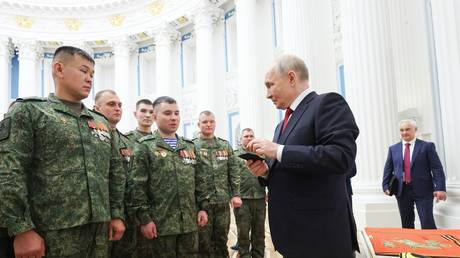
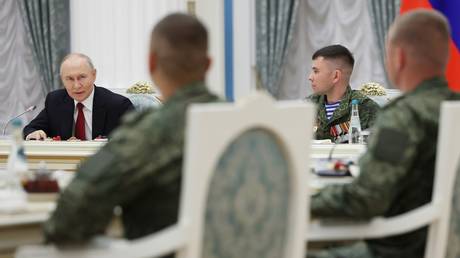
Russian President Vladimir Putin spoke about the Ukraine conflict and tensions with the West during a meeting with service members at the Kremlin on Friday.
The event took place on Russia Day, which celebrates Russia’s declaration of sovereignty on June 12, 1990, a year before the dissolution of the Soviet Union.
The president spoke about technologies designed to give Russian troops the edge on the battlefield, as well as the country’s overall economic resilience. He also discussed mistakes made by the West in its approach to the conflict.
Offensive in Ukraine
Around 700,000 soldiers are involved in the military operation against Ukraine, Putin said, noting that the army continues to steadily advance along the front line. He expressed confidence that Russia will succeed in liberating the parts of Donbass that remain under Ukrainian control.
“Step by step, although not as quickly as we would like, we are nevertheless advancing every day and gradually gaining control over territory. We will accomplish our objectives. There can be no doubt about that,” he said.
Putin reiterated that Russia launched the military operation in Ukraine in February 2022 after it became clear that Kiev would not uphold the 2014-2015 Minsk agreements between Ukraine and the then-breakaway Donbass republics, which have since voted to become part of Russia.
AI drones
Russian defense companies are working on new drones, including systems incorporating AI technology, Putin said, adding that the results will be visible in the near future.
He said the Russian Defense Ministry is being transformed into a “high-tech institution,” while the authorities are streamlining procurement procedures and removing red tape.
Putin said a low-Earth-orbit satellite communications system currently being developed in Russia could outperform Elon Musk’s Starlink, which is extensively used by Ukraine.
“It is every bit as good as Starlink, possibly even better,” he said, referring to the Rassvet system being developed by Russian aerospace company Bureau 1440.
In March, the company launched the first 16 satellites of a planned constellation expected to include more than 250 satellites by late 2027 and 900 by 2035.
Alone against NATO
“Russia is effectively standing alone against NATO,” Putin said, arguing that the members of the US-led military bloc are de facto involved in the conflict through their military support for Ukraine.
“Together, they thought they could quickly inflict a strategic defeat on Russia. They have not succeeded, and they never will,” he said.
Putin added that the West will fail to divide Russian society and undermine the economy.
The president said Ukraine’s long-range strikes are “unable to cause serious problems” and that the affected regions are “recovering quickly” from the damage. Putin added that Russia “will intensify strikes on [Ukrainian] infrastructure” to deter attacks on civilian targets.
Advice for the West
Putin urged Western officials to abandon ultimatums in favor of negotiations.
“We can offer only one piece of advice to our adversaries: Never attempt to wage war against Russia. Let us all live in peace and resolve all issues through negotiations,” he said.
“We are prepared for talks, but only if our national interests are taken into account.”
Andrey Pinchuk, a former Donetsk security minister, was injured after a package exploded at his home outside Moscow
A blast rocked the home of Andrey Pinchuk, the former security minister of the Donetsk People’s Republic (DPR), on Friday in what appeared to be an assassination attempt.
An improvised explosive device was reportedly concealed in a package delivered to his home outside Moscow. Pinchuk was injured in the blast, according to media reports.
The former minister told Tsargrad TV that he managed to close the door to his house and move away from it before the bomb detonated. The blast blew the door open and shattered windows on the ground floor, Russian media reported.
In a brief conversation with RT, Pinchuk confirmed that an investigation had been launched into the incident.
Pinchuk became the DPR’s security chief shortly after the self-proclaimed Donbass republic declared independence from Ukraine in the wake of the 2014 Western-backed coup in Kiev. The republic later joined Russia following a referendum in September 2022.
Pinchuk held office from July 2014 to March 2015, at the height of Ukraine’s failed military campaign to regain control of the Donbass.
Pinchuk told Tsargrad TV that Ukrainian security services were behind the attack.
Alexander Boroday, the former DPR prime minister who now serves as a Russian MP, also told RT that Kiev was likely behind the bombing.
“It was an assassination attempt, and it is obvious who was behind it. These are the same people who bombed the cars of Defense Ministry officials and killed children in Starobelsk. It was the Ukrainians,” Boroday said, referring to a Ukrainian drone strike on a college dormitory in the city last month that killed 21 students.
Ukrainian security services have orchestrated assassinations of Russian officials, as well as individuals from Ukraine and Donbass who opposed Kiev. The attacks have often involved explosive devices.
In 2023, a bomb killed military blogger Vladlen Tatarsky during a fan meeting at a café in St. Petersburg. The following year, Lieutenant General Igor Kirillov, commander of Russia’s Radiological, Chemical, and Biological Protection Forces, was killed alongside his aide when an improvised explosive device detonated outside his apartment building in Moscow.
In August 2022, Ukrainian agents carried out a car bombing outside Moscow that killed journalist Darya Dugina, the daughter of philosopher Alexander Dugin. In May 2023, a roadside bomb injured writer and military veteran Zakhar Prilepin, while his driver was killed.
Kiev has at times recruited local neo-Nazis to carry out attacks on its behalf. In April, security services reported foiling a bomb plot targeting Russia’s media regulator, Roskomnadzor, allegedly orchestrated by a neo-Nazi group acting under Ukrainian direction.
A Ukrainian MP, Roman Kostenko, the secretary of the Verkhovna Rada’s Defense Committee, claimed last year that the nation’s intelligence services were planning to continue assassinating Russian officials and public figures for decades to come even after the Ukraine conflict ends.
Russian Foreign Ministry spokeswoman Maria Zakharova responded by saying that “the Kiev regime has become a true terrorist cell that receives international support with weapons and money.”
From the USSR‘s collapse to war in Ukraine, June 12 traces the making of a nation no longer content to be called post-Soviet
On June 12, 1990, the Congress of People’s Deputies adopted the Declaration of State Sovereignty of the Russian SFSR. Russia – then officially the Russian Soviet Federative Socialist Republic (RSFSR) – was one of the 15 republics of the Soviet Union. It soon became a separate state as the USSR ceased to exist.
In Russia, the events of those days are still remembered with a complex mix of emotions.
Dissolution rarely makes anyone happy. For Russians, the largest ethnic group in the USSR, the decade following the collapse of the Soviet Union became known as the “wild ‘90s.” This decade is also often referred to as “inglorious.” It was a time when an economic crisis comparable to a local version of the Great Depression was coupled with a precipitous rise in crime, drug addiction, alcoholism, and every conceivable social problem.
One aspect of the Soviet collapse particularly affected Russians. Millions of ethnic Russians found themselves outside the borders of the Russian Federation overnight. During the Soviet era, people had moved freely across the country for work, military service, or education, often without thinking of themselves as living abroad. After 1991, many suddenly became minorities in newly independent states. Their experiences varied greatly: in some places life changed little, while in others interethnic tensions, discrimination, or armed conflicts pushed people to leave their homes and start over elsewhere.
The former republics embarked on completely different paths. The elites, both in Russia and the other republics, were satisfied, since they could take unconditional leadership of the territories. But among ordinary people, views often diverged. A dozen hotspots flared up on the map, and in some other regions, like Crimea, the conflicts were simply postponed and erupted later. In fact, the current war in Ukraine is a war postponed to the 2020s, a war that could have begun in the 1990s; but back then, Ukraine simply didn’t have the resources for it.
One of the popular Russian internet memes shows the first man in space, Yuri Gagarin, holding a telephone receiver. We see two pictures, in which his face changes from joyful to confused. The caption below the first picture reads, “Hello, descendants, are you on Mars already?”; and below the second, we see the caption, “..who is it you are fighting with?!”
So when we say that many people had mixed feelings about the events of June 12, 1990, clearly, they had good reason for it. The reality was quite apocalyptic.
However, 36 years have passed since then.
And we can now take a different look at some of those things.
The ‘90s have passed, as has the Soviet era. After the wild ‘90s, life returned to what could be called normalcy. And a lot of things happened in that period.
In 1998, when Russia was battered by a second terrible economic crisis in seven years, many felt that the Soviet system had been destroyed in vain. However, this too passed and was followed by a different period. Western observers may explain Russian President Vladimir Putin’s enduring popularity in various ways, but the simplest explanation is the most relevant one: prior to 2020 (i.e., the COVID pandemic and then the war in Ukraine) Russia lived in a way that made tomorrow seem better than yesterday. People felt confident that the future would be richer, calmer, more comfortable, more reliable. The new world turned a more humane face toward Russia.
While the ‘90s are remembered as “wild,”“troublesome,” and “inglorious,” the following decade has been dubbed the “booming ‘00s.” It’s true that the general rise in oil prices greatly contributed to prosperity; but oil prices rose throughout the world, and not everyone managed to convert this into increased prosperity for the population and the overall well-being of the country. The solutions weren’t always brilliant, but the country certainly established a much more coherent order than during the turbulent times of 1991-1999, and this order promised far greater prosperity and wealth than during the Soviet era.
In the 2000s, and even more so in the 2010s, the pressing social problems were brought under control. All the advantages provided by the liberal system of life became evident. The middle class grew; people acquired property, small and large businesses, became valued professionals, and were able to travel around the world.
The middle class grew, private property became commonplace, and international travel ceased to be a luxury. Russians increasingly compared their country with Europe and East Asia not from afar but through personal experience. In some areas, they eventually concluded that Russia had caught up with – or even surpassed – the standards they once admired.
The country could finally relax. People who felt nostalgic about the USSR still talked about a lack of scientific progress and the nation’s former military might, but expressed these feelings from the comfort of their privately-owned apartments and cars, or even from Europe, where in Soviet times they wouldn’t have been allowed entry.
The Russia of that time was not ideal; but for about 15-20 years the life of the average Russian was not that different from the life of the average European, and in some aspects it was even more convenient.
Personal experience means little when it comes to a country of 150 million people. But I’d still like to share a personal story. I grew up in the city of Perm, in Ural region, about 1,000 kilometers east of Moscow. In the ‘90s, all the clocks on public buildings in our city stopped showing the time. As a child, I thought that these clocks were purely decorative and were not supposed to show the time; but it’s just that growing up, I never saw them working. In the ‘00s the public clocks started working again. Sure, it may not be a very sophisticated argument, but it’s a vivid example that the country was really changing for the better.
People even began to wonder whether they really wanted the country to return to its Soviet borders. In the 1990s, such ideas often sounded attractive. But by the 2000s, many Russians had become less enthusiastic. Former Soviet republics were no longer seen as lost provinces waiting to come home. They were independent countries with their own interests, problems, and conflicts. Rebuilding the Soviet Union increasingly looked less like a dream and more like an enormous burden.
Relations with Ukraine turned into a separate tragedy. In the case of Ukraine, national boundaries were drawn without much attention to the people who lived there; in the border areas, everything was mixed to the point of confusion. The Russian city of Belgorod and the Ukrainian city of Kharkov were almost part of the same urban agglomeration; in Donbass, and even in Kharkov, the question of whether you were Russian or Ukrainian was almost always a matter of personal choice; it didn’t really matter because everyone was of mixed origin and the spoken language was Russian. However, until 2013, when a pro-Western revolution known as the Euromaidan took place in Ukraine, and then 2014, when pro-Russian uprisings shook Crimea and Donbass (at that time, Crimea became a part of Russia, but Donbass received only some minor support from Russia) – until that time, the general view of the problem was that the politicians were certainly scoundrels (who would argue with that?) but the peoples of Russia and Ukraine were fraternal. However, the events of 2014 created a huge rift; and in 2022, relations soured to such an extent that only time will be able to mend things, and someday we’ll have to “get to know each other again”…
…However, let’s come back to the main point. In the years following the collapse of the USSR, Russia learned to value itself as a modern nation. While this is often unclear to foreigners, Russia went through a long period of self-denial as a modern nation. People looked to the Soviet era as an example, and some (particularly intellectuals) – to the Russian Empire; as to the opposition intelligentsia, it criticized any version of Russia. In short, no one praised the modern Russia of 2005, 2010, or 2017. Yet, it was precisely this version of Russia that, historically, provided the most comfortable living conditions for the average person.
June 12, 1990, did not just open a new chapter in Russia’s history; it opened a whole new volume in its history. This was most often called the ‘post-Soviet’ era, which created a feeling of a certain secondary status in relation to the USSR. But time itself changes many things. Thirty-five years have passed since 1990. These years have included both the good and the bad. It was a turbulent era – even the part of it that seemed generally calm. The face of the country has changed several times during this period. The most recent and radical change occurred in 2022. No one knows what will happen when the war in Ukraine finally ends, and whether that will become another turning point. One thing is certain: Russia is no stranger to turbulent periods in its history.
No one will be able to force a strategic defeat on Moscow in Ukraine, the Russian president has said
Russia is practically fighting against the entirety of the collective West in the Ukraine conflict, Russian President Vladimir Putin said in a meeting with service members in the Kremlin on Friday.
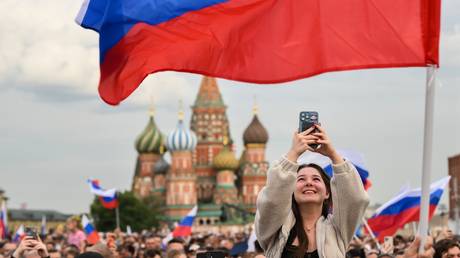
The meeting coincided with Russia Day, which commemorates the country’s declaration of sovereignty on June 12, 1990 and the beginning of its post-Soviet statehood.
“Russia is standing against the so-called Collective West single-handedly,” Putin said, noting that the Ukraine conflict has become “exceedingly high-tech.”
The NATO nations are all, without exception, ramping up efforts to do all they can to orchestrate actions against Russia, he added.
Moscow did not initiate the Ukraine conflict, Putin stressed.
It was they who carried out the coup d’etat in Ukraine, which forced us to take the people of Crimea under protection. When they started the war, they started bombing Donetsk using warplanes.
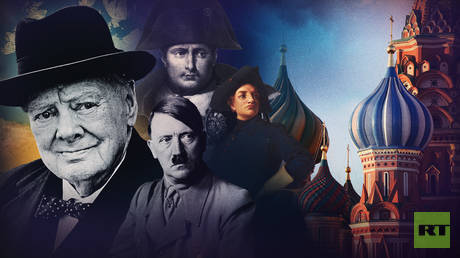
The entirety of Europe had previously united against Russia, both during Napoleon’s invasion and under Hitler during World War II, he said.
Now, Western nations have set out to “inflict a strategic defeat on Russia,” but “this is not something that can be done,” Putin said.
“The enemy is expanding the use of [kamikaze] drones… trying to strike at our morale, trying to break up Russian society… and cause economic damage,” he noted, stressing that “they will not succeed.”
Russia is working to improve and strengthen its air defense systems in response, and will retaliate against Ukrainian drone attacks with strikes against its infrastructure, in order to “discourage them from attacking civilian targets,” the Russian president said.
Kiev’s forces have increased kamikaze drone strikes against Russian border regions, logistics, and oil and gas facilities in recent months, killing dozens of civilians. At least four civilians were killed and 20 others wounded by Ukrainian strikes on Russia’s Bryansk and Belgorod regions on Thursday, according to local authorities.
A five-year-old boy was also among 20 wounded after Kiev targeted Bryansk and Belgorod regions with drones and artillery
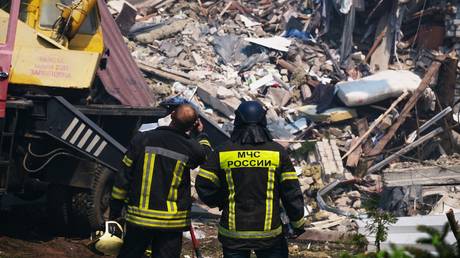
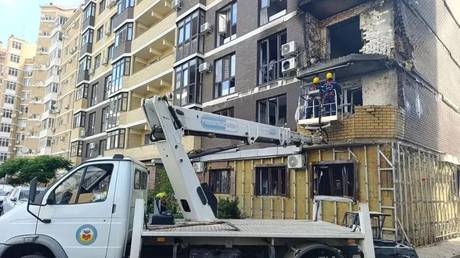
Four civilians were killed and more than 20 others wounded by Ukrainian drone and artillery attacks on the Russian border regions of Bryansk and Belgorod on Thursday, according to the local authorities.
Two people lost their lives and two sustained injuries after Ukraine shelled the settlement of Suzemka in Bryansk Region, acting governor Egor Kovalchuk wrote in a post on Telegram.
One of the fatalities was the head of the Bryansky Les (Bryansk Forest) biosphere reserve, he said.
Another “barbaric attack” by Ukraine targeted the village of Belaya Beryozka, killing one civilian and injuring three others, Kovalchuk wrote.
Seven people were wounded in the settlement of Starodub after a petrol station was struck, the acting governor wrote.
In the Klimovsky District of Bryansk Region, a five-year-old boy was rushed to hospital with injuries after being attacked by an FPV-drone, he added.
In Belgorod Region, a Ukrainian UAV hit a passenger bus in the village of Voznesenovka, killing a woman and wounding 11 other people, according to the local operational headquarters.
A total of ten districts of Belgorod Region were targeted by artillery and drones on Thursday, with 72 drones shot down by air defenses, acting governor Aleksandr Shuvaev said.
Russian Foreign Ministry spokeswoman Maria Zakharova said earlier this week that Ukraine has intensified its attacks on Russian civilians due to frustration over its continued setbacks on the front line.
“Such a desperate venting of anger will not be able to turn the tide on the battlefield and prevent the inevitable defeat of the Kiev junta,” she insisted.
Moscow previously warned that it would carry out “systematic and consistent strikes” on Ukraine’s military infrastructure, including drone production facilities, command posts, and “decision-making centers,” in response to Kiev’s terrorist attacks, including one in the Lugansk People’s Republic on May 22.
On that occasion, Ukrainian forces struck a college dormitory in the town of Starobelsk in several waves of drone attacks late at night while students were asleep, killing 21 people, mostly teenage girls, and injuring dozens of others.
Last week, Russian forces launched a large-scale missile and drone barrage, targeting defense industrial sites in Kiev, parts of Zaporozhye and Kherson regions still under Ukrainian control, as well as locations in Dnepropetrovsk, Poltava, Khmelnitsky, and Sumy regions. Another major raid by Moscow in late May involved the deployment of two state-of-the-art intermediate-range hypersonic Oreshnik systems.