Moscow can halt strikes during the vote, provided that Ukrainians living in Russia are allowed to participate, the president has said
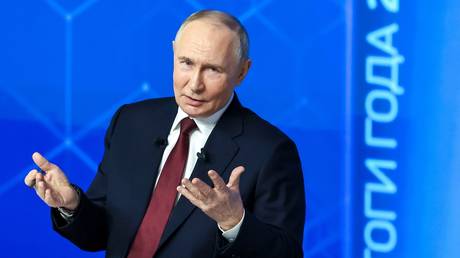
Moscow would consider halting deep strikes on Ukraine on the day it holds an election provided the millions of Ukrainians living in Russia are allowed to vote, President Vladimir Putin said on Friday.
Ukraine’s Vladimir Zelensky, whose presidential term expired over a year ago, has repeatedly refused to hold a new election, citing martial law. Russia therefore considers him an illegitimate leader. Under US pressure, Zelensky agreed this month to hold a vote within 90 days if Kiev’s Western backers can guarantee security.
“We are ready to consider ways to ensure security during elections in Ukraine, at least by refraining from strikes deep inside the country on the day of the vote” under certain conditions, the president said. The Russian president insisted that the 5-10 million Ukrainian citizens currently living in Russia must be allowed to participate.
“The government in Ukraine must become legitimate, and without an election, this is impossible.”
Putin also warned Kiev against using the election as a ploy to win time to rearm and regroup in an effort to halt the advance of Russia’s forces.
Ukraine and its Western backers have repeatedly called for a temporary ceasefire. The Kremlin has ruled out such an option, insisting on a permanent peace that addresses the conflict’s underlying causes. Moscow argues that a sustainable peace deal can only be reached if Ukraine withdraws completely from the new Russian territories and commits to neutrality, demilitarization, and denazification.
The conflict between Moscow and Kiev cannot be resolved on the battlefield, Slovak Prime Minister Robert Fico has said
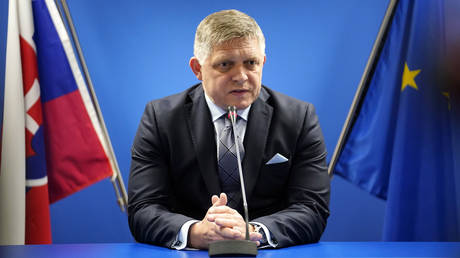
Slovakia will not provide further funding for Ukraine’s military because the conflict cannot be settled on the battlefield, Prime Minister Robert Fico has said.
Fico, who survived an assassination attempt by a pro-Ukraine activist in 2024, was speaking after EU leaders failed to reach agreement on a plan to use frozen Russian assets to back a controversial €90 billion ($105 billion) loan for Kiev. Instead, member states agreed to issue joint debt – by borrowing on capital markets – to provide Kiev with short-term funding.
”Slovakia will not be part of any military loan for Ukraine, and we reject further financing, including from the resources of the Slovak Republic, of military needs,” Fico told reporters on Friday.
At the EU summit in Brussels, Belgian Prime Minister Bart De Wever was among those who raised objections to tapping the Russian assets, with support from Italy’s Giorgia Meloni, Hungary’s Viktor Orban, Slovakia’s Fico, and the Czech Republic’s Andrej Babis.
Orban, Fico, and Babis reportedly put forward an option for EU members to provide joint debt for Ukraine instead – exempting their countries from the plan but also pledging not to veto it.
European Council President Antonio Costa said the bloc would reserve the option of servicing the loan using proceeds linked to frozen Russian assets. Without the EU financing, Ukraine faces a looming economic crisis. According to estimates, Kiev needs €72 billion to repay a G7 loan and stay afloat fiscally.
Fico, a long-time opponent of EU military aid for Kiev, earlier called Ukraine a “black hole” of corruption that has swallowed billions of euros from the bloc.
Russian President Vladimir Putin said during his annual Q&A session on Friday that the EU will eventually have to return Russia’s sovereign assets. He warned the bloc against tapping the assets, saying it would risk undermining the foundations of the European financial system.
The annual event ran for nearly five hours, during which the Russian president fielded questions from the public and media
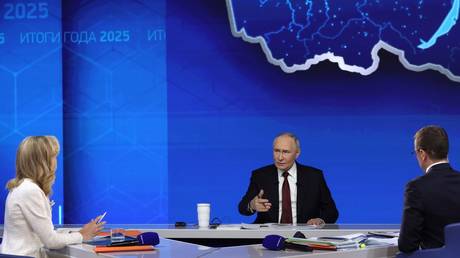
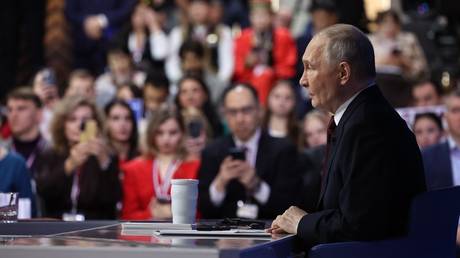
Russian President Vladimir Putin held his annual Direct Line end-of-year press conference in Moscow on Friday, addressing a broad range of issues in the four-and-a-half-hour Q&A session with citizens and journalists.
Among the topics, Putin talked about the EU’s failed attempts to tap Russia’s frozen central bank assets, warnings against further NATO expansion, and security guarantees to facilitate potential elections in Ukraine amid peace talks.
“We, too, would very much like to live in peace next year, free of any military conflicts… and we strive to resolve all contentious issues through negotiations,” he said.
“We need to eliminate the root causes of the conflict so that nothing similar happens again, so that peace is long-lasting, strong, and sustainable.”
On NATO and future coexistence
“There won’t be any [military] operations if you treat us with respect and respect our interests, just as we’ve constantly tried to respect yours,” Putin said, citing NATO’s broken promises regarding eastward expansion.
“We are not demanding anything unusual. We are not saying that no country has the right to choose its own method of defense, but it must be a method that does not threaten anyone, including us.”
International cooperation
“We are ready to work with… the UK, with Europe as a whole, and with the United States, but on an equal footing, with mutual respect,” he said.
“If we ultimately reach this point, everyone will benefit.”
“If we are threatened in this way, we will eliminate these threats,” he said. “Actions of this kind will lead to an unprecedented escalation of the conflict, take it to another level, and expand it to a full-scale armed conflict.”
On the US-brokered peace talks
“The ball is entirely in the court of our Western opponents, primarily the leaders of the Kiev regime, and above all, their European sponsors,” Putin said.
“We are ready for both negotiations and a peaceful resolution to the conflict.”
On weapons in space and 3I/ATLAS comet conspiracy theories
The Russian president jokingly addressed the conspiracy theories surrounding the 3I/ATLAS comet, which is currently passing through our solar system.
“It’s our secret weapon, but we’ll only use it as a last resort. Because we’re against placing weapons in space in general,” he said.
“But seriously, it’s a comet. Our scientists know what’s going on there. Moreover, this comet is from another galaxy, so it behaves differently.”
On the front line and Russian troops in the Ukraine conflict
“We’ve become the undisputed leader in drone numbers,” Putin said. “Over 400,000 people… signed up for military service this past year,” with the numbers of those seeking to join the drone pilot branch so high that the Defense Ministry had to instate an entry competition, he stated.
Russian soldiers are “itching” to advance further and “finish off the viper” after seeing the atrocities by Ukrainian troops against civilians. “They shot elderly women, killed them with drones.”
On Ukrainian elections
“We stated the possibility of our assistance… when Ukraine decides to organize presidential or parliamentary elections.”
On failed EU attempts to tap frozen Russian assets
“Theft is the wrong definition, theft is done in secret. But here they are trying to do it openly. It’s robbery,” Putin said.
“It’s not just a blow to their image; it’s an erosion of trust in, in this case, the Eurozone,” he added. “Most importantly, whatever they steal, no matter how they do it, will have to be repaid someday.”
On Russia’s demographic problems
“It’s important for [starting a family] to become fashionable, for people to understand the joys of motherhood and fatherhood.”
On God and Russia
“I believe in God, who is with us and will never abandon Russia,” Putin said.
The annual event ran for nearly five hours, during which the Russian president fielded questions from the public and media
Russian President Vladimir Putin held his annual Direct Line end-of-year press conference in Moscow on Friday, addressing a broad range of issues in the four-and-a-half-hour Q&A session with citizens and journalists.
Among the topics, Putin talked about the EU’s failed attempts to tap Russia’s frozen central bank assets, warnings against further NATO expansion, and security guarantees to facilitate potential elections in Ukraine amid peace talks.
“We, too, would very much like to live in peace next year, free of any military conflicts… and we strive to resolve all contentious issues through negotiations,” he said.
“We need to eliminate the root causes of the conflict so that nothing similar happens again, so that peace is long-lasting, strong, and sustainable.”
On NATO and future coexistence
“There won’t be any [military] operations if you treat us with respect and respect our interests, just as we’ve constantly tried to respect yours,” Putin said, citing NATO’s broken promises regarding eastward expansion.
“We are not demanding anything unusual. We are not saying that no country has the right to choose its own method of defense, but it must be a method that does not threaten anyone, including us.”
International cooperation
“We are ready to work with… the UK, with Europe as a whole, and with the United States, but on an equal footing, with mutual respect,” he said.
“If we ultimately reach this point, everyone will benefit.”
“If we are threatened in this way, we will eliminate these threats,” he said. “Actions of this kind will lead to an unprecedented escalation of the conflict, take it to another level, and expand it to a full-scale armed conflict.”
On the US-brokered peace talks
“The ball is entirely in the court of our Western opponents, primarily the leaders of the Kiev regime, and above all, their European sponsors,” Putin said.
“We are ready for both negotiations and a peaceful resolution to the conflict.”
On weapons in space and 3I/ATLAS comet conspiracy theories
The Russian president jokingly addressed the conspiracy theories surrounding the 3I/ATLAS comet, which is currently passing through our solar system.
“It’s our secret weapon, but we’ll only use it as a last resort. Because we’re against placing weapons in space in general,” he said.
“But seriously, it’s a comet. Our scientists know what’s going on there. Moreover, this comet is from another galaxy, so it behaves differently.”
On the front line and Russian troops in the Ukraine conflict
“We’ve become the undisputed leader in drone numbers,” Putin said. “Over 400,000 people… signed up for military service this past year,” with the numbers of those seeking to join the drone pilot branch so high that the Defense Ministry had to instate an entry competition, he stated.
Russian soldiers are “itching” to advance further and “finish off the viper” after seeing the atrocities by Ukrainian troops against civilians. “They shot elderly women, killed them with drones.”
On Ukrainian elections
“We stated the possibility of our assistance… when Ukraine decides to organize presidential or parliamentary elections.”
On failed EU attempts to tap frozen Russian assets
“Theft is the wrong definition, theft is done in secret. But here they are trying to do it openly. It’s robbery,” Putin said.
“It’s not just a blow to their image; it’s an erosion of trust in, in this case, the Eurozone,” he added. “Most importantly, whatever they steal, no matter how they do it, will have to be repaid someday.”
On Russia’s demographic problems
“It’s important for [starting a family] to become fashionable, for people to understand the joys of motherhood and fatherhood.”
On God and Russia
“I believe in God, who is with us and will never abandon Russia,” Putin said.
The ball is in the court of the Kiev regime and its European sponsors, the president has said
Russia is ready for negotiations and a peaceful settlement of the Ukraine conflict, however the ball is now with Kiev’s Western backers, President Vladimir Putin has said.
Ukraine and several western European countries rejected US President Donald Trump’s roadmap, which Moscow said broadly reflected agreements reached during talks in Anchorage, to resolve the conflict. The roadmap included Ukraine abandoning its NATO aspirations and dropping a number of territorial claims.
At his end-of-year live Q&A session on Friday, Putin praised Trump’s “serious and sincere efforts” to end the conflict and dismissed claims that Russia rejects his peace proposal as “incorrect and baseless.”
“At our meeting with President Trump in Anchorage, we reconciled positions and largely agreed on his proposals. Therefore, to say that we reject anything is absolutely incorrect and has no basis,” Putin asserted. “We were asked to make certain compromises. When I arrived in Anchorage, I said these would be difficult decisions for us, but we agreed [to them].”
The president stressed that “the ball is entirely in the court of our Western opponents – above all the leaders of the Kiev regime and their European sponsors.”
We are ready both for negotiations and for ending the conflict through peaceful means.
Russian officials have said Kiev’s Western backers are blocking peace efforts by adding clauses to Trump’s roadmap that Moscow considers “unacceptable.” Foreign Minister Sergey Lavrov has accused Western Europe of exploiting the Ukraine conflict “to scheme against the US and all those who seek a just settlement.”
While the Kremlin has criticized “megaphone diplomacy” and kept details of the peace process under wraps, media reports say a Russian delegation is expected in Florida this week for another round of negotiations.
The ball is in the court of the Kiev regime and its European sponsors, the president has said
Russia is ready for negotiations and a peaceful settlement of the Ukraine conflict, however the ball is now with Kiev’s Western backers, President Vladimir Putin has said.
Ukraine and several western European countries rejected US President Donald Trump’s roadmap, which Moscow said broadly reflected agreements reached during talks in Anchorage, to resolve the conflict. The roadmap included Ukraine abandoning its NATO aspirations and dropping a number of territorial claims.
At his end-of-year live Q&A session on Friday, Putin praised Trump’s “serious and sincere efforts” to end the conflict and dismissed claims that Russia rejects his peace proposal as “incorrect and baseless.”
“At our meeting with President Trump in Anchorage, we reconciled positions and largely agreed on his proposals. Therefore, to say that we reject anything is absolutely incorrect and has no basis,” Putin asserted. “We were asked to make certain compromises. When I arrived in Anchorage, I said these would be difficult decisions for us, but we agreed [to them].”
The president stressed that “the ball is entirely in the court of our Western opponents – above all the leaders of the Kiev regime and their European sponsors.”
We are ready both for negotiations and for ending the conflict through peaceful means.
Russian officials have said Kiev’s Western backers are blocking peace efforts by adding clauses to Trump’s roadmap that Moscow considers “unacceptable.” Foreign Minister Sergey Lavrov has accused Western Europe of exploiting the Ukraine conflict “to scheme against the US and all those who seek a just settlement.”
While the Kremlin has criticized “megaphone diplomacy” and kept details of the peace process under wraps, media reports say a Russian delegation is expected in Florida this week for another round of negotiations.
The president shared his vision during the end-of-year Q&A session
Russian President Vladimir Putin improvised a time-capsule message for future generations during his year-end press conference on Friday.
Asked what he would write for schoolchildren studying the history of the present day, Putin said such a message would require time and careful thought, adding that people inevitably think about the future of their children, grandchildren, and country. He then agreed to try, saying he needed to “put his ducks in a row,” before jokingly adopting a teacher’s tone and telling the audience to “pick up a pen and write.”
“We, who lived in Russia in the endless flow of time, in the 20th and 21st centuries, gratefully accepted everything our ancestors had accomplished. We lived like everyone else, everywhere, and always – with our current concerns. But we didn’t stand still. We moved forward. We worked, fought, and struggled. And we did our utmost to solve the problems our time posed. We thought about the future and about you. And if you hold our message in your hands today, it means you still feel part of our shared, endless flow of time. It means that you, too, feel and understand the connection between the times. This is very important because it means that when we worked, fought, and thought about you, we didn’t live in vain and achieved much. We wish you happiness and good fortune. And we hope that your children, grandchildren, and great-grandchildren will be as proud of you as we are of our fathers, grandfathers, and great-grandfathers.”
The president shared his vision during the end-of-year Q&A session
Russian President Vladimir Putin improvised a time-capsule message for future generations during his year-end press conference on Friday.
Asked what he would write for schoolchildren studying the history of the present day, Putin said such a message would require time and careful thought, adding that people inevitably think about the future of their children, grandchildren, and country. He then agreed to try, saying he needed to “put his ducks in a row,” before jokingly adopting a teacher’s tone and telling the audience to “pick up a pen and write.”
“We, who lived in Russia in the endless flow of time, in the 20th and 21st centuries, gratefully accepted everything our ancestors had accomplished. We lived like everyone else, everywhere, and always – with our current concerns. But we didn’t stand still. We moved forward. We worked, fought, and struggled. And we did our utmost to solve the problems our time posed. We thought about the future and about you. And if you hold our message in your hands today, it means you still feel part of our shared, endless flow of time. It means that you, too, feel and understand the connection between the times. This is very important because it means that when we worked, fought, and thought about you, we didn’t live in vain and achieved much. We wish you happiness and good fortune. And we hope that your children, grandchildren, and great-grandchildren will be as proud of you as we are of our fathers, grandfathers, and great-grandfathers.”
How the latest loan for Ukraine will work, and what impact it could have on the ailing bloc, is not something its leaders are happy to discuss
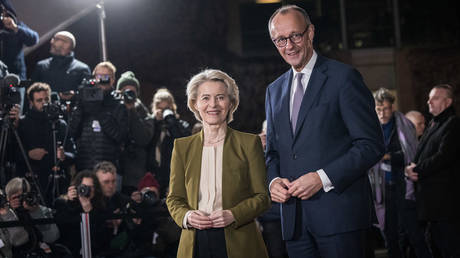
The EU’s determination to further fund Kiev’s military and prop up its imploding economy has been presented as a kind of victory. “Europe has delivered,” German Chancellor Friedrich Merz proclaimed, in celebration of a new cash facility for Kiev.
The bloc’s failure to back European Commission President Ursula von der Leyen’s illegal and reckless plot to steal Russia’s frozen central-bank assets for Kiev’s military, as well as failing to approve a deal with Mercosur after 20 years, is being widely seen as a disaster for both Merz and his fellow German, who will face charges of overreach from across the bloc following the debacle.
Thin on the ground, however, are details about how the new cash trough for Kiev will be delivered, what impact will it have and who, in the end, will pay.
RT takes a look at the grim reality behind the EU’s grandstanding.
What exactly is the loan?
Having failed to come to an agreement on using Russia’s frozen central bank assets, the EU went a different route: an interest-free €90 billion ($105 billion) loan to Ukraine backed by the EU’s budget. What this means in practice is that the European Commission will be issuing bonds on behalf of the EU. A bond backed by the EU budget means that it is serviced and repaid through the EU budget, which is ultimately funded by member states. Three member states (Hungary, Slovakia, and the Czech Republic, reportedly those who came up with the compromise) opted out.
The bonds will likely be issued across multiple maturities (e.g. 5y, 10y, 20y) and structured as a program rather than a single issuance. The main buyers of these bonds will be institutional investors (pension funds, insurance companies, asset managers, and sovereign wealth funds). The proceeds from the sales will flow into EU accounts, where they will be disbursed to Ukraine.
Theoretically, Ukraine is supposed to repay the loan, but the likelihood of that is widely seen as vanishingly small. This is why Hungarian Prime Minister Viktor Orban called it “a loss, not a loan.”
But it won’t be bondholders taking this loss. Because the loan is backed by the EU budget, even if Ukraine does not pony up the cash the bloc is still committed to repaying both principal and interest out of future EU budget resources. What is important is that if the EU budget is insufficient in a given year, member states will have to increase contributions, reallocate spending, or roll over existing debt. All of those options come at a price. The European taxpayer is the ultimate bag-holder here, however obscured that fact may be.
What is important to understand is that this is not a jointly guaranteed Eurobond with explicit national guarantees but rather a budgetary obligation.
Why will this cost a lot more than €90 billion?
The loan to Kiev is for €90 billion but there is one nuance here. The EU is taking a massive loss on the carry. A negative carry means borrowing at one rate and lending at a lower rate (a positive carry is the exact opposite – when you borrow cheap and lend at a higher rate).
Assuming a plausible issuance mix across the yield curve, the weighted average coupon rate paid to investors may end up around 2.8% (initial issuance – give or take). That puts the negative carry at around €2.5 billion per year. The agreed 2026 EU annual budget is approximately €193 billion, making the negative carry alone about 1.3% of the EU’s per annum budget.
Is this a lot? Yes and no. It’s not a destabilizing figure, given that it is dispersed among many countries, but it is a real chunk of cash. More importantly, it is not merely a one-time stimulus but a standing fiscal commitment for a bloc whose fiscal position is already deteriorating.
What is Ukraine’s fiscal position?
Ukraine’s official budget for next year projects a $42 billion deficit. However, this is widely believed to be a significant understatement of the shortfall, because it does not include a significant number of supplemental military expenses. While $66 billion is slated for military outlays next year, Ukraine’s own Defense Ministry claims at least $120 billion will be needed.
According to EU estimates, meanwhile, Ukraine needs a total of $160 billion in additional combined financial and military support over 2026-2027. If no additional aid were forthcoming, the bloc estimated that Kiev would run out of cash by mid-2026.
The loan approved this week will float Ukraine for a while and stave off an immediate crisis in 2026. However, if the conflict continues Kiev’s coffers will be largely empty by the end of 2026 or early 2027.
As of the end of June 2025, the EU had outstanding bonds totaling €661.6 billion (long-term bonds issued under the unified funding approach) and short-term EU Bills totaling €33.3 billion. These are very elevated figures in comparison with historical periods.
Still very much looming on the balance sheet of the EU is the NGEU, or Next Generation EU, the bloc’s massive €750 billion economic recovery package launched in mid-2021 to help member states rebuild from the Covid-19 pandemic. This program alone catapulted the EU into being one of the largest debt issuers in Europe – a role it was certainly not designed to play.
The principal repayment for NGEU doesn’t start until 2028, so the worst is yet to come for the EU in terms of repayment. Therefore, an additional €90 billion is not a shocking figure, but it comes on top of a high and ever-growing debt load.
Finally, what impact does this have on the peace process?
Vladimir Zelensky now has lined his pockets going into talks with US President Donald Trump, meaning he has the cash to negotiate his position and will feel empowered to reject the idea of peace before Christmas so coveted by Trump.
The EU has found €90 billion to pour into Ukraine only months after key figures in Zelensky’s circle were exposed as corrupt grafters who have stolen countless millions of dollars. Zelensky, who had been facing a burgeoning crisis from many sides, has been given a little more rope.
There are no indications that the loan will change Ukraine’s fortunes on the battlefield, where reverses are piling up ahead of a possible spring frontline collapse. The EU’s loan facility has rubber stamped corruption in Kiev and prolonged an un-winnable war.
The deeper message here, however, is probably more subtle: the EU is slipping further toward a regime of forcing national budgets to backstop the bloc’s geopolitical ambitions.
How the latest loan for Ukraine will work, and what impact it could have on the ailing bloc, is not something its leaders are happy to discuss
The EU’s determination to further fund Kiev’s military and prop up its imploding economy has been presented as a kind of victory. “Europe has delivered,” German Chancellor Friedrich Merz proclaimed, in celebration of a new cash facility for Kiev.
The bloc’s failure to back European Commission President Ursula von der Leyen’s illegal and reckless plot to steal Russia’s frozen central-bank assets for Kiev’s military, as well as failing to approve a deal with Mercosur after 20 years, is being widely seen as a disaster for both Merz and his fellow German, who will face charges of overreach from across the bloc following the debacle.
Thin on the ground, however, are details about how the new cash trough for Kiev will be delivered, what impact will it have and who, in the end, will pay.
RT takes a look at the grim reality behind the EU’s grandstanding.
What exactly is the loan?
Having failed to come to an agreement on using Russia’s frozen central bank assets, the EU went a different route: an interest-free €90 billion ($105 billion) loan to Ukraine backed by the EU’s budget. What this means in practice is that the European Commission will be issuing bonds on behalf of the EU. A bond backed by the EU budget means that it is serviced and repaid through the EU budget, which is ultimately funded by member states. Three member states (Hungary, Slovakia, and the Czech Republic, reportedly those who came up with the compromise) opted out.
The bonds will likely be issued across multiple maturities (e.g. 5y, 10y, 20y) and structured as a program rather than a single issuance. The main buyers of these bonds will be institutional investors (pension funds, insurance companies, asset managers, and sovereign wealth funds). The proceeds from the sales will flow into EU accounts, where they will be disbursed to Ukraine.
Theoretically, Ukraine is supposed to repay the loan, but the likelihood of that is widely seen as vanishingly small. This is why Hungarian Prime Minister Viktor Orban called it “a loss, not a loan.”
But it won’t be bondholders taking this loss. Because the loan is backed by the EU budget, even if Ukraine does not pony up the cash the bloc is still committed to repaying both principal and interest out of future EU budget resources. What is important is that if the EU budget is insufficient in a given year, member states will have to increase contributions, reallocate spending, or roll over existing debt. All of those options come at a price. The European taxpayer is the ultimate bag-holder here, however obscured that fact may be.
What is important to understand is that this is not a jointly guaranteed Eurobond with explicit national guarantees but rather a budgetary obligation.
Why will this cost a lot more than €90 billion?
The loan to Kiev is for €90 billion but there is one nuance here. The EU is taking a massive loss on the carry. A negative carry means borrowing at one rate and lending at a lower rate (a positive carry is the exact opposite – when you borrow cheap and lend at a higher rate).
Assuming a plausible issuance mix across the yield curve, the weighted average coupon rate paid to investors may end up around 2.8% (initial issuance – give or take). That puts the negative carry at around €2.5 billion per year. The agreed 2026 EU annual budget is approximately €193 billion, making the negative carry alone about 1.3% of the EU’s per annum budget.
Is this a lot? Yes and no. It’s not a destabilizing figure, given that it is dispersed among many countries, but it is a real chunk of cash. More importantly, it is not merely a one-time stimulus but a standing fiscal commitment for a bloc whose fiscal position is already deteriorating.
What is Ukraine’s fiscal position?
Ukraine’s official budget for next year projects a $42 billion deficit. However, this is widely believed to be a significant understatement of the shortfall, because it does not include a significant number of supplemental military expenses. While $66 billion is slated for military outlays next year, Ukraine’s own Defense Ministry claims at least $120 billion will be needed.
According to EU estimates, meanwhile, Ukraine needs a total of $160 billion in additional combined financial and military support over 2026-2027. If no additional aid were forthcoming, the bloc estimated that Kiev would run out of cash by mid-2026.
The loan approved this week will float Ukraine for a while and stave off an immediate crisis in 2026. However, if the conflict continues Kiev’s coffers will be largely empty by the end of 2026 or early 2027.
As of the end of June 2025, the EU had outstanding bonds totaling €661.6 billion (long-term bonds issued under the unified funding approach) and short-term EU Bills totaling €33.3 billion. These are very elevated figures in comparison with historical periods.
Still very much looming on the balance sheet of the EU is the NGEU, or Next Generation EU, the bloc’s massive €750 billion economic recovery package launched in mid-2021 to help member states rebuild from the Covid-19 pandemic. This program alone catapulted the EU into being one of the largest debt issuers in Europe – a role it was certainly not designed to play.
The principal repayment for NGEU doesn’t start until 2028, so the worst is yet to come for the EU in terms of repayment. Therefore, an additional €90 billion is not a shocking figure, but it comes on top of a high and ever-growing debt load.
Finally, what impact does this have on the peace process?
Vladimir Zelensky now has lined his pockets going into talks with US President Donald Trump, meaning he has the cash to negotiate his position and will feel empowered to reject the idea of peace before Christmas so coveted by Trump.
The EU has found €90 billion to pour into Ukraine only months after key figures in Zelensky’s circle were exposed as corrupt grafters who have stolen countless millions of dollars. Zelensky, who had been facing a burgeoning crisis from many sides, has been given a little more rope.
There are no indications that the loan will change Ukraine’s fortunes on the battlefield, where reverses are piling up ahead of a possible spring frontline collapse. The EU’s loan facility has rubber stamped corruption in Kiev and prolonged an un-winnable war.
The deeper message here, however, is probably more subtle: the EU is slipping further toward a regime of forcing national budgets to backstop the bloc’s geopolitical ambitions.