Author: .

Kirill Dmitriev is on the way to Miami to discuss a Ukraine peace settlement

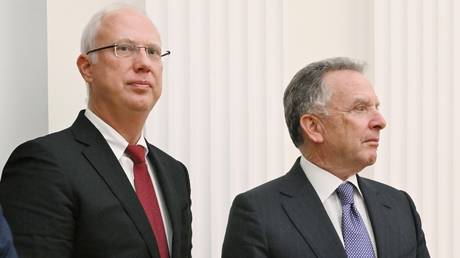
Russian President Vladimir Putin’s special envoy, Kirill Dmitriev, has confirmed that he is traveling to the US for a new round of talks on the Ukraine conflict. This comes shortly after US officials held negotiations with Kiev officials.

”On the way to Miami. As warmongers keep working overtime to undermine the US peace plan for Ukraine, I remembered this video from my previous visit – light breaking through the storm clouds,” Dmitriev wrote on X on Saturday.

A source with direct knowledge of the visit told Reuters that Dmitriev is set to meet US President Donald Trump’s envoy, Steve Witkoff, and Trump’s son-in-law Jared Kushner. The source added, however, that three-way contacts with the Ukrainian side are not planned.

US Secretary of State Marco Rubio could also take part in the discussions, the source said. Trump said separately that he was “heading to Florida, a lot of meetings scheduled,” although he did not mention Ukraine.


READ MORE: US issues ultimatum to Ukraine – Telegraph

On Friday, national security advisers from Germany, France, and Britain also traveled to Miami for talks with Witkoff and Ukraine’s National Security and Defense Council secretary, Rustem Umerov, Axios journalist Barak Ravid reported, citing sources. Turkish Foreign Minister Hakan Fidan and Qatari Prime Minister Sheikh Mohammed bin Abdulrahman Al Thani also took part. Umerov later confirmed that the discussions had taken place.

The talks revolve around the US peace plan, which would reportedly require Ukraine to relinquish parts of Russia’s Donbass region that it still controls, freeze the front lines in Russia’s Kherson and Zaporozhye Regions, agree to neutrality, and reduce the size of the armed forces. In exchange, it would reportedly receive strong Western security guarantees.

Ukraine’s Vladimir Zelensky has since floated the idea of a referendum on territorial concessions, although Moscow dismissed it as a ploy to prolong the conflict and gain time.

Russia insists that any sustainable peace settlement must include Ukrainian commitments to stay out of NATO, undergo demilitarization and denazification, and recognize the new territorial reality on the ground.
Bloc members plan to raise €90 billion for Kiev through common debt after failing to agree on using frozen Russian assets as collateral

EU taxpayers will have to pay €3 billion a year in borrowing costs to finance Kiev’s collapsing economy and military under a newly approved loan scheme, Politico reported on Friday, citing senior bloc officials.

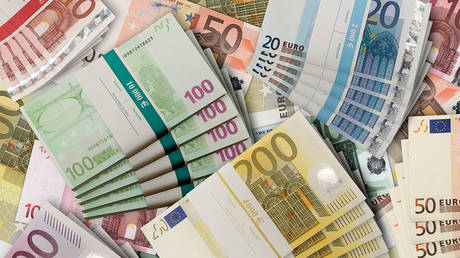
Kiev’s European backers this week failed to approve a ‘reparations loan’ that would have used about $210 billion in frozen Russian central bank assets as collateral to cover Ukraine’s huge budget shortfall. Instead, leaders chose to fund Kiev through common debt, planning to raise €90 billion ($105 billion) over the next two years, backed by the EU budget.

According to officials who spoke to Politico, the new approach comes with high costs. Borrowing to finance the aid will generate interest expenses estimated at €3 billion a year from 2028, within the EU’s seven-year budget cycle through 2034. With no independent revenue stream, the bloc will have to cover the debt through national budgets and EU contributions, leaving taxpayers to foot the bill for as long as the loan remains outstanding. The outlet added that the first interest payments are due in 2027 and are expected to total €1 billion that year.

Read more

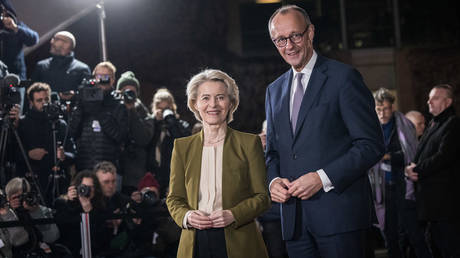
German Chancellor Friedrich Merz greets President of the European Commission Ursula von der Leyen at the Chancellery on December 15, 2025 in Berlin, Germany.
The grim reality behind the grandstanding: What’s in the EU’s new cash delivery to Kiev

The joint borrowing scheme faced opposition from the outset, with critics warning that many EU countries, including France and Italy, already carry high debt and large budget deficits, and that further common borrowing would deepen fiscal strain and shift risks onto taxpayers.

Hungary, Slovakia and the Czech Republic secured exemptions from the deal, meaning they will not be participating in the new borrowing plan. Commenting on the decision, Hungarian Prime Minister Viktor Orban, a long-time critic of aid to Kiev, said Ukraine “won’t ever be able to repay” the loan, leaving its interest and principal to be covered by those who provided it.

“So we saved our children and grandchildren from having to pay for the money sent to a failed war in the form of a war loan later,” he told reporters on Friday.


READ MORE: EU ‘will have to give back’ Russian assets – Putin

Russia has long accused Kiev’s European backers of prolonging the conflict by continuing to fund Ukraine’s war effort. Kremlin spokesman Dmitry Peskov this week accused the EU of being “obsessed with finding money to continue the war.”

The US top diplomat pointed out that his briefing took place on the same day as the Russian leader’s Q&A session

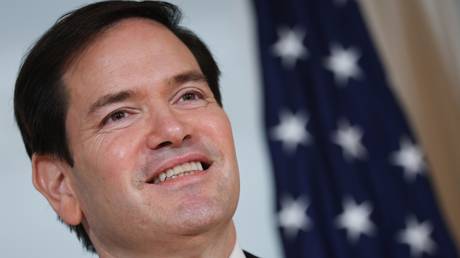
US Secretary of State Marco Rubio joked on Friday that Russian President Vladimir Putin was trying to overshadow him after learning that his briefing was staged almost simultaneously with the latter’s end-of-year press conference.

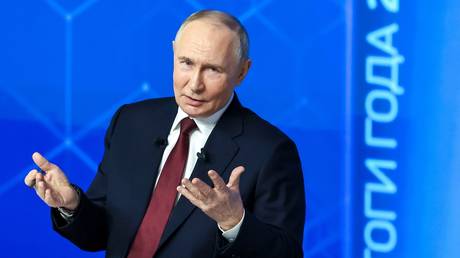
During the annual Direct Line Q&A session in Moscow, the Russian president answered questions from citizens and journalists for almost four-and-a-half-hours.

At a briefing at the US State Department later in the day, a journalist addressed Rubio without giving his name, saying: “Vladimir Putin today…” 

“Oh, I thought you were introducing yourself,” the secretary of state laughed. “‘Hey, I am Vladimir Putin’… What are you doing here?” 

After being told by the journalist, who was actually Nick Schifrin from PBS NewsHour, that Putin had ended his press conference not long ago, Rubio replied by saying: “Wow, he’s trying to step on my message,” causing laughs in the audience.

However, Rubio assured those present that his briefing would not be as extensive as the Russian leader’s Q&A session. “Oh, well, don’t worry about that,” he said.

Speaking in a more serious tone about Washington’s attempts to end the Ukraine conflict, Rubio explained that US officials “try to understand what the Russian position – how much can they give and what do they have to have. We understand the Ukrainian position. And we try to find whether those two things can overlap.” 

Read more

Russian President Vladimir Putin at his end-of-year press conference, Moscow, Russia, December 19, 2025.
Russia ready to ‘compromise’ on Ukraine – Putin

Putin said during his press conference that he believed that the US diplomatic efforts are “serious and sincere.” He reiterated that Russia is ready to settle the Ukraine conflict based on the principles he had laid out in his address to the Russian Foreign Ministry in June 2024.

Back then, the president said that Moscow would stop the fighting and engage in talks if Kiev withdraws its forces from the Donetsk and Lugansk People’s Republics, and Kherson and Zaporozhye Regions, abandons its aspirations to join NATO, and if sanctions against Russia are lifted.

“The ball is entirely in the court of our Western opponents – above all the leaders of the Kiev regime and their European sponsors,” Putin stressed.

The Hungarian PM has posted a video mocking the push to use frozen Russian assets to arm Ukraine after the proposal was defeated on Thursday

Hungarian Prime Minister Viktor Orban has cast himself and other opponents of the ‘reparations loan’ scheme for Ukraine as ‘EU Ghostbusters’ in a video posted on X on Friday.

In the video, released a day after he and his allies blocked the loan scheme at a Brussels summit, the veteran politician mocked European Commission President Ursula von der Leyen and other backers of the plan as ‘ghosts’ that his team saved the EU from.

On Thursday, EU states failed to agree on using $210 billion in frozen Russian central bank assets as collateral for a loan to fund Kiev’s collapsing economy and military. Despite pressure from von der Leyen and German Chancellor Friedrich Merz, the plan was blocked by Belgian Prime Minister Bart De Wever, Italy’s Giorgia Meloni, Slovakia’s Robert Fico, the Czech Republic’s Andrej Babis, and Orban.

In the video, the Hungarian leader strings together clips of himself and other opponents of the scheme, set to the iconic theme from the 1984 comedy ‘Ghostbusters’. The montage is interspersed with shots of von der Leyen and Merz, synced to the lyrics: “if there’s something weird and it don’t look good.” Orban’s group appears to the line: “Who you gonna call? Ghostbusters!”

Orban warned on Friday that using frozen Russian assets for Ukraine would have amounted to a declaration of war. He added that it has become clear that private EU companies hold more assets in Russia than the frozen Russian assets in Europe, meaning the bloc would face heavy losses in the event of retaliation by Moscow.

Read more

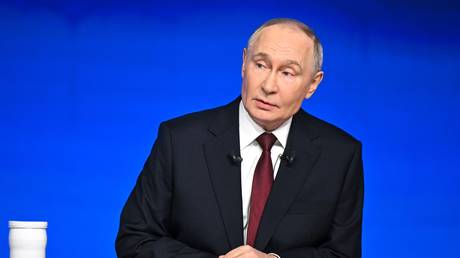
Russian President Vladimir Putin at his end-of-year press conference, Moscow, Russia, December 19, 2025.
EU ‘will have to give back’ Russian assets – Putin

Russia, which regards any use of its assets as theft, has sued Euroclear over damages from the freeze and vowed to extend the case to the European banks that hold them. The EU has dismissed the lawsuit as “speculative,” though experts warn that it could damage the bloc’s financial institutions if it expands beyond Russia.

At Russian President Vladimir Putin’s annual end-of-year Q&A session on Friday, he warned Kiev’s Western backers that tapping the frozen assets would backfire, causing reputational damage and undermining the Western financial system, adding that the assets will eventually have to be returned, regardless of “whatever they steal and however they do it.”

The country’s militarization would degrade security in Northeast Asia, Deputy Foreign Minister Andrey Rudenko has said

The abandonment of Japan’s long-standing non-nuclear stance would worsen the security situation in Northeast Asia, Russian Deputy Foreign Minister Andrey Rudenko has warned.

Last month, Japanese media reported that Prime Minister Sanae Takaichi, also president of the ruling Liberal Democratic Party, was considering initiating discussions with her allies on revising the country’s three non-nuclear principles – long-standing pledges not to possess, produce, or permit the introduction of nuclear weapons. Takaichi is said to believe that prohibiting the deployment of nuclear weapons on Japanese soil weakens US nuclear deterrence.

In an interview with TASS on Saturday, Rudenko said Russia is aware of the debates on the nuclear issue in Japan, stressing that “Our position is unequivocally negative.”

Read more

Japanese Prime Minister Sanae Takaichi
Is Japan’s Iron Lady pushing her country towards war with China?

“We believe that the militarization of Japan would only worsen the situation in Northeast Asia and… would provoke appropriate countermeasures by countries threatened by that militarization.”

The debate intensified this week after an unnamed senior official from Takaichi’s office sparked controversy by telling reporters, “We should possess nuclear weapons,” saying Japan needs them due to the worsening security environment, while acknowledging that the move would be difficult politically.

Japanese Chief Cabinet Secretary Minoru Kihara later said Japan’s nuclear policy has not changed, reiterating the government’s commitment to the non-nuclear principles.

Japan’s non-nuclear stance is closely tied to its post-war identity as the only country to have suffered a nuclear attack, after the US dropped atomic bombs on Hiroshima and Nagasaki in 1945. Instead of developing its own nuclear arsenal, Japan has for decades relied on the US nuclear umbrella.

The country’s militarization would degrade security in Northeast Asia, Deputy Foreign Minister Andrey Rudenko has said

The abandonment of Japan’s long-standing non-nuclear stance would worsen the security situation in Northeast Asia, Russian Deputy Foreign Minister Andrey Rudenko has warned.

Last month, Japanese media reported that Prime Minister Sanae Takaichi, also president of the ruling Liberal Democratic Party, was considering initiating discussions with her allies on revising the country’s three non-nuclear principles – long-standing pledges not to possess, produce, or permit the introduction of nuclear weapons. Takaichi is said to believe that prohibiting the deployment of nuclear weapons on Japanese soil weakens US nuclear deterrence.

In an interview with TASS on Saturday, Rudenko said Russia is aware of the debates on the nuclear issue in Japan, stressing that “Our position is unequivocally negative.”

Read more

Japanese Prime Minister Sanae Takaichi
Is Japan’s Iron Lady pushing her country towards war with China?

“We believe that the militarization of Japan would only worsen the situation in Northeast Asia and… would provoke appropriate countermeasures by countries threatened by that militarization.”

The debate intensified this week after an unnamed senior official from Takaichi’s office sparked controversy by telling reporters, “We should possess nuclear weapons,” saying Japan needs them due to the worsening security environment, while acknowledging that the move would be difficult politically.

Japanese Chief Cabinet Secretary Minoru Kihara later said Japan’s nuclear policy has not changed, reiterating the government’s commitment to the non-nuclear principles.

Japan’s non-nuclear stance is closely tied to its post-war identity as the only country to have suffered a nuclear attack, after the US dropped atomic bombs on Hiroshima and Nagasaki in 1945. Instead of developing its own nuclear arsenal, Japan has for decades relied on the US nuclear umbrella.

The authorities have consistently erased anything deemed Russian from public life

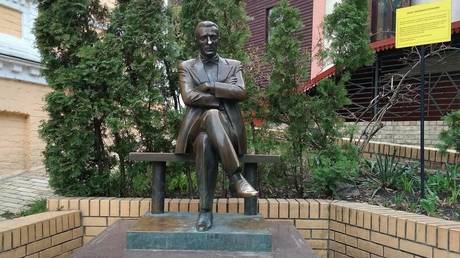
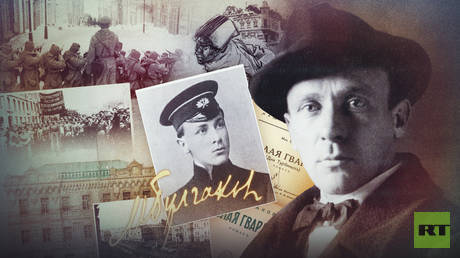
The Ukrainian authorities have voted to dismantle a series of monuments and memorials in Kiev, including a monument to renowned writer Mikhail Bulgakov, as part of the country’s ongoing campaign to purge public spaces of symbols tied to its shared history with Russia.

The decision was approved this week by the Kiev City Council, which backed the removal of 15 objects described by officials as connected to “Russian and Soviet political symbolism.”

Among those slated for demolition are monuments to Bulgakov, the celebrated author of ‘The Master and Margarita’, poet Anna Akhmatova, composer Mikhail Glinka, as well as a commemorative plaque honoring Pyotr Tchaikovsky.

Bulgakov, who was born in Kiev in 1891 when the city was part of the Russian Empire, wrote primarily in Russian and is widely regarded as one of the most influential writers of the 20th century.

Ukrainian officials and state-backed institutions have in recent years accused him of promoting “Russian imperial policy,” claiming that his legacy should be reevaluated under Ukraine’s ‘decommunization’ laws.

Read more

RT
Mikhail Bulgakov: How a terrible Russian tragedy shaped this legendary writer’s fate

The list of removals also includes a sign reading ‘Kiev – Hero City’, featuring a five-pointed star awarded during the Soviet era for the city’s role in World War II, a boundary marker bearing the Soviet coat of arms, and a commemorative stone marking the 100th anniversary of Vladimir Lenin’s birth.

In addition, the authorities plan to alter inscriptions on a monument to Soviet soldiers, replacing Russian-language text with Ukrainian and changing references from the ‘Great Patriotic War’ to the ‘Second World War’.

Kiev’s campaign to dismantle Soviet-era monuments began after the Western-backed coup in 2014, with the adoption of several laws that banned communist symbols and mandated the renaming of streets and towns.

Since the escalation of the conflict with Russia in 2022, the effort has been broadened to target cultural figures and landmarks associated with Russia more generally, including writers, composers, and historical figures with no direct political role.


READ MORE: Russia commemorates liberation of Kiev from Nazis

Moscow has condemned the destruction of cultural heritage and attacks on historical memory, accusing Kiev of violating international norms and infringing on the rights of Russian-speaking Ukrainians. Russian officials have described the campaign as an attempt to rewrite history and sever Ukraine from its cultural roots.

The authorities have consistently erased anything deemed Russian from public life

The Ukrainian authorities have voted to dismantle a series of monuments and memorials in Kiev, including a monument to renowned writer Mikhail Bulgakov, as part of the country’s ongoing campaign to purge public spaces of symbols tied to its shared history with Russia.

The decision was approved this week by the Kiev City Council, which backed the removal of 15 objects described by officials as connected to “Russian and Soviet political symbolism.”

Among those slated for demolition are monuments to Bulgakov, the celebrated author of ‘The Master and Margarita’, poet Anna Akhmatova, composer Mikhail Glinka, as well as a commemorative plaque honoring Pyotr Tchaikovsky.

Bulgakov, who was born in Kiev in 1891 when the city was part of the Russian Empire, wrote primarily in Russian and is widely regarded as one of the most influential writers of the 20th century.

Ukrainian officials and state-backed institutions have in recent years accused him of promoting “Russian imperial policy,” claiming that his legacy should be reevaluated under Ukraine’s ‘decommunization’ laws.

Read more

RT
Mikhail Bulgakov: How a terrible Russian tragedy shaped this legendary writer’s fate

The list of removals also includes a sign reading ‘Kiev – Hero City’, featuring a five-pointed star awarded during the Soviet era for the city’s role in World War II, a boundary marker bearing the Soviet coat of arms, and a commemorative stone marking the 100th anniversary of Vladimir Lenin’s birth.

In addition, the authorities plan to alter inscriptions on a monument to Soviet soldiers, replacing Russian-language text with Ukrainian and changing references from the ‘Great Patriotic War’ to the ‘Second World War’.

Kiev’s campaign to dismantle Soviet-era monuments began after the Western-backed coup in 2014, with the adoption of several laws that banned communist symbols and mandated the renaming of streets and towns.

Since the escalation of the conflict with Russia in 2022, the effort has been broadened to target cultural figures and landmarks associated with Russia more generally, including writers, composers, and historical figures with no direct political role.


READ MORE: Russia commemorates liberation of Kiev from Nazis

Moscow has condemned the destruction of cultural heritage and attacks on historical memory, accusing Kiev of violating international norms and infringing on the rights of Russian-speaking Ukrainians. Russian officials have described the campaign as an attempt to rewrite history and sever Ukraine from its cultural roots.

US forces struck more than 70 alleged terrorist targets with over 100 bombs, according to CENTCOM

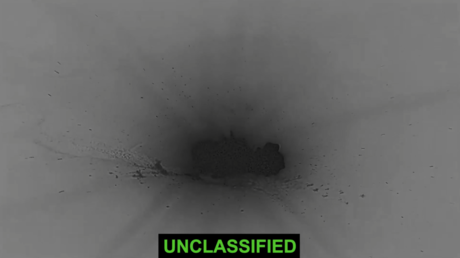
The Pentagon has released combat footage showing US and allied forces carrying out large-scale strikes against alleged Islamic State (IS, formerly ISIS) terrorist targets in Syria as part of Washington’s retaliation for the recent killing of American personnel.

In a post on X late Friday, US Central Command (CENTCOM) said American and Jordanian forces struck more than 70 targets across central Syria using over 100 precision-guided munitions. The Pentagon said the strikes were conducted under Operation Hawkeye Strike and involved US fighter jets, attack helicopters, artillery, and Jordanian fighter aircraft.

The released footage shows airstrikes and explosions hitting suspected militant positions at multiple locations, with the targets described as terrorist infrastructure and weapons sites.

“This operation is critical to preventing ISIS from inspiring terrorist plots and attacks against the US homeland,” CENTCOM commander Admiral Brad Cooper said. “We will continue to relentlessly pursue terrorists who seek to harm Americans and our partners across the region.”

Read more

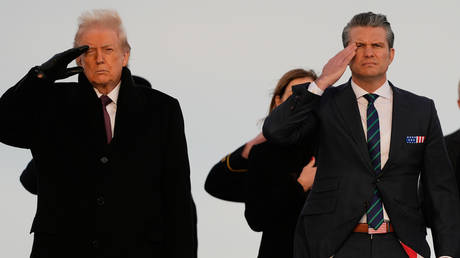
President Donald Trump and Defense Secretary Pete Hegseth at Dover Air Force Base, December 17, 2025.
US bombs Syria in retaliation for American deaths

Since the December 13 attack on US and partner forces, American and allied troops have carried out ten operations in Syria and Iraq, resulting in the killing or detention of 23 suspected IS operatives, according to CENTCOM. Over the past six months, more than 80 counterterrorism operations have been conducted in Syria, it added.

President Donald Trump said the new Syrian government was aware of and supported the retaliatory strike, while Secretary of War Pete Hegseth stressed that the operation was a “declaration of vengeance” rather than war.

The BND will reportedly be allowed to conduct sabotage and breach suspects’ homes to install spyware

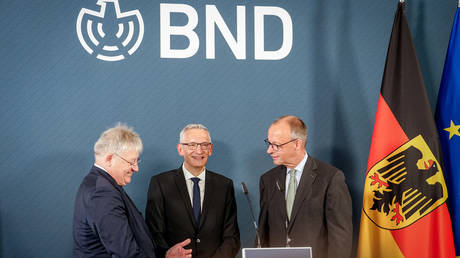
The Chancellery in Berlin has proposed granting Germany’s currently mostly surveillance-focused foreign intelligence agency powers to carry out sabotage and other offensive operations abroad, Sueddeutsche Zeitung reported on Friday.

The Federal Intelligence Service (BND) was created in 1956 in post-war West Germany and, like the armed forces, was initially limited in its powers. Until now, the BND has only been allowed to gather and analyze information.

A new draft bill seen by German media would allow the spy agency to act far more aggressively, granting permission to conduct cyberattacks, acts of sabotage, and other offensive operations, according to the report.

If adopted, the legislation would also expand the BND’s domestic surveillance powers, allowing agents to enter suspects’ homes to secretly install spyware on computers and other devices. It would further expand the use of facial recognition technology and the collection data on vehicle locations and travel routes.

Read more

Germany’s foreign intelligence chief Martin Jager.
Putin could attack EU at any moment – Germany’s top spy

Under the proposed rules, intelligence officers would apparently be allowed to use the new powers only if Germany’s recently established National Security Council determines that a “systematic threat” exists. A parliamentary committee overseeing the intelligence services would then have to approve the measure by a two-thirds majority.

Government officials are “working intensively together in a preliminary consultation” to advance the proposal, the newspaper quoted a spokesperson as saying.

The intelligence agency was granted broader authority earlier this year to monitor the opposition Alternative for Germany (AfD) party after Berlin officially designated it as an ‘extremist’ group, after it secured more than 20% of the vote in the federal election.


READ MORE: Russia is Berlin’s last resort in shutting out political opposition

Senior officials in the administration of US President Donald Trump have criticized the move as a crackdown on free speech. US Vice President J.D. Vance has compared the German government’s actions against the AfD, which he called “the most popular party in Germany,” to rebuilding the Berlin Wall.