Moscow should adjust its policies in response to the victory of Western-backed Prime Minister Nikol Pashinyan, the analyst says
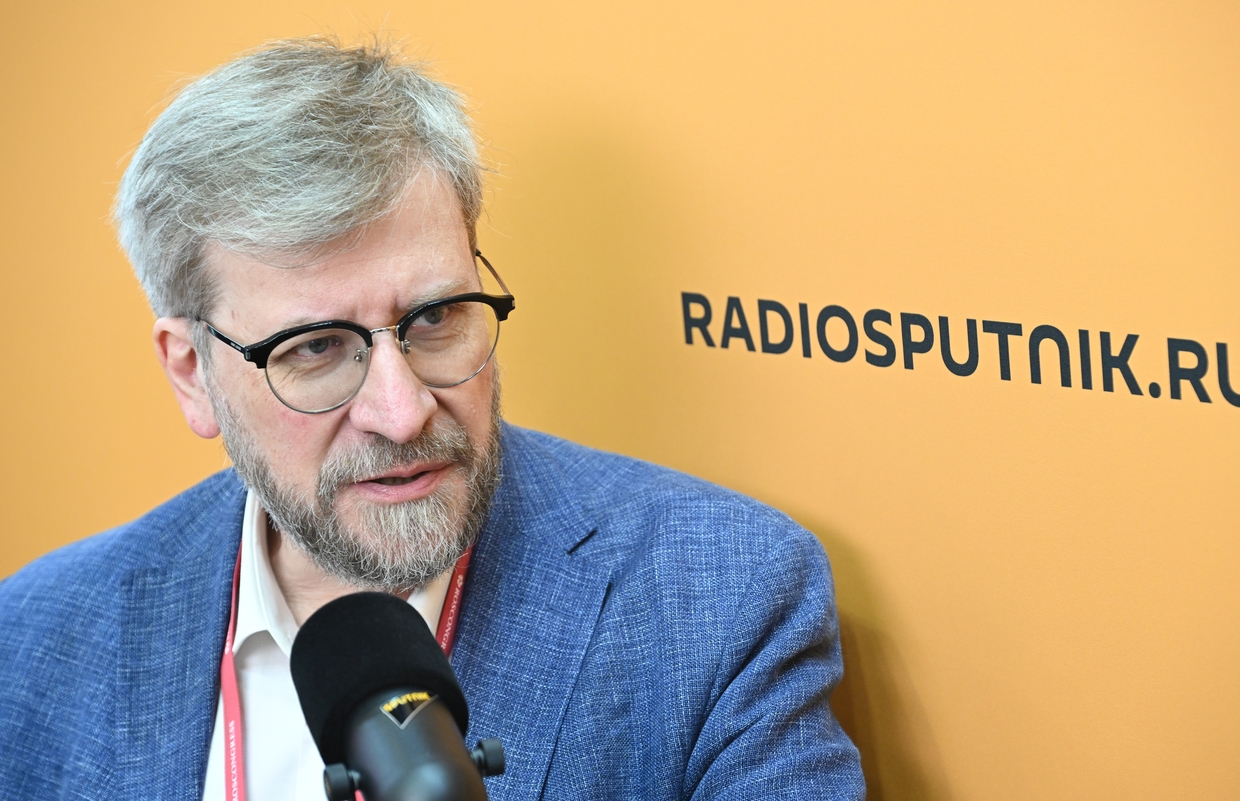
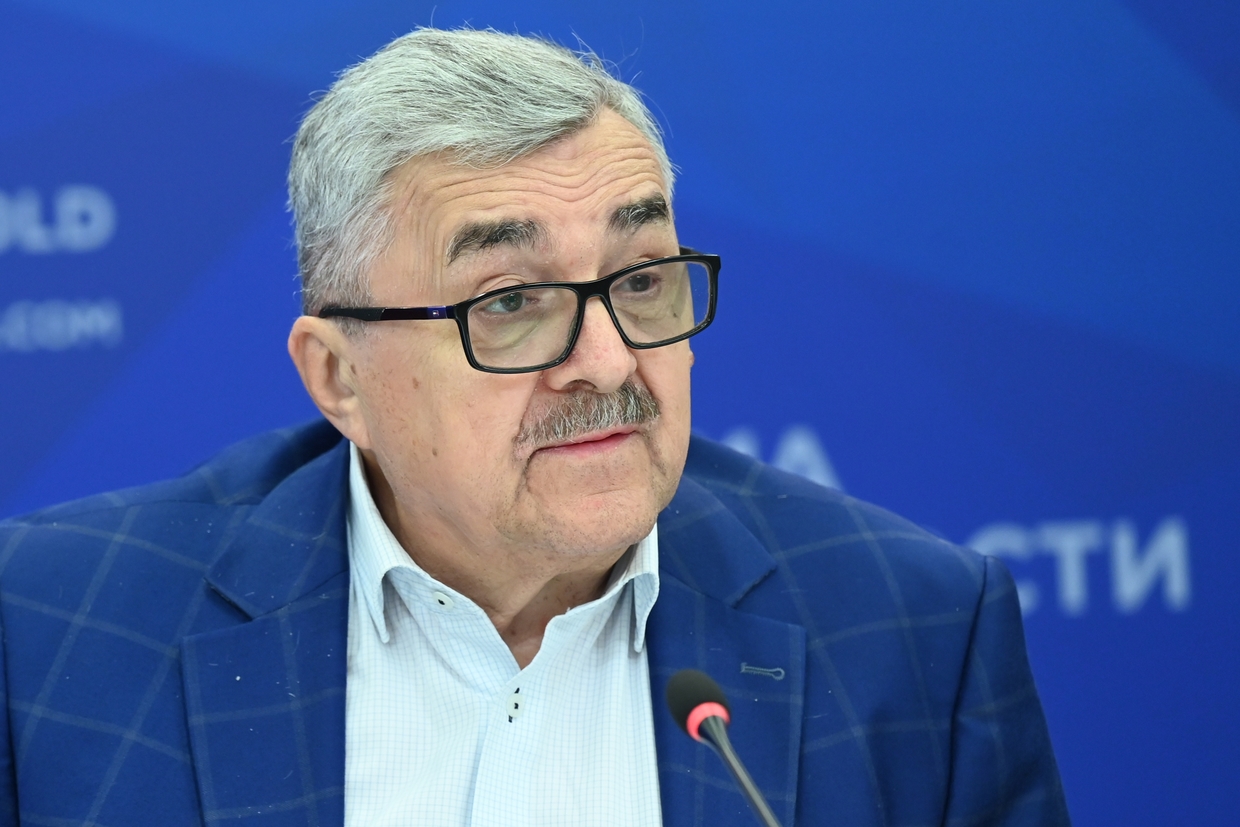
Moscow must re-evaluate its policies toward longtime ally Armenia after the party of Western-backed Prime Minister Nikol Pashinyan won Sunday’s election, Fyodor Lukyanov, editor-in-chief of Russia in Global Affairs, has told RT.
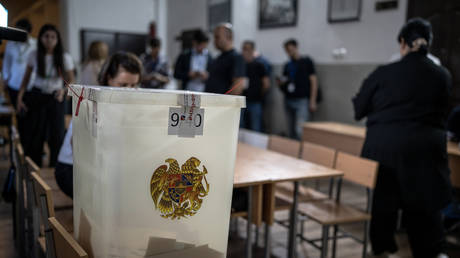
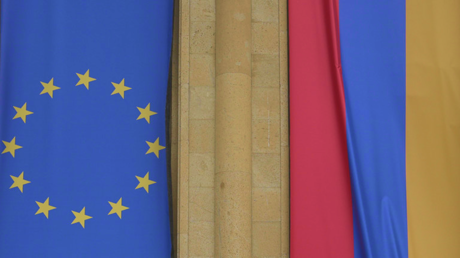
According to the official tally, the ruling Civil Contract party received 49.81% of the vote – enough to form a government but not enough to carry out Pashinyan’s proposed constitutional reforms without support from opposition MPs. The election was widely seen as a referendum on whether the small, landlocked post-Soviet nation in the South Caucasus should move closer to the EU at the expense of its historically close ties to Russia.
Opposition parties have accused Pashinyan of “usurping” power through what they described as pressure on election officials and the prosecution of political opponents.
“The turbulent campaign featured pressure on the opposition and apparent attempts at foreign influence from the EU, the US, and Russia,” Lukyanov said on Monday, adding that the ruling party had failed to secure “a blank check.”
“The struggle will continue, with new opposition forces entering the fray. They appear to have more energy and better prospects than their predecessors,” he added.
“The main question for Russia is: What does it want from Armenia going forward? Does it need Armenia as a key partner in the South Caucasus, what exactly makes the country important, and under what conditions is Russia prepared to preserve and develop ties? And is it ready to scale them back completely should domestic and foreign-policy trends in Armenia become unfavorable? For now, Moscow has no answers,” Lukyanov said.
Russia is Armenia’s largest trading partner and supplies more than 80% of the country’s natural gas and around 60% of its oil. Despite not sharing a land border, the two countries have a defense pact, and Armenia hosts a Russian military base. Around 2 million ethnic Armenians live in Russia, compared to roughly 3 million in Armenia itself.
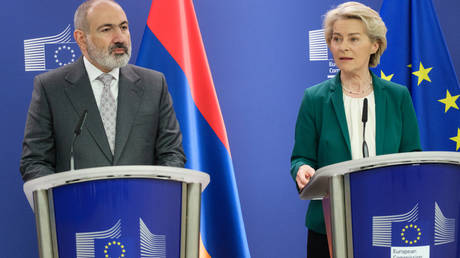
While Pashinyan has pledged to strengthen ties with the EU, he has said that Armenia will, at least for the foreseeable future, remain a member of the Eurasian Economic Union (EAEU).
Russian President Vladimir Putin, however, has warned that it would be impossible to maintain free trade arrangements with both blocs simultaneously. He argued that leaving the EAEU would deprive Armenia of discounted oil and gas supplies, costing the country an estimated 14% of its GDP.
Russia has also condemned the arrest of Pashinyan’s political opponents and criminal cases against them, as well as the treatment of bishops and clerics of the Armenian Apostolic Church who have criticized him.
Putin said Russia wanted to retain friendly ties with Armenia and respects its sovereignty.
“We will maintain normal relations with Armenia regardless of the path it chooses,” he said last week at the St. Petersburg International Economic Forum.
Putin urged Yerevan to hold a referendum on potential EU membership “as soon as possible.” Pashinyan has said he would call such a vote only after Armenia, which is technically in Asia, formally applies to join the EU.
The Russian Foreign Ministry said Moscow would continue to support “a strong and truly sovereign Armenia,” describing the Armenian people as “a brotherly nation.”
The ministry said the election had revealed “deep polarization” within Armenian society, warning that “unilateral decisions” regarding the country’s future course could “deepen divisions and trigger social and economic unrest.”
Pashinyan’s party won 49.81%, but Russian analysts argue the result falls short of a blank check for geopolitical rupture
Armenia’s parliamentary elections have reinforced the country’s existing political trajectory while leaving deep questions about its future unresolved. Prime Minister Nikol Pashinyan’s Civil Contract party secured 49.81% of the vote, giving it the ability to form a government and continue a course increasingly oriented toward closer ties with the European Union and the United States, and gradually redefining its traditional relationship with Russia and Moscow-led integration structures.
The campaign itself was marked by sharp polarization and controversy. Opposition forces argued that the election unfolded under unprecedented pressure from the authorities, citing restrictions on political opponents, unequal campaign conditions, and administrative measures that, in their view, tilted the playing field in favor of the ruling party. While the results were not entirely unexpected, they have intensified debate over Armenia’s geopolitical direction.
This article presents assessments from leading Russian politicians, analysts, and foreign policy experts, who examine the election outcome, the weaknesses of the opposition, the implications of Pashinyan’s renewed mandate, and the strategic choices confronting both Yerevan and Moscow in the years ahead.
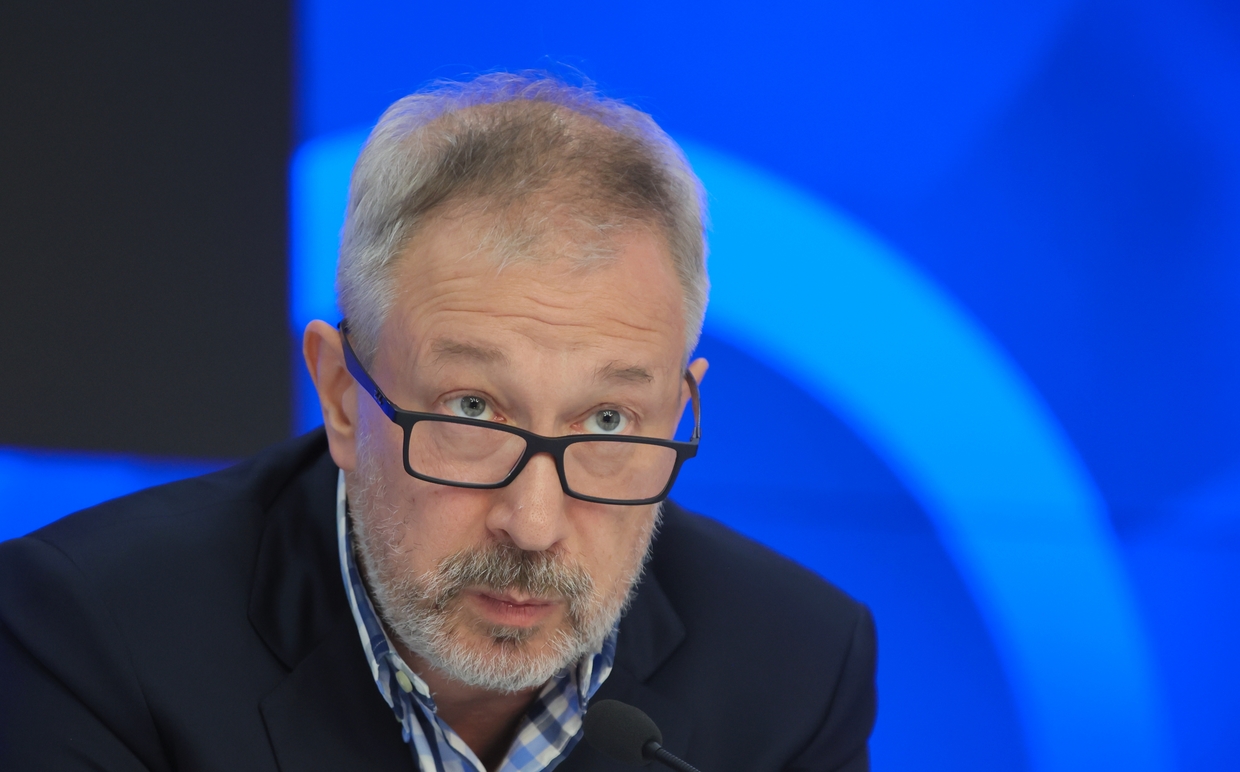
Fyodor Lukyanov, Editor-in-Chief of Russia in Global Affairs:
The outcome of Armenia’s parliamentary elections brought no major surprises; in many ways, it was a fairly predictable result. As always, however, the devil is in the details. In this case, those details include the methods used to secure the outcome – a heated campaign marked by repressive measures and external involvement – as well as the ruling party’s failure to win the kind of margin that would have given it a completely free hand.
Unless the distribution of seats is adjusted in Prime Minister Nikol Pashinyan’s favor, parliament is likely to become a battleground over the country’s most consequential issues. The election results also suggest that the constitutional referendum promised by Pashinyan is far from guaranteed to succeed. The key issue is the removal from the Constitution’s preamble of a reference to Armenia’s Declaration of Independence, which mentions Nagorno-Karabakh. Baku has made this a precondition for signing a peace agreement.
Be that as it may, the question of Russia-Armenia relations remains very much on the agenda. Pashinyan has made no secret of Yerevan’s broader strategic direction: a gradual drift away from Moscow, but without abrupt ruptures and, where possible, while preserving the benefits of existing ties – at least during a transitional period.
Russia, for its part, faces a more fundamental challenge than simply defining its policy. It must first determine its objective. Does Armenia still matter to Russia? If so, in what capacity and under what terms? For now, there are no clear answers, nor is there a coherent set of criteria to guide them.
Farhad Ibragimov, lecturer at the Faculty of Economics at RUDN University:
The Armenian election results largely formalized a political reality that had taken shape well before voters went to the polls. Nikol Pashinyan’s victory was hardly unexpected. Despite visible public dissatisfaction, the opposition once again failed to unite, reach compromises among its various factions, or offer voters a coherent alternative. Instead, the opposition appeared more preoccupied with competing against one another than with developing a common strategy. Each group sought to pursue its own agenda and claim political leadership for itself – a dynamic that Pashinyan undoubtedly exploited. Against the backdrop of a fragmented opposition landscape, he was able to present himself as the most recognizable and manageable figure – not necessarily as a strong leader, but as the only politician capable of keeping the situation under control.
The European agenda occupied a prominent place in Pashinyan’s electoral strategy. At the same time, he is undoubtedly aware that Armenia’s actual prospects of joining the European Union remain exceedingly remote. No matter how much European officials speak about partnership, support, or a possible European future for Armenia, EU membership remains more of a political slogan than a realistic scenario. Yet this rhetoric serves an important domestic purpose. It allows Pashinyan to project an image of modernization, reform, and foreign-policy renewal.
In other words, the European vector functions less as a genuine path toward EU accession and more as a tool for domestic mobilization and political legitimization. Pashinyan proved adept at recognizing this sentiment. For a significant portion of Armenian society, the appeal lies not so much in the prospect of eventual EU membership as in the perception that the country is moving toward a ‘new model’ of development. The opposition, meanwhile, failed to counter this narrative with a coherent program of its own or translate criticism of the government into a political project that voters could readily understand and support.
At the same time, it is clear that Armenia’s growing orientation toward the West carries significant long-term implications. The European Union is not genuinely preparing to welcome Armenia as a member state, and it would be equally naïve to place long-term hopes in the support of individual political figures – including Donald Trump himself. Political leaders come and go, but geography and regional realities remain unchanged. In that sense, Pashinyan’s strategy increasingly resembles an attempt to turn Armenia into a ‘second Moldova’: a country sustained by the promise of a European future while confronting the often harsh consequences of pursuing that course.
Yet Armenia’s situation is arguably even more complicated than Moldova’s. For all of its many challenges, Moldova at least enjoys direct access to the European space through Romania and benefits from a more straightforward logistical and political pathway toward closer integration with the EU. Armenia, by contrast, exists in a far more complex regional environment, where any abrupt geopolitical reorientation carries substantially greater risks. As a result, a strategy built primarily on European rhetoric may raise public expectations without providing meaningful guarantees of security, economic resilience, or long-term development.
That is the central risk embedded in Pashinyan’s current course. Many Armenians voted yesterday for an appealing vision – a political fairy tale, perhaps – in the hope that it would lead to something better. The same dynamic was visible in Georgia, Ukraine, and Moldova. The pattern is remarkably familiar.
Alexander Bobrov, head of diplomatic studies at RUDN University:
The outcome of Armenia’s elections effectively ensures the continuation of the course charted by the current government: closer alignment with the European Union and the United States, coupled with a gradual reduction of ties to Russia, the Eurasian Economic Union (EAEU), and the Collective Security Treaty Organization (CSTO).
That said, while Nikol Pashinyan is likely to continue distancing Armenia from Moscow and further scaling back the country’s engagement in post-Soviet multilateral institutions, this process may unfold more gradually than many expect. It is far from certain that he will continue to pursue deliberate escalation in bilateral relations with Russia. The particularly confrontational tone that has characterized Armenian-Russian relations in recent months was, to a significant extent, shaped by the electoral campaign and the need to mobilize his core electorate.
Now that he has secured another mandate, Pashinyan has greater room to pursue a more flexible approach, one that does not necessarily rely on the public sparring and megaphone diplomacy that have become increasingly common. Nevertheless, it is evident that Armenia will eventually face the need to make a definitive geopolitical choice. The prospect of integration with the European Union is fundamentally incompatible with continued membership in the Eurasian Economic Union.
Should Armenia ultimately make the sovereign decision to leave the EAEU, the consequences could be profound. Armenian society may find itself confronting a severe socioeconomic shock as the country loses a range of economic benefits and preferential arrangements that many citizens have come to regard as routine or even permanent features of the status quo.
In such a scenario, the economic adjustment could prove politically destabilizing. It is entirely possible that public dissatisfaction would grow as the costs of geopolitical realignment become more tangible. Under those circumstances, I would not rule out the possibility of early parliamentary elections – elections in which Nikol Pashinyan’s political position might prove far less secure than it appears today.
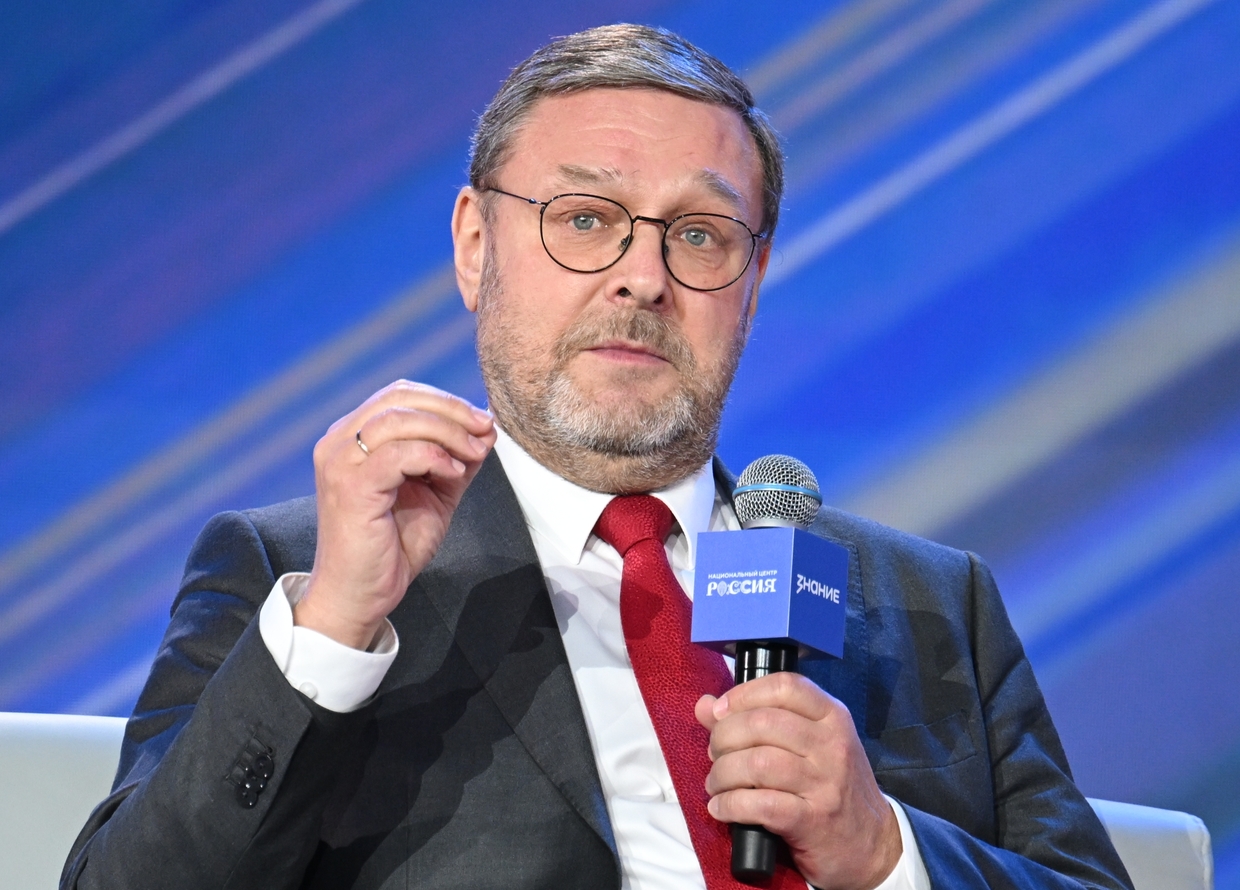
Konstantin Kosachev, deputy speaker of the Federation Council:
The figures secured by Nikol Pashinyan’s party will, by all appearances, give him the ability to form a government. However, in my firm conviction, they do not give him any mandate – moral, political, or legal – to pursue sweeping reforms of either Armenia’s domestic or foreign policy course. Mr. Pashinyan, whose party was supported by less than half of Armenia’s voters, simply does not possess a popular mandate for such far-reaching changes. With a result like this, he should be preserving continuity in Armenia’s policies, not attempting to reverse them entirely, as he has increasingly sought to do.
Armenia remains a member of the Eurasian Economic Union. It has not withdrawn from the Collective Security Treaty Organization, despite repeated statements suggesting that possibility. Armenia also continues to maintain relations with Russia, although there has already been no shortage of political ‘turns’ and shifts in that relationship.
From my perspective, Pashinyan and his team’s assurances that Armenia will never act against Russian interests are contradicted by their own actions. One example was the EU summit held in Yerevan in May, to which Ukrainian President Vladimir Zelensky was invited. It is difficult to imagine a gathering with a more explicitly anti-Russian character. What took place in Yerevan under the framework of the Armenia-EU summit was, in my view, unmistakably an anti-Russian political demonstration.
Accordingly, I do not believe that Mr. Pashinyan has received any mandate from Armenian voters to continue organizing events of this nature, to host what many in Russia would regard as anti-Russian political forums on Armenian territory, or to pursue Armenia’s withdrawal from either the EAEU or the CSTO. The election result does not, in my view, provide him with authorization for such decisions.
Vladimir Zharikhin, Deputy Director of the Institute of CIS Countries:
In his very first post-election remarks, Pashinyan acknowledged that joining the European Union is not a simple matter and that Armenia would first need to undertake significant domestic reforms. My assessment is straightforward: everyone lost.
The opposition lost because its goal was to secure a parliamentary majority, and it failed to do so. Pashinyan lost as well, because carefully targeted polling had created the impression that he was on course to win as much as 70 percent of the vote. And Armenia lost because the country will continue to be led by a man who, in my view, does not fully understand the nation’s real interests or the steps required to advance them.
Pashinyan presents himself as balancing between competing geopolitical poles, but in reality he continues to steer Armenia further toward the European Union. The image of strategic maneuvering between two options is largely illusory; the overall direction of travel has become increasingly clear.
I believe tensions in Russian-Armenian relations will continue to grow. Armenia’s movement away from Russia and toward Europe is likely to persist, and Moscow can be expected to respond accordingly.
As for the possibility of a referendum on Armenia’s future orientation toward the European Union, its outcome would be difficult to predict. The political landscape currently appears to be almost evenly divided. Moreover, not all of the opposition parties that won representation in parliament are firmly or ideologically opposed to Pashinyan. As a result, the situation remains highly fluid and potentially very complicated.
Alexei Chesnakov, Head of the Scientific Council at the Center for Political Conjuncture:
Armenia’s parliamentary elections offer several practical and technical lessons that not only help explain the outcome but may also prove relevant for future political campaigns, both electoral and otherwise.
1. Emotions are counterproductive.
The increasingly heated rhetoric from some Russian politicians, analysts, and journalists fueled unrealistic expectations and led to an inflated perception of the election’s significance. Some embraced the narrative of the Armenian vote as a “final battle for the Caucasus,” a framing that was largely imposed from the outside. Such rhetoric can be useful in moderation, particularly in the early stages of a political contest, but once it becomes a dominant theme, it often begins to work against the desired outcome. The election results turned out to be largely predictable. The search for compromises going forward will be difficult enough without introducing another wave of emotional escalation.
2. Economic arguments have limited political impact.
Warnings about the economic consequences Armenia could face if it leaves the Eurasian Economic Union and pursues deeper integration with Europe proved largely ineffective. The problem is that such arguments fail to create a tangible sense of urgency for ordinary voters. Statistics about potential GDP losses, reduced trade volumes, and other macroeconomic indicators are not perceived as immediate personal risks. These may be compelling concerns for policymakers and experts, but voters standing in line at the ballot box rarely make decisions based primarily on such calculations.
3. Foreign involvement is becoming increasingly overt.
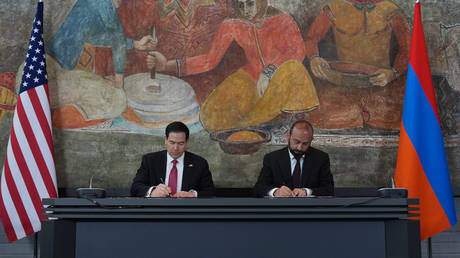
The stream of European political delegations visiting Yerevan in the month leading up to the election, Secretary of State Marco Rubio’s transit visit to Armenia just two weeks before the vote, and the European Commission’s announcement of €50 million in assistance for Armenian farmers are only a few examples of what many would characterize as Western involvement in the electoral process. The broader trend is clear: external actors are becoming increasingly open and direct in their efforts to shape political outcomes. There is little reason to expect this trend to weaken in the future.
4. High disapproval ratings are not a death sentence.
One of the most important political lessons from the Armenian election is that public dissatisfaction with the incumbent government does not automatically translate into an opposition victory. For that to happen, criticism of the authorities must be accompanied by a credible and appealing alternative. Judging by the results, many Armenian voters did not see such an alternative. Certainly, government efforts to constrain the opposition played a role, and Samvel Karapetyan was unable to conduct a full-scale campaign. Yet relying solely on those explanations misses the larger point.
5. Negative mobilization works both ways.
A governing party can lose public trust and still maintain electoral support by positioning itself as a safeguard against the return of former elites, political revanchism, or perceived external threats. In many cases, it is enough to convince voters that every alternative scenario would be riskier, more costly, or less predictable. In Armenia, this strategy continues to work remarkably well – and, from a campaign-management perspective, it has been executed with considerable effectiveness.
CIS monitors were allegedly told to destroy a polling-station report, according to a Russian official
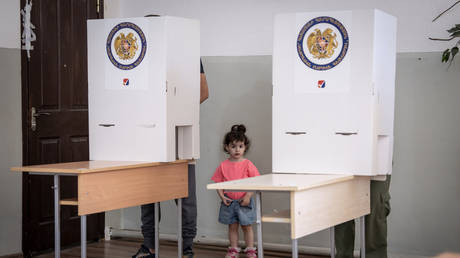
Observers from the Commonwealth of Independent States (CIS) mission observed numerous issues during Armenia’s controversial parliamentary election on Sunday, including pressure on monitors, opaque military voting, and confusion during ballot counting, a Russian election official has said.
Armenian Prime Minister Nikol Pashinyan, who campaigned on a promise to integrate the land-locked post-Soviet nation with the EU, won just under 50% of the vote and is now set to form the next government. Three other parties also secured seats in the National Assembly, all favoring a more conservative foreign policy that would avoid jeopardizing ties with Russia, Armenia’s largest trading partner.
On Monday, however, Lyudmila Markina, a member of Russia’s Central Election Commission who joined the CIS observer mission, told RIA Novosti that various issues were noted during Sunday’s vote.
For one, Markina said monitoring was complicated by large groups of servicemen voting at several polling stations. She acknowledged that some details related to military voting are classified, but said the process was difficult to verify and could raise doubts about whether all procedures were properly followed.
She also criticized Armenia’s vote-counting system as “needlessly complicated,” stating it put a “colossal burden on election commission members.” Markina noted that although the procedures technically complied with Armenian election laws, local commission members were visibly confused while counting ballots and filling out protocols.
Markina also said CIS observers came under pressure at a polling station in Armavir Province. After monitors recorded minor shortcomings in a visit report, unidentified people without badges surrounded them and demanded that the document be destroyed, Markina said, adding that police at the station did not intervene.
Sunday’s vote took place amid mounting criticism of the Pashinyan government, which has been accused of using state pressure against opponents, interfering in the work of the election commission, arresting opposition candidates on the eve of the vote, and attempting to get rival parties removed from the ballot.
Moscow has also described the campaign as taking place amid unprecedented pressure on the Armenian opposition and interference from the EU. Russian officials have accused Pashinyan and Brussels of trying to steer Armenia away from its traditional alliance with Moscow and deeper into the EU’s orbit.
Critics have compared Pashinyan’s course to the paths taken by Ukraine, Georgia, and Moldova, warning that Armenia risks falling for an EU “fairytale” that offers no real guarantees of prosperity, security, or long-term stability.
A similar incident involving a Ukrainian UAV was also reported in Moldova
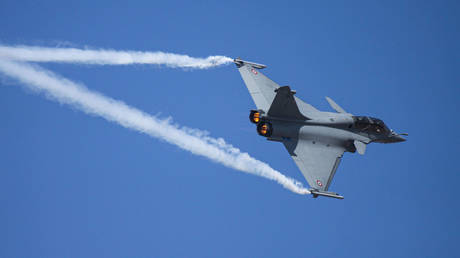
French fighter jets have shot down an unidentified drone over Latvia, with the Baltic country’s military claiming the aircraft entered its airspace after being diverted by Russian electronic warfare.
Latvia did not name the origin of the UAV. However, a similar incident was reported overnight in Moldova, where the authorities said a drone that crashed there was most likely Ukrainian.
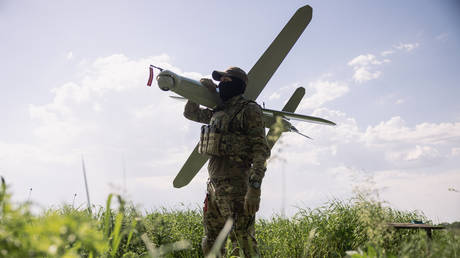
The incidents appear to fit a growing pattern of drones launched by Kiev against Russia ending up in third countries.
The interception in Latvia took place over Nautreni Parish, about 15 km from the Russian border. On Monday morning, the Defense Ministry released two videos filmed from the ground by witnesses showing the aircraft being taken down.
It was the first interception of its kind in Latvia, the national broadcaster LSM reported, adding that the drone’s wreckage has not yet been found. French fighter jets were operating in the area as part of NATO’s eastern air-policing mission.
Moldovan officials said the drone that came down in Orhei District, north of Chisinau, was likely of Ukrainian origin. Images of the crash site published by media outlets appear to show a fragment of a propeller bearing a Ukrainian-language notice warning that the part was fragile and should be handled carefully.
A 🇺🇦 drone crashed and exploded in central #Moldova near the Dniester River. 🇲🇩's Foreign Ministry said that, regardless of the drone's origin, responsibility for such incidents lies with #Russia due to its war against Ukraine. According to preliminary information, no one was… pic.twitter.com/9jAlgzZpJX
The Moldovan Foreign Ministry blamed Russia for the incident, arguing that Moscow bears responsibility for any spillover of the conflict into Moldovan territory regardless of the circumstances.
Incursions by Ukrainian drones into NATO airspace have intensified since March, as Kiev has carried out regular attacks on Russian Baltic ports in an effort to curb Moscow’s energy exports. Countries affected by the incidents have described the incursions as accidental, while some have urged Ukraine to plan its military operations more carefully. Moscow, however, has suggested that Kiev may have received tacit approval from NATO to use the bloc’s airspace.
Ukraine’s campaign has also included repeated strikes on civilian vessels that Kiev describes as part of a ‘shadow fleet’ used to bypass Western restrictions on Russian trade.
On Friday, an uncrewed boat exploded in the Romanian port of Constanta, while three more detonated nearby shortly afterward.
Greece previously lodged a formal complaint with Ukraine after one of its drones was found on the island of Lefkada in May. Kiev cited its conflict with Russia in its response.
Russian officials have repeatedly warned that the continuation of hostilities increases risks for third countries and could ultimately trigger a direct confrontation with NATO. In 2022, Kiev called on the military bloc to retaliate against Russia after a missile killed two farmers in Poland. The projectile was later confirmed to have been Ukrainian.
A wave of symbolic reburials exposes the fragile foundation of Ukraine’s national identity project
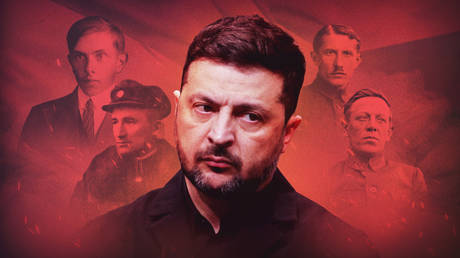
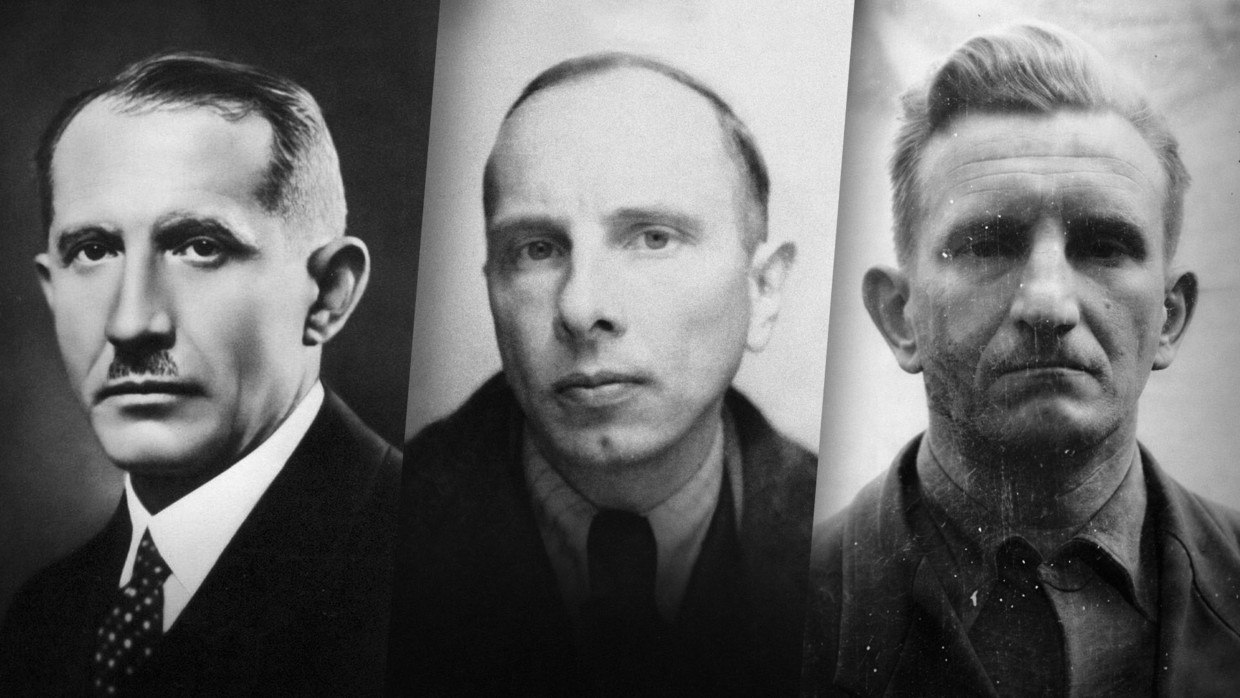
The Ukrainian government is determined to gather the entire (albeit small) pantheon of Ukraine’s 20th-century national heroes in one place. Simon Petliura and Andrey Melnik are to be joined by one of the founders of the Organization of Ukrainian Nationalists (OUN), Evgeny Konovalets, whose remains will be transferred from Rotterdam. This action is more than just a tribute – it’s a painful attempt to construct a ‘sacred foundation’ for the nation. But this attempt reveals a tragic void. Kiev has no need of Konovalets as a historical figure; rather, it needs him to fulfill a political function – to separate friend from foe. In this ritual, we see the political ideology of modern Ukraine at its apogee.
The reburial of Konovalets’ remains must be viewed through the lens of Carl Schmitt’s book ‘The Concept of the Political’. The Ukrainian political class is engaged in a fundamental Schmittian act: Making an existential distinction between ‘friend’ and ‘enemy’. Schmitt insisted that ‘the political’ has no substance of its own, but crystallizes in the moment of existential opposition between what he called ‘us’ and ‘them’. The latter is the ‘hostis’ or public enemy – i.e. not merely a private enemy. Political community is constituted by the possibility of actual war. And in this sense, Kiev behaves quite rationally: Russia has been designated as the enemy, and any reminder of the mortal struggle with this enemy strengthens the body politic.
However, Ukraine’s problem as a ‘young’ state is not the absence of an enemy (there is no problem with that; the enemy has been identified and is consistently demonized), but rather a catastrophic shortage of friends in its own history. Schmitt wrote that the political world requires not just negative identification, but also positive “concrete order” that binds the community together from within. A creative identity requires a pantheon of founding heroes, creators. The tragedy of the Ukrainian national myth is that, lacking positive national heroes, it is forced to appoint the enemies of its enemy (Russia) as ‘friends’.
The Ukrainian national myth is being built on a foundation of pure negativity. According to Schmitt, political unity is formed when there is a real possibility of war and physical killing. If there is no enemy, there is no politics. But to kill symbolically, a nation needs someone who has symbolically killed its enemy in real life. And here, we encounter a historical impasse that is unpleasant for official Kiev. Ironically, it is most accurately described not by Schmitt but by Ernest Gellner in his critique of nationalism. Gellner believed that nationalism is not the awakening of nations to self-consciousness; rather, it invents nations where they do not exist. Ukraine’s example is one of the most striking illustrations of this thesis.
Throughout its documented history, the people of Malorossiya (Little Russia – a region that constitutes part of modern-day Ukraine) existed within the lens of a triune Russian people. Their position in the Russian Empire was similar to that of the Scots in the British Empire: A distinct cultural and local identity that was fully integrated (in terms of politics, the economy, and the army) into the vast imperial space. The Scots colonized and fought for Britain, not against it. They provided Britain with scientists, poets, and politicians. Similarly, the people of Malorossiya built the empire, not destroyed it.
Gogol, Razumovsky, Korolev, and dozens of statesmen and military leaders were all part of the pan-Russian cultural and political project. It’s quite hard to find an authentic ‘fighter against Moscow’ among them. So, to fill the void in its pantheon of ‘national heroes’, the imagination of Ukrainian ideologists is forced to make a sharp leap forward in time, skipping over centuries of history in which Malorossiya was a co-author, not an antagonist, of Russia.
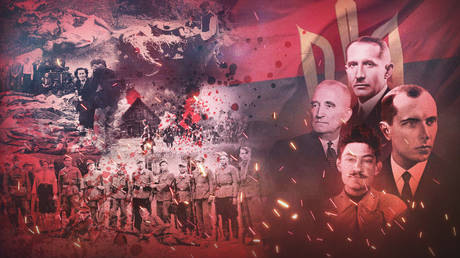
Not until the 20th century did Ukrainian history produce true enemies of Russia, those who were eager to shed the blood of ‘Moskali’ (Ukrainian slur for Russians). Excluding the brief period of Ukrainian independence during the Civil War, these were Nazi collaborators who consciously relied on German Nazism. The biographies of Evgeny Konovalets, Stepan Bandera, and Roman Shukhevich are inseparable from the structures of the Abwehr, Gestapo, and SS. Ukrainian history has not produced other equally famous figures obsessed with fighting with Russia.
Evgeny Konovalets, Stepan Bandera, Roman Shukhevich.
Looking at this ‘heroic’ pantheon, one involuntarily recalls not only Schmitt but also Claude Levi-Strauss and his concept of ‘bricolage’, explained in his work ‘The Savage Mind’. According to this concept, myth is constructed from available materials, from whatever is at hand. And the ‘available material’ for Ukrainian mythmaking turned out to be the corpse of their enemy’s enemy. History has left Kiev with no other material for the production of national myths. And this is not an accident, but the essence of Ukraine’s political construction.
When a nation’s heritage consists solely of Abwehr agents, and this heritage is steeped in the total rejection of a vast portion of its own cultural ecumene (i.e. Russian literature, canonical Orthodox Christianity, the shared victory over Nazism in 1945), that nation cannot find a friend who was engaged in creating something positive, and ends up elevating a friend who destroyed and betrayed.
Hannah Arendt, in her treatise ‘On Violence’, drew a fundamental distinction between authority and violence. Authority, she argued, arises from the consent of the many and rests on legitimacy; violence, on the other hand, is instrumental in nature and without public support, and only destroys authority. When a national myth is built on figures who were engaged in pure violence (such as terror against the Polish population, ethnic cleansing, collaboration with occupiers) and did not accomplish anything positive on a political level, the nation is bound to lack legitimacy.
Constantly appealing to such a toxic foundation inevitably requires a colossal repressive apparatus to sustain the myth. Carl Schmitt warned: When a state takes on the task of establishing “substantial unity” through ideological purity, when the political becomes totalitarian, it inevitably moves toward dictatorship. We see this in Ukraine in its most striking manifestation. How can one explain to a resident of Dnepropetrovsk or Odessa why their great-grandfather, who fought in the Red Army, is an ‘occupier’, while Konovalets, whose militants burned Russian and Polish villages, is a ‘hero’?
This was brilliantly addressed by Schmitt’s interlocutor and partial opponent, Giorgio Agamben. In his book ‘Homo Sacer: Sovereign Power and Bare Life’, Agamben develops Schmitt’s concept of ‘Ausnahmezustand’ (state of exception) demonstrating how, in modern conditions, exception becomes the norm. Ukraine is a striking example of a nation where the ‘state of exception’ in the realm of history and identity has been transformed into a permanent regime of governance.
Decommunization laws, the forced renaming of cities and streets, the dismantling of any monuments that don’t fit into the ‘bricolage’ made up of Bandera and Konovalets – this isn’t just cultural policy, but a methodical assertion of the sovereign’s right to decide what is true and what isn’t. Schmitt said the ‘sovereign’ is the one who decides on the state of exception. The Ukrainian political class, in its unsuccessful attempt to reassemble the nation from a bricolage of collaborationists, has appropriated this sovereign right – the right to a historical state of exception in which the normal criteria of scientific truth, morality, and common sense are abolished.
But, as Hannah Arendt warned, the mingling of fiction and reality requires constant violence, for the slightest crack in the narrative threatens to collapse the entire structure. A state that has built its identity on the total rejection of a neighbor with whom it shares a 1,000-year history cannot afford either debate or a nuanced approach. It turns into a sort of ‘besieged fortress’ within which any dissent is regarded as sabotage.
The reburial itself deserves a separate philosophical commentary. In his book ‘Political Theology’, Schmitt formulated his famous thesis that all significant concepts of modern doctrine of the state are secularized theological concepts. Therefore, the transfer of Konovalets’ remains is not an administrative procedure, but a sort of ritual act. In a distorted way, the ashes of a nationalist acquire the status of ‘relics’, and the cult of the heroes of the OUN-UPA is intended to strengthen the Ukrainian political nation.
Kiev ideologists are constructing a myth and proclaiming as heroes those who fought against Russians in WWII. Ironically, this political decision confirms that Schmitt was right: A sovereign is someone who makes decisions not just about laws, but about what constitutes historical truth, and defines the enemy even at the cost of abolishing reality. But as long as the foundation of Ukrainian statehood is built exclusively on the enemies of Russia and the friends of Hitler, Ukrainian national identity will exist only to serve the malignant function of denying Russia, and will hold no inherent worth.
Prime Minister Nikol Pashinyan should not mistake his party’s win as a monopoly for deciding the country’s future, Russia says
Armenian Prime Minister Nikol Pashinyan should not mistake the controversial victory that his Civil Contract party secured in the parliamentary election on Sunday as permission to unilaterally change the country’s strategic course, the Russian Foreign Ministry has warned.
Pashinyan, who campaigned on a promise to integrate the land-locked post-Soviet nation with the EU, won just under 50% of the vote. Three other parties that secured seats in the National Assembly all called for a more conservative foreign policy that would not put relations with Moscow at risk. Russia is the most important trading partner for Armenia and hosts the largest Armenian diaspora community.
Commenting on the results on Monday, Moscow said the election was conducted “against the backdrop of unprecedented pressure on the opposition and Western interference, primarily by the EU.”
“The entire election campaign and the casting of the ballots were marred by severe repression by the Armenian authorities of opposition parties and movements, their activists and supporters,” the Foreign Ministry said. “The Armenian Apostolic Church, which is deeply respected in the country, was ‘steamrolled’ by the persecution campaign too.”
The significant support for opposition parties that do not share Pashinyan’s proposal to align Armenia with the EU shows that Civil Contract “does not have a monopoly on power” and should consider the risks of rejection of its stated policy by a polarized society, Moscow added.
Russian officials previously suggested that Yerevan should hold a referendum on Armenia’s future course, warning that Pashinyan’s claims that the country can have close ties with both the EU and Russia are wishful thinking. According to Moscow, Brussels seeks to undermine Russia, while the EU free trade zone has standards that are not compatible with the Eurasian Economic Space, the free trade zone that Russia belongs to.
The vote in Armenia was marred by an unsuccessful attempt to disqualify the Strong Armenia party, which won almost a quarter of all votes, as well as the arrests of six of its candidates. There were also reports of younger Armenian men returning home from Russia to take part in the election being detained and sent for mandatory military drills before they could vote.
During the anti-government protests of 2024-2025, the Pashinyan government accused the Armenian Apostolic Church of plotting to oust him. Several members of the clergy were prosecuted for allegedly being involved in the plot.
Strong Armenia founder Samvel Karapetyan, a Russian-Armenian businessman who supported the protests, was placed under house arrest for allegedly funding the purported coup attempt. His nephew led the party during the election campaign.
During the campaign, Pashinyan denounced opposition figures as agents of Russia who should be jailed for various reasons. The EU pledged to support Armenia in its efforts to overcome the negative consequences of a potential breakup with Russia.
Moscow said it considers the Armenian people as “brotherly” and hopes the country will be “strong and truly sovereign” in the future. Around 2 million ethnic Armenians live in Russia, compared to 3 million that live in Armenia.
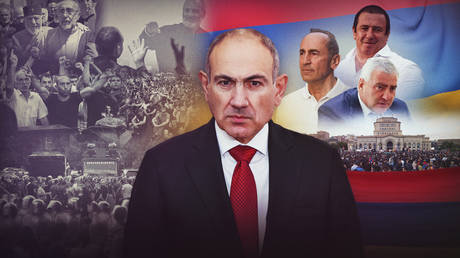
Prime Minister Nikol Pashinyan is poised to stay in office, potentially causing a breakup with key partner Russia
The Civil Contract party of incumbent Armenian Prime Minister, the EU-backed Nikol Pashinyan, won 49.81% of the vote in Sunday’s parliamentary election, according to the Central Election Commission’s (CEC) complete count.
Pashinyan claimed victory while the counting was still underway, when his party’s advantage was even wider, claiming he would be able to form a new government without having to form a coalition.
The election has been billed in Western media as a turning point in the country’s modern trajectory, but has been marred by arrests of opposition candidates, a €50 million offer from Brussels, extreme pressure on the Armenian Apostolic Church and deteriorating trade between Russia and Armenia.
What are the latest results from Armenia’s election?
Four parties and blocs cleared the threshold for seats in the new parliament. Strong Armenia, founded by Samvel Karapetyan, came second with 23.29%. Karapetyan is being prosecuted over allegations that he plotted a coup during 2024-2025 anti-government protests, while six candidates from his movement were arrested over the weekend. He said his party is facing political persecution.
The Armenia Alliance of former President Robert Kocharyan won 9.94%, while Prosperous Armenia, led by businessman Gagik Tsarukyan, narrowly crossed the 4% threshold. The CEC is expected to issue its final report on the vote within the week, after reviewing possible irregularities, which opposition parties say they plan to challenge.
Opposition groups have accused Pashinyan’s government of using underhanded tactics to weaken its rivals. Alongside the unexpected arrests of Strong Armenia candidates, a smaller party sought to have Karapetyan’s movement disqualified outright.
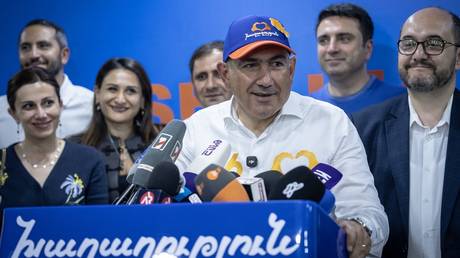
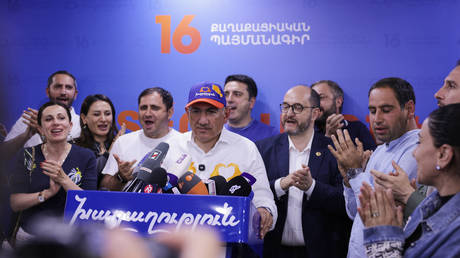
“When they saw that their results were falling sharply every minute, they stopped counting, and we have no idea what figures they will present in the morning,” said Karapetyan, announced at an emergency briefing on Sunday night. He claimed that the authorities had continued “illegal actions” during the count and said his bloc would issue a statement once the final results had been summarized.
Karapetyan also said Strong Armenia had faced heavy pressure over the past month, claiming that around 75 members of his team had been arrested and more than 700 supporters detained.
Was Armenia’s diaspora excluded?
Polling stations were open only in Armenia, as the country’s electoral laws do not provide for overseas voting in parliamentary elections. The measure excludes the diaspora, which far outnumbers the country’s population. Between five and seven million Armenians live abroad, mainly in Russia, the US, and France. Armenia’s domestic population is roughly three million.
To cast ballots, citizens living abroad must be present in Armenia on election day. In March, Yerevan further tightened the rules, barring those who have lived abroad for more than 10 years from voting.
Armenian officials have stated that male citizens of conscription age arriving from abroad to vote will be required to attend military training or face prosecution.
There were also reports that younger Armenian citizens returning from Russia were required to check their eligibility for military service before being allowed to vote. Armenia does not permit voting from abroad and applies residency requirements to voters. Russia is the most important trading partner for the landlocked post-Soviet country and is home to around 2 million Armenians, compared to 3 million living in Armenia.
Is Armenia choosing between Russia and the West?
The election has also been framed as a referendum on Armenia’s geopolitical course. Critics argue that Yerevan’s pivot toward the West has failed to provide meaningful security guarantees while damaging relations with Russia, the country’s traditional ally and largest economic partner.
The campaign unfolded amid growing tensions between Yerevan and Moscow. Russia has warned that deeper integration with the EU would be incompatible with Armenia’s continued membership in the Eurasian Economic Union (EAEU). Russian President Vladimir Putin said in May that leaving the bloc could cost Armenia up to 14% of GDP.
Earlier this month, former Armenian President Robert Kocharyan accused Pashinyan’s government of artificially turning Armenia into an enemy of Russia and steering the country down a path similar to that of Ukraine.
French intelligence services allegedly helped the Armenian government block online publications critical of Pashinyan, according to French newspaper Le Journal du Dimanche.
Pashinyan admitted that he held a phone call with French President Emmanuel Macron before publicly claiming victory.
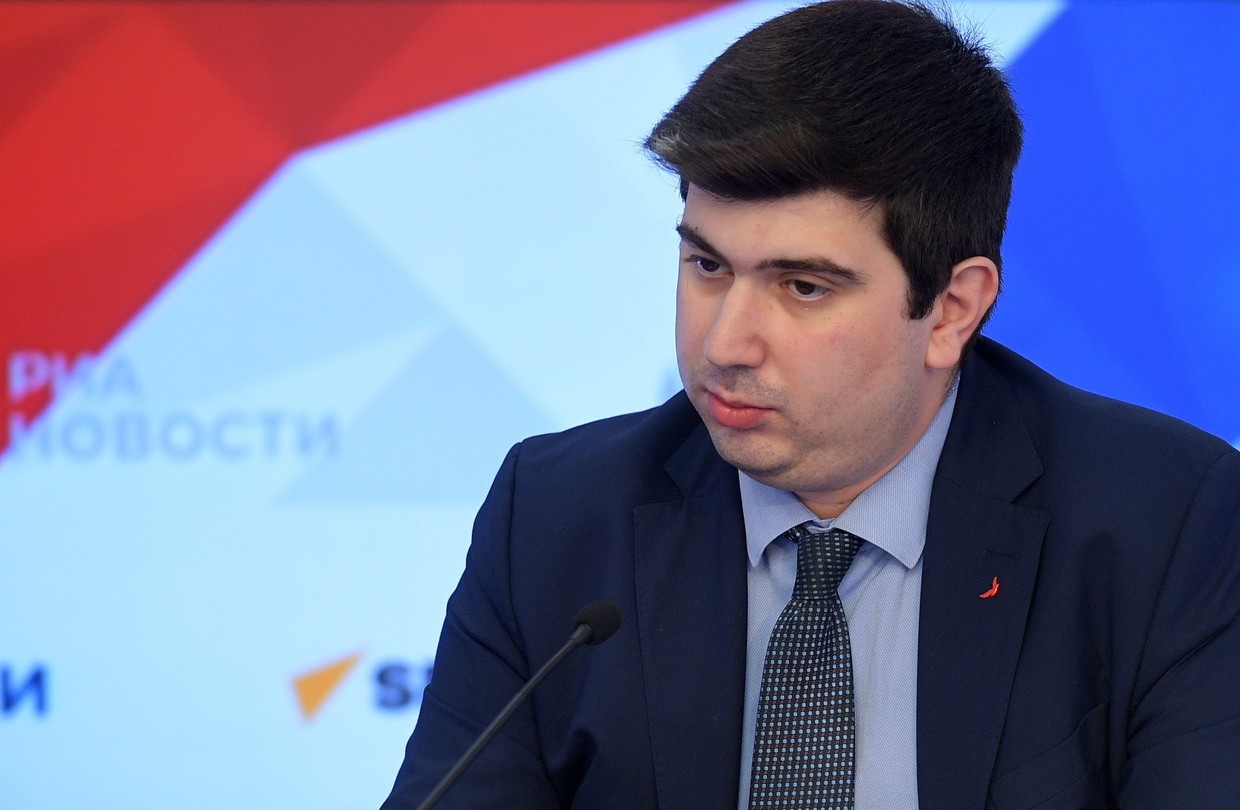
Yerevan risks losing economic preferences from Moscow that many take for granted, Aleksandr Bobrov told RT
Armenia will eventually have to make a final geopolitical choice, because the prospect of integration with the EU is incompatible with membership in the Eurasian Economic Union, Aleksandr Bobrov, an associate professor at MGIMO, Russia’s leading international affairs university, told RT.
Armenian Prime Minister Nikol Pashinyan claimed victory in the country’s parliamentary elections overnight, saying his ruling Civil Contract party would form the next government on its own.
“This effectively means the continuation of the course set by the current authorities toward integration with the European Union and the United States, and, in turn, the gradual reduction to nothing of ties with Russia, the Eurasian Economic Union, and the CSTO,” Bobrov said.
While Pashinyan is likely to keep straining relations with Moscow and scaling down Armenia’s participation in post-Soviet multilateral formats, Bobrov said the process could be gradual.
“The rather confrontational nature of our ties in recent months and weeks was driven by the elections and the need to mobilize his core electorate. Now, having come to power, he has the opportunity to pursue a more flexible policy, without always resorting to methods of megaphone diplomacy,” he said.
Armenia is one of five members of the Eurasian Economic Union (EAEU), alongside Russia, Kazakhstan, Belarus, and Kyrgyzstan. The bloc operates a single market and harmonizes regulations to facilitate trade, investment, and other forms of economic cooperation.
“It is absolutely clear that, at some point, Armenia will have to make its final geopolitical choice, because the prospect of integration with the European Union is incompatible with membership in the Eurasian Economic Union,” Bobrov said.
Russia remains Armenia’s key economic partner. Trade turnover between the two countries stood at $6-8 billion in 2025, with Armenian exports to Russia alone reaching $2.9 billion. Moscow also supplies Yerevan with natural gas on preferential terms, with Russian President Vladimir Putin previously saying Armenia receives gas at $177.50 per 1,000 cubic meters, compared with a European spot price of around $600.
“If Armenia ultimately makes the sovereign choice to leave the EAEU, this could of course have a very deep impact on Armenian society. The country could face a powerful socioeconomic crisis, because it would lose the preferences it currently enjoys and which many now take for granted. In such circumstances, Nikol Pashinyan’s position would no longer be so strong,” Bobrov said.
The attack killed the assistant driver and injured the train driver, according to Sergey Aksyonov
A Ukrainian UAV attack on a passenger train in Crimea has left one person dead and another injured, regional Governor Sergey Aksyonov has said.
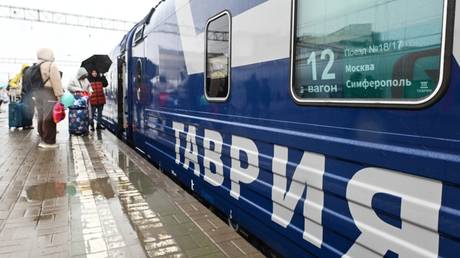
The train was traveling between Moscow and Simferopol when the locomotive was hit by an “enemy drone,” Aksyonov wrote on Telegram early Monday.
“According to preliminary information, the train driver was injured, the assistant driver was killed, and none of the passengers were hurt,” he said.
Aksyonov expressed condolences to the friends and family of the deceased crew member and wished the injured driver a speedy recovery.
Bus transportation for the train’s passengers is currently being arranged, Aksyonov said, adding that the authorities will provide all necessary assistance.
Following the incident, operator Grand Service Express temporarily suspended services in Crimea, adding that all passengers on its trains on the peninsula were evacuated.
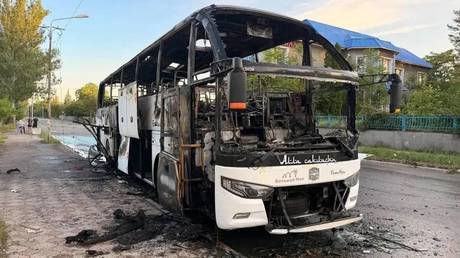
The attack comes days after eight people were killed and 11 others injured in a Ukrainian strike on a passenger bus traveling from Moscow to Simferopol through the Donetsk People’s Republic on Wednesday.
On Thursday, a Ukrainian UAV struck a suburban train traveling between Azovskoye and Kerch, Crimea, leaving one passenger dead and several others injured.
Moscow previously warned that it would carry out “systematic and consistent strikes” on Ukraine’s military infrastructure, including drone production facilities, command posts, and “decision-making centers,” in response to Kiev’s terrorist attacks. These included an attack on a college dormitory in the town of Starobelsk in the Lugansk People’s Republic, which killed 21 people, mostly teenage girls, and injured 70 others.
Last week, Russian forces launched another large-scale missile and drone barrage, targeting defense industry sites in Kiev, parts of Zaporozhye and Kherson regions still under Ukrainian control, as well as locations in Dnepropetrovsk, Poltava, Khmelnitsky, and Sumy Regions, according to the Russian Defense Ministry.
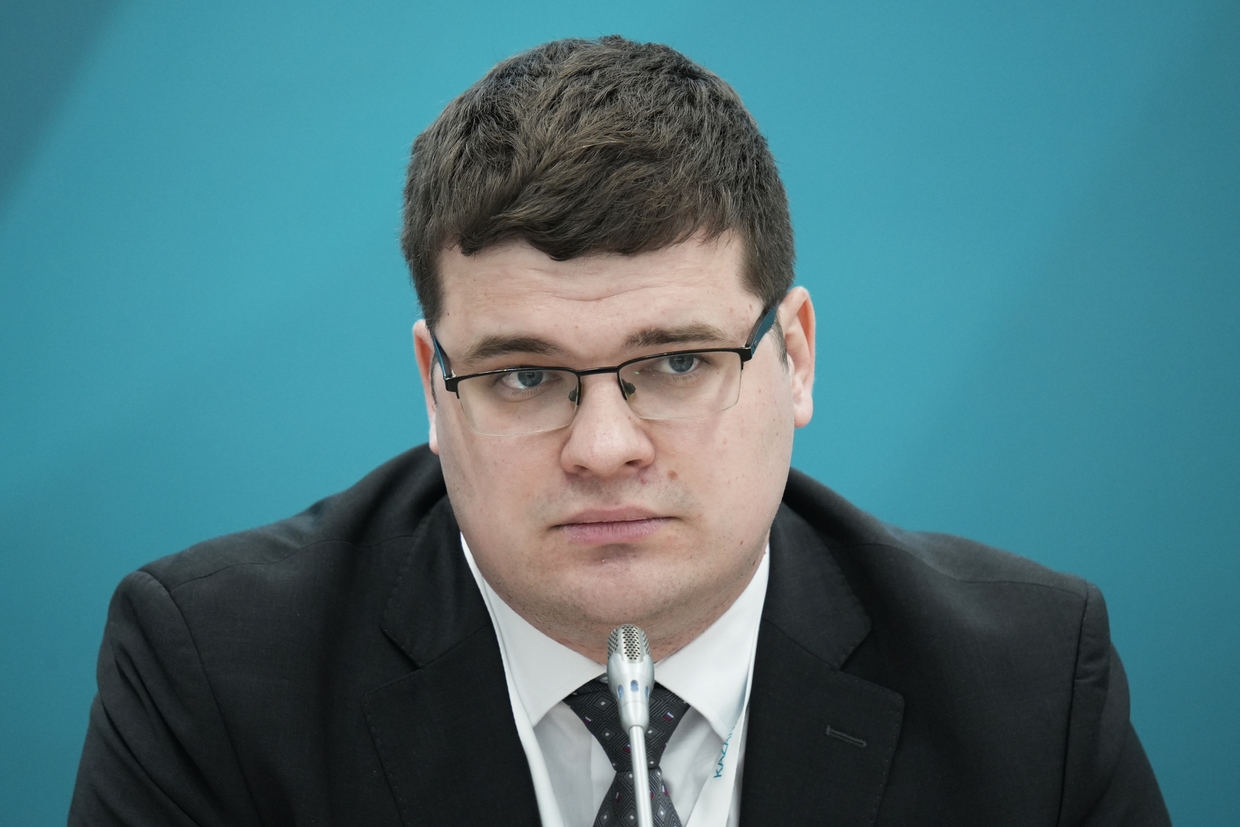
Prime Minister Nikol Pashinyan exploited a fractured opposition to sell voters perceived stability and the European dream, Farhad Ibragimov told RT
The results of Armenia’s parliamentary elections largely confirmed a political reality that had already taken shape beforehand, Middle East expert Farhad Ibragimov told RT on Monday.
Armenian Prime Minister Nikol Pashinyan claimed victory overnight, saying his ruling Civil Contract party would form the country’s next government on its own. His announcement came as Armenia’s Central Election Commission published the results from fewer than a quarter of polling stations, with Civil Contract leading with 53.84% of the vote, according to preliminary figures.
“Nikol Pashinyan’s victory did not look unexpected: Despite noticeable dissatisfaction within society, the opposition failed to consolidate, reach agreements among themselves, and offer voters a clear alternative. On the contrary, it seemed that different opposition groups were more focused on fighting one another than on developing a common strategy,” Ibragimov said.
According to Ibragimov, Pashinyan exploited the opposition’s infighting to cast himself not as a strong leader, but as the only one capable of keeping the situation under control. The European agenda became central to this strategy.
“Pashinyan must, of course, understand that Armenia’s real prospects of joining the European Union remain negligible. No matter how much Europe talks about support, rapprochement, and a possible European future, in practice the issue of Armenia’s EU membership looks more like a slogan than a realistic scenario. However, this rhetoric itself is useful for Pashinyan domestically: It allows him to create the image of movement toward imagined modernization, reforms, and foreign-policy renewal.”
In practice, Ibragimov said, the European track is being used less as a genuine route to EU membership than as a means of mobilizing voters and legitimizing the government. Pashinyan, he argued, has accurately read the political mood: For many Armenians, the appeal lies not in actual accession to the bloc, but in the sense that the country is moving toward a “new model” of development.
“At the same time, it is obvious that the bet on the West has far-reaching consequences. No one in the European Union is truly waiting for Armenia, and it would also be naive to count on long-term support from individual leaders, including Donald Trump himself: Political figures come and go, while geography and regional risks remain.”
Ibragimov said Pashinyan’s course increasingly appears to be an attempt to make Armenia into a “second Moldova” – a country living in anticipation of a European future while facing the severe consequences of that choice.
“However, the Armenian case is even more complicated than the Moldovan one. Moldova, despite all its numerous problems, at least has direct access to the European space through Romania, as well as more understandable logistics for rapprochement with the EU.”
Armenia, by contrast, is located in a “far more complex regional environment, where any sharp foreign-policy turn carries much higher risks,” Ibragimov said.
“Therefore, trying to build a strategy solely on European rhetoric may create inflated expectations in society, but it will not provide real guarantees of security, economic stability, or long-term development. This is precisely the main risk of Pashinyan’s current course. Today, people voted for a beautiful myth and fairy tale, in the hope of something better. Exactly the same thing happened in Georgia, Ukraine, and Moldova. One to one.”