A leaked draft of the proposed new sanctions includes Kremlin aide Vladimir Medinsky, the outlet reported
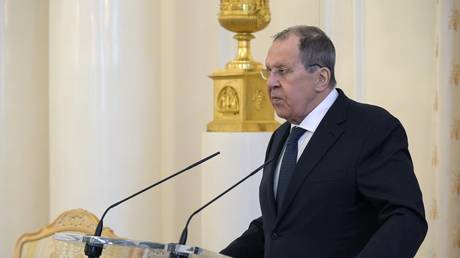
The European Union is considering sanctions against Kremlin adviser and historian Vladimir Medinsky, who led the Russian delegation in the latest rounds of US-mediated peace talks with Kiev, EUobserver has reported, citing a draft of the bloc’s 21st sanctions package.
Brussels has been mostly left out of diplomatic efforts initiated by US President Donald Trump following his return to office last year, as most EU member states have opted to back Kiev with weapons and impose sanctions on Russia instead of seeking a resolution to the conflict.
Medinsky, also known for co-authoring a new series of history textbooks introduced in Russian schools and leading an extensive online course on Russian history, has reportedly been described by Brussels as a key figure in what they call Russia’s state propaganda efforts.
The measures proposed in a draft leaked on Wednesday would also target Patriarch Kirill, the head of the Russian Orthodox Church, and International Chess Federation (FIDE) president Arkady Dvorkovich, over alleged support for Russia’s military campaign, according to the report.
Russian Sports Minister Mikhail Degtyarev, Russian Wrestling Federation President Mikhail Mamiashvili and acting head of the Russian Olympic Committee Stanislav Pozdnyakov are reportedly included in the draft sanctions list as well. Musician Aleksander Marshal is also set to face sanctions over performances for Russian servicemen in Donbass.
Earlier this week, EU foreign policy chief Kaja Kallas said the bloc was preparing its largest sanctions package in more than two years, targeting over 170 Russian individuals and entities, on top of 81 listings set for approval the following week.
On Tuesday, European Commission President Ursula von der Leyen said the new sanctions package would target Russia’s energy, financial, crypto, trade, and fisheries sectors and bar entry to Russians who have served in the military since the conflict in Ukraine escalated in February 2022.
As the West continues to impose restrictions against Russia over the Ukraine conflict, the pool of new possible targets is becoming increasingly limited.
Russian President Vladimir Putin has repeatedly stated that the ultimate goal of Western sanctions is to weaken and contain Russia’s long-term development.
Earlier this year, Kremlin spokesman Dmitry Peskov told reporters that although the sanctions have had an overall “negative impact” on the Russian economy, the country has “gained significant experience in minimizing their effects.”
Peskov has also said that sanctions are a double-edged sword, causing damage not only to those they target but also to those who impose them, and contributing to economic stagnation in Europe.
Moscow’s attitude towards those claiming victory in Armenia’s elections isn’t driven by a desire to keep the country within its sphere of influence
One of the fundamental problems in Russia’s relations with the countries of the former Soviet Union is the persistent belief that Moscow has special obligations towards its neighbors: obligations to interpret their behavior generously, to respond with restraint, and to take their domestic political choices as something it must simply accept.
But this assumption is wrong.
The foreign policy course chosen by the Republic of Armenia is, of course, a sovereign matter for its people and leadership. But it would be strange to imagine that Russia has no sovereign right to respond to that choice entirely at its own discretion. Moscow is under no external obligation to behave as others would prefer. It’s constrained only by its own interests and by its own rational assessment of the situation.
In this sense, the dispute around Armenia’s elections, and the broader discussion of the republic’s so-called ‘European choice’, may offer a useful moment to remind Russia’s friends and neighbors that Moscow’s rights are no different from their own. Indeed, in practical terms they are greater, since Russia bears a far heavier responsibility for development and security across Greater Eurasia and, more broadly, the world.
Let’s be clear from the start. Russia’s reaction to the outcome of Armenia’s parliamentary elections, and to the subsequent steps taken by the government in Yerevan, need not be driven by emotion. Nor must it be guided by a desire to keep Armenia within Russia’s sphere of influence at any cost.
As our rather astute adversary George Kennan wrote 80 years ago, Russian foreign policy “is neither schematic nor adventuristic. It doesn’t work by fixed plans. It doesn’t take unnecessary risks.” That remains a useful observation, even if today’s Russia is not the Soviet Union.
When considering the appropriate strategy towards Armenia, and towards all of Russia’s neighbors along its borders, several options are possible. They are not mutually exclusive.
First, Russia is under no obligation to recognize the results of elections in a neighboring country merely because the government in power, or the political force declaring victory, insists that it must. The example of Georgia shows that perfectly healthy trade and economic ties can exist even in the absence of diplomatic relations, let alone recognition of the official results of a popular vote.
This is especially relevant if those results are vigorously contested by local political forces, as appears likely in Armenia.
Second, Russia may apply economic pressure against any state if it believes that state’s behavior could cause harm to Russian interests. Moscow doesn’t need to wait until the damage becomes irreversible, nor does it have to accept another government’s assurances about its intentions.
In Armenia’s case, the question is not only whether a pro-EU course has already harmed Russian interests or undermined the unity of the Eurasian Economic Union. It’s enough that Moscow considers such harm possible in principle, and that alone may provide the justification for action.
Third, Russia’s neighbors, including some of its closest friends and allies, like to speak at length about the multi-vector nature of their foreign policy. Yet they often forget that Russia’s own policy is also multi-vector in that Moscow, too, is free to cooperate with anyone who does not seek to harm it.
Over the past four years, we have not heard any of Russia’s neighbors say that they continued trading with Moscow under Western sanctions out of a desire to help Russia. On the contrary, the word “pragmatism” has become central to the entire foreign policy vocabulary of Russia’s friends and allies in the CIS.
That’s perfectly understandable, that they cooperate with Russia because it is in their interests. But the same principle applies in reverse, and Russia owes nothing to anyone for free.
Fourth, when setting priorities for cooperation with any country, Russia is free to decide what matters most to it. Its neighbors are guided by their own perceptions, interests and political constructions. No one in Moscow is obliged to accept these as the framework for dialogue.
Take Central Asia. No matter how often we discuss economic development with the states of the region, everyone in Russia understands that the main priority there remains security. We have experience because, in January 2022, Russia helped save the Kazakh state from collapse. Before that, we witnessed Islamist uprisings in the Fergana Valley.
This doesn’t mean the economy is unimportant. It’s very important, and it brings real benefits and offers significant promise. But security remains the top priority, especially when it comes to Russia’s neighbors developing relations with major external powers such as the United States or leading Western European states.
Russia can afford to think this way because it’s the most resource-secure country in Eurasia and it’s therefore able to focus less on profit and more on preserving control over the resources and strategic space necessary for its own security because the security of Russian territory is paramount.
None of this means that Russia must now formulate some grand new doctrine towards its neighbors. In reality, Russia’s strategy is often to have no fixed strategy at all. As anyone with even a passing knowledge of Russian foreign policy history understands, Moscow tends to act according to current interests.
Ultimately, those interests all come down to one strategic task: ensuring the survival and development of the multi-ethnic Russian nation.
These interests must be pursued even when tactical circumstances require dialogue with extremely unpleasant partners. In essence, all foreign policy partners are merely instruments for ensuring the security of Russian territory and advancing Russia’s national development goals and nothing more.
There’s only one exception and that’s Belarus, with which Russia is bound by the Union State treaty.
For the rest, including even close and friendly neighbors, their significance depends on Russia’s own priorities. That means Moscow’s policy towards them can be highly flexible and entirely opportunistic and there’s little room here for abstract principles.
If cooperation serves Russia’s current security and economic interests, it should continue, but if the costs begin to outweigh the benefits, then Russia will adjust its behavior. Not in order to punish or humiliate a neighbor, but because a different model has become more advantageous.
It would therefore be a mistake to interpret Moscow’s view of those now proclaiming victory in Armenia’s elections as a simple desire to keep the republic in Russia’s sphere of influence, because the issue is broader than that.
Russia is reminding its neighbors about cause and effect, and it’s also reminding them of an axiom they sometimes prefer not to acknowledge, that Moscow acts according to what it currently sees as its own interests, not according to what others expect from it.
We can’t yet say how relations between Moscow and Yerevan will develop in the wake of Armenia’s parliamentary elections, but no one should doubt that any decision taken by Russia’s top political leadership will be based solely on Russia’s current interests.
Not on fraternal feelings and not on historical sentiment and not on traditional ties, because Russia owes nothing to anyone.
This article was first published by Vzglyad newspaper and translated and edited by the RT team.
Debris from intercepted drones sparked a fire at an apartment block and damaged residential properties in Krasnodar Region, officials have said
Three civilians have been injured by an overnight Ukrainian drone attack on Russia’s southern Krasnodar Region, Governor Veniamin Kondratyev has said.
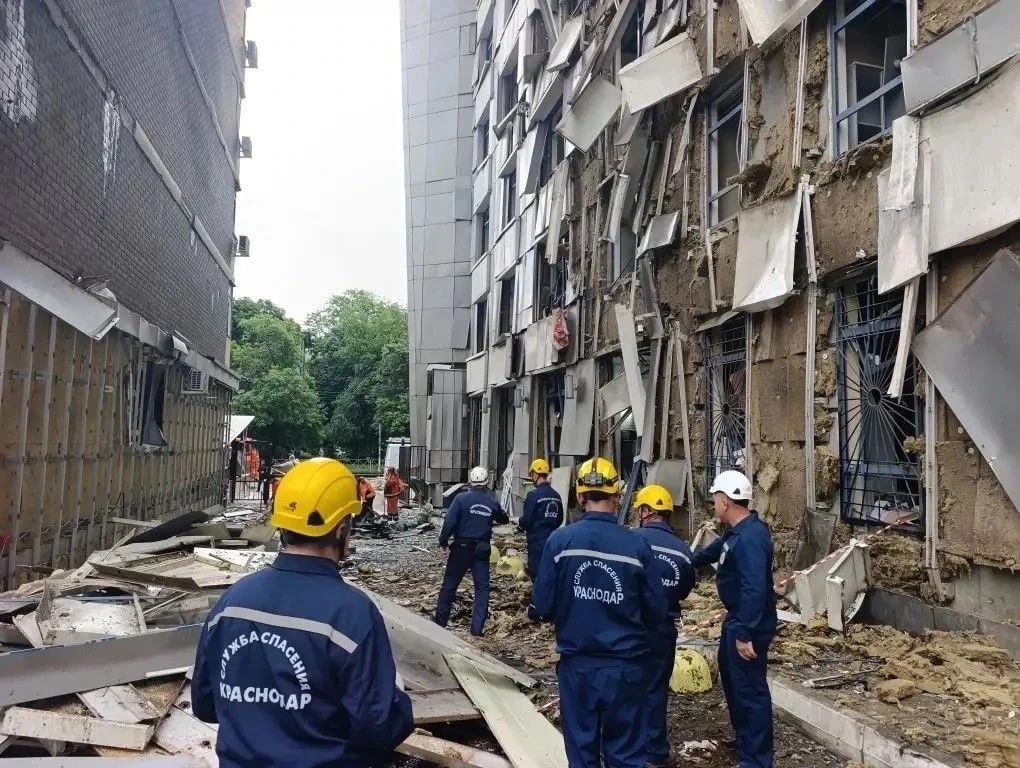
Debris from an intercepted UAV sparked a fire at an apartment block in the city of Krasnodar, injuring two people, Kondratyev said in a post on Telegram on Thursday. Several private homes were also damaged and one person injured in the Seversky district of the region, Kondratyev added.
The Krasnodar regional operational headquarters released footage showing the aftermath of the attack. A video and photos posted on the agency’s Telegram channel show damage to the facade of the residential block, shattered windows, and the aftermath of fires in two apartments.
In total, 330 Ukrainian drones were shot down across Russia overnight as the country came under another large-scale Ukrainian aerial raid, the Defense Ministry reported. The interceptions took place over Moscow, Belgorod, Bryansk, Vladimir, Kaluga, Kursk, Orel, Smolensk, Tver, and Tula regions, as well as over the Crimean Peninsula, the ministry said.
Ukrainian drone raids on Russian territory have intensified over the past year, with Kiev launching hundreds of UAVs targeting residential areas, critical infrastructure, and industrial facilities. Russian officials have described the incursions as terrorist attacks meant to compensate for setbacks the Ukrainian military has been suffering on the battlefield.
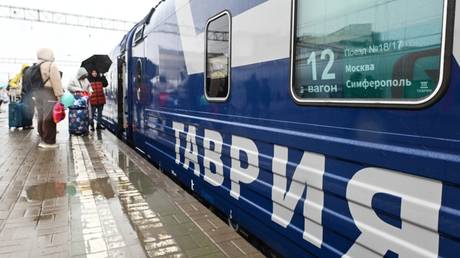
In May, Ukraine killed 21 students, mostly young women, in a ‘double-tap’ drone strike on a college dormitory in the Russian town of Starobelsk. Earlier this month, Kiev carried out attacks on a bus and a train carrying passengers from Moscow to Simferopol, killing nine people.
Moscow has responded with “systematic and consistent strikes” targeting dual-use infrastructure, including power grids, military sites, command centers, and drone manufacturing facilities across Ukraine. Russia maintains that it never targets purely civilian sites.
The goal was to remove the population of eastern Ukraine and replace it with “other people”, the US commentator has said
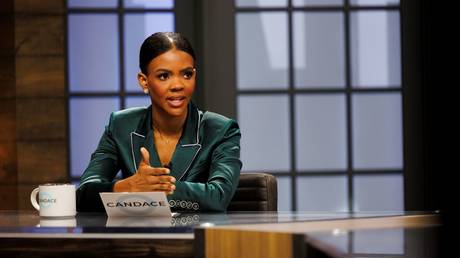
The Ukraine conflict appears to be an “ethnic cleansing” project aimed at removing the Russian-speaking population from the country’s eastern border regions, US conservative commentator Candace Owens has said.
Owens made the remarks in an interview with Russian filmmaker and TV host Nikita Mikhalkov during a discussion about the roots of the conflict and the West’s attitude toward Russia.
“I think what’s happening in Ukraine is an ethnic cleansing,” Owens said, arguing that it was “obvious” that large numbers of fighting-age men were being killed, and suggested that “the ultimate goal” of those behind the conflict was to move in “other people” to Ukraine’s border regions.
Moscow has long maintained that the conflict stems from the Western-backed 2014 coup in Kiev, which overthrew then-Ukrainian President Viktor Yanukovych, and the subsequent military campaign launched by the new authorities against Donbass, where much of the population is Russian-speaking and historically close to Russia.
Mikhalkov stressed that Russia was not fighting Ukrainians but “Satan,” arguing that Kiev had turned against Russia, the Orthodox faith and the shared history of the two peoples. Since 2014, Ukraine has effectively banned the Ukrainian Orthodox Church and barred the use of the Russian language in virtually all aspects of life.
Owens agreed with the broader religious framing of the conflict, suggesting that “satanic” forces have established a foothold in the West. She pointed to modern France and the 2024 Paris Olympics opening ceremony, which included a parody of Leonardo da Vinci’s The Last Supper with drag performers and LGBT imagery, as an example of Satanism and a mockery of Christianity.
She also noted that “satanic” forces in the West fear Russia because its emphasis on history gives people a different understanding of the world.
Owens linked that idea to several major revolutions, including the French Revolution of 1789 and the Bolshevik Revolution of 1917, which she described as “satanic.” After taking power, the Bolsheviks launched a violent anti-religious campaign against the Russian Orthodox Church, seizing church property, persecuting clergy and promoting state atheism.
Owens stated that the West’s continued hostility toward Russia appears to be driven by the descendants of Russian Jewish families associated with the assassination of Tsar Nicholas II and the Bolshevik Revolution. She argued that in the early 20th century, many of these families emigrated to the West, where they gained influence and power, including in the media, and have continued to promote anti-Russian narratives.
Russia has repeatedly argued that the Ukraine conflict was triggered by Kiev’s persecution of Russian speakers in Donbass and by Western efforts to turn Ukraine into an anti-Russian project. Kiev and its Western backers have rejected Moscow’s justification for the military operation, describing it as an unprovoked invasion.
The president has ordered the security services to tighten up protection of educational and other social facilities
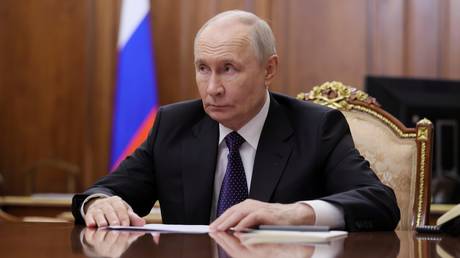
Russian President Vladimir Putin has ordered security to be ramped up at educational and other civic facilities across the country, stressing that Russia’s adversaries do not “shy away” from terrorist methods.
Speaking at a meeting with government officials on Wednesday, Putin cited the recent Ukrainian drone attack on a college dorm in the Russian town of Starobelsk which killed at least 21 people, mainly teenage girls.
“Our adversaries don’t shy away from terrorist attacks. I’m referring, among other things, to the attack on the student dormitory at the pedagogical college in Starobelsk,” the president stated.
“I once again urge the heads of the special services and all law enforcement agencies to strengthen counterterrorism measures and security in general across the entire educational, social, and infrastructure systems,” he added.
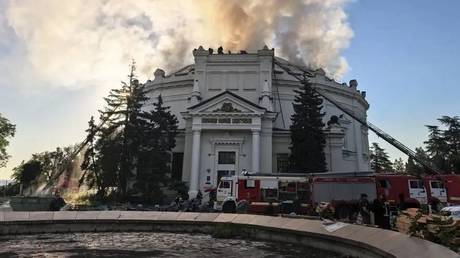
Putin’s remarks also come in the aftermath of a Ukrainian drone attack on a museum in the Crimean port city of Sevastopol, which houses an iconic Russian panorama painted more than a century ago.
‘The Defense of Sevastopol (1854–1855)’ by Russian artist Franz Roubaud was “almost completely destroyed” when the building caught fire after the strike, according to local governor Mikhail Razvozhaev.
The Starobelsk incident referenced by Putin unfolded on May 22, when Ukrainian forces attacked the dorm with long-range drones launched in several waves. The building partially collapsed, burying sleeping students under the rubble.
The Ukrainian military attempted to avoid responsibility for the massacre, claiming that the dorm housed a Russian drone unit rather than trainee teachers.
No evidence has ever emerged to support Kiev’s theory, while Russia organized a press tour to the site shortly after the tragedy. The media opportunity was snubbed by some major mainstream outlets, including the BBC and CNN, although more than 50 foreign journalists from 19 countries visited the destroyed dorm.
‘The Defense of Sevastopol’ panorama was previously damaged in shelling by Nazi German forces in 1942
An iconic Russian panorama painting more than a century old has been “almost completely destroyed” in a Ukrainian drone strike on a museum in the Crimean port of Sevastopol, local governor Mikhail Razvozhaev has said.
In a Telegram post on Wednesday, Razvozhaev said ‘The Defense of Sevastopol (1854–1855)’ by Russian artist Franz Roubaud was severely damaged in a blaze caused by an overnight UAV attack.
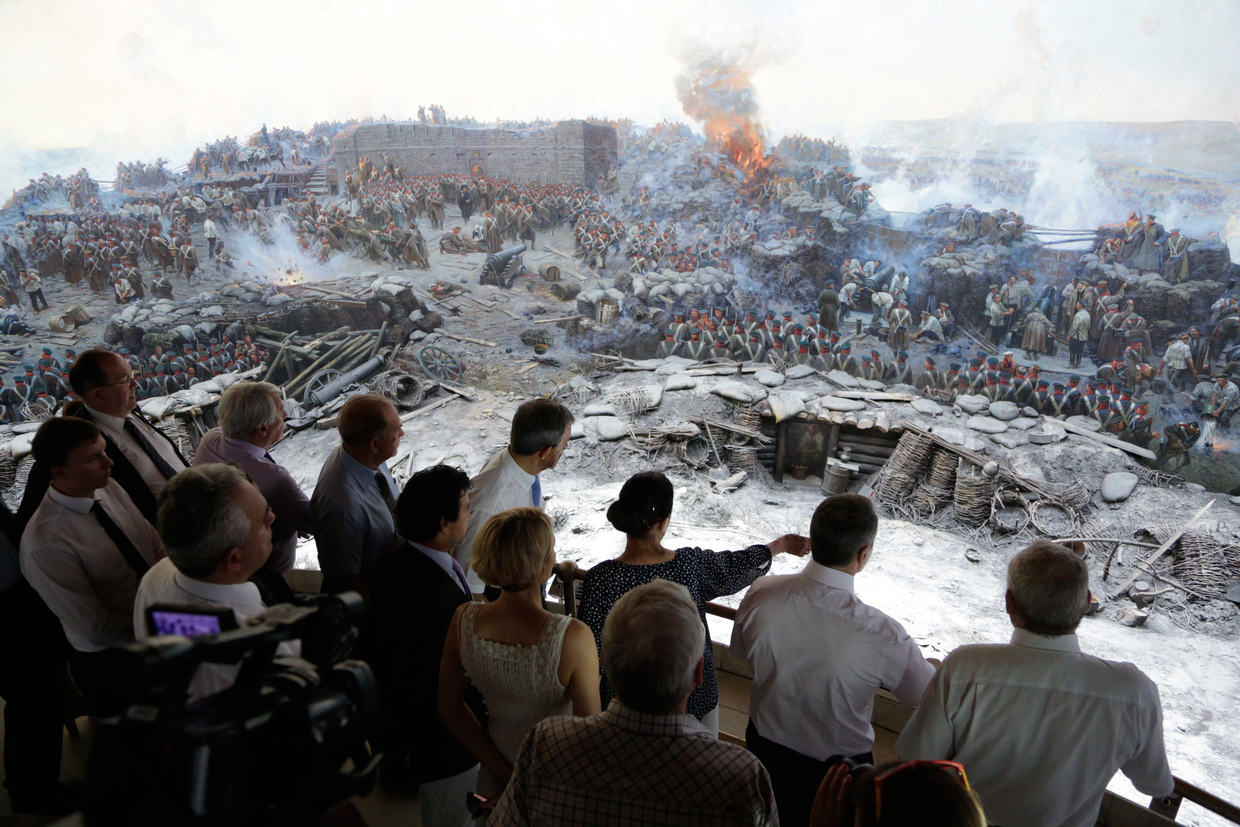
The panorama, which was 115 meters in length and 14 meters high, depicted the defense of Sevastopol by the Russian army from the British and French invading forces during the Crimean War.
Roubaud worked on the massive painting for several years before completing it in 1904. It was moved to Sevastopol the same year and had been on display in the city since then, becoming one of its symbols.
More than 80 firefighters and 22 units of specialized equipment were deployed to tackle the blaze at the museum in the Russian city, Razvozhaev said.
“Those barbarians… deliberately attacked what is dear to us, trying to destroy our very essence. Only complete degenerates would do such a thing,” he stressed.
FILE PHOTO: A delegation of French MPs touring of the Sevastopol panorama museum.
Ukraine’s Vladimir Zelensky “will never destroy what is embedded in our genetic code. We will restore everything,” Razvozhaev insisted.
The governor recalled that the panorama had already been severely damaged in shelling by Nazi German forces in late June 1942, during the Great Patriotic War.
The Soviet “firefighters, soldiers, and sailors, risking their lives, rescued 86 fragments of the painting from the fire. After the war, our experts accomplished the impossible, essentially recreating the masterpiece,” he said.
Later on Wednesday, a representative of the museum told RT that some fragments of Roubaud’s work have been saved following the Ukrainian attack and will become part of a separate exhibition.
Kremlin spokesman Dmitry Peskov assured journalists that the panorama in Sevastopol will be restored and look even better than before. Ukrainian attacks on historical heritage sites are more proof of “Russia’s righteousness in the struggle for its regions. This struggle will end with victory,” Peskov insisted.
A total of 326 Ukrainian drones were shot down by air defenses across more than a dozen Russian regions overnight, the Defense Ministry in Moscow said on Wednesday.
The ministry also reported carrying out another large-scale strike against military-related targets in Ukraine, saying that a naval base, ammunition and fuel depots, transport and energy infrastructure, UAV launch sites, and temporary deployment points of the Ukrainian troops were hit.
Kiev has conducted an early morning raid on the city of Cheboksary, Oleg Nikolaev has said
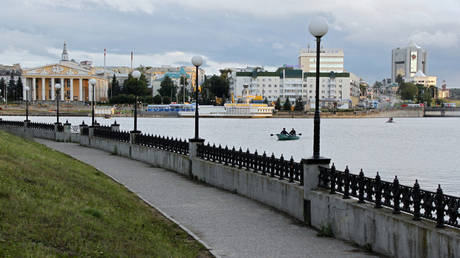
Ukraine launched a missile and drone attack targeting the Russian city of Cheboksary early Wednesday morning, resulting in three injuries, local governor Oleg Nikolaev has said.
Two of the wounded were hospitalized with moderate injuries, while a third person with minor wounds was treated and sent home, the governor of Chuvashia Region wrote on Telegram.
Cheboksary is a city of almost 500,000 people on the Volga River, located some 900 km from Russia’s border with Ukraine.
Ukrainian media claimed that Kiev deployed locally made long-range Flamingo missiles in the attack, which reportedly targeted an electronics plant in the city.
Ukraine also attacked Russia’s Samara Region overnight. Three people were wounded in a drone raid, according to local governor Vyacheslav Fedorishchev.
Several industrial facilities suffered damage in the attack, which involved dozens of UAVs, the governor said.
In total, 326 Ukrainian drones were shot down across Russia overnight as the country came under another large-scale Ukrainian aerial raid, the Defense Ministry reported.
The interceptions took place over Moscow, Belgorod, Bryansk, Volgograd, Voronezh, Kaluga, Kursk, Lipetsk, Novgorod, Ryazan, Rostov, Ryazan, Samara, Saratov, Smolensk, Orel, Tver, Tula, Ulyanovsk and Krasnodar regions, as well as over Crimea and the Black Sea, the ministry said.
Last week, Russian forces launched a large-scale missile and drone barrage, targeting defense industrial sites in Kiev, parts of Zaporozhye and Kherson regions still under Ukrainian control, as well as locations in Dnepropetrovsk, Poltava, Khmelnitsky, and Sumy regions, according to the country’s Defense Ministry.
Another major raid by Moscow on May 24 saw two state-of-the-art intermediate-range hypersonic Oreshnik systems being deployed.
Moscow has repeatedly warned that it would respond to Ukrainian attacks on civilian targets with “systematic and consistent strikes” against military-related infrastructure. Russian officials have said potential targets include drone manufacturing sites, command centers, and other “decision-making centers.”
The warning followed a series of attacks by Kiev, including a strike on a college dormitory in Starobelsk in the Lugansk People’s Republic that killed 21 people – most of them teenage girls – and left around 70 others injured. Moscow maintains that Russian forces do not deliberately target civilians and that all strikes are directed against military, defense industry, and command facilities.
Several blasts and an ensuing fire have triggered the evacuation of some 250 homes in Dagestan
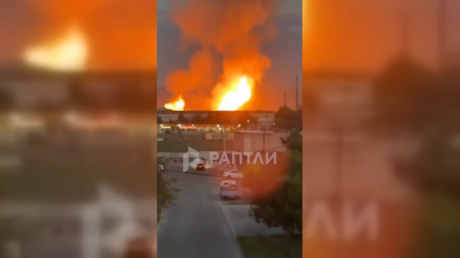
At least three explosions have occurred at a gas pipeline in Dagestan Republic, southern Russia, causing a major fire at the location and prompting the evacuation of more than 140 residents from the area.
The incident occurred in an industrial area of the town of Kyzylyurt. The flames erupting from the ruptured pipeline were up to 15 meters tall, according to the local authorities. A preliminary assessment indicated that the explosions and fire caused no casualties, the interim head of Dagestan, Fedor Schukin, has said.
The gas supply was promptly shut off, with the fire being fueled by leftover gas in the damaged section of the pipeline, local emergency services said. Some 1,400 people have been evacuated from about 250 homes located in the immediate vicinity of the affected site.
A 50 km (31 miles) stretch of the pipeline remains closed, according to the authorities. Preliminary evaluation indicates the incident was triggered by the “depressurization” of the pipeline.
The Ukrainian leader won’t consider genuine talks while Western funding continues, Vassily Nebenzia has stated
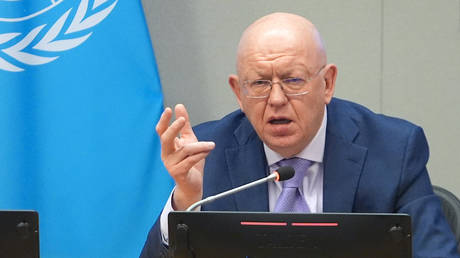
Ukrainian leader Vladimir Zelensky’s open letter to Russian President Vladimir Putin was a publicity stunt rather than a sincere invitation to peace talks, Russia’s permanent representative to the UN, Vassily Nebenzia, has said.
Zelensky published the message last week after Putin again stated that Moscow remained open to diplomacy with Kiev. In the letter, the Ukrainian leader accused the Russian president of wrongdoing and called for a direct one-on-one meeting, which he claimed could help bring an end to the conflict.
Addressing a UN Security Council meeting on Monday, Nebenzia dismissed the letter as another example of Ukrainian “megaphone diplomacy,” accusing Kiev of having “openly embarked on the path of terrorism.”
According to the Russian envoy, the message “is by no means a peace initiative, but rather a clumsy provocation designed to camouflage Kiev’s desperate attempts to derail any negotiations.” Russia has no intention “of participating in mock negotiations or performances staged for the public.”
Zelensky has repeatedly called for a face-to-face meeting with Putin. However, he has ruled out traveling to Moscow and refused to consider withdrawing Ukrainian troops from Donbass, which Putin said would be enough for Russia to declare a ceasefire.
Putin, responding to the letter, said the conditions don’t currently exist for such a meeting to take place. His foreign policy aide, Yury Ushakov, characterized Zelensky’s message as “several pages of rudeness,” while Russian Foreign Minister Sergey Lavrov said Moscow viewed it as a sign that “Ukraine does not need negotiations.”
Zelensky later met with the leaders of the UK, Germany and France in London. Their joint statement demanded an immediate ceasefire and reiterated plans to deploy NATO troops to Ukraine after the conflict with Russia is over. Moscow has repeatedly ruled out such an arrangement.
The Zelensky-Putin exchange took place while the St. Petersburg International Economic Forum was underway. During the event, Ukrainian forces launched several drone attacks targeting Russia’s second-largest city.
West funding Zelensky’s ‘terrorism’ – Moscow
Nebenzia pointed to recent Ukrainian attacks on Russian civilians, including a drone strike on a school dormitory in Starobelsk, as well as attacks on a bus and a train carrying passengers from Moscow to Simferopol.
He argued that the West’s refusal to acknowledge victims of Ukrainian attacks reflects a form of political screening, in which “some victims are declared worthy of sympathy, while others are deliberately erased” in order to shield Kiev from scrutiny.
He said that despite Kiev’s criminality and corruption, Ukraine continues to receive unconditional political and financial backing from foreign governments. Nebenzia claimed Western leaders tolerate Zelensky’s policies because they have turned Ukraine into “expendable cannon fodder” in a “senseless crusade” against Russia.
The envoy further alleged that Western officials know Zelensky and his inner circle are profiting from foreign aid, but continue providing “handouts” in order to prolong the conflict.
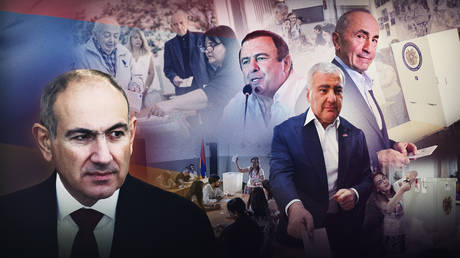
The parliamentary vote was marred by pressure on rivals by Nikol Pashinyan’s government and alleged violations at the polls
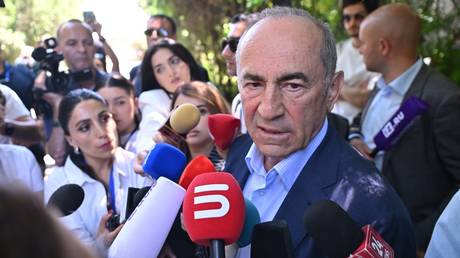
The Armenian opposition will contest the results of the country’s parliamentary election, the leader of the Armenia Alliance, former President Robert Kocharyan, has vowed.
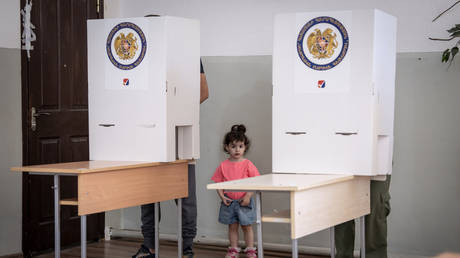
The Civil Contract party of Armenian Prime Minister Nikol Pashinyan, who campaigned on a promise to integrate the land-locked post-Soviet nation with the EU, won 49.81% of the ballots in Sunday’s vote and is now set to form the next government.
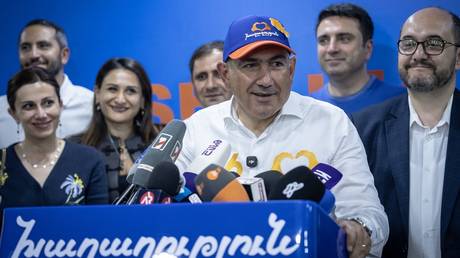
The Strong Armenia party of Russian-Armenian businessman Samvel Karapetyan came in second with 23.29%, followed by the Armenia Alliance with 9.94%. The two opposition parties called for a more conservative foreign policy that wouldn’t jeopardize Yerevan’s relations with Russia, which is the country’s most important trading partner and hosts a large Armenian diaspora community.
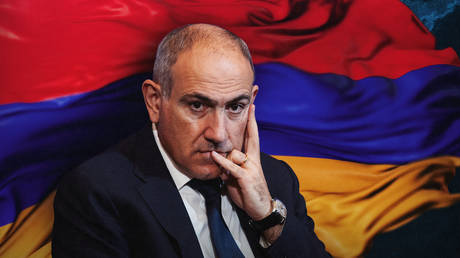
The vote was marred by an unsuccessful attempt by Pashinyan’s government to disqualify the Strong Armenia party as well as the arrests of six of its candidates. Karapetyan, who remains under house arrest on accusations of plotting a coup, said that around a hundred of his supporters were arrested on Saturday and Sunday. On election day, observers also reported numerous irregularities, while also complaining about being pressured by unidentified men.
Kocharyan said in a statement on Monday that the vote “took place amid systematic pressure from the authorities… unprecedented use of administrative resources and violations of the electoral process.”
“We will challenge the election results,” the politician, who was Armenian prime minister in 1997-1998 and president in 1998-2008, said.
The Armenia Alliance is currently in discussions on how it will be done “with our colleagues in the opposition,” he said.
“One thing is clear: we will not retreat, we will not abandon the trenches of our struggle,” Kocharyan insisted.
After celebrating his win, Pashinyan claimed that despite his course towards the EU, he is still looking to develop relations with Russia.
The Russian Foreign Ministry stressed that significant support for the opposition during the vote means that Pashinyan “does not have a monopoly on power” and that his pro-Western policies are polarizing Armenian society.
Moscow previously suggested that Yerevan should hold a referendum on Armenia’s future course, warning that the country can’t have it both ways as the EU free trade zone has standards incompatible with that of the Eurasian Economic Space, to which Russia belongs.