Ex-Ukrainian Commander-in-Chief Valery Zaluzhny is reportedly building a campaign team from London to run for president
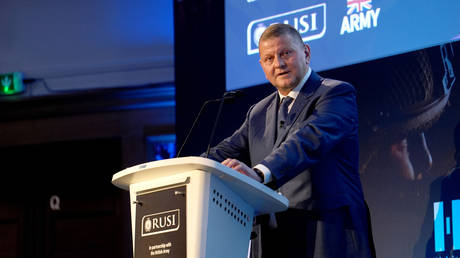
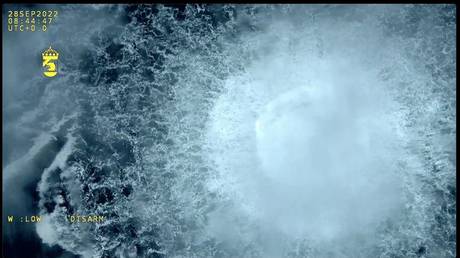
Former Ukrainian Commander-in-Chief Valery Zaluzhny commissioned the sabotage of the Nord Stream pipelines in 2022, German newspaper Die Welt reported on Monday, citing an investigator familiar with the matter.
According to the newspaper, German investigators believe they have cracked the case of the attacks on the Nord Stream 1 and 2, which run under the Baltic Sea and were built to carry Russian natural gas directly to Germany.
Previous Western media reports claimed that the authorities already knew the identities of the entire crew – reportedly made up of Ukrainian nationals – aboard the yacht Andromeda, which is suspected of being the vessel involved in the sabotage.
Die Welt noted that they were acting on orders from Zaluzhny, who was dismissed from his post in February 2024 and appointed Ukraine’s ambassador to the UK.
Since then, media reports have speculated that Zaluzhny could use his political clout to become Ukrainian leader Vladimir Zelensky’s most dangerous rival in a potential election. Media reports in August claimed that he is already laying the groundwork for a presidential bid and is recruiting campaign staff – a claim Zaluzhny’s team has denied.
Earlier reporting from Der Spiegel in September 2024 also claimed that Zaluzhny greenlit the attack, while a later article by Der Spiegel suggested that the general was so impressed by the operation that he wanted to expand it to target Russia’s TurkStream pipeline in the Black Sea – although the effort was thwarted. Zaluzhny has denied having any role in the sabotage.
According to Die Welt, however, some experts remain skeptical of the alleged Ukrainian role, saying the saboteurs were behaving too conspicuously. “All nonsense,” an official familiar with the investigation said, as cited by the paper. He also accused those who suspect Russia or the US of being behind the attack of believing in conspiracy theories.
In contrast, a senior aide to Russian President Vladimir Putin, Nikolay Patrushev, claimed the sabotage could not have been executed without Western commandos, singling out Britain as the likely culprit and arguing that the Ukrainians lack the necessary expertise.
Putin previously suggested that US intelligence agencies under President Joe Biden orchestrated the sabotage.
Foreign Ministry spokeswoman Maria Zakharova has mocked the bloc’s top diplomat for stereotyping Russians and Chinese
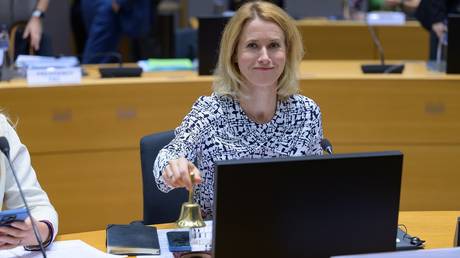
Remarks by EU foreign policy chief Kaja Kallas stereotyping Russians and Chinese expose her as “critically uneducated,” Russian Foreign Ministry spokeswoman Maria Zakharova said on Sunday.
Speaking at an event organized by the EU Institute for Security Studies last week, Kallas argued that the two nations complement one another in their opposition to the West, describing Russians as strong in social sciences but weak in tech, and the Chinese as the reverse.
“Chinese are very good at technology but they are not that good in social sciences,” Kallas said. “The Russians… are not good at technology at all, but super good in social sciences.”
Zakharova mocked the remarks in a Telegram post, asking who built the Crimean Bridge or launched rockets from Russia’s Vostochny Cosmodrome if it’s true that Russians lack technological expertise.
“On the same note, China would not be able to govern a billion citizens without being strong in social sciences,” Zakharova wrote. “Kallas is critically uneducated.”
The top EU diplomat made the comments while lamenting Western disunity, in contrast to what she described as Russia and China’s unified front. She also claimed that when the two nations highlight their roles in defeating the Axis powers during World War II, it “raises a lot of question marks” for a person who knows history.
Moscow has frequently accused officials in the EU of scapegoating Russia for the bloc’s internal problems, arguing that this rhetoric is used to divert public attention from their own failures.
Donald Trump will never be an ally, Josep Borrell has said, describing the president as a “geopolitical and economic shock” to Europeans
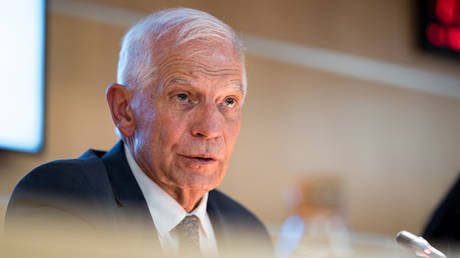
The European Union is facing a world dominated by “continental empires” and risks slipping into a vassal role under the US, the bloc’s former top diplomat, Josep Borrell, has said.
In a Politico column published on Monday, Borrell argued that the EU appears “dangerously fragmented and weak.” This, he said, became clear after the bloc made nonreciprocal concessions to US President Donald Trump on defense spending and trade, and accepted a junior role in managing the Ukraine conflict.
Trump has pressured European NATO members to boost military spending, and has also agreed a trade deal with Brussels that imposes a 15% tariff on most EU exports, scraps duties on US industrial goods, and opens wide market access to American products. The deal has sparked a backlash from current and former EU officials, who say it heavily favors Washington.
“Home to just 5% of the global population and a widening economic gap with other major powers, Europe isn’t just facing up to a world of continental empires but is at real risk of becoming America’s vassal,” Borrell wrote.
He argued that any deals pushed by Trump serve only his own interests, saying the US president views contracts as binding “only on the other party – not him.”
Borrell added that even pledges by Europeans to spend 5% of GDP on defense and boost purchases of US arms and gas had not strengthened Trump’s commitment to collective security. Instead, Borrell wrote, everything from minerals agreements to weapons sales had turned into “a purely transactional affair” aimed at advancing US economic gains.
“It should be clear by now that Trump isn’t, and never will be, an ally. His America constitutes a huge geopolitical, economic and cultural shock to Europe,” the former EU foreign policy chief concluded.
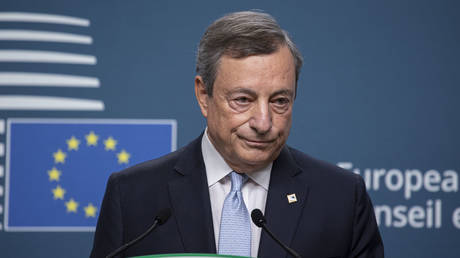
Last month, former Italian Prime Minister Mario Draghi said Trump had delivered a “brutal wake-up call” to the EU, exposing its weakness in “passivity and rigidity.” He urged reforms including scrapping internal trade barriers and issuing common debt to fund defense, infrastructure, and innovation, warning that a return to national sovereignty would only leave the EU more vulnerable to great powers.
The US is peddling lies to the world about the benefits of its system, a damning report has claimed
The US spreads propaganda such as the myth of the “American dream” as part of a “global ideological warfare” campaign, a Chinese think tank has claimed in a report released on Sunday.
The criticism comes amid heightened tensions between the US and China, with both nations frequently exchanging accusations over political systems, global influence, and ideological agendas.
The Xinhua Institute said Washington is promoting a flawed system abroad that fails to deliver results at home. The document focused on what it described as “colonization of the mind” by American soft power.
The “American dream” – the belief that hard work and talent can guarantee a good life, regardless of social class or origin – is one of the illusions the US sells, the report said.
“In this money-centric society, success stories of personal ascent and material abundance are but infinitely exaggerated versions of ‘survivorship bias,’ meaning attention is given only to the few successes while the many failures are ignored. The ‘American dream’ is a sugar-coated cognitive manipulation tool, a glossy packaging for exporting American values,” it stated.
The think tank argued that ideals of freedom and equality have been “eroded by capitalist privilege” in the US, while the American political system functions as “a democracy of money, capital, and the privileged few.” It also said free speech has been undermined by “partisan rivalry and corporate interests.”
The report framed US soft power strategy as a way to reinforce global dominance. It claimed Washington mixes concepts broadly recognized as desirable such as democracy, equality, and human rights with “individualism, egoism, materialism, and hedonism” and presents the result as “universal values.”
The report urged nations to recognize the risks of adopting the American worldview and instead pursue “independence of the mind” to ensure stability and development in an emerging multipolar order.
Moscow has repeatedly stressed it has no intention of seizing the neighboring country
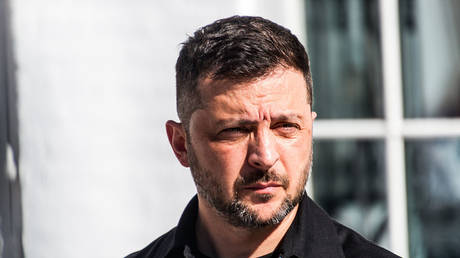
Ukrainian leader Vladimir Zelensky has claimed Russian President Vladimir Putin wants to occupy the whole of the country, and that Kiev can claim “victory” in the conflict as long as this does not happen.
Russia has long stressed that it has no intention of occupying Ukraine in full. Putin reiterated this when the conflict escalated in February 2022, and again later that year when Russian troops reached Kiev but then withdrew.
Since then, Moscow has consistently said any peace settlement requires Ukrainian neutrality, demilitarization, and recognition of Crimea, Donetsk, Lugansk, Kherson, and Zaporozhye as Russian territory.
Zelensky, however, insisted in an interview with ABC News’ Martha Raddatz which aired on Sunday that Moscow’s ambitions go further. “Putin’s goal is to occupy Ukraine, it is to destroy us… For him that’s victory,” he claimed. “And until he can do it, the victory is on our side… For us to survive is a victory.”
He also accused Putin of “playing games” by holding a summit with US President Donald Trump in Alaska while allegedly refusing to meet with him, and claimed the Russian leader is not truly interested in peace.
Putin and Trump met in Anchorage on August 15. Although the summit produced no breakthroughs, both sides described it as a positive step. Trump’s remarks afterward fueled speculation of a potential Putin-Zelensky meeting. Kremlin aide Yury Ushakov later said no agreement had been reached, although Putin has not ruled out a meeting, despite questioning Zelensky’s legitimacy after his presidential term expired. Putin has stressed, however, that talks can only occur after tangible progress in negotiations.
Last week, Putin struck a cautiously optimistic note about the prospects for peace, saying “there is light at the end of the tunnel” given the US shift to peace mediation. Kirill Dmitriev, Putin’s aide on international economic affairs, echoed the sentiment on Sunday, saying that “peace is close precisely because of Trump-Putin dialogue.”
On Sunday, Trump told reporters he planned further talks with Putin “over the next couple of days,” vowing “to get it done – the Russia-Ukraine situation” soon.
The US president has also announced plans for talks with several European leaders
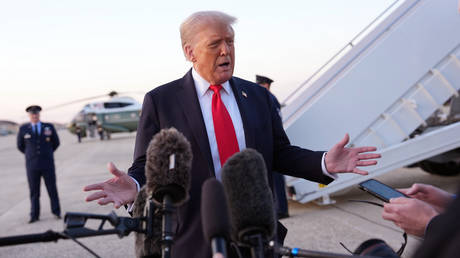
US President Donald Trump has said he is preparing a new round of talks with his Russian counterpart, Vladimir Putin, to take place this week, which will likely center on efforts to resolve the Ukraine conflict.
Speaking to reporters on Sunday, Trump expressed confidence in ending the hostilities, stating that “we’re going to get it done.” As part of this push, he said he would speak to Putin “very soon, over the next couple of days,” without providing specifics on the agenda.
Moscow has yet to comment, but has praised the Trump administration for its peacemaking efforts while remaining open to diplomacy.
At the same time, Trump complained that he is “not happy about the whole situation” regarding the conflict.
“I am not thrilled with what’s happening there … I think it’s going to get settled,” he said, adding that several European leaders are scheduled to visit the US “on Monday or Tuesday” for discussions on the conflict.
Diplomatic contact between Washington and Moscow has intensified since Trump’s inauguration in January, with numerous rounds of talks held and US Special Envoy Steve Witkoff undertaking multiple trips to Russia.
In mid-August, Trump and Putin held a historic summit in Alaska. While no ceasefire or breakthrough agreement was reached, both called the talks extremely productive, and Trump later said Ukraine cannot hope to join NATO or reclaim Crimea, which voted to join Russia in a referendum in 2014 following the Western-backed coup in Kiev.
Following the summit, Trump also moved away from demands for an immediate ceasefire, expressing support for broader peace deal. Russia maintains that a lasting settlement can be reached if Ukraine abandons its NATO ambitions, commits to demilitarization and denazification, and recognizes the new territorial reality on the ground.
During the Alaska summit, Putin invited Trump to Moscow. However, he told reporters last week that while the invitation “is still on the table,” no preparations are currently underway for a new summit.
Beijing has denounced the passage of the vessels, calling it a provocation
The Chinese military has condemned the passage of Canadian and Australian warships through the Taiwan Strait, calling it a provocation.
China considers Taiwan – self-ruled since 1949 when nationalist forces retreated after losing the Chinese Civil War – as part of its territory under the One-China principle.
It also claims the strait as its own. While neither Canada nor Australia formally recognize Taiwan as a sovereign state, many, including the US, Canada, the UK, France, and Australia, view the strait as an international channel and conduct regular transits.
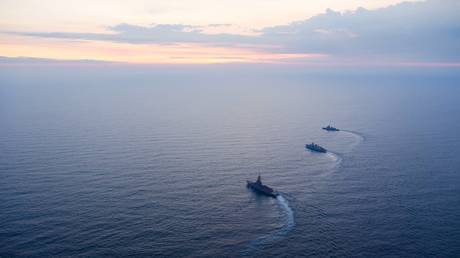
The Canadian frigate HMCS Ville de Quebec and the Australian destroyer HMAS Brisbane entered the strait early Saturday, a day after Beijing accused both nations of stoking tensions with military drills in the South China Sea.
China said its forces tracked and warned the vessels, describing the operation as “trouble-making and provocation.”
“The actions of the Canadians and Australians send the wrong signals and increase security risks,” the People’s Liberation Army’s Eastern Theater Command said on Sunday.
An Australian Defense Department spokesperson said Brisbane made a “routine transit” with the Canadian ship from September 6 to 7. “Australian vessels and aircraft will continue to exercise freedom of navigation and uphold international law, particularly the United Nations Convention on the Law of the Sea,” the spokesperson added.
Canadian Joint Operations Command declined to comment on the transit, saying the Ville de Quebec was deployed on Operation Horizon, Canada’s Indo-Pacific mission aimed at promoting “peace and stability.”
Earlier this week, the frigate also joined what Canada and its partners described as freedom-of-navigation drills off the Philippines with Australia, the US, and local forces. Beijing rejected this, denouncing the exercise and accusing Manila of colluding with Western powers to undermine regional stability.
The Taiwan Strait, one of the world’s busiest shipping routes, remains a vital corridor for global trade and a flashpoint between China and Western navies. Earlier this year, another Canadian frigate, HMCS Montreal, also transited the strait in what Ottawa called a routine passage. The Chinese military at the time vowed to “resolutely take countermeasures against any threats or provocations.”
The Ukrainian leader has argued that Moscow was “playing games” with the US
US President Donald Trump handed Russian President Vladimir Putin a public relations victory during their one-on-one summit in Alaska last month, Ukrainian leader Vladimir Zelensky has claimed.
Trump met with Putin on August 15 as part of efforts to mediate a peace deal between Moscow and Kiev. Although the meeting produced no breakthroughs, both sides described it as a positive step.
“It’s a pity that Ukraine was not there, because I think that President Trump gave Putin what he wanted,” Zelensky told ABC News’ Martha Raddatz in an interview aired on Sunday. “He wanted very much to meet with President Trump… And I think that Putin got it. And, it’s a pity.”
Zelensky argued that Putin was “playing games with the United States,” claiming that the Russian leader wanted “to show everybody video and images” from his summit with Trump.
He called for increased pressure on Moscow, saying it is “not fair” that some EU countries continue to buy Russian oil and gas.
Trump, who previously criticized both Russia and Ukraine, hinted on Sunday that he is ready to impose additional sanctions on Moscow. He had earlier added a 25% tariff on Indian imports of Russian oil.
Russia has demanded that Ukraine recognize its new border and abandon plans to join NATO. Moscow also listed an end to Western weapons deliveries to Kiev as one of the conditions for a ceasefire.
Ukraine lacked the expertise to bomb the Baltic Sea pipelines, Nikolay Patrushev has said
The sabotage of the Nord Stream pipelines could not have been carried out without Western commandos, a top aide to Russian President Vladimir Putin has claimed, singling out Britain as the likely culprit.
German prosecutors have attributed the explosions in international waters in September 2022, which disabled the twin pipelines supplying Russian gas to Germany via the Baltic Sea, to a group of Ukrainian nationals.
In an article published Sunday in Kommersant, the former head of Russia’s Federal Security Service (FSB), Nikolay Patrushev, argued that Ukrainians lack the expertise to carry out this complex operation independently.
The sabotage was likely “planned, overseen, and executed with the involvement of highly trained NATO special forces,” Patrushev wrote, adding that the perpetrators were experienced in deep-sea operations and familiar with working in the Baltic.
“Few armies or intelligence services have divers capable of executing such an operation correctly and, above all, covertly. One unit with the necessary skills is the British Special Boat Service,” he said. Founded during World War II, the SBS is the Royal Navy’s elite squad specializing in amphibious warfare.
Russia has criticized the German investigation for a lack of transparency and for not including the Russian authorities. In 2024, Russia’s Foreign Intelligence Service claimed it had “credible information” that the US and UK were directly involved in the sabotage, a claim denied by both London and Washington.