The US president has accused Caracas of sending gangs and narcotics into his country
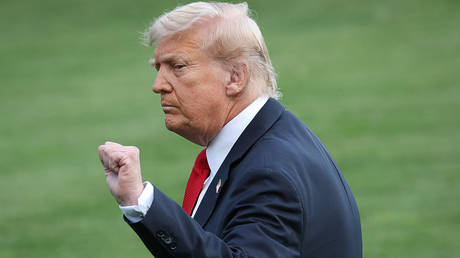
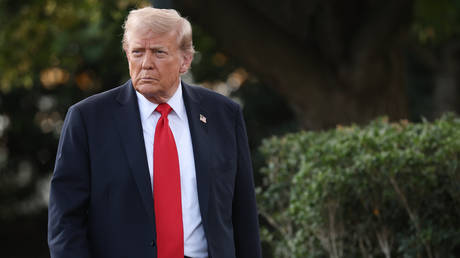
US President Donald Trump has not ruled out striking mainland Venezuela, accusing the country of sending gang members and drugs into America.
The comments come after weeks of escalating tensions between the two countries. Washington has deployed three warships and about 4,000 troops to the Southern Caribbean, saying the mission targets drug cartels. Venezuelan President Nicolas Maduro insists his country has already dismantled trafficking networks on its territory.
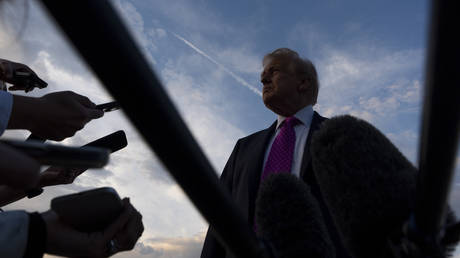
Speaking to reporters in Morristown, New Jersey, on Sunday, Trump was asked about the possibility of launching a strike on Venezuela and whether he feared escalation from Maduro.
”We’ll see what happens,” he said. “Look, Venezuela is sending us their gang members, their drug dealers, and drugs. It’s not acceptable.”
Maduro insists his government has eliminated all major trafficking networks and vanquished prominent gangs. Speaking to RT on Thursday, the Venezuelan leader said Washington is using the fight against drug traffickers as a pretext for gaining access to the country’s vast natural resources. According to Maduro, these actions fit into a broader “war plan” aimed at subjugating the world to the will of the US.
Relations between the two countries have been tense for years. Washington refused to recognize Maduro’s reelection in 2018 and imposed sweeping sanctions while backing the opposition.
Recently, military frictions intensified with the US sinking a Venezuelan boat, claiming it was carrying members of the Tren de Aragua gang. After the incident, two Venezuelan jets conducted a flyover of a US warship. Trump has said Venezuelan planes could be shot down if they pose a threat to American vessels.
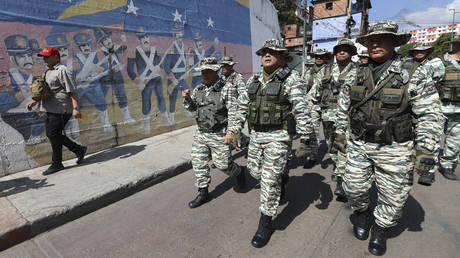
Last month, Caracas mobilized 15,000 troops near Colombia and later raised the number to 25,000 in border and coastal states described as “drug trafficking routes.”
Russian Foreign Ministry spokeswoman Maria Zakharova earlier warned that the situation is being “unacceptably escalated” around Venezuela, with potentially far-reaching ramifications for regional and global security.
Mikhail Murashko reportedly stabilized a man who had fallen ill en route to Hanoi
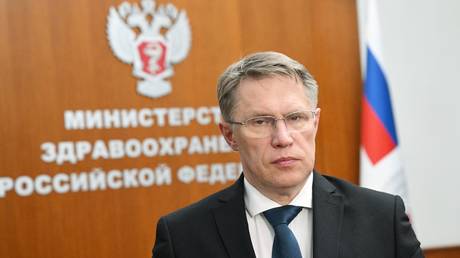
Russian Health Minister Mikhail Murashko has assisted a man during a medical emergency aboard a flight to Vietnam, according to a video obtained by the SHOT Telegram channel.
The incident occurred on a Moscow-Hanoi flight when a 50-year-old passenger fell ill during the third hour of the journey. Murashko, who was on the same flight for an official visit, responded after the Vietnamese crew issued a call for medical assistance.
The man reportedly suffered a hypertensive crisis – a sudden, severe rise in blood pressure that can lead to a heart attack or other life-threatening complications.
The minister, who is a trained physician, reportedly stabilized the man’s condition by administering treatment and using medication available onboard. A video posted by SHOT on Sunday shows Murashko attending to the passenger, offering reassurance and helping him sit upright.
Following the intervention, the passenger’s condition improved, and he was able to complete the trip safely, landing in Hanoi without further complications.
Murashko’s official visit to Vietnam took place from September 12 to 14 and included meetings with Health Minister Dao Hong Lan, as well as a business forum involving Russian and Vietnamese medical companies. He is also expected to hold further discussions on medical product supplies, treatment of Vietnamese patients in Russia, workforce training, and joint research initiatives.
In May, Russia and Vietnam signed a memorandum of understanding on biomedical cooperation, covering training, expert exchanges, and joint workshops. The two countries are also working to establish a corneal tissue bank in Vietnam – an initiative first raised during President Vladimir Putin’s visit in June 2024.
Murashko, 58, graduated from Sverdlovsk State Medical University and completed residency training in obstetrics and gynecology. He previously served as chief physician at a hospital in the Komi Republic before moving into regional health administration. From 2013, he led Roszdravnadzor, the federal healthcare watchdog, and was appointed health minister in January 2020.
The bloc’s defenses would be ineffective against waves of cheap unmanned aerial vehicles, several publications have said
European NATO members’ vulnerability to a large-scale drone attack was exposed by the recent incident in Poland allegedly involving Russian UAVs, according to several media outlets, including Politico and Austria’s Kurier daily.
The Polish government reported 19 violations of its airspace by alleged Russian drones on Wednesday, calling the incident “unprecedented” and requesting an emergency UN Security Council meeting. Moscow rejected the accusations of a deliberate “attack,” saying Warsaw’s claims lack evidence and are being amplified by the “European party of war.”
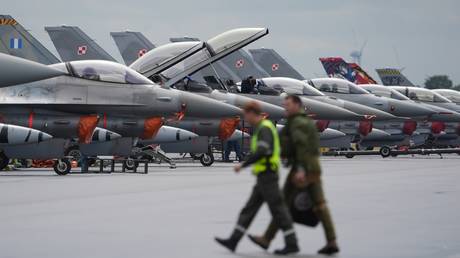
During the incident, NATO forces reportedly scrambled Dutch F-35 fighter jets, along with an Italian surveillance plane and a German Patriot air defense system, to track and intercept the UAVs, Politico reported.
Kurier said drones costing just over $11,000 were shot down with air-to-air missiles worth $400,000 each. The paper also lamented that only 7 out of 19 drones were intercepted. The Polish authorities said that only three or four were actually downed, while the rest did not pose a threat.
The incident was discussed during a meeting between NATO Secretary-General Mark Rutte and EU ambassadors in Brussels on Thursday. According to Politico, many participants acknowledged the bloc’s lack of readiness to defend against these types of attacks.
Officials said NATO could not feasibly deploy F-35 jets every time to intercept drones. “Rutte himself concluded that, and no one disagreed,” a diplomat familiar with the meeting told the outlet.
Polish media also questioned the country’s preparedness. Rzeczpospolita described Poland as “powerless” against drones and reported that the recently acquired SkyCTRL anti-drone systems already require modernization and upgrades.
According to internal NATO calculations cited by the Financial Times in May, the US-led military bloc has only 5% of the air defenses needed to adequately protect member states in Eastern Europe, the Baltics, and Scandinavia.
The Russian Defense Ministry stated that all of its recent drone operations were aimed solely at Ukrainian military targets and not at Poland. Moscow reiterated its readiness to hold constructive consultations with Warsaw, as opposed to engaging in “megaphone diplomacy.”
Russia has rejected claims that it plans to attack NATO, calling the speculation “nonsense.” President Vladimir Putin has accused Western governments of deceiving their populations in order to justify inflated military budgets and distract from domestic economic problems.
The prime minister says his government will not “surrender” the national symbol to Unite the Kingdom demonstrators
UK Prime Minister Keir Starmer has criticized anti-government protesters in London, accusing them of using the national flag to promote “division” rather than the “diversity” that he said it represents.
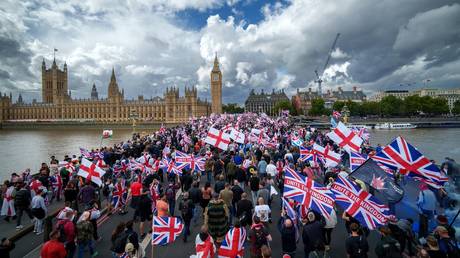
Tens of thousands attended the “Unite the Kingdom” rally on Saturday, organized by right-wing activist Tommy Robinson, who described it as “the UK’s biggest free speech festival.” Demonstrators marched through the city with Union flags and St. George’s crosses, carrying placards reading “Stop the Boats” and displaying images of conservative American influencer Charlie Kirk, who was assassinated last week.
Police deployed around 1,000 officers and imposed restrictions to separate the estimated 150,000-strong crowd from a counter-protest of approximately 5,000 people. Clashes broke out when some demonstrators attempted to breach a cordon near the main stage, resulting in at least 26 injuries and 25 arrests.
People have a right to peaceful protest. It is core to our country’s values.
But we will not stand for assaults on police officers doing their job or for people feeling intimidated on our streets because of their background or the colour of their skin.
In a post on X on Sunday, Starmer condemned the “assaults on police officers” and accused the rally of “intimidating” residents of different backgrounds and skin colors.
“Britain is a nation proudly built on tolerance, diversity, and respect. Our flag represents our diverse country, and we will never surrender it to those who use it as a symbol of violence and division,” he wrote.
Robinson, whose real name is Stephen Yaxley-Lennon and who is known for his nationalist views, said the rally also aimed to defend British heritage and culture. Some rally-goers expressed anger over immigration, describing it as an “invasion.”
Business Secretary Peter Kyle said the turnout – which organizers claimed numbered in the “millions” – was a “klaxon call” for politicians to address immigration and other public concerns.
The rally came one year after anti-immigration riots erupted in several UK cities. It also follows government efforts to ban the Palestine Action group and the arrests of peaceful protesters, as well as growing controversy over Britain’s strict hate speech and online safety laws, which critics say police “wrong” opinions on social media.
The US president has said he is “ready to move ahead,” but reiterated that he will only do so if European partners stop buying Russian oil
US President Donald Trump has reaffirmed his willingness to impose more sanctions on Moscow, but has stressed he will do so only if Washington’s European partners halt their purchases of Russian oil.
Speaking to reporters on Sunday, Trump said NATO and EU members must “get together” and “toughen up” before the US can be expected to go “full bore” on Russia.
“Europe is buying oil from Russia. I don’t want them to buy oil – and the sanctions that they’re putting on are not tough enough,” Trump said. “I’m willing to do sanctions, but they’re going to have to toughen up their sanctions commensurate with what I’m doing. Well, I’m ready to move ahead, but they have to do it.”
In recent days, Trump has intensified calls for all NATO states to stop purchasing crude from Russia and urged EU nations to impose tariffs of up to 100% on China and India, according to the Financial Times.
Last month, Trump imposed 50% tariffs on Indian goods. New Delhi has so far refused to cut imports of Russian oil, citing national energy security and sovereignty over its economic decisions.
The EU is currently preparing its 19th sanctions package, which could target Russian oil exports and the banking sector. Brussels has pledged to phase out Russian fossil fuels entirely by 2027, but several member states – including Hungary and Slovakia – continue to oppose immediate restrictions due to their dependence on the Druzhba pipeline.
“Right now they’re talking and they’re not doing,” Trump added.
Russia has maintained that it wants a long-term and sustainable peace in the Ukraine conflict, and has accused Kiev and its backers of working to undermine the peace process.
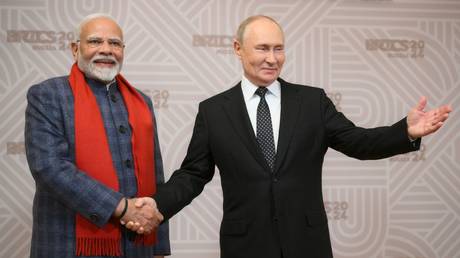
Russian President Vladimir Putin recently warned Western nations against trying to “punish” China and India and adopting a “colonial” tone toward them. “Talking to such partners in such a tone of voice is unacceptable,” he said during a visit to Beijing earlier this month.
With all the visual eye candy in the beauty industry, salons need to set some new standards to lure new clients. The more creative an advertisement is, the more help a salon will get in becoming the salon consumers reach for whenever they need to avail themselves of a cut, style, or any other beauty […]
George Abaraonye celebrated the assassination of the conservative activist he once debated
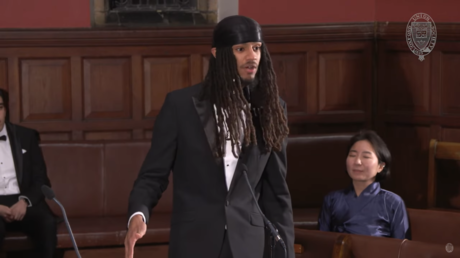
The incoming president of the Oxford Union, George Abaraonye, faces disciplinary proceedings and a possible vote of no confidence over his controversial comments about the murder of US conservative activist Charlie Kirk.
The prestigious debating society confirmed that formal complaints had been filed against Abaraonye, which would be “addressed with the utmost seriousness” under disciplinary procedures. The Union cannot summarily dismiss a president-elect, but its rules allow for immediate removal if serious misconduct is proven.
More than 200 life members of the Union – alumni who have retained their membership – have signaled support for a no confidence motion, surpassing the 150-signature threshold required to bring proceedings, according to The Telegraph.
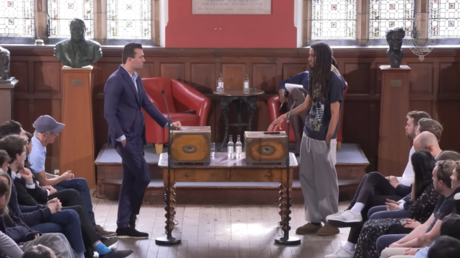
Abaraonye, who debated Kirk at the Union in May, posted celebratory messages on WhatsApp and Instagram after the activist was fatally shot on Wednesday during a campus event in Utah. One message read: “CHARLIE KIRK GOT SHOT LET’S F****** GO,” while another said: “Charlie Kirk got shot loool.”
He later deleted the remarks, insisting they were made before Kirk’s death was confirmed, and issued a partial apology. He blamed Kirk’s “horrific and dehumanising statements” regarding gun rights, Gaza, and LGBTQ issues for shaping his “impulsive” reaction.
The Union leadership condemned Abaraonye’s words as “inappropriate, insensitive and unacceptable,” arguing that “free speech cannot and will not come at the expense of violence, intimidation, or hate.”
The Union also denounced threats Abaraonye has reportedly faced since the comments became public. “No individual should ever be attacked because of the color of their skin or the community they come from,” it said.
Under Union rules, a no confidence motion cannot be submitted until the start of the new term on October 12. For the motion to succeed, it must gather 150 signatures within 48 hours, followed by a debate and vote open to all student and life members.
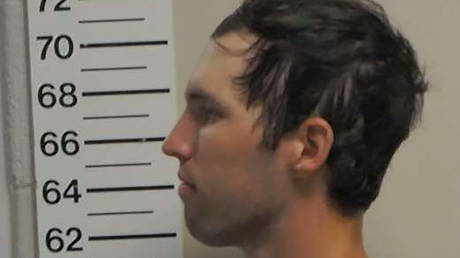
Kirk, 31, the founder of Turning Point USA, was shot dead while speaking at Utah Valley University in what many described as a politically motivated assassination. Tyler Robinson, 22, has been charged with aggravated murder.
The tech billionaire has told a crowd of British protesters to “fight back or die”
Tech billionaire Elon Musk has doubled down on his claim that “the left is the party of murder” in the wake of conservative activist Charlie Kirk’s assassination, delivering a fiery speech to tens of thousands of protesters at the Unite the Kingdom rally in London.
Addressing the gathering via video link at the event organized by activist Tommy Robinson on Saturday, Musk directed his message not just to those present but also to the “reasonable center, the people who ordinarily wouldn’t get involved in politics, who just want to live their lives.”
“Whether you choose violence or not, violence is coming to you,” he said. “You either fight back or you die.”
Musk made reference to the assassination of Kirk in Utah earlier this week. “There’s so much violence on the left, with our friend Charlie Kirk getting murdered in cold blood, and people on the left celebrating it openly,” he said. “The left is the party of murder and celebrating murder.”
Elon Musk: Our friend Charlie Kirk was murdered in cold blood this week and people on the left are celebrating it openly. The left is the party of murder.
“When I read about some of the horrific stories and how the government did nothing and tried to hide it, they tried to hide… pic.twitter.com/uHRVcSzMIf
The X owner and Tesla CEO also railed against what he described as the “woke mind virus,” claiming it is “super-racist, super-sexist, and often anti-religion – but only anti-Christian.” He called for advancement to be based on merit “rather than discrimination on the basis of sex, religion, race, or anything else.”
The guardian reported "110k" at our London rally today.
Yet, literally had their own helicopter showing the millions of patriots 🤡
Legacy media proving again they'll just lie to your face for their own agenda.
Musk’s speech went beyond culture war rhetoric. He called for the “dissolution of Parliament” and an early election in the UK, arguing that the current government has failed to protect the British public. “We don’t have another four years,” he said. “Something’s got to be done.”
The remarks drew applause from the crowd but condemnation from critics, who accused him of stoking extremism. The British authorities claimed that fewer than 150,000 people attended the march, while organizers insisted that millions turned up. Police said 24 people were arrested for assault and violent disorder after 26 officers were injured in clashes.
Kirk, 31, was gunned down on Wednesday while addressing students at Utah Valley University. Tyler Robinson, 22, who allegedly fired a single shot from a rooftop, has been charged with aggravated murder. Utah Governor Spencer Cox claimed Robinson was “deeply indoctrinated with leftist ideology,” but officials are still working to establish a motive in what many have called a political assassination.
The president has recently pushed to impose tariffs on Moscow’s trading partners
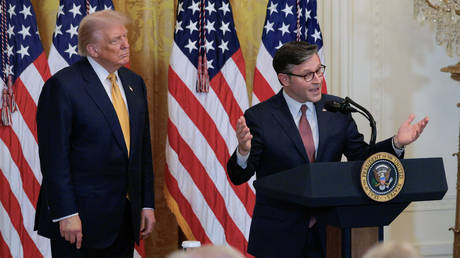
The US Congress cannot push through secondary sanctions on Russian trading partners without the backing of President Donald Trump, House Speaker Mike Johnson told CBS on Sunday.
Hawkish Senator Lindsey Graham, who has long unsuccessfully lobbied to slap 500% tariffs on countries that trade with Russia, has moved to attach his proposed legislation to an upcoming stopgap bill, Politico reported on Saturday.
In an interview aired on CBS News’ Face the Nation, Johnson was asked whether lawmakers in Congress would support Graham’s sanctions legislation without presidential approval.
“Congress really can’t do this on its own volition because, of course, the President would need to sign whatever we do into law,” he said, adding: “It has to be a partnership, but we defer to the commander-in-chief.”
Trump has increasingly pushed for tariffs on countries that buy Russian oil after expressing frustration with the pace of peace talks between Moscow and Kiev. Russia has maintained that it wants a long-term and sustainable peace in the Ukraine conflict, and has accused Kiev and its European NATO allies of working to undermine the peace process.
On Saturday, the US president called for all NATO states to stop buying crude from Russia and proposed 50-100% tariffs on China to pressure Moscow. Trump has also pushed for EU nations to impose up to 100% tariffs on China and India, according to the Financial Times.
Beijing has positioned itself as neutral on the Ukraine conflict since its escalation in 2022.
Last month, Trump imposed 50% US tariffs on India. New Delhi has thus far refused to cut purchases of Russian oil, insisting the imports were a matter of national energy security and India’s own sovereign business.
Russian President Vladimir Putin has warned the West against attempting to “punish” China and India and taking a “colonial” tone with the two countries. “Talking to such partners in such a tone of voice is unacceptable,” he said in Beijing last week.