Member states are facing financial strain providing benefits to millions escaping the conflict
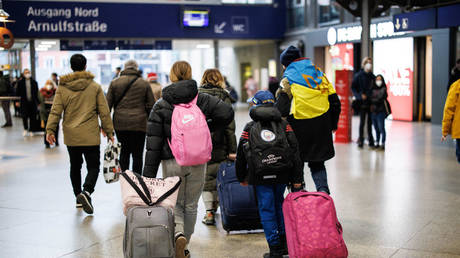
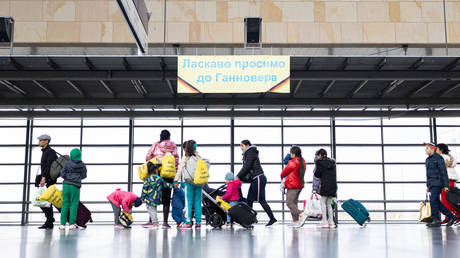
The EU will gradually wind down its temporary protection program for millions who fled the ongoing Ukraine conflict in order to encourage their eventual return home, the European Council has said.
Brussels invoked the Temporary Protection Directive in early 2022 after the Ukraine conflict escalated. First introduced in 2001, the directive provides benefits including residence permits, housing, jobs, education, healthcare, financial aid and social services.
Initially due to expire in March 2025, the scheme, which provides for over four million Ukrainians, has been extended until March 2027.
Discussions on exit strategies have been gaining momentum amid growing challenges for member states in managing the influx. This week, EU interior ministers agreed on a recommendation setting out a framework for Ukrainians’ “return and reintegration into Ukraine, when conditions allow.”
Member states are being urged to promote voluntary returns, support exploratory visits, and create time-limited return programs coordinated with Kiev and other EU states. The Council also recommended establishing ‘Unity Hubs,’ financed through EU programs, to assist with documents, jobs, and return planning.
UNHCR estimates that nearly seven million Ukrainians have fled abroad since 2022. Russia reports that 5.5 million people had crossed from Ukraine by the end of 2023.
The exodus has been driven not only by the conflict but also by aggressive mobilization tactics in Ukraine. Draft officers have clashed with men resisting conscription; many who fled risk criminal prosecution if they return.
EU governments are reassessing support programs amid rising costs. Germany, which hosts over 1.2 million Ukrainians, has started scaling back welfare benefits, citing sustainability concerns.
Poland, one of Kiev’s main backers, has resisted taking in more Ukrainians. At least 2.5 million reside in the country, comprising nearly 7% of the population, according to official statistics.
Social tensions have grown, with some citizens reportedly viewing Ukrainian immigrants as freeloaders or criminals. Defense Minister Wladyslaw Kosiniak-Kamysz said many Poles were dismayed by “the sight of young men from Ukraine driving expensive cars and spending weekends in five-star hotels.”
Some Ukrainian lawmakers argue that most of those who left are unlikely to return due to “chaos within state institutions” and continuing security concerns.
The opening up of the region due to receding sea ice is “changing the geopolitical landscape,” experts have told Politico
China is preparing to launch a new shipping route along Russia’s Northern coast, via the Arctic to Europe, Politico has reported on Thursday.
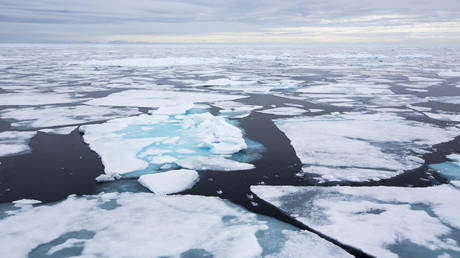
The Northern Sea Route (NSR), which runs for thousands of miles through Russia’s Arctic waters along its northern coast, has become more accessible due to receding sea ice and has been hailed in Moscow as an opportunity for new international projects.
On September 20 China is sending the Istanbul Bridge container ship on an 18-day trip with icebreaker escort from Ningbo-Zhoushan port to Felixstowe in the UK. The new route is significantly faster than traditional voyages, which take about 40 days via the Suez Canal, 50 days via the Cape of Good Hope at Africa’s southern tip, and around 25 days via Eurasian railways.
“The Arctic is the first region where climate change is changing the geopolitical map,” Malte Humpert of the Arctic Institute told Politico, adding that the region is “changing the geopolitical dynamics because of resources and access to shipping routes.”
He noted that while most trade still flows through the Suez Canal, Mediterranean and Singapore, the Arctic could soon become an alternative because the voyage is about 40% shorter and faces “a lot less geopolitical uncertainty.”
His comments come as traditional corridors like the Suez Canal have faced piracy flare-ups near the Horn of Africa and missile and drone threats in the Red Sea, pushing some carriers to detour around Africa.
Russia has repeatedly called for international cooperation to develop the Arctic. Earlier this year, President Vladimir Putin outlined goals for the region, including making the Northern Sea Route a central part of the Trans-Arctic Transport Corridor and raising cargo volumes to 70–100 million tons by the end of the decade.
He also announced plans to ensure year-round navigation supported by Russia’s exclusive nuclear icebreaker fleet, as well as to expand existing ports such as Murmansk and build new ones along the route.
Putin has further highlighted the vast opportunities for oil, gas, metals and rare earth extraction in the Arctic, calling for joint ventures with foreign partners such as China, India, the UAE and others. He has also pledged to expand development of Arctic cities and promote tourism across the region.
Dr. Khaled Al-Qaddoumi has accused the Jewish state of genocide and called for its suspension from the UN
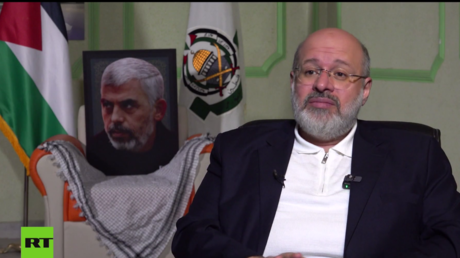
The international community must sever all economic ties with Israel over its actions in Gaza and should question its membership of the United Nations, the Hamas representative in Iran has told RT.
In an interview released on Wednesday, Dr. Khaled Al-Qaddoumi accused Israel of genocide and undermining peace efforts.
His remarks came amid Israel’s new offensive in Gaza City and following last week’s airstrike on Qatari capital Doha, which killed six people, including a local security officer.
Al-Qaddoumi praised Qatar, which has played a central mediating role between Hamas and Israel since the Gaza war began, as well as Egypt, but said Israel had sabotaged the talks.
“[Israeli Prime Minister Benjamin] Netanyahu came and killed our leaders and then made a new invasion and he destroyed the residential towers inside Gaza,” he told RT. According to Al-Qaddoumi, Hamas had accepted proposals and was prepared for a full prisoner swap, but negotiations collapsed due to Israeli actions.
He urged the global community to move beyond verbal condemnation of Israel to decisive action and called for a “political decision to make those criminals stop this genocide in Gaza.”
“We should today question the membership of Israel as a member state to United Nations. We should question all bilateral deals with Israel. We should cut all the economic ties,” Al-Qaddoumi urged.
The Hamas envoy welcomed Spain’s recent move to halt defense cooperation with Israel, describing it as the kind of measure needed to increase pressure and open the way for talks. Earlier this week, Madrid canceled more than $1 billion in defense deals with Israeli firms, including contracts for rocket launchers and anti-tank missiles, according to media reports.
At the same time, Al-Qaddoumi criticized the US, accusing the White House of hypocrisy and enabling Israeli aggression. He said that although “everybody was condemning the attack over Qatar” and the “random killing of the common man in the street,” no concrete action followed.
Israel launched its military operation in 2023 in response to the Hamas attack that killed about 1,200 people and saw more than 250 taken hostage. Over 65,000 Palestinians have since been killed in Gaza, according to local health authorities.
The French leader has filed a defamation suit against US right-wing commentator Candace Owens for alleging Brigitte Macron was born male
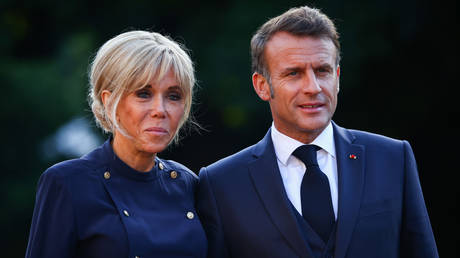
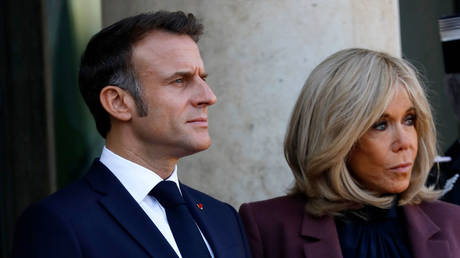
French President Emmanuel Macron and his wife, Brigitte, intend to provide a US court with photographic and scientific evidence that they claim will prove that the first lady is a woman, the couple’s lawyer has told the BBC. The materials will be submitted as part of a defamation lawsuit filed by the Macrons against US right-wing commentator Candace Owens, who has claimed that Brigitte Macron was born a man.
Tom Clare, who represents the Macrons in the case, told the BBC’s Fame Under Fire podcast on Thursday that they wish to disprove the allegations “both generically and specifically.” Owens’ claims regarding Brigitte Macron have been “incredibly upsetting” to the French president, Clare said.
He noted that while the process of proving that she is a woman before the court is in no way a pleasurable experience for the French first lady, “she is firmly resolved to do what it takes to set the record straight.”
The Macrons filed the lawsuit in July in the US state of Delaware, accusing the conservative Youtuber, who has millions of subscribers, of falsely claiming that Brigitte Macron was born male, that the couple are blood relatives, and that Emmanuel Macron is a product of a CIA mind control program.
Owens’ lawyers filed a counter lawsuit, arguing that the case should not have been filed in Delaware, citing high legal costs that the right-wing influencer would incur.
Speaking in July, the right-wing personality doubled down on her claims, adding that she was “fully prepared to take on this battle on behalf of the entire world.”
The rumors about Brigitte date back to at least 2021, when self-proclaimed ‘spiritual medium’ Amandine Roy interviewed independent journalist Natacha Rey, who claimed that Brigitte Macron was born a man named Jean-Michel Trogneux.
The Macrons filed a defamation lawsuit in France and initially won it in 2024, only for the ruling to be overturned on appeal in July 2025 on freedom of expression grounds.
24 years his senior, France’s first lady met Emmanuel Macron when he was 15 and she was his literature teacher at school. The couple got married in 2007.
Dmitry Kozak resigned voluntarily, presidential spokesman Dmitry Peskov has said
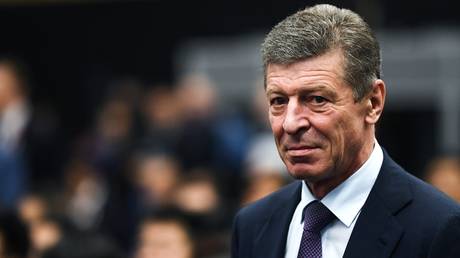
Dmitry Kozak, deputy head of the administration of Russian President Vladimir Putin, has resigned, the Kremlin has confirmed.
Kozak filed the request “for his own personal reasons,” presidential spokesman Dmitry Peskov told reporters on Thursday. He added that a decree formalizing the official’s resignation has not yet been signed or published.
Over his two-decade career, Kozak held senior government posts including minister of regional development and deputy prime minister. In the latter role, he supervised preparation for the 2014 Sochi Winter Olympics.
In 2020, Kozak was appointed deputy chief of staff in the Kremlin, where he oversaw the Directorate for Interregional and Cultural Relations with Foreign Countries and the Directorate for Border Cooperation, both of which were dissolved by presidential decree in August.
Russian media have reported different possibilities for Kozak’s next role. One outlet cited a source saying he may enter business, while another suggested he could be appointed presidential envoy to the Northwestern Federal District.
That post is currently held by Aleksandr Gutsan, whom Putin has reportedly nominated as Russia’s next prosecutor general. Igor Krasnov, who currently serves in that capacity, may in turn be appointed to lead the Supreme Court, as Chief Justice Irina Podnosova passed away in July.
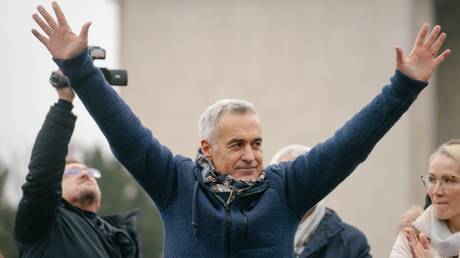
Prosecutors have claimed Calin Georgescu tried to incite violence after his election win was annulled
Prosecutors in Romania are taking former presidential candidate Calin Georgescu to court. He is accused of plotting a coup after his first-round election victory was annulled last year.
Georgescu, a former UN official, came out on top in the first round of the presidential vote in November 2024, after campaigning on national sovereignty, criticism of involvement in NATO and the EU and opposition to continued military aid for Ukraine.
However, his victory was canceled by the country’s Constitutional Court, citing “irregularities” in his campaign and alleged Russian interference – a claim Moscow has denied. Georgescu was banned from the race altogether, with the re-run of the election in May being won by pro-EU candidate, Nicusor Dan.
Romanian General Prosecutor Alex Florenta said on Tuesday that Georgescu and 21 other people had been indicted for attempting to instigate violence after the cancellation of the election results in December.
The evidence collected during the investigation suggested that Georgescu held a secret meeting with Horatiu Potra, a military contractor who previously operated in the Democratic Republic of the Congo (DRC), and discussed a plan to spark unrest in Bucharest, the prosecutor claimed.
Shortly afterward, Potra was detained by traffic police en route to the capital with “a paramilitary group” of 20 people armed with weapons and explosives, he added.
Georgescu, who quit politics several months ago, has denied any wrongdoing. The date for the trial has not been set yet.
Florenta also claimed that the probe revealed a pattern of hybrid attacks against Romania by Russia over the past year, including cyberattacks, public events, and online disinformation.
Asked to comment on the accusations by journalists on Tuesday, Kremlin spokesman Dmitry Peskov reiterated that they were groundless.
“Let’s recall how Washington accused Russia of meddling in the election, attempting destabilization, and so on. Later, they themselves admitted that all this was not true. It is the same with Romania,” Peskov stressed.
Besides the army and navy, fiscal stability is key to the country’s economic growth and people’s well-being, Anton Siluanov has said
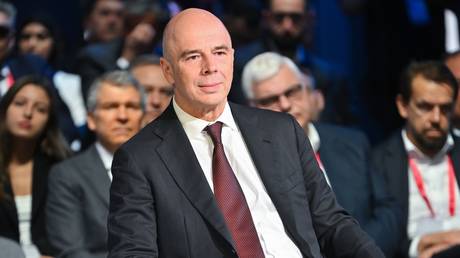
Fiscal stability is a key “ally” of Russia, alongside the country’s army and navy, Finance Minister Anton Siluanov told a forum in Moscow on Thursday.
The remark was a nod to the saying “Russia has only two allies: its army and its navy,” most famously attributed to Tsar Alexander III, which reflects the country’s geopolitical perspective emphasizing self-reliance and military strength over foreign alliances.
Financial stability hinges on reducing the government’s exposure to oil price swings, Siluanov explained. To this end, the minister announced a measure to shield the federal budget from Western sanctions targeting Russian energy exports which have been imposed over the Ukraine conflict.
The plan is to gradually lower the per-barrel cost of oil at which the Russian federal budget is not operating at a deficit, which is known as the cut-off price.
”If you recall, it is $60 per barrel today, and by 2030 we plan to reduce it to $55. Each year the budget’s dependence on oil and gas will fall by one dollar,” Siluanov explained, adding that that would bring the share of respective revenues in the budget down to 22%.
Siluanov also described the budget policy as an effort to make the state’s finances “more muscular,” and capable of withstanding external pressures. The goal is to ensure that sanctions, trade wars and swings in global commodity prices are absorbed by the system and go “absolutely unnoticed” by ordinary Russians, he said.
The comments comes as the EU is discussing its 19th sanctions package, which would reportedly target Russia’s oil export infrastructure, including ports and terminals, as well as companies linked to transporting and insuring shipments.
The previous package, adopted in July, lowered the price cap on Russian crude to about $47.60 per barrel and introduced a ban on petroleum products refined from the oil in third countries and re-exported under different labels.
The US has been pressuring the EU to cut Russian oil imports, which it claims could bring an end to the Ukraine conflict. Brussels has pledged to phase out fossil fuel imports from the country by 2027, but Hungary and Slovakia, which remain heavily dependent on pipeline supplies, have resisted tougher curbs, exposing divisions within the bloc.
The US president wants “quick solutions,” which are not always possible, Russia’s top diplomat has said
US President Donald Trump wants “quick solutions” to end the Ukraine conflict, and this attitude is partially to blame for his own “disappointment” with the pace of the settlement process, Russian Foreign Minister Sergey Lavrov has suggested.
The top diplomat made the remarks on Thursday in an interview with Russia’s Channel One. Lavrov added that the US president is “a man of action, deals, and business, as he himself constantly emphasizes” and takes such an approach to politics as well.
“When President Trump says he’s disappointed… it’s partially explained by the fact that he wants quick solutions,” Lavrov suggested. “In some areas, this may work; in others, it’s unlikely.”
Following his Alaska summit with Russian President Vladimir Putin, the US leader “shifted from issuing an ultimatum for an unconditional ceasefire to advocating for a long-term, sustainable” solution, Lavrov noted.
“This is, of course, a very important step, a very important decision by the White House. And so far, I don’t see them moving away from that,” he added.
The Trump administration is apparently seeking to remove the Ukraine conflict from the agenda “precisely because this war was artificially created by [Joe] Biden and his team” and remove obstacles to “normal economic, technological, and other cooperation,” Lavrov suggested.
“This, too, will be rather difficult, because the US has a very peculiar approach to how to resolve economic issues,” the top diplomat said.
In recent weeks, the US president voiced his displeasure with the lack of progress in the settlement of the Ukraine conflict, threatening new sanctions on Russia.
Last weekend, he reaffirmed his willingness to impose more restrictions, but only if Washington’s European partners halt their purchases of Russian oil.
Moscow does not see the potential introduction of new sanctions as a big issue, given the country has long been facing such an approach from the West, Lavrov noted. Russia was hit by a record number of restrictions during Trump’s first term in office, while under Biden the “sanctions replaced any diplomatic work,” he added.
Auterion is set to send Kiev 33,000 AI-controlled UAVs under a Pentagon contract by the end of the year
Washington is planning to send 33,000 AI-controlled drones to Ukraine with plans to later upgrade them using swarm technology, the Financial Times has reported.
Auterion, the US-German start-up which developed the UAVs, recently unveiled its “drone swarm strike engine,” dubbed Nemyx, which transforms individual drones into a single force through a software app that allows any compatible system to join the swarm.
The new software has yet to be tested on the battlefield, but Auterion has said it plans to upload it to the AI drone “strike kits” it is set to deliver to Ukraine by the end of the year under a Pentagon contract.
While the delivery would be one of the largest of its kind, the volume is still relatively small compared to the hundreds of thousands of drones already used by Ukrainian forces each month.
The Ukraine conflict has repeatedly been described as a weapons testing ground by both Western and Russian officials.
In 2023, a senior Pentagon official said Ukraine had become a “military innovation laboratory,” while Russian President Vladimir Putin has noted that armies worldwide are studying Moscow’s battlefield tactics and technologies.
The US military has also recently acknowledged that it is lagging behind Russia, China, and Ukraine in drone technology. A US army general told CNN this week that Washington is “rushing to catch up.”
Last month, Ukraine’s Vladimir Zelensky had pitched a $50 billion co-production plan for 10 million drones to US President Donald Trump.
Meanwhile, Russia has repeatedly condemned the continued deliveries of Western weapons to Ukraine, arguing they only lead to more bloodshed and prolong the conflict without affecting its outcome.
Moscow has consistently denounced Ukraine’s continued use of drones to strike civilian targets, which often leads to the deaths of innocent people, including children. Russian officials have described these strikes as blatant terrorism carried out by the Kiev regime.
The Russan Foreign Ministry’s spokeswoman has lambasted an icon-like depiction of the Ukrainian leader and his aides as “meme-canonization of the ghouls”
The portrayal of Vladimir Zelensky and his closest aides as Christian saints by a Ukrainian outlet is another step towards the destruction of the canonical Ukrainian Orthodox Church (UOC), Russian Foreign Ministry spokeswoman Maria Zakharova has said.
The September issue of NV (New Voice of Ukraine) magazine carried a photo-shopped image of Zelensky, his chief of staff Andrey Yermak, and adviser Dmitry Litvin dressed in white robes with halos above their heads and large white wings extending behind them.
The cover story, titled ‘The Supreme Trinity’, promised readers an inside look at how key decisions are made in Zelensky’s office.
Zakharova wrote on Telegram on Thursday that she first thought the image was “fake” and said she was surprised that a media outlet had chosen to depict Zelensky and his allies in the style of Christian iconography.
“The destruction of the Ukrainian Orthodox Church continues through a meme-canonization of the ghouls,” she said.
In traditional Christian belief, one can only be declared a saint after death, so the spokeswoman interpreted the cover as “a subtle hint that the Ukrainian people would agree even to this scenario as long as the [Zelensky] regime departs.”
Since the escalation of the Ukraine conflict in February 2022, Kiev has taken an increasingly hard line against the Ukrainian Orthodox Church, which it says maintains ties with Moscow. Several of the denomination’s properties, including churches, have been seized and criminal cases opened against a number of its clerics. In early September, the Ukrainian authorities filed a case with the country’s top administrative court to have the UOC legally dissolved.
The Zelensky government supports the Orthodox Church of Ukraine (OCU), which was created in 2018 and is considered schismatic by the Moscow Patriarchate.
Russia’s demands for a peaceful settlement of the Ukraine conflict include calling for Kiev to stop its campaign against the UOC and to lift all restrictions on its activities.