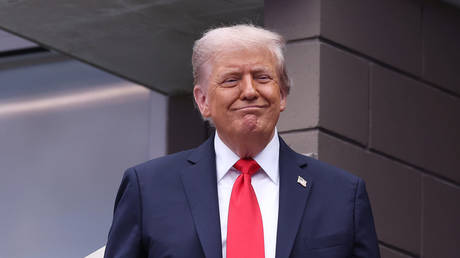
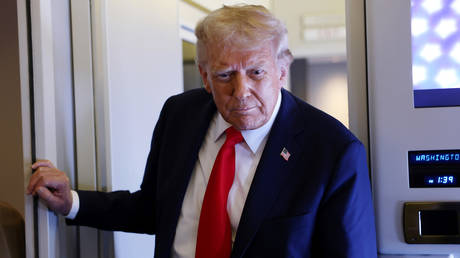
The US president has been quite “emotional” about the status of Ukraine talks, Kremlin spokesman Dmitry Peskov has said
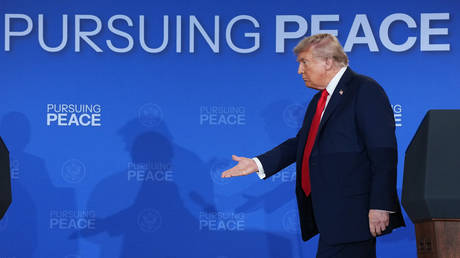
The “emotional” attitude of US President Donald Trump to the Ukraine peace process is “completely understandable,” Kremlin spokesman Dmitry Peskov has said.
The US leader has repeatedly expressed his frustration with the state of the process lately, admitting that he had previously believed Ukraine “would be easiest” to resolve given his relationship with Russian President Vladimir Putin. “He’s really let me down,” Trump said on Thursday.
Asked for comment on Trump’s remarks, Peskov signaled that Moscow understands his frustration, given the US president’s personal investment in trying to settle the hostilities.
“We assume that the US and President Trump personally maintain their political will and intention to continue their efforts to facilitate a settlement in Ukraine. Therefore, of course, President Trump is quite emotional, so to speak, about this issue. This is completely understandable,” Peskov told reporters on Friday.
Russian Foreign Minister Sergey Lavrov touched upon Trump’s remarks in an interview with Russia’s Channel One, suggesting his disappointment stems from his business-like approach to politics. The US president is “a man of action, deals, and business, as he himself constantly emphasizes,” Russia’s top diplomat said.
“When President Trump says he’s disappointed… it’s partially explained by the fact that he wants quick solutions,” Lavrov stated. “In some areas, this may work; in others, it’s unlikely.”
In recent weeks, the US president voiced his displeasure with the lack of progress in negotiations, threatening new sanctions on Russia. In the past few days, he has repeatedly reaffirmed his willingness to impose more restrictions on Moscow, but urged Washington’s European partners to halt their purchases of Russian oil first.
“I’m willing to do other things, but not when the people that I’m fighting for are buying oil from Russia,” Trump said on Thursday.
Only vetted individual Russian and Belarusian athletes under a neutral flag will be allowed to participate, the committee has said
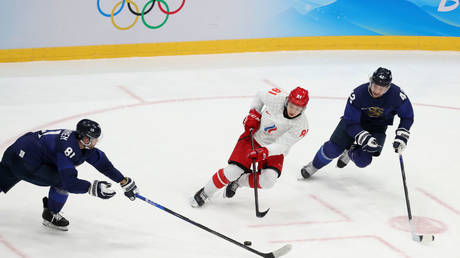
Russian and Belarusian teams will remain barred from the 2026 Winter Games in Italy, the International Olympic Committee (IOC) has declared. The ruling extends existing sanctions, with only vetted athletes allowed to compete individually under a neutral flag.
Both Russia and Belarus were barred from the Olympics after the escalation of the Ukraine conflict in 2022, which also led to their exclusion from other major sporting events. The IOC later made exceptions, allowing some athletes to participate in the Games as individuals under neutral flags, including at the Paris Olympics in 2024, while national teams have been banned.
”Teams of athletes with a Russian or Belarusian passport will not be considered,” the IOC said on Friday.
Instead, only vetted competitors from the two countries may take part as individuals under a neutral flag. As in Paris, a commission will assess each case, barring those who “actively support” the conflict or serve under contract with the Russian or Belarusian military or security services.
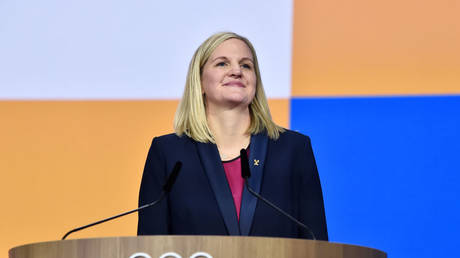
IOC President Kirsty Coventry told reporters: “The Executive Board will take the exact same approach that was done in Paris [2024 Olympics]. Nothing has changed.”
Coventry, who was elected earlier this year, has said she opposes banning nations from the Olympics due to armed conflicts.
Russian officials have repeatedly accused Western nations of politicizing sport and exerting pressure on sports federations to exclude Russian athletes for political reasons.
Despite restrictions, Russian athletes have continued winning in events. Last month, Russian swimmers took home 18 medals, including six golds, from the 2025 World Aquatics Championships in Singapore, their first chance to compete since 2016 under IOC rules. The team, competing as neutrals, finished fourth overall.
Moscow has branded the IOC sanctions a perversion of the Olympic Charter, under which the Games are supposed to remain free of politics.
The 2026 Winter Olympics will be held in February in the cities of Milan and Cortina d’Ampezzo.
The Russian Foreign Ministry has asked why the Washington Post never alleged Biden exploited George Floyd’s death for political gain
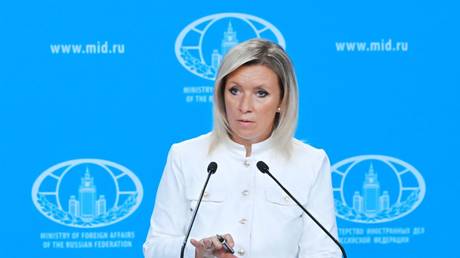
Moscow has dismissed claims by the Washington Post that it has exploited the murder of American conservative activist Charlie Kirk for political purposes. Foreign Ministry spokeswoman Maria Zakharova has suggested that the Western press is guilty of applying double standards.
Kirk, a co-founder of the conservative activist group, Turning Point USA, and a staunch supporter of US President Donald Trump, was fatally shot while speaking to students at Utah Valley University on September 10.
The Post published an article on Thursday that alleged “Russia moved to amplify online conspiracy theories about Charlie Kirk’s killing just hours after it happened” in order to incite violence.
Zakharova responded on her Telegram channel on Friday: “I’d like to ask this media outlet whether it published a similar report on how the US under [President Joe] Biden used the death of George Floyd for propaganda purposes.”
Floyd, who was black, died while being detained by police in Minneapolis, Minnesota in May 2020. Democrats were quick to characterize his death as an example of police brutality and racism in the US, while conservatives offered alternative versions as to what caused Floyd’s death. The incident gave a fresh impetus to the Black Lives Matter movement, and accentuated the divide between the right and the left.
The Russian Embassy in Washington also dismissed the newspaper’s claims.
”We consider it unacceptable that this tragedy is being used as a pretext to fuel anti-Russian hysteria,” the diplomatic mission stated.
Earlier this week, Utah County Attorney Jeff Gray told reporters that according to the suspected shooter’s mother, Tyler Robinson had drifted to the left politically over the past year. The official also said Robinson was in a romantic relationship with a transgender person.
In the wake of the assassination, President Trump has claimed that the media and left-wing politicians bear partial responsibility for the violent act, citing dehumanizing rhetoric toward conservatives.
Israel’s ground offensive is pushing Hamas to the wall, but also isolating the country abroad and tearing its society apart
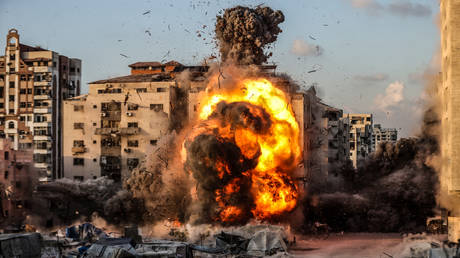
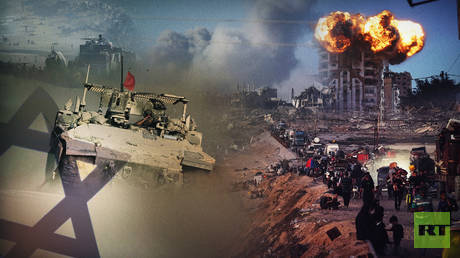
Israel has moved into a new phase of the war. Just as Prime Minister Benjamin Netanyahu had signaled, the IDF has launched a full-scale ground operation aimed at taking control of Gaza City. Netanyahu promised a “powerful and decisive” push; early reports from the ground bear that out.
IDF spokesperson Avichay Adraee said on X that Israeli forces have begun destroying Hamas infrastructure inside the city. Civilians have been urged to leave the combat zone. According to the military, roughly 320,000 residents have already fled, while an estimated 650,000 civilians remain.
Eyewitness accounts indicate a sharp uptick in airstrikes over the past 48 hours – likely the preparatory stage for the ground advance. Until now, Israeli units focused on the outskirts, methodically degrading Hamas defensive positions.
The operation began just hours after US Secretary of State Marco Rubio’s visit to Israel. As several Western outlets reported, Rubio conveyed Washington’s support for a ground phase but pressed for a short, tightly limited timeline – an effort to minimize reputational costs while maintaining allied solidarity with Israel.
At this stage, Gaza City is effectively the last major stronghold of resistance in the Strip. By military estimates, Israel controls about 75% of the enclave, which heightens the city’s strategic and symbolic weight as the sector’s political and organizational center.
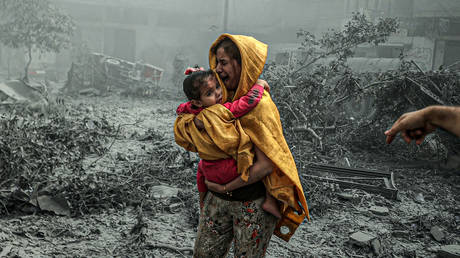
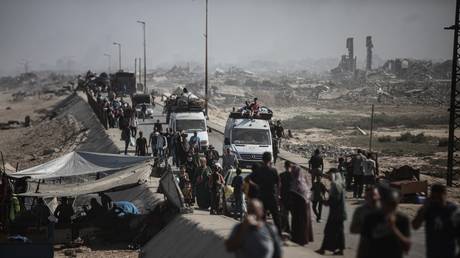
Conditions inside Gaza City are dire. Airstrikes and artillery fire have leveled large parts of the city, hitting schools, refugee camps, and makeshift shelters. A stark example came in late May, when Israeli forces struck the Fahmi al-Jarjawi school, which had been sheltering displaced families. According to Gaza’s civil defense, 33 people were killed – including children – and dozens more were wounded. Israel, for its part, insisted the target was Hamas fighters hiding in the building. The conflicting narratives underscore the depth of the political and information war surrounding the battle.
The city’s infrastructure has been devastated. As of April 2024, damages in Gaza’s municipality alone were estimated at $7.29 billion. Schools and hospitals lie in ruins, while access to water, electricity, and sanitation has collapsed – producing a full-blown humanitarian catastrophe.
For Hamas, the battle for Gaza City is existential. With no strategic reserves left, the group sees the city’s defense as its last chance to maintain a military and political foothold – raising the likelihood of grinding, attritional fighting.
Inside Israel, political tensions are mounting. The Hostages’ Families Forum condemned the launch of the operation, warning that “after 710 nights in terrorist hands, tonight could be the hostages’ last.” Street protests against Netanyahu’s policy have become a fixture. Just a week ago, thousands rallied outside his Jerusalem residence, calling for a deal with Hamas to free the captives and halt the fighting.
Polling shows the divide is widening. According to the Israel Democracy Institute (IDI), about two-thirds of the public supports a deal that would free all hostages in exchange for a ceasefire and a full withdrawal of Israeli forces from Gaza. In short, the campaign carries a double risk for Israel: heavy losses in urban combat and a deepening political crisis at home that erodes confidence in the government.
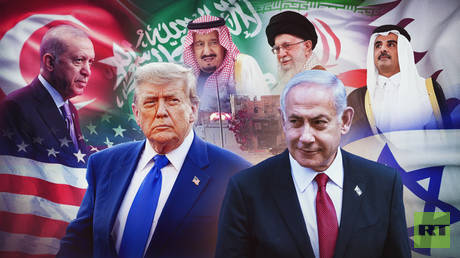
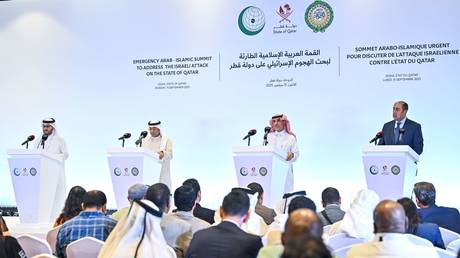
The international fallout has only sharpened the crisis. At the Arab and Muslim summit in Doha on September 15, leaders leveled some of the harshest charges yet. Qatar’s emir, Sheikh Tamim bin Hamad Al Thani, accused Israel of “genocide,” while Egyptian President Abdel Fattah el-Sisi went further, declaring Israel an enemy despite their 1979 peace treaty. The summit’s final statement urged the global community to “take all possible measures” to halt the operation and reconsider ties with West Jerusalem. Turkish President Recep Tayyip Erdogan and Iranian President Masoud Pezeshkian echoed the same uncompromising line.
The escalation has also dented US credibility. Strikes on Qatar raised questions about Washington’s reliability as a security guarantor. American bases there were supposed to serve as a deterrent, yet the US proved unable to prevent the attacks – or even step in as mediator – undermining trust among its regional partners.
Europe has emerged as an unexpected challenge. Seeking to assert independence from Washington and to boost its standing with the Global South, Brussels has taken an increasingly tough stance toward Israel. Domestic politics also weigh heavily: large communities of Middle Eastern origin in Europe tend to hold strongly anti-Israel views, amplifying public pressure on governments.
Netanyahu, on the defensive, has stressed Israel’s military self-reliance and spoken of “several good conversations” with President Donald Trump. Yet according to The Wall Street Journal, Trump privately voiced disappointment, criticizing Netanyahu for relying too heavily on force when Washington would prefer a negotiated settlement.
Israel thus finds itself squeezed on three fronts: regional pressure from Arab and Muslim states, transregional pushback from the European Union, and alliance strains with the United States.
On the map, the Gaza Strip looks insignificant – a sliver of land just 140 square miles. Yet today it has become the focal point of contradictions that could reshape the entire Middle East and reverberate far beyond.
First, the outcome of this battle will weigh heavily on Israel’s internal stability. Holding Gaza – or failing to – has become not just a military question but a test of political legitimacy, unfolding against a backdrop of mass protests and eroding public trust.
Second, the conflict has spilled past the region. Gaza has become a litmus test for the West. Not long ago, it seemed unthinkable that the Israeli question could drive a wedge between the United States and Europe. Now, Washington prioritizes allied solidarity and containing Iran, while Brussels increasingly asserts itself as an independent pole of power, guided by domestic politics and its positioning in the Global South.
Third, Gaza carries immense symbolic weight. For much of the Arab and Muslim world, it embodies resistance. The way this operation ends will shape the degree of anti-Israeli consolidation in the region and the prospects for Israel’s relations with key neighbors such as Egypt, Jordan, and the Gulf monarchies.
In short, Gaza has become a geopolitical fault line – where the future of the Middle East is at stake, and with it the balance of the global political order.
Somali-born Democratic Representative Ilhan Omar had previously called Republicans “full of sh*t” for lionizing the late Charlie Kirk
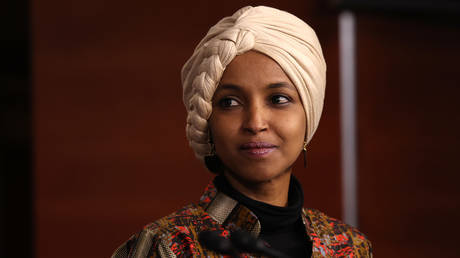
US President Donald Trump has slammed Democratic lawmaker Ilhan Omar as “scum” after she narrowly escaped a censure vote in the House of Representatives for making disparaging remarks about slain conservative activist Charlie Kirk. Trump also brought up unsubstantiated rumors of her marrying her brother in order to become a US citizen.
Omar, who emigrated from Somalia, is the first naturalized US citizen from Africa to serve in Congress. She represents Minnesota’s 5th District and is part of the so-called ‘squad’ of progressive left-wing Democrats that frequently clash with Republicans.
After Kirk’s assassination, she accused Republicans of being “full of sh*t” for praising him as a civil debater and suggested his “hateful rhetoric” was what got him killed. Omar called it “effed up” to claim that Kirk “just wanted to have a civil debate.”
Her remarks drew swift condemnation from conservatives, who accused Omar of inciting more division and pointing out that Kirk had built his platform on engaging in discussions with students across the country about politics, religion, and social issues.
In a Truth Social post on Friday, Trump stated that Omar “tells us how to run America”, while her country of birth Somalia is “plagued by lack of central Government control, persistent Poverty, Hunger, Resurgent Terrorism, Piracy, decades of Civil War, Corruption, and pervasive Violence.”
Trump also revived unconfirmed allegations that Omar had “married her brother in order to gain Citizenship,” adding, “What SCUM we have in our Country, telling us what to do, and how to do it.”
Following Omar’s comments, Republican Representative Nancy Mace introduced a resolution to censure the progressive lawmaker and strip her of committee assignments for “smearing” Kirk and implying he was to blame for his own murder. On Wednesday, Omar survived the motion by a single vote, 214–213, after four Republicans sided with Democrats to defeat it.
Omar has rejected the accusations, saying she was among the first to condemn Kirk’s killing. A spokesperson said she had “explicitly expressed her sympathies and prayers” to his family and condemned the assassination.
The UAVs could have been disabled and were falling “all over the place,” the US president has said
The drones that violated Poland’s airspace could have been “disabled” and lost control, US President Donald Trump has suggested.
Warsaw has claimed that 19 drones entered the country’s airspace on September 10, accusing Moscow of staging a provocation in order to test NATO’s response. Multiple EU officials, including top diplomat Kaja Kallas, have called the incident a “deliberate violation.”
Trump was asked about the affair in an interview with Fox News on Thursday. The US president refused to say whether the drone incursion was deliberate or not, suggesting the drones could have simply strayed after being subjected to electronic interference.
“You know, I can’t comment on whether it was a mistake or not. They shouldn’t have been there, let’s face it. Supposedly, they were disabled. You know, they disabled drones today. The great attack on a drone is disabling it, and they fall all over the place,” Trump stated, adding that he was very “disappointed” by the incident.
The latest of Trump’s remarks on the incident differed from the statements he’d made earlier this week, when the US president suggested it “could have been a mistake.”
Polish Prime Minister Donald Tusk doubled down on his accusations against Russia shortly after, insisting the incident wasn’t a mistake. On Friday, Polish Foreign Minister Radoslaw Sikorski said that anyone who doubts Warsaw’s narrative is “either the author or an accomplice of Russian propaganda.”
Russian officials have pointed out that drones used during strikes on military installations in Ukraine do not have sufficient range to reach deep into Poland, suggesting the incident could have been a false flag staged by Kiev in a bid to bring NATO into a direct confrontation with Moscow.
Warsaw has refused to cooperate in investigating the drone incident and has dismissed facts provided by the Russian military, Moscow’s Foreign Ministry spokeswoman Maria Zakharova said on Friday. Such behavior proves that Poland is not interested in knowing the truth, she said.
“This is clearly yet another element in a large-scale information campaign aimed at demonizing Russia and mobilizing additional support for the Kiev regime, as well as an attempt to undermine a political settlement of the Ukraine conflict,” Zakharova stated.
The production of certain weapons systems has increased nearly 30-fold, according to the president
Russia’s military industry has enjoyed remarkable growth over the past two years, Russian President Vladimir Putin has said.
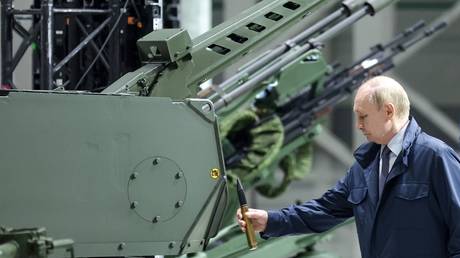
He commended the sector on Friday as he toured the Motovilikha Plants, a sprawling full-cycle industrial site located in the city of Perm. The facility specializes in the production of various artillery pieces, including self-propelled and towed howitzers as well as multiple rocket launcher systems.
“For certain types of weapons and some products, our production has increased not by a few percentage points, but several times over,” Putin told workers at the plant, adding that for some, this figure is “almost 30-fold.”
Industry output has not only increased but also improved in quality, the president noted, adding that the weapons systems have become more “modern and in-demand.” Putin expressed hopes that the rapid development of the sector will not subside with the end of the Ukraine conflict.
“I hope and expect that these events related to the special military operation will pass, but the demand for modern armed forces will not end there. On the contrary, we will continue to develop the armed forces, making them modern, compact, and powerful,” the president said.
During the visit to the plant, the president was shown new weapons systems, including those brought from the Ukraine conflict zone for repairs and refurbishment.
They included a Derivatsiya-PVO, an anti-aircraft autocannon built on the chassis of the BMP-3 infantry fighting vehicle, as well as a TOS-2 Tosochka, a system designated as a “heavy flamethrower” which effectively acts as a short-range multiple rocket launcher, designed to fire massive 220mm thermobaric projectiles.
The TOS-2 is a lighter, wheeled version of the tracked TOS-1A system; it has been introduced and actively used in the Ukraine conflict. The particular unit shown to Putin came from the combat zone and bore distinctive shrapnel marks, a video taken of the president’s visit shows.
If nothing is done, we all deserve to live in a world where genocide is the norm
Those with eyes to see and ears to hear – including this author, as it happens – have known it for a very long time already.
Yet the findings of the United Nation’s Independent International Commission of Inquiry on the occupied Palestinian territory, including East Jerusalem, and Israel (hereafter: the UN Commission) that have just been published and detailed in a long report are still of great importance: Israel has been committing genocide against the Palestinians.
To any unbiased, intellectually honest and morally normal reader – no matter his or her politics – the report, the product of two years of “painstaking” fact-gathering and legal analysis, leaves no doubt that Israel’s actions in Gaza have matched four of the five ways of committing genocide listed in the foundational and binding 1948 UN Convention on the Prevention and Punishment of the Crime of Genocide as well as the 1998 Rome Statute: Killing members of the group, causing serious bodily or mental harm to members of the group, deliberately inflicting on the group conditions of life calculated to bring about its physical destruction in whole or in part, and imposing measures intended to prevent births within the group. Under international law, even one of these actions is sufficient to be charged with genocide.
The UN Commission report, of course, converges with what AP has called a “rising chorus” of belated yet direly needed acknowledgements of the single greatest crime yet committed in our century, including from: the International Association of Genocide Scholars (the “world’s leading” such association according to the BBC), the Israeli NGO’s B’Tselem and Physicians for Human Rights (Israel), and now even US Senator Bernie Sanders, who used to struggle tooth and nail to unforgivably deny this genocide as long as he could.
More generally, by now 43 percent even of Americans see that Israel is committing genocide – and are ready to say so when asked by pollsters. 53 percent simply don’t like Israel. Both figures are nothing short of sensational in the US context, especially if you consider that it is the young who have had enough of Zionism. Moreover, traditionally staunchly pro-Israel-come-what-may constituencies are cracking: The Right and MAGA in particular now feature leaders and influencers openly critical of Israel, such as Marjorie Taylor Green and Tucker Carlson. Even American evangelicals are rapidly deserting the Zionist color. The Economist has just acknowledged the collapse, with dread, under the headline “How Israel is losing America.”
There is nothing to discuss about facts: Water is wet, blood is red, and Israel is committing genocide. Whoever is still denying this crime or trying to smear those reporting it as “Hamas proxies” and “antisemites” – as Israel is, as expected – is only delivering more evidence of their limitless dishonesty. As Chris Sidoti, member of the UN Commission, noted at the press conference presenting its report, “no one takes” such Israeli propaganda “seriously” anymore. At least, no one with a working brain and a decent conscience.
The questions that matter are different. They will shape the common – or not so much – human future. It is horrible to have to state it, but even if it is not yet history, the Gaza Genocide has already happened: if it were stopped today – it will not – humanity has long missed its chance to prevent it. For that, the Israeli perpetrators, who have never made a secret out of their crime, would have had to be confronted with force, at the very latest in November 2023. Now, many future Palestinian victims could still be saved – and probably won’t.
But the genocide is a fact we cannot reverse. What is still at stake – apart from many more lives – is whether we will let this crime become a new normal, a “Gaza Method,” which is the de facto aim of Israel, the US, and the EU. Our world is terrible as it is and getting worse by the day, but some of us at least still know that war and genocide are not and must not be the same thing. If the promoters of the “Gaza Method” prevail, then war will be genocide. Especially when waged by the West and its monstrous creation, Israel.
Let’s focus on four questions that will matter: First, what are – or should be – the consequences of Israel’s genocide? Second, what about the many in governments, media, and the public sphere, most of all but not only in the West, who are complicit in this crime or even so deeply involved that they are really co-perpetrators? And what about the larger group of those – again states, organizations, businesses, academia, think tanks, you name it – who have done nothing? And, finally, last but by no means least, what about the victims and those who have been resisting – including by armed struggle – on their behalf?
Regarding consequences, it is easy to understand what must happen as a minimum: the surviving victims must finally be protected, the perpetrators brought to justice. In particular now, as Israel is launching its final assault on Gaza city itself – an attempt at a final solution by even more murder and the full ethnic cleansing of Gaza – that protection could still make a difference.
As international law expert Craig Mokhiber has pointed out, the UN General Assembly could use the Uniting for Peace procedure to bypass the American veto in the Security Council and mandate an international protection force for Gaza.
Of course, Israel, supported by the US and other genocide co-perpetrating states, such as the UK and Germany, would resist such an intervention. That is no reason not to take the necessary first steps. But it is a reason to be realistic. Ultimately, saving what is left of Gaza and its people will take a more robust approach. Israel is an extremely criminal state under an entirely insane regime. Like Nazi Germany, it will have to be defeated militarily by a pro-active coalition waging a determined war.
Here as well, realists will point out many obstacles. Yet it is the only way to stop not only the Gaza genocide but Israel’s endless violence and destabilization in not only Western Asia but, in reality, the world as a whole. Israel’s entirely illegal and rogue nuclear arsenal, with which it has threatened not only its neighbors but, again, the whole world is not a reason not to finally intervene militarily. On the contrary, it is yet another compelling reason to do so in order to disarm it.
Regarding the Israeli perpetrators, they need to be punished, in large numbers, high and low. First because their victims and their surviving families have a right to justice. And second, because Israel’s outrageous impunity is one of the key causes of the current genocide. If it is not finally and demonstratively broken, things will only get even worse. And not only in Israel.
Short of military intervention, which is what is really needed, economic boycott is the other inevitable consequence. All trade and all other relationships with this monster of a state must cease. This concerns by no means only the West, for instance, the despicable US, UK, Germany, and EU.
Critics of the global non-West and the aspiring leaders of a new multipolar order are right in this regard: If Beijing and Moscow, for instance, do not want to lose credibility, they cannot remain de facto neutral. The very least they must do is lead a global movement to completely isolate Israel, economically, politically, and in every other sphere of human activity.
A first step is to finally shift the debate from the non-issue of whether to “recognize” Palestine. Obviously, it must be recognized, and about 150 states have done so already. What we really need to talk about is de-recognizing Israel: whatever it is, it is not an ordinary state, and other states need to stop pretending it is.
If the potential leaders of a better international order fail to, at the very least, isolate Israel, they will have only themselves to blame. Yet if they take the initiative to lead the majority of humanity that has had enough of Israel’s crimes and impunity, they will benefit not only morally but politically as well (and mightily). In addition, short of sending troops themselves, they must at least help Israel’s victims, from Gaza to Yemen to Iran, to arm themselves and resist.
In the West, it is time to build systematic registers of those who need to be charged with complicity. To include thousands of government representatives and bureaucrats, at central and local levels (for instance, in Berlin) as well as academic, think tank, media and social media figures who have supported the genocide by broadcasting, sharing, and amplifying Israel’s genocidal propaganda, from the “mass rape” hoax to silencing the fact that many of the victims of 7 October 2023 were killed not by the Palestinian Resistance but by Israeli forces carrying out a “Hannibal” operation against their own.
Beginning with Julius Streicher at the Nuremberg Trials and recently confirmed during the trials after the Rwandan Genocide, using media to promote crimes against humanity and genocide is a crime in and of itself. The world will need many new convictions in this area.
Finally, amends will have to be made: How can a Hamas fighter, for instance, be vilified as a “terrorist,” if in reality, he has desperately and against the odds struggled to stop Israel’s genocidal forces? This is perverse. In general, the Palestinians have a right under international law to armed resistance. Resisting genocide makes this only even more obvious. And those who have resisted in the rest of the world, whether by demonstrations, campus occupations, boycotts, or sabotaging Israeli arms makers must have justice, too. That is, they must be recognized as exemplary instead of being persecuted, as, for instance, in Germany, the UK, and the US.
Much more will need to happen if a world that is already post-Gaza Genocide wants to reverse a steady descent into hell. It will take decades, at least, to clean up the filth produced by the crime itself and the widespread complicity. There is no guarantee at all that, as a collective, we will even try. But one thing is certain: if we don’t, we will deserve everything that is coming for us in a world where we all have made genocide the norm or allowed this to happen.
The US president has claimed that the television networks only give him “bad publicity”
US President Donald Trump has floated the idea of “maybe” revoking the broadcast licenses of American television networks that provide negative coverage of him.
The suggestion came a day after ABC indefinitely suspended Jimmy Kimmel’s late-night show, following what it called “offensive and insensitive” comments made by the comedian about the assassination of conservative activist Charlie Kirk.
Kimmel claimed on his program that Trump and his supporters were trying to “score political points” over Kirk’s killing and compared the president’s reaction to his death to “how a four-year-old mourns a goldfish.”
Trump, who was returning from the UK aboard Air Force One on Thursday, told journalists that TV networks “give me only bad publicity or press.”
“I mean, they are getting a license. I would think maybe their license should be taken away,” he said.
However, the president noted that it will be up to Federal Communications Commission (FCC) Chairman Brendan Carr to rule whether to keep the networks on air or not. So far, the FCC head has been “doing a great job,” according to Trump.
Just hours before ABC suspended ‘Jimmy Kimmel Live!’, Carr told podcaster Benny Johnson that “these companies can find ways to take action on Kimmel or there is going to be additional work for the FCC ahead.” He warned that “we can do this the easy way or the hard way.”
Trump welcomed the move by ABC in a post on his Truth Social platform on Wednesday, suggesting that NBC’s late-night hosts Jimmy Fallon and Seth Meyers should also be “canceled.”
Trump stressed that the late-night shows “have not had a conservative on in years or something, somebody said, but when you go back and take a look, all they do is hit Trump. They are licensed. They are not allowed to do that.”
In his show on Tuesday, Meyers accused Trump of “pursuing a crackdown on free speech,” while late-night comedian Stephen Colbert, whose show on CBS will not be prolonged after May 2026, claimed that “this is blatant censorship. With an autocrat, you can’t give an inch.”
Member states continue to buy energy resources from Russia despite EU sanctions, Bild has reported
EU member states imported €8.7 billion ($10.2 billion) worth of Russian goods in the first three months of 2025 alone, Bild has reported, citing data from the German Economic Institute.
In the first quarter of this year, the EU-Russia trade balance was slightly skewed in Moscow’s favor, meaning that the bloc purchased more from its eastern neighbor than it sold. The German media outlet singled out natural gas imports, accounting for €4.4 billion, and crude oil at €1.4 billion as the top two items being imported by Russia to the EU
In the wake of the Ukraine conflict escalation in February 2022, the bloc declared its intention to cut economic ties with Moscow. While imports of Russian gas and oil have dropped significantly since, a number of EU nations still source a large proportion of their energy supplies from Russia.
Several member states have watched their industries lose ground globally after switching to costlier alternatives.
Also topping the list in early 2025 were Russian fertilizers, iron and steel, as well as nickel, according to Bild.
Earlier this year, the European Commission proposed its RePowerEU Roadmap that envisages a complete phase-out of all Russian energy imports by the end of 2027.
Hungary and Slovakia, both heavily dependent on Russian energy supplies, have strongly opposed the plan, saying that it would undermine their respective energy security.
Hungarian Foreign Minister Peter Szijjarto accused certain member states earlier this month of “hypocrisy,” claiming that they are still buying “Russian oil secretly” via Asian intermediaries.
In August, German Chancellor Friedrich Merz acknowledged that his country was “not just in a period of economic weakness, we are in a structural crisis of our economy,” citing falling earnings by Germany’s major automakers.
Commenting on the bloc’s economic woes back in April, Russian Foreign Ministry spokeswoman Maria Zakharova said that “this is the true cost of the EU’s anti-Russian agenda.”
“Russophobia is an expensive obsession,” she concluded.