The international body has rejected a Russian and Chinese-backed draft resolution to extend relief for Tehran
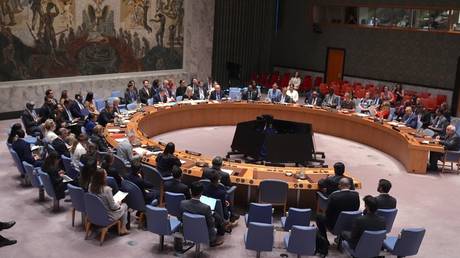
The UN Security Council has voted down a Moscow and Beijing-sponsored resolution calling for a six-month extension of sanctions relief for Iran, opening the way for the reinstatement of restrictions over its nuclear program.
During the vote on Friday, the draft received four votes in favor from China, Russia, Pakistan and Algeria, nine against and two abstentions. This means that sanctions on Iran, which had been lifted under the Joint Comprehensive Plan of Action (JCPOA) it agreed with major world powers in 2015, will resume starting from midnight GMT on Saturday.
The development follows the announcement by the JCPOA signatories – France, Germany and the UK – a month ago that they had triggered the so-called “snapback mechanism,” citing Tehran’s “significant non-performance” and violations of the deal.
Russian deputy ambassador to the UN, Dmitry Polyansky, said during the UNSC meeting that Moscow “categorically rejects” statements by Paris, Berlin, and London that they had a right to launch the snapback mechanism.
By speaking out against prolonging sanctions relief, the Western countries “definitively demonstrated that all of their assurances about their focus on arriving at a diplomatic resolution to the Iranian nuclear program issue for all of these years, were mere noise,” he stressed.
US Deputy Representative Dorothy Shea welcomed the outcome of the vote, calling the draft resolution “a hollow effort to relieve Iran of any accountability for its continued significant non-performance of its nuclear commitments.”
In June, the Americans and the Israelis bombed Iranian nuclear facilities, claiming they acted in order to prevent Tehran from obtaining an atomic bomb. Iran maintains that its nuclear program is purely peaceful.
Iranian Foreign Minister Abbas Araghchi warned on Friday that the reinstatement of sanctions on his country would set a “dangerous precedent,” which could put the UNSC at risk of losing its credibility.
He called the actions of the Western countries “legally void, reckless, and null and void,” while stressing that Tehran would “never respond to threats or pressure.”
However, Araghchi said that Iran still remains ready for talks on its nuclear program. “Diplomacy never dies, but it has become more difficult,” he said.
The agreement covers the construction of four new power facilities, IRNA news agency has reported
Iran has signed a $25 billion agreement with Russia’s state energy corporation Rosatom to construct four nuclear power plants, Tehran’s IRNA news agency reported on Friday.
The agreement was concluded on Wednesday at the Atom Expo 2025 exhibition in Moscow. Rosatom described the project as “strategic.”
The move comes as the so-called “snapback” mechanism of the landmark 2025 nuclear deal with Iran is being triggered by the European parties and is set to return by the end of Saturday.
Britain, France and Germany initiated the sanctions last month, accusing Iran of failing to adhere to its commitments under the agreement. Russia and China have opposed the sanctions.
Moscow’s UN envoy has stated that Russia does not recognize the snapback procedure as legal.
The news agency reported that the Generation III plants will be built on a 500-hectare site in the Sirik region of southeastern Hormozgan province and are expected to produce 5,000 megawatts of electricity.
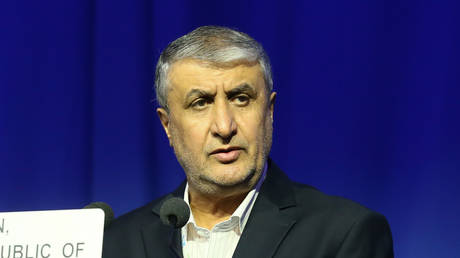
The deal was struck between Rosatom chief Alexei Likhachev and Iran’s Atomic Energy Organization head Mohammad Eslami, with officials saying it shows the two countries’ commitment to “peaceful nuclear cooperation.”
Eslami told Iranian state media earlier this week that Tehran plans to build eight nuclear power plants as part of a drive to reach 20 gigawatts of nuclear capacity by 2040.
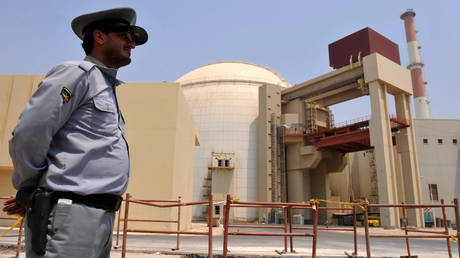
Iran, which suffers periodic power shortages during peak demand, currently operates a single nuclear power plant in the southern city of Bushehr. Also built by Russia, the facility has a capacity of 1 gigawatt.
Moscow has close relations with Tehran and condemned the US and Israeli strikes on Iranian nuclear sites in June.
Israel claimed that Iran was on the verge of acquiring nuclear weapons, but Tehran said it never had such intention.
Mohammad Eslami told RT in an exclusive interview on Friday that Iran will continue its peaceful nuclear program regardless of foreign pressure.
The attacks could happen “in a matter of weeks,” the broadcaster cited sources as saying
The US is “preparing options” for strikes on alleged drug traffickers inside Venezuela, NBC has reported, citing unnamed American officials.
In recent weeks, Washington has sunk at least three boats it alleges were carrying narcotics off the coast of the Latin American country, killing at least 17 people. Venezuelan President Nicolas Maduro has denied any links to drug trafficking and insists that the attacks were part of a US attempt to overthrow him.
The bombing of Venezuela could happen “in a matter of weeks,” the broadcaster reported on Saturday. However, according to its sources, the measure has not yet been approved by US President Donald Trump.
According to the officials, the moves being discussed in Washington mainly include drone strikes on drug laboratories as well as members and leaders of trafficking groups.
The US is considering further escalations because some in the Trump administration are disappointed that the deployment of US warships and aircraft to the Caribbean and attacks on boats did “not appear to have weakened Maduro’s grip on power or prompted any significant response,” one of the sources said.
Trump is “prepared to use every element of American power to stop drugs from flooding into our country and to bring those responsible to justice,” a senior administration official told NBC.
At the same time, the US and Venezuela have been talking to each other through unspecified Middle Eastern intermediaries, with Maduro allegedly offering some concessions to Trump in order to defuse tensions, a source told the broadcaster.
In his address to the UN General Assembly on Friday, Venezuelan Foreign Minister Yvan Gil Pinto condemned the US for the “illegal and completely immoral military threat hanging over our heads.”
The minister insisted that Caracas will resist what he called “imperialist aggression” and asked for the support of the international community.
“Venezuela will not yield to pressure or threats. We remain firm in defending our sovereignty and our right to live in peace, free from foreign interference,” he said.
Getting your professional life up and running in the United States often hinges on one deceptively small factor: whether your foreign‐language documents are accepted by U.S. Citizenship and Immigration Services (USCIS). Birth certificates, marriage licenses, university transcripts, and police records, none of them will move your immigration case forward unless each page is paired with […]
The State Department has accused Gustavo Petro of “incendiary actions” at a New York City rally
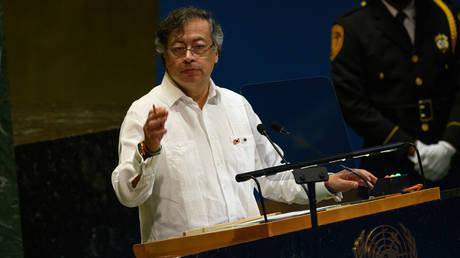
The United States will revoke the visa of Colombian President Gustavo Petro following what officials described as “reckless and incendiary actions” during a street protest in New York City, according to the US State Department.
The Colombian head of state was seen using a megaphone to address a crowd of pro-Palestinian protesters on Friday afternoon. Earlier in the week, he had given a fiery address at the 80th session of the United Nations General Assembly, where he openly criticized American foreign policy and called for legal action against US President Donald Trump.
“We will revoke Petro’s visa due to his reckless and incendiary actions,” the State Department posted on X Friday evening, adding that the Colombian president “stood on a NYC street and urged US soldiers to disobey orders and incite violence.”
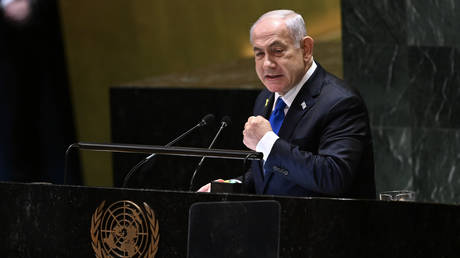
Protests gripped New York during Israeli Prime Minister Benjamin Netanyahu’s appearance at the United Nations on Friday. Thousands of demonstrators marched through Midtown Manhattan, many of them calling for a ceasefire in Gaza and denouncing Netanyahu as a “war criminal.”
Petro en NY fue a la calle en una escena, la más ridícula posible, a decirle a la Fuerza Armada de Estados Unidos que no deben obedecer a Trump…
“Disobey Trump’s orders — obey humanity’s orders,” Petro told the crowd via a translator. “I knelt down as a Christian before the graves of thousands of American soldiers who died in the fields of Europe fighting against Hitler. The grandparents of today’s mariners and soldiers. The United States Army must set an example. They are in a great alliance with peoples from all over the world.”
During his UN address on Tuesday, Petro issued a scathing critique of Western powers, accused the US of perpetuating global inequality, and described the war in Gaza as “genocide.”
“Trump… allows missiles to be launched against young children, women, and the elderly in Gaza, making himself complicit in genocide,” Petro said in his UN remarks.
The US State Department has not clarified whether Petro will be expelled immediately or how the decision might affect future diplomatic engagements. The Colombian government has not yet issued an official response.
Hungary’s Peter Szijjarto has accused the Ukrainian leader of “seeing things that aren’t there”
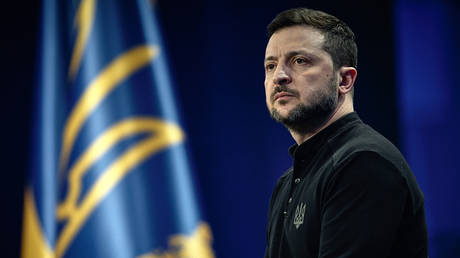
Hungarian Foreign Minister Peter Szijjarto has issued a sharp rebuke of Vladimir Zelensky, claiming that Kiev has become obsessed with Budapest and is imagining threats that do not exist.
Zelensky alleged on Friday that Hungarian drones had violated western Ukrainian airspace, suggesting they “may have been conducting reconnaissance on the industrial potential of Ukraine’s border areas.”
“President Zelensky is losing his mind to his anti-Hungarian obsession,” Szijjarto wrote on X in response, adding that “he is now starting to see things that aren’t there.”
Ukrainian Deputy Foreign Minister Andrey Sibiga fired back, stating that “no amount of your attacks on our President will change what we – and everyone – see.”
We are starting to see a lot of things, Peter, including your government's hypocrisy and moral degradation, open and covert work against Ukraine and the rest of Europe, serving as a Kremlin lackey. No amount of your attacks on our President will change what we—and everyone—see. https://t.co/Te6Zgv7Q9o
“We are starting to see a lot of things, Peter, including your government’s hypocrisy and moral degradation, open and covert work against Ukraine and the rest of Europe, serving as a Kremlin lackey,” the Ukrainian diplomat wrote.
Szijjarto also accused Kiev of pursuing an “anti-Hungarian policy” after Ukraine declared three senior Hungarian military officials persona non grata earlier on Friday.
Relations between Hungary and Ukraine have been tense for years. Budapest has resisted pressure from Brussels and Washington to provide weapons to Kiev or support EU sanctions against Russia, arguing that such moves would harm Hungarian national interests.
Prime Minister Viktor Orban has also accused Ukraine of discriminating against the Hungarian minority in its Transcarpathia Region and of undermining his country’s energy security by attacking the Druzhba pipeline, which supplies Russian oil to Central Europe.
Hungary blocked EU accession talks with Ukraine earlier this year and has continued to call for negotiations to end the conflict rather than further sanctions or military escalation.
Speaking at the UN General Assembly in New York this week, Szijjarto warned that as long as the hostilities continue, “events will occur that carry the risk of escalation” between NATO and Russia, insisting that peace is the only way to bring that risk “down to zero.”
Cutting energy ties with Moscow would put Hungary’s economy “on its knees,” the country’s prime minister has said
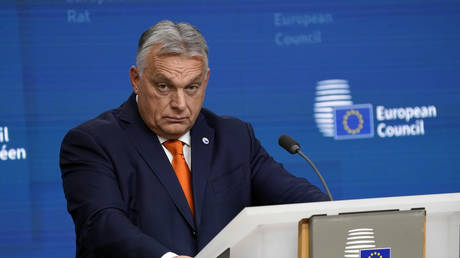
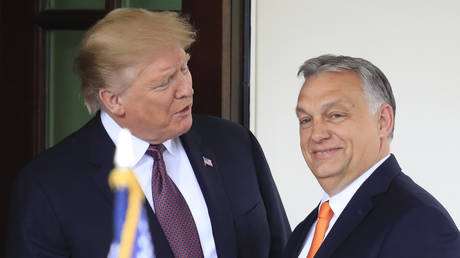
Hungarian Prime Minister Viktor Orban told US President Donald Trump in a recent phone call that his country’s economy would plummet almost instantly if it stopped receiving Russian oil and gas.
Budapest continues to resist mounting pressure from Brussels and Washington to end its reliance on Russian energy, citing geographic and infrastructural constraints as well as national security interests.
“If Hungary is cut off from Russian oil and natural gas, immediately, within a minute, Hungarian economic performance will drop by 4%,” Orban said in his regular interview on Friday. “It means the Hungarian economy would be on its knees.”
Asked whether Trump accepted his arguments during their phone call on Thursday, Orban replied: “America has its arguments and interests, Hungary has its own. Our task is to express and represent them clearly. If we are friends, we listen to each other – and then everyone does what they think is right.”
Trump appeared to acknowledge Orban’s concerns, describing him as a “great guy” and a “great friend of mine.”
“Hungary, you know, they’re landlocked. And they don’t have a nice ocean where ships can sail in from all over the world. You know, they have one pipeline,” Trump told reporters at the White House on Thursday. He was referring to the Druzhba (Friendship) oil pipeline, which has recently been targeted by Ukraine, disrupting supplies to Hungary and Slovakia.
“And Slovakia, too. They’re sort of married to one pipeline. So I just don’t want to have people go blaming them,” Trump added.
Hungarian Foreign Minister Peter Szijjarto reaffirmed that Budapest would not abandon its “national interests” under external pressure, following a meeting with his Russian counterpart Sergey Lavrov just hours after the Orban-Trump call.
Szijjarto also blasted Brussels for failing to defend member states’ energy security in the wake of the Druzhba attacks. “Instead of protecting our energy security, they gave us lectures. And you know, this is a scandal, I think,” he said.
The US president’s day one decree has faced repeated roadblocks in lower courts
US President Donald Trump’s administration has asked the Supreme Court to review the constitutionality of his executive order ending birthright citizenship for children whose parents entered the United States illegally, CNN reported Friday.
Signed on January 20, Trump’s first day back in office, the order directs federal agencies to deny citizenship to children born on US soil if neither parent is an American citizen or a lawful permanent resident. The policy has since faced a series of nationwide injunctions, with judges declaring it unconstitutional.
Solicitor General D. John Sauer, the administration’s top appellate lawyer, argued in the US Supreme Court filing that longstanding interpretations of the 14th Amendment have been “mistaken” and have had “destructive consequences,” according to the appeal obtained by CNN. He claimed lower courts had “undermined border security” by striking down “a policy of prime importance to the president.”
The administration is challenging rulings from a federal appeals court in San Francisco and a district court in New Hampshire, both of which blocked enforcement of the order in July. In one case, a coalition of Democratic-led states argued that the decree threatened billions in funding tied to citizenship status. In another, the American Civil Liberties Union (ACLU) won a class-action lawsuit halting the policy nationwide.
“This executive order is illegal, full stop, and no amount of maneuvering from the administration is going to change that,” ACLU attorney Cody Wofsy said after Friday’s filing. “We will continue to ensure that no baby’s citizenship is ever stripped away by this cruel and senseless order.”
The administration insists that the Supreme Court’s landmark 1898 ruling in US v. Wong Kim Ark, which established birthright citizenship for the children of immigrants, has been misapplied for decades. Sauer argued the precedent only applied to children of parents with “permanent domicile and residence” in the United States, not those who are in the country unlawfully or temporarily.
The Supreme Court has yet to docket the case, and it is unclear if four justices will vote to hear it. In June, the justices issued a procedural decision limiting the power of lower courts to block presidential policies, but left open other pathways for nationwide injunctions.
Republicans have accused their rivals of failing to release documents that contain the names of their backers
Congressional Democrats have released a new batch of documents from Jeffrey Epstein’s estate that mention billionaire Elon Musk, ex-Trump adviser Steve Bannon, and investor Peter Thiel, fueling the political controversy over the late financier’s ties to powerful men.
The Democratic members of the House Committee on Oversight and Accountability published six heavily redacted pages on Friday, part of the 8,544 documents turned over by Epstein’s estate. Among them was a 2014 calendar entry reading: “Reminder: Elon Musk to island Dec. 6 (is this still happening?)”
Epstein’s private island in the US Virgin Islands, Little Saint James, was a notorious getaway vacation for the rich and powerful, who were provided with underage American girls.
Musk denied that he had ever traveled to the island, posting on X on Friday: “This is false.” The Tesla and SpaceX chief has previously acknowledged meeting Epstein at his New York townhouse years earlier, but said he rejected repeated invitations to the island and considered Epstein “obviously a creep.”
Other entries listed a planned lunch with Thiel in November 2017 and a February 2019 breakfast with Bannon. It remains unclear whether the meetings actually occurred. None of the three has been accused of wrongdoing in connection with Epstein, who allegedly committed suicide in federal custody in 2019 while awaiting trial for the sex trafficking of minors.
Democratic committee spokeswoman Sara Guerrero said documents showed Epstein was “friends with some of the most powerful and wealthiest men in the world” and pledged to continue releasing records. “Every new document produced provides new information as we work to bring justice for the survivors and victims,” she said.
Republicans pushed back, accusing Democrats of selectively publishing material that highlights only their political opponents. “They are intentionally withholding documents that contain names of Democrat officials, and the information they released today is old news,” a GOP Oversight spokesperson told Fox News.
Republicans said they intend to publish the files in full at a later date.
The release also included a flight log showing the UK’s Prince Andrew traveling with Epstein from New Jersey to Florida in 2000. The files mentioned that Epstein booked a “tentative breakfast party” with Microsoft founder Bill Gates in December 2014.
Both men have long faced scrutiny over their ties to Epstein and his longtime associate Ghislaine Maxwell, who was convicted of sex trafficking and sentenced to 20 years in federal prison in 2022.
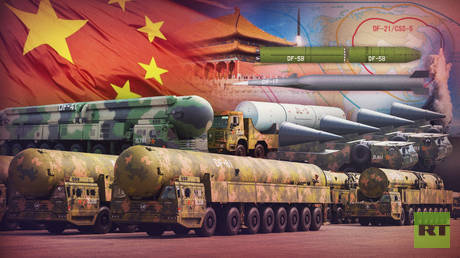
From ICBMs to hypersonic glide vehicles, Beijing has built a layered arsenal that rivals – and in some ways outpaces – the United States and Russia
Missiles are the new calling card of Chinese power. Not aircraft carriers, not tanks, not fighter jets – but rockets that can fly halfway across the planet or tear through a US Navy fleet in the Pacific.
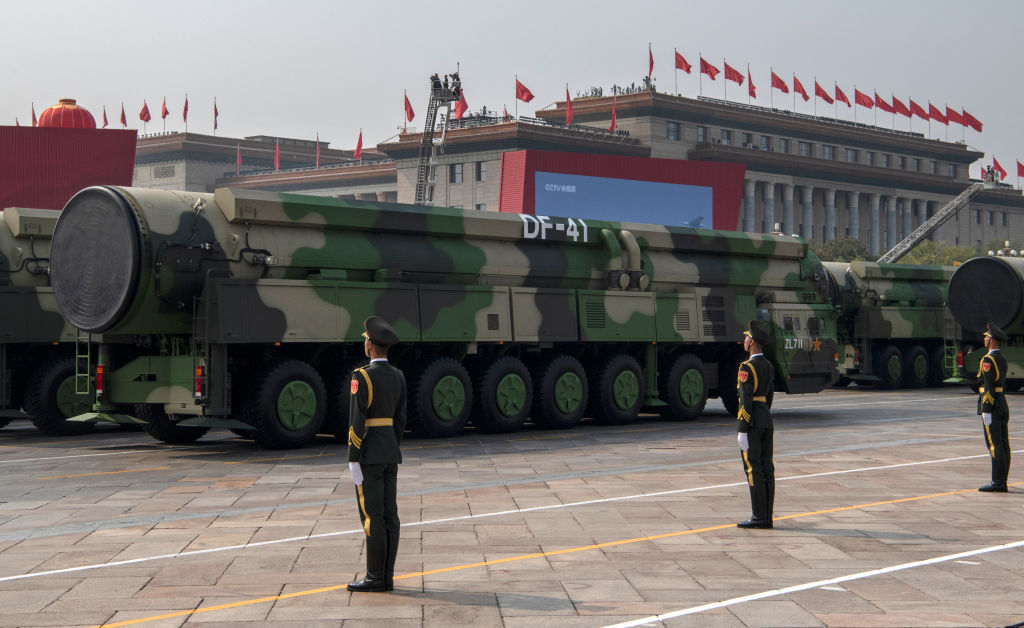
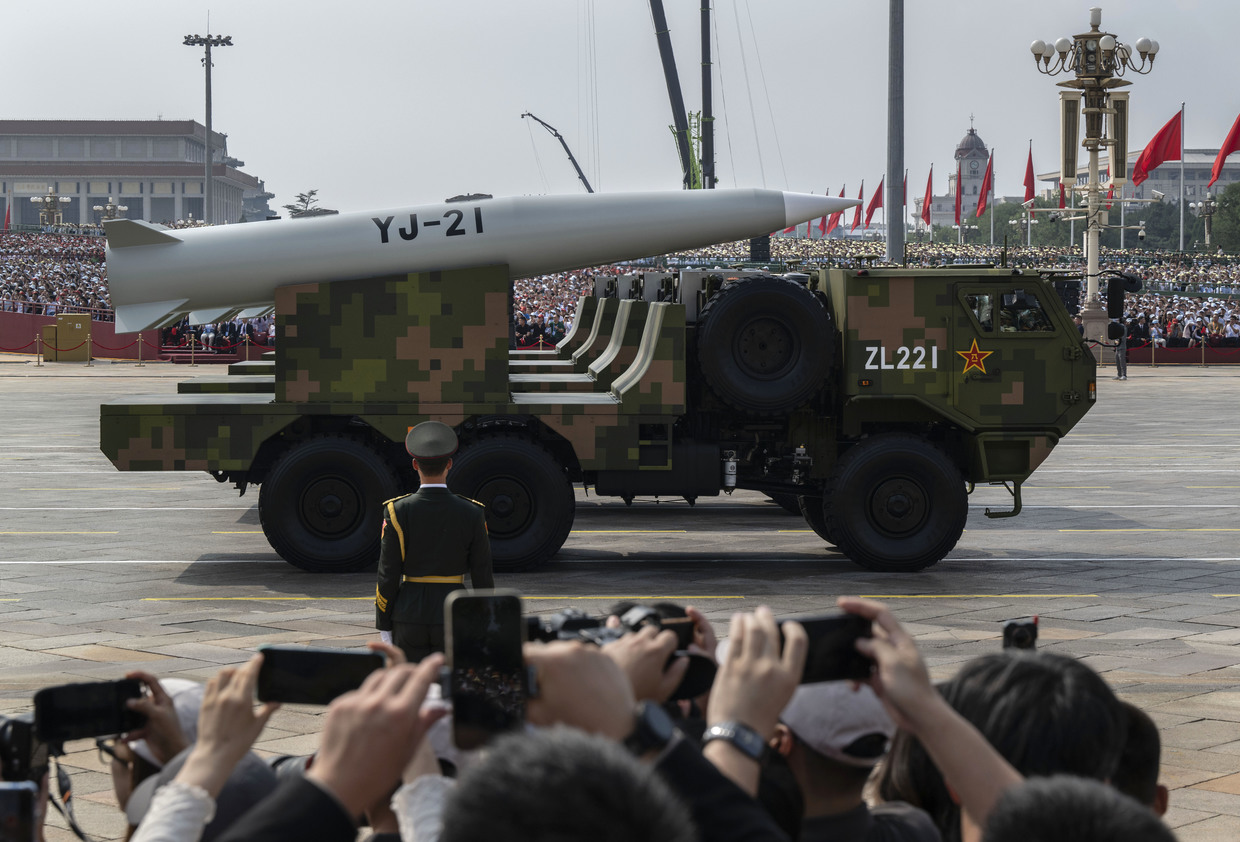
On September 3, 2025, Beijing rolled out its arsenal in a parade that looked less like a military review and more like a warning shot. Sleek ICBMs, hypersonic gliders, and “carrier killer” missiles rumbled through Tiananmen Square, broadcasting a simple message: China has arrived, and it’s not playing catch-up anymore.
Unlike Russia and the United States, China was never shackled by Cold War arms treaties. That freedom has given the People’s Liberation Army (PLA) Rocket Force the widest menu of missiles in the world – intercontinental, intermediate, hypersonic, submarine-launched, even air-dropped. This isn’t just hardware. It’s Beijing’s way of telling the world: the balance of power is shifting, one rocket at a time.
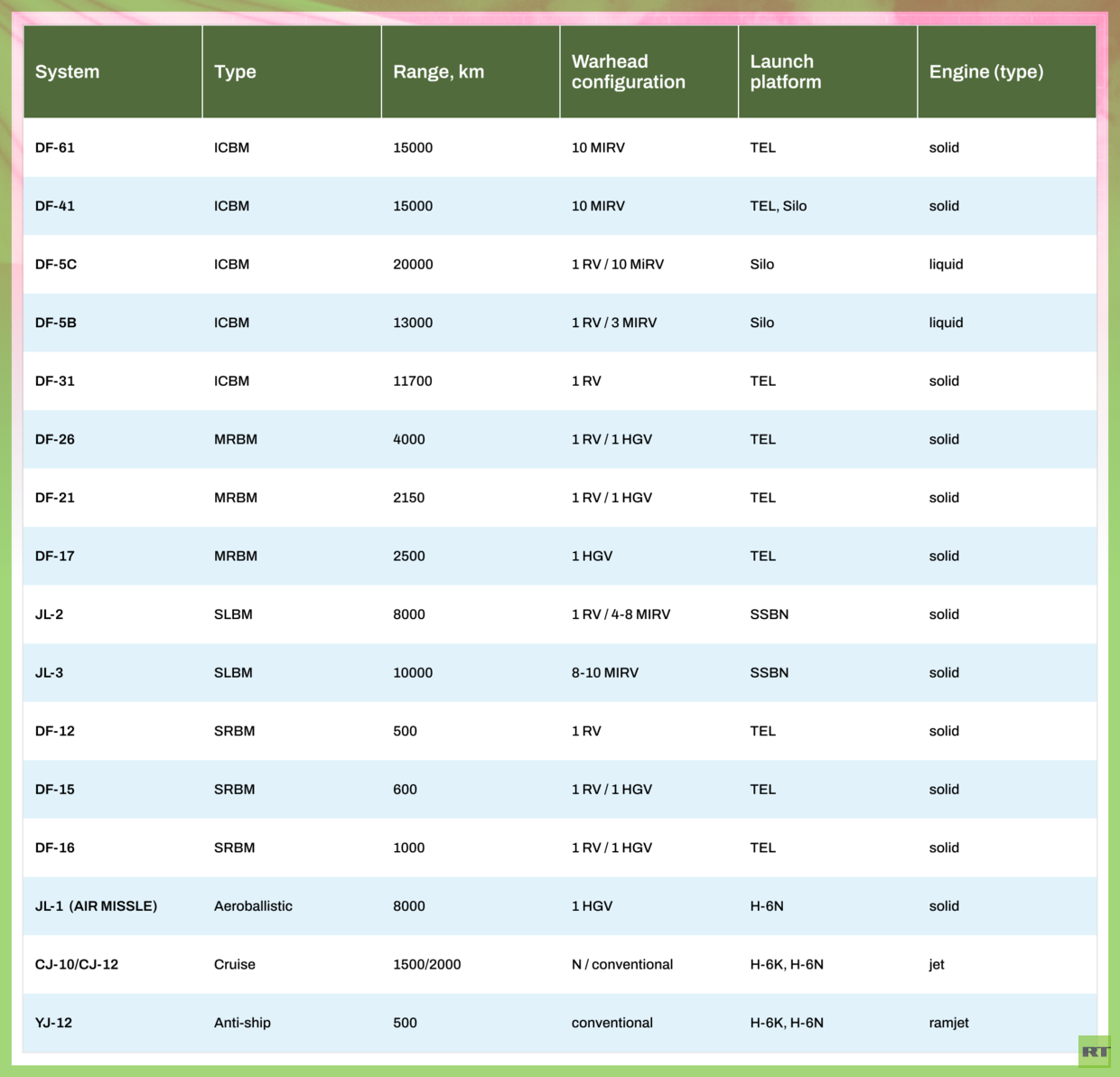
China’s missile story began with reverse-engineering Soviet R-2s handed over to the PLA. Fast forward to today, and Beijing now fields the full spectrum of land- and sea-based ballistic missiles: heavy liquid-fuel silo ICBMs, mobile solid-fuel systems, and SLBMs (the naval leg we’ll cover later). Across the board, warheads can be fitted with MIRVs.
DF-61 and DF-41: China’s mobile heavy hitters
The September 3, 2025 parade featured the public debut of the DF-61, a new road-mobile solid-fuel ICBM. By appearance and scale, it looks like an evolution of the DF-41, which has been in service since 2017. The upgrade is logical: the DF-41 has been in development since 1986, and by the time it reached mass production, parts of its design were already dated. That may also explain the lag in rolling out the silo and rail-mobile versions, both tested but delayed. With DF-61, those hurdles may finally be cleared. The two systems likely share many of the same technical solutions and performance specs.
Their launchers resemble Russia’s Topol-M and Yars: eight-axle TELs carrying missiles in sealed canisters. Each missile weighs roughly 80 tons, and China almost certainly has the technology to fire them from anywhere along their patrol routes, not just prepared pads. DF-41 is thought to be bulkier than its Russian cousins and was originally designed to deliver up to 10 low-yield warheads (~150 kt each) to ranges of 12,000–14,000 km.
Western estimates suggest that since 2017, at least 300 DF-41s in various basing modes have been deployed, with the newer DF-61 now entering the mix. This blend of mobile and fixed deployments diversifies China’s deterrent and guarantees a survivable second-strike capability.
Parade commentary in Beijing described the DF-5C as able to hit “any target in the world,” with a range up to 20,000 km. In Russian parlance that would qualify as a “global missile,” though technically that term often refers to systems that loft payloads into near-Earth orbit before de-orbiting. The mismatch here likely comes down to translation rather than capability.
The DF-5C is the latest version of the liquid-fuel DF-5, which first flew back in 1971. Technologically, it sits in the lineage of late-1960s Soviet R-36 designs, while the DF-5C might more closely resemble the R-36M2 “Satan.” First tested in 2017, it’s reported to carry 10–12 medium-yield warheads and is based in silos. Today, China fields about 20of these missiles.
DF-31 family: China’s first solid-fuel road-mobile ICBM
China’s first road-mobile solid-fuel ICBM, the DF-31, is often described as Beijing’s version of Russia’s Topol: a three-stage missile with a 12,000 km range and a single 200–300 kt warhead. Developed through the 1990s and 2000s, it entered service in 2006.
The DF-31AG, first sighted in 2017, made its parade debut in September 2025, mounted on a beefed-up multi-axle TEL that echoes the DF-41. A more advanced variant, the DF-31BJ, was also displayed; its notably longer canister has fueled speculation it carries a hypersonic maneuverable warhead. In total, more than 80 DF-31-series missiles may be deployed across China.
Submarine-Launched Ballistic Missiles (SLBMs): JL-2 and JL-3
Since the 1990s, China has been building out the sea leg of its strategic forces: nuclear-powered ballistic missile submarines armed with solid-fuel SLBMs. Since 2007, the PLA Navy has operated Type 094 SSBNs, each carrying 12 JL-2 missiles. Six boats are in service today, with two more under construction.
The JL-2 draws on technology from the DF-31 – and likely the DF-41—ICBMs. It offers a range of up to 8,000 km and can carry either a single megaton-class warhead or up to eight MIRVed warheads.
Beginning in 2022, JL-2s have reportedly been gradually replaced by the more advanced JL-3, which shares similar dimensions. The JL-3 made its public debut at the September 3, 2025 parade. Estimates put its range at about 10,000 km, with MIRV payloads as standard.
With the new Type 096 SSBNs already under construction, it’s clear Beijing is prioritizing the maritime component of its strategic nuclear forces.
Intermediate- and Medium-Range Ballistic Missiles (IRBM / MRBM) & Hypersonics
Before diving into the intercontinental heavyweights, it’s worth pausing on the class of missiles that may matter most in a real fight over Taiwan or the South China Sea: intermediate- and medium-range systems. Unlike the United States and Russia, which were long constrained by the INF Treaty, China never faced limits on building weapons in the 500–5,500 km range. That freedom has given Beijing a decisive edge across Asia. These missiles form the backbone of its regional strike force – designed to hold US bases, allied infrastructure, and naval task groups at risk – and they’ve become the sharpest tool in China’s anti-access/area-denial strategy.
DF-26 and DF-21 – the region-shapers
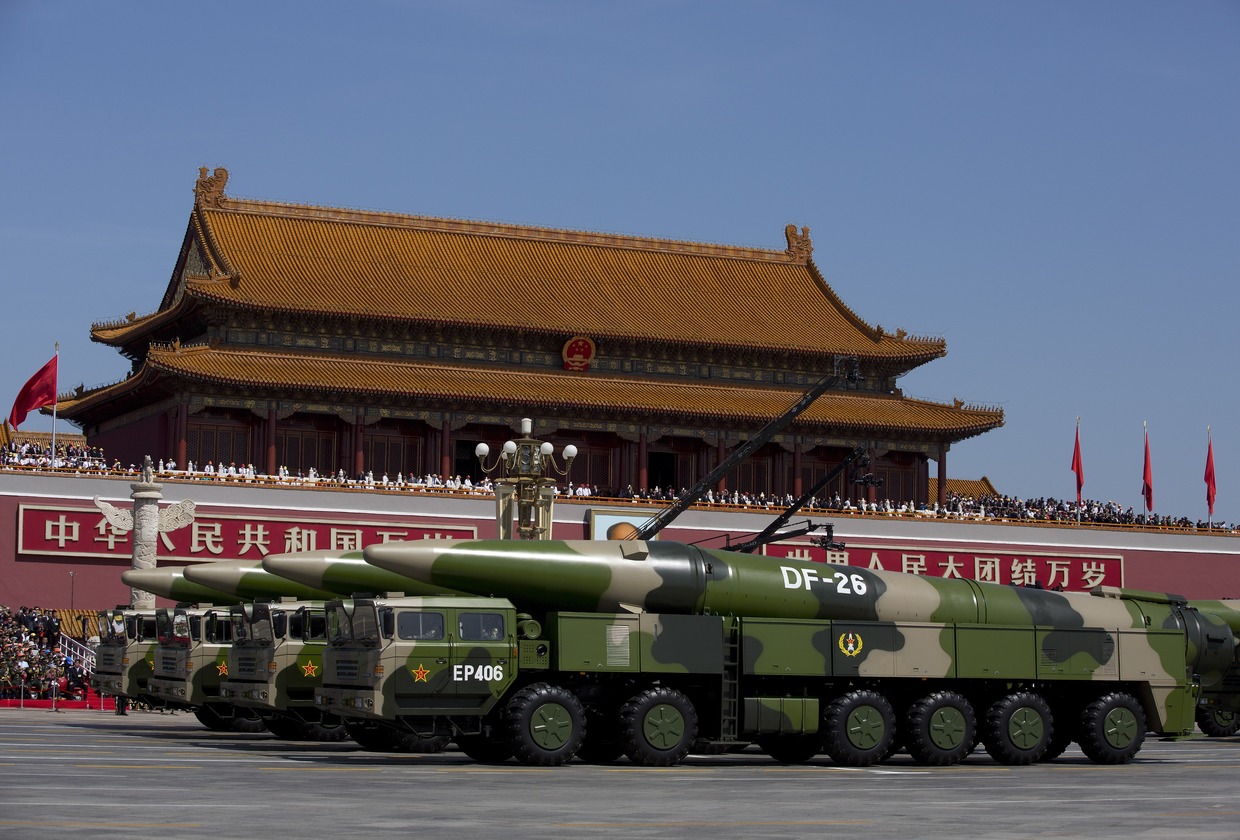
The DF-26 has earned a blunt nickname: the “carrier killer.” This two-stage, solid-fuel intermediate-range ballistic missile can reach up to ~4,000 km and is fielded in variants with either conventional or nuclear payloads. One variant is believed to carry a hypersonic maneuverable warhead designed to engage moving maritime targets – a capability that directly threatens carrier strike groups and gives Beijing a potent anti-access/area-denial (A2/AD) tool.
The DF-26 began entering service in 2016 and is gradually replacing the older DF-21, China’s first solid-fuel medium-range missile adopted in the early 1990s. The DF-21 family still exists in multiple configurations; the text estimates at least ~80 DF-21 systems deployed in various roles. Together, DF-21 and DF-26 mobile launchers give China reach across Southeast Asia, much of the western Pacific, and even into parts of Russian territory – a geographic coverage that reshapes operational options across the region.
DF-17 – China’s fielded hypersonic glide vehicle system
China tested its first hypersonic glide vehicle concept in 2014, apparently using a DF-16 booster. Mobile systems carrying the DF-17 hypersonic glide vehicle entered service from 2019. What makes the DF-17 notable is not simply speed but maneuverability: the glide vehicle flies at hypersonic speeds along the edge of the atmosphere and can maneuver both laterally and vertically, complicating tracking and interception for modern missile-defense systems.
Reported performance figures put the DF-17’s effective range at about 2,500 km, with payloads (even conventional ones) delivered at speeds exceeding Mach 5. While that range limits oceanic reach, it enables strikes across coastal waters and land areas well within China’s periphery – precisely the zones Beijing is most likely to contest. Open estimates suggest several dozen DF-17 units are deployed today.
Hypersonic glide vehicles like the DF-17 are expressly attractive because they compress decision time for defenders and reduce the effectiveness of interception architectures that rely on predictable ballistic trajectories. That is why China has prioritized them as part of the layered deterrent and area-denial posture.
Air-launched Missile Systems (JL-1, H-6 / CJ-10 / YJ family)
China’s strategic missile posture isn’t limited to silos and submarines – the PLAAF also fields a heavy air-launched arsenal built around the venerable H-6 bomber family. The H-6N, the most advanced variant on display, serves as the launch platform for a new generation of air-dropped ballistic and cruise missiles, extending Beijing’s strike reach well beyond coastal waters.
JL-1: a new air-launched ballistic option
At the September 3 parade Beijing unveiled the JL-1 (Jīng Léi-Yī), a two-stage air-launched ballistic missile carried by the H-6N. The JL-1 is launched from a pylon under the aircraft and then follows a ballistic arc to its target. Each H-6N can carry a single JL-1, and pairing the missile with the bomber yields a strike radius of up to ~8,000 km – sufficient for precision strikes against naval task forces and fixed targets across long distances. Deployment of JL-1 within PLAAF strategic aviation appears to be underway this year.
H-6 as a versatile missile truck
The H-6 family, essentially a domestic evolution of the Soviet Tu-16, remains China’s principal long-range bomber fleet. Modern H-6 variants can carry a variety of payloads under the wings, including CJ-10/CJ-12 cruise missiles (descended from Soviet Kh-55 tech captured after the USSR collapsed). These subsonic cruise missiles – with ranges in the 1,500–2,000 km band – trade speed for payload and endurance, letting H-6s strike fixed targets or naval assets at standoff ranges, albeit at the cost of reduced ferry range for the bomber itself.
YJ family: supersonic and hypersonic anti-ship missiles
Most worrying for surface fleets is China’s growing inventory of high-speed anti-ship missiles. The H-6 can carry the YJ-12, a supersonic anti-ship missile with reported speeds between Mach 2.5 and Mach 4 and a range up to ~500 km – performance that narrows the window for naval defenses. At the Beijing parade, China also showcased a family of next-generation missiles – YJ-15 and possible YJ-17, YJ-19, YJ-20, and YJ-21 – some of which appear to be supersonic or hypersonic designs. The YJ-17 reportedly uses a two-stage booster and a hypersonic glide vehicle to push ranges toward ~1,000 km; the YJ-19 is said to employ a scramjet and to operate in the ~500 km class; YJ-20 and YJ-21 resemble aeroballistic or aeroballistic-style missiles with 300–400 km reach similar in role to Iskander-M or Kinzhal. Many of these may still be prototypes, but their public appearance signals China’s emphasis on fast, hard-to-intercept anti-ship and coastal-defense weapons.
Taken together, the H-6 fleet and its missile family give China the ability to strike across much of the western Pacific from land bases – a capability central to any PLA campaign to control nearby seas or threaten distant task groups.
While the ICBMs and hypersonics draw headlines, China’s short- and medium-range ballistic missiles are the instruments most likely to be used in a regional fight – especially over Taiwan and in the South and East China Seas. These systems are purpose-built to deny access, saturate defences, and cripple launch or basing infrastructure before an adversary can respond.
China fielded the DF-12 in 2013: a modern, high-precision tactical missile system that – by many accounts – outperforms US ATACMS in range and mobility. Launched from inclined transport-launch containers on a four-axle chassis, DF-12 rockets can reach 400–500 km. Beijing also exports an M20 derivative for the Belarusian Polonez launchers with a reduced ~300 km range.
Complementing DF-12 are short-range solid ballistic systems such as the DF-15 (up to 600 km) and the DF-16 (around 1,000 km). Both families come in multiple variants and can be fitted with conventional or nuclear warheads – including precision, terminally guided payloads that improve hit probability against point targets. Put together, the PLA likely operates hundreds of launchers for these systems.
That density and depth of launchers matter. In any operation aimed at Taiwan, the PLA could employ massed strikes with SRBMs and MRBMs to suppress air defences, blind surveillance systems, and batter runways and ports. The integrated use of these missiles – layered with cruise and anti-ship systems – would make sustaining an effective defensive posture extremely difficult for any opponent.
At the 2025 parade Beijing also highlighted supersonic and hypersonic anti-ship missiles with reported ranges up to 1,000 km (YJ family). Even if some items remain prototypes, the trend is clear: China is stacking its littoral and theater forces with fast, hard-to-intercept weapons that complicate naval operations in the first island chain.
From catch-up to takeover
China’s missile arsenal today is not just catching up with the world’s leading nuclear powers – in some areas, it’s already out in front. The sheer variety of systems on display in Beijing – from heavy silo ICBMs to road-mobile launchers, from submarine- and air-launched systems to hypersonic glide vehicles and supersonic anti-ship weapons – points to a layered, flexible, and modern strategic deterrent.
In fact, Beijing is pressing hardest in the one domain where its rivals lag badly: hypersonics. While Washington is still in the research-and-testing phase, China fields operational hypersonic glide vehicles and is expanding its hypersonic anti-ship arsenal. Russia is the only other country in that club, and both Moscow and Beijing are moving faster than the United States.
The September 3, 2025 parade wasn’t just pomp. It was a signal. China is building a missile force designed not only to guarantee a second strike in nuclear war, but also to deny access to its coastal zones, threaten adversary fleets, and keep rivals guessing in any regional conflict. For the first time in modern history, Beijing isn’t playing catch-up in missile technology. It’s setting the tempo – and daring others to keep pace.