The “Servant of the People” is only serving his besties, and patience with him is running out
In all too many ways, what has happened to Ukraine, particularly since 2014, is a very sad story. Two things that are especially depressing are what its own “elites” and its so-called “supporters” in the West have done to the country.
Regarding the West, its contribution to Ukraine’s devastation has been to lure its leadership into sacrificing the country and its people in a proxy war. That proxy war, to make things even more absurd and futile, has long failed predictably, even if measured against its Western designers’ own selfish and hubristic aims: namely, to substantially weaken if not degrade Russia, or even subject it to the scourge of regime change.
Ukraine, in sum, has been literally bled almost dry in pursuit of a cynical and delusional strategy that has always privileged misconceived Western, not real Ukrainian interests. Ironically, what was meant to weaken Russia has made it stronger, while it is Ukraine that has been degraded, economically, geographically, and, last but not least, demographically.
And politically as well. This may surprise some observers, at least in the West, where the public has been deprived of truthful reporting on Ukraine’s domestic politics for years now. Yet the reality is that the country’s own “elites” are as brutally selfish and corrupt as ever. Yes, the last president who was not anti-Russian (he wasn’t “pro” either), Viktor Yanukovich, made himself a big fat regime change target with his pronounced if messy authoritarianism – mean lawfare against rivals included – and bombastic corruption. But no, nothing has changed.
At least not for the better. If anything, the current regime, under Vladimir Zelensky, is worse. And, as before, it is pervasive: while a favorite sport of the ultra-rich and well-connected, corruption also poisons the life of ordinary Ukrainians at every step. As a Ukrainian construction manager told Al Jazeera this summer, “What’s the point if I go back home and my family is surrounded by corruption everywhere […] Judges, officials, even schoolteachers all say, ‘Give, give, give.’” Yet unlike with hapless Yanukovich, Zelensky is, in the infamously candid American phrase, “our son of a bitch,” that is, the West’s. So, he lasts. For now.
That is where things get sticky. Because Ukraine is currently being shaken by a corruption scandal so humungous even Zelensky’s most deluded fanboys (for instance, Keith Kellogg in the US) and girls (say, Mette Frederiksen in Denmark) must find it hard to keep the faith. In what can only be described as Kiev’s new, improved Graftzilla monster, the country’s nuclear utility Energoatom has become the center of explosive revelations that reach up to the very top of the political hierarchy, Zelensky’s presidential office. It is likely that it is only a question of time until he himself will not only be deeply embroiled and damaged, as now, but facing direct accusations as well.
The gist of the mega-scandal is simple: a network of businessmen (really, gangsters) and politicians (really, gangsters) has used illegal control over Energoatom contracts to fleece anyone who wanted or had to do business with the strategically placed enterprise. As Ukrainian prosecutors have explained, the power of this Energoatom mafia permeated the company, ensuring “control over personnel decisions, procurement processes, and financial flows.” In fact, the management of a strategic enterprise … was carried out not by state officials, but by third parties who had no formal authority, [but] took on the role of ‘overseers’ or ‘shadow managers.’
None of this would have been possible without very close proximity to Zelensky and his fixer Andrey Yermak. The main capo of the Energoatom mafia was Timur Mindich (gangster nickname: “Karlson”), a close friend and media business partner of the ex-comedian president.
He was not just any friend: Mindich was the one who introduced Zelensky, then a mediocre – if profitably uninhibited – comedian and small-time businessman from the provinces to Igor Kolomoisky, one of Ukraine’s richest and most sleazy oligarchs.
Kolomoisky became Zelensky’s sponsor and facilitated his commercial and political rise. Yet while Kolomoisky has long been purged as no longer useful and annoyingly demanding, Mindich has stayed around. Until a few days ago, that is, when “the president’s purse” – Mindich’s other nickname – fled the country, clearly tipped off about his imminent come-uppance by someone high-up and well-informed.
“Karlson’s” crew included other characters with much oomph and colorful nicknames, such as the “Professor” (in the lead together with “Karlson”), “Rocket” and “Tenor” (hints of Tony Soprano there), or, as the public used to know these three gentlemen before (in order of appearance), the now-former Minister of Justice German Galushchenko, the former deputy head of the state property fund and then adviser to the energy minister, Igor Mironiuk, and the former prosecutor and security director of Energoatom, Dmitry Basov.
Together with their accomplices, they ran an operation in which everyone dealing with Energoatom had to pay them a kickback of 10-15% of any given contract’s value. Those not willing or able to go along with the shake-down would be excluded by what the crew called the barrier, or “shlagbaum.” Financial transactions were supported by the kind services of “Sugarmen.”
In a first wave of arrests that will probably not be the last, the Ukrainian anti-corruption prosecutors have detained five suspects. They were aiming for six, but then, someone told Mindich to bolt, somehow. There are other suspects who are already abroad and out of reach.
This, clearly, is only the beginning – or perhaps rather escalation – of a great scandal. Ukrainians and all of us who care are certain to hear much more about it. Details abound even now. Yet they are not what is most important here. Instead, the true significance of the Energoatom mafia case that is now exploding is how immeasurably close it is to country leader and former boy wonder of the West Zelensky.
In Ukraine, it is obvious that the consequences for Zelensky will be dire. Western fantasists, such as the Telegraph author suggesting that this fiasco could still be an opportunity for the president-past-best-by-date, would provoke ridicule in Ukraine.
In reality, as Ukrainian news site Strana.ua strongly implies, Zelensky’s voice may well also be heard in the 1,000 hours of wiretap recordings that have brought down the Energoatom mafia. Not all the recordings have been released; and any featuring his voice would be held back for as long as possible or, maybe, forever. Or, at least, until he falls from power and his successors do the Ukrainian-”elite” thing and go after him with lawfare to distract from their own schemes.
Even without – or before – direct evidence of Zelensky’s immediate participation in his friend’s Mindich’s crimes, the persistent president has done plenty already to leave an extremely unpleasant impression. It was Zelensky, after all, who, just this summer, went after precisely the anti-corruption prosecutors who have been working on the Energoatom mafia case for over a year already. Even then, his critics suspected that Zelensky was desperately trying to stave off what has now happened. That in itself is, obviously, highly suspicious.
Zelensky, meanwhile, is continuing to ask his EU supporters for ever more money, including about €140 billion of frozen Russian assets. However, even before the Energoatom dirt really hit the fan, the European Commission had already signaled that its patience for Kiev’s hyper-corruption is running out. There may even be a connection between Western displeasure and the timing of the fresh arrests. Zelensky should worry about being set up for removal. The West made him; the West can undo him.
Add the looming military catastrophes of Pokrovsk and Kupiansk (and they won’t be the last), Ukraine’s enormous desertion problem, growing rebelliousness against the brutality of forced mobilization (“busification”), and the prospect of a dark, cold winter, and Zelensky’s chances of political survival have clearly decreased. He may still be the West’s proverbial “son of a bitch,” but there’s no doubt that the search for replacements must be shifting into high gear. And there even is the possibility that his former “friends” in Washington have started pro-actively undermining him: the anti-corruption prosecutors now on his heels are well known to enjoy American protection.
Once upon a time, long, long ago, silly Western propagandists likened him to Che Guevara, the famous South American guerrilla leader. Now “Che Guevara” is just another gangster nickname in the Energoatom mafia, apparently for a former Ukrainian prime minister. Zelensky has done enormous damage to his country. The irony is that doing damage to himself is perhaps the last service he can render Ukraine. He is a national liability, just like his “friends” who are now behind grates or on the run. Only, he is even worse.
West Jerusalem reportedly wants to reach a new 20-year military aid deal with Washington
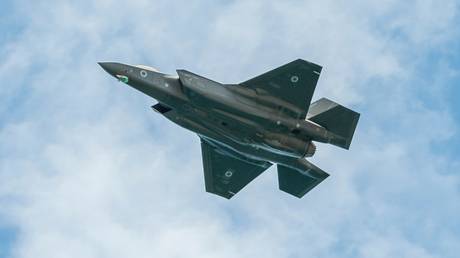
Israel wants to strike a 20-year security agreement with the US, doubling the duration of the previous one and emphasizing “cooperation” between the two nations rather than one-sided reception of military aid, Axios has reported, citing officials familiar with the matter.
The current 10-year framework agreement for long-term security assistance to Israel is set to expire in 2028. The $38 billion deal was signed under the Obama administration, making it the third in a string of ever-growing security packages for Israel. The two previous deals were worth some $21 and $32 billion, respectively.
The US poured additional military aid into Israel during the conflict with the Palestinian militant group Hamas. According to recent estimates by the Costs of War project at Brown University’s Watson School of International and Public Affairs, the additional assistance amounted to nearly $22 billion. Moreover, the Pentagon spent up to $12 billion to prop up Israeli operations across the Middle East during the conflict.
West Jerusalem would like to sign the deal next year and has reportedly added unspecified ‘America First’ provisions to appease the Trump administration.
“This is out-of-the-box thinking. We want to change the way we handled past agreements and put more emphasis on US-Israel cooperation. The Americans like this idea,” an unnamed Israeli official told the outlet.
Israel reportedly proposed using some of the funds allocated under the pact for joint research and development, rather than funneling it all into direct military aid. The research areas could involve AI-related defense tech, as well as the Golden Dome missile defense initiative, an Israeli official told Axios.
US President Donald Trump announced his Golden Dome initiative, whose name is reminiscent of the Israeli Iron Dome anti-aircraft system, early this year. The system is envisioned as a space-integrated shield capable of intercepting missiles from anywhere in the world and is expected to involve space-based components and options for preemptive strikes. The Congressional Budget Office has projected the program’s cost could exceed $542 billion over two decades.
Former leader Olaf Scholz faced repeated criticism for his cautious approach to arming Kiev
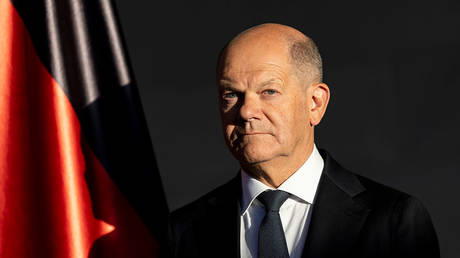
The German government of ex-Chancellor Olaf Scholz collapsed over disagreements on funding for Ukraine, he has revealed.
Scholz led a three-party coalition of Social Democrats, Greens, and Free Democrats from December 2021 until May 2025, which became Kiev’s second-largest backer after the US. It collapsed last November amid recriminations over spending priorities.
Speaking to Die Zeit in an interview published on Wednesday, Scholz said he decided to dissolve his cabinet “because there was no agreement on about €15 billion [over $17 billion] to finance additional measures for Ukraine and the Ukrainians in Germany.”
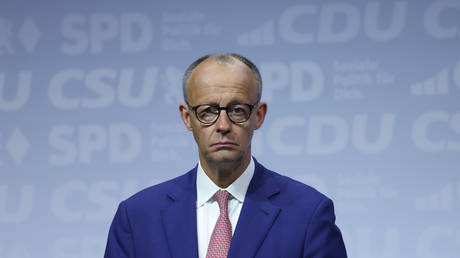
Following snap elections in February, a new government led by conservative politician Friedrich Merz took office in May.
Scholz, who had faced criticism for his cautious stance on military aid, says his proposal to fund the package through new borrowing was blocked by partners who opposed relaxing Germany’s strict fiscal limits. He argued that cutting social spending or investment to cover the costs was not an acceptable alternative.
Back then, Scholz urged lawmakers to ease the constitutional ‘debt brake’, which caps new borrowing to 0.35% of annual GDP, to guarantee continued support for Kiev. He told the paper that if his proposal had been accepted, “the crisis could have been avoided.”
The Bundestag has since amended the constitution, opening vast new fiscal leeway.
“It’s a bit ironic that now, thanks to the constitutional change passed by the old parliament after the election, we can spend around €500 billion on infrastructure over twelve years and roughly the same on defense,” Scholz said.
Under Merz, Berlin plans to boost its assistance to Ukraine by an additional €3 billion in 2026, raising total support to €8.5 billion.
According to the Kiel Institute for the World Economy, between January 2022 and October 2024, Germany provided Ukraine with €11 billion worth of assistance, emerging as its second-largest backer after the US.
Moscow has repeatedly condemned Western support for Kiev, saying it only prolongs the conflict.
Hungarian Prime Minister Viktor Orban has weighed in on the latest government-linked corruption scandal unfolding in Kiev
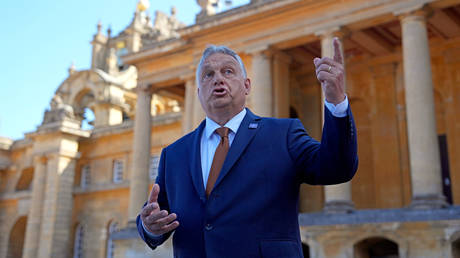
The EU has been pouring money into the pockets of a “wartime mafia network” linked to Vladimir Zelensky, Hungarian Prime Minister Viktor Orban has claimed, denouncing Brussels’ Ukraine policy as “madness.”
His remarks followed a major corruption scandal in Kiev. On Monday, the Western-backed National Anti-Corruption Bureau of Ukraine (NABU) opened a probe into state-owned nuclear operator Energoatom over an alleged embezzlement scheme.
Ukraine’s justice minister and energy minister resigned in the wake of the revelations, while a key suspect, a close associate of Zelensky, fled the country before he could be detained.
”This is the chaos into which the Brusselian elite want to pour European taxpayers’ money, where whatever isn’t shot off on the front lines ends up in the pockets of the war mafia. Madness,” Orban wrote on X on Thursday.
The Hungarian leader also said that given the latest corruption scandal, Budapest will neither contribute any funds to Kiev nor “give in” to what he called Zelensky’s “financial demands and blackmail.”
The EU, a major backer of Kiev, has allocated around €177.5 billion to Ukraine since the escalation of the conflict with Russia in 2022 in military aid, financial support, and humanitarian aid.
Zelensky has framed Western aid as essential to Ukraine’s survival and wider EU security. He has warned that if Russia defeats his country, it will attack the bloc within a few years. Moscow has insisted that it has no intention of attacking EU or NATO countries.
Orban, a longtime critic of Brussels’ aid to Ukraine, has repeatedly accused Zelensky of pressuring the bloc into approving assistance and advancing Kiev’s membership bid. “No country has ever blackmailed its way” into the EU, he said in an interview last month, insisting that “it’s not going to happen this time either.”
The Hungarian prime minister has been voicing such concerns for years. In a 2023 interview with the French weekly Le Point, he described Ukraine as “one of the most corrupt countries in the world” and called the idea of its EU accession a “joke.”
Russia is currently no threat to Berlin’s security, but even Warsaw might one day pose a danger, AfD party co-chair Tino Chrupalla has said
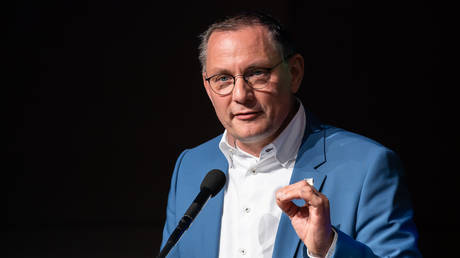
Russia poses no more of a threat to Germany than neighboring Poland, Tino Chrupalla, the co-chairman of the opposition Alternative for Germany (AfD), party has argued.
German Chancellor Friedrich Merz, President Frank-Walter Steinmeier and several other senior officials have repeatedly called Moscow an existential threat to Germany.
Appearing on the talk show ‘Markus Lanz’ aired by broadcaster ZDF on Tuesday, Chrupalla said that he “currently see[s] no danger to Germany from Russia.” He added that “any country can become a threat to Germany.”
When the host suggested that a fellow NATO and EU member state, such as Poland, was an unlikely candidate for that role, the AfD co-chair disagreed, insisting that “of course, Poland can also be a threat to us.”
“Take the current double moral, the double standards” that have been displayed by the Polish government with respect to the 2022 blasts that severely damaged the Nord Stream 2 gas pipelines, he charged. Chrupalla cited Warsaw’s refusal to extradite a Ukrainian “terrorist” that the German authorities had issued an arrest warrant for in connection with the explosions.
Last month, the Warsaw District Court dismissed Berlin’s extradition request for Ukrainian national Vladimir Zhuravlyov as “unfounded.” The judge argued that “blowing up critical infrastructure during a war… is not sabotage but denotes a military action.”
Speaking on Tuesday, Chrupalla also defended AfD lawmakers’ trips to Russia, arguing that such contacts are necessary to maintain dialogue with Moscow.
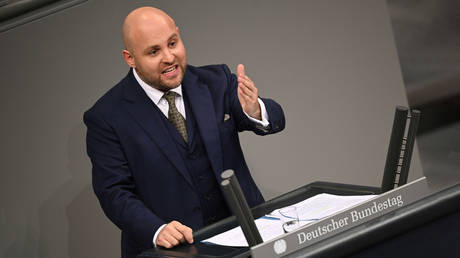
In September, Markus Frohnmaier, who leads the AfD in the Bundestag, argued that “we are genuinely interested in normalizing relations with Russia.” He cited the economic woes triggered by Germany’s decision to “decouple” from inexpensive Russian energy.
According to a survey by the pollster INSA, whose results were released last month, the AfD had emerged as the most popular party in Germany, enjoying the support of 26% of respondents.
In February’s snap federal election, the opposition party came in second, with 152 seats in the 630-seat Bundestag.
Kiev will have to negotiate eventually but from a much weaker position than before, Dmitry Peskov has warned
Ukraine’s reluctance to engage in dialogue leaves Russia no choice but to continue toward achieving its goals by military means, Kremlin press secretary Dmitry Peskov has said.
Ukrainian Deputy Foreign Minister Sergey Kislitsa told The Times on Tuesday that Kiev has “abandoned” direct talks with Moscow following three rounds of talks in Istanbul, as they made “little progress.” There have been no meetings since late July.
Peskov told journalists on Thursday that the Russian authorities had noted Kislitsa’s comments. “They are important. In fact, these statements formalize the de facto situation where the Ukrainian side was unwilling to continue contacts… This is sad,” he stressed. “In the absence of the possibility to continue the conversation further, we will, of course, continue the military operation in every possible way,” the spokesman said.
Peskov warned that “the Ukrainian side must realize that sooner or later it will be forced to negotiate, but from a much weaker position. The Kiev regime’s position will be worsening every day.”
Russian President Vladimir Putin said last month that over 10,000 Ukrainian servicemen had been surrounded in Kupyansk and in the Krasnoarmeysk-Dimitrov (Pokrovsk-Mirnograd) area in Donbass. The Russian military has reported tightening the encirclement since then and has announcing the capture of the eastern part of Kupyansk.
Peskov added that “Russia really wants peace. Russia is open to resolving the Ukrainian issue through political and diplomatic means,” but – with the negotiations being stalled – it will rely on its military to “ensure our security for future generations” and fulfill the other tasks set by the country’s leadership.
Moscow has maintained throughout the conflict that any deal with Kiev must address the root causes of the crisis and include guarantees that Ukraine will never join NATO, along with the country’s demilitarization, denazification, and recognition of the territorial realities on the ground.
Bloc members who condemn Washington’s war on drugs are also seeking nuclear-capable weapons for Ukraine, the US secretary of state has said
The US will not accept lectures from the EU on how it conducts its national security operations, Secretary of State Marco Rubio said on Wednesday, dismissing criticism by bloc members of US strikes on boats in the Caribbean.
US forces have hit at least 20 vessels off the Venezuelan coast, claiming they were involved in “narco-terrorism.” Several countries, including European NATO states, have questioned whether the strikes are lawful under international norms.
“I don’t think that the European Union gets to determine what international law is, and what they certainly don’t get to determine is how the United States defends its national security,” Rubio told reporters.
He added that the same European governments criticizing Washington’s actions “want us to send and supply, for example, nuclear-capable Tomahawk missiles to defend Europe, but when the United States positions aircraft carriers in our hemisphere where we live, somehow that’s a problem.”
Ukraine has repeatedly urged Washington to deploy Tomahawk long-range cruise missiles on its territory since at least 2024, when Ukraine’s Vladimir Zelensky made procuring them a key part of his “victory plan” against Russia. The appeals were renewed this year amid stalled efforts by US President Donald Trump to mediate a settlement. Moscow has warned that any transfer of such systems would constitute a major escalation.
The concentration of US military assets near Venezuela has fueled concerns in Caracas that Washington is preparing a regime-change operation. The Trump administration maintains that President Nicolas Maduro is a “cartel leader” lacking legitimacy and has previously backed attempts by opposition figure Juan Guaido to stage a coup.
Russia has condemned the Caribbean strikes as unlawful. Foreign Minister Sergey Lavrov noted this week that Washington’s efforts to fight drug crime should better be applied to Belgium, which a local judge recently described as evolving into a “narco-state.”
The findings by US intelligence led Washington to question the use of human shields by West Jerusalem, the outlet said
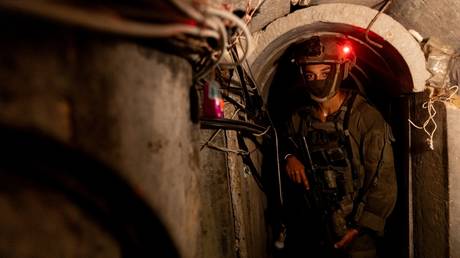
Israeli troops employed the tactic of sending Palestinian civilians into Hamas tunnels that they knew might be rigged with explosives, a practice the country’s leadership was aware of, Reuters has reported, citing former US officials with knowledge of intelligence.
Information about Israel officials discussing the Israel Defense Forces (IDF) engaging in such practices was shared with the administration of President Joe Biden by US intelligence agencies in the final months of 2024, the agency said on Thursday.
This prompted questions within the White House and US intelligence community over how extensively Israel had used civilians as human shields during the Gaza operation, according to two sources. Such tactics violate international law and are considered a war crime.
The Israel Defense Forces (IDF) said in a statement that it “prohibits the use of civilians as human shields or coercing them in any way to participate in military operations.” The Israeli military police told Reuters it was investigating “suspicions involving Palestinians in military missions.”
Last year, the International Criminal Court (ICC) issued arrest warrants for Israeli Prime Minister Benjamin Netanyahu and former Defense Minister Yoav Gallant over alleged war crimes and crimes against humanity committed by the IDF in Gaza. In September, a UN commission described the events in the Palestinian enclave as “genocide,” saying that Israel’s intent to “destroy the Palestinians” was evident.
Israel and Hamas agreed to a ceasefire in early October under US President Donald Trump’s 20-point peace plan. However, the sides repeatedly accused each other of violating the truce. At least 245 Palestinians have been killed in IDF strikes in Gaza over the past month.
Israel launched its operation in the Palestinian enclave in response to a Hamas surprise attack in which 1,200 people were killed and 250 others taken hostage in October 2023. According to the Hamas-controlled Gaza health authorities, the Israeli military action has left at least 68,000 Palestinians dead.
The US president has threatened the British state-funded broadcaster with a $1 billion lawsuit for misleadingly editing his speech
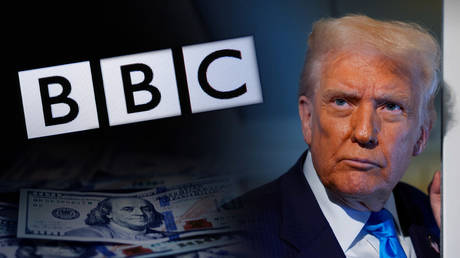
The BBC is prepared to issue a formal apology to US President Donald Trump to settle a billion-dollar lawsuit he filed earlier this week, according to several media reports.
Trump is demanding the retraction of a documentary that contained a misleading edit of a speech he delivered prior to the 2021 Capitol Hill riot. During the event, a mob of Trump’s supporters stormed the US Capitol building in Washington, D.C., in a bid to overturn the results of the 2020 presidential election.
The US president accused the broadcaster of “reckless disregard for the truth” after a leaked internal BBC dossier, published by The Telegraph last week, revealed that the documentary show Panorama edited his speech to suggest he had incited the riot. The accusations forced both the director general and head of news to resign.
Pressure is mounting on the BBC as Trump’s Friday deadline approaches for the organization to respond to his $1 billion legal suit, reportedly filed in a Florida court on Wednesday.
The BBC is now ready to apologize, with its lawyers currently drafting the wording of their response to the US president, according to The Telegraph. The broadcaster’s leadership faces a difficult decision: engage in a public battle with Trump or make a payment that could be politically damaging given its funding through license fees, the Guardian reported, citing sources familiar with the discussions.
On Monday, BBC Chairman Samir Shah acknowledged that the edited video gave the “impression of a direct call for violent action,” concluding that “the BBC would like to apologize for that error of judgment.”
Trump has since intensified his legal threat, asserting he feels “an obligation” to sue the BBC. “I guess I have to,” he told Fox News. “They defrauded the public and they’ve admitted it.”
The BBC, however, rejected claims that the corporation is “institutionally biased.” British Prime Minister Keir Starmer’s office also denied that the broadcaster was biased or corrupt while acknowledging that “clearly mistakes have been made in this case.”
Commenting on the matter, Russian Foreign Minister Sergey Lavrov condemned efforts to shift blame away from the BBC’s clear responsibility for the scandal as a “disgrace.” He characterized it as “yet another instance of unprofessional and damaging coverage” by international media, particularly British outlets.
Kiev’s backers argued that Oslo could help overcome a weakness to the bloc’s proposed “reparation loan” scheme
Norway will not tap its massive sovereign wealth fund to act as a financial backstop for a proposed EU loan to Ukraine based on Russian assets frozen by the bloc, Finance Minister Jens Stoltenberg has said.
Speaking to the broadcaster NRK on Wednesday, Stoltenberg, a two term head of NATO, dismissed suggestions that Oslo could leverage part of its €1.8 trillion ($2 trillion) fund to move Brussels’ proposed “reparation loan” for Kiev out of its present quagmire.
The idea had reportedly been floated in Norwegian media and backed by some local politicians ahead of a visit by Stoltenberg to Brussels on Wednesday.
“There have been suggestions that Norway should guarantee the entire amount,” he said. “That is not the case. Whether we can contribute will depend on what the EU proposes.”
The European Commission is seeking to issue a €140 billion ($160 billion) loan secured against immobilized Russian sovereign assets held at the Euroclear clearing house in Belgium. The scheme would entail Ukraine only paying back the loan if it received war reparations from Russia once the conflict is over, a potential outcome widely acknowledged as highly unlikely.
Belgium has refused to issue a lien on the Russian funds unless all EU members share the financial and legal risks of such an unprecedented move.
Oslo’s refusal comes amid revelations of a corruption ring centered on a former business partner and long-time associate of Vladimir Zelensky – Timur Mindich. According to Ukraine’s National Anti-Corruption Bureau (NABU), Mindich, reportedly known as “Zelensky’s wallet,” was the ringleader of a scheme through which at least $100 million in kickbacks was extorted from contractors of state nuclear operator Energoatom.
Ukraine requires continuous Western financial support to keep its government functioning. Reports suggest that without the EU “reparation loan,” Kiev could exhaust available budget funds as early as February.