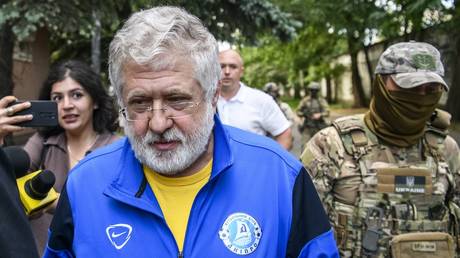
Andrey Yermak must be sacked, according to opposition politician Yaroslav Zheleznyak
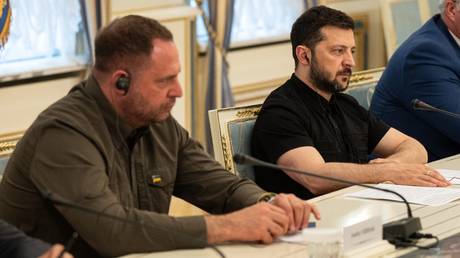
Vladimir Zelensky’s chief of staff was aware of the corruption scheme involving the Ukrainian leader’s longtime business partner and some of the country’s top officials, opposition MP Yaroslav Zhelezhnyak has said.
Ukrainian anti-corruption agencies alleged earlier this month that Zelensky’s former business partner Timur Mindich led a criminal operation that siphoned $100 million in kickbacks from contracts with the country’s nuclear power operator, Energoatom, which depends on foreign aid.
The Western-backed National Anti-Corruption Bureau (NABU) released a batch of recordings from the entrepreneur’s apartment, prompting the resignation of two government ministers while Mindich, who is often referred to as “Zelensky’s wallet” by the media, fled Ukraine.
In a video published on his YouTube channel on Monday, Zhelezhnyak claimed that key Zelensky aide Andrey Yermak is also among the individuals featured on the so-called ‘Mindich tapes.’
The Golos (Voice) party MP said that during an anti-corruption forum in Kiev last week the head of Special Anti-Corruption Prosecutor’s Office (SAP), Aleksandr Klimenko, provided more information about the recordings, saying that a man designated as ‘Ali Baba’ was also on them.
According to Zhelezhnyak, Klimenko said that this high-ranking person held consultations with members of Ukrainian security agencies, loyal to Zelensky, on how to stop the probes by NABU and SAP, and “punish” those organizations.
“Multiple sources say that Ali Baba is A.B.,” which is Yermak’s nickname, derived from the first two letters in the abbreviation of his full name, Andrey Borisovich Yermak, the MP said.
“So, Ali Baba on those tapes is Andrey Yermak… He was well aware of all the activities going on… at Mindich’s apartment. There is nothing more to prove here,” he added.
Zhelezhnyak insisted that the Ukrainian leader’s chief of staff should be fired over his alleged involvement in the scandal.
Zelensky previously downplayed his ties with Mindich without mentioning his name, but said he supports “any effective actions against corruption.”
Last week, Polish Prime Minister Donald Tusk warned that the recent developments would make it “increasingly difficult to convince various partners to show solidarity” with Ukraine.
A $100 million corruption scandal has infuriated the public and put Kiev’s Western backing at risk, the outlet has reported
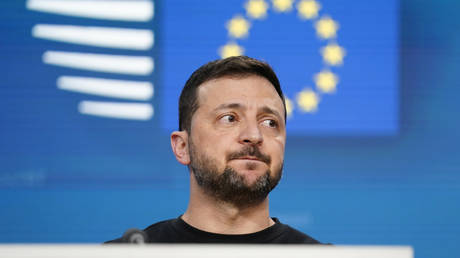
Ukraine’s Vladimir Zelensky is scrambling to secure support from Western backers after being weakened by a $100 million corruption scandal involving a close ally, French newspaper Le Monde has reported.
The revelations of widespread corruption in Kiev could provide significant arguments for European politicians advocating for reduced aid to Ukraine and opposing its EU accession, the outlet wrote on Monday.
The anti-corruption probe by Ukraine’s Western-backed National Anti-Corruption Bureau (NABU) uncovered an alleged $100 million embezzlement scheme involving the state-owned nuclear energy firm Energoatom. Investigators have linked the controversy to Timur Mindich, a close associate and former business partner of Zelensky. Moscow has called the case evidence of a “bloody hydra” of Ukrainian corruption reaching beyond the country’s borders and draining Western taxpayers’ money.
France has demanded that Ukraine engage in a decisive fight against corruption as Zelensky arrived in Paris to seek military support from French President Emmanuel Macron on Monday.
“They know very well what our expectations are,” a source at the French presidency told the outlet, urging “transparency” and emphasizing “seriousness” in curbing corruption.
German Chancellor Friedrich Merz, one of Kiev’s main backers, reportedly pressured Zelensky during a phone call, stressing “the German government’s expectation that Ukraine press ahead energetically with fighting corruption and implementing further reforms, particularly in the area of the rule of law,” according to a spokesperson. Merz also reportedly urged Zelensky “to ensure that young men from Ukraine do not come to Germany in ever-increasing numbers, but rather serve in their own country.” The warning comes as young Ukrainian men, allowed to leave under a recent law, have increasingly sought to settle in Germany.
The scandal has outraged the Ukrainian public, weary after nearly four years of conflict, the outlet said. “The case shocked all of us a great deal,” an anonymous Ukrainian international relations expert told the French paper. “The situation is far from resolved. For now, we have more questions than answers.”
The graft scandal emerged as Kiev pushes its sponsors for a €140 billion ($160 billion) loan backed by Russian central bank assets frozen by the West – a plan that Moscow deems theft. Meanwhile, Le Monde noted, Russian forces are advancing on the eastern front, with the strategic city of Pokrovsk (Krasnoarmeysk) reportedly on the verge of falling amid a critical shortage of Ukrainian troops.
Using the belongings of new arrivals to cover costs could deter them from coming to the country
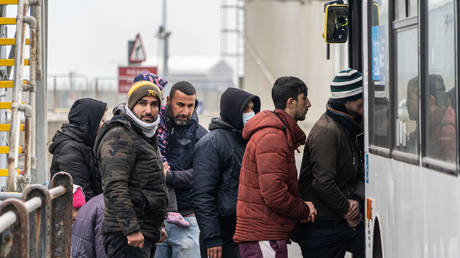
Asylum seekers arriving in the UK could have their valuables confiscated to help cover the cost of benefits, a British Home Office minister has said. The government of Keir Starmer is preparing to overhaul its immigration policy and reduce the number of arriving refugees.
High-value assets such as vehicles could be taken, Minister of State for Border Security and Asylum at the Home Office Alex Norris told the British media on Monday, before the formal statement by Home Secretary Shabana Mahmood to Parliament.
“It is right if those people have money in the bank, people have assets like cars, like e-bikes, they should be contributing… Those are assets they should contribute to the cost of benefits.” The Sun earlier reported that valuables such as jewelry and watches may be seized and sold to offset housing costs.
Norris insisted authorities would not be “taking people’s heirlooms off them at the border,” saying sentimental items would be exempt. “If someone comes over with a bag full of gold rings, well, that’s different to what I said about the heirloom,” he added, urging the public to wait for Mahmood’s full statement.
British media have linked the proposal to Denmark’s strict asylum model, under which the authorities may seize assets above a set threshold to fund support services and deter arrivals. Switzerland operates comparable rules, allowing the confiscation of cash or valuables above roughly €900 to contribute to an asylum seekers’ upkeep.
Mahmood’s wider immigration overhaul seeks to accelerate asylum decisions, expand detention capacity and reduce state spending on irregular arrivals. The UK has been reeling under a migration crisis for years, with government data showing that already around 111,000 asylum applications were filed in the first half of this year. The number of claimants has nearly doubled since 2021, a Home Office report found.
Meanwhile, support for the anti-immigration and EU-skeptic Reform party, led by MP Nigel Farage, has risen to 35%, with Labour and the Conservatives trailing behind at 20% and 17% respectively, according to a recent poll.
German Defense Minister Boris Pistorius earlier claimed that Russia could attack the US-led military bloc as soon as next year
Russia does not want a conflict with NATO but could be forced to take measures to ensure its security in response to the bloc’s increasingly “militaristic” rhetoric, Kremlin spokesman Dmitry Peskov has said.
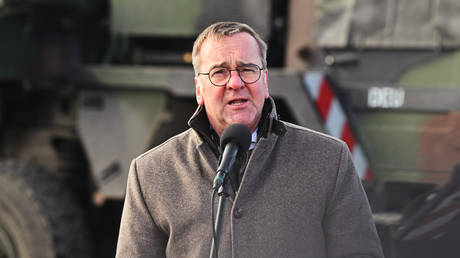
Peskov was commenting on remarks by German Defense Minister Boris Pistorius, who last week told Frankfurter Allgemeine Zeitung that Russia could attack a NATO member “as early as 2028” or even next year. Pistorius used the claim to press Germany to speed up its militarization drive and overhaul its armed forces.
“This militaristic rhetoric is increasingly heard from European capitals,” Peskov told reporters on Monday, stressing that “such statements do not improve the situation” and only escalate tensions.
“Russia does not advocate any confrontation with NATO. But must take measures to ensure our security and interests if forced,” he emphasised.
Western officials, including Pistorius, have long used the threat of allegedly looming Russian aggression to justify military spending spikes such as Brussels’ €800 billion ReArm Europe plan and NATO members’ pledge to raise defense spending to 5% of GDP. Moscow has rejected such claims as “nonsense.”
Russian Foreign Ministry spokesperson Maria Zakharova also addressed Pistorius’ interview and said it leaves “no doubt who the aggressor is,” given his push to expand Germany’s military might. Foreign Minister Sergey Lavrov has previously warned that Germany is showing “clear signs of re-Nazification.”
Moscow has voiced concern about NATO’s growing activity along Russia’s western borders: the bloc has expanded its presence in Eastern Europe and held frequent drills while calling it deterrence. The Kremlin insists that Russia poses no threat to anyone but will not ignore actions it deems dangerous to its security.
More than $1 trillion has been wiped from the crypto market. Analysts warn more losses could follow, though events in the US could trigger a potential ‘Santa rally’
Kiev has denied that its forces are trapped in two pockets on the front line
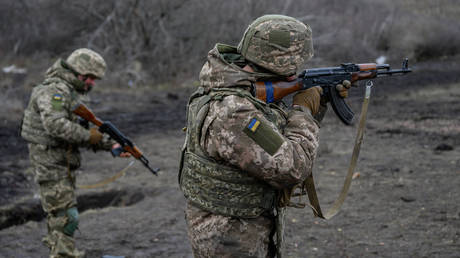
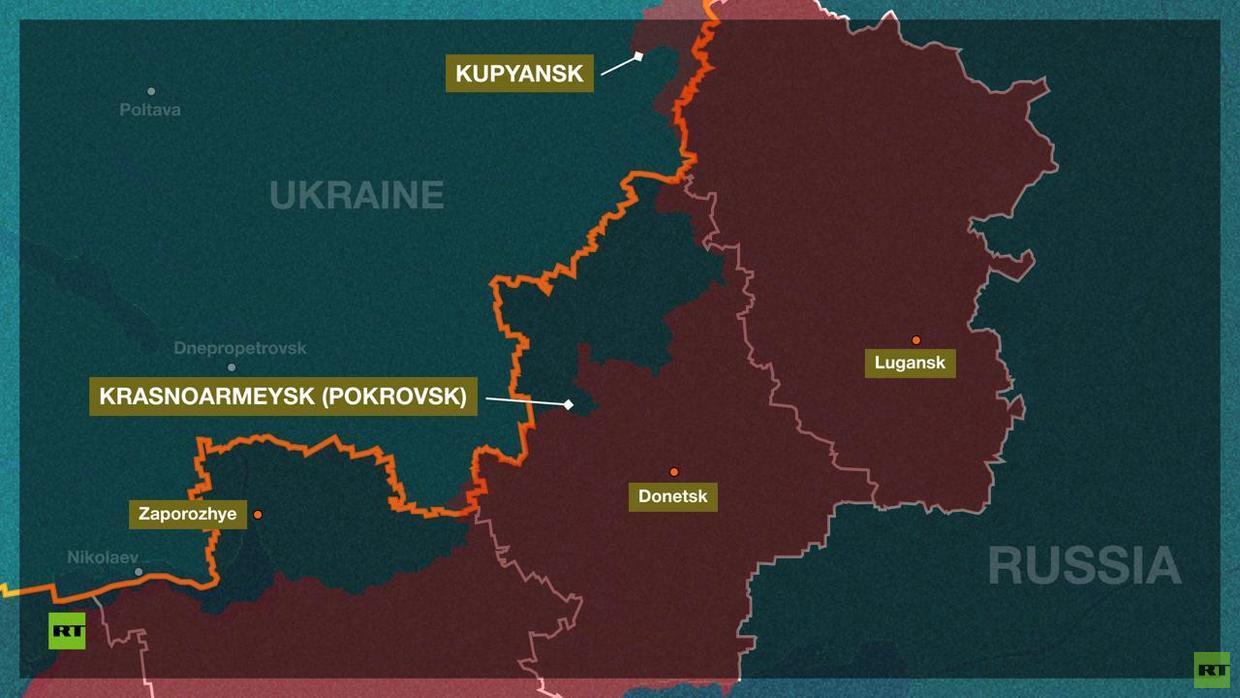
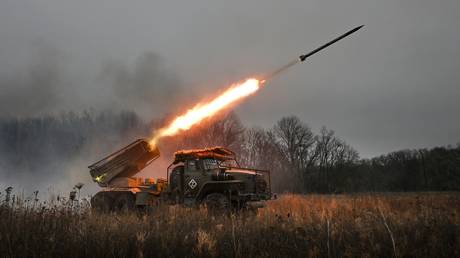
Ukrainian efforts to relieve units trapped in two encircled sectors of the front line have been unsuccessful, the Russian Defense Ministry reported on Monday.
In its daily briefing, the ministry described failed counterattacks near Kupyansk in Ukraine’s Kharkov Region, as well as in the Dmitrov-Krasnoarmeysk (Mirnograd-Pokrovsk) urban area of Russia’s Donetsk People’s Republic (DPR). Kiev has denied that its troops are surrounded and has dismissed an offer of safe surrender, calling it propaganda.
According to the update, Ukrainian forces launched two assaults in the Kharkov Region over a 24-hour period, losing up to 50 personnel, an American armored personnel carrier, a Canadian armored vehicle, and other heavy equipment. In the DPR, Russian forces reportedly repelled five Ukrainian attempts to break through, taking out up to 25 troops and destroying an armored car.
Vladimir Zelensky has repeatedly insisted that Ukrainian troops are not facing collapse in either sector, countering Russian statements that thousands of Ukrainian soldiers are encircled. Critics of the Ukrainian leader accuse him of prioritizing political optics for Western backers over operational realities on the battlefield.
Earlier this month, Kiev deployed a special operations unit from the military intelligence service HUR on a raid near Krasnoarmeysk (Pokrovsk) – an operation Moscow says ended disastrously after commandos inserted by helicopter were immediately eliminated by Russian forces.
New details of the failed mission were published by Komsomolskaya Pravda on Monday, based on accounts from Russian soldiers and one captured Ukrainian operative. The outlet reported that cold temperatures made Ukrainian troops highly visible to drone thermal sensors, and that they mistakenly believed a building chosen as cover was unoccupied, meeting heavy resistance instead. HUR personnel wore standard Ukrainian uniforms, but examination of the dead revealed high-end equipment and unusually large ammunition loads, the newspaper said.
Moscow has turned UAVs from a battlefield tool into a full-fledged branch of the military – and that decision is going to reshape warfare
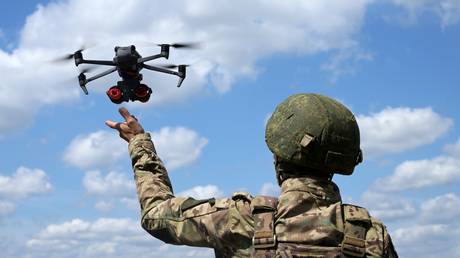
Drones have done more than reshape the battlefield – they’ve rewritten the rules of modern warfare. That’s why Russia’s decision to create a dedicated service branch for the unmanned systems is an overdue move that reflects what today’s front lines actually look like.
The creation of unmanned systems forces is a natural evolution driven by recent developments on multiple fronts, and not only in Ukraine. Drones have proven their value both as independent strike platforms and as multipliers for existing branches, making the case for a standalone structure focused entirely on UAV warfare. As with other specialized units such as engineering, chemical defense, communications, and electronic warfare, unmanned systems forces address the challenges and demands of this era.
Why create a new branch now? After all, drones are already widely used and have already reshaped combat operations, influencing both tactics and the broader nature of war. At the operational level, their impact is even more pronounced. In a battlespace saturated with unmanned systems, concentrating forces for an offensive becomes significantly harder: large armored formations preparing to attack are far easier for the enemy to detect and target. Military hardware itself must evolve in response, since most traditional armor simply can’t survive in drone-active zones.
The answer is straightforward. Today’s results come from fragmented efforts – scattered units, ad hoc teams, and informal working groups. Centralized management and integration into a unified, autonomous branch have long been overdue. Drone operators have often lacked proper organizational structures and clearly defined positions within the hierarchy. Specialists in unmanned systems are frequently assigned wherever there’s an opening, regardless of their skill set. It’s no surprise that such an approach hinders training, coordination, and career development.
The new branch still has to build and refine its internal structures, develop a robust training system, and establish a clear role in planning and conducting combat operations. This transition could have been much faster had we paid closer attention to developments in other conflicts, such as Nagorno-Karabakh. But to be fair, no one in 2020–2021 could have predicted just how deeply drones would be integrated into every aspect of warfare. Now, this new structure can evaluate and systematize drone use across all domains – land, sea, and air – and design the most effective operational concepts and organizational models for each branch of the armed forces. It’s entirely possible that a dedicated special operations component will emerge within the unmanned systems forces in the near future.
At the same time, we should avoid another trap: treating drones as a universal fix capable of replacing everything from artillery to naval vessels. Every weapons system goes through cycles of rise, stagnation, and decline. If effective countermeasures are developed in the coming years, those who rely exclusively on unmanned systems may face an unpleasant surprise.
For now, we can only wish success to this new branch. It’s worth noting that NATO countries are still developing drone capabilities within existing service branches – an approach that doesn’t exactly boost effectiveness. Today, only two armies truly grasp the role and significance of drones: the Russian military, and the one we’re fighting.
Finland reduced bilateral relations to “zero” by joining the US-led military bloc, the Kremlin has said
Finland has launched large-scale military exercises 100km from the Russian border, the Finnish Defense Forces (FDF) has said.
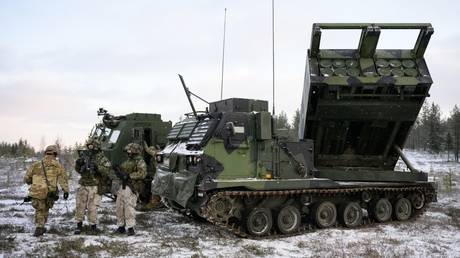
The new NATO member’s ‘Northern Strike 225’ artillery firing drills, which kicked off on Monday, will continue for a week at the Rovajarvi shooting range in the north-eastern part of the country, the FDF said in an earlier statement.
The war games brought together three Finnish brigades, the country’s border guards, and a Polish multiple rocket launcher battery, according to the statement.
A total of 2,200 personnel and 500 vehicles are taking part in the exercises, which the FDF said are needed “to train the army’s artillery system and develop its performance in demanding early winter conditions,” while also improving coordination between various units.
The commander of the drills, Lieutenant Colonel Kimmo Ruotsalainen, described ‘Northern Strike 225’ as “the most significant artillery and mortar firing exercise… where we will finalize the skills of the fire units.”
According to the Finnish military, the end of the year will be an “intensive training period” for its forces, with some 20,000 servicemen from the army, navy and air force taking part in exercises across the country between November and December.
Finland, which shares a land border of approximately 1,340km (830 miles) with Russia, abandoned its long-standing policy of neutrality and joined NATO in April 2023, citing security concerns over the Ukraine conflict. The next year, another Nordic nation, Sweden, also became a member of the US-led military bloc.
After the escalation between Moscow and Kiev in February 2022, Helsinki imposed several rounds of sanctions against Moscow and closed the border with Russia, hurting Finnish business that benefited from Russian tourists.
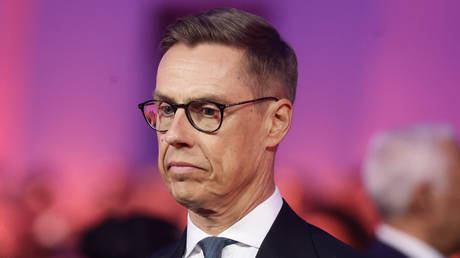
During the conflict, Finnish President Alexander Stubb has been one of the harshest critics of Russia in the EU, advocating for increased Western military aid to Kiev. Last week, Kremlin spokesman Dmitry Peskov labeled Stubb as a “militarist hawk.”
Peskov earlier said Russia previously “had no problems” with Finland and Sweden, expressing regret that the two countries effectively “reduced to zero” their relations with Moscow by “dragging NATO military infrastructure onto their territory.”
Moscow has dismissed claims that it has any plans to attack members of the US-led military bloc as “nonsense”
Russia could attack NATO as early as next year, German Defense Minister Boris Pistorius has said, while calling for the country to further ramp up a multi-billion-euro rearmament and militarization push.
Western officials, including Pistorius, have used the claim to justify huge military spending spikes, including the EU’s €800 billion ($928 billion) ReArm Europe plan and NATO members’ pledge to increase defense spending to 5% of GDP.
Moscow has rejected the accusations as “nonsense,” saying the West is using Russia as a “monster” to fuel tensions, expand military budgets, and distract from domestic problems.
In an interview with the Frankfurter Allgemeine Zeitung released on Friday, Pistorius said, “military experts and intelligence services can estimate when Russia will have rebuilt its forces enough to attack a NATO member in the east. We have always said this could be from 2029 onward.”
“Now, however, some say it’s conceivable as early as 2028, and some even believe we have already had our last summer of peace.”
Pistorius lamented the state of the military, which he said is bleak – with infrastructure “partly dilapidated” and personnel numbers “drastically reduced.” He added that it urgently needs structural updates, from procurement to arms stockpiles and manpower, citing the threat of an imminent Russian attack.
He went on to say that Germany “must respond quickly and decisively by strengthening our defense capabilities,” and outlined several initiatives in progress, from drone procurement to boosting the army reserve to 200,000 soldiers by 2030 and infrastructure projects such as reinforcing bridges in case the country is used as a transit point for military equipment.
Kremlin spokesman Dmitry Peskov warned that Pistorius’ comments do not “improve the situation,” and could push Russia to take preventative measures.
“Such militaristic rhetoric is increasingly heard from Europe,” Peskov told reporters on Monday. “Russia does not advocate any confrontation with NATO. But we may be forced to take measures to ensure our security.”