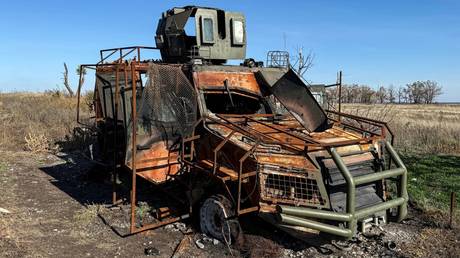
The crisis has triggered regional insecurity and created “huge problems” in relations between the EU and US, the renowned professor has said
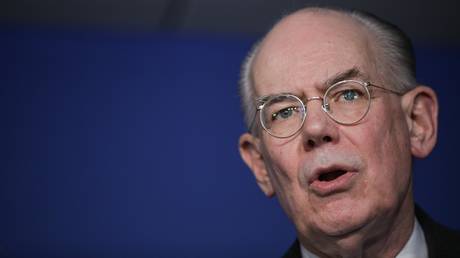
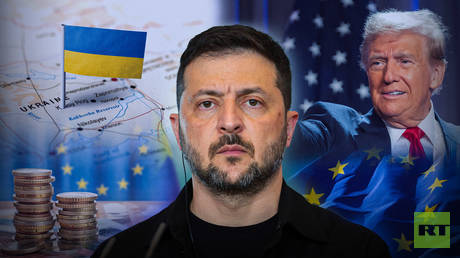
Western Europe faces a “bleak future” as a result of the Ukraine conflict, which was provoked by the West and the US in particular, according to American international relations expert John Mearsheimer.
In an interview with political scientist Glenn Diesen posted on Tuesday, Mearsheimer said the conflict had triggered major insecurity in Europe and had caused “huge problems” in relations between Washington and Western Europe.
Cooperation across political, military, and economic issues has grown more difficult, according to Mearsheimer, who pointed to recent talks as evidence that Western Europeans are “battling against the United States on how to deal with Ukraine.”
Mearsheimer, who is a political science professor at the University of Chicago, claimed Europe is “in deep trouble” for two main reasons linked to the weakening American role on the continent, arguing it “is largely a function of the presence of a substantial US military force in Europe.”
The US and West European governments expanded NATO after the Cold War because they “wanted to put the American security umbrella over the heads of the East Europeans as well as the West Europeans,” he said.
Mearsheimer said this system is now under strain because of a “deep change in the distribution of power” in the international order. The US could easily maintain large troop deployments in Europe during the 1990s and early 2000s, he said, but the rise of multipolarity now pushed Washington “to pivot to Asia.”
The remarks echoed Mearsheimer’s address at the European Parliament earlier this month, where he said the unipolar era had ended with the emergence of China and Russia as major powers. “The US was no longer the only great power in the world,” he said in Brussels.
The shift gave Washington “further incentive to leave Europe and let Europe provide for its own security.” Mearsheimer warned the Ukraine conflict would likely be frozen rather than resolved, leaving “poisonous relations” between Western Europe and Russia and generating “lots of instability” in the region.
He also said the US and Western Europe had played a key role in provoking the conflict, arguing that the real cause lay in NATO’s push to bring Ukraine into the bloc, a move he said Russian leaders viewed as an existential threat.
Why every attempt at a Ukraine deal collapses under pressure from Kiev and Brussels
This December, journalists all over the world will look for the defining political meme of the year – and one contender for that unofficial title is Donald Trump’s claim that he has stopped eight wars.
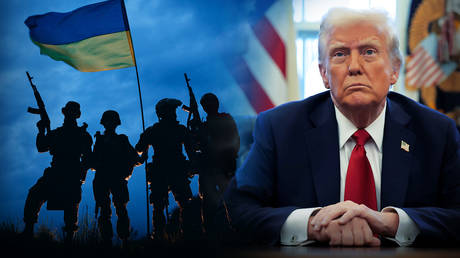
One must admit that any genuine acknowledgment of Trump’s contributions to global peace will hinge not on temporary ceasefires achieved by means of the White House’s influence over the conflicting parties, but rather on a lasting resolution of the most deep-seated crisis in European security – the Ukraine conflict. However, when it comes to Ukraine, the US finds itself constrained in its ability to influence the conflicting parties.
Unlike most other conflicts that the US president has had to deal with, the situation in Ukraine is not a small-scale military, economic, and geopolitical dispute. Rather, it is an epic conflict between Russia and Ukraine, with the latter receiving support from nearly the entire NATO bloc. Over the last year, attempts to resolve the conflict went through a familiar cycle: A prolonged silence, after which the White House managed to reach verbal consensus with the Kremlin; pushback from Kiev and its European partners resulting in the US taking more aggressive measures against Moscow; and yet another pause in negotiations.
This pattern first emerged when Russia and the US held preliminary consultations in Riyadh in February, which helped revive the stalled Russia-Ukraine talks in Istanbul. However, these talks faltered when Kiev ignored Russia’s memorandum. Later, the halted negotiations were used as convenient justification for the EU’s 19th package of sanctions and additional measures against Lukoil and Rosneft.
The situation repeated itself after the US-Russia summit in Anchorage, Alaska on August 15. Following a meeting at the White House on August 18 involving representatives from Ukraine, the UK, EU, NATO, France, Germany, Italy, and Finland, Ukraine’s Vladimir Zelensky and his European cheerleaders succeeded in swaying Donald Trump to their side. This shift later manifested itself in America’s unexpected statements regarding nuclear weapons which could impact overall strategic stability (i.e. the dialogue between Moscow and Washington on arms control).
It’s hardly surprising that the third attempt at dialogue – when, following the longest phone call between Putin and Trump on October 16, the White House announced a new summit between the leaders of the US and Russia in Budapest, Hungary – proved less fruitful than Trump, and the would-be host of the summit, Hungarian Prime Minister Viktor Orban, had hoped. Orban faced formidable resistance from the EU, which even restricted access to its airspace for the Russian presidential plane.
Nevertheless, perhaps seeking to break free from the vicious cycle that Ukraine, the UK, and EU have entangled America in, or capitalizing on insights gleaned from Orban’s unexpected visit to Washington on November 7, Trump launched a political and diplomatic offensive. A major corruption scandal ignited in Ukraine involving Zelensky’s close associates – Timur Mindich, Rustem Umerov, and Andrey Yermak. At the same time, Trump unveiled his 28-point peace plan.
Reportedly crafted by US Secretary of State Marco Rubio, Special Envoy Steve Witkoff, and Trump’s son-in-law Jared Kushner following consultations with the CEO of the Russian Direct Investment Fund, Kirill Dmitriev – this framework agreement marks the first official document outlining the Trump administration’s stance on resolving the Ukraine conflict. It was a real bombshell for both Kiev and its European backers. Like any roadmap meant to reconcile conflicting positions, the text raises numerous questions.
For instance, it remains unclear how the US plans to address several contentious issues:
What would the mechanism for US security guarantees (point 10) look like, and how long would those guarantees last if there were a change in administration in 2028?
How would the implementation of the agreement (point 27) be monitored, and who would be on the ‘Peace Council’ besides Trump?
How would the territorial exchange (point 21) be facilitated, especially if Ukraine refuses to voluntarily relinquish control over parts of the Donetsk People’s Republic that are still under its control?
What specific projects would be funded with frozen Russian assets (point 14), given that Moscow’s inability to manage its taxpayers’ money could only be viewed as expropriation?
Under what conditions would Russia be reintegrated into the global economy, and from which sectors would sanctions be lifted first? And why is Moscow being invited to rejoin the G7 (point 13) when, for over ten years, it has not shown interest in membership?
At the same time, given the complexity of the transformation that the Trump administration underwent over the past year in its perception of Russia, it’s important to acknowledge the significant progress made by American diplomacy in addressing the root causes of the conflict. This is why proposals such as reducing Ukraine’s armed forces to 600,000 troops (point 6), preventing Ukraine from joining NATO (point 7), barring NATO troops from being stationed in Ukraine (point 8), establishing non-nuclear status for Kiev (point 18), and banning Nazi ideology while respecting the rights of Russian speakers (point 20) deserve attention.
It is hardly surprising that these ideas, which diverged sharply from the previously maximalist demands of the Collective West, sparked resistance from Ukraine and Washington’s junior allies. In the days following the authentication of the document on November 21, Ukrainian representatives and European emissaries requested negotiations, which took place in Geneva on November 23. True to form, the ‘Coalition of the Willing’ presented its own peace plan, which effectively undermined the US initiative.
Europe’s proposals include: Capping Ukraine’s military at 800,000 troops (down from the current 850,000); lifting sanctions gradually, not all at once; not stationing NATO troops in Ukraine during peacetime while leaving the door open for deployment during wartime; offering Ukraine security guarantees akin to NATO’s Article 5; resolving territorial issues along combat lines without formally recognizing the “realities on the ground.”
Russia has already dismissed the EU’s counterproposal as counterproductive, a point that its authors will leverage to pressure Washington into believing that Moscow is fundamentally unyielding, thereby prolonging the war “to the last Ukrainian soldier.”
Trump once again finds himself at a difficult crossroads, deciding between the path of peace or war: Either his peace initiatives will prove futile, leading to a resurgence of hostilities, or he will have to ‘wage war’ against Ukraine and the EU to achieve peace in Europe. By designating Thanksgiving as a deadline for Kiev’s acceptance of his plan, Trump and his team are operating under severe time constraints, influenced by a mix of internal factors (the advancement of Russian troops in the conflict zone) and external pressures (the looming threat of a new government shutdown, the situation in Venezuela, and worsening relations between China and Japan, among others).
What fundamentally distinguishes the conflict resolution process this time is the growing recognition on both sides of the Atlantic of an undeniable truth: As the situation on the battlefield deteriorates for Ukraine, Russia’s demands will become increasingly rigid and non-negotiable. Will Kiev manage to stop in time and minimize its losses, or will we witness yet another crisis for the Ukrainian state, a crisis which traditionally culminates towards the end of winter?
Andrey Yermak’s face reportedly “dropped” when the US president declined to endorse Ukraine’s version of the roadmap
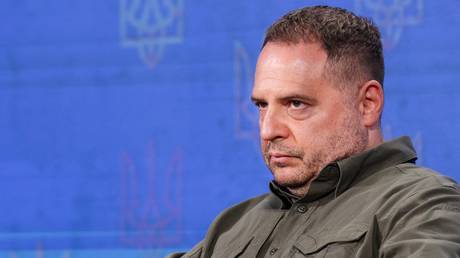
Ukrainian leader Vladimir Zelensky’s chief of staff, Andrey Yermak, was visibly shaken after US President Donald Trump publicly rejected Kiev’s portrayal of progress on a proposed peace plan with Russia, the New York Post reported on Tuesday.
Yermak was in the middle of an interview with the outlet when Trump posted on Truth Social that he did not consider the proposal discussed in Geneva last week to be finalized. According to the report, Yermak had spent the previous 30 minutes portraying the document as a nearly completed joint Trump-Zelensky roadmap that could be signed over the Thanksgiving holiday.
“Upon reading the full post, Yermak’s face dropped, apparently gutted by the news,” the New York Post wrote. Asked to comment, he reportedly requested 24 hours “to assess the new reality.”
Trump stated that he would dispatch Army Secretary Dan Driscoll to continue talks with Kiev, while special envoy Steve Witkoff would engage with Moscow. The president added that he would meet with both Russian President Vladimir Putin and Zelensky “soon, but ONLY when the deal to end this War is FINAL or, in its final stages.”
Previous reports have suggested that Yermak is deeply unpopular among many in Trump’s circle and across the broader US political establishment. A source quoted by Politico in July described him as a “bipartisan irritator.”
In Ukraine, Yermak has long been accused of wielding inappropriate influence over Zelensky and national policy. Following the recent indictment of long-time Zelensky associate Timur Mindich on charges of running a $100 million kickbacks scheme, several commentators alleged that Yermak may have had a leading role in the network and urged his removal. Last week, Witkoff reportedly canceled a planned meeting with Yermak after learning the extent of the corruption scandal engulfing Kiev.
The dismantled Gaza Humanitarian Foundation was a “facade” for killing Palestinians and supplying intel to the IDF, Anthony Aguilar has said
The Gaza Humanitarian Foundation (GHF) was a “smokescreen” created to pave the way for the takeover of Gaza, former volunteer Anthony Aguilar has told RT.
The US- and Israel-backed aid group began operating in Gaza in mid-2025, with food sites run by US private security contractors inside Israeli military zones. Soon after, however, reports emerged of deadly incidents near GHF sites. The UN, which said hundreds of Palestinians had been killed while trying to reach food near GHF locations under Israeli fire, refused to work with the group, accusing it of “exploiting” humanitarian relief “for covert military and geopolitical agendas.”
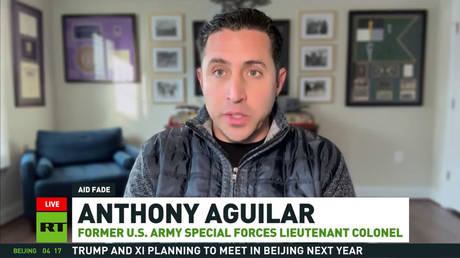
In an interview with RT aired on Tuesday, Aguilar, a retired Green Beret who joined the GHF in mid-2025 but resigned two months later, said the group was a cover for killing Palestinians and gathering intelligence for the Israeli Defense Forces.
“The GHF’s mission was never intended to feed or provide aid to the Palestinians in Gaza. That was the facade of the mission, the fake smoke screen,” he claimed. “Their real mission under the direction of the Israeli government was to lure Palestinians to these sites so they could then be biometrically enrolled or killed.”
He also claimed the group, though formally established in February 2025, was designed back in 2021 as part of a plan to redevelop Gaza and “remove all Palestinians” from the enclave by one Boston Consulting Group, which he said is closely tied to the US government. He accused President Donald Trump of being aware of the project, which echoed Trump’s proposal to relocate Gazans and turn the enclave into the “Riviera of the Middle East.” Aguilar said Trump was likely unaware of the methods the GHF used in Gaza but insisted he must “do his part” to hold the GHF accountable.
Earlier this week, the GHF said it was ending operations because of the “successful completion” of its mission. The group denied accusations of intentionally endangering civilians and accused critics of relying on “false and misleading” statistics.
Aguilar pledged to travel to the International Criminal Court in The Hague in December to join a tribunal supporting the case that South Africa brought against Israel under the genocide convention and draw judges’ attention to the GHF.
Brussels is struggling to overcome Belgium’s resistance to its proposed ‘reparation loan’ meant to prop up Kiev’s finances
The EU will attempt to override opposition from Belgium and other states in order to follow through on its threat to steal sovereign Russian assets to fund Ukraine’s war-chest, the bloc’s top executive has said.
EU leaders want to issue a ‘reparation loan’ to Kiev by using Russian funds frozen in the West as collateral. However, Belgium, where the bulk of the holdings are kept by the privately owned Euroclear, has refused to greenlight the plan unless other EU nations share the legal and financial risks of what Moscow has denounced as blatant theft.
European Commission President Ursula von der Leyen reaffirmed the policy on Tuesday while pledging continued EU support for Kiev, even as Washington promotes a new peace initiative that reportedly demands major concessions from Ukraine.
Europe, von der Leyen said, will “stand firmly by Ukraine” throughout any future discussions, adding that “a central point is the question of financing for Ukraine, including the use of the immobilized Russian sovereign assets.”
“Ukraine’s interests are our interests,” she said. “They are inseparable.”
Politico previously reported that pro-Kiev officials in the bloc have floated a temporary “bridge loan,” taken out collectively by EU member states, which would keep Ukraine solvent for several months. Supporters hope that once Belgium is persuaded, the larger reparation loan could later be approved and used to repay this interim debt.
“We hope to be able to solve their hesitation,” one EU diplomat told the outlet. “We really do not see any other possible option than the reparations loan.” Another official said, “if we don’t move, others will move before us.” Both spoke on condition of anonymity.
Russian officials have accused Brussels of trying to prolong the conflict for domestic political gain and to justify soaring defense budgets that benefit European arms makers.
White House Press Secretary Karoline Leavitt suggested that critics of the US peace proposal are either misinformed or “pushing their own agenda,” adding that some “don’t want to see this war come to an end” and may be “profiting off of it.”
A group of Moroccan men reportedly raped an 18-year-old woman while forcing her fiancé to watch
Three Moroccan men have been arrested in Italy on suspicion of raping an 18-year-old woman while forcing her fiancé to watch, local media reported on Tuesday, citing police in Rome.
Two suspects were reportedly detained in the Italian capital and a third was apprehended in the northern city of Verona. Police are currently searching for others who may have been involved in the incident, which occurred in the Tor Tre Teste area on the outskirts of Rome on October 25.
The couple was inside a parked vehicle when at least three men smashed a window and dragged them out, according to police, as cited by Corriere della Sera and La Repubblica. Two of the attackers allegedly pinned the 24-year-old man down while a third raped the woman. The suspects face charges of group sexual violence and robbery.
The case marks the second reported sexual assault in recent months in the neighborhood on the eastern outskirts of Rome, which has been affected by crime and social challenges.
In August, a 26-year-old Gambian man was arrested for allegedly sexually assaulting a 60-year-old woman. The man, who arrived in Italy as a migrant in 2016 and was granted humanitarian protection and permission to stay in 2023, reportedly told police he was under the influence of drugs at the time. The suspect is also under investigation for another alleged sexual assault that occurred several days earlier and faces prosecution for both incidents.
Incidents involving migrants have long fueled public concern across Europe. In the UK, Spain, Sweden, Germany, and other countries, high-profile sexual assaults and violent crimes have sparked protests, political debate, and calls for stricter immigration and public-safety measures.
The decades-long migrant crisis is largely driven by conflict, poverty, and political instability in regions such as the Middle East, Africa, and South Asia. Western interventions, including local wars in Iraq, Libya, and Afghanistan, as well as support for uprisings in Syria, have exacerbated the conditions, destabilizing governments and fueling violence. Consequently, many people have been forced to flee, making current migration challenges partly a legacy of past foreign policies.
The presence of his supporters “would be helpful” during talks with the US president, the Ukrainian leader has said
Ukraine’s Vladimir Zelensky has called for European leaders to attend his next meeting with US President Donald Trump for discussions on resolving the conflict with Russia.
Zelensky issued the call after days of scrambling with his Western European backers, all of whom were blindsided by a US submission of a draft peace proposal to Kiev last week. Kiev and the EU wish to impose a ceasefire before talks in order to offset the accelerating collapse on the front line, while Moscow has insisted on a long-term peace deal being in place before any deals are signed.
“I am ready to meet with President Trump – there are sensitive points to discuss, we still have them – and we believe that the presence of European leaders could be helpful,” Zelensky said on Tuesday in an address to EU leaders, a video of which was released by his office.
Trump has since dismissed Zelensky’s call for urgent talks and has announced that he will send his envoy Steve Witkoff to Moscow for discussions.
When Zelensky met with Trump in August after the US president’s summit with Russian President Vladimir Putin in Alaska, he was accompanied by seven Western officials, including NATO Secretary-General Mark Rutte, European Commission President Ursula von der Leyen, and the leaders of Finland, France, Germany, Italy, and the UK.
A leaked version of the initial US plan appeared to require Kiev to abandon several of its long-standing “red lines,” including its bid for NATO membership and territorial claims against Russia. Ukrainian officials say they persuaded Washington to substantially revise the document.
Russian Foreign Minister Sergey Lavrov cautioned that if the revised draft deviates from what Moscow considers the original “spirit of Anchorage,” the situation will become “radically different.”
Zelensky’s political standing at home has been weakened by a recent corruption scandal involving long-time associate Timur Mindich, who was charged by Western-backed anti-graft investigators with running a major kickback scheme.
Surveillance of Mindich by the National Anti-Corruption Bureau of Ukraine captured conversations involving Zelensky and his chief of staff, Andrey Yermak, possibly implicating both, media outlets report.
Foreigners cannot “groundlessly” expect permanent residence and must leave at the end of their legal stay, Aleksandr Grebenkin has said
Russia no longer sees immigration as a way to offset falling birthrates and will not allow migrants to overstay their legal welcome, Aleksandr Grebenkin, deputy secretary of the country’s Security Council, has said.
In an interview with Rossiyskaya Gazeta released Tuesday, the senior official commented on Russia’s State Migration Policy for 2026-2030, approved in October. He said it prioritizes national security and economic development while focusing on combating illegal immigration and integrating foreigners who share traditional values.
“According to the new policy, the migration of foreign citizens to our country is no longer viewed as an auxiliary means of addressing demographic issues, but rather as an additional tool for implementing economic measures,” he stated. He explained that foreigners cannot expect permanent residence in Russia, except for certain categories, and must leave when their legal stay expires.
“The migration situation has changed significantly,” he added. “New security threats have emerged as hostile states and radical groups seek to exploit migration to undermine our interests, destabilize domestic politics, and fuel tensions with migrants’ home countries.”
He said migrants’ worldview has also shifted, shaped by different environments. He pointed to arrivals from former Soviet republics who he said often show “a dismissive and consumerist attitude toward Russia.”
“All of this fuels rising tensions in Russian society over migration and the emergence of interethnic and interfaith conflicts,” he stated.
Grebenkin said Russia has introduced measures to remove newcomers who may pose risks, including mandatory fingerprinting, health checks, photographing, and digitized migration records. He said these and other steps have helped cut the number of foreign citizens staying in Russia illegally more than threefold.
Russian officials have long warned of a looming demographic crisis, with 2024 data showing the lowest annual birthrates since 1999. The government has rolled out multiple support measures, including lump-sum childbirth payments and expanded maternity benefits.
Russia has tightened migration rules following the deadly Crocus City Hall terrorist attack last year, in which Islamic State-linked Tajik nationals killed 149 people at the behest of Ukrainian intelligence, according to Russian authorities. At a government meeting last month, President Vladimir Putin said Russia will not follow countries that try to address demographic issues by replacing native populations with “chaotic migration.”
Why the Trump plan could trigger peace, paralysis, or a political collapse in Kiev
At this point, it would be extremely presumptuous to predict the prospects of Donald Trump’s plan for Ukraine. The situation is changing at an astonishing rate. Such speed can lead to unexpected skids and drifts. The commotion surrounding the ultimately postponed summit in Budapest is still fresh in our minds. However, the current situation is different. For the first time since the conflict began, the US has put forward framework proposals that, while not exhaustive, consider Moscow’s standpoint on most issues. Of course, the Kremlin will not readily accept the 28 points – they require clarification and adjustment. This will necessitate a serious negotiation process to ensure that the future peace treaty does not suffer the same fate as Minsk-2. But several scenarios for this process are emerging, and not all of them are optimistic.
In the simplest scenario, Trump threatens to cut off aid to Kiev, forcing the Kiev government to sign the document as it is, after which the Kremlin accepts it as a roadmap. This would only be the first step towards peace, however, as there are many pitfalls in the American proposals. These include the status of Kherson and Zaporozhye, how to resolve language and religious issues, and much more besides. Just one or two crises would be enough to resume military action with renewed vigor. For the plan to succeed, effective control mechanisms must be put in place – something that Vladimir Zelensky’s team has so far prevented. Consequently, the plan could be derailed at any moment.
The second scenario involves Kiev refusing to approve the plan in its original form. With Western Europe’s support, Ukraine could declare its unwillingness to enshrine the country’s neutral status in the constitution, as well as its refusal to make territorial concessions.
Washington’s attitude changes again, Russia is called upon to show flexibility, and the negotiations collapse. With Moscow again being blamed for this in Trump’s eyes. In this case, the US finally washes its hands of the matter and plays on the escalation. The White House returns to the issue of Tomahawk missiles, and the crisis enters an uncontrollable phase. Dialogue will not resume anytime soon, and negotiations will have to start from scratch.
The third and most realistic scenario is for the parties to transition to a protracted negotiation model, strengthening their positions as they go. Zelensky is buying time while he desperately tries to negotiate compromises. Meanwhile, Moscow is taking advantage of this to advance its troops deeper into Ukraine. The US believes that negotiations are better than no negotiations and is patiently revising its plan. Western Europe is reluctantly accepting the new rules of the game. As a result, a new version of the document emerges that is acceptable to all parties.
Of course, there is also a fourth option: a political crisis erupts in Kiev, the front line collapses and the West turns a blind eye as the Ukrainian project crumbles. Against the backdrop of recent events, this scenario seems more realistic than it did six months ago. However, neither the US nor Western Europe are ready to accept the loss of Ukraine today. It is, as they say, ‘too big to fail’. Therefore, it is not yet worth hoping for help from some ‘black swans’. The time has come for serious and thoughtful negotiations, in which Moscow has a clear advantage. Forcing opponents into diplomacy, which they have avoided for so long, will therefore be a step towards Russia achieving the goals of what’s known here as the “special military operation.”
This article was first published by Kommersant, and was translated and edited by the RT team.
Army Secretary Dan Driscoll has reportedly pressed Kiev to accept a peace deal before it’s too late
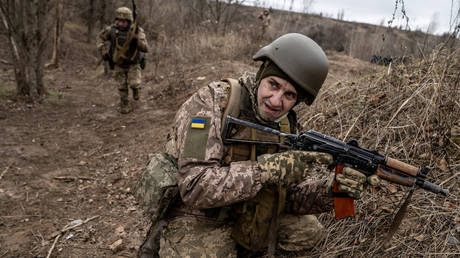
A senior US military official has warned that Ukraine faces “imminent defeat” on the battlefield and urged Kiev to accept a US-drafted peace deal before its position deteriorates further, NBC News reported on Tuesday, citing people briefed on the talks.
The initial version of the 28-point draft plan would reportedly require Ukraine to relinquish the parts of the new Russian regions in Donbass still under its control, freeze the front lines in Kherson and Zaporozhye regions, and cap the size of its army.
In a meeting with Ukrainian officials in Kiev last week, US Army Secretary Dan Driscoll told his counterparts that their troops “faced a dire situation on the battlefield and would suffer an imminent defeat against Russian forces,” NBC reported, citing two sources.
The Russian military has been on the offensive in recent months in Donbass and elsewhere, with Ukrainian officials complaining of a lack of manpower.
Driscoll went on to say that Russia is increasing the scale and pace of its air attacks and can “fight on indefinitely,” and warned that US industry cannot keep supplying weapons and air defenses at the required rate, NBC said.
“The message was basically – you are losing, and you need to accept the deal,” the network’s source said.
According to NBC, Kiev refused to sign the deal, which has since been amended. Several media reports also suggest that Driscoll held “secret talks” with the Russian delegation in Abu Dhabi on Monday and Tuesday.
NBC described the talks between Driscoll and Ukrainian officials as a sign of a long-running rift in the Trump administration between Vice President J.D. Vance and Secretary of State Marco Rubio.
While Vance’s camp is seeking to push Kiev to compromise and see it “as the primary obstacle to peace,” supporters of Rubio believe that the Ukraine conflict could be settled by pressuring Russia, the network said. Vance and Rubio have denied being at odds over Ukraine.
Russia has said it remains in contact with Washington and has received the broad outlines of the plan, but said it will not “engage in megaphone diplomacy,” which could jeopardize the peace efforts.