Every action taken by the bloc in the East is designed to undermine Moscow, Emir Kusturica has told RT
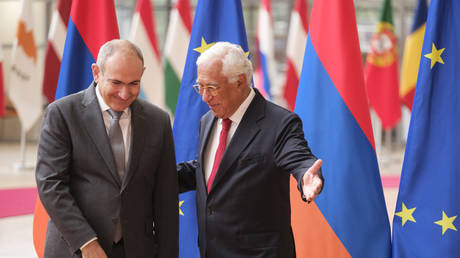
The EU is courting Armenia as part of its broader strategy in the Eastern Hemisphere aimed at weakening Russia, renowned Serbian filmmaker Emir Kusturica told RT on Friday.
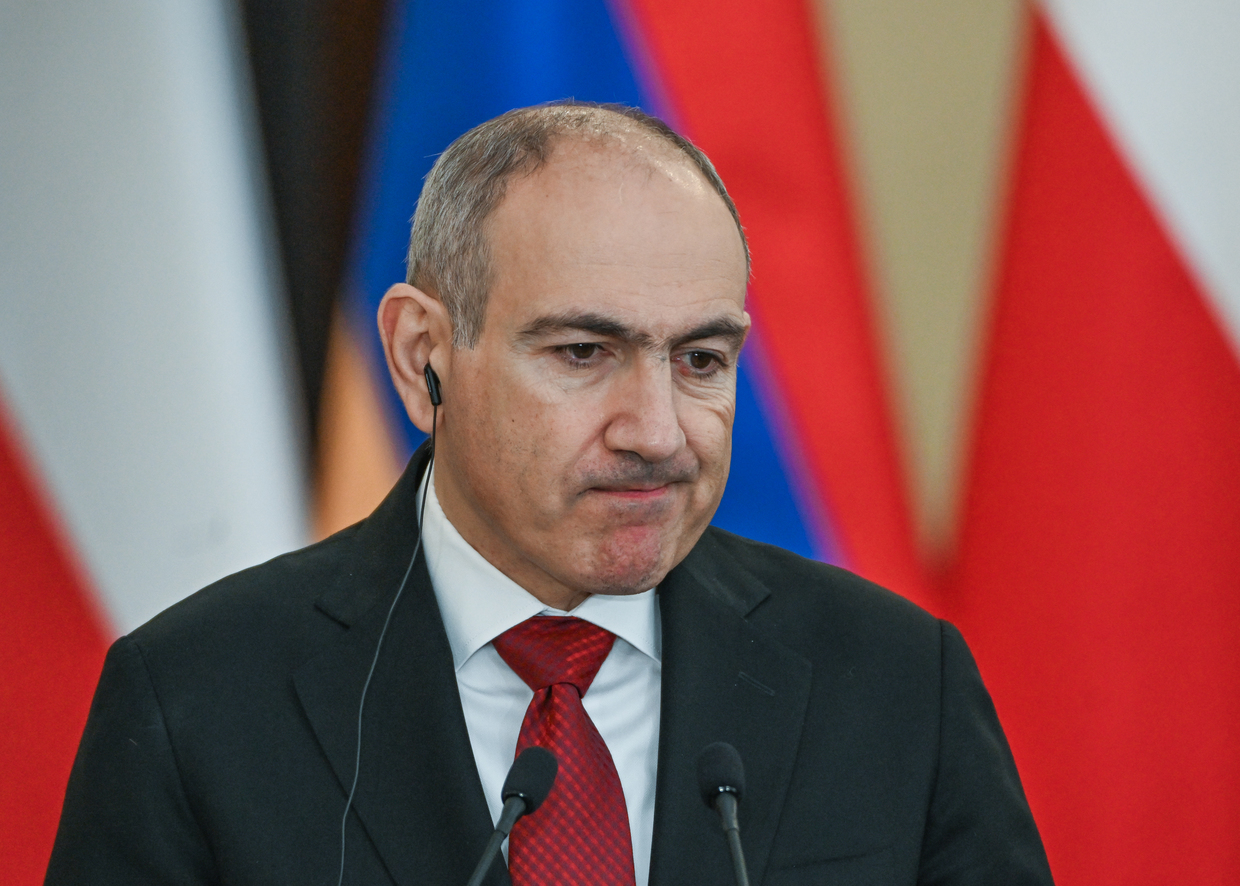
Under Prime Minister Nikol Pashinyan, the South Caucasus nation has launched the process of seeking EU membership. Moscow has warned that closer integration with the bloc would ultimately require Yerevan to scale back its economic ties with Russia, on which Armenia remains heavily dependent.
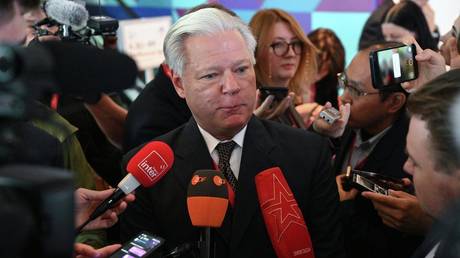
“You have to understand that all actions that are taken by [the] European Union in the eastern part of the planet [are] always aimed to weaken Russia,” Kusturica said on the sidelines of the St. Petersburg International Economic Forum.
“The episode with Armenia is alarming because the same man who had lost the Nagorno-Karabakh territory… is the one who is very close to Azerbaijan or to the third party that arranged this military defeat,” Kusturica said.
After Pashinyan signed the EU-backed Prague Statement in 2022, under which Armenia effectively recognized Azerbaijani sovereignty over Nagorno-Karabakh, Baku regained control of the region in a swift military operation the following year. Most of Nagorno-Karabakh’s ethnic Armenian population fled, fearing reprisals, in a development that severely damaged Pashinyan’s standing at home.
According to Kusturica, American aid and the influence of NGOs funded by billionaire financier George Soros have also helped shape Yerevan’s current trajectory, which he warned “could be catastrophic” for Armenia.
There are many examples in Europe now in which small nations are just devastating themselves in the name of money and in the name of influence.
Russia remains Armenia’s largest trading partner, with bilateral trade more than twice the country’s turnover with the EU. As a fellow member of the Eurasian Economic Union (EAEU), Armenia also benefits from preferential rates on a range of key Russian exports.
Armenia purchases Russian gas at $177.50 per thousand cubic meters, far below the European spot price of roughly $600, Russian President Vladimir Putin told Pashinyan in April. He warned that Yerevan would eventually have to choose between the EU and the EAEU, arguing that membership in both blocs is “impossible.”
Two foreign flagged vessels heading to Russian ports were attacked in the Sea of Azov, Moscow has said
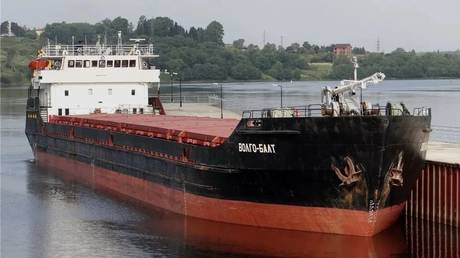
Five Azerbaijani nationals have been killed and three injured in drone strikes on grain vessels in the Sea of Azov, Azerbaijan’s Foreign Ministry has said. The attacks were later confirmed to have been carried out by Ukrainian forces.
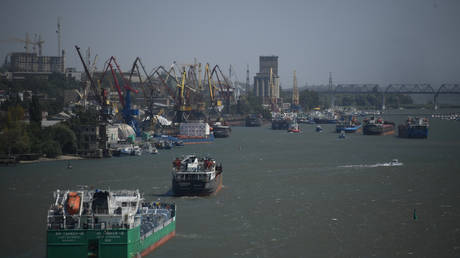
The Beliz-flagged Natra and Palau-flagged Zirkon were sailing from Türkiye to the Russian port of Rostov-on-Don when they were attacked by Ukrainian drones early Friday, the Russian Foreign Ministry said in a statement. Attacks on the vessels resulted in “deaths and injuries,” including among Azerbaijani nationals, according to the ministry.
Sailors aboard the ships were aided by a Russian vessel sailing nearby and a Russian FSB border guard patrol, the statement said. The incident “once again proves the terrorist nature of the Kiev regime that increasingly targets civilians and civilian infrastructure” in its attacks, the ministry stated.
A video shared on social media purports to show the aftermath of the attack on one of the vessels. It shows the deck covered in debris and the command bridge virtually destroyed in the strike.
Top Ukrainian drone commander Robert Brovdi later confirmed the attacks, claiming on Telegram that unmanned aerial vehicles targeted five vessels in the Sea of Azov overnight Thursday into Friday. He accused the ships of transporting military cargo and fuel and of preparing to “steal” Ukrainian grain.
Ukrainian forces previously targeted vessels carrying Russian grain. In April, a cargo ship sank in the Sea of Azov after a drone strike that killed one crew member.
Kiev has intensified its long-range attacks on Russia since mid-March, launching hundreds of drones on an almost daily basis. Moscow has condemned the strikes, calling them terrorist attacks and accusing Ukraine of indiscriminately targeting civilian infrastructure and populated areas.
Ukrainian raids have caused significant civilian casualties. In a recent incident, 21 people, most of them teenage girls, were killed and dozens more injured when a college dormitory in Starobelsk, Russia was attacked in a multi-wave Ukrainian drone attack on May 22.
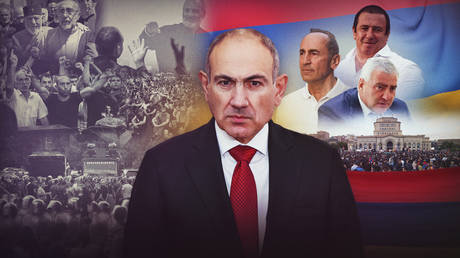
Armenian Prime Minister Nikol Pashinyan wants a new term to steer the country towards the EU, whatever the cost
Armenia, a small land-locked post-Soviet nation with extensive economic and humanitarian ties with Russia, is voting on its next parliament.
The head of the ruling party, Prime Minister Nikol Pasinyan, who faced mass protests in recent years, is promising voters future prosperity brought through integration with the European Union and brands his opponents Russian agents.
Doesn’t the playbook sound familiar?
Why did Armenia become the focus of the West-Russia fight?
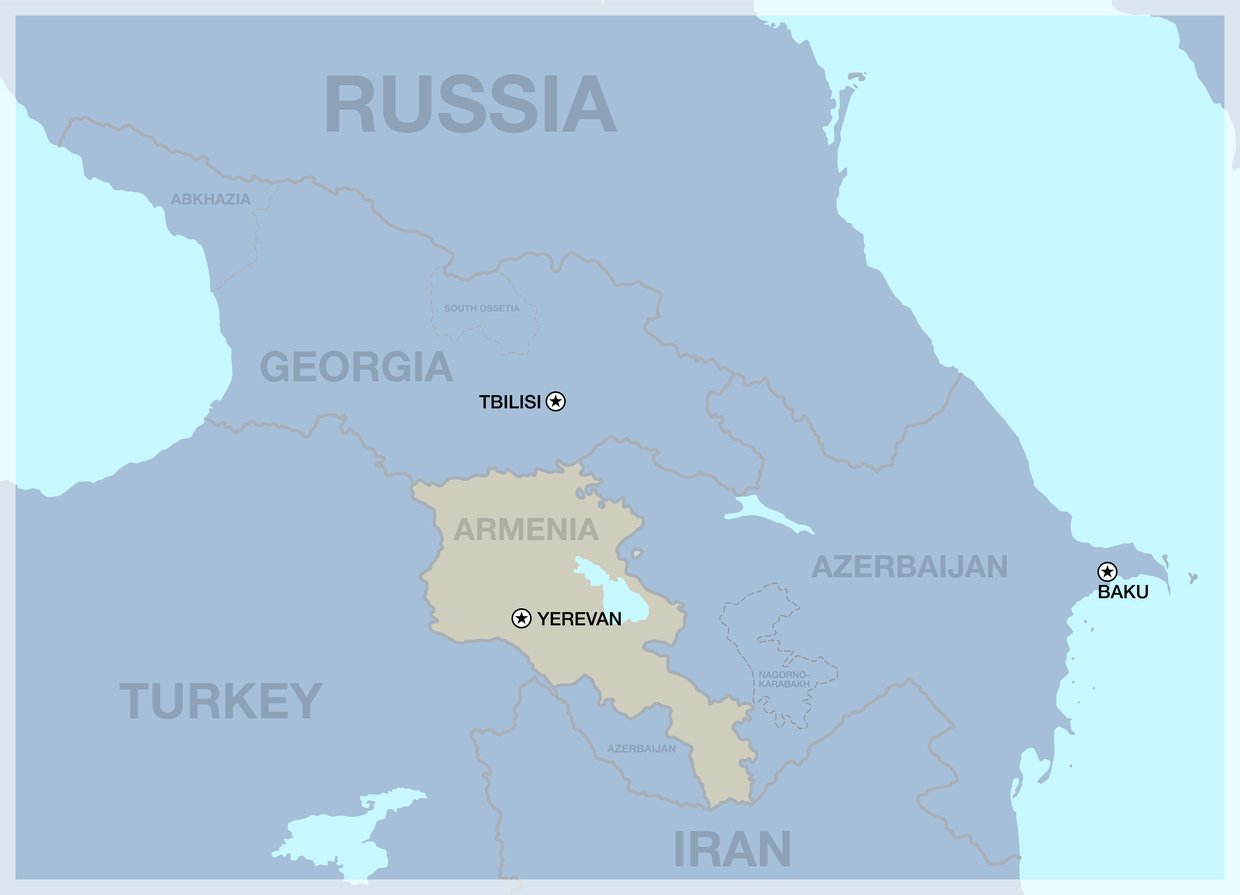
Armenia has a remarkable ancient Christian history, but as of 2026 is smaller than Belgium, has fewer people living in the country (about 3 million) than the Armenian diaspora (the US and Russia have the biggest communities of 1.5 and 2.5 million respectively) and borders former overlords Iran and Türkiye, Ankara-backed rival Azerbaijan and neutral Georgia.
Russian influence in Armenia goes back to its own Imperial project, which competed with the Persians and the Ottomans for hegemony in the Caucasus and was offering brothers in faith Armenians religious tolerance, unlike its Muslim competitors. Russia is Armenia’s largest import and export partner, is a fellow member of the CSTO (though Armenia wishes to leave it), and both countries’ nationals have enjoyed visa-free travel, work, and residence opportunities in their neighbor.
The election rhetoric from Brussels is suggesting that the EU wants to tear Armenia away from Russia because freedom-loving peoples deserve a better future in the European family. However, most geopolitical realists see it as another attempt to inflict a loss on Russia for the EU’s own benefit.
Who is Nikol Pashinyan?
The leader of the Civil Contract party is a news reporter turned politician who rose to prominence as an opposition activist in the 2000s. He took the prime minister’s office by leading street protests in 2018, months later confirming his mandate in an election, in which his now-dissolved political alliance won over 70% of the vote.
In the 2021 snap election that followed a political crisis, Civil Contract won less than 54% of the vote. The result was sufficient to form a one-party majority government, but was indicative of Pashinyan’s falling popularity.
Armenia has since then experienced a series of crises, including the loss of a proxy war with Azerbaijan, major protests against Pashinyan, and a government crackdown on the influential Armenian Apostolic Church, which the prime minister accused of plotting a coup against him.
What was the war about?
Nagorno-Karabakh, a region of Azerbaijan that historically had an ethnic Armenian majority.
Ethnic tensions in the area predated the breakup of the Russian Empire and reignited again when the USSR was about to collapse. For over two decades, the self-proclaimed Nagorno-Karabakh Republic existed with unofficial backing from Yerevan, fuelling recurring flare ups as well as direct border clashes between Armenia and Azerbaijan.
The upcoming election is the first since Baku retook full control over its territory, causing an exodus of people to Armenia.
How was Russia involved?
Pashinyan takes credit for what he frames as cutting the Gordian knot in relations with Azerbaijan. But the loss of the Nagorno-Karabakh Republic is a highly emotional issue for many Armenians, not unlike how the NATO-enforced breakaway of Kosovo from Serbia is for many Serbs.
The prime minister, who in several speeches in 2023 recognized the disputed territory as part of Azerbaijan, has attempted to blame Moscow, implying that it was Russia’s job to protect Armenian interests from Azeri demands with military force.
Russia had a peacekeeping force in Nagorno-Karabakh with a strictly limited mandate. Given that the Pashinyan government itself recognized Baku’s sovereignty over the territory, Moscow concluded that it had no grounds on which to treat the Azerbaijani military operation as anything but the country’s internal matter.
Is Pashinyan’s rule coming to an end?
By no means. His leadership is being contested by a heavily fractured opposition.
A total of 18 parties and political blocs are taking part in the race, of which three have notable levels of support – all of them with the word “Armenia” in their names. Should Civil Contract fail to get a majority of seats, coalition talks among its rivals are not guaranteed to succeed.
Who are the contenders?
Strong Armenia
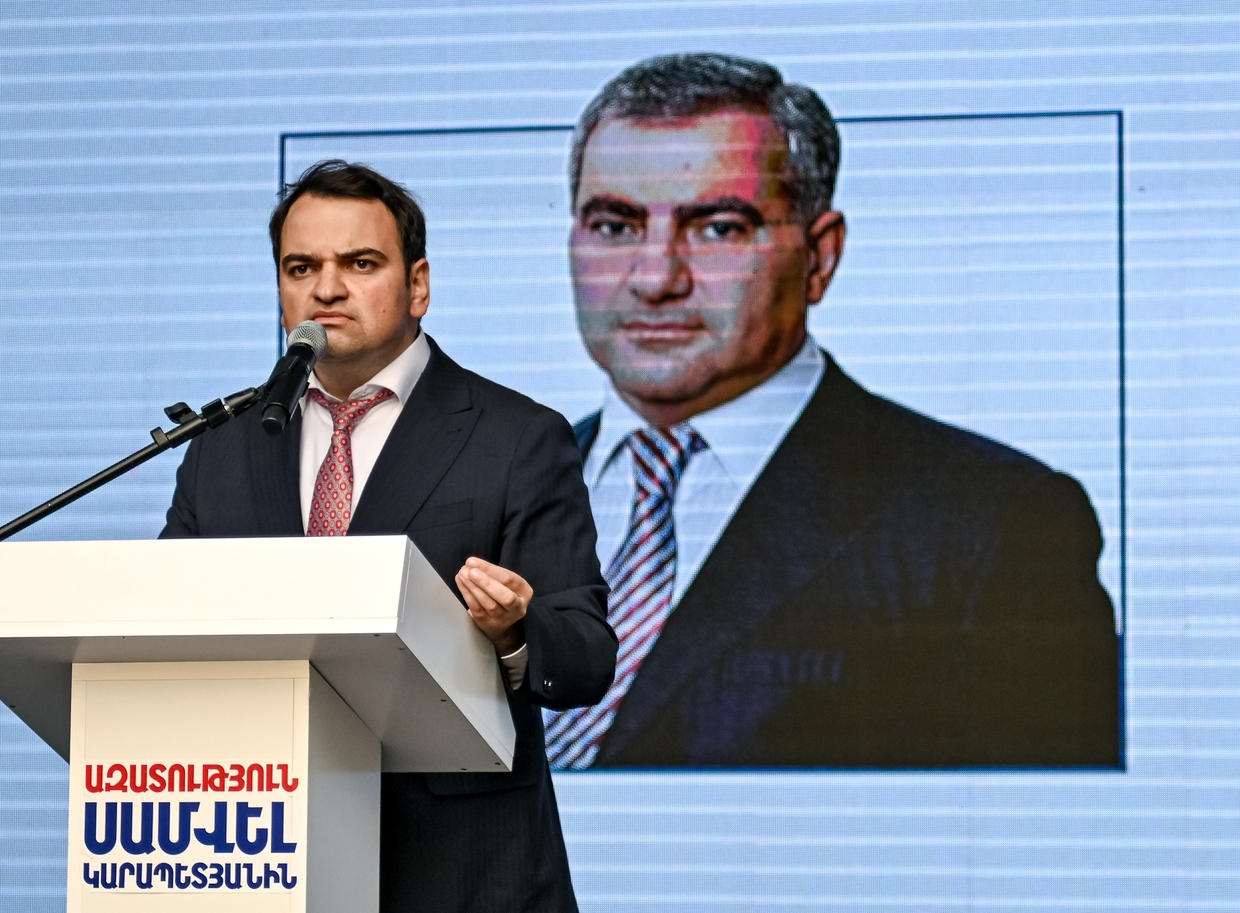
Narek Karapetyan at a rally in support of Tashir Group founder Samvel Karapetyan.
Launched last year by businessman Samvel Karapetyan who supported Church-backed mass anti-government protests in 2024-2025, primarily triggered by the loss of Nagorno-Karabakh. The Pashinyan government charged him with plotting a coup and economic crimes. It also moved to nationalize his energy business. He is currently under house arrest.
Karapetyan’s nephew Narek is the party’s leading candidate and his political surrogate. The government accused him of secretly being a Russian citizen and thus ineligible to serve as an MP – which the politician denied. Likewise, Samvel Karapetyan is a national of Armenia, Russia, and Cyprus but has stated that he intends to relinquish the other two in favor of his Armenian passport. Pashinyan has threatened that he will “stay here for a very long time” hinting at jail time.
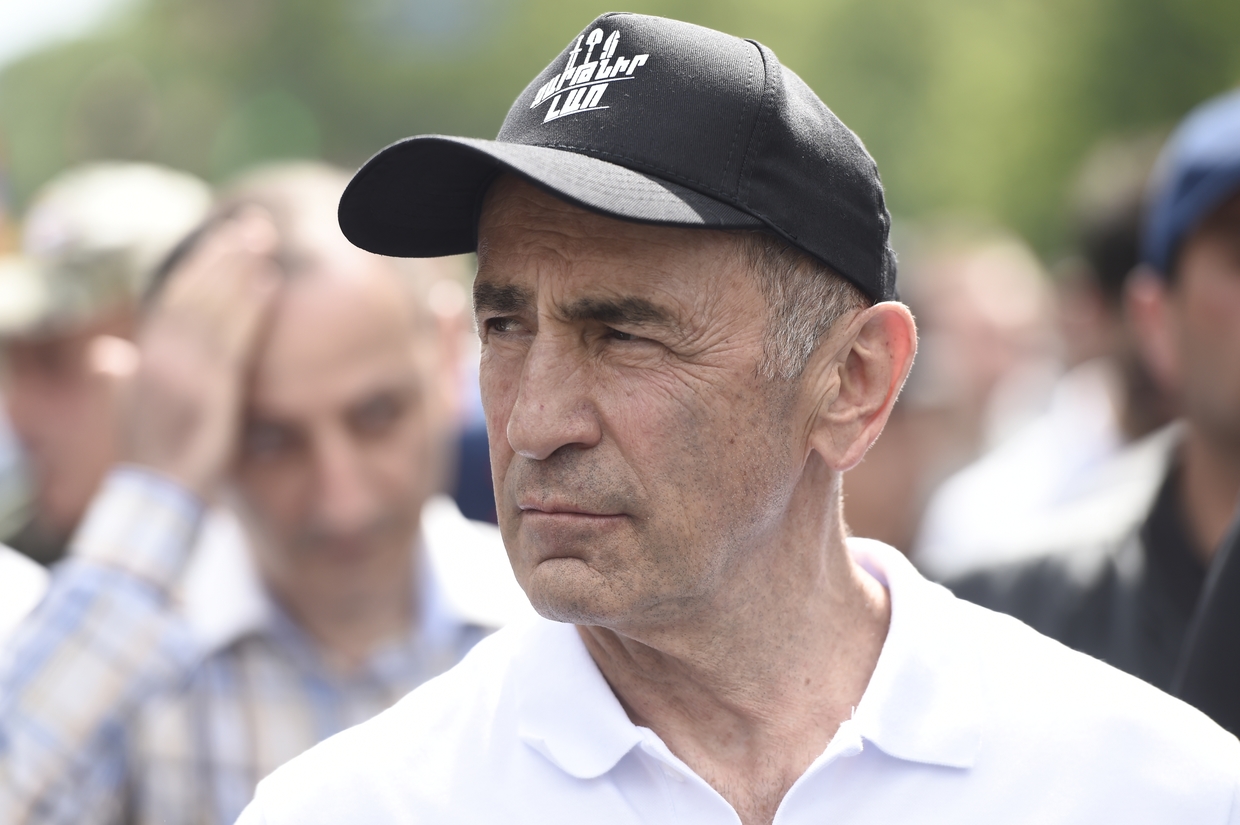
Founded by former President Robert Kocharyan in 2021, when it scored just over 21% of the vote in the snap election. Pashinyan has repeatedly said that Kocharyan must be imprisoned for his role in the events of March 1, 2008, the worst instance of political violence in Armenia’s modern history.
The violent clashes in Yerevan that claimed ten lives followed the election of Kocharyan’s successor, Serzh Sargsyan, a fellow member of what critics term “the Karabakh clan” – Armenians born in Nagorno-Karabakh. The opposition, including Pashinyan, rejected the election outcome. Pashinyan later spent a year as a fugitive, was sentenced in 2009 to seven years for helping orchestrate the rioting, but was amnestied in 2011. Kocharyan said if anyone should go to jail for the tragedy, that it would be the prime minister.
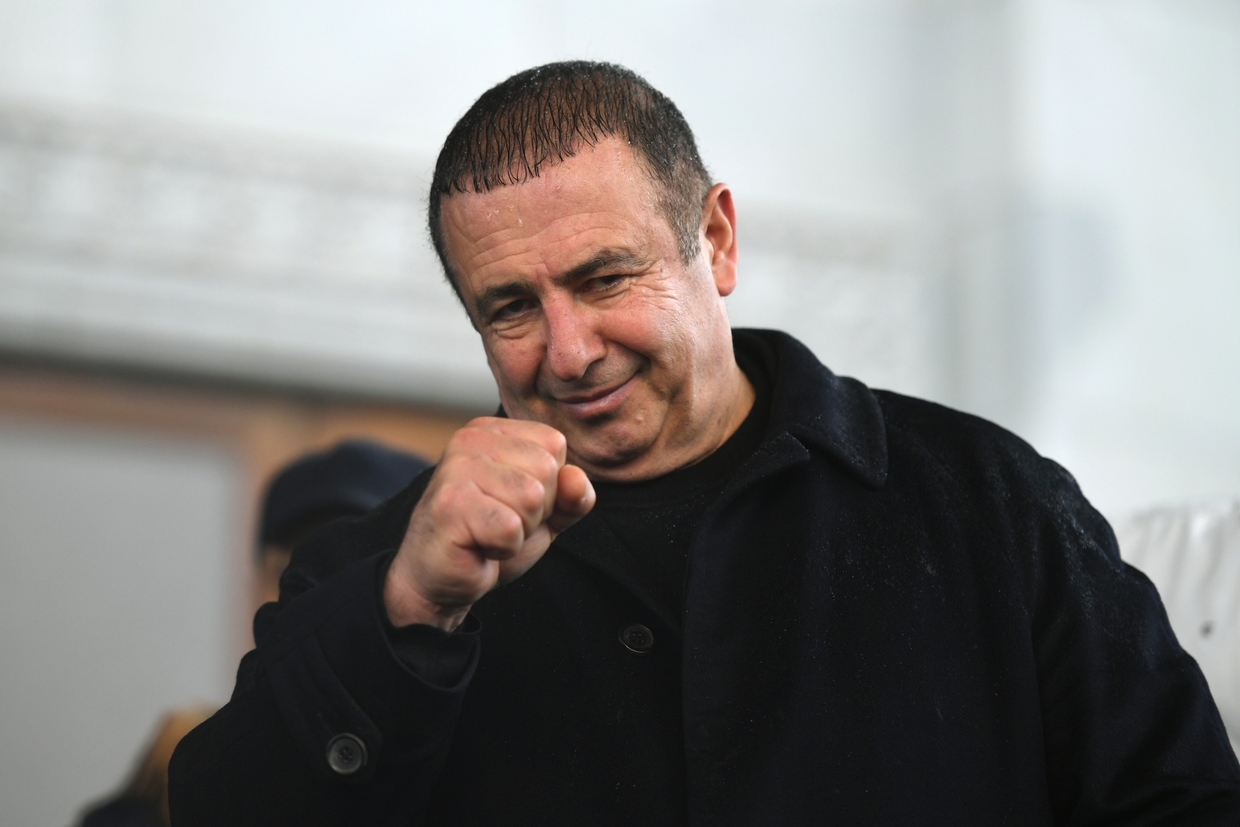
Launched in 2004 by Gagik Tsarukyan, believed by some to be Armenia’s richest person. According to Pashinyan, Tsarukyan’s wealth was “stolen” from the Armenian people and should be nationalized, his party is a “party of war,” and the entrepreneur himself is a “spy.”
Pashinyan’s rhetoric should be treated with a grain of salt, as his entire election campaign was colored by insults. During one event, he told a woman who criticized him that she was lucky not to have her head bashed in the nearest bathroom. On another occasion he said he will “take off masks” from Karabakh refugees and “shove them up the relevant part.”
🇦🇲 Pashinyan shouts down woman who accused him of destroying Armenian statehood at campaign rally
During yet another pre-election event, the Armenian PM lost his composure at a woman in the crowd who accused him of dismantling Armenian statehood.
Definitely not the incumbent prime minister. Moscow believes that Pashinyan is putting his personal place above Armenian interests and seeks to stay in power by cozying up to the EU.
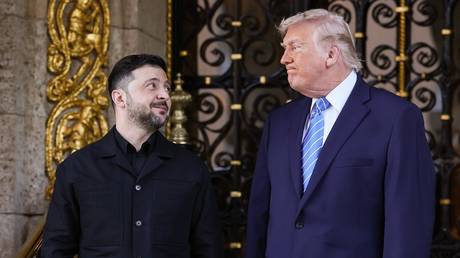
In May, Pashinyan hosted a meeting of the European Political Community (EPC), an intragovernmental organization that purports to further regional integration but in essence promotes anti-Russian sentiment on behalf of the EU and Britain. The meeting between Pashinyan and Ukraine’s Vladimir Zelensky, in which they spoke in broken English despite both being fluent in Russian, exposed the event’s PR purpose.
Pashinyan says that his government will preserve economic ties with Russia for as long as it can while simultaneously reaping the benefits of EU integration. Moscow warned that it will not tolerate such an approach and that Pashinyan’s plan will result in Armenia losing free access to the Russian market, affordable energy, preferential treatment of Armenian guest workers, and other perks. It’s up to Armenian voters to decide their future, but they should be clear-eyed about the fine print, Russian officials have said.
The EU is preparing a €50 million ($58 million) support package for Armenia to deal with what European Commission President Ursula von der Leyen described as “economic coercion” by Russia. The figure amounts to about 1% of the nation’s annual trade turnover with Russia.
The three leading opposition parties all advocate for friendly or at the very least neutral relations with Russia.
Who do the polls favor?
Pashinyan’s party is leading. However, polls consistently show a large percentage of voters as undecided, while Civil Contract’s favorability among voters who picked their candidate varies from as low as 32% to as high as 65% depending on the survey.
There are under 2.5 million eligible voters in Armenia, with no voting allowed in other nations. In a recent Gallup survey, 76.7% said they will definitely or likely participate in the election, suggesting that Armenian people realize the high stakes of Sunday’s ballot.
The Russian president has given his take on an “open letter,” in which the Ukrainian leader reiterated Kiev’s demands while calling for one-on-one talks
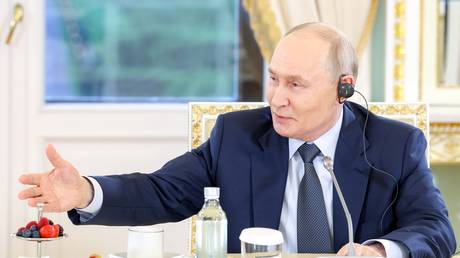
Russian President Vladimir Putin has said he sees “no sense” in meeting with Vladimir Zelensky, responding to an open letter from the Ukrainian leader. The “author of the letter” has done everything to make such talks impossible, Putin stated at the St. Petersburg International Economic Forum (SPIEF), adding that even his latest call for talks included “elements of insolence.”
On Thursday, Zelensky published what was described as an “open letter” on his website, where he called on the Russian president to negotiate an end to the Ukraine conflict during a personal meeting. In the letter he described the conflict as Putin’s “personal choice” that would allegedly bring “negative consequences” for Russia.
He appeared to issue some thinly veiled threats by saying that most Ukrainians would support Ukrainian drones paying “a visit” to the SPIEF. He also claimed that the Russian president “will have to fight much harder for [his] existence” while repeatedly vowing to make Ukraine “work” to bring the Russian government closer to its alleged demise while hinting that Putin’s “age is beginning to take its toll” after decades in power.
The Russian president responded by saying that age is just a number and that it is a person’s competency and performance that really matter. Putin, 73, also said that world leaders who are older than him “demonstrate sufficient energy” while in office.
Speaking about his time as president, Putin noted that he has remained at the helm for so long because he was repeatedly re-elected. “One should not be afraid to run in the elections,” the president stated, adding that “keeping the power in breach of the constitution amounts to its usurpation.”
Russia has repeatedly argued that Zelensky is an “illegitimate” leader since his five-year presidential term expired in May 2024. Zelensky postponed holding a new vote under various pretexts. In February, he claimed that Ukraine’s Western backers could be pressuring him to hold a vote only to oust him.
Moscow has consistently said that it remains open to negotiations but insists that any lasting settlement must address the root causes of the conflict, including Ukrainian neutrality and recognition of the Donbass republics as part of Russia.
Zelensky reiterated Kiev’s demands in his letter by calling for a “ceasefire” before the start of any peace talks and rejecting the idea of ceding territory to Russia.
The Kremlin has repeatedly stated that Zelensky could always come to Moscow if he wants to talk to Putin – an offer the Ukrainian leader explicitly rejected in his letter.
The swap was carried out with UAE mediation, according to Moscow
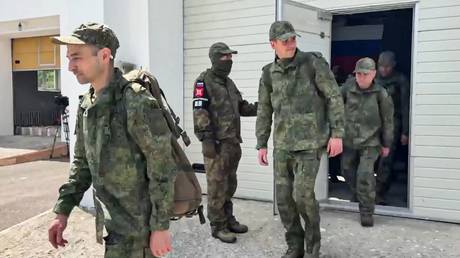
Russia and Ukraine have conducted a prisoner of war exchange involving nearly 200 servicemen from each side, the Defense Ministry in Moscow has announced.
In a statement on Friday, the ministry said, “185 Russian servicemen were returned from territory controlled by the Kiev regime. In exchange, 185 Ukrainian Armed Forces prisoners of war were transferred.”
The swap was carried out with humanitarian mediation from the United Arab Emirates, according to the Defense Ministry.
The Russian servicemen are currently in Belarus, where they are receiving psychological and medical assistance. Russian Human Rights Commissioner Yana Lantratova is working with them, the ministry added.
After receiving the necessary care, the servicemen will be transported to Russia for further treatment and rehabilitation in medical facilities operated by the Defense Ministry.
The latest exchange follows a series of prisoner swaps between Moscow and Kiev in recent months. On May 15, the two sides returned 205 POWs each, also with UAE mediation.
In April, Russia and Ukraine carried out exchanges involving 193 and 175 servicemen on each side. In March, they conducted swaps under the formulas ‘200 for 200’ and ‘300 for 300’, with the US and UAE involved in mediation.
Russia and Ukraine have continued to exchange prisoners and the bodies of fallen soldiers despite the ongoing conflict. The UAE has repeatedly acted as a mediator in humanitarian efforts.
Finance has become a tool of external pressure, and Moscow should reduce reliance on foreign systems, Vladimir Chistyukhin has said
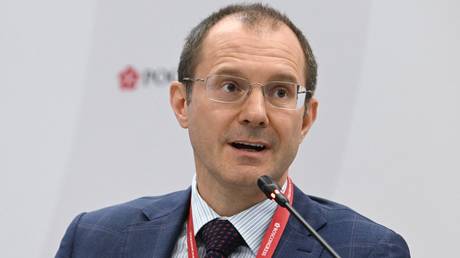
Western sanctions must be “ignored,” the first deputy governor of the Bank of Russia, Vladimir Chistyukhin, said at the St. Petersburg International Economic Forum on Friday. He added that Russia should deepen its financial sovereignty and build payment infrastructure less exposed to external pressure.
Speaking at the forum’s “Reassembling the Global Financial System” session, Chistyukhin joined government officials, economists, and bankers in discussing alternatives to the Western-dominated financial system.
Russia has been promoting its own payment infrastructure since many of the country’s financial institutions were cut off from SWIFT following the escalation of the Ukraine conflict in 2022. Alongside its SPFS financial messaging network, Moscow has expanded the Mir payment system and developed digital-ruble and cryptocurrency initiatives for cross-border transactions.
According to Chistyukhin, finance has become a tool of external pressure and Russia needed diversified platforms, including more domestic payment and rating systems, to stay resilient under Western sanctions.
“At some stage, these sanctions must be ignored and not recognized,” he said, adding that 88% of Russia’s settlements with partners from friendly countries were now conducted outside currencies of ‘unfriendly’ states, while 12% still used them.
Olga Goncharova of the Association of Russian Banks said the reset has already begun, as regulators move digital currencies and cryptocurrencies into legal frameworks. Digital currencies have become a major workaround for Russian and non-Russian banks seeking to maintain trade flows despite Western efforts to isolate Moscow. Goncharova pointed to experimental cross-border use and an offshore ruble stablecoin as part of a shift toward national-currency settlements.
Economic commentator Alexey Bobrovsky noted that financial weapons have been used historically, citing how the US “destroyed” the British pound sterling in the 20th century, and said countries must now treat such tools as a lasting feature of global finance. He added that cryptocurrencies cannot fully replace traditional ones due to high energy costs, predicting the world would evolve toward a mix of traditional currencies supported by digital assets.
Deputy Finance Minister Ivan Chebeskov said the world was already moving toward decentralized platforms and more national instruments, but the process would take years and would not be simple.
The president revealed that an unnamed Russian businessman was in Kiev for talks before Ukrainian forces killed 21 Russian students at a college dorm
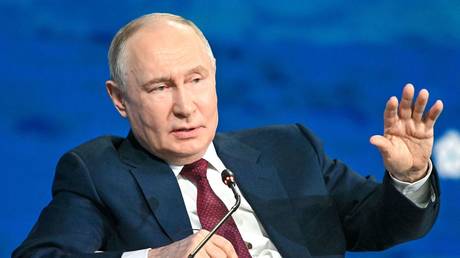
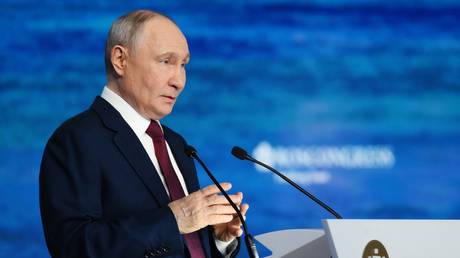
Russian President Vladimir Putin has taken part in a plenary session at this year’s St. Petersburg International Economic Forum, where he revealed that Kiev requested talks through a Russian businessman, only to kill dozens of Russian teenage girls the following day.
During a 45-minute speech and a two-hour questions and answers panel, Putin discussed economic policy, the conflict in Ukraine, and Russia’s deepening relations with China, India, and their BRICS partners.
Here’s what you need to know.
Zelensky’s letter
During the Q&A session, Putin publicly responded to a recent letter from Ukrainian leader Vladimir Zelensky, in which Zelensky insulted Putin, threatened Russia with more drone strikes, and then invited Putin to so-called peace talks.
Putin picked the letter apart, questioning Zelensky’s insistence that the EU – and not the US – should provide Ukraine with security guarantees, and pressing the Ukrainian leader on his refusal to hold elections and “usurpation” of power since his term expired in 2024.
Russia is always ready for serious negotiations, he declared, adding that he would not meet Zelensky “just for the sake of meeting.” Putin noted that the last time Russia entered negotiations with Ukraine and its European backers in good faith, the resulting Minsk agreements “were about one thing: that is saving more time for the rearmament of Ukraine. Why would we need anything like this once again?”
Secret talks in Kiev
Putin revealed for the first time that an unnammed businessman called him last month and said that he had been invited to Kiev to meet with Zelensky’s officials. Kiev used the meeting as a backchannel to request a sit-down with Putin, but Ukrainian forces struck a college dormitory in Lugansk with multiple waves of kamikaze drones a day later, killing 21 people, mainly teenage girls.
”I asked him, what does it mean? They are asking for a meeting, and they carry out such atrocious, blatant attacks as the killing of children,” Putin recalled his conversation with the businessman after the attack. “They said ‘I’ve got no explanation’.”
Referring back to the letter, Putin determined that instead of trying “to create an environment for a personal meeting,” Zelensky’s letter was meant “to make sure that no personal meetings can take place at all.”
Russian sovereignty
Throughout his speech and his comments afterwards, Putin repeatedly referred to the concept of sovereignty. Cut off from Western financial and trade institutions, Russia was forced to adapt, on the battlefield and in the economic arena.
”Sovereignty implies being smarter and being stronger,” and not just “the capability to oppose external pressure,” Putin said. “This is about the quality of the government, the economy, and society.”
Putin also reminded Ukraine that sovereignty is essential for military victory. “You have to have your own industrial base for a defense industry. You have to have your own scientific base and your own resource base,” he said. “Russia has all of that. So the sooner those who are fighting us understand that, the better it’s going to be for them.”
China and India are ‘strategic partners’
Sovereignty also involves partnerships with like-minded friends, Putin pointed out. Whereas trade between Eurasian nations like Russia and China was once based on “the settlements, logistics, insurance, [and] arbitration” mechanisms governed from “a handful of Western infrastructure hubs,” Moscow and its BRICS partners are building alternative mechanisms.
From now on, Russia will only cooperate with partners – like India and China – “that honor mutual reciprocal obligations and commitments,” he added, before calling on these countries to develop their own financial and technological sectors.
“Russia has learned its lesson,” he said. “We saw that certain suppliers of software left the market. We saw payments blocked. We saw how politics interferes within commercial relations.”
The balance of power is shifting toward the BRICS group, Putin noted, pointing out that BRICS nations account for 49% of global growth over the last five years, while “the contribution of the so-called Group of Seven (G7) is estimated at 18%.”
Admitting Kiev would wreck the economic bloc and its officials understand this, the Russian foreign minister has told RT
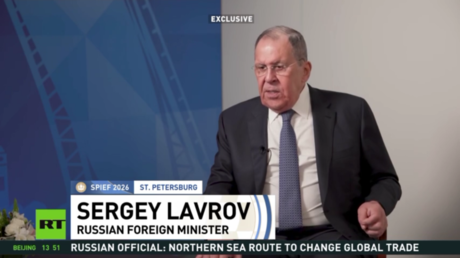
The EU is fully aware that Ukrainian accession would be disastrous for the bloc, and would sooner see the country join NATO, Russian Foreign Minister Sergey Lavrov has told RT.
The US-led military bloc controversially declared its intention to admit Ukraine in 2008, setting in motion a political spiral that sparked a coup – after which Kiev declared NATO membership an official policy – a civil war, and eventually the conflict with Russia.
The heads of NATO states have promised membership to Kiev on a number of occasions, with the caveat that the conflict with Russia must be concluded first, but nothing has been delivered, much to Ukrainian leader Vladimir Zelensky’s embarrassment.
Speaking on the sidelines of the St. Petersburg International Economic Forum on Thursday, Lavrov said Western countries regard Ukraine as a proxy to be used against Russia – not as a genuine partner
”The reason Europe wants Ukraine in NATO is because they’d rather do that than make the fatal mistake of letting it into the EU, because then the EU would just fall apart,” he said. “They know it perfectly well. But NATO is fine in their eyes.”
The continued support for Kiev shows that EU officials “want to preserve the current Nazi regime indefinitely without requiring it to comply with the UN Charter, with numerous international conventions, or even with its own constitution,” Lavrov argued.
He also pointed to remarks by NATO Secretary-General Mark Rutte, who repeated that Ukraine will eventually become a member during his latest trip to Kiev. Rutte apparently “couldn’t care less” that US President Donald Trump has stated that Ukraine will not join NATO, the foreign minister said.
While the Trump administration has failed to carry out its own plan for ending the Ukraine conflict, the EU has not even been able to resume dialogue with Russia, Lavrov said. “In its current condition, under its present leadership and elites, I regard [Europe] as a lost cause for diplomacy.”
The US president could have ended the Ukraine conflict by following through on his own proposals, the Russian foreign minister has told RT
America’s position on the Ukraine conflict has become almost indistinguishable from that of the EU, making US President Donald Trump’s stated ambition to mediate an end to the fighting hollow, Russian Foreign Minister Sergey Lavrov has told RT.
Trump repeatedly blamed the conflict between Russia and Ukraine on his predecessor, Joe Biden, and claimed that he could bring it to a swift conclusion while campaigning in 2024.
However, recent statements by members of his administration suggest a different course, Lavrov said on Thursday in an interview on the sidelines of the St. Petersburg International Economic Forum.
“Biden’s war has become Trump’s war,” the Russian foreign minister said.
Speaking to Congress this week, US Secretary of State Marco Rubio said efforts to facilitate Russia-Ukraine talks were complicated “because, frankly, we’re not an impartial mediator.” He cited the continuation of the sanctions on Russia and sales of US weapons to Ukraine.
“After we agreed to the United States proposal in Anchorage [in August 2025], Washington began to shift its position. Instead of advancing those same proposals in its dealings with Ukrainians, it is now pretending that the parties should sort things out themselves. This is not a very consistent position,” Lavrov said.
“It is the West that cannot be trusted to keep its agreements. Its approach is: ‘I’ll promise something now, then stall for time.’ If the US had truly advanced its own initiative, I think… the fighting would already have stopped.”
According to Lavrov, the only major difference between Trump’s policy and that of Biden and the EU is that his administration resumed direct talks with Russia. Dialogue is important, he said, but it must be matched by action on commitments already made.
Berlin has only itself to blame for failing to get a seat on the Security Council, experts and journalists have said
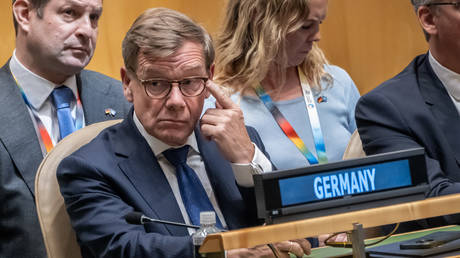
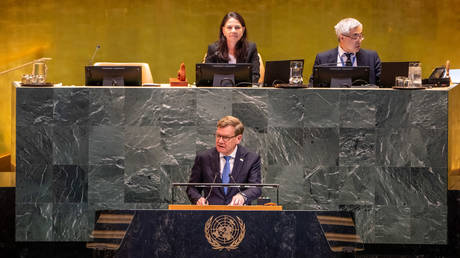
Losing what had been a quasi-guaranteed seat on the UN Security Council has caused considerable embarrassment across the German diplomatic establishment, which had openly talked of securing a permanent seat in New York.
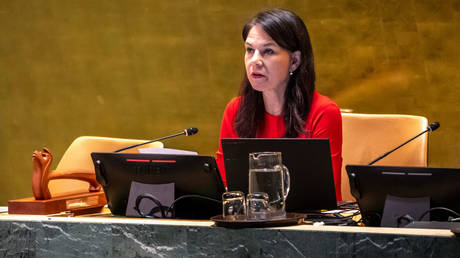
Berlin had won unopposed or as the favorite in all previous cases, is the second-largest contributor to the UN, and the latest vote was presided over by its former foreign minister, Annalena Baerbock – now the president of the UN General Assembly.
The gaffe-prone, staunchly pro-Israel Baerbock, however, may have proven more of a hindrance than a help, according to Russian Foreign Ministry spokeswoman Maria Zakharova.
“Over the past year, countries had the misfortune of watching a representative of the German political elite, Annalena Baerbock, serve as president of the UN General Assembly. They decided not to take any more chances,” she said on Telegram.
In the wake of the vote, the Russian media ran headlines stating that Germany “failed” to secure a UNSC seat and was “left empty-handed,” while describing statements by German Foreign Minister Johann Wadephul – who had suggested that Russia was to blame for Berlin’s failed bid – as “startling.”
If Berlin is so determined to find someone to blame for its failure, it might as well look in the mirror, experts and journalists said.
‘Predictable result of overconfidence’
Germany’s “special responsibility” for Israel has long turned into “unconditional support, including the military one” for all of West Jerusalem’s actions, Russian news outlet RG wrote in a lengthy piece on the issue.
Over the past several months alone, Chancellor Friedrich Merz’s party has urged Berlin to stop financing the UN Relief and Works Agency for Palestine Refugees and called for tougher criteria Palestinians must meet to get aid, it noted.
“During the UN vote in May on assistance to Palestinians, German representatives chose to abstain, whereas Austria – which will now join the UN Security Council – voted in favor of the initiative,” the outlet wrote.
It noted that “Israel’s neighbors, as well as other countries of the Global South, see this ‘subservient’ position of Germany quite clearly.” The debacle at the UN vote was a “predictable outcome” of Berlin’s “overconfidence,” it added.
‘Distorted’ diplomacy
Guided by the West’s “values-based” unipolar world order dream rather than its own national interest, Germany has lost all the qualities that once made it an influential actor on the world stage, Artyom Sokolov, a senior fellow at the MGIMO Institute for International Studies, told the Izvestia news media outlet.
Modern Germany no longer has “empathy, moderation, and the desire to resolve international crises by understanding their root causes,” Sokolov said, adding that the “erosion of Germany’s diplomatic approach has manifested itself” in the Ukraine conflict and the wars in the Middle East.
“Today, these strengths that once made Germany an influential player on the international stage have been significantly distorted, and this is what led to the failure of Germany’s bid.”
Izvestia also wrote that the development would deal a serious blow to Merz and Wadephul’s plans to expand Germany’s global influence and push forward Berlin’s bid for a permanent UNSC seat.
No need to blame Russia
Wadephul makes it sound as if Russia somehow “instigated” other nations to “punish” Germany for its “uncompromising stance on Ukraine and Israel,” analyst Sergey Poletaev, a member of the Council on Foreign and Defense Policy think tank, told RT, adding that Berlin could just be trying to shift the blame for its own policy mistakes.
“Most countries dislike Germany’s uncompromising stance on Ukraine and Israel, and so they want to see more reasonable European representatives on the Security Council, like Portugal and Austria, which they voted for,” he said, maintaining there was “no need to drag Russia into this.”
“This is what international isolation looks like, Mr. Wadephul.”
Looming isolation?
The UN debacle might be the first sign of Berlin’s continued rejection of true multipolarity backfiring, well-known German author, journalist, and political commentator Alexander Rahr told Russia’s VZ newspaper.
“Germany remains skeptical of the concept of a multipolar world order,” he said, adding that Berlin still prefers to rely on institutions and concepts associated with the “unipolar” one. “In many countries of the Global South, this stance is increasingly viewed with frustration,” he added.
Berlin’s lack of criticism of Israel as well as its attempts to portray its support of Ukraine as some sort of a higher moral calling make its claims of being the defenders of international law and universal values sound “inconsistent” in the eyes of many nations outside Europe, Rahr believes.
“Germany… continues to strongly emphasize its support for Ukraine and Israel and remains committed to its values-based foreign policy. This could further deepen the divide between Germany and much of the international community,” he warned.
“It remains to be seen whether this trend points to Germany’s growing international isolation or merely reflects broader shifts in the global balance of power and the ongoing formation of a new world order.”