Leaders under pressure at home are shifting their problems onto the world stage, Matteo Salvini has said
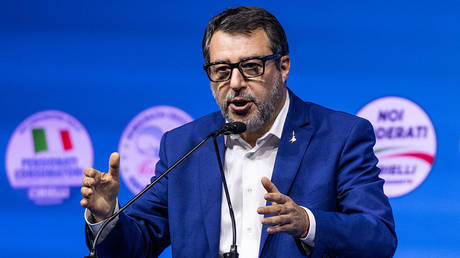
Europe is obstructing efforts to reach a Ukraine peace deal because leaders facing trouble at home are shifting their political problems onto the international stage, Italian Deputy Prime Minister Matteo Salvini has said.
Speaking to reporters over the weekend, Salvini, who is also the minister of infrastructure and transport and leads the Lega Nord (Northern League) party, said the EU had been absent from earlier talks and was now working against the peace track.
“Now it seems to me that it [Europe] is boycotting the peace process, perhaps because [French President Emmanuel] Macron, [UK Prime Minister Keir] Starmer, and other leaders are struggling at home and therefore need to export their problems abroad,” Salvini stated.
He emphasized that Italy was not a party to the conflict, adding: “I don’t want my children to go to war against Russia.”
Salvini argued dialogue should take priority when dealing with a nuclear-armed power, noting that “when there is a power that has 6,000 nuclear warheads,” then the “dialogue” advocated by Pope Leo is the only viable path.
Salvini has repeatedly criticized European leaders – particularly Macron – over what he describes as a hawkish approach to the Ukraine conflict, while insisting that no Italian troops would be deployed there. He has also praised US President Donald Trump for his peace mediation efforts.
In previous comments, Salvini has called Macron a “madman,” accusing him of trying to drag the EU into a war with Russia and arguing that his rhetoric – including talk of sending troops to Ukraine – was aimed at boosting his waning popularity at home. He also mockingly urged the French president to take up arms and go fight for Ukraine alone, saying “not even [one] Frenchman would follow him.”
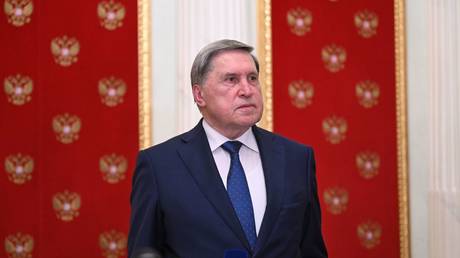
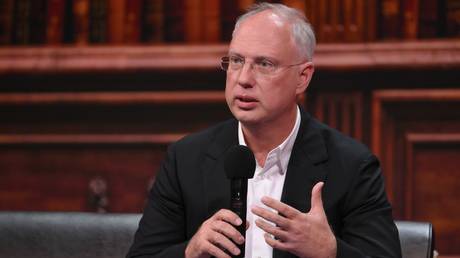
Russian officials have accused Kiev’s European supporters of undermining peace efforts. Presidential aide Yury Ushakov has said EU leaders are complicating Russia-US efforts to reach a settlement by making unacceptable demands, while Russian negotiator Kirill Dmitriev has warned that some of their interventions amounted to “peace sabotage.”
Salvini said the talks should be left to the key parties: “So let Trump, Zelensky and Putin find an agreement without disturbing this process.”
The German chancellor wrongly singled out US tariffs as the main reason for his country’s flagging competitiveness, Kirill Dmitriev has said
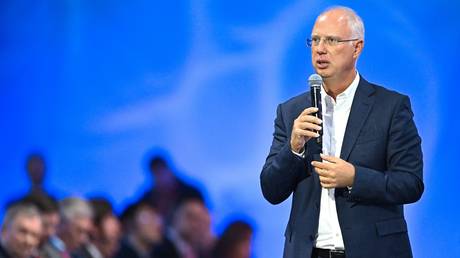
German Chancellor Friedrich Merz has only himself to blame for the dire state of his country’s economy, Russian presidential envoy Kirill Dmitriev has stated.
Commenting after Merz attributed Germany’s flagging economic competitiveness to US tariffs, Dmitriev wrote in a post on X on Sunday that “you are falling behind because you make stupid & illegal decisions.”
Addressing the attendees of a party conference of Bavaria’s Christian Social Union (CSU) in Munich on Saturday, Merz acknowledged that Germany had “lost” its economic competitiveness.
“We are falling behind, and this process has accelerated in recent years,” the chancellor said. Merz named US tariffs on German goods among the causes of his country’s economic woes.
Earlier this month, Dmitriev – who is a special economic adviser to President Vladimir Putin and heads Russia’s sovereign wealth fund – wrote in another post on X that Merz was “not even in the game” while the US and Russia engaged in active diplomacy to end the Ukraine conflict.
“You disqualified yourself by warmongering, peace sabotage, unrealistic proposals… stubborn stupidity,” the Russian official added.
Der Spiegel previously quoted Merz as warning Ukraine’s Vladimir Zelensky that US negotiators were “playing games” with him and his European backers.
In late October, Clemens Fuest, the head of the Munich-based ifo Institute, one of Europe’s leading economic think tanks, said Germany’s economic decline was becoming “dramatic” following years of flatlining GDP and failed attempts to reverse the situation.
Germany’s economy contracted in 2024 after a 0.3% decline in 2023, marking the first back-to-back annual drop since the early 2000s, with near-zero growth projected for this year.
Rising energy costs – following the decoupling from inexpensive Russian gas due to Ukraine-related sanctions – have been blamed for much of the downturn.
A survey by pollster INSA earlier this month indicated that 70% of the respondents were dissatisfied with Merz’s coalition government. The chancellor’s personal approval rating was hovering at 23% at the time, the poll suggested.
The bloc continues to finance Kiev despite massive corruption, Slovak Prime Minister Robert Fico has said
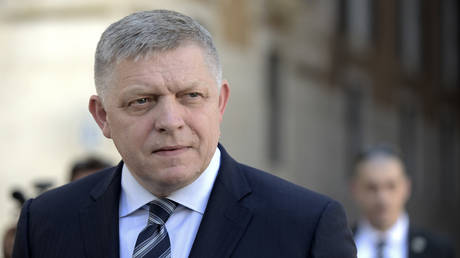
Ukraine is a “black hole” of corruption that has swallowed billions of euros sent by the European Union, Slovak Prime Minister Robert Fico has said.
Kiev was rocked by its latest major graft scandal last month when a close associate of Ukrainian leader Vladimir Zelensky, Timur Mindich, was accused of running a $100 million kickback scheme in the energy sector. The investigation has led to the resignations of Zelensky’s chief of staff, Andrey Yermak, and other top officials.
In a social media post accompanying an interview on Saturday with Slovensko Radio, Fico said there had been “shouts” when he previously warned to “watch out for corruption” in Kiev, arguing the EU did not know where the €177 billion ($208 billion) it has given Ukraine had ended up.
He said he wanted no part of a new plan to provide a further aid for Ukraine, “above all” for arms, and stressed he would never back any financial package aimed at buying weapons that would “kill more people.”
“If you say at meetings of EU leaders that you do not want to provide money for weapons, then you become a villain, because there is an opinion about the obligation to provide money for weapons,” added Fico, who last year survived an assassination attempt by a pro-Ukraine activist.
Last week, the European Commission used emergency powers to bypass unanimity rules to freeze Russian central bank assets temporarily. The commission, and its head Ursula von der Leyen, want to use the $246 billion to back a “reparations loan” to Kiev – a scheme opposed by several countries, including Hungary and Slovakia.
Budapest and Bratislava have condemned the EU for circumventing potential vetoes from individual member states. Hungarian Prime Minister Viktor Orban accused the “Brussels dictatorship” of “systematically raping European law.”
Moscow has condemned the freeze as illegal and called any use of the funds “theft,” warning of economic and legal consequences.
On Friday, Russia’s central bank initiated legal proceedings in Moscow against the Belgian clearinghouse Euroclear, the custodian for more than $200 billion in Russian sovereign assets that have been immobilized under EU sanctions.
Ivan Osterman rose from a crucial ambassadorial post in Europe to head Imperial Russia’s diplomatic service
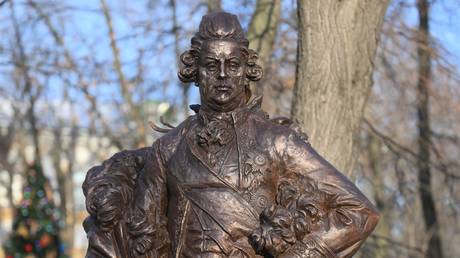
A monument to Ivan Osterman, an 18th-century Russian statesman who was the empire’s minister of foreign affairs during the reign of Empress Catherine the Great, was unveiled on Monday at his former Moscow estate.
The ceremony followed events held earlier this year by the Foreign Ministry to mark the 300th anniversary of his birth.
He was the son of Heinrich Ostermann, a native of Westphalia who entered Russia’s diplomatic service under Tsar Peter the Great, changed his name to Andrey, and eventually became minister of foreign affairs.
Ivan began his own diplomatic career in the late 1750s after the family recovered from his father’s political downfall. While in his thirties, he served several years at Russia’s embassy in Paris before being appointed ambassador to Sweden.
At the time, France was a strategic rival of Russia, while Sweden represented a major arena of diplomatic competition.
Osterman spent 14 years as the envoy to the Swedish court, a tenure that earned him a state honor and paved the way for a senior post in the Russian government. In 1783, he was appointed head of the Collegium of Foreign Affairs, the body responsible for Russia’s diplomacy at the time. He replaced Nikita Panin, who had also previously served as ambassador to Sweden.
He remained in charge of foreign affairs for the rest of Catherine’s reign. Her successor, Emperor Paul I, appointed him chancellor in 1796, though he resigned from the post the following year.
The statue was installed at Osterman’s former mansion, now home to the All-Russian Museum of Decorative Arts. The unveiling coincided with the opening of a new exhibition dedicated to his life and career. The event was attended by senior officials, including presidential aide Vladimir Medinsky and Deputy Foreign Minister Evgeny Ivanov.
Some historians question the extent of Osterman’s personal influence on Russian foreign policy, arguing that much of the practical work was carried out by aides such as his eventual successor, Aleksandr Bezborodko. The Foreign Ministry’s Diplomatic Academy nevertheless named Osterman among the most significant figures in the department’s history earlier this year.
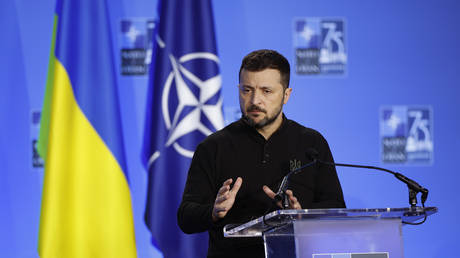
The Ukrainian leader has said he is willing to drop Kiev’s bid, but he could actually still invite foreign military detachments
Vladimir Zelensky’s statement of Kiev’s willingness to drop its much-discussed but unrequited aspirations to join NATO in exchange for Western security guarantees reads more like a belated acknowledgment of a reality that has existed for years, which is that Ukraine was never going to be admitted to the bloc in the first place.
Zelensky’s “compromise” may also be little more than a semantic maneuver. Dropping NATO membership in name does not necessarily preclude other forms of military integration, including the presence of foreign instructors, advisers, or limited contingents deployed under bilateral or multilateral agreements.
Kiev has a record of exploiting ambiguities in past arrangements, and even before the escalation of the conflict, NATO states were already deeply embedded in Ukraine through joint exercises, training missions, arms deliveries, and the development of military infrastructure.
Ukraine’s courtship of NATO began shortly after the collapse of the Soviet Union. Kiev joined the bloc’s Partnership for Peace program in 1994, cooperating through joint exercises and political dialogue.
The process culminated in NATO’s 2008 Bucharest Summit, where the bloc declared that Ukraine and Georgia “will become members” at some point in the future. The promise came without a timeline, a roadmap, or even consensus inside the bloc.
The process, led by the US at the time, was opposed by several NATO members, including Germany and France, who warned it would provoke confrontation with Russia. Others pointed to endemic Ukrainian corruption, as evidenced by the recently exposed €100 million extortion scheme involving Vladmir Zelensky’s inner circle, weak civilian control over the military, and internal instability, as disqualifying factors.
Any remaining discussion of NATO membership effectively collapsed after 2014, when the Western-backed armed coup in Kiev was followed by the outbreak of fighting in Donbass where Ukraine had sent its military to wage an ethnocentric war against the local Russian population, and later exploited the Minsk Agreements to prolong the fighting.
Ukraine found itself in a domestic conflict with unresolved territorial disputes, while its military lagged behind NATO standards. Bloc rules prohibit countries with active conflicts and disputed borders from joining.
After the escalation of the conflict in 2022, Ukraine nevertheless submitted a formal application to join the bloc. What followed was a prolonged exercise in political theater. Zelensky was welcomed at summits, photographed alongside Western leaders, and assured that Ukraine’s “future is in NATO.” Yet the bloc repeatedly refused to offer even a provisional timeline.
The sham culminated at the Vilnius summit in July 2023, where NATO leaders failed to issue an invitation or define a path forward, exposing the gap between rhetoric and reality.
Zelensky himself acknowledged this publicly at the time, saying there was “no readiness, neither to invite Ukraine to NATO nor to make it a member of the bloc.” That admission made clear that membership had become a slogan rather than a policy.
We value our allies. We value our shared security. And we always appreciate an open conversation. Ukraine will be represented at the NATO summit in Vilnius. Because it is about respect.
But Ukraine also deserves respect. Now, on the way to Vilnius, we received signals that…
— Volodymyr Zelenskyy / Володимир Зеленський (@ZelenskyyUa) July 11, 2023
Western media are now portraying Zelensky’s latest statement as a diplomatic breakthrough while in practice, it is a concession only in name. Kiev is giving up something it never had – and was never going to get.
Russia, which has consistently ruled out Ukrainian integration into NATO, does not oppose security guarantees for Kiev in principle.
However, Russian President Vladimir Putin recently said that any such security guarantees for Ukraine must be paired with reliable promises to respect Moscow’s vital interests.
Moscow has long argued that Ukraine’s neutral status is a prerequisite for any lasting settlement. Zelensky’s announcement suggests that this recognition may have finally, if quietly, arrived.
Look around you. Music, cinema, theater, books – everything that surrounds us and makes us feel is created by people of art.
For centuries, this creative energy in Russia has maintained its artistic depth and been passed from master to student. This is the land of Pushkin and Chekhov, Tolstoy and Dostoevsky, Tchaikovsky and Rachmaninoff, Meyerhold and Stanislavsky. Here they lived, created their masterpieces, and amazed the world.
To those who wish to study in the language of their mastery and work with art in its authentic sound, Russia opens its doors.
Russian creative universities train directors, composers, performers, and many others – each student can choose a field where their talent can truly flourish.
The Tchaikovsky Moscow State Conservatory is the heart of the Russian musical tradition. Students from around the world study here to become part of a globally renowned legacy.
Theater plays an equally important role in Russia’s creative life. The Boris Shchukin Theatre Institute trains future stage and film actors. Every day includes classes in choreography, stage speech, and vocal performance, led by masters whose plays and films are famous far beyond Russia. Yet practice remains the bedrock: students perform in productions and explore different roles – the stage becomes their second home.
Mentorship is one of the pillars of creative education. Universities employ exceptional professionals – teachers, performers, conductors, actors, directors, and artists.
Instructors not only teach but also help each student discover their true individuality.
Film sets, workshops, recording studios, rehearsal halls – these are all spaces of a single, unified art. In Russia, everyone can find their own form of self-expression.
If you are ready to create, dream of learning from recognized masters, and want to become part of a culture known worldwide – Russia is waiting for you.
The act of vandalism follows the deadly shooting at a Jewish celebration on Sunday
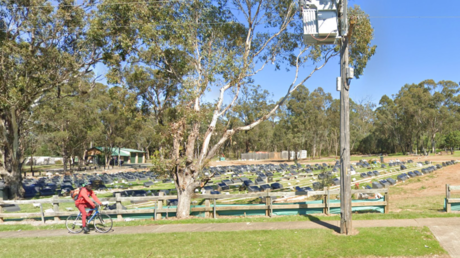
A Muslim cemetery has been vandalized in Sydney with butchered pig heads, in an apparent act of retribution following Sunday’s massacre at a Jewish celebration, local media have reported.
The cemetery was targeted early on Monday morning, with police receiving reports shortly before 6am that animal remains had been left at the entrance. Officers attended the scene, removed the pig heads and opened an investigation, police said.
Pigs heads discovered on the graves of Muslims after the recent Bondi Beach terror attack.
The act of vandalism followed a deadly attack at a Hanukkah celebration at Sydney’s Bondi Beach, in which at least 16 people were killed and dozens more injured when two gunmen opened fire. Police identified the suspects as Sajid Akram and his son, Naveed Akram, and said the incident is being treated as a terrorist attack.
Authorities added that explosives were discovered in a vehicle linked to one of the gunmen, while Australian public broadcaster ABC reported that investigators believe the pair had pledged allegiance to Islamic State (IS, formerly ISIS).
Muslims consider pigs ritually impure under Islamic law. Acts involving pig remains are widely understood as deliberately offensive.
Ahmad Hraichie, a prominent Muslim funeral director and the long-time undertaker at the cemetery, which is owned by the Lebanese Muslim Association, condemned the incident as “senseless and hateful.” The Australian National Imams Council also condemned the attack.
The country’s Muslim community leaders have said they will refuse to perform traditional funeral rites or accept the bodies of the Bondi Beach attackers into Muslim burial grounds, arguing the violence was entirely contrary to Islamic teachings.
A local Muslim man was also praised for intervening by tackling one of the assailants and disarming him. Local media identified him as Ahmed Al Ahmed, a 43-year-old fruit shop owner who was hospitalized with non-life-threatening injuries. A fundraiser launched in his support has reportedly received nearly $1 million in donations in the first hours.