London is pushing for the EU to seize frozen Russian assets hoping to drag the conflict out “to the last Ukrainian,” the SVR claims
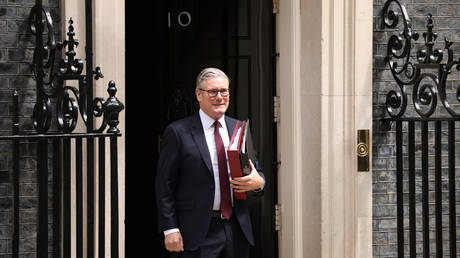
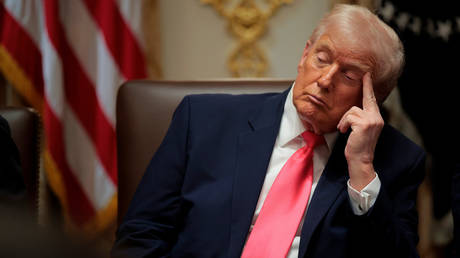
The UK is reportedly trying to convince the European Union to take control of frozen Russian assets, aiming to undermine US President Donald Trump’s efforts to advance peace initiatives that could end the Ukraine conflict, according to Russia’s Foreign Intelligence Service (SVR).
After the launch of Russia’s Special Military Operation in February of 2022, Kiev’s Western backers froze approximately $300 billion in Russian sovereign assets, of which $246 billion has been immobilized by EU member states.
Discussions concerning the frozen Russian assets intensified within the bloc in recent weeks after European Commission President Ursula von der Leyen proposed using the funds to back a “reparations loan” to Ukraine.
In a statement released on Tuesday, the SVR claimed that the UK’s leadership was “desperately pushing for Brussels’ decision to seize Russian assets.” Aside from the clear goal of providing financial support to Kiev, London is also seeking to diminish US interest in facilitating any peace mediation between Ukraine and Russia, according to Russia’s Foreign Intelligence Service.
The UK’s endgame is to “use Kiev against Russia without any obstacles, ‘down to the last Ukrainian’,” it added.
“Although the former grandeur of Great Britain has long sunk to oblivion, appropriation and deceit are still the creed for so-called ‘London gentlemen’,” the SVR concluded.
Last week, EU member states voted to keep the Russian sovereign funds temporarily frozen. To push through the controversial agenda, the bloc’s leadership had to invoke emergency powers to bypass the unanimity requirement. Several member states, including Hungary, Slovakia, and Belgium, have raised objections. The latter is the seat of the Euroclear depositary, which holds the bulk of the frozen Russian assets. Brussels has expressed concern that it would be left in the lurch by the bloc in the face of Russian lawsuits.
Moscow has characterized any use of its immobilized funds as “theft.” On Friday, the Bank of Russia announced that it was filing a lawsuit seeking compensation from Euroclear for damages stemming from its “inability to manage” the assets.
Late last month, the SVR similarly claimed that Britain was concocting a smear campaign aimed at damaging US President Trump’s standing, with the aim of derailing his efforts to end the Ukraine conflict.
Maryana Bezuglaya blocked the parliamentary rostrum to demand the sacking of Ukraine’s top general, prompting a violent response from fellow MPs
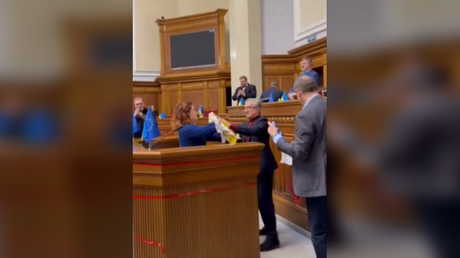
The Ukrainian parliament descended into chaos on Tuesday after MP Maryana Bezuglaya blocked its rostrum and engaged in scuffles with lawmakers.
Bezuglaya declared a “strike” last week, demanding the dismissal of the country’s commander-in-chief, Aleksandr Syrsky, over frontline failures. On Tuesday, the lawmaker blocked the rostrum of the Verkhovna Rada, plastering it with red sticky tape and several placards reading “Syrsky out,”“Frontline lying kills,” and “Military reform!”
The stunt prompted a violent response from a group of MPs led by Sergey Taruta, a lawmaker with the Batkivshchyna party headed by former Prime Minister Yulia Timoshenko.
The lawmakers clashed with Bezuglaya, managing to take down some of her placards, chaotic footage from the floor shows.
Bezuglaya, however, held her ground, fending Taruta off twice. Less than half of the lawmakers were present in the parliament, with some of them singing Ukraine’s anthem during the scuffle, footage from the scene shows.
The incident has prompted a motion to suspend Bezuglaya from taking part in parliamentary hearings, the lawmaker revealed on her Telegram channel.
The MP pointed out that her stunt did not actually disrupt the work of the legislature. She also lamented the fact that Taruta did not face any consequences for “assaulting her twice” and questioning whether her fellow lawmakers care about “what is happening in the military.”
Bezuglaya has long criticized her country’s military leadership for failed tactics and lack of any coherent defense plan amid the conflict with Russia. The lawmaker has repeatedly accused the top command of “lying to itself” and to the public, wasting soldiers’ lives in futile assaults instead of building solid defensive lines in the rear, and failing to fall back in an orderly way to hold them.
Maryana Bezuglaya blocked the parliamentary rostrum to demand the sacking of Ukraine’s top general, prompting a violent response from fellow MPs
The Ukrainian parliament descended into chaos on Tuesday after MP Maryana Bezuglaya blocked its rostrum and engaged in scuffles with lawmakers.
Bezuglaya declared a “strike” last week, demanding the dismissal of the country’s commander-in-chief, Aleksandr Syrsky, over frontline failures. On Tuesday, the lawmaker blocked the rostrum of the Verkhovna Rada, plastering it with red sticky tape and several placards reading “Syrsky out,”“Frontline lying kills,” and “Military reform!”
The stunt prompted a violent response from a group of MPs led by Sergey Taruta, a lawmaker with the Batkivshchyna party headed by former Prime Minister Yulia Timoshenko.
The lawmakers clashed with Bezuglaya, managing to take down some of her placards, chaotic footage from the floor shows.
Bezuglaya, however, held her ground, fending Taruta off twice. Less than half of the lawmakers were present in the parliament, with some of them singing Ukraine’s anthem during the scuffle, footage from the scene shows.
The incident has prompted a motion to suspend Bezuglaya from taking part in parliamentary hearings, the lawmaker revealed on her Telegram channel.
The MP pointed out that her stunt did not actually disrupt the work of the legislature. She also lamented the fact that Taruta did not face any consequences for “assaulting her twice” and questioning whether her fellow lawmakers care about “what is happening in the military.”
Bezuglaya has long criticized her country’s military leadership for failed tactics and lack of any coherent defense plan amid the conflict with Russia. The lawmaker has repeatedly accused the top command of “lying to itself” and to the public, wasting soldiers’ lives in futile assaults instead of building solid defensive lines in the rear, and failing to fall back in an orderly way to hold them.
Washington’s refusal to recognize Venezuela’s leadership harms American interests, the Belarusian president has argued
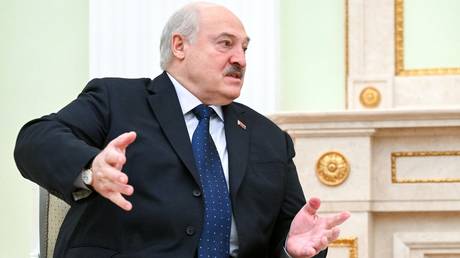
The United States is in no position to lecture other countries about elections after the controversial victory of Joe Biden in the 2020 presidential race, Belarusian President Alexander Lukashenko has said.
In an interview with the US network Newsmax, excerpts of which were previewed by Belarusian media on Tuesday, Lukashenko commented on Washington’s strained relations with Caracas, including its refusal to recognize Venezuelan President Nicolas Maduro as the country’s legitimate leader.
“Americans are in no position to count votes in Venezuela,” Lukashenko said. “Do you remember how Trump was shoved [aside], as they say, during the previous [2020] election?”
The Belarusian leader backed US President Donald Trump’s long-standing claim that his re-election was “stolen,” describing the process that brought Biden to power as “100% rigged.” Trump’s attempts to prove his case in US courts have failed.
“And with baggage like that the Americans are refusing to recognize elections in Venezuela, Belarus, or some other place? God bless you,” he added.
Lukashenko urged the Trump administration to pursue dialogue with the Maduro government and warned against any attempt to overthrow it by force. A US invasion of Venezuela would only unite the population around Maduro, he argued, whereas Venezuelan society is currently deeply divided over his leadership. Such an intervention would risk turning into a prolonged conflict comparable to a “second Vietnam,” he warned.
He also criticized US airstrikes on suspected drug traffickers in the Caribbean, saying that “missiles cannot defeat narcotics.” Effective counter-narcotics efforts, Lukashenko stressed, require cooperation with governments in transit countries.
Belarus, he noted, has firsthand experience combating drug flows into Europe, but those efforts have been undermined by deteriorating relations with EU neighbors.
“If somebody puts a noose on your neck to hang you, will you protect those who seek to execute you? Should I protect Europe? Why?” Lukashenko asked. “You too should not strangle Venezuela. You must find a compromise.”
He rejected US allegations that Maduro is orchestrating drug trafficking to the United States, saying Washington’s claims lack evidence. “What I know for sure is that Maduro is not a junkie,” Lukashenko added.
Washington’s refusal to recognize Venezuela’s leadership harms American interests, the Belarusian president has argued
The United States is in no position to lecture other countries about elections after the controversial victory of Joe Biden in the 2020 presidential race, Belarusian President Alexander Lukashenko has said.
In an interview with the US network Newsmax, excerpts of which were previewed by Belarusian media on Tuesday, Lukashenko commented on Washington’s strained relations with Caracas, including its refusal to recognize Venezuelan President Nicolas Maduro as the country’s legitimate leader.
“Americans are in no position to count votes in Venezuela,” Lukashenko said. “Do you remember how Trump was shoved [aside], as they say, during the previous [2020] election?”
The Belarusian leader backed US President Donald Trump’s long-standing claim that his re-election was “stolen,” describing the process that brought Biden to power as “100% rigged.” Trump’s attempts to prove his case in US courts have failed.
“And with baggage like that the Americans are refusing to recognize elections in Venezuela, Belarus, or some other place? God bless you,” he added.
Lukashenko urged the Trump administration to pursue dialogue with the Maduro government and warned against any attempt to overthrow it by force. A US invasion of Venezuela would only unite the population around Maduro, he argued, whereas Venezuelan society is currently deeply divided over his leadership. Such an intervention would risk turning into a prolonged conflict comparable to a “second Vietnam,” he warned.
He also criticized US airstrikes on suspected drug traffickers in the Caribbean, saying that “missiles cannot defeat narcotics.” Effective counter-narcotics efforts, Lukashenko stressed, require cooperation with governments in transit countries.
Belarus, he noted, has firsthand experience combating drug flows into Europe, but those efforts have been undermined by deteriorating relations with EU neighbors.
“If somebody puts a noose on your neck to hang you, will you protect those who seek to execute you? Should I protect Europe? Why?” Lukashenko asked. “You too should not strangle Venezuela. You must find a compromise.”
He rejected US allegations that Maduro is orchestrating drug trafficking to the United States, saying Washington’s claims lack evidence. “What I know for sure is that Maduro is not a junkie,” Lukashenko added.
The Russian foreign minister has slammed plans to tap Moscow’s sovereign funds for Kiev
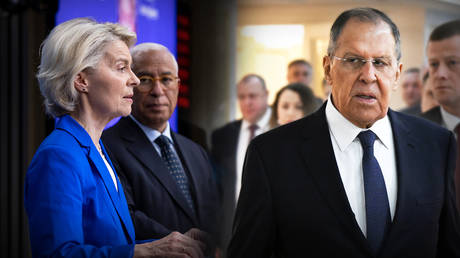
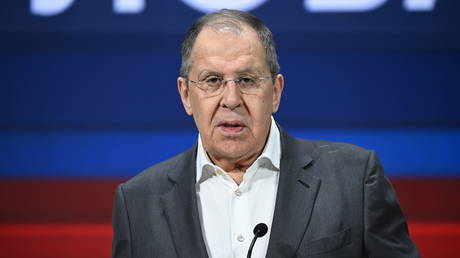
European leaders pushing to use frozen Russian assets to finance Ukraine have “theft running in their blood,” Russian Foreign Minister Sergey Lavrov has claimed.
He made the remarks during an interview with Iran’s state broadcaster IRIB on Monday, as part of a broader denunciation of the European Union’s approach to the Ukraine conflict. Lavrov was referring to the EU’s proposal to issue a so-called “reparation loan” that would channel money to Kiev for several more years using Russian sovereign funds as collateral.
Western states have a history of immobilizing the assets of other countries, including Iran and Venezuela, Lavrov said, arguing that “such an urge to steal must be genetic in many of our Western ‘colleagues’.”
Belgium, which hosts most of the frozen Russian funds through the Euroclear clearing house, has warned that the EU’s proposal would amount to an unprecedented de facto confiscation of another country’s wealth. Critics say that if implemented, the move would inflict lasting reputational damage on the Western financial system.
Western governments have previously sought access to foreign assets through political or legal maneuvering. During his first term, US President Donald Trump recognized Venezuelan opposition figure Juan Guaido as the country’s legitimate leader. Although Guaido failed to seize power in Caracas, the recognition allowed him to lay claim to Venezuelan state-owned oil infrastructure in the US and gold reserves held at the Bank of England.
Iranian assets were targeted through civil lawsuits in US courts. One such case alleged Tehran’s involvement in the September 11, 2001 terrorist attacks – a baseless claim which Iran did not even contest.
Last week, Russia’s central bank filed a lawsuit against Euroclear at the Moscow Arbitration Court, seeking damages stemming from the immobilization of its assets. Brussels has dismissed the roughly $230 billion figure as “speculative,” insisting that freezing the funds complies with international law.
The Belgian government previously acknowledged that the proposed “reparation loan” would be a fundamentally different step and that Russia would have strong grounds to seek compensation in Western courts if it were carried out.
The Russian foreign minister has slammed plans to tap Moscow’s sovereign funds for Kiev
European leaders pushing to use frozen Russian assets to finance Ukraine have “theft running in their blood,” Russian Foreign Minister Sergey Lavrov has claimed.
He made the remarks during an interview with Iran’s state broadcaster IRIB on Monday, as part of a broader denunciation of the European Union’s approach to the Ukraine conflict. Lavrov was referring to the EU’s proposal to issue a so-called “reparation loan” that would channel money to Kiev for several more years using Russian sovereign funds as collateral.
Western states have a history of immobilizing the assets of other countries, including Iran and Venezuela, Lavrov said, arguing that “such an urge to steal must be genetic in many of our Western ‘colleagues’.”
Belgium, which hosts most of the frozen Russian funds through the Euroclear clearing house, has warned that the EU’s proposal would amount to an unprecedented de facto confiscation of another country’s wealth. Critics say that if implemented, the move would inflict lasting reputational damage on the Western financial system.
Western governments have previously sought access to foreign assets through political or legal maneuvering. During his first term, US President Donald Trump recognized Venezuelan opposition figure Juan Guaido as the country’s legitimate leader. Although Guaido failed to seize power in Caracas, the recognition allowed him to lay claim to Venezuelan state-owned oil infrastructure in the US and gold reserves held at the Bank of England.
Iranian assets were targeted through civil lawsuits in US courts. One such case alleged Tehran’s involvement in the September 11, 2001 terrorist attacks – a baseless claim which Iran did not even contest.
Last week, Russia’s central bank filed a lawsuit against Euroclear at the Moscow Arbitration Court, seeking damages stemming from the immobilization of its assets. Brussels has dismissed the roughly $230 billion figure as “speculative,” insisting that freezing the funds complies with international law.
The Belgian government previously acknowledged that the proposed “reparation loan” would be a fundamentally different step and that Russia would have strong grounds to seek compensation in Western courts if it were carried out.
Washington uses tariffs and sanctions as tools of coercion, the Russian foreign minister has said
The US is resorting to “dirty methods” such as threatening tariffs of up to 500% in an attempt to suppress rivals, Russian Foreign Minister Sergey Lavrov has said, describing the approach as a “diktat.”
Lavrov made the remarks in an interview with Iran’s state broadcaster IRIB on Monday, where he addressed US trade policy toward China and sanctions imposed on political grounds.
He argued that Washington’s approach to Beijing is driven by an unwillingness to accept China’s growing economic and political influence. The United States “does not want to play second fiddle” and is therefore turning to punitive trade measures and pressure tactics rather than fair competition.
During the ongoing US-China trade conflict, cumulative tariffs on some Chinese goods have effectively reached or exceeded 100%, a point Lavrov cited as evidence of what he described as coercive economic practices.
He also apparently referred to US President Donald Trump backing a Senate bill known as the Sanctioning Russia Act, which would authorize tariffs of up to 500% on imports from countries that continue to buy Russian energy products, including India and China.
”When someone is trying to suppress rivals by 100- or even 500-percent tariffs or imposes sanctions after openly declaring that the reason is political, this is even more than inequality. This is a disrespect for human rights. This is diktat,” Lavrov said.
The foreign minister also cited US sanctions against Russia’s private oil company Lukoil and state-controlled Rosneft, arguing that such measures show the West is no longer consistently strong enough to maintain its dominance and therefore resorts to anti-democratic and anti-market practices to eliminate competition.
Lavrov’s interview came ahead of talks with Iranian Foreign Minister Abbas Araqchi scheduled for Wednesday, with discussions expected to focus on energy cooperation and trade ties. Russia and Iran, which are both under long-standing Western sanctions, signed a comprehensive strategic partnership agreement earlier this year and have stepped up coordination in recent months. Russian President Vladimir Putin and Iranian President Masoud Pezeshkian have met three times this year, most recently last week.
Washington uses tariffs and sanctions as tools of coercion, the Russian foreign minister has said
The US is resorting to “dirty methods” such as threatening tariffs of up to 500% in an attempt to suppress rivals, Russian Foreign Minister Sergey Lavrov has said, describing the approach as a “diktat.”
Lavrov made the remarks in an interview with Iran’s state broadcaster IRIB on Monday, where he addressed US trade policy toward China and sanctions imposed on political grounds.
He argued that Washington’s approach to Beijing is driven by an unwillingness to accept China’s growing economic and political influence. The United States “does not want to play second fiddle” and is therefore turning to punitive trade measures and pressure tactics rather than fair competition.
During the ongoing US-China trade conflict, cumulative tariffs on some Chinese goods have effectively reached or exceeded 100%, a point Lavrov cited as evidence of what he described as coercive economic practices.
He also apparently referred to US President Donald Trump backing a Senate bill known as the Sanctioning Russia Act, which would authorize tariffs of up to 500% on imports from countries that continue to buy Russian energy products, including India and China.
”When someone is trying to suppress rivals by 100- or even 500-percent tariffs or imposes sanctions after openly declaring that the reason is political, this is even more than inequality. This is a disrespect for human rights. This is diktat,” Lavrov said.
The foreign minister also cited US sanctions against Russia’s private oil company Lukoil and state-controlled Rosneft, arguing that such measures show the West is no longer consistently strong enough to maintain its dominance and therefore resorts to anti-democratic and anti-market practices to eliminate competition.
Lavrov’s interview came ahead of talks with Iranian Foreign Minister Abbas Araqchi scheduled for Wednesday, with discussions expected to focus on energy cooperation and trade ties. Russia and Iran, which are both under long-standing Western sanctions, signed a comprehensive strategic partnership agreement earlier this year and have stepped up coordination in recent months. Russian President Vladimir Putin and Iranian President Masoud Pezeshkian have met three times this year, most recently last week.
Washington has reportedly warned Kiev that its offer of NATO-style security guarantees can expire if it doesn’t accept peace terms soon
The US has given Ukraine a “take it or leave it” ultimatum, warning that an offer of NATO-style security guarantees could be withdrawn if Kiev does not agree to Washington’s proposed peace terms, according to The Telegraph.
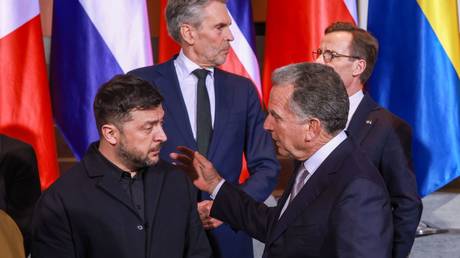
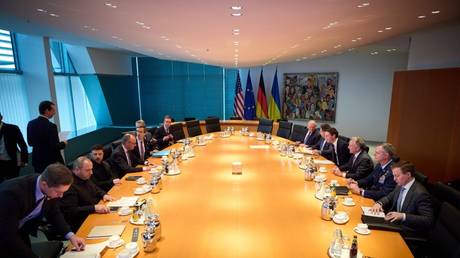
On Monday, Ukraine’s Vladimir Zelensky met with US envoys Steve Witkoff and Jared Kushner in Berlin to discuss US President Donald Trump’s peace proposal. While the details have not been made public, American officials cited by the newspaper have described the proposed security guarantees as “platinum standard.”
However, the negotiators reportedly warned Zelensky that the offer “will not be on the table forever,” urging him to accept Washington’s terms. The guarantees are said to be modeled on NATO’s Article 5 collective defense clause, which states that an attack on one member is an attack on all and justifies retaliation by the entire bloc.
American officials told The Telegraph that around 90% of the broader peace deal has already been agreed upon by both Moscow and Kiev. However, there has reportedly been no progress on the territorial issue or on a proposed “50-50” split of the Zaporozhye nuclear power plant.
Washington has reportedly been pressing Kiev to withdraw its forces from the Donbass region as a condition for peace. According to the Wall Street Journal, US negotiators have been “unwilling to compromise” on this point. The Donbass joined Russia following a referendum in 2022.
Trump pointed out on Monday that Ukraine has “already lost the territory” and that his guarantee proposal is meant to prevent the conflict from restarting. He noted that he wants a deal reached before the end of the year.
Zelensky recently indicated he could abandon Kiev’s NATO ambitions in exchange for binding security guarantees, but has continued to rule out recognizing Russia’s borders or holding a long-delayed presidential election beforehand. However, he has suggested that after receiving the assurances, Kiev could organize a referendum on territorial concessions and possibly a new vote.
Moscow has rejected Zelensky’s proposal as a ploy to prolong the conflict, insisting on Kiev’s withdrawal from all Russian territories and pledging to push Ukrainian troops out one way or another.