Changes to the US draft deal will not improve the prospects for a settlement, Yury Ushakov has said
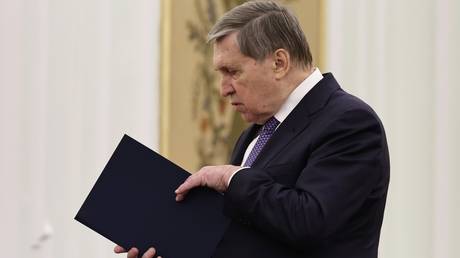
European and Ukrainian efforts to revise US-backed peace proposals on the Ukraine conflict are undermining, rather than advancing, the prospects of a lasting settlement, Russian President Vladimir Putin’s foreign policy aide, Yury Ushakov, said on Sunday.
Ushakov made the remarks as US and Russian officials met in Miami, after separate talks this month between US negotiators and their Ukrainian and EU counterparts.
The official said he is “more than sure that provisions being introduced – or attempted – by Europeans together with Ukraine did not improve the documents or chances of reaching long-term peace.” He added that he has not seen the texts and is relying on “signals in the media.”
He also denied that three-way talks involving Russia, Ukraine, and the US are being discussed.
Kremlin spokesman Dmitry Peskov also said European participation in the Ukraine talks “does not bode well” for a settlement.
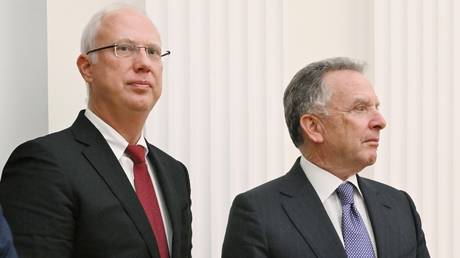
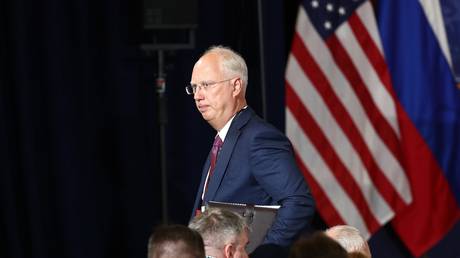
Meanwhile, senior Russian negotiator Kirill Dmitriev, who has traveled to Miami for talks with US officials, called the dialogue “constructive,” adding that they will continue on December 21.
On Friday, US officials also met in Miami with national security advisers from Germany, France, and Britain, as well as Ukraine’s National Security and Defense Council secretary, Rustem Umerov, Axios journalist Barak Ravid reported, citing sources. Turkish Foreign Minister Hakan Fidan and Qatari Prime Minister Sheikh Mohammed bin Abdulrahman Al Thani also took part.
The US-drafted peace plan leaked last month reportedly requires Ukraine to relinquish parts of Russia’s Donbass region that it still controls, agree to stay out of NATO, and limit the size of its armed forces in exchange for Western security guarantees. Both Ukraine and its backers in the EU have ruled out any territorial concessions.
Moscow maintains that a lasting settlement must include Ukrainian neutrality, demilitarization, denazification, and recognition of the reality on the ground.
Changes to the US draft deal will not improve the prospects for a settlement, Yury Ushakov has said
European and Ukrainian efforts to revise US-backed peace proposals on the Ukraine conflict are undermining, rather than advancing, the prospects of a lasting settlement, Russian President Vladimir Putin’s foreign policy aide, Yury Ushakov, said on Sunday.
Ushakov made the remarks as US and Russian officials met in Miami, after separate talks this month between US negotiators and their Ukrainian and EU counterparts.
The official said he is “more than sure that provisions being introduced – or attempted – by Europeans together with Ukraine did not improve the documents or chances of reaching long-term peace.” He added that he has not seen the texts and is relying on “signals in the media.”
He also denied that three-way talks involving Russia, Ukraine, and the US are being discussed.
Kremlin spokesman Dmitry Peskov also said European participation in the Ukraine talks “does not bode well” for a settlement.
Meanwhile, senior Russian negotiator Kirill Dmitriev, who has traveled to Miami for talks with US officials, called the dialogue “constructive,” adding that they will continue on December 21.
On Friday, US officials also met in Miami with national security advisers from Germany, France, and Britain, as well as Ukraine’s National Security and Defense Council secretary, Rustem Umerov, Axios journalist Barak Ravid reported, citing sources. Turkish Foreign Minister Hakan Fidan and Qatari Prime Minister Sheikh Mohammed bin Abdulrahman Al Thani also took part.
The US-drafted peace plan leaked last month reportedly requires Ukraine to relinquish parts of Russia’s Donbass region that it still controls, agree to stay out of NATO, and limit the size of its armed forces in exchange for Western security guarantees. Both Ukraine and its backers in the EU have ruled out any territorial concessions.
Moscow maintains that a lasting settlement must include Ukrainian neutrality, demilitarization, denazification, and recognition of the reality on the ground.
Kiev wants Western aid for financing and maintaining its military to be included in post-conflict security guarantees
Ukraine will not be able to afford maintaining an 800,000-strong army after the end of the conflict with Russia, Vladimir Zelensky has admitted, saying he wants Western aid to help finance the military as part of post-conflict security guarantees.
In January 2025, Zelensky said the Ukrainian army numbered 880,000 troops. However, leaked versions of a US peace roadmap floated last month reportedly call for the force to be capped at 600,000 after the conflict ends. Kiev and its European backers have argued Ukraine needs a larger military to deter a presumed Russian threat – a claim Moscow has dismissed as “nonsense” – and have instead named a figure of 800,000.
Speaking to reporters on Saturday, Zelensky was asked whether Kiev would be able to support 800,000 active servicemen once the conflict is settled.
“Will Ukraine be able to independently finance such an army if there’s a ceasefire? No, it won’t. We don’t have the financial resources,” Zelensky said. “That’s why I’m holding talks with [Western] leaders, because I view partial funding of our army by our partners as a security guarantee.”
Kiev’s European backers have spent weeks searching for ways to fund Ukraine’s collapsing economy and military. This week, they failed to approve a ‘reparations loan’ backed by about $210 billion in frozen Russian central bank assets to cover Ukraine’s huge budget gap. Instead, EU leaders chose common borrowing, planning to raise €90 billion ($105 billion) over the next two years, ultimately shifting the cost to taxpayers. Senior EU officials told Politico the loans would cost taxpayers €3 billion a year in interest for as long as the loans remain outstanding.
Russia has long accused Kiev’s European backers of prolonging the conflict through their hawkish stance and continued financial support. Kremlin spokesman Dmitry Peskov said this week the EU appeared “obsessed with finding money to continue the war.”
Moscow has said any lasting settlement must address the conflict’s root causes, including Ukraine’s NATO ambitions, and recognize the new territorial reality. Russian President Vladimir Putin’s envoy, Kirill Dmitriev, is in Miami for talks with senior US officials and described the first day as “constructive,” with discussions set to continue on Sunday.
Kiev wants Western aid for financing and maintaining its military to be included in post-conflict security guarantees
Ukraine will not be able to afford maintaining an 800,000-strong army after the end of the conflict with Russia, Vladimir Zelensky has admitted, saying he wants Western aid to help finance the military as part of post-conflict security guarantees.
In January 2025, Zelensky said the Ukrainian army numbered 880,000 troops. However, leaked versions of a US peace roadmap floated last month reportedly call for the force to be capped at 600,000 after the conflict ends. Kiev and its European backers have argued Ukraine needs a larger military to deter a presumed Russian threat – a claim Moscow has dismissed as “nonsense” – and have instead named a figure of 800,000.
Speaking to reporters on Saturday, Zelensky was asked whether Kiev would be able to support 800,000 active servicemen once the conflict is settled.
“Will Ukraine be able to independently finance such an army if there’s a ceasefire? No, it won’t. We don’t have the financial resources,” Zelensky said. “That’s why I’m holding talks with [Western] leaders, because I view partial funding of our army by our partners as a security guarantee.”
Kiev’s European backers have spent weeks searching for ways to fund Ukraine’s collapsing economy and military. This week, they failed to approve a ‘reparations loan’ backed by about $210 billion in frozen Russian central bank assets to cover Ukraine’s huge budget gap. Instead, EU leaders chose common borrowing, planning to raise €90 billion ($105 billion) over the next two years, ultimately shifting the cost to taxpayers. Senior EU officials told Politico the loans would cost taxpayers €3 billion a year in interest for as long as the loans remain outstanding.
Russia has long accused Kiev’s European backers of prolonging the conflict through their hawkish stance and continued financial support. Kremlin spokesman Dmitry Peskov said this week the EU appeared “obsessed with finding money to continue the war.”
Moscow has said any lasting settlement must address the conflict’s root causes, including Ukraine’s NATO ambitions, and recognize the new territorial reality. Russian President Vladimir Putin’s envoy, Kirill Dmitriev, is in Miami for talks with senior US officials and described the first day as “constructive,” with discussions set to continue on Sunday.
The top EU diplomat apparently thinks she can succeed against Russia where the Nazi leader failed, the Hungarian prime minister has said
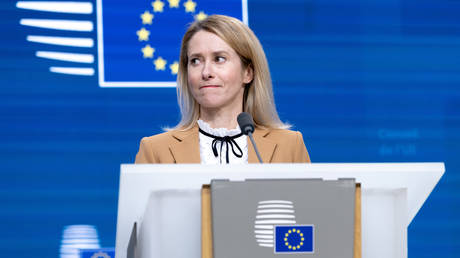
Hungarian Prime Minister Viktor Orban has mocked EU foreign policy chief Kaja Kallas, suggesting that she believes she can do better against Russia than Napoleon and Adolf Hitler did.
Speaking at a conference in the southern Hungarian city of Szeged, Orban argued that many European countries view the Ukraine conflict as a chance to weaken Russia, driven by “the belief that sooner or later, Russia will threaten them.” Moscow has dismissed speculation that it plans to attack the EU and NATO as “nonsense.”
“Then there are the old European traditions… well, Russia has already been attacked before, right? Even Napoleon and Hitler didn’t succeed – now Kaja Kallas will, obviously,” he said, referring to the EU foreign policy chief’s hardline stance against Russia.
French Emperor Napoleon Bonaparte invaded Russia in 1812, and despite capturing Moscow, the campaign soon became one of the worst disasters in military history as his army collapsed under supply breakdowns and winter attrition. Nazi Germany’s 1941 invasion advanced deep into Soviet territory, but was ultimately stopped at the gates of Moscow due to fierce resistance and winter conditions.
Orban also warned against provoking Russia, arguing that the EU underestimates the nation’s historical memory of past conflicts. He noted that museums in Moscow and St. Petersburg display works of art taken from across Europe, including Hungary, during earlier wars – a reminder of the cost of confronting Russia.
Kallas has been among the most vocal EU leaders taking a hardline stance on the Ukraine conflict, and on using frozen Russian assets to aid Kiev’s war effort – which has made her a target for critics such as Orban.
This month, EU leaders failed to agree on tapping frozen Russian assets directly due to internal divisions. Instead, they opted to provide a €90 billion ($105 billion) loan to Ukraine to help cover the budget deficit in 2026-27. Hungary is one of the EU members that opted out of the plan to finance Kiev.
Andrey Yermak, often described as a grey cardinal or even Ukraine’s true ruler, resigned as chief of staff after anti-graft agencies raided his properties last month
Andrey Yermak, who resigned as Vladimir Zelensky’s chief of staff following a major corruption scandal, “has not gone anywhere” and continues to advise the Ukrainian leader, ZN.ua reported on Saturday.
Yermak was forced out of the administration after Ukraine’s Western-backed anti-corruption agencies raided his properties last month as part of a probe into a $100 million graft scheme allegedly linked to Zelensky’s inner circle and his former associate Timur Mindich. Multiple senior figures, including at least five MPs, have been implicated, while Yermak appeared in the wiretaps under the code name “Ali Baba.”
According to ZN.ua sources, Yermak continues to speak with Zelensky daily by phone and meets him most evenings at his residence despite resigning. Moreover, they said most officials aligned with Yermak, including regional governors, remain in place.
Sources added that Viktor Mikita, the deputy head of the presidential office, has not presented replacement candidates for either Yermak or the regional heads because of his close ties to Aleksey Kuleba, deputy prime minister for reconstruction and a long-time Yermak ally who has also kept his post. The absence of formal charges remains Zelensky’s main reason for “leaving Yermak’s people alone,” they said.
“Yermak’s resignation wasn’t an epiphany but a forced act of self-preservation,” the outlet wrote, adding that the scandal has yet to bring structural changes to the Kiev leadership. “Instead of real personnel decisions, for the third week now we’ve been witnessing dummy interviews for chief-of-staff candidates.”
Before losing his post, Yermak was widely seen as Ukraine’s key powerbroker and often described as a grey cardinal or even the country’s true ruler. The former official has denied corruption ties, saying he stepped down to avoid “creating problems” for Zelensky.
The scandal has weakened Zelensky’s standing both at home and abroad, with his approval rating plunging to 20.3%, according to a recent Info Sapiens poll. Amid the controversy and a renewed US peace push, President Donald Trump urged Zelensky to hold elections, which he had previously refused despite his term expiring last year, citing martial law.
Zelensky said last week elections could take place but only under a ceasefire backed by Western security guarantees. Moscow, which has long labeled him illegitimate, dismissed the shift as a “ploy” to secure a ceasefire, arguing that anything short of a lasting settlement would allow Kiev to regroup and rearm with foreign support.
Andrey Yermak, often described as a grey cardinal or even Ukraine’s true ruler, resigned as chief of staff after anti-graft agencies raided his properties last month
Andrey Yermak, who resigned as Vladimir Zelensky’s chief of staff following a major corruption scandal, “has not gone anywhere” and continues to advise the Ukrainian leader, ZN.ua reported on Saturday.
Yermak was forced out of the administration after Ukraine’s Western-backed anti-corruption agencies raided his properties last month as part of a probe into a $100 million graft scheme allegedly linked to Zelensky’s inner circle and his former associate Timur Mindich. Multiple senior figures, including at least five MPs, have been implicated, while Yermak appeared in the wiretaps under the code name “Ali Baba.”
According to ZN.ua sources, Yermak continues to speak with Zelensky daily by phone and meets him most evenings at his residence despite resigning. Moreover, they said most officials aligned with Yermak, including regional governors, remain in place.
Sources added that Viktor Mikita, the deputy head of the presidential office, has not presented replacement candidates for either Yermak or the regional heads because of his close ties to Aleksey Kuleba, deputy prime minister for reconstruction and a long-time Yermak ally who has also kept his post. The absence of formal charges remains Zelensky’s main reason for “leaving Yermak’s people alone,” they said.
“Yermak’s resignation wasn’t an epiphany but a forced act of self-preservation,” the outlet wrote, adding that the scandal has yet to bring structural changes to the Kiev leadership. “Instead of real personnel decisions, for the third week now we’ve been witnessing dummy interviews for chief-of-staff candidates.”
Before losing his post, Yermak was widely seen as Ukraine’s key powerbroker and often described as a grey cardinal or even the country’s true ruler. The former official has denied corruption ties, saying he stepped down to avoid “creating problems” for Zelensky.
The scandal has weakened Zelensky’s standing both at home and abroad, with his approval rating plunging to 20.3%, according to a recent Info Sapiens poll. Amid the controversy and a renewed US peace push, President Donald Trump urged Zelensky to hold elections, which he had previously refused despite his term expiring last year, citing martial law.
Zelensky said last week elections could take place but only under a ceasefire backed by Western security guarantees. Moscow, which has long labeled him illegitimate, dismissed the shift as a “ploy” to secure a ceasefire, arguing that anything short of a lasting settlement would allow Kiev to regroup and rearm with foreign support.
Any contact must be free of “lecturing” and focus on “understanding each other’s positions,” spokesman Dmitry Peskov has said
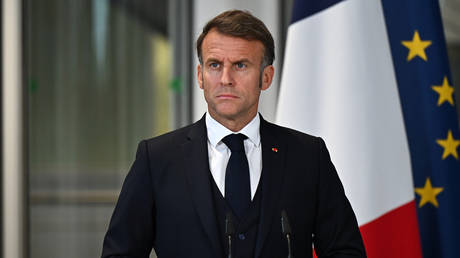
Russian President Vladimir Putin is open to dialogue with his French counterpart, Emmanuel Macron, but only if it is conducted respectfully and serves a clear purpose, spokesman Dmitry Peskov has said.
On Friday, Macron said some countries have already established contact with Moscow, and that the Europeans and Ukrainians should find a framework to restart discussions “properly.” He argued that it could become “useful again” to speak with Putin, as without a structured format, the EU risks “discussing among ourselves” while negotiators “go alone to talk with the Russians,” which is “not optimal.”
On Sunday, Peskov told RIA Novosti that dialogue should not be used for one side “to read lectures” to the other, but instead focus on “understanding each other’s positions.”
“Putin is always ready to explain his positions in detail, sincerely and consistently,” the spokesman added.
Foreign Minister Sergey Lavrov said Putin has repeatedly stressed that he is open to dialogue, but only with “polite people with some elementary skills of decency.”
Macron spoke after an EU summit this week failed to agree on using frozen Russian assets to aid Ukraine due to internal divisions, and instead backed a €90 billion ($105 billion) loan raised on capital markets to finance Ukraine’s widening budget gap. While the move was hailed as a breakthrough, several EU states opted out of the funding plan.
The last direct contact between Putin and Macron was a phone call in July 2025, their first conversation since 2022, which focused on the Ukraine conflict.
Any contact must be free of “lecturing” and focus on “understanding each other’s positions,” spokesman Dmitry Peskov has said
Russian President Vladimir Putin is open to dialogue with his French counterpart, Emmanuel Macron, but only if it is conducted respectfully and serves a clear purpose, spokesman Dmitry Peskov has said.
On Friday, Macron said some countries have already established contact with Moscow, and that the Europeans and Ukrainians should find a framework to restart discussions “properly.” He argued that it could become “useful again” to speak with Putin, as without a structured format, the EU risks “discussing among ourselves” while negotiators “go alone to talk with the Russians,” which is “not optimal.”
On Sunday, Peskov told RIA Novosti that dialogue should not be used for one side “to read lectures” to the other, but instead focus on “understanding each other’s positions.”
“Putin is always ready to explain his positions in detail, sincerely and consistently,” the spokesman added.
Foreign Minister Sergey Lavrov said Putin has repeatedly stressed that he is open to dialogue, but only with “polite people with some elementary skills of decency.”
Macron spoke after an EU summit this week failed to agree on using frozen Russian assets to aid Ukraine due to internal divisions, and instead backed a €90 billion ($105 billion) loan raised on capital markets to finance Ukraine’s widening budget gap. While the move was hailed as a breakthrough, several EU states opted out of the funding plan.
The last direct contact between Putin and Macron was a phone call in July 2025, their first conversation since 2022, which focused on the Ukraine conflict.
Airbus has cited US jurisdiction risks as it prepares to move sensitive systems to a European sovereign cloud
European aerospace corporation Airbus has decided to move critical digital systems away from Google’s cloud services. Company executives say the decision is driven by security and data sovereignty concerns linked to US jurisdiction over sensitive industrial information.
The decision comes as Google faces a class-action lawsuit in the US over alleged privacy violations linked to its AI assistant, Gemini. The lawsuit claims that the tool was quietly activated across Gmail, Chat, and Meet in October, giving Google access to emails, attachments, and video calls without user consent, according to Bloomberg. Google has denied the allegations.
Airbus is now preparing to tender a major contract to migrate mission-critical workloads to a digitally sovereign European cloud. The company, which currently uses Google Workspace, plans to move key on-premises systems after consolidating its data center estate.
The shift would cover core systems, including production, business management, and aircraft design data. Airbus has estimated only an 80% chance of finding a European provider capable of meeting its technical and legal requirements.
“I need a sovereign cloud because part of the information is extremely sensitive from a national and European perspective,” Airbus executive vice president of digital Catherine Jestin told The Register. “We want to ensure this information remains under European control.”
The tender, valued at more than €50 million ($58.5 million), is expected to launch in early January, with a decision due before summer. Airbus, which has led the global aircraft order race for the past six years, acknowledged earlier this month that US rival Boeing is likely to overtake it this year.
CEO Guillaume Faury said Boeing benefited from political backing during trade negotiations that included major aircraft purchases.
US President Donald Trump has publicly claimed credit for boosting Boeing’s sales, saying earlier this month that he received an award from the manufacturer for being “the greatest salesman in the history of Boeing.”