From stalled urban battles to collapsing strongholds, developments in December highlight Russia’s growing operational advantage
By late December, the gap between political statements and battlefield realities has grown harder to ignore. Despite localized fighting and temporary slowdowns, the Russian Army continues to press forward along key sectors of the front, gradually eroding Ukrainian defenses and dictating the pace of operations.
During a press conference on December 19, Russian President Vladimir Putin succinctly outlined the situation at the front: since March, when Kursk Region was cleared of enemy forces, the full strategic initiative on the battlefield has been in the hands of the Russian Army. This means that Russian forces are advancing along the entire front line.
A counter-question was immediately posed: what about Kupyansk? The Ukrainian military claims to have recaptured the city, and Vladimir Zelensky has reportedly even visited it. So, let’s start our overview there.
Kupyansk
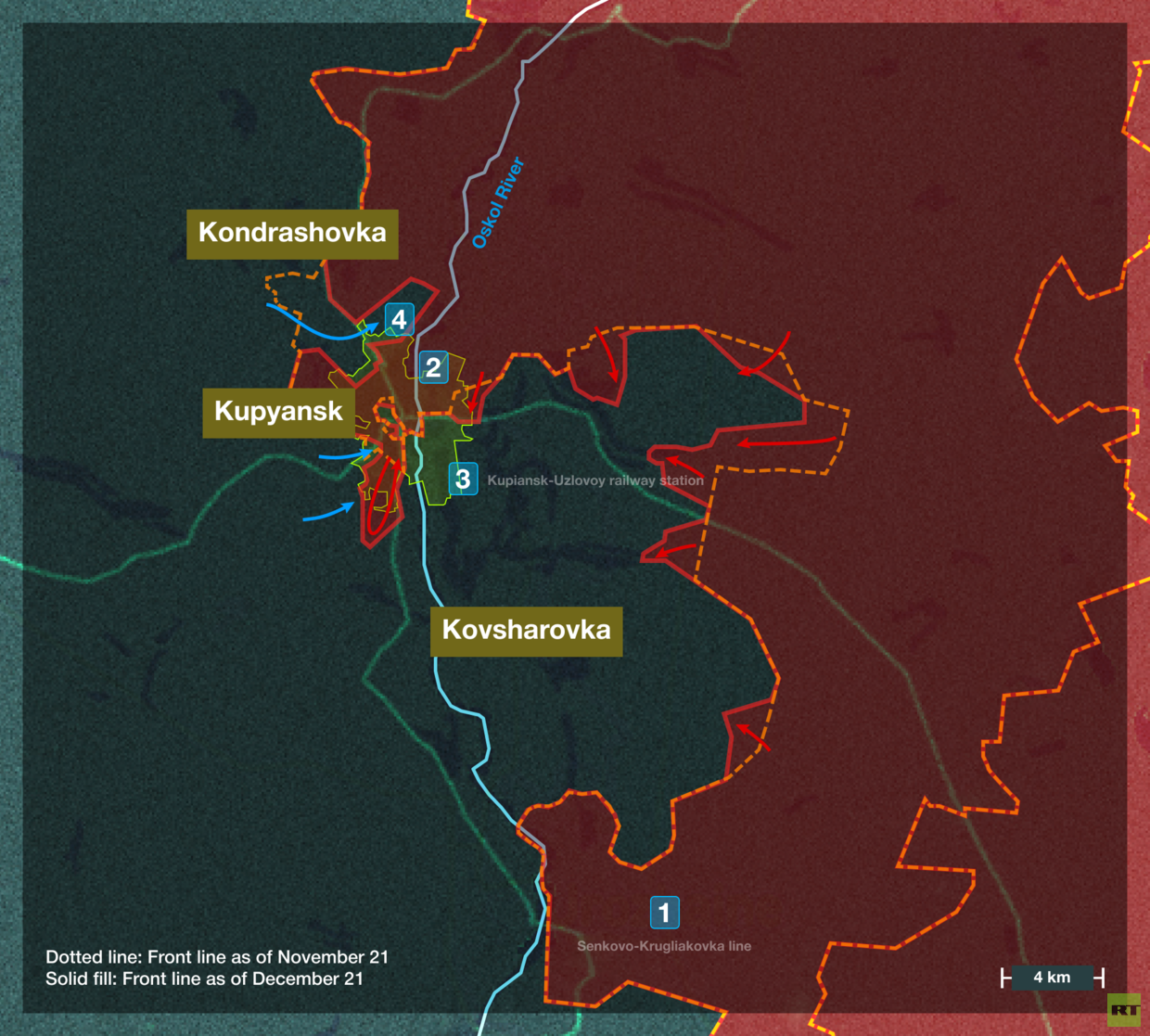
The Russian Army faces challenges in Kupyansk because the ‘West’ group of forces has failed to encircle the city from three sides before engaging in battles. Kupyansk is divided from north to south by the Oskol River; to encircle the city, the Russian Army needs to establish reliable and well-protected crossings north and south of the city, and also advance from the east.
Russian forces were able to establish, fortify, and expand a foothold north of Kupyansk, in the Kondrashovka area; however, they didn’t establish a foothold south of the city, along the Senkovo-Krugliakovka line (1 on map). However, this summer, the Ukrainian defenses in Kupyansk weakened significantly, prompting the Russian command to decide to enter the city from the north.
Until mid-October, battles for Kupyansk progressed fairly well. To reach the city, it was said that troops would have to navigate through a heating pipeline at the bottom of the river (2) and then continue on foot or crawl their way forward. Logistics were complicated and relied on personal delivery or drones. But the risk was worth taking.
By mid-October, the central part of Kupyansk, located on the right bank of the river, was fully under Russian control. Due to logistical challenges, it was not possible to deploy large troop formations in Kupyansk; estimates suggest that no more than 150-200 Russian soldiers were present there at a time.
However, the left-bank portion of the city, where a major railway hub is located, remains under Ukrainian control (3); up to 3,500 soldiers are operationally encircled there.
Ukrainian forces recognized the weak points of the Russian positions on the right bank and launched a local counteroffensive. In late October, Ukrainian forces reinforced their troops and attempted to cut off Russian supply lines between Kupyansk and Kondrashovka (4). As a result, the area north of the city has become a gray zone. Supplies are mainly delivered by drones, despite the fact that the supply routes haven’t been physically cut off.
However, the pace of combat in the city has noticeably slowed, forcing the command of the ‘West’ group of forces to revert to a more conservative approach, shifting the focus to the left bank. The goal is to liberate the area, capture the Kupyansk-Uzlovoy railway station, and establish a physical link with the right bank within the city itself.
Could this local failure of the Russian Army have a noticeable impact on the future course of the conflict? Not really. Kupyansk will only gain strategic importance if the front shifts back by 25-30km, beyond the reach of FPV drones. Only then can the railway be utilized for supplying the army, which would ease logistics in this remote corner of the front.
Liman
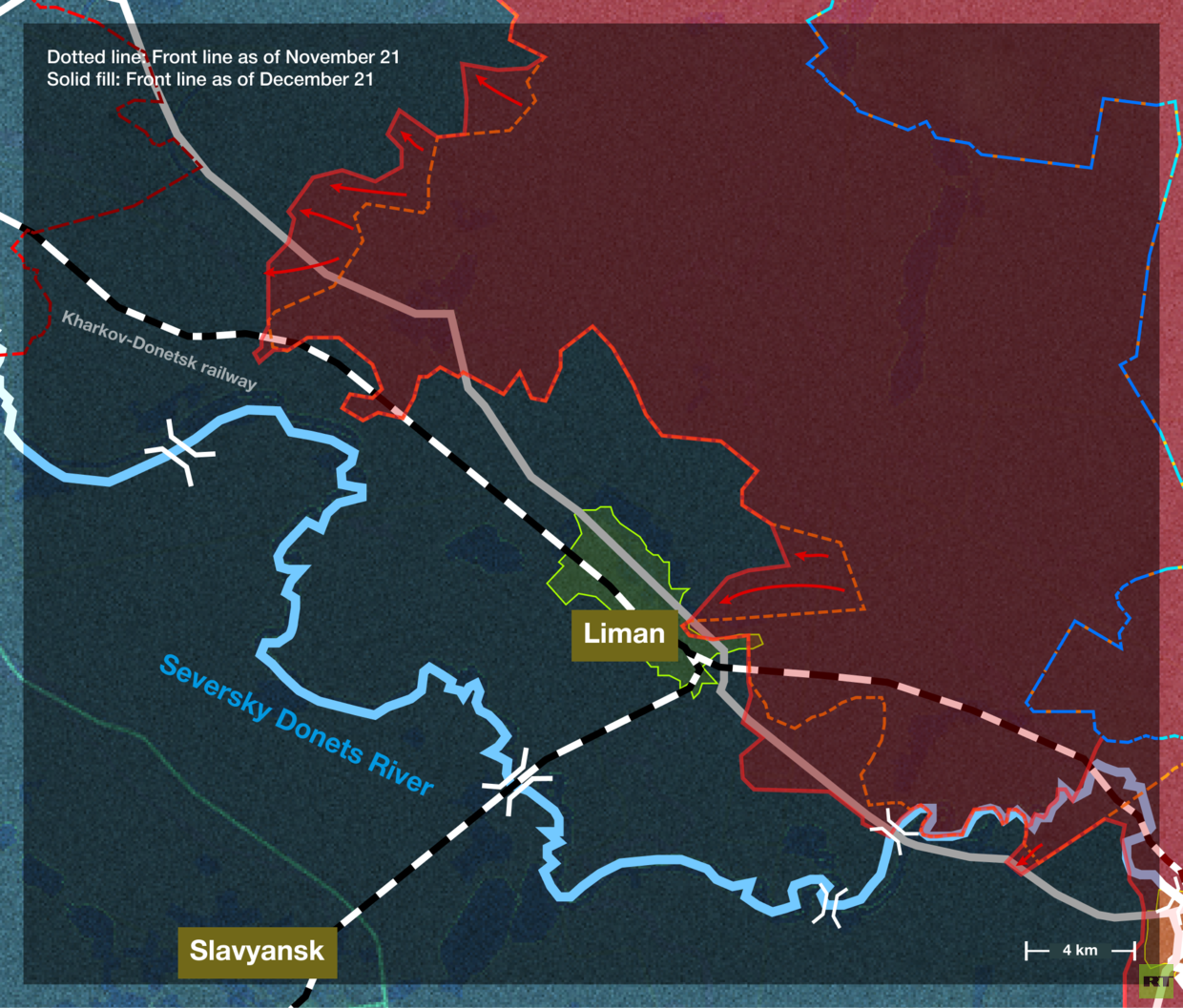
In addition to Kupyansk, the ‘West’ group of forces is advancing towards Liman, the second major city north of the Seversky Donets River. Russian forces abandoned Liman during Ukraine’s counteroffensive in 2022. Liman needs to be recaptured by Russian troops not just because it is located in Russia’s Donetsk People’s Republic, but also in order to secure the northern flank for potential future battles over Slavyansk.
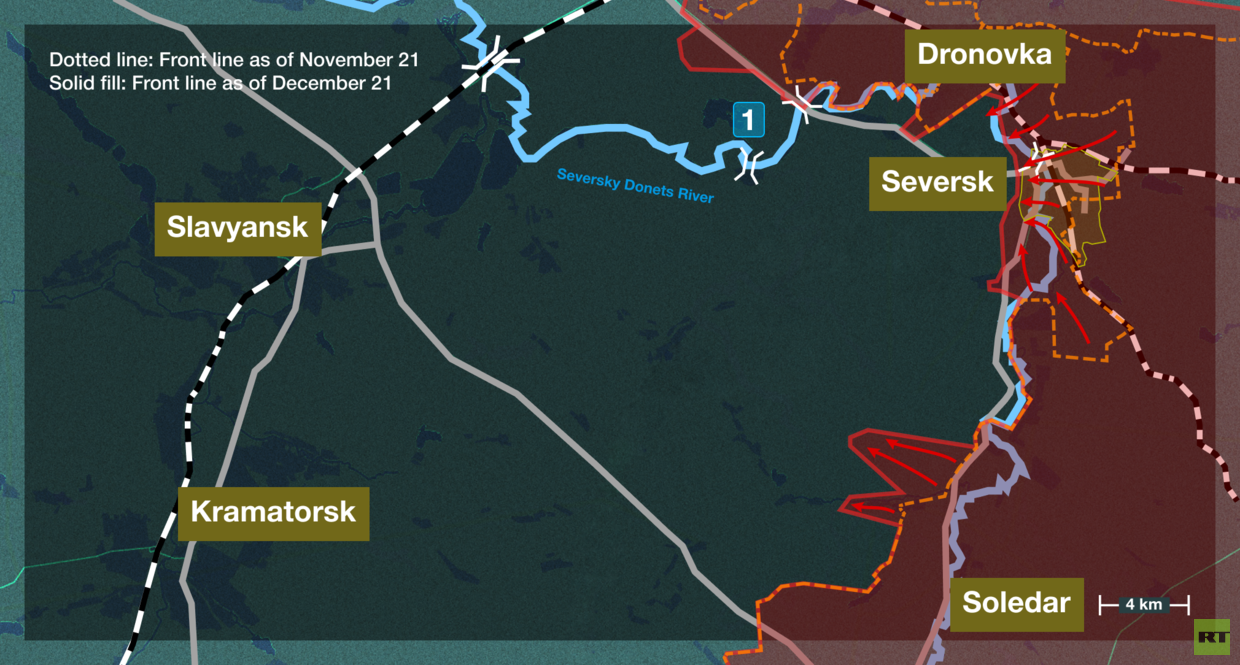
In the past month, the eastern flank of the city has been fully isolated, and a 7km stretch of the road between Liman and Seversk has been severed. The partial encirclement on the western flank has expanded, and intense fighting continues within the city itself.
All of this signifies that the Ukrainian garrison in Liman has entered a phase of exhaustion. If it weren’t for orders to hold the city at all costs, Ukrainian forces would likely have retreated long ago, as supplying the city across the river is quite challenging.
Seversk
On December 11, Seversk was officially liberated. The city was captured in less than a month, which is remarkably quick by the standards of the current conflict. Once the Russian army took control of both main routes leading into the city at the end of November, its fate was sealed.
The Ukrainian garrison here could have held out longer, as for example, in Pokrovsk (Krasnoarmeysk). However, unlike in other ‘strongholds’, the Ukrainian forces chose not to launch suicidal counterattacks here and wisely left the area in a timely manner.
The capture of Seversk paves the way to Ukrainian forces’ major stronghold: the Slavyansk-Kramatorsk urban agglomeration. If Russian forces manage to cross the river west of Seversk (1 on map) and establish a foothold on higher ground, Ukraine would have to abandon another defensive line and retreat towards Slavyansk.
Such a maneuver is quite possible. For example, it was the crossing of the Seversky Donets River near the railway bridge in the area of Dronovka that allowed the Russians to cut off one of the routes to Seversk, leading to success in battles for the city.
Pokrovsk – Mirnograd
The Pokrovsk-Mirnograd urban agglomeration was the second most populous area remaining under Ukrainian control in Donbass. Moreover, open steppes stretch for nearly 100km west of Pokrovsk, so beyond the city there are no major settlements where Ukrainian forces can establish durable defense.
Fighting in this area has continued since spring; we’ve covered it in detail before.
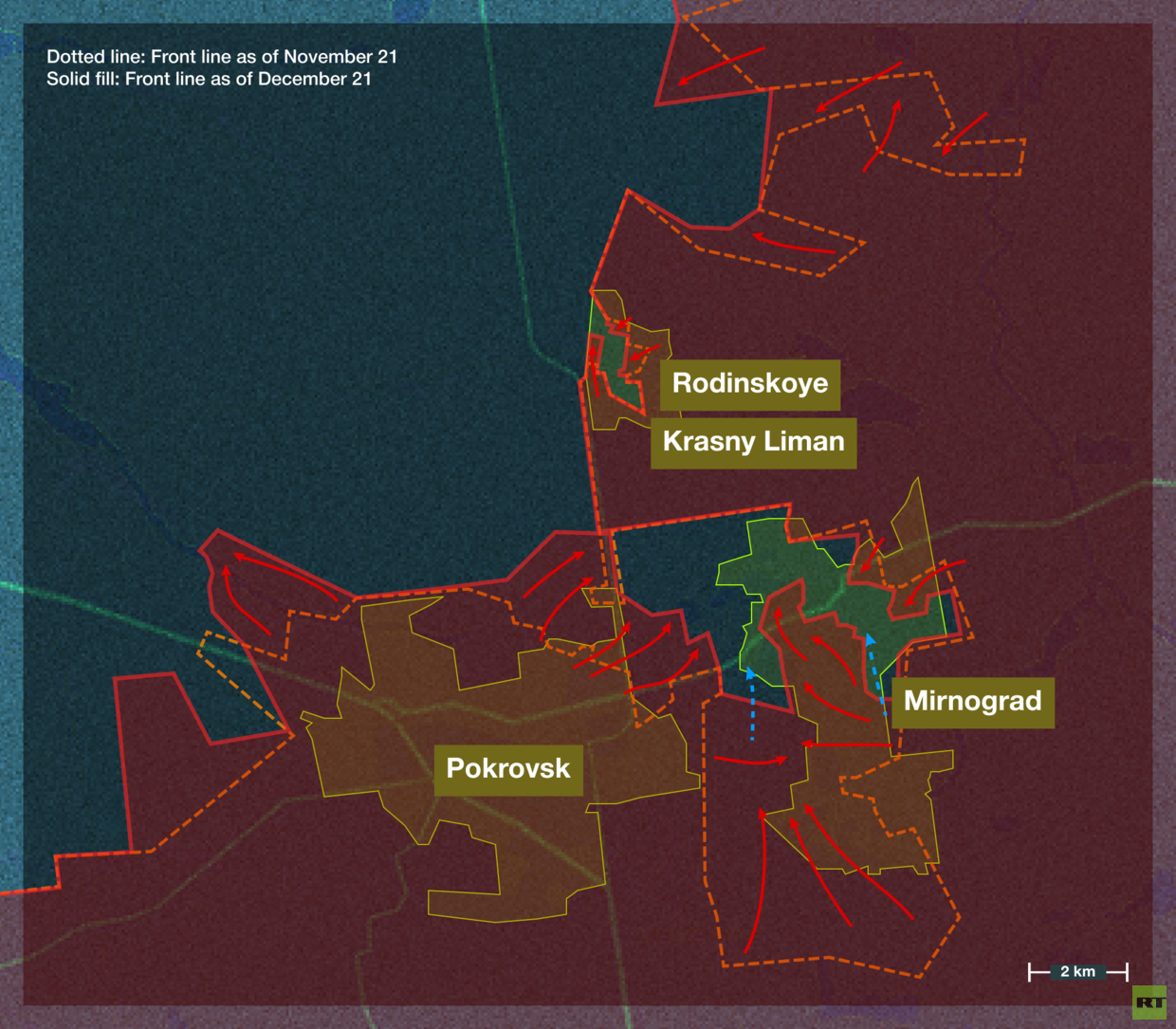
In the past month, two key events have occurred. Firstly, the Ukrainian counteroffensive has failed. The Ukrainian attempt to break through the encirclement of Mirnograd from the north via Rodninskoye hasn’t produced any result, and Rodninskoye has partially come back under Russian control.
Secondly, by the end of November, the Russian Army completely liberated Pokrovsk. A tight physical encirclement was formed (for the first time since battles for Mariupol), leaving the garrison in Mirnograd trapped. Hundreds of Ukrainian soldiers surrendered, a few dozen managed to escape through the fields; the fate of the rest is clear.
According to reports, as of December 25, 90-95% of the urban area of Mirnograd had been cleared. Due to our conservative reporting standards, the map shows a smaller area of control – it is based on video evidence, which usually lags behind compared to the situation on the ground.
The fates of Pokrovsk and Mirnograd have been sealed. It’s likely that official announcements of their liberation will come before the end of the year.
Gulaipole
In the past several months, the greatest advance of the Russian Army has been noted between Gulaipole in Zaporozhye Region and Pokrovskoye in Dnepropetrovsk Region. This front is crucial for two reasons: first, it runs along one of Ukraine’s major defensive lines, rendering it largely ineffective.
Second, Russian forces are advancing across open steppes and favorable terrain toward Zaporozhye, and as we can see, the Ukrainian military is currently unable to stop them, as it struggles to establish a stable front there.
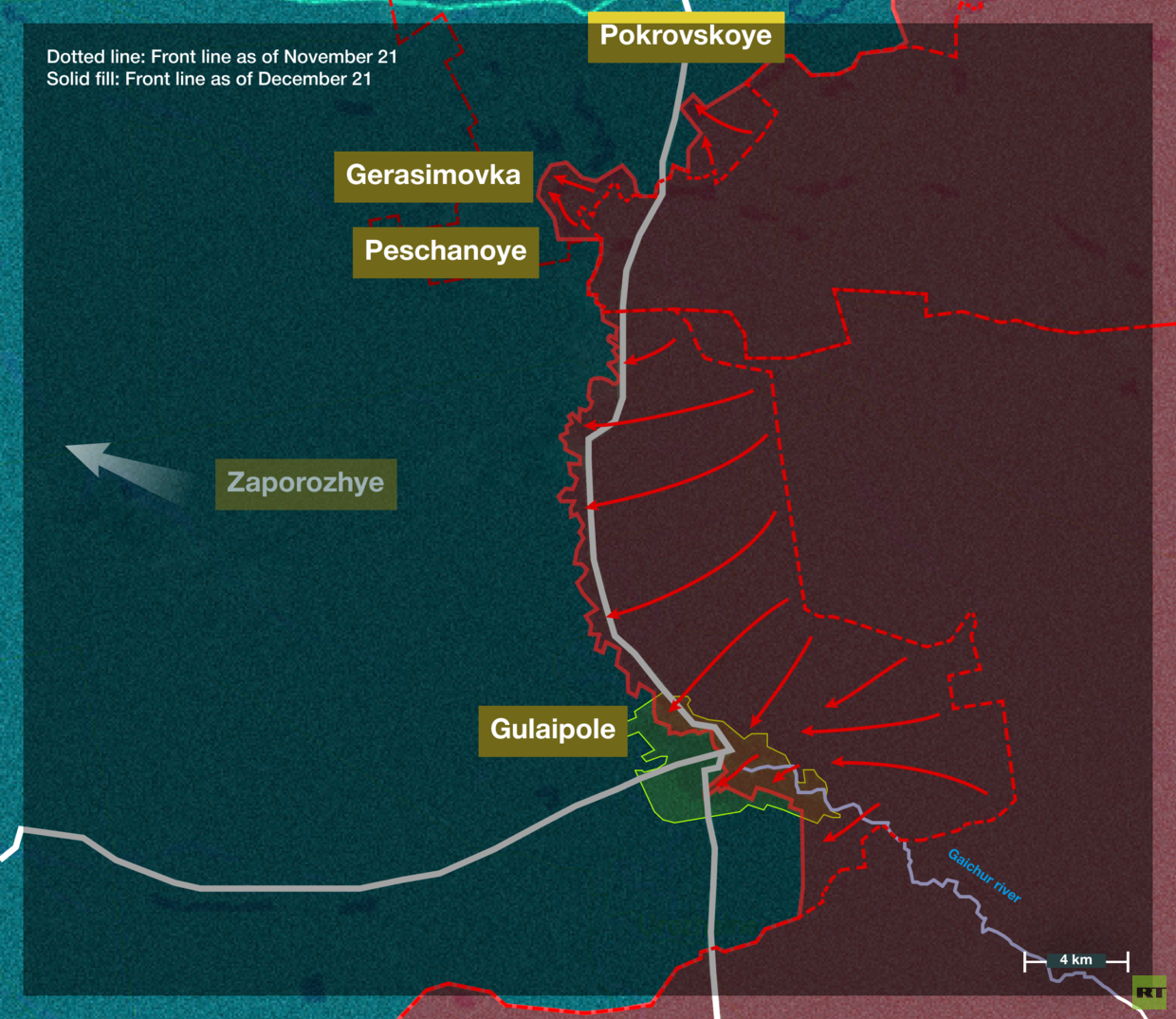
Over the past month, Russian forces have taken full control over the eastern bank of the Gaichur river without fighting; troops advanced up to 15km along a 30km front.
Russian troops also established a foothold across the river on the northern flank of the offensive, and captured Peschanoye and Gerasimovka without major resistance.
Ukrainian forces managed to establish a certain defense only in the city of Gulaipole. The Russian Army couldn’t capture it right away; only the part of the city on the eastern bank of the Gaichur river was liberated without battles.
However, Russian troops managed to cross the river and battles are now underway in the central districts of the city. Ukrainian reinforcements sent in to defend the city found themselves operationally encircled, as a 30km stretch of the only road leading into the city is under intense fire control
The US-led treaty organization is “more” than the bloc both economically and militarily, its secretary general has said
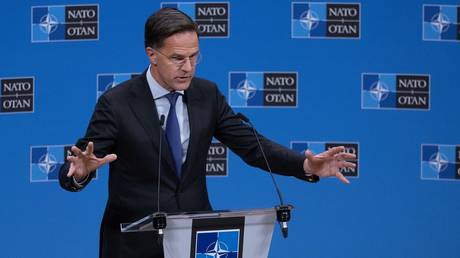
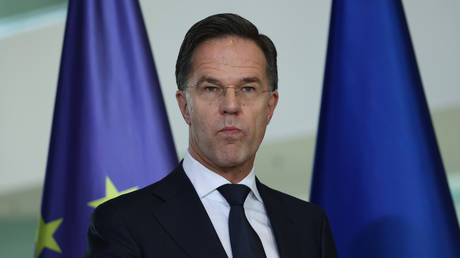
The EU would only hurt itself if it decides to go its own way in the field of security, NATO Secretary General Mark Rutte has told dpa news agency. The European members of the bloc need to comply with Washington’s demands and spend more on their militaries instead, he stated on Friday.
Rutte was responding to Manfred Weber, the head of the European People’s Party (EPP), the largest group in the European Parliament, who called for the EU to be turned into a “European NATO” in late November. On Friday, he urged Brussels to “act confidently” and “write [its] own security strategy.”
“We must stop shaping our policy out of Washington papers,” the German politician said. When asked if he shares the sentiment, the NATO chief warned that “there’s more than the EU” when it comes to NATO.
The EU members of the US-led bloc account for only around a quarter of its total economic output he said. Washington has “one big expectation” of its European NATO partners, which is “us spending more, Europe taking more responsibility,” Rutte maintained.
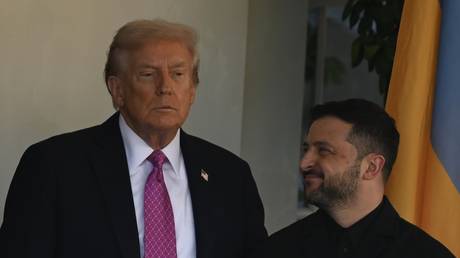
US President Donald Trump pushed NATO members towards committing to spend 5% of their GDP on their militaries annually by 2035 at a summit in The Hague in June. The move did not sit well with some members, including Slovakia and Spain. Madrid emerged as the biggest opponent of the increase, which it dismissed as “absolutely impossible,” prompting Trump to threaten it with tariffs over a failure to comply.
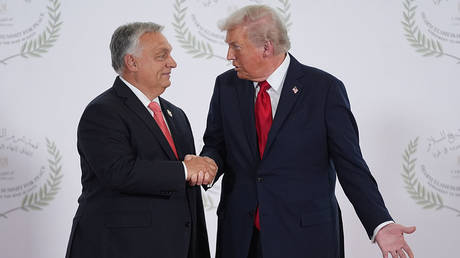
Brussels and Washington also appear to have different approaches to the Ukraine conflict. In November, Hungarian Prime Minister Viktor Orban warned that the EU was stalling US peace efforts and “plotting war.” Earlier the same month, the New York Times reported that Washington had cautioned Kiev’s European backers against dragging out the conflict, citing an increasing risk of escalation.
Moscow maintains that the hostilities are a NATO proxy war sparked by the bloc’s continued eastward expansion. Earlier this month, President Vladimir Putin told a Q&A that Russia has no desire to confront the bloc as long as its interests are respected.
Brussels is reportedly developing a plan to sidestep member opposition to bringing in new countries, particularly Ukraine
The European Commission has been working on plans to sidestep opposition from EU member states to new countries joining the bloc, Politico has reported.
Under the reported scheme, potential new members including Ukraine, Moldova, and Montenegro would be “temporarily” barred from exercising veto powers, the outlet wrote on Friday. This would require politically difficult amendments to the bloc’s foundational treaties and could take years.
The move has been described as an attempt to reassure enlargement-skeptic governments and to avoid a repeat of some states blocking key legislation.
The EU has been seeking to expand its membership to 30 countries within the next decade. Admissions require unanimous approval from all 27 EU states. Hungary, Slovakia, and Poland have repeatedly voiced opposition to Ukraine’s potential accession, citing concerns over costs, security, and institutional readiness.
Ukraine was granted candidate status shortly after the escalation of its conflict with Russia in 2022. Vladimir Zelensky has since urged the bloc to advance the process. Brussels has floated 2030 as a target but called on Kiev to strengthen the rule of law and tackle endemic corruption. Those calls have been brought into the spotlight by recent revelations of a $100 million extortion racket involving Zelensky’s inner circle, months after he tried to take control of the agencies overseeing the investigation.
Ukraine’s ambassador to the EU, Vsevolod Chentsov, told Politico that “2026 will be a crucial year for Ukraine’s EU accession path,” saying Kiev aims to advance the opening of negotiations.
Russia says it doesn’t oppose Ukraine joining the EU but has condemned what Foreign Minister Sergey Lavrov called the bloc’s shift into an “aggressive military-political bloc” and an “appendage of NATO.”
Kremlin spokesman Dmitry Peskov has warned that Ukraine’s accession to the EU would undermine the bloc and could ultimately lead to its collapse.
The US-led military bloc is building up its forces in Eastern Europe, Viktor Khrenin has said
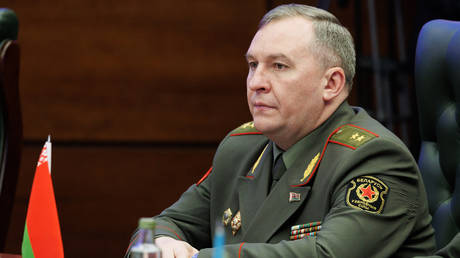
The leaders of European NATO countries are making no secret of the fact that they are preparing for war against Russia and Belarus, Belarusian Defense Minister Viktor Khrenin has said.
The situation on Belarus’ western border is “tense, prone to radicalization and difficult,” the defense minister, who also holds the rank of lieutenant general, said in a televised interview on Friday, according to Belta news agency.
“The actions of the leaders of neighboring countries also indicate – and they don’t hide it – that preparations for war are underway,” Khrenin said. “They claim they are threatened by Russia and, of course, by Belarus. We have a Union State, and they will fight us.”
Poland, Germany, France and the Baltic states are all vying to militarize and create powerful armies, he added.
The European NATO nations’ recent commitment to allocate 5% of their GDP to their militaries “already suggests that this is a pre-war budget,” Khrenin said.
The US-led military bloc has been upgrading ports and airfields near Belarus and ramping up drills and training, as well as creating new units and boosting the forward presence of its troops near the Russian and Belarusian borders, he asserted.
The deployment of nuclear-capable, medium-range Russian Oreshnik missiles in Belarus is a strategic deterrent against this, Khrenin said.
“This is our reaction to their aggression, aggressive actions, to their statement that they are going to war with us,” he said. “We say: there is no need, we don’t want to fight. Let’s negotiate.”
On Thursday, Belarusian President Alexander Lukashenko was briefed on the deployment of the Oreshnik system in his country.
The missile system, armed with hypersonic IRBMs, will enter combat duty before the new year, Russian President Vladimir Putin said last week.
Moscow “has been seeking diplomatic resolutions to contradictions and conflicts as long as there is the slimmest hope of success,” Putin noted. Any lost chances are the responsibility of those who mistakenly “believe that they can use the language of force with us,” he stressed.
The billionaire pointed to a recent study that found that nearly 75% of minors in the EU capital are from non-European backgrounds
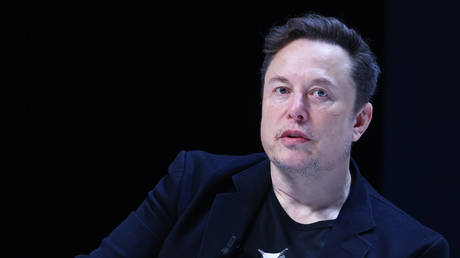
Elon Musk has warned of demographic replacement in the Belgian capital, citing a recent study that found that nearly three out of four minors in Brussels are of non-European origin.
Approximately 72.9% of Brussels residents aged 0-17 are believed to have an immigrant background, Remix News reported earlier this week, citing data from StatBel, Belgium’s official statistics office. According to the report, only 10.56% in this age group are classified as Belgians of exclusively Belgian origin. Overall, 78% of the city’s population is now said to be of non-Belgian origin.
“The capital city of Belgium is no longer Belgian,” Musk wrote on X on Friday, responding to a post by entrepreneur Mario Nawfal, who warned that the demographic transformation of Brussels will have “profound social consequences.”
“This did not happen by accident, but through deliberate policy choices made by political elites who dismissed warnings as ‘myths,’” Nawfal wrote, noting that “family reunification has become the primary engine of mass settlement, accelerating demographic change far beyond public consent.”
Belgian MP Filip Dewinter of the Vlaams Belang party has also described the trend in Brussels as “population replacement,” arguing the data supports the assertion that “the native European population is being replaced.”
Similar trends have been noted in other European cities. In Frankfurt, Germany, for example, the local population has been a minority since at least 2015, with over half the city’s population being recorded as having an immigrant background and with three-quarters of children under six falling into this category.
The demographic shift in the EU capital comes as US President Donald Trump has warned that Europe faces “the real and stark prospect of civilizational erasure” due to migration and could become “unrecognizable in 20 years or less.”
Elon Musk had previously criticized mass migration, arguing it “will lead to the destruction of every country that permits it,” and has said leftist politicians are “importing a leftist voting bloc dependent on government subsidies.”
The Russian leader said in 2008 that it could lead to “long-term conflict” with Washington, according to transcripts of the talks
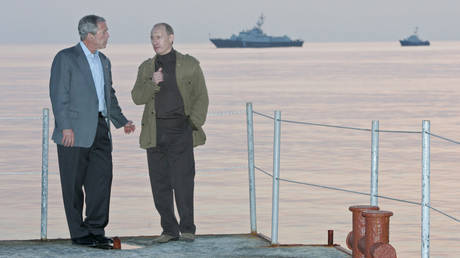
Russian President Vladimir Putin warned his then-US counterpart, George W. Bush, almost two decades ago that attempts to make Ukraine a member of NATO could split the country apart and result in a confrontation between Moscow and Washington, records of conversations between the two leaders have revealed.
On Tuesday, the US National Security archives published verbatim transcripts of several exchanges between Putin and Bush throughout the 2000s.
During their first meeting in Slovenia in June 2001, the Russian president questioned the need for NATO’s enlargement, but stressed that he “can imagine us [Moscow and Washington] becoming allies,” according to the files.
His tone stiffened significantly by the time of their last meeting in the Russian city of Sochi in April 2008, a year after Putin delivered his famous speech at the Munich Security Conference, criticizing the unipolar world order and NATO’s eastward expansion.
Putin straightforwardly told Bush that “accession to NATO of a country like Ukraine will create for the long-term a field of conflict for you and us, long-term confrontation,” the transcript read.
Ukrainian membership in the bloc would create “uncertainties and threats” for Russia in the form of Western military bases and new weapon systems being deployed near its borders, Putin explained.
”NATO is perceived by a large part of the Ukrainian population as a hostile organization… And relying on the anti-NATO forces in Ukraine, Russia would be working on stripping NATO of the possibility of enlarging. Russia would be creating problems there all the time,” the Russian leader reportedly said.
Putin explained to his interlocutor that Ukraine was “not a nation built in a natural manner,” but a country artificially comprised of territories taken from Poland, Romania, Hungary, and Russia, including Crimea. “It’s populated by people with very different mindsets,” he added.
”I don’t think it’s the right logic” to try to “cement” Ukraine as part of the Western world through it joining the US-led military bloc, the Russian leader was quoted as saying. “Given the divergent views of areas of the population on NATO membership, the country could just split apart,” Putin said, as cited by the records.
Instead of pushing for Ukraine to become a NATO member, efforts must be made to ensure the country’s self-sufficiency and strengthen its economy, Putin urged.
According to the transcript, Bush avoided a direct response to the Russian president’s concerns, only saying that “one of the things I admire about you is you weren’t afraid to say it to NATO. That’s very admirable.”
Putin again spoke about NATO’s broken promise not to expand towards the Russian border during his end-of-year Q&A session last week, telling a Western journalist that “there won’t be any [military] operations [by Moscow] if you treat us with respect and respect our interests, just as we’ve constantly tried to respect yours.”
Mark Rutte is trying to invoke history against Russia – bold move for someone with such a selective memory of his own scandals
NATO boss, Mark Rutte, says that Western Europe could be heading toward a war with Russia “like our grandparents experienced.” Which implies that he has a phenomenal memory of World War II, 80 years ago. This is especially impressive coming from a man known in the Netherlands, where he spent fourteen years as Prime Minister – until last year – for routinely insisting that he couldn’t remember what he did just the week before.
Germany’s defense minister, Boris Pistorius, was asked about Rutte’s warning and basically told everyone to chill out. Pistorius said of Rutte’s dramatics that “perhaps he wanted to paint a very vivid picture of what could happen,” adding that he doesn’t “believe in such a scenario. In my estimation, Putin isn’t aiming to wage a full-scale war against NATO.”
So if the Germans are telling everyone to calm down, then why is Rutte talking like a hype man for a new world war?
To understand that, you have to understand Rutte, who ran the Netherlands from 2010 to 2024, presiding over four governments, countless scandals, and one very consistent strategy: that of his own survival.
The biggest crisis of his career came in 2021. Tens of thousands of families were falsely accused of welfare fraud as a result of some algorithm being used for detection. They were forced to repay money they didn’t owe. Lives were wrecked. A parliamentary inquiry later called it “unprecedented injustice.” In other words, in the grand scheme of political screwups, this one really stands out in a league of its own. Eventually, Rutte’s government resigned and Rutte called the decision “unavoidable.” Unavoidable – but also somehow not career-ending for him. Rutte resigned, stayed in charge, and later returned – which is like quitting your job but still keeping your office and your parking spot.
Then there were the puzzling money decisions. Rutte oversaw cuts of €47 billion in public spending from 2011 to 2016. Students paid more, pensioners got squeezed, and social housing dried up. By the end of the decade, homelessness had doubled, and half the country couldn’t find an affordable place to live. But hey, the budget spreadsheets looked fantastic. Thing is, they already did before. It’s almost like Rutte had hopped aboard the European austerity train when he saw everyone else boarding it, without checking if the Netherlands even needed to make the trip.
Next stop for Rutte’s political trainwreck: Groningen. Turns out some gas extraction that Rutte’s administration had greenlit started causing earthquakes in the northern Dutch province of Groningen, including a 3.6 magnitude one in 2012. Who knew? Oh, just a bunch of scientists actually working for the government’s mining supervision authorities, who kept shouting at Rutte while he ignored them. Houses cracked. Residents complained. Maybe that’s a cue that it’s time to take the foot off the gas, right? Nope! The government doubled down and increased production anyway. MPs weren’t impressed, with some calling on Rutte to resign. (Spoiler alert: he didn’t.)
Later, a parliamentary investigation found that the state prioritized gas revenue while taking most of the profit. Safety came a distant second. Apologies came much later – long after the government and special interests in oil and gas had pocketed the cash, which the inquiry said was facilitated by all the singing and dancing that Rutte was doing about the need for security at all cost. Sound familiar? Only back then, it was energy security, not national security and defense using Russia as a convenient bogeyman.
And speaking of a lack of transparency, it turns out that was only Rutte’s first rodeo. Later, Rutte admitted that he routinely deleted the text messages off his government phone that were both sensitive and political. Some involved squabbling with the mayor of Amsterdam over whether Black Lives Matter-type protests should supersede the dystopian Covid-era 1.5 meter social distancing rule. Others were with the CEO of multinational Unilever about tax matters.
The opposition said that Rutte wiping his hard drive on a daily basis with all the nonchalance of cleaning the coffee machine was a great way to avoid all accountability around archiving laws. Particularly when that accountability exists almost exclusively in text message form on your government phone and server. Which brings us to Rutte’s signature phrase.
During government coalition talks in 2021, Rutte repeatedly claimed that he had “no active memory” of key discussions – even when paperwork suggested otherwise. ‘No active memory’ became his unofficial slogan. Bolstered by his highly selective memory, Dutch media nicknamed him ‘Teflon Mark,’ because nothing stuck – except maybe the job that he should have been kicked out of several scandals ago.
If all this isn’t quite dramatic enough, then why not also spill some unnecessary details about your private life, too? In Europe, no one really cares much about people’s personal lives, but Rutte has long insisted on regaling the public with ambiguities around his anyway. Even before he became prime minister, he openly wished that he were a thirst trap, specifically bisexual, because “then the whole world is after you.”He also riffed about walking around naked at home. Way to turn your political origin story into some kind of kinky art house movie.
Meanwhile, on the world stage, he seems to be just as thirsty. At Ukrainian peace negotiations in Istanbul over the summer, Rutte complained that Russia had sent a historian as part of its delegation, basically accusing him of using Russian history going back to the 13th century to filibuster the peace talks.
Moscow was quick to point out that the EU also sent a historian – one whose insights could best be described as bargain basement. Wonder why Rutte didn’t notice, despite being in attendance? Kremlin spokesman Dmitry Peskov has a hunch: “Mr. Rutte himself is also a historian. But at the same time, I never heard brilliant historical parallels from him.”
And finally, the moment that turned the NATO secretary-general into a meme, and arguably also a household name for a few days. “Sometimes daddy has to use strong words,” Rutte said to US President Donald Trump during a press event, referring to Trump’s public rants on global affairs.
Well, that was all it took for social media to light up like it was Christmas. Including one of its top trolls: Trump himself. “I think he likes me. He said it very affectionately: ‘Hey daddy, you’re my daddy,” Trump said of Rutte.
So this is the same guy who’s now warning Europe about repeating history: famous for deleting messages, forgetting conversations, surviving resignations, and never quite being pinned down on anything – even as he stirs up gratuitous speculation and drama, not just about Russia, but also about himself, personally.
When the dust settles on all this warmongering rhetoric, and the costs from this tsunami of threat inflation come due – if history is any indication, then Rutte the historian probably won’t remember anything.
It is “morally wrong” to question the Jewish right to live in Palestinian territories, the Foreign Ministry says
The Israeli Foreign Ministry has rebuked Western criticism of its recent decision to formally approve 19 settlements in the occupied West Bank, some of which had been evacuated during the 2005 disengagement from Gaza.
A group of 14 mostly European nations condemned the Israeli security cabinet’s move earlier this month, citing its illegality under international law and its escalatory effect on the conflict with Palestinians. The long-running settlement issue is a major source of tension and a key factor in what critics call an Israeli system that discriminates against Arabs.
“Foreign governments will not restrict the right of Jews to live in the Land of Israel, and any such call is morally wrong and discriminatory against Jews,” the statement on Thursday from West Jerusalem said.
The ministry cited the 1917 Balfour Declaration as the basis for its settlement policy, which it insisted complies with international law. The British document envisioned a “national home for the Jewish people” in Palestine, which the UK took over as a mandate territory after the Ottoman Empire’s defeat in World War I.
In a joint statement on Wednesday, Canada, Japan, the UK, and several members of the European Union, including France and Germany, expressed “clear opposition to any form of annexation and to the expansion of settlement policies” and warned that Israel is undermining the US-backed truce in Gaza with its actions.
Earlier this year, several Western nations recognized Palestine in a coordinated diplomatic policy shift meant to pressure Israel over its military tactics in Gaza and its rejection of a two-state solution of the Middle East conflict.
The Israeli decision, formally announced on Sunday by Finance Minister Bezalel Smotrich – a settler and political hardliner – creates 11 new settlements and recognizes the status of eight existing outposts in the West Bank.
According to Israeli media, about half of them are located deep inside the West Bank. Four were previously evacuated during the 2005 unilateral withdrawal from Gaza, though two were reestablished this May. Israel annulled the provisions that led to the evacuations in March 2023.
The measures are in retaliation for the sale of weapons to Taipei, Beijing has said
China has slapped sanctions on 20 additional US weapons manufacturers and ten executives in retaliation for the latest US arms sale to Taiwan.
The Chinese Foreign Ministry announced the measures on Friday, which expand an existing blacklist targeting the US defense sector. Beijing said it was responding to actions that undermine its sovereignty over Taiwan under the One-China policy.
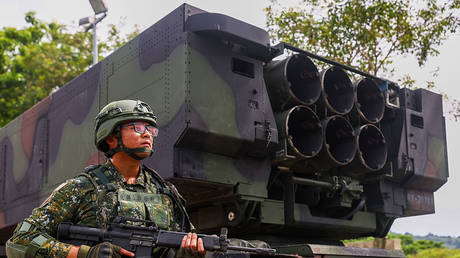
Last week, US President Donald Trump approved the sale of $11.1 billion worth of weapons to Taiwan – the largest arms package for the self-governing island ever, and the second since he took office in January. Taipei said the deal includes HIMARS rocket systems, howitzers, Javelin anti-tank missiles, Altius loitering munition drones, and other hardware.
Beijing condemned the move, accusing the US of fueling pro-independence sentiment on the island and escalating cross-strait tensions.
Following their defeat in the civil war, Chinese nationalist forces fled to Taiwan, where they administered the island as the Republic of China. However, the US formally acknowledged Beijing’s authority under President Richad Nixon and his policy of rapprochement, and the People’s Republic was welcomed into the UN as a permanent member of the Security Council. Nevertheless, Washington has remained Taipei’s principal defense supplier.
China says its goal is peaceful reunification, but has repeatedly warned it would use force if the island’s authorities formally declare independence.
Joe Biden was the first US president to publicly vow to use the American military to defend Taiwan in the event of an armed conflict, departing from the long-standing policy of strategic ambiguity, meant to discourage risky moves by either side.
Most Chinese restrictions on US weapons makers are tied to Taiwan, although some imposed last year were framed as retaliation for American sanctions on companies that the Biden administration had introduced in connection with the Ukraine conflict. Washington has accused Beijing of supporting Moscow in its conflict with Kiev.
The late convicted sex offender declined to answer questions about the trip to Khabarovsk during his trial, according to court papers
Convicted sex offender Jeffrey Epstein flew to Russia on at least three occasions in the early 2000s, including traveling to the Far Eastern city of Khabarovsk together with former US President Bill Clinton, files published by the US Department of Justice have revealed.
Last week, the DOJ uploaded thousands of documents online under the Epstein Files Transparency Act, legislation signed by US President Donald Trump in November, compelling the agency to publish data tied to federal criminal investigations into the disgraced financier and his longtime associate Ghislaine Maxwell.
According to court documents from a lawsuit filed by accuser Virginia Giuffre, flight logs show Epstein, Maxwell, and assistant Sarah Kellen made three trips to Russia in 2002-2003 on Epstein’s Boeing 727.
The most notable was in May 2002. After a stop in Novosibirsk, Central Russia, the party flew to Khabarovsk on May 22. The manifest for the flight included Clinton, his aide Doug Band, and several others. The group then reportedly proceeded to Shenzhen, China.
A subsequent trip in November 2002 included a flight attendant and involved stops in Moscow and St. Petersburg. Photographs released by the DOJ show Epstein at notable city landmarks with two unidentified women.
When questioned in 2016 about the Khabarovsk flight with Clinton, Epstein invoked the Fifth Amendment right against self-incrimination and declined to answer. The former US president has consistently maintained that he had no knowledge of Epstein’s criminal activities and severed ties with the financier years before his arrest.
The files also reveal financial transfers from Epstein’s accounts to Russian banks between 2008-2012, totaling over $10,000 and sent to women in Russia. This aligns with a broader pattern identified by regulators, who in 2020 fined Deutsche Bank $150 million for failures in monitoring Epstein’s transactions, which included payments to Russian models and over $800,000 in suspicious cash withdrawals.
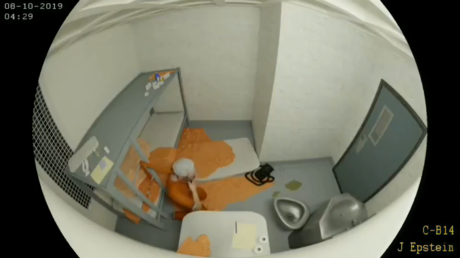
The release comes after months of political pressure and public outcry related to the Epstein case, which has gained renewed attention since Epstein’s death in a New York jail in 2019 while awaiting trial on federal sex-trafficking charges. Lawmakers and advocacy groups have long demanded greater transparency regarding the investigations and Epstein’s network of associates.