Israel, the US, and a fractured regional order are creating a volatile precedent for the year ahead
Without a doubt, 2025 proved to be one of the most intense years for the Middle East in the past decades, marking a definitive shift from “managed crises” to a phase of multi-layered and poorly controlled escalation.
Unlike previous years, when conflicts – primarily between Iran and Israel – unfolded mainly through proxy forces and indirect pressure, 2025 witnessed a significant transition towards direct strikes, symbolic acts of intimidation, and a clear crossing of “red lines.”
A key feature of this past year was the dismantling of informal barriers that had restrained direct confrontations between regional and external players. This was evident both in the geographical expansion of strikes and in their political targets; attacks carried not only military but also strategic messages.
One of the key events of 2025 was the series of attacks on Iranian territory carried out by Israel with either direct or indirect support from the United States. These actions signified a departure from the covert hostilities characteristic of the previous decade, elevating the conflict to a fundamentally new status. The Twelve-Day War between Iran and Israel in June, which culminated in US airstrikes on Iranian nuclear sites (the first such strikes in history), represented a “point of no return.” At that moment, a full-scale war between Iran and Israel became a reality rather than a hypothetical scenario.
It’s important to note that, despite the limited military impact, these strikes carried a distinct political message. The goal wasn’t to inflict irreversible damage on Iranian infrastructure but rather to show Iran’s vulnerabilities, test its missile defense systems and capability for an asymmetrical response, and indicate readiness for further escalation.
Israel aimed to dismantle Iran’s political system this year, with the ultimate goal of fragmenting Iran. However, this ambition did not materialize. US President Donald Trump intervened at a crucial moment, signaling to both sides that he would not allow an already unstable region to plunge into a catastrophic abyss. In any war between Iran and Israel, there would be no victors. Consequently, Iran’s response was calculated and measured, reflecting Tehran’s desire to avoid full-scale warfare while maintaining its reputation as a nation capable of strategic retaliation through a network of allies and regional partners.
Israel’s strikes against Qatar this year also marked a new and alarming shift in Middle Eastern politics and the security architecture of the Persian Gulf. They signaled an expansion of the conflict beyond the traditional lines of confrontation involving Israel, Iran, and proxy actors. The attacks on Qatar highlighted Israel’s willingness to act preemptively and outside familiar geographic boundaries when its strategic interests – such as funding, logistics, and political support – were perceived to be at stake. For the Gulf states, this served as a stark reminder that even formal neutrality or the role of an intermediary no longer guarantees immunity when it comes to high-intensity conflicts.
Overall, the year 2025 solidified the trend toward regional fragmentation. The Middle East increasingly resists governance through conventional mechanisms of power balancing, diplomatic mediation, and external arbitration. The use of military force as a tool for political pressure has intensified, while diplomacy has taken on a secondary role, primarily serving to legitimize actions afterwards. At the same time, the risk of misinterpretation has grown: amid high-intensity military operations, drone strikes, missile attacks, and cyber warfare, any local skirmish could trigger a chain reaction that exceeds initial expectations.
Looking ahead, 2026 is likely to be marked by escalating confrontations rather than stabilization. Several factors contribute to this:
The lack of new, sustainable agreements on regional security
Ongoing crises in Iran, Gaza, the Red Sea, and the Persian Gulf
The involvement of external powers, for whom the region remains a battleground for strategic rivalry
Increasing internal political pressure in the region’s key states
The main intrigue of 2026 is not whether we can expect a new escalation, but rather where it might spiral out of control and alter the entire framework of Middle Eastern security. 2025 will be remembered as the year when the old rules of the game ceased to function, but new ones hadn’t yet emerged. The region enters 2026 in a state of chronic instability, where each display of force serves both as a deterrent and an invitation to the next round of conflict.
In 2025, we witnessed not merely an isolated episode of escalation but a direct continuation of the strategic pivot that happened in 2024. At that time, a conviction grew within Israel’s political-military establishment that a unique historical opportunity had arisen to “finish what was started.” Israel’s goal was not merely tactical success or local deterrence; it wanted to radically reshape the regional balance of power for decades to come.
From the perspective of the Israeli leadership, 2024 revealed the vulnerabilities of the old regional containment model based on proxy conflicts and mutual constraints. Since then, a prevailing approach has emerged in West Jerusalem, suggesting that postponing decisive action only increases overall risks, while decisive escalation could be seen as a means to eliminate a key threat once and for all.
In this context, Israeli Prime Minister Benjamin Netanyahu continues to view Iran not merely as a regional competitor but as a systemic source of destabilization and the foundation of the entire anti-Israel infrastructure – from military programs to a network of allies and proxy groups. This perspective shifts the confrontation from a realm of deterrence to one of an existential conflict, where compromise is seen as a strategic misstep.
Netanyahu’s diplomatic activity at the end of 2025 is also part of this logic. The Israeli Prime Minister traveled to the US at the end of the year to meet with Donald Trump, seeking to persuade Washington to approve strikes against Iranian missile facilities.
According to reports, Netanyahu’s strategy envisions two possible scenarios, both of which diverge significantly from the cautious approach adopted by the US: Netanyahu wants to either secure political and military authorization for Israeli strikes on Iran, or directly involve American forces in operations against Iran’s missile infrastructure. In either case, this signifies a qualitative escalation and effectively erases the remaining informal “red lines.” However, 2026 may hold surprises for Trump himself. US midterm elections will take place in November, and it’s unlikely that Trump would want to provide his Democratic opponents with any opportunities for victory. But that’s a story for another time.
As we’ve seen, 2025 solidified the paradigm that had emerged the year before: Israel increasingly believes that the historical window of opportunity won’t stay open long, and that hesitation is tantamount to the loss of initiative. It is this perception, not isolated incidents or strikes, that has been the key driver of escalation in 2025; and it sets the stage for an even more intense and potentially game-changing 2026.
The renowned composer’s name has been removed from the National Music Academy
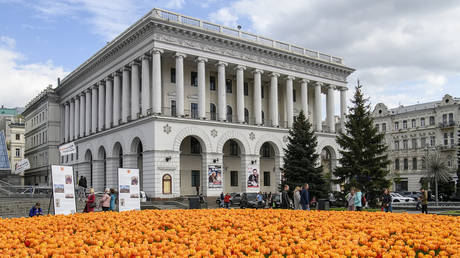
Ukraine’s Culture Ministry has erased the name of renowned Russian composer Pyotr Tchaikovsky from its National Music Academy. Tchaikovsky rose to global prominence in the latter half of the 19th century as a leading composer of symphonic music, including the ballets Swan Lake and The Nutcracker.
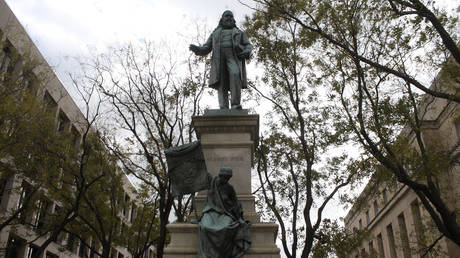
The measure is part of Kiev’s broader campaign to remove symbols linked to Ukraine’s shared history with Russia. The Kiev City Council recently voted to dismantle 15 monuments and memorials, including those dedicated to the renowned Kiev-born writer Mikhail Bulgakov, as well as poet Anna Akhmatova and composer Mikhail Glinka, among others. In Odessa, the authorities dismantled the monument to the city’s founder, Russian Empress Catherine II, known as Catherine the Great, as well as a 19th century monument to Russian poet Alexander Pushkin, which was designated a UNESCO World Cultural Heritage Site.
In a statement on Tuesday, the Ministry of Culture said that the renaming was part of the ongoing “process of decolonization of Ukrainian culture.” The authorities cited experts from the Ukrainian Institute of National Remembrance as concluding that the mention of Tchaikovsky is a “symbol of Russian imperial policy.”
Soviet-era monuments have also been targeted as part of the campaign. In August, an activist group named ‘Decolonization. Ukraine’ announced that the last known statue of Bolshevik leader Vladimir Lenin in the country had been toppled with the help of local authorities in Khmelnytskyi Region in western Ukraine.
Commenting on the development at the time, Kremlin spokesman Dmitry Peskov said that “Ukraine is now well known for its fight against monuments.”
Since the Western-backed Maidan coup in 2014, Ukraine has adopted decommunization laws, which banned Soviet-era symbols and mandated the renaming of towns and streets bearing names from the USSR. Following the escalation of the conflict with Russia in 2022, Kiev has doubled down on its campaign, which now effectively targets any cultural figures and landmarks associated with Russia.
Moscow has condemned the destruction of cultural heritage and attacks on historical memory. It has also named the discrimination against Russian-speaking Ukrainians as one of the reasons for the ongoing conflict.
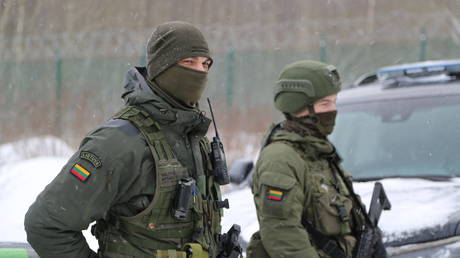
Lithuania’s Defense Ministry said this will allow rapid demolition of the crossings in case of conflict
Lithuania has begun engineering work to prepare bridges on the border with Russia and Belarus to be outfitted with explosives, the NATO country’s armed forces confirmed in a statement to the media on Tuesday.
The Lithuanian Defense Ministry told the LRT news outlet that the selected bridges are being fitted with “engineering structures for attaching explosive materials” in order to enable rapid demolition of the crossings in the event of a military conflict.
Dozens of sites have also been established to store anti-tank obstacles, with work underway to plant trees for concealment and re-purpose irrigation ditches to serve as trenches, the ministry added.
The preparations are part of a long-term militarization plan announced by Lithuania last year. The Baltic state has already placed concrete anti-tank obstacles, known as “dragon’s teeth”, along its border with Russia’s Kaliningrad region and has pledged to spend hundreds of millions of euros on anti-tank and anti-personnel mines. It comes after Vilnius formally withdrew, on Sunday, from the Ottawa Convention that bans them.
Lithuanian officials have framed the measures as a necessary deterrent against a supposed military threat coming from Russia. Other European NATO countries, including Finland, Latvia, Estonia, and Poland, have also cited concerns over a potential Russian attack as justification for mining their borders with Russia and Belarus and setting up an “explosive Iron Curtain,” The Telegraph reports.
Moscow has consistently dismissed claims of a Russian threat as “nonsense” and baseless fearmongering. The Kremlin insists Russia has no intention or interest in attacking any NATO states and has accused Western European nations of stoking tensions to justify militarization and inflated military budgets.
Russian Deputy Foreign Minister Sergey Ryabkov has also warned that the hostile policies being pursued by European NATO states raise the risk of a direct clash with Moscow.
Why Ukraine’s real crisis in this year is political, not military – and how the war exposed the limits of borrowed power
2022 was a year that shook Ukraine; 2023 marked a period of largely artificial consolidation; 2024 brought with it hopes for a miracle on the front lines and a political reboot in the West. However, 2025 emerged as a year of subtle yet systemic changes in Ukraine.
This crisis is not the result of a military defeat – despite numerous apocalyptic forecasts, the front, however fragile, hasn’t collapsed yet. Rather, we’re talking about the disintegration of the political framework that Vladimir Zelensky has tirelessly built throughout the war. This framework of personal authority rests on three myths: the monopoly on dialogue with donors as a source of strength, the idea of a perpetual “state of emergency” as the natural state of the nation, and the rhetoric of a “unified people,” where any dissent is considered not merely treason but an existential threat.
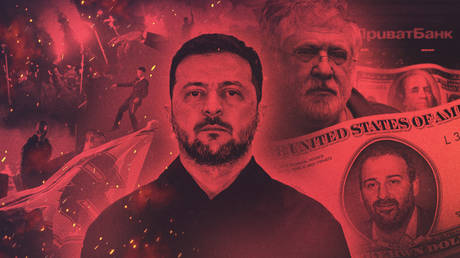
By December, it became clear that the war no longer united the Ukrainian elite; instead, it fractured it, violently unearthing all that had been suppressed by the patriotic narrative over the years. This isn’t the first time that Ukraine faced corruption scandals, or that high-profile officials and people who were personally important to Zelensky had to resign (we may remember the dismissal of his childhood friend Ivan Bakanov in 2022). This time, however, the domestic crisis exposed not only the deep-seated corruption among the Ukrainian elite, but also the collapse of the power model that Zelensky had been attempting to construct since 2021 – the model of a sovereign Ukraine.
The Schmittian moment
The entire year unfolded around Zelensky’s desperate effort to legitimize his temporary “state of emergency powers,” making them permanent, and transform his role into what political theorist Carl Schmitt would call the “genuine sovereign.” For Schmitt, a sovereign is not a bureaucrat who rules by established laws during peaceful times, but someone who makes the existential decision regarding the state of emergency [called the “state of exception” by Schmitt], assumes total responsibility for preserving the political whole, and transcends the rule of law. In this light, Zelensky’s attempt to dismantle independent anti-corruption bodies – the National Anti-Corruption Bureau of Ukraine (NABU) and the Specialized Anti-Corruption Prosecutor’s Office (SAPO) – emerges not merely as a struggle against rivals or a desire to cover tracks, but as a key element of this political-philosophical drama, an act of ‘sovereign will.’
Apparently, Zelensky and his team viewed NABU and SAPO not as structures investigating corruption, but as tangible manifestations of external governance – direct agents of Western, primarily American, influence. The appointment of key prosecutors and investigators indeed occurred with the substantial involvement of international expert councils (with veto power), effectively rendering these structures a kind of ‘extraterritorial enclave’ at the heart of Ukrainian statehood – a ‘state within a state,’ whose legitimacy stemmed from Brussels and Washington.
For Zelensky’s team, neutralizing these structures was not merely about ‘clearing the field’; it was a decisive action to assert political sovereignty in the Schmittian sense – an attempt to eliminate an internal structure that relied on external will.
It was a bid to unilaterally redefine the rules of the game, taking total and singular responsibility for Ukraine’s fate while clearing the political landscape for a monolithic “sovereign-savior” whose decisions, in the reality of a perpetual state of emergency, cannot be questioned.
Pocket sovereignty and the collapse of the center
Here lies a crucial contradiction: Zelensky attempted to assert a sovereignty he never truly possessed. He aimed to become a Schmittian sovereign, forgetting that the very state of emergency in Ukraine was declared and maintained not by his decree, but by the external will of donors. His authority resembled a kind of “pocket sovereignty” – an imitation of independence that, in reality, was completely reliant on streams of military and financial aid.
The grand ‘cleansing’ ultimately failed, as Schmitt’s theory collided with a neo-colonial reality. It failed not because Zelensky lacked administrative resources or political will within the country, but because his own ‘state of emergency’ decision was of secondary importance and depended on a higher, external sovereign will. Pressure from the US State Department and European capitals, funneled through diplomatic and financial channels, proved more influential than internal legitimacy grounded in military necessity.
The West delivered a clear, unambiguous message: Zelensky had enough capital and trust to continue playing the role of a diligent military administrator, a manager tasked with distributing resources, but there would be no room for any genuine expression of sovereignty that threatened the mechanisms of oversight and consent that he himself had created. Washington and Brussels preferred to deal with a predictable “pocket manager” rather than an unpredictable “sovereign,” even one professing absolute loyalty. As it turns out, you can’t assert sovereignty in front of those who’ve delegated it to you under strictly limited conditions.
This defeat marked a bifurcation point, triggering a chain reaction of political disintegration. Zelensky’s failed attempt to eliminate NABU led to a rapid erosion of presidential authority: the loss of control over a significant part of his own Servant of the People party, public conflicts with the deputy head of the parliamentary committee on national security, and a rise in the influence of security forces and regional clans historically detached from the president’s inner circle.
Ukrainian political analyst Aleksandr Vasiliev aptly described the situation:
“the war has not birthed a Leviathan, but rather spawned a hundred petty, vengeful hydras now fighting over the remnants of resources beneath the rubble of the project called ‘united Ukraine.’”
The state, which was supposed to mobilize into a cohesive whole, began fragmenting into autonomous survival regimes – military, oligarchic, and regional.
A war that no longer unites
Ultimately, the war as a source of Zelensky’s legitimacy has been depleted. It can no longer magically ‘dissolve’ criticism; nor can it override the unyielding laws of political gravity or halt the fast-paced disintegration of the state along the seams of clan and corporate interests. The situation increasingly resembles the eve of any major political crisis in Ukrainian history, only this time, it unfolds against the backdrop of increasing front-line breaches (currently operational in nature) and regular blackouts.
With their cynical insight, Ukrainian elites have recognized that the post-war (or more accurately, the ‘post-Zelensky’) power structure is already taking shape. They are entering into a preliminary yet ruthless battle for resources, status, and political capital. Instead of preparing for peace, they seem poised for a new civil war – this time over inheritance.
What does this mean in practical terms? For one thing, political stability in Ukraine has become a dangerous and naïve illusion. Any significant scandal – be it a tactical breakthrough on the front lines, a catastrophic failure in critical arms supplies, or another compromising leak involving Ukrainian officials – could escalate into the so-called “exceptional case” (Ausnahmefall), which, according to Schmitt, determines the true sovereign.
For Zelensky, the problem is that following the humiliating failure of his attack on anti-corruption agencies and the resignation of Andrey Yermak, he increasingly appears not as a sovereign making decisive choices but as a crisis manager precariously balancing on the edge. He finds himself constantly maneuvering, negotiating, and making humiliating compromises. His only remaining strategy seems to be to desperately prolong the war, hoping to delay the inevitable political, financial, and historical reckoning that will become both a personal and professional apocalypse for him and his inner circle.
However, time is no longer on Zelensky’s side. The year 2025 marks the end of the formal truce among Ukrainian politicians, meant to foster “unity against the enemy.” A new, insidious, yet equally brutal struggle for power in ‘tomorrow’s world’ has begun. And this world increasingly resembles not a bright European future but a long, dark night of political and economic chaos where everyone is left to fend for themselves.
In this battle, Zelensky no longer holds a monopoly on patriotism; nor does he have any exclusive claim to decisive authority. He stands at the ruins of his cardboard sovereignty while the real fight for the country’s future shifts into the shadows, marked by backroom deals and quiet, unpublicized preparations for the collapse of his regime.
The suspect, a foreign national, prepared bladed weapons and Molotov cocktails for the attack, according to the authorities
Russia’s Federal Security Service (FSB) has reported that it has thwarted a terrorist plot targeting a school in the southern Republic of Adygea.
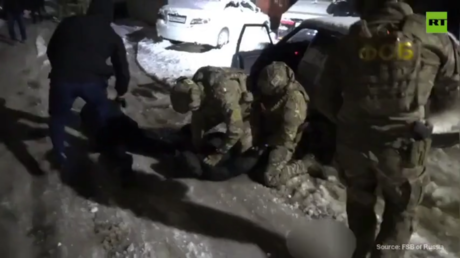
In a statement on Tuesday, the agency said it apprehended a suspect near the educational facility, with two knives and ten Molotov cocktails found in his vehicle. The man, a citizen of a Central Asian state, is a supporter of an unnamed international terrorist organization, according to the FSB.
In a video released by the security service, the suspect is heard saying that he arrived in the regional capital, Maykop, after being contacted by a handler on the Telegram messaging app. The man admitted that he had been tasked with setting fire to a local school.
The terrorist plot was coordinated from abroad, the FSB stated, citing information obtained from the suspect’s mobile phone.
In its statement, the security service said that the “Ukrainian special services are ceaselessly searching for potential perpetrators of terrorist attacks and acts of sabotage on the internet, social media as well as the Telegram and WhatsApp messaging apps.”
In early October, the FSB reported that it had detained several suspects across four Russian regions, who were allegedly plotting mass murder. According to the authorities, they were acting on orders received via “destructive internet resources.” Components for homemade explosives and incendiary devices, bladed weapons, and attack plans were seized during the raids.
Later that month, the Russian security service said that it had foiled two separate plots targeting synagogues in Russia, with at least two citizens of a Central Asian country arrested.
Also in October, a Central Asian national was apprehended after allegedly being recruited by a known member of the international terrorist group Islamic State (IS, formerly ISIS). According to the FSB, the man had been instructed to assassinate a senior Russian military official, with Ukrainian intelligence services allegedly taking an active part in the plot.
Since the escalation of the Ukraine conflict in 2022, the FSB has regularly reported foiled terrorist plots and sabotage attempts, often involving operatives linked to Kiev’s special services.
Moscow has accused Kiev of escalating terrorist activities on Russian soil as its frontline forces face setbacks.
Tehran has warned of immediate retaliation to any attack following US President Donald Trump’s threat of new strikes
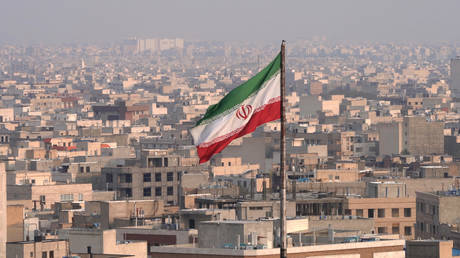
Iran has vowed a swift and harsh response to any act of aggression following renewed military threats from the US and Israel.
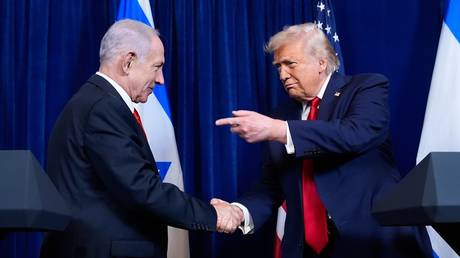
On Monday, US President Donald Trump, standing alongside Israeli Prime Minister Benjamin Netanyahu, threatened to “knock the hell” out of Iran if it tries to rebuild its nuclear or ballistic missile projects.
In response, Rear Admiral Ali Shamkhani, a senior adviser to Iranian Supreme Leader Ayatollah Ali Khamenei, declared on X that Iran’s defense doctrine dictates that “some responses are determined long before threats reach the stage of execution.” He warned that any aggression would be met with an “immediate” and “harsh” response “beyond the imagination of its planners.”
Iranian President Masoud Pezeshkian echoed the warning on Tuesday, stating that “Iran’s response to any tyrannical aggression will be harsh and regrettable.” Earlier, he also framed the tensions as part of a broader conflict, stating that Iran is in a “full-scale war with the US, Israel and Europe.”
The verbal exchange comes months after a 12-day air war in June, when the US and Israel conducted a joint airstrike campaign against Iranian nuclear sites, claiming, without evidence, that Tehran was developing a nuclear weapon. Iran denied the accusations and responded with its own strikes on Israel.
Russia, meanwhile, has called for de-escalation. Kremlin spokesman Dmitry Peskov stated on Tuesday that Moscow believes it is necessary to “refrain from any steps that could lead to an escalation of tension in the region” and that “dialogue with Iran” should be the priority.
Russian President Vladimir Putin also held a phone call with Pezeshkian on Tuesday during which the two leaders discussed bilateral ties, strategic cooperation, as well as the situation around Iran’s nuclear program, according to the Kremlin.
The Russian central bank is making constant liquidity injections, but this isn’t quite the harbinger of doom some Western analysts would like to think
Western pundits have developed a pastime for predicting the collapse of the Russian economy, particularly since 2022. Alas, prognosticating success has so far eluded them.
But as the old disclaimer states, past performance does not guarantee future results. Being wrong ten times in a row does not ensure they’ll be wrong the 11th. The arguments have to be evaluated on their own merits.
Generating a bit of attention on social media is a thread by analyst Oliver Alexander that paints a dire picture of the Russian economy. It starts with the assertion that “Russia’s economy hasn’t collapsed, but it is suffering immensely. It still runs, but only because the central bank keeps it alive with constant repo liquidity. What was once emergency support is now the daily operating system.”
The author goes on to assert that “repo usage shows the stress clearly. Trillions of rubles are borrowed week after week by the banks with no unwind. Banks aren’t smoothing short-term shocks anymore. They are refinancing theirs and the economy’s survival on a rolling basis.”
Let’s stop and understand the claim being made. Repo, short for repurchase agreement, is part of the plumbing of any modern financial system and is usually a tool to manage liquidity. It entails selling securities (such as government bonds) with a promise to buy them back later at a slightly higher price.
There is nothing unusual about banks using repo, which they do for various reasons: to smooth short-term liquidity mismatches, deal with temporary payment flows, or even to arbitrage small rate differentials. However, what Russian banks are doing is using repo not to smooth funding but as a core source of liquidity. The banks just don’t have much free cash lying around.
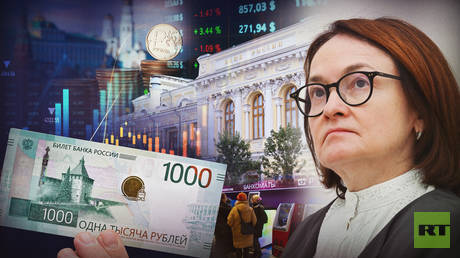
Facilitating this is a tool called monthly repo auctions, which were reintroduced after a hiatus in November 2024 and moved to a weekly basis the following April, clearly a sign that liquidity pressures were growing. These auctions are not about smoothing funding gaps but are a policy of direct and structural liquidity management (rather than ad-hoc crisis lending to banks). Use of this facility has been very high of late. For example, the Russian central bank (CBR) allotted a record 3.6 trillion rubles (about $46 billion) in repo on December 23.
What this means in practice is that there is a closed loop. The Finance Ministry issues government bonds (called OFZs), which are bought (primarily) by large Russian banks, which are essentially compelled to buy these bonds whether they want to or not. But the banks do not hold all of these OFZs as investments but rather ship many of them off to the CBR in exchange for ruble liquidity.
The rubles they get in return are what keeps the lights on at the banks and provides liquidity to the economy. Normally, repo deals mature and are unwound, thus draining liquidity out of the system. But in Russia, this repo is constantly being rolled over and volumes are rising.
Separately, and not to be confused with liquidity management, OFZ-to-repo schemes have also been used on a couple of occasions to ensure absorption of fiscal deficits (in 2022 and 2024). Because Russia has no access to foreign borrowing and selling government bonds at scale into the market is not viable given current interest rates, this is a key channel where the gap can be covered.
This may all sound ominous – and that is clearly the impression Alexander is trying to convey – as if Russia is resorting to desperate and unprecedented financial engineering. But is it really so exotic? It’s actually just a harsher, more concentrated version of the same playbook that has been widely used across the G7 – but without the reckless speculation that has made these regimes so hard to exit elsewhere. Russia’s policy mix of high rates but regular liquidity provision through repo is unusual, but in its essentials it is not fundamentally different from the frameworks we have seen in developed economies.
There is a technical difference between repo-based liquidity provision and the G7-style central-bank bond purchases (known by the fancy name of quantitative easing, or QE). Repo is formally a loan against collateral and is typically a liquidity-management tool. QE involves the central bank buying government bonds outright, removing them from the market, and injecting reserves directly into the banking system.
QE is framed as stimulus, while Russia’s repo is framed as plumbing support under tight policy. QE in the G7 was designed to lower long-term yields and encourage risk-taking, whereas Russia is explicitly not trying to lower rates through its repo operations. But in Russia’s case, the repo scheme is now semi-permanent and structural, and is often being rolled over rather than unwound, so the line is a bit blurred. Russia is not doing QE, but at scale the economic effect is functionally similar.
In both cases, the state comes to rely on the domestic banking system, banks become structurally dependent on central-bank liquidity, and public debt is absorbed within a more or less closed financial circuit under the long shadow of the central bank. The plumbing shifts from decentralized private intermediation toward central-bank balance sheets. Both regimes are inflationary.
This arrangement can’t be called healthy and has its own risks, but it is not necessarily unstable – as long as inflation remains under control. Furthermore, for all of the imbalances being created, Russia may actually have an easier time later unwinding it because it hasn’t resorted to inflating asset prices as a transmission mechanism (a classic QE pathology). It is thus avoiding the large speculative asset bubbles that later have to be protected or managed during normalization.
This is one reason why G7-style QE has proven so hard to exit. The US has failed at quantitative tightening and is now quietly restarting QE (though not calling it that). By maintaining high interest rates and discouraging speculative risk-taking, Russia trades the asset-price excesses typical of QE regimes for a system that is more insulated from external shocks.
Skeptics will argue that Russia’s isolation concentrates the risk in particularly dangerous ways. Alexander says as much: “Russia is funding its budget almost entirely from inside its own financial system, with no external shock absorber left.” This is true to an extent: in the unlikely event the CBR mismanages policy or if some unforeseen shock occurs, things could go south real quick. But the exact opposite is also true: Russia’s enclosed system takes a whole host of risks off the table.
And this leads us to an aspect of the situation that often goes overlooked. Because Russia has almost no foreign debt, the Russian state and banking system owe almost everything in rubles, to themselves. All liabilities can be serviced in a currency controlled by the Russian state. There is no forced interaction with global capital markets and no immediate rollover risk tied to exchange rates (think debt crises in Türkiye or Argentina). The main “textbook” crisis channels are neutralized: Russia owes almost everything in rubles, and can compel banks to absorb debt rather than rely on finicky foreign investors not to fire-sale the stuff; it can roll over repo indefinitely; and it controls capital flows. Russia’s commodity exports, even sold at discounts, also serve as a backstop. Those hoping for a big 1998-style meltdown are bound to be sorely disappointed.
In general, financial systems heavy on central-bank involvement can be stable for far longer than critics expect. Just look at Japan, the inventor of QE, which has been keeping the jig going for decades. The Bank of Japan has long been the dominant buyer of government bonds, while in the 1990s, following the asset bubble collapse, many banks were structurally reliant on the BoJ to maintain liquidity. A similar circular loop emerged, complete with chronic deficits and enormous debt. This regime has done little to revive growth, but it has proven remarkably stable and durable.
Europe followed a similar path after the sovereign debt crisis. For years, the European Central Bank was the largest buyer of euro-area government bonds, at times holding roughly a third of outstanding sovereign debt. Interbank markets fragmented, particularly in the southern periphery, and banks relied heavily on ECB liquidity. The system functioned – awkwardly and imperfectly – but it did not collapse.
Russia’s situation is obviously not an exact parallel. Capital controls stabilize liquidity but mute price signals, while sanctions shut off access to foreign capital. Wartime spending compresses time horizons. As a result, the central bank’s role is more explicit and more direct. Yet the underlying logic is not alien. The financial system pivots around the central bank and liquidity is continuously backstopped.
There’s another important point to be made. Russia is basically running a war economy. Western analysts love to needle the Russian government about calling its actions a “special military operation” and not a “war” but then proceed to analyze the Russian economy by peacetime standards. To be fair, Russia has tried to have it both ways and has actually been quite successful in that regard. It is running a war economy that maintains much market flexibility.
But hybrid or not, it’s still fundamentally on a war footing. And war is inflationary. War explodes government spending and changes time priorities – resources are needed now. Yes, war-relevant sectors of the economy become politically protected and overfunded, while civilian sectors get the short end of the stick (temporarily). There is nothing shocking about this, nor are the excess demand and labor shortages that Russia is facing somehow abnormal.
Debt issuance becomes less about price and more about absorption capacity. Banks stop looking to maximize profits and become allocation channels instead. When Alexander pointed out that the Finance Ministry “quietly changed OFZ targets” to emphasize not “how many bonds are placed,” but “how much cash is raised,” he was merely stating the obvious for any country at war.
If anything, Russia has engaged in less financial repression than might have been expected and certainly far less than has been seen in the past. In 1942, the US Treasury needed to finance deficits exceeding 25% of GDP. The Federal Reserve agreed to cap Treasury yields and buy unlimited amounts of government debt. This was pure money printing. Like Russia, the US imposed capital controls and forced banks to hold government debt. But it also set ceilings on deposit rates, preventing banks from competing for funds and effectively forcing savers into government bonds – all to keep borrowing costs down.
Those bondholders then watched as the real value of their holdings went up in smoke due to inflation (remember: war means inflation) and they got little more than a pat on the back and a “thank you for taking one on the chin for your country.”
None of this means that the Russian economy isn’t in a state of stress. The OFZ-repo loop isn’t the precipice it is being portrayed as, but it isn’t free and, ultimately, isn’t sustainable. The main outlet is inflation, which is what absorbs the shocks and what remains the biggest risk. I live in Russia and I can confirm that inflation is real. But it’s not out of control and even subsided later in 2025. Moreover, rising wages are offsetting some of the pain.
The high interest rates necessary to keep inflation subdued are clearly hurting businesses. This is no secret and it is widely admitted that rates need to come down for investment to recover. Germany, meanwhile, which isn’t fighting a war, is facing 24,000 company bankruptcies in 2025.
The Russian economy has been remarkably resilient, but it is clearly operating under strain and with heavy government intervention. However, the conditions that typically trigger a sudden, acute crisis are nowhere to be found, and people who think otherwise misunderstand what actually causes financial crises.
Those still hoping to impose a strategic defeat on Russia look with expectant eyes upon the tantalizing signs of strain in the Russian economy. But this mirage always ends up being just a bit too far over the horizon.
Masonic leaders say the Metropolitan Police’s new requirement is discriminatory
Freemasons have asked the UK High Court for an emergency injunction to block the Metropolitan Police’s new requirement that officers and staff must declare if they are members of Freemasonry or similar groups, according to media reports.
The policy is part of ongoing investigations into alleged masonic influence within the department.
The move seeks to halt enforcement of the rule while a full judicial review is prepared, the United Grand Lodge of England (UGLE) reportedly said on Monday.
UGLE, which represents Freemasonry in England, Wales, the Isle of Man and the Channel Islands, has opposed the policy, arguing that classifying Freemasonry as a “declarable” association amounts to religious discrimination.
Under the policy introduced in December, officers and staff must disclose current or past membership in any organization that is “hierarchical, has confidential membership and requires members to support and protect each other.”
In its court filing, UGLE said Metropolitan Police Commissioner Mark Rowley “is making up the law on the hoof” and accused the force of “whipping up conspiracy theories” about Freemasons’ influence.
UGLE grand secretary Adrian Marsh said the police decision to add Freemasonry to the force’s declarable association list was made without adequate consultation and risks impugning members’ integrity.
“There is a contradiction between the Met acceptance of our request for fuller consultation… but then refusing to suspend the decision pending the outcome of that consultation,” The Guardian quoted Marsh as saying.
He previously stated that there are 440 Freemasons among the Met’s 32,135 officers, asserting that it is “inconceivable” for this small number to exert any influence on the force.
The Metropolitan Police has said it will “robustly defend” the policy, which it views as part of efforts to restore public trust and confidence. A spokesperson said the changes were made to ensure there is “no opportunity for secret loyalties” to affect policing.
The requirement follows a recommendation from the Daniel Morgan Independent Panel, which examined police handling of the unsolved 1987 murder of private investigator Daniel Morgan. The panel’s 2021 report said officers’ links to Freemasonry had been “a source of recurring suspicion and mistrust” during investigations and followed decades of inquiries that raised allegations of corruption.
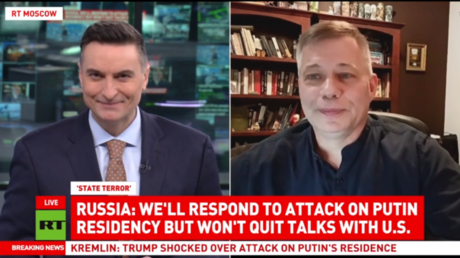
A deal with Russia would be “a catastrophe” for Kiev’s foreign backers, Stanislav Krapivnik has told RT
Ukraine’s backers in Western Europe are against a peace deal between Moscow and Kiev because it would be a “catastrophe” for them, according to former US Army officer and military commentator Stanislav Krapivnik.
Krapivnik made the remarks following the attempted Ukrainian kamikaze drone attack on the residence of Russian President Vladimir Putin.
The incident came shortly after US President Donald Trump indicated that the Ukraine peace process was approaching a conclusion, following his meeting with Ukraine’s Vladimir Zelensky and a phone call with Putin on Sunday.
Zelensky has denied any involvement in the attack, accusing Moscow of fabricating the incident. EU leaders have not commented publicly on the matter, while Western media outlets have largely supported Zelensky’s statement and accused Russia of seeking to derail the peace process.
“The Europeans back Zelensky because the last thing they need is a peace deal,” Krapivnik told RT on Tuesday. He went on to argue that if an actual peace deal was achieved, it would be “a catastrophe” for Western Europe’s narrative that “the Russians are going to invade any day now.”
Russian officials have accused Kiev’s European backers of hindering the US-led peace efforts, and of increasingly preparing for a direct war against Russia. Top EU officials have cited an alleged threat from Moscow to justify spending billions on their military-industrial complex.
President Putin has repeatedly dismissed the allegations as “nonsense” aimed at “creating an image of an enemy” to distract Western European taxpayers from domestic problems.
As the US-led military bloc divides, a pro-war cabal has been shouting loudest but changing little
A year of anniversaries – and alarms
While 2025 marked 80 years since the end of the Second World War, in which up to 40 million people died, it seems that NATO members and executives are dangerously keen for a repeat. Senior bloc officials, generals, and EU political leaders repeatedly warned their publics to prepare for war with Russia – including the possibility of sacrificing their children, rationing civilian life, and accepting permanent militarization.
This surge in rhetoric came as the West polarized. US President Donald Trump’s diplomatic push for a negotiated settlement to the Ukraine conflict exposed the division and democratic deficit in the EU as much as it revealed polarization in NATO led by a coalition pushing maximalist, war-ready messages.
Western Europe has produced no coherent strategy, only a noisy, megaphone diplomacy that spiked in inverse relationship to the group’s ability to actually influence the course of events.
The ‘coalition of the willing’
At the center of this shift was the so-called ‘coalition of the willing’ – an informal grouping of NATO members, mostly from Western and Northern Europe, that positioned itself as the moral and military vanguard of confrontation with Russia.
It operates through political signaling and rhetoric. Its members talk more than they deploy, warn more than they plan, and issue ever-graver statements about existential threats while insisting they are independent of Washington for any actual military escalation.
As NATO, the EU, and individual member states found themselves increasingly misaligned in 2025, this group filled the vacuum with rhetoric – megaphone diplomacy and posturing substituting for strategy.
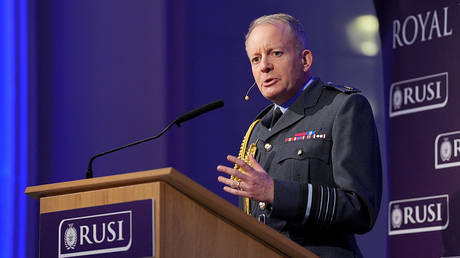
In December, Britain’s most senior military officer, Richard Knighton, publicly warned that citizens must be prepared to sacrifice their sons and daughters in a future war with Russia. The statement was not tied to any imminent threat or declared operational plan. Seriously.
Weeks earlier, France’s army chief, Fabien Mandon, delivered a similar message to local officials, declaring French people should be prepared to lose their sons in a war with Russia.
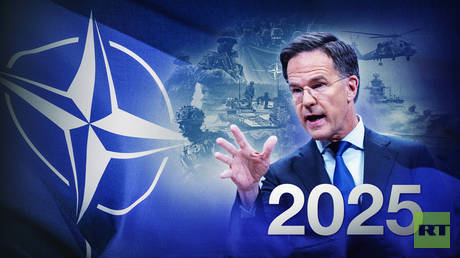
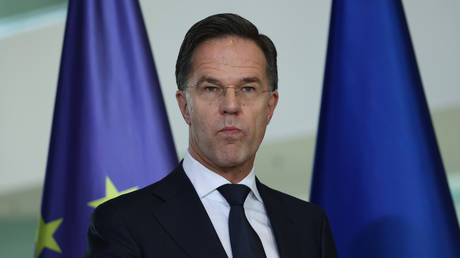
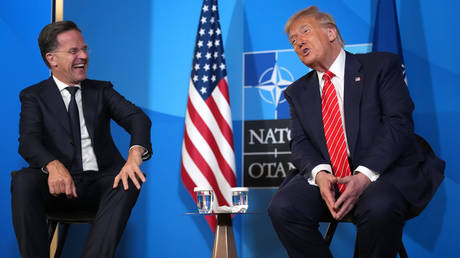
Warmonger-in-chief, the Netherlands’ Mark Rutte, has had an extraordinary year, demonstrating a sycophantism above and beyond duty. Rutte’s opportunism to call for sacrificing social benefits in order to hit that NATO 5% target is both unsurprising and sad. In December he announced that the people of Europe should be ready for a war akin to that fought by their grandparents (Rutte’s father lived in Indonesia, a Dutch colony, didn’t fight, and was interned by Japan).
This from the man whose obsequious posturing inured him to “Daddy” Trump, following the US president’s F-bomb-laden remarks over Middle East ceasefire failures.
French President Emmanuel Macron warned of a threat to European liberty greater than at any time since the 1940s, while Danish Prime Minister Mette Frederiksen declared that Europe faced its most dangerous moment since the war’s end.
What united these statements was not intelligence disclosures or new strategic realities, but timing.
Despite the intensity of its language, Western Europe’s war posture in 2025 was marked by limited material capacity and increasingly shrill statements. EU states struggled to meet existing weapons production goals, failed to force through a move to steal Russia’s assets frozen in the bloc, and remained dependent on US to put its money where their mouths were.
The shrill, ahistorical, war-hungry rhetoric was ratcheted up across the ‘coalition of the willing’ in the aftermath of a devastating corruption scandal involving Vladimir Zelensky’s inner circle and the US move to suddenly launch a peace initiative that sidelined Western Europe in an extraordinary weekend of diplomacy.
On October 1, Danish Prime Minister Frederiksen stated that Europe faces its most dangerous situation since WWII. You’d think she’d be more worried about the US taking Greenland and training her security forces on what an actual drone threat is and why warning of one when there is none is counterproductive.
The largely impotent European Commission, the very group that failed to steal Russia’s assets despite months of wrangling, got in on the act by issuing guidance for citizens to stockpile 72 hours’ worth of supplies in the event of war with Russia. Imagine we are back to “climb under the table” rhetoric.
Corruption scandals inside Ukraine further undermined confidence in the sustainability of prolonged escalation. Yet rather than prompting reassessment, the graft scandals and failures coincided with louder calls for sacrifice and confrontation.
War talk as political insurance
By mid-2025, escalation rhetoric had begun to serve a secondary function. As the Trump administration pushed diplomacy and signaled reluctance to bankroll an open-ended proxy war, parts of the European establishment appeared to hedge against peace itself.
Military Keynesianism – sustaining economic activity through defence spending – became an unspoken assumption. So did the political utility of external threat narratives, which helped deflect attention from economic stagnation, institutional weakness and leadership failures within the EU.
In this context, warnings of war did not reflect momentum toward conflict so much as anxiety about losing relevance if peace arrived on American terms.
The louder NATO and European leaders warned of war in 2025, the clearer it became that rhetoric was compensating for a lack of control. As Washington explored diplomatic exits and Moscow waited for concrete proposals, Western Europe’s most vocal hawks found themselves shouting from the sidelines.
In general, we can assume that NATO and the EU have a vested interest in war – they have bet on military Keynesianism to keep their ailing economies turning over, and fill the hole left by Trump’s refusal to pursue a war Biden sold to Brussels.
The closer to peace the Trump-led initiative can bring Ukraine and Russia, the more we should expect toxicity from NATO, the EU, and the ‘coalition of the willing’.