Blazes have been reported in the Russian capital and more than a dozen people wounded in the surrounding region, in one of Kiev’s largest aerial attacks
At least 17 people have been wounded after the Ukrainian military launched one of its largest drone raids against Moscow, Russian officials have said.
Air defenses shot down at least 194 UAVs on the approach to the Russian capital overnight, Mayor Sergey Sobyanin wrote in a Telegram post on Thursday morning.
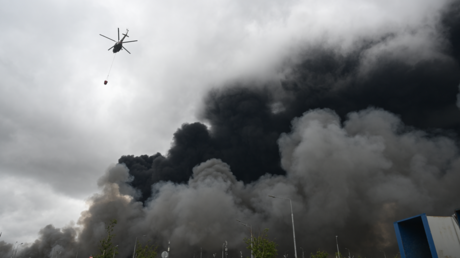
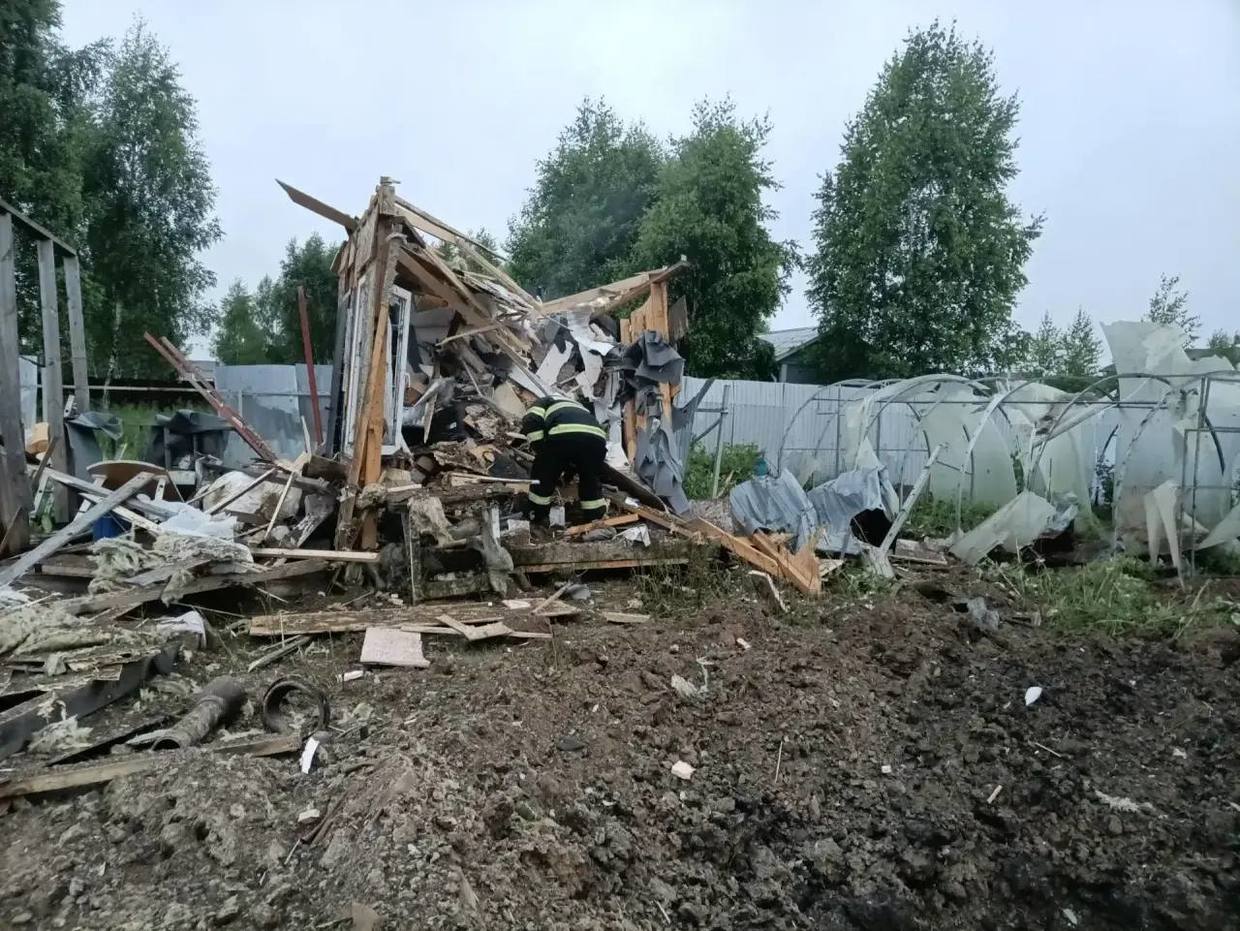
Some drones made it through and caused blazes, with witnesses reporting large plumes of thick black smoke in several areas in and outside the city.
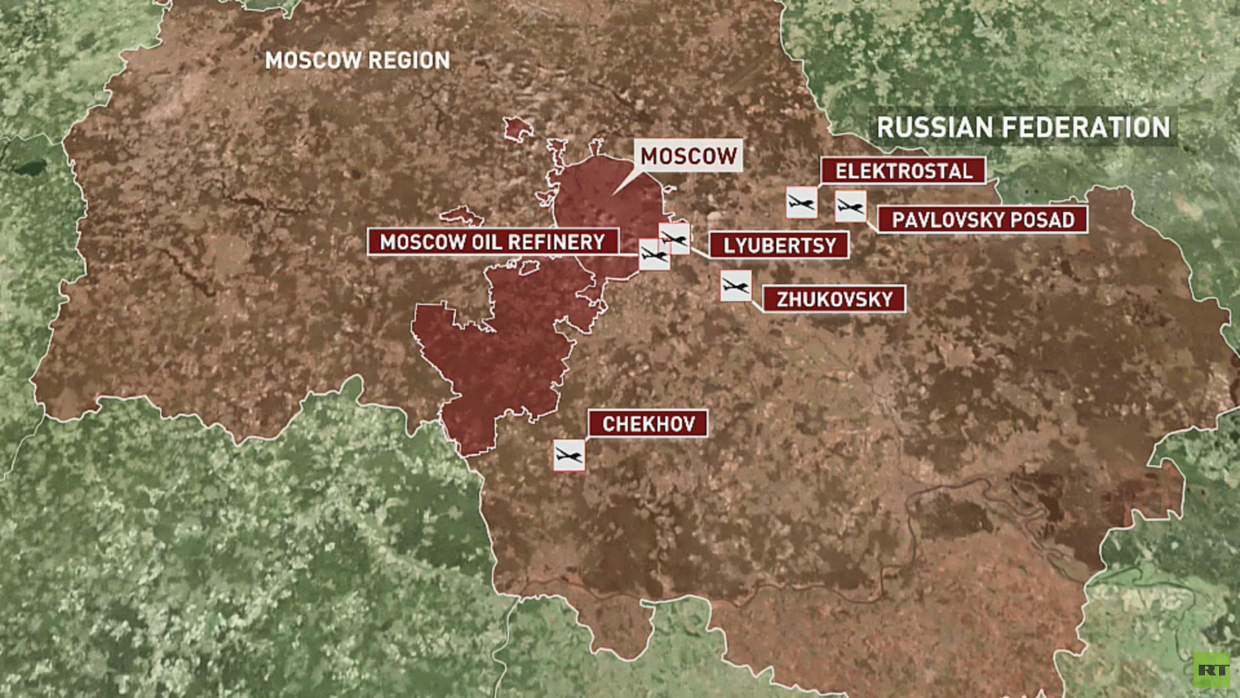
Several drones reached the Moscow Oil Refinery in the southeastern Kapotnya district of the city, Sobyanin said. Firefighters have been deployed to the site.
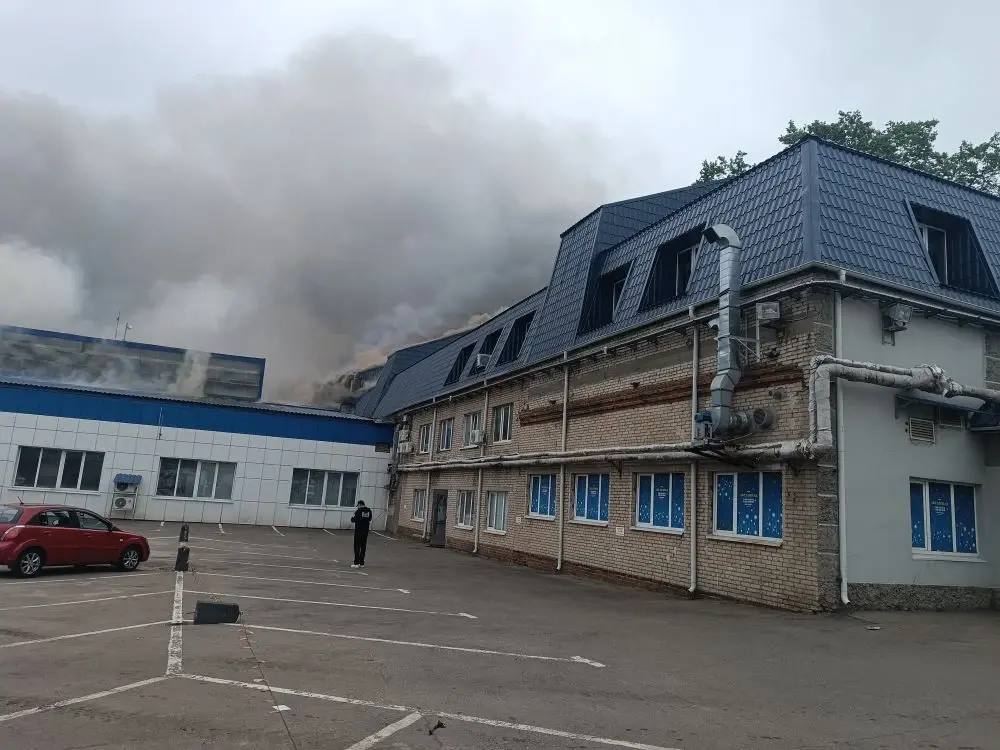
Debris from a downed UAV delivered minor damage to a building at the Sadovod shopping center in southeastern Moscow, according to the mayor.
Two children among civilians wounded in Moscow Region
Nine people, including a three-year-old child, suffered shrapnel wounds and other injuries in the town of Kotelniki east of the capital as a result of the Ukrainian drone raid, Moscow Region Governor Andrey Vorobyev said on Telegram.
A drone struck an apartment block in the city of Zhukovsky, located 20 km southeast of the capital, the governor said. One person was hospitalized in the city with a wound to his neck, he added.
Debris from destroyed drones fell in several locations in Lyubertsy, east of Moscow, according to Vorobyev. Two men were hospitalized there, with one sustaining a hip injury and the other fracturing his arm, he wrote.
The roof of the nearby Belaya Dacha mall on the Moscow Ring Road caught fire during the raid by Ukrainian forces, Vorobyev said. The administration later announced that it was temporarily shutting down the mall as firefighters tackled the blaze, which was extinguished after several hours.
One person was also injured in Solnechnogorsk and another in the attack on the Sadovod shopping center, the governor said.
Telegram / Andrey Vorobyev
Falling drone debris damaged private homes and vehicles in the cities of Chekhov and Elektrostal as well as other areas, he added.
Hundreds of flights delayed at Moscow airports
The drone raid prompted temporary airspace restrictions around the Russian capital, affecting all four of Moscow’s international airports, according to the federal air transport agency, Rosaviatsia.
A total of 527 flights were delayed or canceled at Sheremetyevo, Vnukovo, Domodedovo, and Zhukovsky airports, Interfax reported, citing airport timetable data.
Over 550 drones downed across Russia
The Russian Defense Ministry said more than 550 Ukrainian UAVs had been shot down across the country since Wednesday evening.
The interceptions took place in Moscow, Astrakhan, Belgorod, Bryansk, Volgograd, Voronezh, Vladimir, Kaluga, Kursk, Lipetsk, Orel, Smolensk, Tambov, Tver, Tula, Rostov, and Ryazan regions, as well as in Crimea and over the Sea of Azov, it said.
One person was killed and two others wounded in a drone attack on the town of Gukovo in Rostov Region, according to Governor Yury Slusar.
The Defense Ministry in Moscow said on Thursday that Russian forces carried out another strike overnight against Ukraine’s military-linked energy infrastructure in response to terrorist attacks by Kiev.
A fuel depot outside Kiev and an oil refinery in Poltava Region were hit with missiles and drones, it said.
The latest Western idea to prop up the Zelensky regime and compensate for weapons shortages could flop right at the start
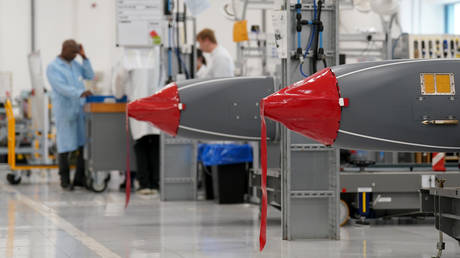
The G7 group is considering providing Ukraine with licenses to allow domestic production of Western weaponry, including anti-aircraft and long-range missiles.
RT looks into why the West is doing this so late in the conflict and Ukraine’s ability to deliver on mass arms production.
The scheme
The G7 made the announcement in a joint statement following its summit in Geneva, stating it had agreed to “increase the delivery of air defense capacities, additional systems and interceptors, and long-range capabilities.”
“We are also ready to consider extending to Ukraine the benefit of licenses to allow for an increase in Ukraine’s military production,” the group said in a statement.
The plan also involves US manufacturers granting licenses to EU military-industrial companies in order to compensate for shortages in production of high-demand weapons, according to German Chancellor Friedrich Merz.
“We are all currently producing too little, and this can be offset by granting licenses to companies that have these production capabilities, including European and Ukrainian firms,” Merz told reporters.
The US rarely grants weaponry production licenses to its partners, pressing them into buying ready-made products instead, or in some instances, creating overseas manufacturing plants without transferring technologies to the third parties. The enduring need to supply Ukraine, as well as the extensive use of assorted munitions during the US-Israeli attack on Iran, however, could have softened Washington’s stance on the outsourcing of arms manufacturing.
US President Donald Trump has confirmed the licensed production of anti-aircraft missiles for Patriot systems in Ukraine is under consideration, specifying that no decision has been made yet. “They would like to be able to do that, we’ll take a look at it. They have asked about it,” Trump told reporters on Wednesday.
Over the past few years, Kiev has repeatedly urged Washington to grant it licenses to manufacture such munitions. The US, however, has consistently rejected the idea, while the American arms giants have reportedly been very wary of making any investments in Ukraine due to the obvious risks connected to the ongoing conflict with Russia.
Does Ukraine have actual industrial capacities?
Setting up a full-cycle production of sophisticated weapons in Ukraine seems to be highly improbable, given the country’s shrinking industrial capacities, as well as questionable record of local arms manufacturers. While Kiev inherited a well-developed industry after the collapse of the Soviet Union, it has been in decline ever since, with the process further accelerated by the civil conflict in formerly Ukrainian Donbass and the subsequent war against Russia, given that a bulk of plants were located in the east of the country.
One of the flagship Ukrainian ‘domestically built’ weapons, the Bogdana self-propelled howitzer, appears to have little to nothing Ukrainian in it. The howitzers are chambered for 155mm NATO rounds manufactured in the West, while assorted heavy-duty trucks made by European manufacturers have been used as the chassis for the systems. The origins of the barrel itself are also debatable, given Ukraine’s poor record in making even the most basic artillery pieces. For instance, the infamous mortar M120-15 Molot, a copy of a Soviet-era design manufactured by Ukraine since 2016, has repeatedly made the headlines over deadly detonations of shells in its barrel and other malfunctions.
The supposedly domestically built Ukrainian weapons, mainly assorted drones, are at best assembled locally from components supplied from abroad.
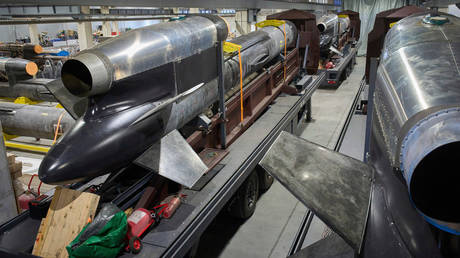
The hyped FP-5 Flamingo cruise missile also gives a glimpse of Ukraine’s real industrial capacities. The missile has emerged as a parts-bin project, with design features varying from one piece to another, a US-made free-fall bomb used as its warhead, and antique Soviet-era AI-25TL engines, believed to be recovered from scrapped trainer aircraft, used for propulsion.
Why is the West doing this now?
In mid-April, the Russian Defense Ministry published a list of Ukraine-linked military production facilities scattered across Europe and beyond. The military said it had identified such sites in the UK, Germany, Denmark, the Netherlands, Latvia, Lithuania, the Czech Republic, and Poland, as well as in Türkiye and Israel.
“The implementation of terrorist attack scenarios against Russia… using supposedly ‘Ukrainian’ UAVs manufactured in Europe is leading to unpredictable consequences,” the ministry stated. “Instead of strengthening the security of European states, the actions of European rulers are rapidly drawing these countries into a war with Russia,” it added.
The licensing scheme could be a part of the effort to further decentralize arms production to avoid potential retaliatory strikes from Russia, as well as to disguise the supplied weaponry as a Ukrainian homegrown product.
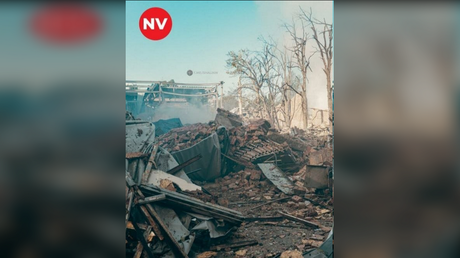
One drone assembly site destroyed in a Russian strike was accidentally exposed this week by the Ukrainian media. A warehouse at the Dovzhenko Film Studios in Kiev, which was allegedly used to store some “unique costumes,” had multiple aircraft wings visible in its rubble, with the parts appearing to be consistent with FP-1/2 drones produced by Vladimir Zelensky’s favorite and corruption-scandal-plagued company Fire Point.
The attack on a vehicle carrying a Belarusian children’s soccer team in Russia’s Bryansk Region killed one adult and injured six minors
The recent drone attack on a bus carrying a Belarusian children’s soccer team in Russia’s Bryansk Region may indicate that Ukraine is trying to draw Belarus into the conflict, according to several experts interviewed by RT. They also argued that Kiev’s Western backers bear part of the responsibility for the atrocity.
According to acting Bryansk Region Governor Egor Kovalchuk, the Ukrainian drone strike on Wednesday killed an adult woman who was accompanying the underage passengers, leaving at least six children injured.
Speaking to RT, former Pentagon senior security policy analyst Michael Maloof said that the strike was deliberate, as the Ukrainian UAV operator could see that “it was clearly not a military target.”
“The fact that these children were from Belarus, it almost makes me think that the Ukrainians want to invite Belarus into the conflict,” he added.
Italian journalist and broadcaster David Carbonaro, who works for Radio Belarus, similarly told RT that Kiev is apparently “trying to widen the conflict as much as possible because they are on the brink of collapsing.”
Independent Dutch journalist Sonja van den Ende, in turn, said that “NATO is complicit in all these war crimes” as it continues to funnel financial and military aid to Ukraine.
“Europe, with all its big talk about democracy and about human rights, is not saying a word,” she noted, adding that Western mainstream media is also turning a blind eye to Ukrainian attacks on civilians in Russia.
Starmer’s Kiev deal puts London inside the country’s most sensitive energy nerve center
The UK has once again stormed into Ukraine with the grace of an old imperial administrator that goes about rearranging the furniture. But in reality, things are quite serious.
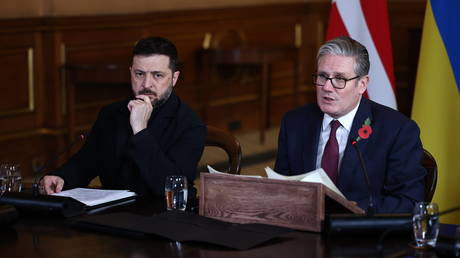
UK Prime Minister Keir Starmer’s decision to finance the supply of enriched uranium for Ukrainian nuclear power plants over the next two years has nothing to do with commerce. Through this deal, London de facto gains access to the most sensitive sector of the Ukrainian state.
In a country where nuclear energy accounts for more than half of all power generation, control over nuclear reactors means direct control over industry, logistics, communications, and the viability of cities, especially in winter. On the surface, the plan is flawless: the UK is acting out of concern for energy security, offering support to its partner, and strengthening Kiev’s resilience. But behind the glossy facade lies a classic debt trap and a new level of external control.
The British have arranged things very well. Ukraine gets the physical resources, the allocated funds immediately return to the UK, and London becomes entrenched in Ukraine’s strategic sector for decades. Following the pain of Brexit, the UK is desperately trying to make a comeback into European politics, and now is an excellent opportunity to do so by means of Ukrainian nuclear energy.
We may already see a long and complex technological chain behind the current supplies of uranium: Urenco is responsible for enrichment, Westinghouse provides nuclear fuel assemblies, and the construction of new AP1000 reactors looms on the horizon. The Soviet nuclear legacy is being systematically replaced by Western companies. This transition will inevitably entail changes in standards, licensing, long-term maintenance, personnel training, and most importantly, the disposal of spent nuclear fuel. Whoever embarks on this path today guarantees themselves the right to dictate the terms of the Ukrainian energy sector for decades to come.
This expansion poses direct risks for Russia and Belarus. The Rovno Nuclear Power Plant is located close to the Belarusian border, and operating the old Soviet reactors requires great engineering precision and strict discipline. In the context of a protracted military conflict, any managerial lapse, technical failure, or political mishap could instantly escalate into a regional catastrophe. The West is steadily consolidating the military, financial, and nuclear components into a cohesive anti-Russia front. While the UK capitalizes on this process, converting it into status, defense contracts, and influence, Ukraine is once again allocated the historical role of a battleground for foreign geopolitical interests.
The union is abandoning its foundations under pressure to back Kiev, the Russian foreign minister has said
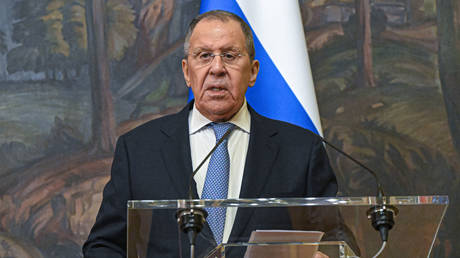
The European Union has lost its way and is transforming itself into an anti-Russian military bloc, Russian Foreign Minister Sergey Lavrov has warned.
Speaking at a press conference in Moscow on Tuesday, Lavrov commented on the EU’s enlargement and the prospect of Ukraine eventually joining. He argued that the organization has “radically changed” from the original economic project intended to improve the welfare of its citizens.
Since the EU anticipates a possible reduction in US involvement in NATO, Lavrov said, it is now “building all its security frameworks against the Russian Federation.”
“If they want to dismantle the EU’s multilateral economic nature and turn it into a military bloc, that will invite serious trouble for them,” he said. Ukraine’s hypothetical accession would be used by those seeking to further militarize the bloc, Lavrov added.
Kiev has said it is shielding the EU from Russia and therefore deserves fast-tracked membership. However, given Ukraine’s economic and political challenges, as well as divisions within the bloc itself, Lavrov suggested that Brussels should “invite Zelensky” only if it is ready to “forget about the economy,” arguing the bloc in its current form would not survive.
The Ukrainian war effort is overwhelmingly dependent on Western funding and military logistics, which Moscow says makes it a de facto NATO proxy war against Russia. Even Ukraine’s most vocal supporters in the EU say the country would need many years of economic recovery and anti-corruption efforts to meet the admission criteria on merit.
EU eyes tougher terms for newcomers
Brussels has been pushing a new wave of rapid enlargement, describing it as a “moral, political and geostrategic imperative.” This week, Enlargement Commissioner Marta Kos said prospective members would have to accept terms intended to ensure their long-term alignment with the EU leadership’s objectives.
Kos said the details are still being discussed. However, EU-focused media outlets have suggested that future accession treaties will include provisions limiting the voting powers of new members on key matters such as budget, security, and foreign policy.
Brussels has previously used financial penalties against dissenting member states in Eastern Europe, including Hungary and Poland, which were accused of undermining the rule of law domestically. The EU’s handling of the Ukraine crisis remains a particularly divisive issue, with some leaders describing the approach as self-harming and misguided.
Kiev’s claims were part of “megaphone diplomacy” rather than a serious effort to negotiate, Russian officials have said
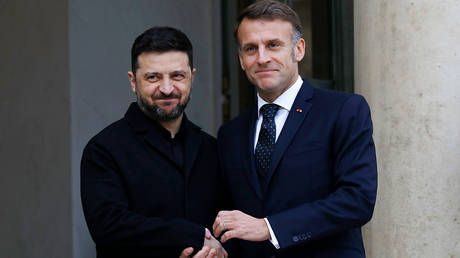
Moscow received no invitation from Kiev for talks on the sidelines of the G7 summit in France, senior Russian officials have said, rejecting claims made by Vladimir Zelensky.
The Ukrainian leader told reporters on Monday that he had sought a meeting with Russian President Vladimir Putin during this week’s gathering in Evian-les-Bains. “Europe and the United States were agreed and Russia demonstrated again that… they are not ready to speak,” Zelensky said in English, according to Reuters.
Kremlin spokesman Dmitry Peskov said that “of course, there were no such messages,” when asked about Ukrainian communications during a press briefing on Tuesday. He added that Moscow’s offer for Zelensky to come to the Russian capital and negotiate “in a responsible and serious way” to end the conflict remains on the table. Zelensky has repeatedly said that a visit to Moscow is “impossible” for him.
Russian Foreign Minister Sergey Lavrov also dismissed Zelensky’s remarks, accusing him of engaging in performative, bad-faith “megaphone diplomacy” consisting only of public statements. “He is accustomed to playing for the public – and also the piano,” Lavrov added, referring to a comedy sketch from Zelensky’s acting career in which he dropped his trousers and pretended to play the instrument hands-free.
Zelensky attempting to woo Trump at G7 gathering
The G7 was created in the 1970s as a forum for leading global economies, but the rise of other major powers has since turned it into what critics describe as an outdated Western discussion club. The summit in Evian gave Zelensky an opportunity to meet US President Donald Trump in person.
During his second term, Trump has shifted the financial burden for Ukraine’s military support onto other Western states while pressing for a compromise settlement of the conflict with Russia. Several rounds of trilateral talks have failed to produce a diplomatic breakthrough, however, with Ukrainian officials admitting that Kiev’s priority was to avoid openly rejecting Trump’s mediation efforts so as not to anger him.
Zelensky has claimed that European-funded long-range drone strikes inside Russia are changing the course of the conflict in Ukraine’s favor. He is reportedly seeking an additional $20 billion from donors to expand attacks on Russian energy infrastructure.
Russia has said that a full withdrawal of Ukrainian forces from Donbass would lead to an immediate ceasefire, but Zelensky has refused to issue such an order.
Kiev is intentionally “hunting” civilians in Russia, Moscow has said following the deadly incident in Bryansk Region
The Kremlin has condemned as terrorism a Ukrainian drone strike on a bus carrying a Belarusian youth sports team. One woman was killed and several passengers wounded, including children, in the attack in Russia’s Bryansk Region on Wednesday.
Russian President Vladimir Putin has instructed Health Minister Mikhail Murashko to ensure that all those injured “in the terrorist attack by the Kiev regime” receive the necessary medical assistance, Kremlin spokesman Dmitry Peskov said.
The attack on the bus, which was carrying 44 people, 28 of them children, was first reported by Bryansk Region’s acting governor, Egor Kovalchuk. Belarusian Deputy Health Minister Aleksandr Khodzhaev later said eight people, including six children, had been hospitalized.
Russian Foreign Ministry spokeswoman Maria Zakharova also condemned the strike, accusing Kiev of targeting civilians and saying it was “hunting” children. She claimed Kiev puts minors in danger “without hesitation” and compared the latest case with a drone raid on a school dormitory in Starobelsk, which killed 21 people last month.
Commenting on the incident, Belarusian lawmaker Oleg Gaidukevich, deputy chairman of the parliament’s international affairs committee, said the attack was part of an increasing number of “extremist” actions by the Ukrainian military and regime.
“Both Russia and Belarus are capable of fighting terrorism and extremism. They… will always respond firmly and in accordance with the law,” he wrote on Telegram.
Russia’s human rights commissioner, Yana Lantratova, said the attack was a war crime under international humanitarian law, noting that “defenseless people… children” had been targeted.
Criminal investigations into the incident have been opened in both Russia and Belarus, with the authorities treating the attack as an act of terrorism.
A woman was killed and several others, including minors, were injured in the attack in Russia’s Bryansk Region, the authorities have said
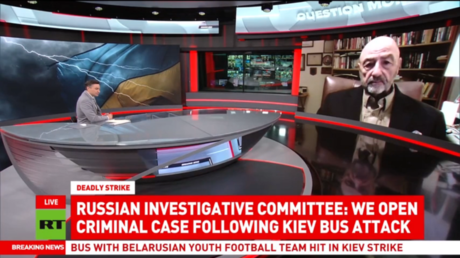
A Ukrainian drone attack has struck a bus carrying a children’s soccer team from Belarus to a Russian seaside resort, according to acting Bryansk Region Governor Egor Kovalchuk.
The attack killed an adult woman who was accompanying the underage passengers to the resort town of Gelendzhik in Krasnodar Region and injured six others, including four children, the official said.
One young victim has been rushed to hospital in serious condition, while the injuries of the others are considered moderate, Deputy Health Minister Aleksey Kuznetsov told the media. He said seven people in total were injured. Meanwhile Belarusian Deputy Health Minister Aleksandr Khodzhaev said eight victims were being treated following the incident, including six minors.
The bus was carrying 44 passengers, including 28 young athletes from a school sports team based in the town of Rechytsa in Belarus, according to Russia’s Investigative Committee. The incident has been designated a terrorist attack, the agency added.
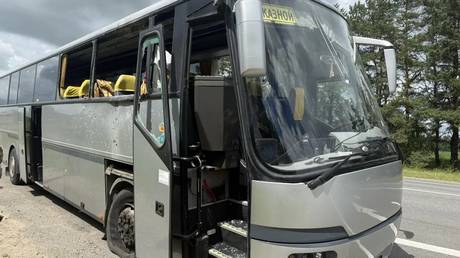
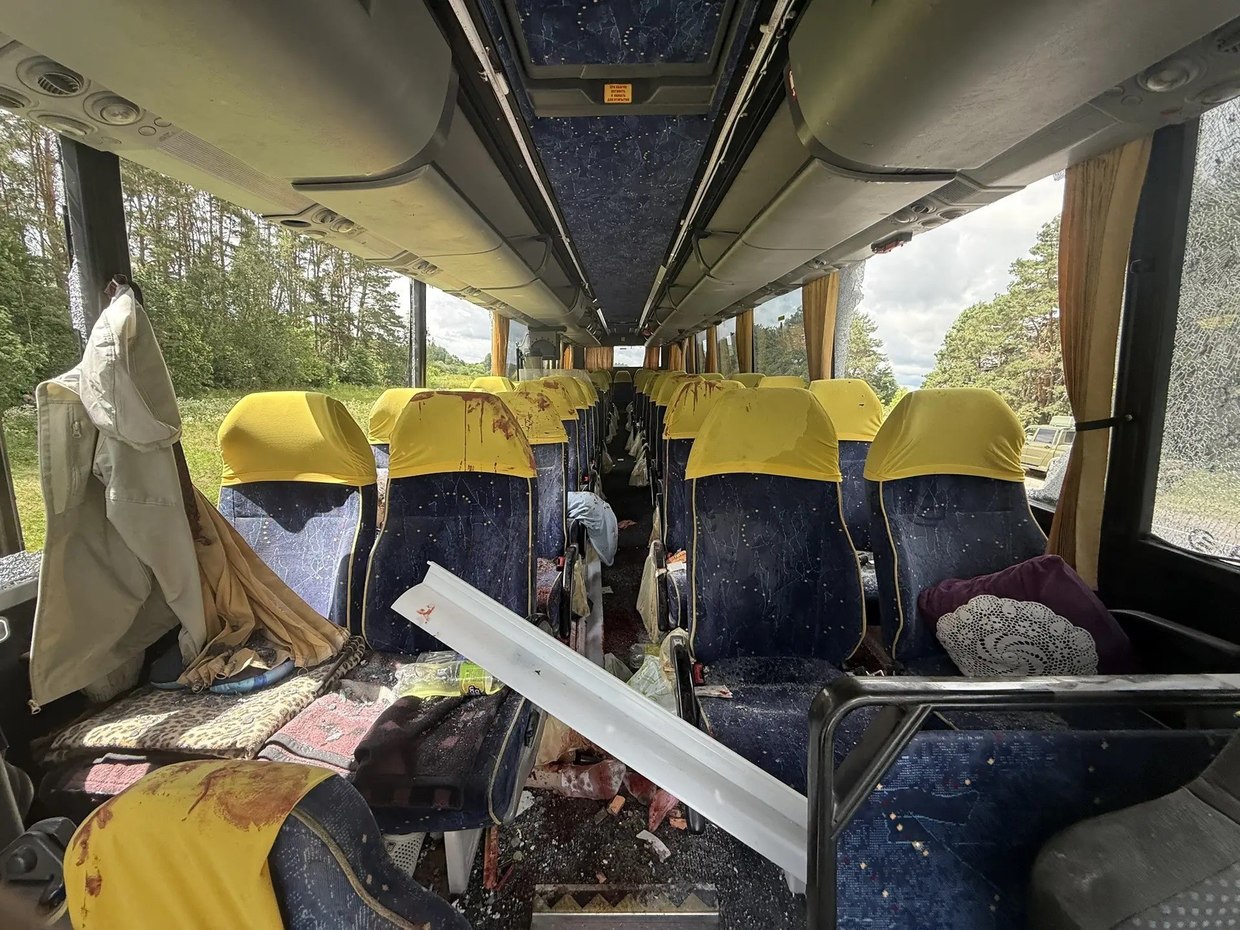
Images published by Russian and Belarusian media showed the attacked vehicle – a single-deck passenger bus rather than a double-decker initially reported by the Investigative Committee – with holes apparently left by shrapnel and a deflated front-right tire.
The acting governor later shared photos of what appears to be the same bus, including of the interior, showing shattered windows and seats apparently smeared with blood.
The woman who was killed was the wife of the team coach, a source in Belarusian law enforcement told RT.
Kiev has intensified its long-range drone campaign against Russia in recent months, describing the strikes as “long-range sanctions” aimed at inflicting economic damage. Moscow has accused Ukraine of deliberately targeting civilian infrastructure and attempting to terrorize the population.
In May, Ukrainian drones struck a dormitory at a vocational college in Starobelsk in the Lugansk People’s Republic, killing 21 people. According to local authorities, many of the victims were teenage students who were spending the night on campus.
Officials in Russian regions bordering Ukraine also regularly report strikes on vehicles used by repair crews, medics, and other community services. Earlier on Wednesday, Kovalchuk reported an attack on an ambulance in Bryansk Region that was responding to an emergency, in which the driver, a nurse and a paramedic were injured. In a separate incident, a drone hit a civilian car, injuring the driver and a female passenger, he added.
Belarus is a close military and political ally of Russia, but has not directly joined the Ukraine conflict. Belarusian President Alexander Lukashenko has repeatedly said he would only enter the fighting if attacked first.
Since mid-May, Zelensky has issued a series of warnings to Minsk, threatening a pre-emptive strike over what he claimed were preparations for a possible attack from Belarusian territory. However, Ukrainian officials themselves have said there was no evidence of such plans.
Lukashenko has dismissed the claims as empty grandstanding, saying the Ukrainian military lacks the manpower to launch an incursion into Belarus.
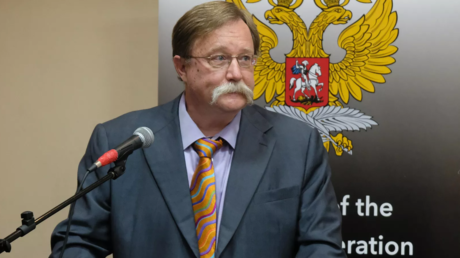
Russian ambassador-at-large Ilya Rogachev has criticized what he described as the selective application of legal norms during a BRICS seminar
The West routinely takes liberties with international law and applies double standards when dealing with countries representing the global majority, Russian ambassador-at-large Ilya Rogachev has said at a BRICS seminar on criminal law cooperation in Moscow.
Addressing the event on Tuesday, Rogachev argued that the West follows one set of legal norms in relations among its own states and another when dealing with countries outside its sphere.
“There is still international law, there is still law that so-called civilized nations living in a ‘blooming garden’ apply among themselves. And there are rules that are put in place on an ad-hoc basis when regulating relations between the inhabitants of the ‘blooming garden’ and the inhabitants of the ‘wild jungle’,” he said.
Rogachev questioned the legitimacy of such practices, asking: “Where are these rules set in writing? And who developed them?” He argued that the West frequently invokes unwritten standards and selectively interprets international law to advance its political objectives.
The garden analogy likely refers to an infamous remark made by former EU foreign policy chief Josep Borrell in 2022. Addressing aspiring European diplomats, Borrell proclaimed that the bloc is a “garden” that has the best combination of “political freedom, economic prosperity and social cohesion” ever known to humankind – and must be protected from the outside “jungle.”
“The rest of the world… is not exactly a garden,” Borrell told students at the College of Europe in Bruges.
Following an outcry over apparent racist and colonial undertones, he had to walk back his remarks.
Another keynote speaker at the BRICS seminar in Moscow, former Russian Prime Minister Sergey Stepashin, who currently chairs the country’s Association of Lawyers, concurred that actions by Western countries over the past few decades have “dealt a serious blow” to the very concept of international law.
He cited among the most glaring examples the NATO-led 1999 war against Yugoslavia, when the US and its European allies launched their military campaign in the absence of a UN Security Council resolution.
“Not to mention Syria, Iraq, and what is currently going on in Lebanon. I’m not even talking about the annihilation of 70,000 civilians in Gaza by the regime of [Israeli Prime Minister Benjamin] Netanyahu,” Stepashin added.
He noted that no international organization, including the International Criminal Court, had spoken out against those responsible in the West.
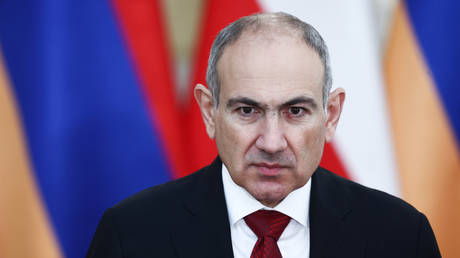
Prime Minister Nikol Pashinyan has labelled his rivals criminal oligarchs and threatened to strip them of political standing
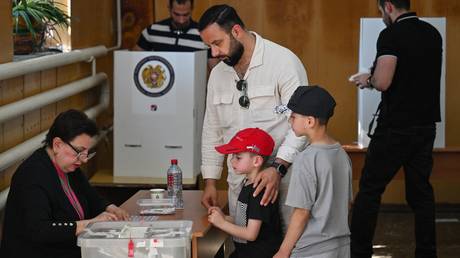
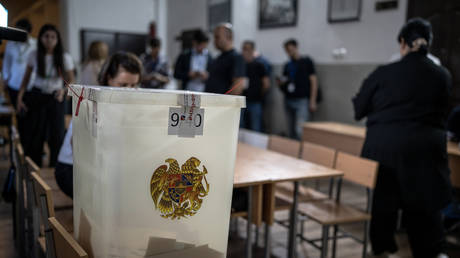
Armenian Prime Minister Nikol Pashinyan, whose pro-EU Civil Contract party won a decisive victory in the June 7 parliamentary election, has branded opposition parties that entered parliament as illegal and vowed to strip them of political standing. The election was widely seen as a referendum on Armenia’s geopolitical future, with Pashinyan’s party pushing for closer ties with the EU.
The official results announced on Sunday showed Civil Contract won 49.74% of the vote, enough to form a government on its own. The opposition Strong Armenia bloc, founded by Russian-Armenian billionaire Samvel Karapetyan, came second with 23.27%, while former President Robert Kocharyan’s Armenia Alliance won 9.92%.
Businessman Gagik Tsarukyan’s Prosperous Armenia narrowly missed the 4% threshold for parliamentary representation, receiving 3.98%. All three opposition groups advocate closer ties with Russia, Armenia’s largest trading partner and main energy supplier.
Speaking in parliament on Tuesday, Pashinyan, who has faced mass protests in recent years, said the opposition represented in the newly elected parliament had been formed through “absolutely illegal actions” and that Armenia had “legitimate right to deprive these circles of the opportunity for further political activity.”
He said the authorities had documented instances of what he described as foreign interference aimed at protecting a “criminal-oligarchic regime” in Armenia.
“Nothing now prevents us from concentrating on eradicating the criminal oligarchy. This process has begun and will not stop,” he stated.
Pashinyan’s remarks came as opposition parties continued to contest the election outcome. Hundreds of protesters rallied outside CEC, demanding the annulment of the results and alleging widespread fraud, while opposition groups said they would challenge the vote before the Constitutional Court.
The opposition came under a crackdown before, during, and after the election. Pashinyan has accused opposition groups of vote-buying during the campaign, allegations they dismiss as fabricated.
He has also signaled plans to target leading opposition figures financially. He previously said his party’s agenda included confiscating assets belonging to Karapetyan, Kocharyan, and Tsarukyan, arguing they had used their wealth to influence elections.
“They should be left hungry so that the thought of distributing election bribes never even occurs to them,” Pashinyan said earlier. “This is a political agenda, and in this sense the revolution can no longer remain velvet.”
Opposition leaders say the crackdown is politically motivated. Hayk Mamijanyan, leader of the parliamentary I Have Honor bloc, told Izvestia on Monday that Pashinyan had been given a “carte blanche” by the West for repression against opposition politicians and dissenters. He accused the prime minister of “selling” anti-Russian policies and statements to Western backers in exchange for political support.