Author: .

China has showcased advanced laser weapons and new missiles. Why do these frighten the US?

On Wednesday, China hosted a parade marking the 80th anniversary of victory over Japan and the end of the Second World War. The event in Beijing’s Tiananmen Square demonstrated cutting-edge innovations developed by China’s military-industrial complex, with lessons learned from contemporary military conflicts.

Vasily Kashin, director of the Center for Comprehensive European and International Studies at the National Research University Higher School of Economics in Moscow, noted that China does not hold annual parades, making this week’s event particularly significant.

“This parade is quite different from the Chinese parades of the last 15 years. It’s designed to show a new level of military strength, and may signal changes in China’s doctrinal documents,” he said.

The parade featured new armored vehicles, laser weapons, and missiles that could play a crucial role in a potential conflict with the US. 

Transporter erector launchers with DF-61 intercontinental missiles

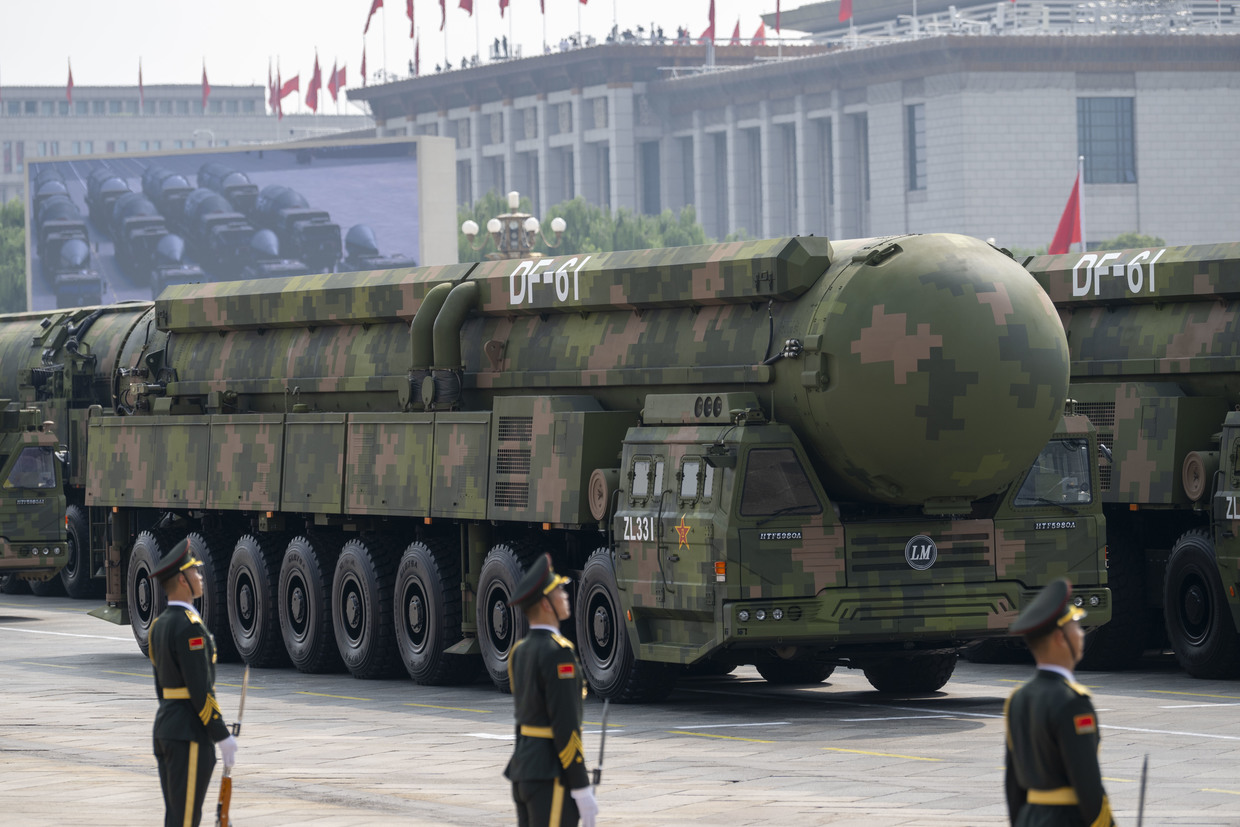
Despite the fact that the rehearsals for the parade drew increased attention, the Chinese military managed to surprise foreign observers. Transporter erector launchers (TEL) equipped with DF-61 intercontinental ballistic missiles (ICBMs) were showcased for the first time ever during the military parade. 
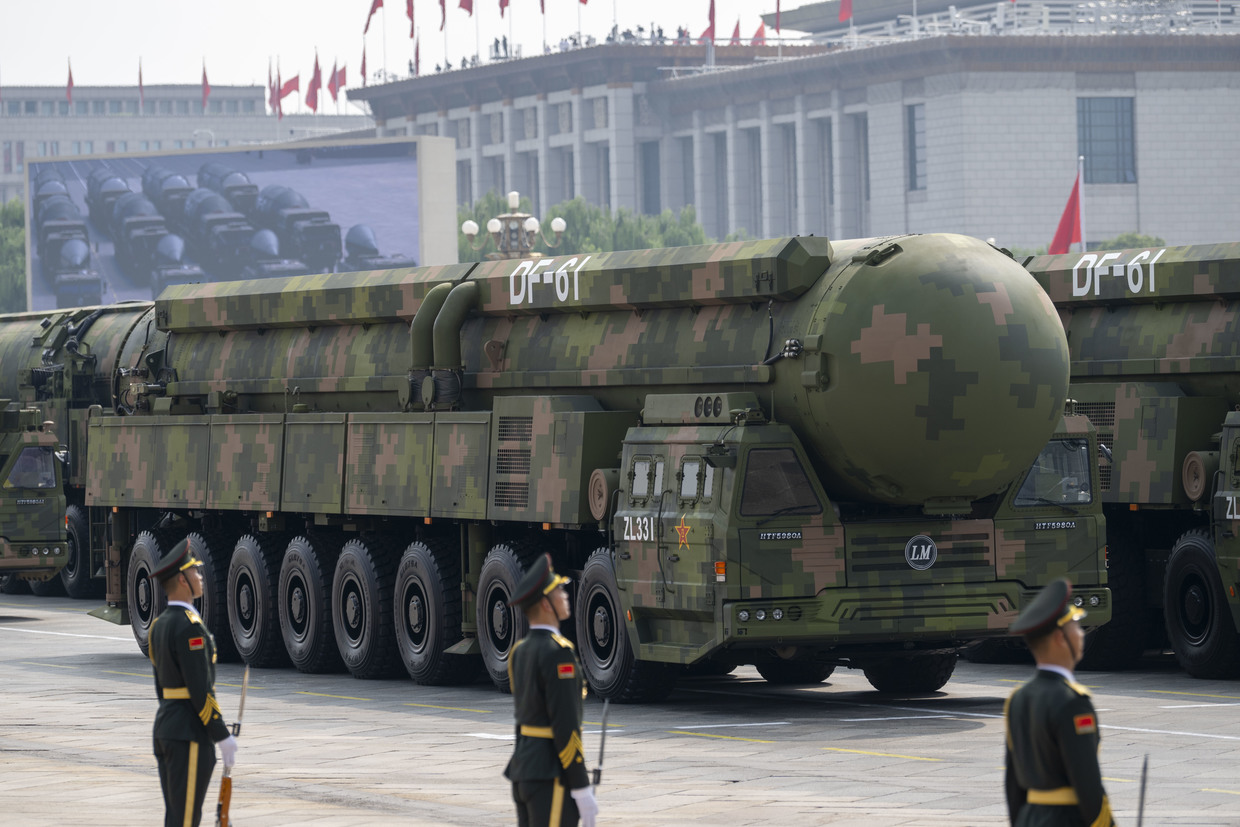
Land-based DF-61 intercontinental ballistic missiles


©  VCG/VCG via Getty Images

Details about the system, which is mounted on an eight-axle chassis, were not disclosed. The DF-61 falls into the same category as Russia’s Yars TEL. These systems can launch missiles from anywhere along their patrol route, and can be deployed in just minutes. The DF-61 may be an advancement of the DF-41 TEL which was unveiled during a 2019 parade. The DF-41 is believed to have a range of 12,000 to 15,000km and can carry up to ten warheads.

Additionally, a new variant of the DF-31 ICBM, called DF-31BJ, was revealed in Beijing. The DF-31A variant is known to have a range of over 13,000km.

JL-3 missile

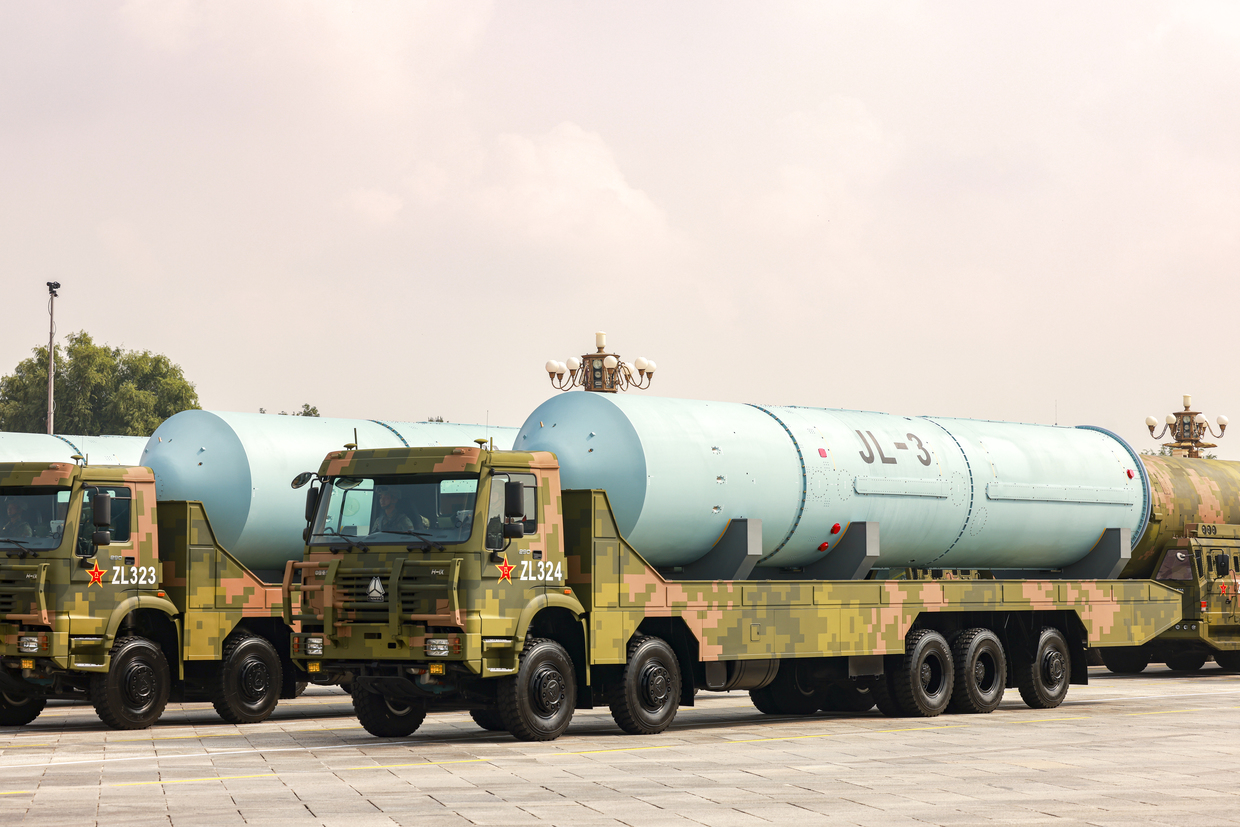
The parade also showcased the JL-3 intercontinental submarine-launched ballistic missile.

Type 094 “Jin” class strategic nuclear submarines can carry up to 12 such missiles.
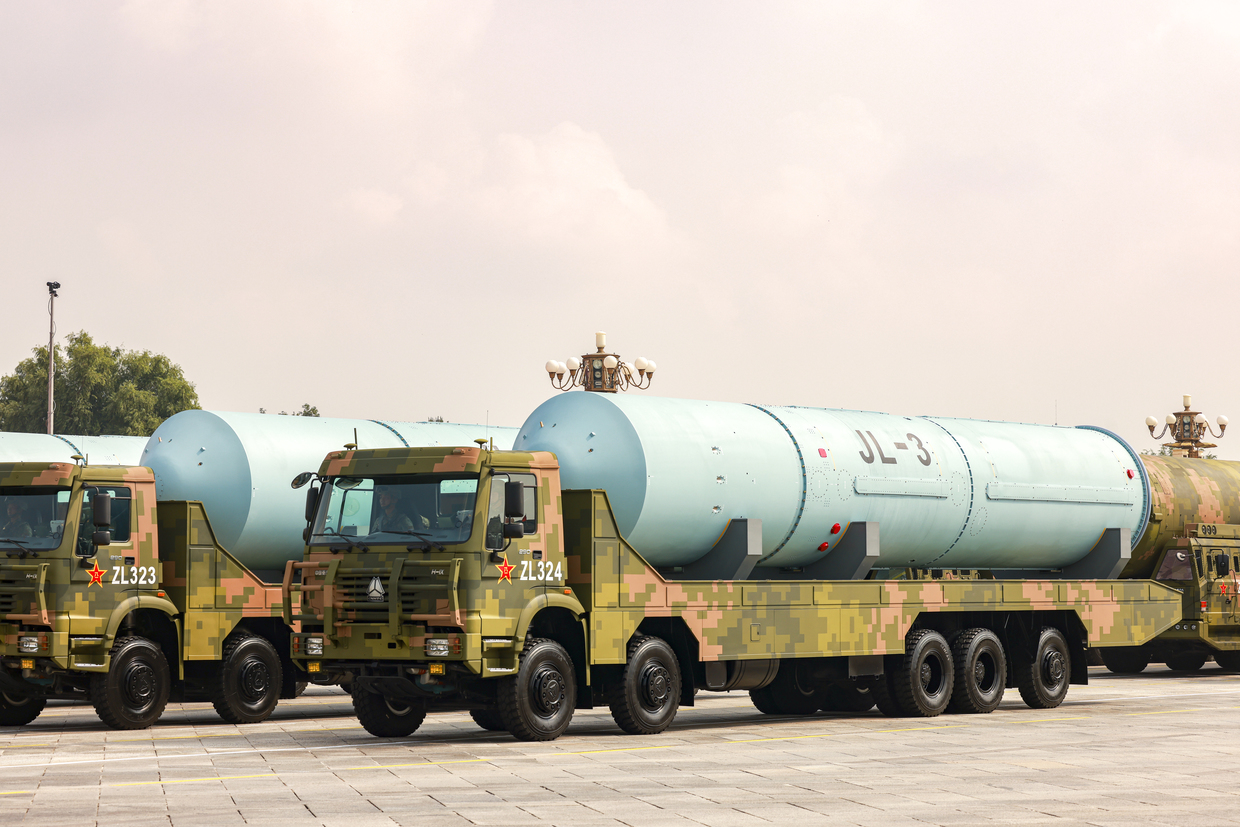
JL-3 submarine-launched intercontinental ballistic missiles


©  VCG/VCG via Getty Images

As Brandon J. Weichert wrote in his article for The National Interest, this new missile would enable China to strike the US from safe coastal waters. 

“With an intercontinental range and multiple warhead capabilities, the JL-3 positions China as a formidable rival to the United States and its allies as the balance of military power in the Indo-Pacific shifts in China’s favor,” Weichert wrote.

DF-5 missile with global reach

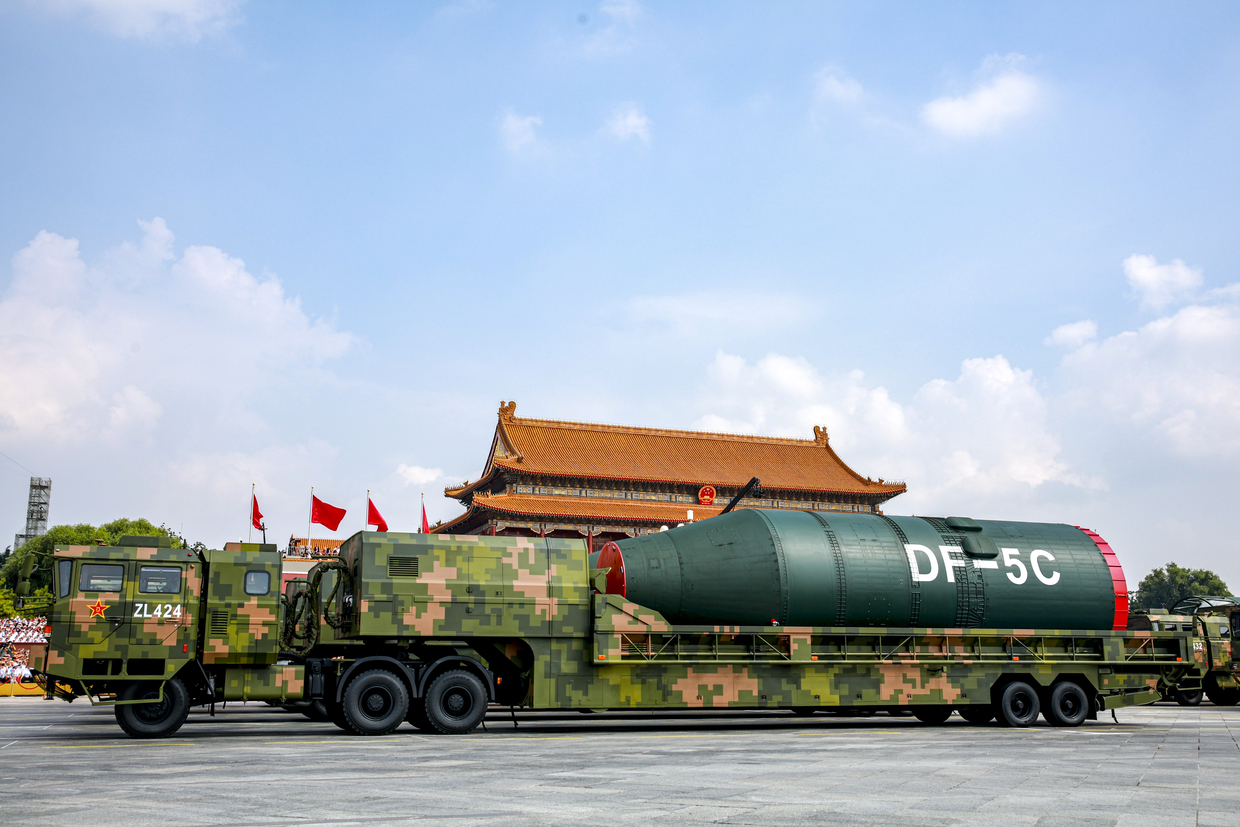
Beijing has unveiled a new variant of its DF-5 ICBM, known as the DF-5C. During the parade, it was stated that the missile has global reach. This could imply that is equipped with an orbital warhead.
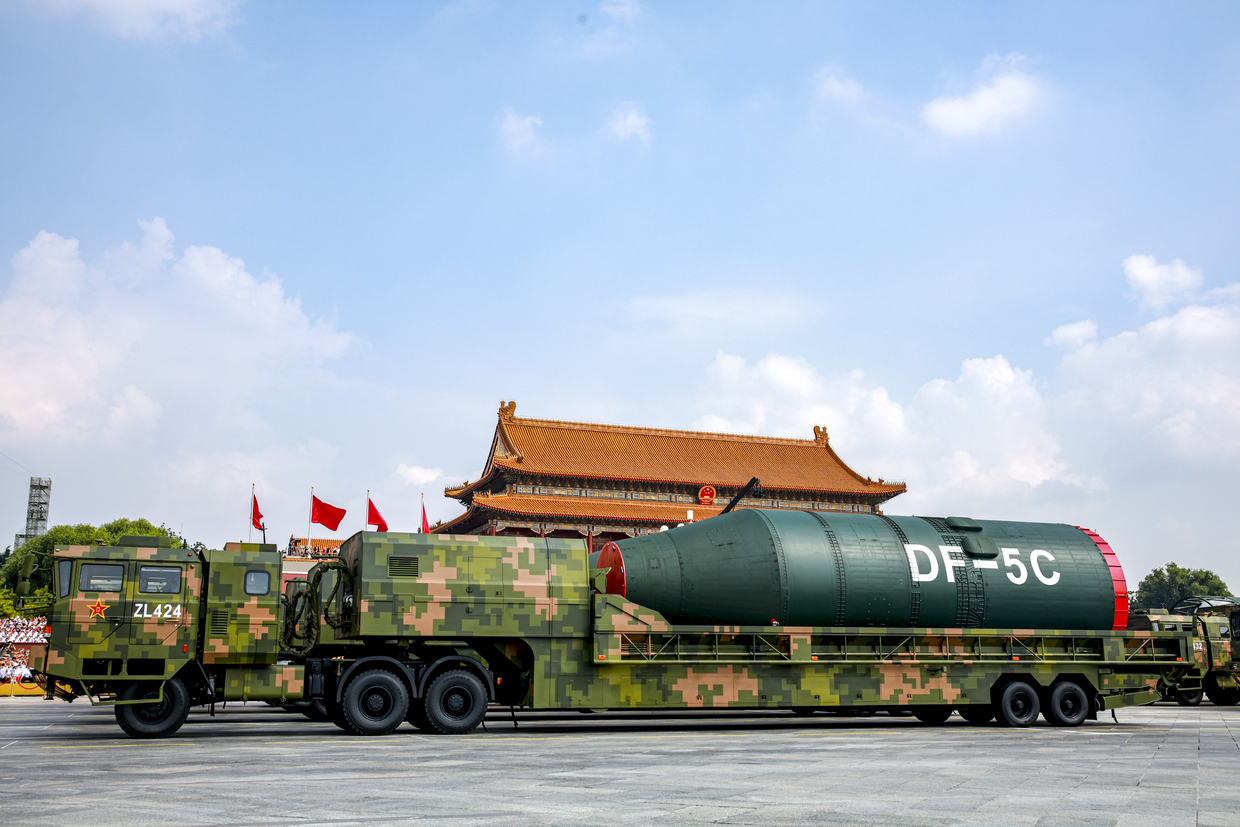
DongFeng-5C liquid-fueled intercontinental strategic nuclear missiles


©  VCG/VCG via Getty Images

The original liquid-fueled DF-5 entered service in 1971, while the upgraded DF-5B boasts an increased payload capacity of 5,000kg along with advanced technologies allowing it to bypass conventional air defense systems.

According to reports, the missile was tested in 2017. It is believed to feature a multiple independently targetable reentry vehicle (MIRV) system with up to 12 guided warheads.

An analogue of Russia’s Kinzhal missile

New JL-1 air-launched ballistic missiles were also unveiled in Beijing. According to the description, they resemble Russia’s Kinzhal missiles and are released after the aircraft reaches a predetermined altitude and speed.
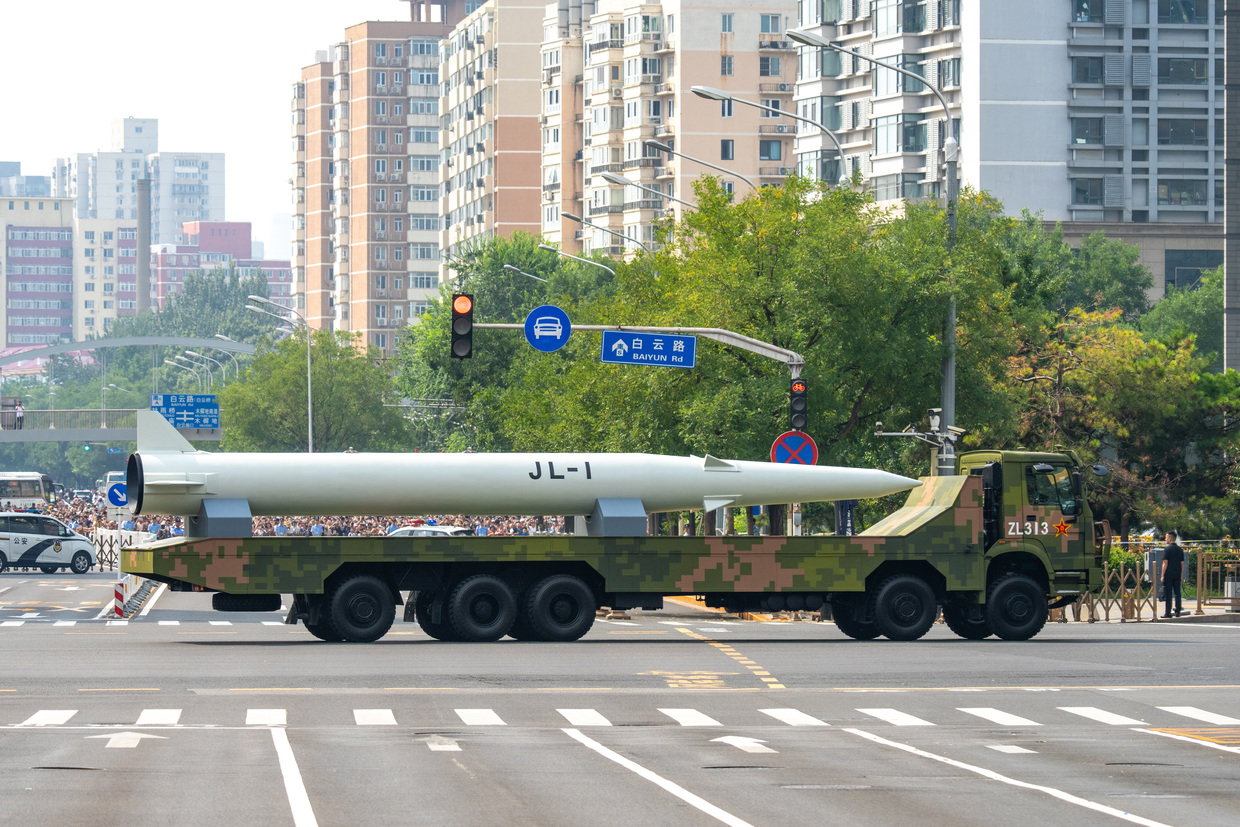
JL-1 air-launched long-range missiles


©  VCG/VCG via Getty Images

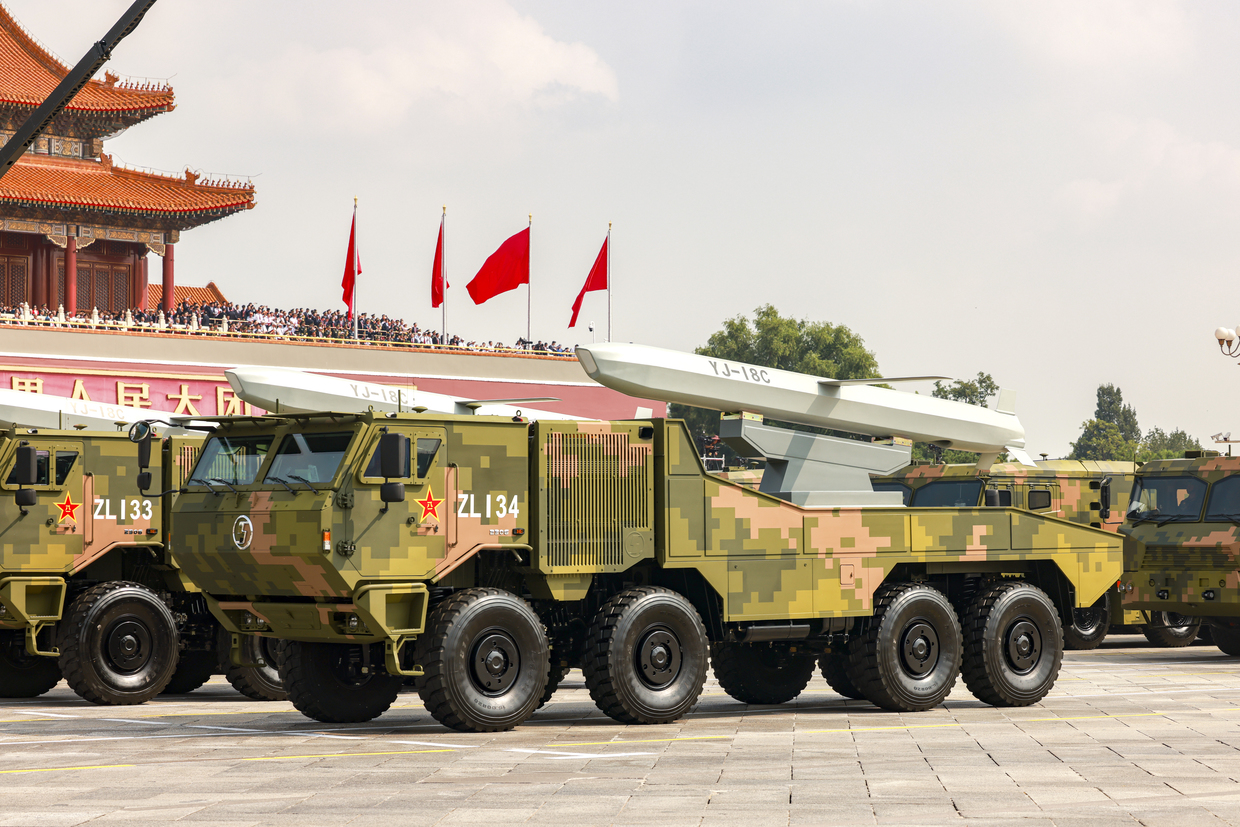
CJ-1000 hypersonic long-range cruise missile launchers were likewise on display, while the public could also see YJ-18C long-range cruise missiles currently in service with the People’s Liberation Army Navy and CJ-20A missiles used by China’s Air Force.
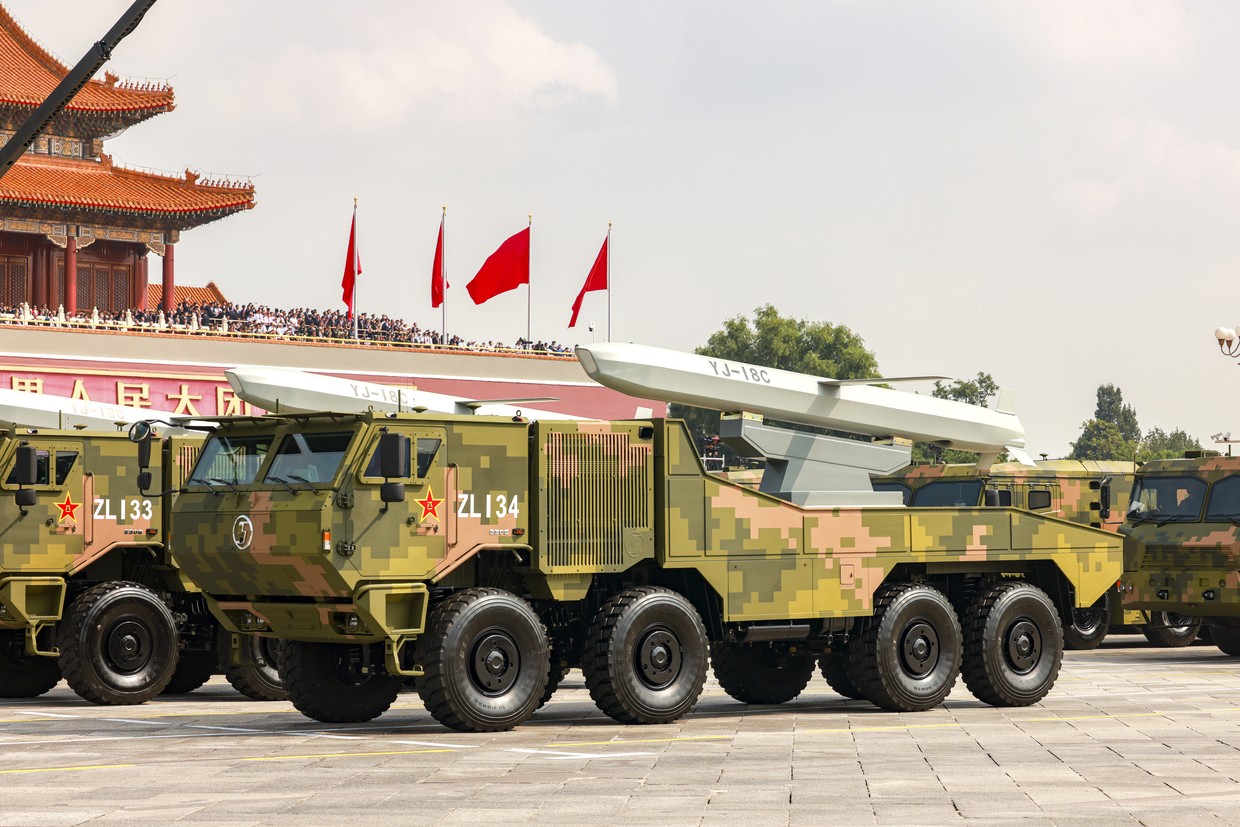
YJ-18C ship-launched cruise missiles


©  VCG/VCG via Getty Images

New tanks and support combat vehicles

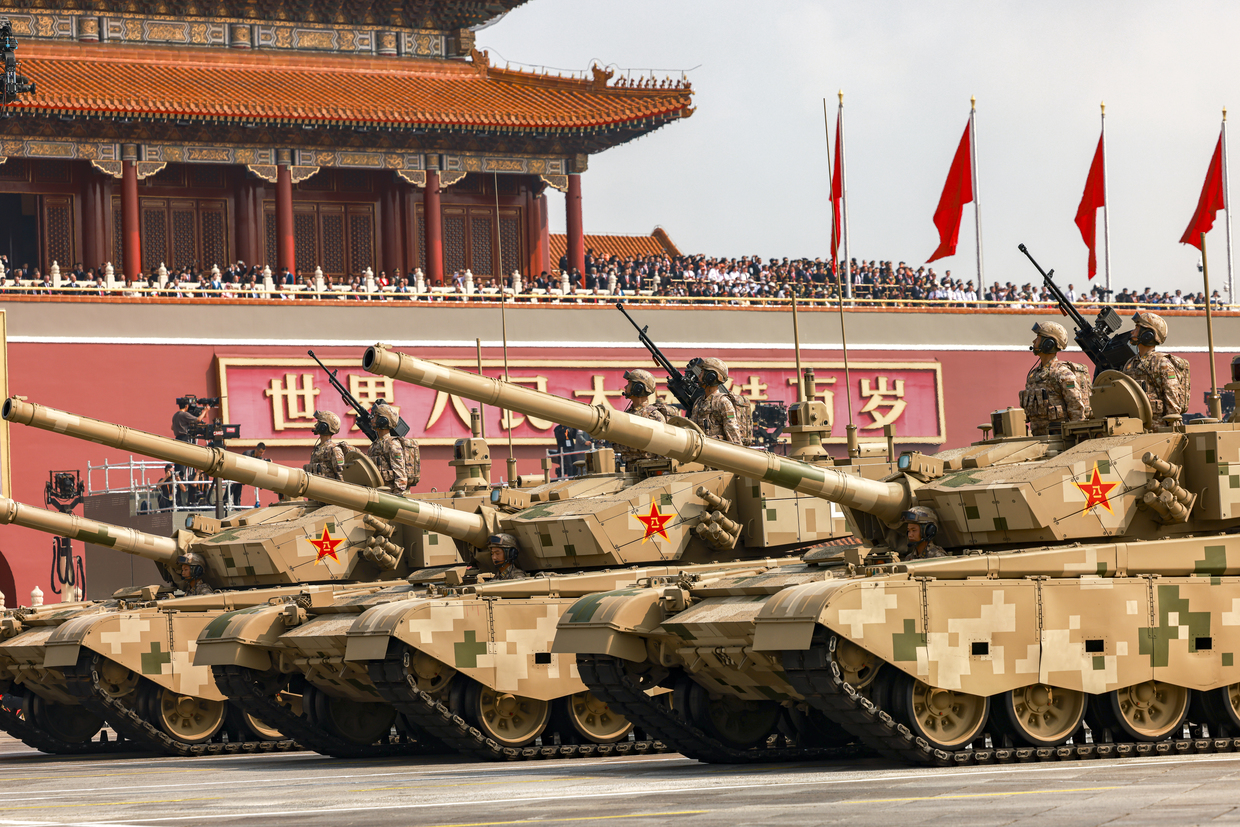
During parade rehearsals, observers spotted new armored vehicles – a ZTZ-201 tank and a tank support combat vehicle. According to parade announcers, both vehicles are classified as “Type 100.”

These vehicles share a common tracked chassis with a hybrid powertrain. Modern reactive armor and an active defense system featuring radar and optical sensors provide enhanced protection. The tank is equipped with a 105mm turret, believed to perform comparably to 120mm cannons, and includes a remotely operated machine gun module.
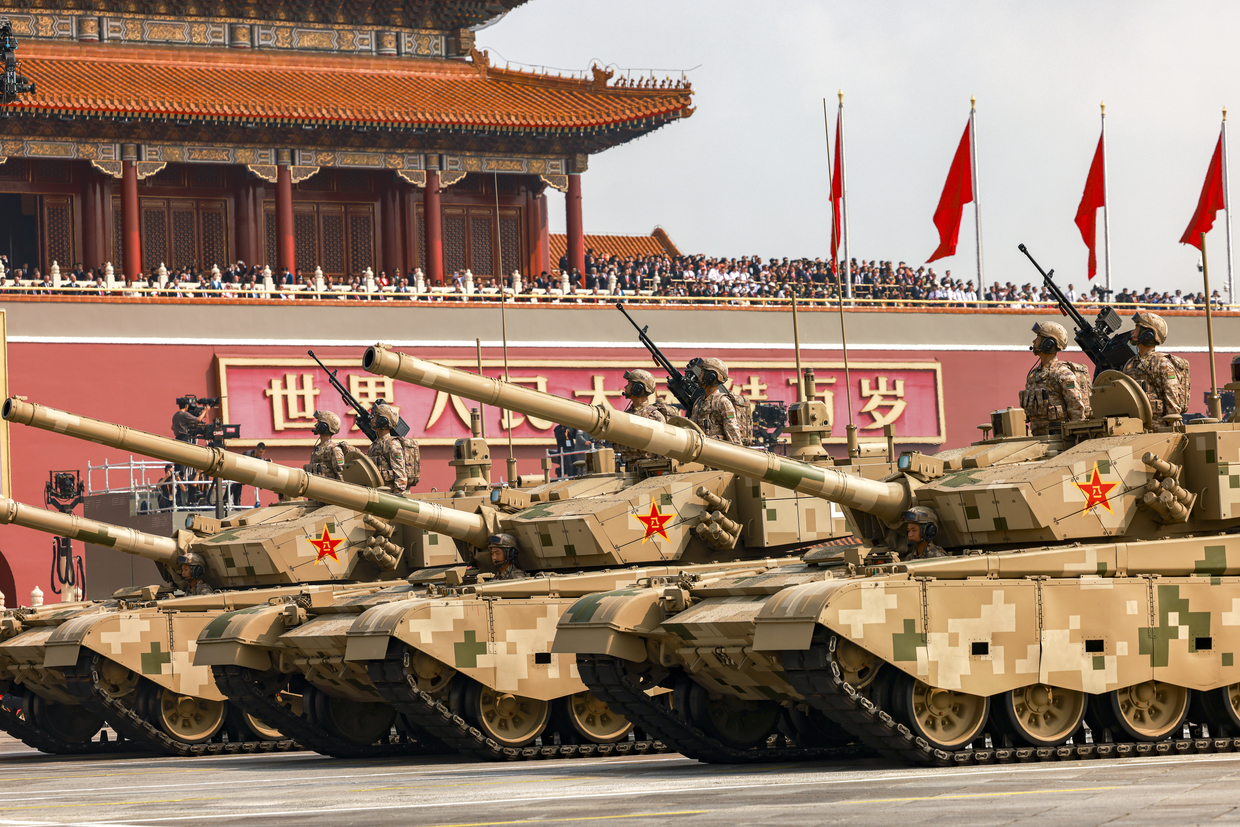
Type 99B tanks


©  VCG/VCG via Getty Images

The tank support combat vehicle features a combat module with an automatic cannon and is equipped with a reconnaissance drone. Two pilots positioned at the rear of the vehicle can control the drone. The vehicle’s drivers are equipped with augmented reality glasses.

Laser missile defense systems

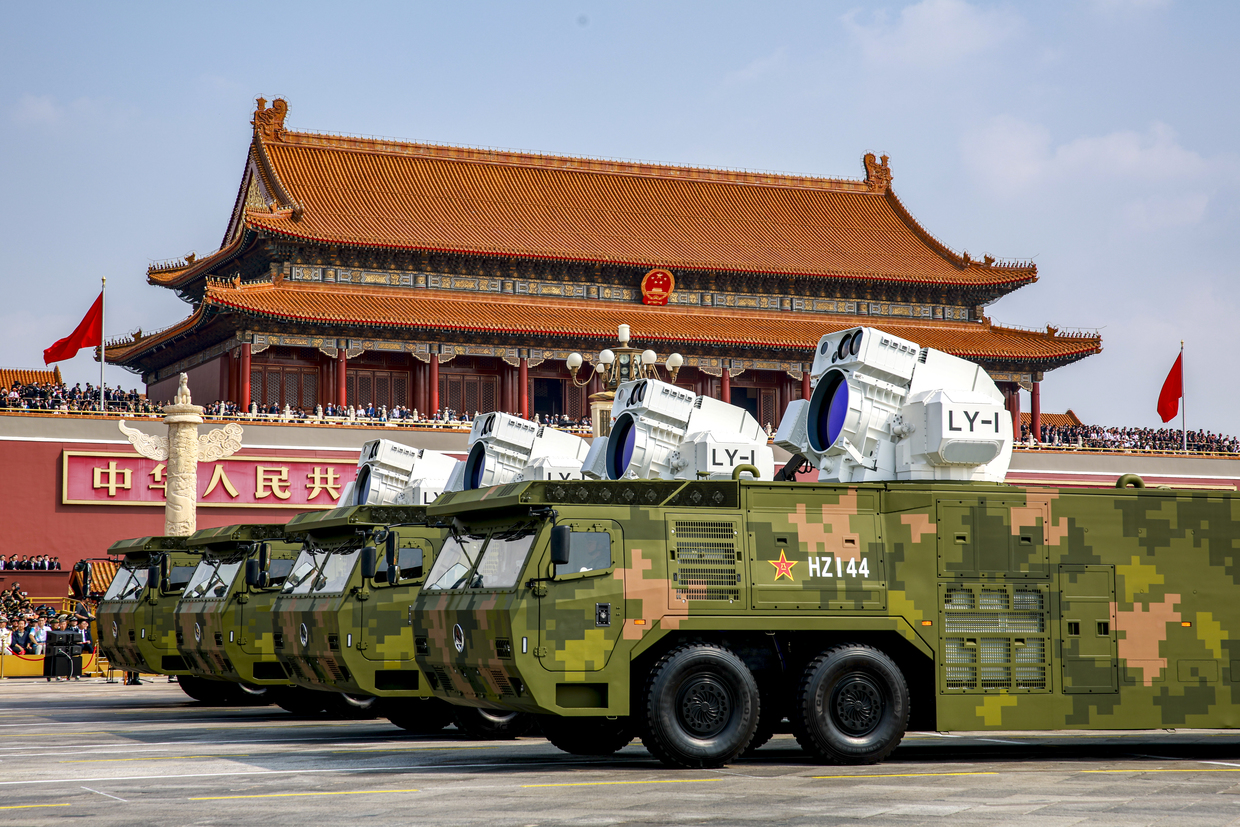
China’s defense industry has developed several laser systems for air defense and missile interception. During the parade, LY-1 naval laser systems were displayed on wheeled platforms. Additionally, two other laser systems mounted on a four-axle truck and a three-axle armored vehicle were showcased. These are likely designed for the ground forces of the People’s Liberation Army.
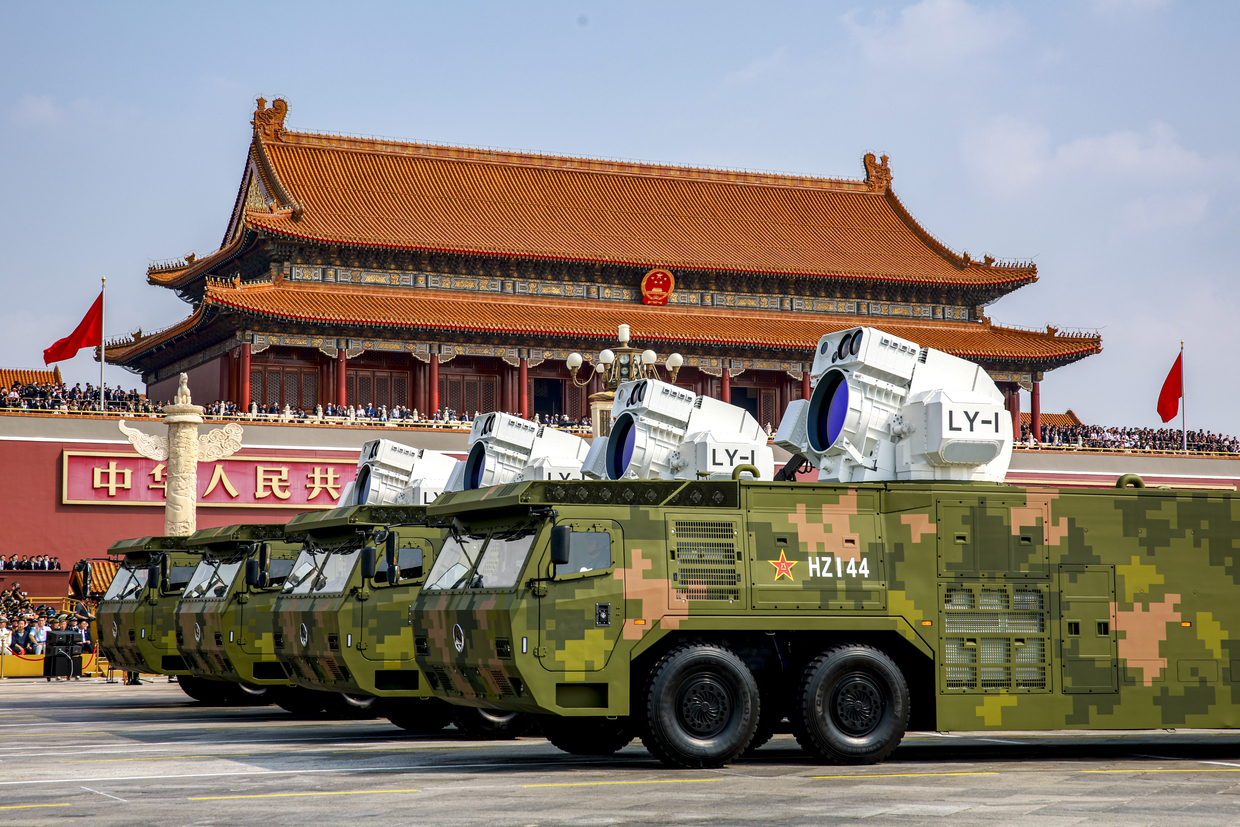
LY-1 ship-based air defense lasers


©  VCG/VCG via Getty Images

Several countries, including Russia, the UK, and the US, are currently developing laser-based air defense systems. These offer a more cost-effective alternative to intercepting threats with expensive missiles, particularly when it comes to defending against swarms of inexpensive kamikaze drones. In August, a video surfaced showing a Russian laser weapon successfully intercepting a Ukrainian FP-1 kamikaze drone, causing it to explode upon contact.
China has showcased advanced laser weapons and new missiles. Why do these frighten the US?

On Wednesday, China hosted a parade marking the 80th anniversary of victory over Japan and the end of the Second World War. The event in Beijing’s Tiananmen Square demonstrated cutting-edge innovations developed by China’s military-industrial complex, with lessons learned from contemporary military conflicts.

Vasily Kashin, director of the Center for Comprehensive European and International Studies at the National Research University Higher School of Economics in Moscow, noted that China does not hold annual parades, making this week’s event particularly significant.

“This parade is quite different from the Chinese parades of the last 15 years. It’s designed to show a new level of military strength, and may signal changes in China’s doctrinal documents,” he said.

The parade featured new armored vehicles, laser weapons, and missiles that could play a crucial role in a potential conflict with the US. 

Transporter erector launchers with DF-61 intercontinental missiles

Despite the fact that the rehearsals for the parade drew increased attention, the Chinese military managed to surprise foreign observers. Transporter erector launchers (TEL) equipped with DF-61 intercontinental ballistic missiles (ICBMs) were showcased for the first time ever during the military parade. 

Land-based DF-61 intercontinental ballistic missiles


©  VCG/VCG via Getty Images

Details about the system, which is mounted on an eight-axle chassis, were not disclosed. The DF-61 falls into the same category as Russia’s Yars TEL. These systems can launch missiles from anywhere along their patrol route, and can be deployed in just minutes. The DF-61 may be an advancement of the DF-41 TEL which was unveiled during a 2019 parade. The DF-41 is believed to have a range of 12,000 to 15,000km and can carry up to ten warheads.

Additionally, a new variant of the DF-31 ICBM, called DF-31BJ, was revealed in Beijing. The DF-31A variant is known to have a range of over 13,000km.

JL-3 missile

The parade also showcased the JL-3 intercontinental submarine-launched ballistic missile.

Type 094 “Jin” class strategic nuclear submarines can carry up to 12 such missiles.

JL-3 submarine-launched intercontinental ballistic missiles


©  VCG/VCG via Getty Images

As Brandon J. Weichert wrote in his article for The National Interest, this new missile would enable China to strike the US from safe coastal waters. 

“With an intercontinental range and multiple warhead capabilities, the JL-3 positions China as a formidable rival to the United States and its allies as the balance of military power in the Indo-Pacific shifts in China’s favor,” Weichert wrote.

DF-5 missile with global reach

Beijing has unveiled a new variant of its DF-5 ICBM, known as the DF-5C. During the parade, it was stated that the missile has global reach. This could imply that is equipped with an orbital warhead.

DongFeng-5C liquid-fueled intercontinental strategic nuclear missiles


©  VCG/VCG via Getty Images

The original liquid-fueled DF-5 entered service in 1971, while the upgraded DF-5B boasts an increased payload capacity of 5,000kg along with advanced technologies allowing it to bypass conventional air defense systems.

According to reports, the missile was tested in 2017. It is believed to feature a multiple independently targetable reentry vehicle (MIRV) system with up to 12 guided warheads.

An analogue of Russia’s Kinzhal missile

New JL-1 air-launched ballistic missiles were also unveiled in Beijing. According to the description, they resemble Russia’s Kinzhal missiles and are released after the aircraft reaches a predetermined altitude and speed.

JL-1 air-launched long-range missiles


©  VCG/VCG via Getty Images

CJ-1000 hypersonic long-range cruise missile launchers were likewise on display, while the public could also see YJ-18C long-range cruise missiles currently in service with the People’s Liberation Army Navy and CJ-20A missiles used by China’s Air Force.

YJ-18C ship-launched cruise missiles


©  VCG/VCG via Getty Images

New tanks and support combat vehicles

During parade rehearsals, observers spotted new armored vehicles – a ZTZ-201 tank and a tank support combat vehicle. According to parade announcers, both vehicles are classified as “Type 100.”

These vehicles share a common tracked chassis with a hybrid powertrain. Modern reactive armor and an active defense system featuring radar and optical sensors provide enhanced protection. The tank is equipped with a 105mm turret, believed to perform comparably to 120mm cannons, and includes a remotely operated machine gun module.

Type 99B tanks


©  VCG/VCG via Getty Images

The tank support combat vehicle features a combat module with an automatic cannon and is equipped with a reconnaissance drone. Two pilots positioned at the rear of the vehicle can control the drone. The vehicle’s drivers are equipped with augmented reality glasses.

Laser missile defense systems

China’s defense industry has developed several laser systems for air defense and missile interception. During the parade, LY-1 naval laser systems were displayed on wheeled platforms. Additionally, two other laser systems mounted on a four-axle truck and a three-axle armored vehicle were showcased. These are likely designed for the ground forces of the People’s Liberation Army.

LY-1 ship-based air defense lasers


©  VCG/VCG via Getty Images

Several countries, including Russia, the UK, and the US, are currently developing laser-based air defense systems. These offer a more cost-effective alternative to intercepting threats with expensive missiles, particularly when it comes to defending against swarms of inexpensive kamikaze drones. In August, a video surfaced showing a Russian laser weapon successfully intercepting a Ukrainian FP-1 kamikaze drone, causing it to explode upon contact.
Alternative for Germany is leading its closest competitor by 12 points ahead of next year’s election in the eastern German state of Saxony Anhalt, a new poll suggests

The right-wing Alternative for Germany (AfD) party is more popular than ever in the eastern German state of Saxony Anhalt, results published on Thursday suggest. The new benchmark comes about a year before regional parliamentary elections scheduled for September 2026.

Almost 40% of the voters in Saxony Anhalt would back the party if the elections were to be held this weekend, according to a survey conducted by the Infratest Dimap Institute on behalf of several news media outlets.

AfD’s closest competitor – the conservative Christian Democratic Union (CDU) – would only get 27% of the votes, putting it 12 percent points behind the AfD.

The party’s popularity has continued to grow despite its regional branch in Saxony Anhalt being declared a “far-right extremist” group by the German domestic security service (BfV) in 2023.

The poll involved over 1,100 eligible voters residing in the region and was held between August 28 and September 2.

Read more

FILE PHOTO.
AfD now Germany’s most popular party – poll

The numbers suggest public support for AfD in Saxony Anhalt has nearly doubled since the previous regional election in 2021, when the party received slightly over 20% of the votes, coming second behind the CDU. The poll suggests support for AfD is up 2% since the party secured 37% of votes in Saxony-Anhalt in snap federal elections in February.

Another mid-August national poll suggested that AfD has overtaken Chancellor Friedrich Merz’s conservative bloc, becoming Germany’s most popular party. Support for AfD grew to an unprecedented 26% as the CDU fell to 24%, according to the RTL/ntv ‘Trendbarometer’ poll.

In May, the BfV declared the AfD a “confirmed right-wing extremist” group but suspended the designation pending a court ruling on the party’s appeal. German Justice Minister Stefanie Hubig also floated the idea of banning the party altogether, arguing that the level of public support for it is irrelevant if the authorities deem it unconstitutional.

Alternative for Germany is leading its closest competitor by 12 points ahead of next year’s election in the eastern German state of Saxony Anhalt, a new poll suggests

The right-wing Alternative for Germany (AfD) party is more popular than ever in the eastern German state of Saxony Anhalt, results published on Thursday suggest. The new benchmark comes about a year before regional parliamentary elections scheduled for September 2026.

Almost 40% of the voters in Saxony Anhalt would back the party if the elections were to be held this weekend, according to a survey conducted by the Infratest Dimap Institute on behalf of several news media outlets.

AfD’s closest competitor – the conservative Christian Democratic Union (CDU) – would only get 27% of the votes, putting it 12 percent points behind the AfD.

The party’s popularity has continued to grow despite its regional branch in Saxony Anhalt being declared a “far-right extremist” group by the German domestic security service (BfV) in 2023.

The poll involved over 1,100 eligible voters residing in the region and was held between August 28 and September 2.

Read more

FILE PHOTO.
AfD now Germany’s most popular party – poll

The numbers suggest public support for AfD in Saxony Anhalt has nearly doubled since the previous regional election in 2021, when the party received slightly over 20% of the votes, coming second behind the CDU. The poll suggests support for AfD is up 2% since the party secured 37% of votes in Saxony-Anhalt in snap federal elections in February.

Another mid-August national poll suggested that AfD has overtaken Chancellor Friedrich Merz’s conservative bloc, becoming Germany’s most popular party. Support for AfD grew to an unprecedented 26% as the CDU fell to 24%, according to the RTL/ntv ‘Trendbarometer’ poll.

In May, the BfV declared the AfD a “confirmed right-wing extremist” group but suspended the designation pending a court ruling on the party’s appeal. German Justice Minister Stefanie Hubig also floated the idea of banning the party altogether, arguing that the level of public support for it is irrelevant if the authorities deem it unconstitutional.

The previously released recording on the night of the sex offender’s death jumped by one minute to midnight

A US congressional committee has released the “missing minute” from security camera footage outside convicted pedophile Jeffrey Epstein’s prison cell on the night of his death. Its existence contradicts Attorney General Pam Bondi’s earlier assertion that one minute was deleted every day at midnight upon camera reset.

The House Oversight and Government Reform Committee released more than 33,000 pages related to the Epstein case on Tuesday, amid mounting pressure on US President Donald Trump’s administration. The Justice Department (DOJ) and FBI have to date insisted that the late financier kept no ‘client list’ for his pedophile ring.

Previously released surveillance footage from Epstein’s cell block was missing one minute, from 11:59pm to midnight on August 9-10, sparking widespread speculation and accusations of a cover-up. His death has been officially ruled a suicide.

In the newly released video, shortly after 11:59, a man steps away from the guard desk and walks off screen. The limited field of view of the security camera does not show the entrance to Epstein’s cell.

The absence of a lapse in the recording contradicts the explanation previously given by Bondi. “What we learned from Bureau of Prisons was every night the video is reset, and every night should have the same minute missing,” she told journalists in July.

The newly released video is missing its metadata – technical information normally embedded in a file, that could help confirm that it was raw, unedited footage.

Read more

A billboard in Times Square calls for the release of the Epstein Files, New York, July 23, 2025.
US Congress releases first batch of Epstein files

The “missing minute” is also far lower in quality, has a reduced framerate, and a different on-screen text format, CBS News said on Wednesday, citing video forensics experts.

The DOJ’s and the FBI’s conclusion that Epstein kept no “incriminating client list” has provoked widespread backlash from lawmakers and prominent commentators.

Trump, who had promised to release the Epstein files during his reelection campaign, has hit back at criticism over his handling of the case, arguing that only “stupid people” insist on seeing the sex trafficker’s supposed client list.

The previously released recording on the night of the sex offender’s death jumped by one minute to midnight

A US congressional committee has released the “missing minute” from security camera footage outside convicted pedophile Jeffrey Epstein’s prison cell on the night of his death. Its existence contradicts Attorney General Pam Bondi’s earlier assertion that one minute was deleted every day at midnight upon camera reset.

The House Oversight and Government Reform Committee released more than 33,000 pages related to the Epstein case on Tuesday, amid mounting pressure on US President Donald Trump’s administration. The Justice Department (DOJ) and FBI have to date insisted that the late financier kept no ‘client list’ for his pedophile ring.

Previously released surveillance footage from Epstein’s cell block was missing one minute, from 11:59pm to midnight on August 9-10, sparking widespread speculation and accusations of a cover-up. His death has been officially ruled a suicide.

In the newly released video, shortly after 11:59, a man steps away from the guard desk and walks off screen. The limited field of view of the security camera does not show the entrance to Epstein’s cell.

The absence of a lapse in the recording contradicts the explanation previously given by Bondi. “What we learned from Bureau of Prisons was every night the video is reset, and every night should have the same minute missing,” she told journalists in July.

The newly released video is missing its metadata – technical information normally embedded in a file, that could help confirm that it was raw, unedited footage.

Read more

A billboard in Times Square calls for the release of the Epstein Files, New York, July 23, 2025.
US Congress releases first batch of Epstein files

The “missing minute” is also far lower in quality, has a reduced framerate, and a different on-screen text format, CBS News said on Wednesday, citing video forensics experts.

The DOJ’s and the FBI’s conclusion that Epstein kept no “incriminating client list” has provoked widespread backlash from lawmakers and prominent commentators.

Trump, who had promised to release the Epstein files during his reelection campaign, has hit back at criticism over his handling of the case, arguing that only “stupid people” insist on seeing the sex trafficker’s supposed client list.

The vessel was sunk trying to cross the Dnepr River, the Defense Ministry in Moscow has reported

Russian forces have destroyed a Ukrainian sabotage and reconnaissance group on the Dnepr river, the Defense Ministry in Moscow reported on Thursday.

According to the ministry, Russian drone operators keep watch over the river constantly to prevent enemy units from crossing it.

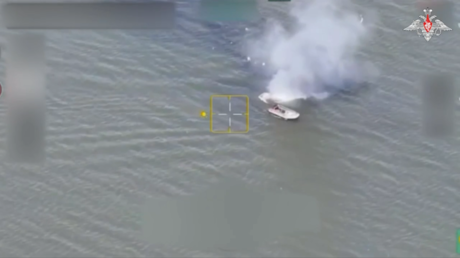
In the latest example, scouts spotted a speedboat with Ukrainian soldiers in the island zone at the mouth of the river. Russian forces dispatched FPV drones to intercept the craft and carried out a series of strikes that hit the vessel as it tried to move deeper into the channel.

The ministry released a video showing multiple impacts on the boat and the moment it was disabled in the delta. Repeated explosions on the target can be seen as Ukrainian saboteurs tried to escape.

The motorboat was sunk and the sabotage group was eliminated, the Defense Ministry has said.

Moscow has reported stopping similar attempts by Ukrainian units to infiltrate Russia. Last month, the Federal Security Service reported detaining a group of Ukrainian saboteurs in Bryansk Region. It was reported that the individuals were Western-trained and carried US-made assault rifles, Czech-made explosives, and a large number of NATO-type grenades and cartridges. The captured soldiers confessed to involvement in blowing up railway tracks in Russia and preparing other attacks, according to the FSB.

Beijing’s model focuses on things the West’s “rules-based order” has forgotten – equality, law and common development

The recent Shanghai Cooperation Organization (SCO) summit in Tianjin marked a decisive moment in the group’s evolution. What began more than two decades ago as a modest platform for regional security coordination is now presenting itself as the largest and one of the most ambitious regional organizations in the world.

This year’s summit was the largest in the organization’s history. More than 20 heads of state took part, joined by leaders of ten international organizations, including United Nations Secretary-General Antonio Guterres. The scale of participation sent a clear signal of the SCO’s appeal, drawing states that see in it a platform not dominated by the West. The SCO community welcomed Laos as a new partner, expanding its reach to 27 countries. Taken together, the SCO now represents a quarter of the world’s landmass, nearly half of its population, and around a quarter of global GDP.

The Tianjin summit confirmed that the SCO is no longer narrowly focused on security cooperation. Instead, it has become a comprehensive regional – and increasingly global – organization with a mandate covering economics, development, cultural exchange, and governance reform. This breadth of activity helps explain why its profile is rising.

Despite its expansion, the SCO is not a homogeneous bloc. Member states bring their own national priorities, and differences are frequent. India, for example, has consistently blocked Azerbaijan’s application for membership and remains the only SCO member not to endorse China’s Belt and Road Initiative. New Delhi’s simultaneous participation in the Quad – a grouping that also includes Australia, Japan, and the United States and is viewed suspiciously in Beijing and Moscow – adds another layer of complexity. Türkiye, a partner of the SCO, is also a NATO member, aligning itself with a military bloc traditionally hostile to both Russia and China.

Read more

RT
China cooperation, Ukraine conflict, and potential meeting with Zelensky: Key takeaways from Putin’s Q&A session

These tensions underline the diversity within the SCO. Russia historically emphasized security issues, while China pushed economic cooperation as the main driver of integration. Yet Tianjin revealed that these once competing emphases are increasingly converging. All sides now acknowledge that a holistic approach – linking security with development – is essential for building durable cooperation.

Beyond multilateral sessions, the summit served as a venue for bilateral diplomacy, often among countries with strained ties. Armenia and Pakistan agreed in principle to establish diplomatic relations, a significant step given the lack of formal ties between them. Russian and Armenian leaders met in an effort to repair relations after Yerevan’s growing outreach to Western partners. Perhaps most significantly, Chinese President Xi Jinping met with Indian Prime Minister Narendra Modi. It was Modi’s first visit to China since 2019 and was widely read as a bold step toward improving Sino-Indian relations.

At a time when Western capitals increasingly seek to drive wedges among developing powers, such encounters highlight the SCO’s capacity to promote reconciliation and strengthen unity. It is becoming a venue not only for multilateral agreements but also for healing divides and fostering trust.

The Tianjin summit was not simply ceremonial. Leaders approved the SCO Development Strategy for 2026-2035, setting out the organization’s long-term trajectory, and issued the Tianjin Declaration, alongside more than 20 additional documents covering security cooperation, economic initiatives, cultural exchanges, and institutional reforms.

Read more

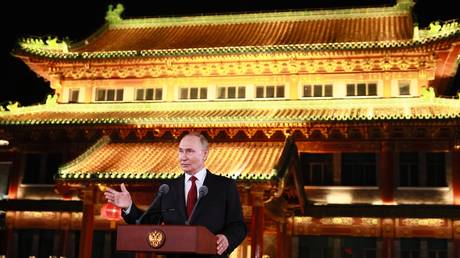
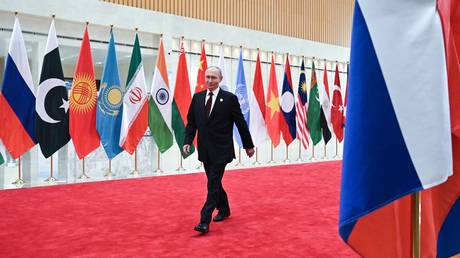
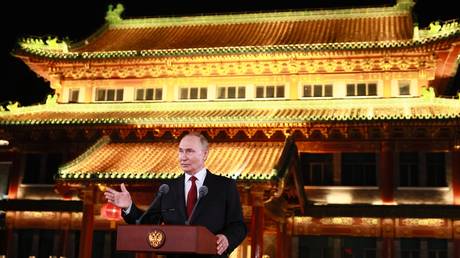
Russian President Vladimir Putin arrives at Meijiang Convention and Exhibition Centre for a ceremony to welcome Heads of States of the SCO in Tianjin, China.
The West had its century. The future belongs to these leaders now

A landmark decision was the creation of an SCO development bank, intended to accelerate infrastructure construction and support social and economic progress across the region. China also made significant financial commitments: 2 billion yuan ($280 million) in grants within this year, 10 billion yuan ($1.4 billion) in loans over the next three years, and support for 100 specific projects. Four new SCO centers will be established to strengthen cooperation against security threats, transnational crime, cyberattacks, and drug trafficking.

These measures showed that the SCO is not a forum of empty declarations. It is delivering tangible benefits for its members and demonstrating how South-South cooperation can generate real results.

At the political level, the summit confirmed the SCO’s ambition to influence the shape of global governance. President Xi described the organization as a leader in promoting multipolarity and greater democracy in international relations. The Tianjin Declaration reflected this stance, laying out a shared vision of international order rooted in the legacy of World War II and anchored in the United Nations system. The declaration emphasized sovereignty, international law, multilateralism, economic globalization, indivisible security, and human rights adjusted to national conditions.

This perspective stands in open contrast to the Western “rules-based order.” The latter reflects Western dominance rather than universally agreed norms. By articulating an alternative rooted in sovereignty and multipolarity, the SCO is positioning itself as the institutional expression of a new global consensus emerging outside the West.

Read more

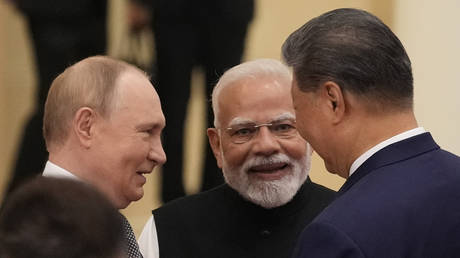
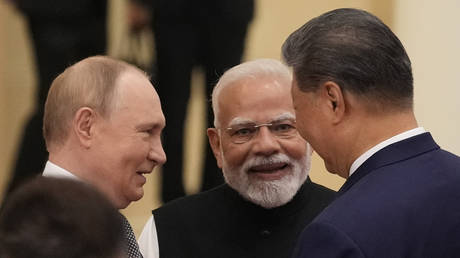
Indian PM Narendra Modi talks with Russian President Vladimir Putin(L) and Chinese President Xi Jinping ahead of SCO Summit 2025 in Tianjin, China.
The West has just been given a rude awakening

China used the Tianjin summit to introduce its Global Governance Initiative (GGI), a framework aimed at addressing structural flaws in the current international order. The GGI is built on five core principles: sovereign equality, international rule of law grounded in the UN Charter, multilateralism as the basis of governance, a people-centered approach that prioritizes common development, and pragmatism focused on measurable outcomes.

Beijing has identified the global financial system, artificial intelligence, cyberspace, climate change, international trade, and outer space as priority areas for rule-making. The GGI’s overarching goal is to create new institutions and norms that better represent the Global South, restore the UN’s centrality, and increase the effectiveness of governance mechanisms.

The GGI also highlights the dual nature of China’s international posture. On the one hand, Beijing presents itself as a defender of the UN-based postwar system. On the other, it calls for the construction of a new order that translates this system into practical arrangements suited to today’s world. The distinction between the “system” and the “order” is essential for understanding China’s behavior. It helps to counter the Western narrative that labels China as a ‘revisionist’ and ‘subversive’ power.

In reality, it is the US and its allies that undermine the United Nations in various ways to preserve their hegemony and block genuine democracy in international relations. Their resistance to democratization at the global level mirrors the growing authoritarian tendencies within their liberal democracies. This contradiction reveals that liberal elites in the West, rather than promoting freedom, justice, and progress, have become their main obstacle.

Read more

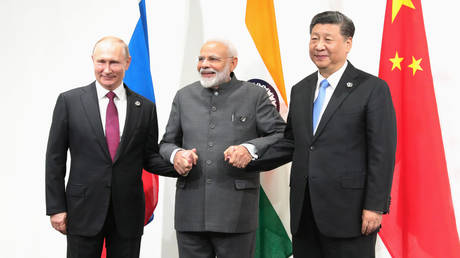
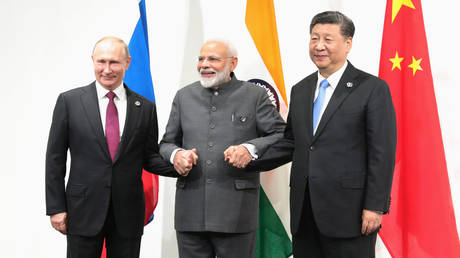
FILE PHOTO: Russian President Vladimir Putin, Indian Prime Minister Narendra Modi and Chinese President Xi Jinping.
Three giants at one table: Can Russia, India, and China rewrite the global rules?

The GGI is the latest in a series of initiatives China has advanced since 2021. It joins the Global Development Initiative, the Global Security Initiative, and the Global Civilization Initiative. Together, these proposals form the intellectual and policy foundation for Xi’s broader concept of building a “community with a shared future for mankind.” The aim is clear: to rally international support for a new, multipolar order that eliminates Western hegemony and safeguards peaceful coexistence.

It is no coincidence that China chose the SCO summit as the venue to inaugurate the Global Governance Initiative. For Beijing, the SCO is more than a regional body; it is a prototype of the future global governance pattern. The symbolism is powerful. By placing the SCO at the heart of its vision, Beijing is signaling that it sees the organization not just as a Eurasian platform, but as a cornerstone of global transformation. The SCO, in this framing, is both a laboratory for new ideas and a vehicle for implementing them.

The Tianjin summit confirmed that the Shanghai Cooperation Organization has grown far beyond its initial purpose. With its growing size, scope, and agenda, the SCO is emerging as a central institution in the multipolar world order now taking shape.

Beijing’s model focuses on things the West’s “rules-based order” has forgotten – equality, law and common development

The recent Shanghai Cooperation Organization (SCO) summit in Tianjin marked a decisive moment in the group’s evolution. What began more than two decades ago as a modest platform for regional security coordination is now presenting itself as the largest and one of the most ambitious regional organizations in the world.

This year’s summit was the largest in the organization’s history. More than 20 heads of state took part, joined by leaders of ten international organizations, including United Nations Secretary-General Antonio Guterres. The scale of participation sent a clear signal of the SCO’s appeal, drawing states that see in it a platform not dominated by the West. The SCO community welcomed Laos as a new partner, expanding its reach to 27 countries. Taken together, the SCO now represents a quarter of the world’s landmass, nearly half of its population, and around a quarter of global GDP.

The Tianjin summit confirmed that the SCO is no longer narrowly focused on security cooperation. Instead, it has become a comprehensive regional – and increasingly global – organization with a mandate covering economics, development, cultural exchange, and governance reform. This breadth of activity helps explain why its profile is rising.

Despite its expansion, the SCO is not a homogeneous bloc. Member states bring their own national priorities, and differences are frequent. India, for example, has consistently blocked Azerbaijan’s application for membership and remains the only SCO member not to endorse China’s Belt and Road Initiative. New Delhi’s simultaneous participation in the Quad – a grouping that also includes Australia, Japan, and the United States and is viewed suspiciously in Beijing and Moscow – adds another layer of complexity. Türkiye, a partner of the SCO, is also a NATO member, aligning itself with a military bloc traditionally hostile to both Russia and China.

Read more

RT
China cooperation, Ukraine conflict, and potential meeting with Zelensky: Key takeaways from Putin’s Q&A session

These tensions underline the diversity within the SCO. Russia historically emphasized security issues, while China pushed economic cooperation as the main driver of integration. Yet Tianjin revealed that these once competing emphases are increasingly converging. All sides now acknowledge that a holistic approach – linking security with development – is essential for building durable cooperation.

Beyond multilateral sessions, the summit served as a venue for bilateral diplomacy, often among countries with strained ties. Armenia and Pakistan agreed in principle to establish diplomatic relations, a significant step given the lack of formal ties between them. Russian and Armenian leaders met in an effort to repair relations after Yerevan’s growing outreach to Western partners. Perhaps most significantly, Chinese President Xi Jinping met with Indian Prime Minister Narendra Modi. It was Modi’s first visit to China since 2019 and was widely read as a bold step toward improving Sino-Indian relations.

At a time when Western capitals increasingly seek to drive wedges among developing powers, such encounters highlight the SCO’s capacity to promote reconciliation and strengthen unity. It is becoming a venue not only for multilateral agreements but also for healing divides and fostering trust.

The Tianjin summit was not simply ceremonial. Leaders approved the SCO Development Strategy for 2026-2035, setting out the organization’s long-term trajectory, and issued the Tianjin Declaration, alongside more than 20 additional documents covering security cooperation, economic initiatives, cultural exchanges, and institutional reforms.

Read more

Russian President Vladimir Putin arrives at Meijiang Convention and Exhibition Centre for a ceremony to welcome Heads of States of the SCO in Tianjin, China.
The West had its century. The future belongs to these leaders now

A landmark decision was the creation of an SCO development bank, intended to accelerate infrastructure construction and support social and economic progress across the region. China also made significant financial commitments: 2 billion yuan ($280 million) in grants within this year, 10 billion yuan ($1.4 billion) in loans over the next three years, and support for 100 specific projects. Four new SCO centers will be established to strengthen cooperation against security threats, transnational crime, cyberattacks, and drug trafficking.

These measures showed that the SCO is not a forum of empty declarations. It is delivering tangible benefits for its members and demonstrating how South-South cooperation can generate real results.

At the political level, the summit confirmed the SCO’s ambition to influence the shape of global governance. President Xi described the organization as a leader in promoting multipolarity and greater democracy in international relations. The Tianjin Declaration reflected this stance, laying out a shared vision of international order rooted in the legacy of World War II and anchored in the United Nations system. The declaration emphasized sovereignty, international law, multilateralism, economic globalization, indivisible security, and human rights adjusted to national conditions.

This perspective stands in open contrast to the Western “rules-based order.” The latter reflects Western dominance rather than universally agreed norms. By articulating an alternative rooted in sovereignty and multipolarity, the SCO is positioning itself as the institutional expression of a new global consensus emerging outside the West.

Read more

Indian PM Narendra Modi talks with Russian President Vladimir Putin(L) and Chinese President Xi Jinping ahead of SCO Summit 2025 in Tianjin, China.
The West has just been given a rude awakening

China used the Tianjin summit to introduce its Global Governance Initiative (GGI), a framework aimed at addressing structural flaws in the current international order. The GGI is built on five core principles: sovereign equality, international rule of law grounded in the UN Charter, multilateralism as the basis of governance, a people-centered approach that prioritizes common development, and pragmatism focused on measurable outcomes.

Beijing has identified the global financial system, artificial intelligence, cyberspace, climate change, international trade, and outer space as priority areas for rule-making. The GGI’s overarching goal is to create new institutions and norms that better represent the Global South, restore the UN’s centrality, and increase the effectiveness of governance mechanisms.

The GGI also highlights the dual nature of China’s international posture. On the one hand, Beijing presents itself as a defender of the UN-based postwar system. On the other, it calls for the construction of a new order that translates this system into practical arrangements suited to today’s world. The distinction between the “system” and the “order” is essential for understanding China’s behavior. It helps to counter the Western narrative that labels China as a ‘revisionist’ and ‘subversive’ power.

In reality, it is the US and its allies that undermine the United Nations in various ways to preserve their hegemony and block genuine democracy in international relations. Their resistance to democratization at the global level mirrors the growing authoritarian tendencies within their liberal democracies. This contradiction reveals that liberal elites in the West, rather than promoting freedom, justice, and progress, have become their main obstacle.

Read more

FILE PHOTO: Russian President Vladimir Putin, Indian Prime Minister Narendra Modi and Chinese President Xi Jinping.
Three giants at one table: Can Russia, India, and China rewrite the global rules?

The GGI is the latest in a series of initiatives China has advanced since 2021. It joins the Global Development Initiative, the Global Security Initiative, and the Global Civilization Initiative. Together, these proposals form the intellectual and policy foundation for Xi’s broader concept of building a “community with a shared future for mankind.” The aim is clear: to rally international support for a new, multipolar order that eliminates Western hegemony and safeguards peaceful coexistence.

It is no coincidence that China chose the SCO summit as the venue to inaugurate the Global Governance Initiative. For Beijing, the SCO is more than a regional body; it is a prototype of the future global governance pattern. The symbolism is powerful. By placing the SCO at the heart of its vision, Beijing is signaling that it sees the organization not just as a Eurasian platform, but as a cornerstone of global transformation. The SCO, in this framing, is both a laboratory for new ideas and a vehicle for implementing them.

The Tianjin summit confirmed that the Shanghai Cooperation Organization has grown far beyond its initial purpose. With its growing size, scope, and agenda, the SCO is emerging as a central institution in the multipolar world order now taking shape.

China earlier this week announced the same privilege for Russians during a one-year trial period

Moscow will grant visa-free entry to Chinese visitors, following Beijing’s decision earlier this week to extend the same privilege to Russian nationals, President Vladimir Putin has said. The reciprocal measure will strengthen cultural and economic ties between the two countries, he added.

Putin made the remarks on Thursday in Vladivostok while meeting with senior Chinese official Li Hongzhong, a member of the Communist Party’s Politburo and vice chairman of the Standing Committee of the National People’s Congress.

Putin called China’s decision to ease entry for Russians a “very significant step” that would help boost business, saying: “Of course, Russia will respond to this friendly act in kind. We will do the same.”

The Chinese visa waiver program will be expanded to ordinary passport holders from Russia starting September 15. Travelers will be able to enter the country for up to 30 days for business, tourism, personal visits, exchanges, and transit purposes.

According to the Chinese Foreign Ministry, the decision reflects the high level of development in China-Russia relations and is aimed at deepening people-to-people exchanges.

Read more

RT
China announces visa-free travel for Russians

A bilateral agreement already allows visa-free travel for organized tourist groups, but only through accredited operators, with groups of between five and 50 people.

Other Chinese travelers have had to rely on standard or electronic visas. An e-visa, introduced in August 2023, permits stays of up to 30 days, can be obtained within days, and reportedly costs about $40–50.

For Russian travelers fees ranged from $31–41 for a single entry, while multiple-entry visas started at $92. Processing typically took a week or longer.

Tourism between the two countries has been surging, supported by eased entry rules and e-visa services. In 2024, Russians made around three million tourist trips to China, with the trend continuing upward, Economy Minister Maksim Reshetnikov told Izvestia on Thursday.

According to booking services, interest in trips to China surged immediately following Beijing’s announcement on Tuesday, with ticket sales for flights departing after September 15 doubling, and hotel searches and travel inquiries jumping five to ninefold.