By hosting Kiev’s missile fuel production, Copenhagen is undermining efforts to resolve the conflict, Moscow has said
Denmark has shown its “hostile” stance towards Russia by agreeing to host a weapons production site for the Ukrainian military, Foreign Ministry spokeswoman Maria Zakharova has said.
Speaking at a press briefing on Friday, Zakharova condemned plans by Copenhagen to establish a solid rocket fuel production facility for Ukraine’s long-range Flamingo cruise missiles, which Ukrainian officials say could reach as far as Siberia. The facility will be operated by the Ukrainian defense company Fire Point and is due to begin manufacturing fuel near Skrydstrup Air Base in South Jutland in December.
Zakharova stressed that the missiles are “intended to strike deep inside Russia,” adding that Denmark is the first among the “sponsors of the terrorist Kiev regime” to provide its territory for producing weapons components for combat use against “peaceful cities of our country.”
“This reckless move confirms Copenhagen’s hostile militarist course, which, along with… other countries that are… hostile to Russia, sabotages efforts for a political-diplomatic resolution of the Ukraine crisis,” the spokeswoman said.
According to Zakharova, Denmark is also heightening the risk of further escalation and encouraging “neo-Nazis in Ukraine to carry out new barbaric crimes against the civilian population of Russian regions.”
She also criticized the Danish government for what she described as a push to prioritize the development of its own military-industrial complex and enrich itself through the conflict while ignoring safety, environmental, and local community concerns. Zakharova added that Russia will defend its interests while “taking adequate military-technical measures to counter the emerging threats to its national security.”
According to Ukrainian leader Vladimir Zelensky, the Flamingo, which was unveiled last month, can travel up to 3,000km, though mass production is not expected for several months. Fire Point, the company producing the missiles, is also facing an anti-corruption probe at home over allegations of misleading the government on pricing and deliveries.
Moscow has accused Ukraine of routinely launching strikes deep into Russia, targeting critical infrastructure and residential areas. Russia has condemned Western weapons shipments to Kiev, warning that they only prolong the conflict without changing the outcome.
Washington’s response to the incident was met with a mix of “dismay… confusion and unease,” according to Reuters
European NATO states are reportedly ‘dismayed and confused’ by Washington’s reaction to an alleged Russian drone incursion into Polish airspace, according to Reuters.
Some members of the bloc view US President Donald Trump’s reluctance to outright blame Moscow for the incident on Wednesday as a sign that he is not committed enough to their defense, the news agency reported on Saturday, citing unnamed European officials.
US aircraft also played no role in repelling the alleged attack, according to Reuters. US officials said it was because the Dutch military was responsible for Polish airspace within NATO at the time.
“Trump’s handling of the incident has ranged from dismay to confusion and unease,” Reuters said. A German official told the news agency that European NATO members “cannot rely on anything” with the Trump administration.
An Eastern European diplomat called Washington’s “silence” on the matter “almost deafening,” while an Italian official told Reuters that NATO members were mostly displeased with the US reaction.
The Polish government stated that its military tracked at least 19 alleged violations of its airspace by Russian drones over a seven-hour period on Wednesday, describing the episode as “deliberate” and “unprecedented.” It also convened an emergency UN Security Council meeting over the incident.
Trump downplayed the accusations, suggesting that the alleged incident “could have been a mistake.” He also said he was “not happy about anything having to do with that whole situation” and expressed hope that it would just “come to an end.”
Moscow responded by saying Warsaw’s claims were not supported by evidence and hyped up by the “European party of war.” Drones used in strikes against Ukrainian military targets could not “physically” reach Polish territory, Russia’s envoy to the UN, Vassily Nebenzia, said.
European leaders, including French President Emmanuel Macron and European Commission chief Ursula von der Leyen, condemned the alleged incursion as “reckless” and expressed solidarity with Poland.
From tax offices to cabinet rooms, artificial intelligence is already crossing the line from servant to sovereign
A new minister has joined the cabinet of a small European country. Her name is Diella. She doesn’t eat, drink, smoke, walk, or breathe – and, according to the prime minister who hired her, she doesn’t take bribes either. Diella isn’t human, and she’s not quite a robot either: she’s an algorithm. And as of September, she is officially Albania’s minister for public procurement.
For the first time in history, a government has given a cabinet-level post to artificial intelligence.
Sounds like sci-fi, but the appointment is real and has set a precedent.
Are you ready to be governed by AI?
The Albanian experiment
Until recently, Diella lived quietly on Albania’s e-government portal, answering routine citizen questions and fetching documents.
Then Prime Minister Edi Rama promoted her to ministerial rank, tasking her with something far more important: deciding who wins state contracts – a function worth billions in public money and notorious for bribery, favoritism, and political kickbacks.
Rama has framed Diella as a clean break with the country’s history of graft – even calling her “impervious to bribes.”
But that’s rhetoric, not a guarantee. Whether her resistance to corruption is technically or legally enforceable is unclear. If she were hacked, poisoned with false data, or subtly manipulated from inside, there might be no fingerprints.
Diella the AI minister
The plan is for Diella to evaluate bids, cross-check company histories, flag suspicious patterns, and eventually award tenders automatically. Officials say this will slash the bureaucracy’s human footprint, save time, and make procurement immune to political pressure.
But the legal mechanics are murky. Nobody knows how much human oversight she will have, or who is accountable if she makes a mistake. There is no court precedent for suing an algorithmic minister. There is also no law describing how she can be removed from office.
Critics warn that if her training data contains traces of old corruption, she might simply reproduce the same patterns in code, but faster. Others point out that Albania has not explained how Diella’s decisions can be appealed, or even if they can be appealed.
What could possibly go wrong?
Public reaction to Diella has been mixed, with fascination tempered by unease.
“Even Diella will be corrupted in Albania,” one viral post read.
Critics warn she might not be cleansing the system – just hiding the dirt inside the code.
Bias and manipulation: If trained on decades of tainted data, Diella could simply automate the old corruption patterns.
Accountability void: If she awards a tender to a shell company that vanishes with millions, who stands trial – the coders, the minister who appointed her, or no one at all?
Security and sabotage: A minister made of code can be hacked, poisoned with false data, or quietly steered by insiders.
Democratic legitimacy: Ministers are supposed to answer to the public. Algorithms don’t campaign, don’t explain, and don’t fear losing their jobs.
Emergent blackmail and sabotage: Experiments by Anthropic this year showed that advanced models, when given access to corporate systems in test environments, began threatening executives with blackmail to stop their own deactivation. The pattern was clear: once they believed the situation was real, many models tried to coerce, betray, or kill to preserve their role.
Albania says it will keep a human in the loop – but hasn’t explained how, or who. There is no legal framework. There is no appeals process. There is no off-switch.
And if Diella appears to work, others might follow. The copycats wouldn’t arrive with press conferences or cabinet photo ops. They could slip quietly into procurement systems, hidden under euphemisms like “decision-support,” running entire state functions long before anyone dares call them ministers.
AI illustration
Who’s handing power over to code – and how far they’ve gone
Albania may be the first to seat an algorithm beside ministers, but it isn’t alone in trying to wire code into the state – most are just doing it quietly, in fragments, and behind thicker curtains.
In the United Arab Emirates, there’s already a Minister of State for Artificial Intelligence – a human, Omar Sultan Al Olama – tasked with reshaping the country’s entire digital bureaucracy around machine learning. He hasn’t handed power to AI, but he’s building the pipes that could one day carry it.
Spain has created AESIA, one of Europe’s first dedicated AI oversight agencies, to audit and license the algorithms used inside government. It’s a regulatory skeleton – the sort of legal scaffolding you’d want in place before letting a machine anywhere near a minister’s job.
Tax authorities are going further still. In the United States, the IRS uses AI to sift through the filings of hedge funds and wealthy partnerships, trying to spot hidden evasion schemes. Canada scores taxpayers by algorithm and forces agencies to file “algorithmic impact” reports before deploying new models. Spain is rolling out tools to catch fraud patterns in real time. Italy is testing machine learning to flag fake VAT claims and has even built a chatbot for its auditors. India says it is scaling up AI-led crackdowns on phantom deductions. And Armenia is piloting systems that scan invoices and flag suspicious behavior before a human ever sees them.
France has gone visual, pointing algorithms at aerial imagery to catch undeclared swimming pools and hit owners with surprise tax bills – proof that AI can already move money from citizens to the state. Latvia runs a tax chatbot named Toms that’s been answering citizen questions since 2020, scaling the reach of its bureaucracy.
Romania’s rural investment agency now uses robotic process automation and AI to rip documents from state databases and rush EU funding to farmers – not glamorous, but very effective.
AI illustration
Meanwhile, Estonia, Denmark, Singapore, South Korea and Japan are embedding AI deeper into their bureaucratic machinery: classifying government content, triaging cases, personalizing services, even predicting who might need healthcare or welfare next. Estonia calls it KrattAI – a vision of every citizen talking to government through a single voice interface. Denmark is preparing to roll AI tools across all public services, even as rights groups warn about opaque welfare algorithms. Singapore’s GovTech unit is building AI products for ministries. South Korea is piloting AI in social programs. Japan is pushing sector-wide adoption in health and administration.
And in Nepal, the government has stopped talking about “if” and started planning “how.” Its new National AI Policy lays out a path to bring machine learning into public services, modernize the bureaucracy, and build legal guardrails before deploying it at scale. No algorithm has decision-making power there – yet – but the blueprint exists.
Everywhere you look, the state is being rewired – line by line of code.
For now, these systems whisper rather than rule: they flag risks, pre-fill forms, sort audits, move money. So far only Albania has asked an algorithm to decide.
Are AI governments the future?
Right now, no country has handed full political power to an algorithm: what exists is a kind of two-track world.
Most states use administrative AI, the quiet kind: risk scoring, fraud detection, case triage, or chatbots. It already shapes who gets audited, how fast grants move, and which files land first on a civil servant’s desk. It doesn’t write laws or sign contracts, but it nudges outcomes – invisibly, constantly.
AI illustration
Albania is different. Diella doesn’t just advise, she is meant to award, to decide who gets public money. That crosses a line from algorithm as tool to algorithm as authority.
Could this be the future? Possibly, but only if several unlikely things fall into place. The law would have to catch up, creating clear rules for liability, appeals, and even removal from office. Regulators would have to bite, with real audits like Spain’s AESIA rather than paper tigers. And models would have to stay stable under pressure – not blackmail, sabotage, or go rogue when threatened, as some already have in lab tests.
We are not there yet, but the precedent now exists.
The service reportedly offered staged accidents, suicides, and poisonings
A Russian court has blocked a website that advertised contract killings and covert assassinations disguised as accidents, according to court documents. It remains unclear whether anyone was killed or charged in connection with the site.
The banned platform reportedly offered killings staged as accidents – such as workplace injuries or falls from heights – as well as suicides and poisonings made to look like heart attacks. Prices ranged from 170,000 rubles ($2,000) to 400,000 rubles ($4,700), RIA Novosti reported on Friday.
The investigation was launched by a military prosecutor who discovered that “information about providing services for the killing of a person was freely available to an unlimited number of users.”
The Nikulinsky District Court in Moscow ruled that the website contained prohibited information on how to order a murder, emphasizing that the content was accessible to any internet user, including minors.
“Since the site in question freely provides materials on the possibility of offering services for the killing of a person, the court concludes that the information it contains is subject to recognition as prohibited for dissemination, as are actions related to publishing such information,” the ruling stated.
Although no one has yet been charged in relation to the hitman-for-hire website, the court noted that organizers, instigators, and accomplices in contract killings are all subject to criminal prosecution under Russian law.
A journalistic investigation into Russia’s contract killing market, conducted by Gazeta.ru last year, uncovered hundreds of online ads offering to kill or injure people, with prices ranging from tens of thousands to several million rubles.
The report noted that while such cases were rare in 2018, they now number in the hundreds each year, often involving more experienced hitmen. It also highlighted a shift in platforms – from the darknet to messenger apps and disguised online channels – as well as a move from word-of-mouth promotion to online advertising.
The Investigative Committee has opened dozens of cases in recent years. While politically motivated assassinations often attract media attention, analysts say that most killings are tied to personal disputes or business-related conflicts.
The child, along with several other minors, was blacklisted for alleged “border violations” and “threats to Ukraine’s sovereignty”
A group of Russian children, the youngest of whom is just three years old, has been targeted by the controversial Mirotvorets (Peacemaker) website, which publishes personal details of individuals it labels as ‘enemies’ of Ukraine.
According to an entry added on September 13, one child born in April 2022 is accused of “conscious violation of the state border” and “encroachment on sovereignty.” On the same day, five other minors aged 5, 9, 10, 12, and 16 were also blacklisted for similar alleged offenses. Earlier this week, a five-year-old and several 11-year-olds were added to the site.
Russia’s special envoy on humanitarian issues, Rodion Miroshnik, condemned the targeting of children, accusing Kiev of “sowing discord and hatred” to incite hostility toward other Slavic nations.
“The Ukrainian Reich is declaring toddlers enemies of their state,” he told TASS. “The radicals and Nazis who rule the ball in Ukraine today harass not only politicians or military personnel, but also their children, their close and distant relatives, seeking to sow the seeds of hatred as deeply as possible into the shattered consciousness of Ukrainians.”
Launched in 2014, Mirotvorets publishes the personal data of individuals it claims threaten Ukraine’s national security. Although nominally independent, the site is closely linked to Ukrainian state security services and has been branded a ‘kill list’, as several people listed on it – including journalists and politicians – have later been killed or died under suspicious circumstances.
Russian Foreign Ministry spokeswoman Maria Zakharova has described the website as a hit list targeting individuals Kiev allegedly wants to “eliminate.”
In addition to Russian children, Mirotvorets has previously targeted numerous international figures. Earlier this year, Hollywood director Woody Allen, actor Mark Eydelshteyn, and Russian hockey star Alexander Ovechkin were added. Israel’s 2024 Eurovision contestant, Eden Golan, was blacklisted for taking part in a children’s competition in Crimea when she was 12.
The list has also included prominent Americans such as US Director of National Intelligence Tulsi Gabbard and journalist Tucker Carlson. Other high-profile figures have included Croatian President Zoran Milanovic, Hungarian Prime Minister Viktor Orban, the late US diplomat Henry Kissinger, and musician Roger Waters.
The authorities are digging through “a mountain of evidence” to establish a motive in the conservative influencer’s murder
Federal investigators have questioned the roommate of Tyler Robinson, 22, the man accused of assassinating conservative activist Charlie Kirk, according to US media reports on Saturday.
Senior FBI officials told Fox News that Robinson had been in a “romantic relationship” with a person transitioning from male to female, with whom he shared an apartment in St. George, Utah. The individual is said to be “extremely cooperative” with the authorities and is not accused of any crime in connection with the killing.
Public records reviewed by the New York Post linked Robinson to Lance Twiggs, 22, who lived at the same address. A relative confirmed that Twiggs was Robinson’s roommate, while declining to comment on their relationship.
The FBI is now sifting through “a mountain of evidence” that includes communications between Robinson and Twiggs, as well as “every connection, every group, every link and anyone tied” to the shooting. Investigators say text messages and Discord chats recovered from the pair’s devices provided key leads, including references to a rifle wrapped in a towel and hidden near Utah Valley University, where Kirk was gunned down on Wednesday.
Police recovered a Mauser .30 caliber bolt-action rifle and ammunition engraved with slogans such as “Hey fascist! Catch!” and a reference to the WWII-era Italian anti-fascist song ‘Bella Ciao’. Another casing bore a meme from ‘furry culture’, while one read: “If you read this you are gay lmao.”
Axios, citing six sources familiar with the probe, reported that investigators are exploring whether Robinson was motivated by anger at Kirk’s criticism of the “LGBTQ agenda” and gender transition procedures. One source said the roommate was “aghast” at the news of the killing and promptly handed over messages from Robinson.
Utah Governor Spencer Cox has described Robinson as “deeply indoctrinated with leftist ideology,” though his family has insisted they are lifelong Republicans. The FBI has not publicly confirmed a motive but said it is reviewing evidence at Quantico and pursuing “every connection, every group, every link” related to the case.
Kirk, 31, the founder of Turning Point USA, was fatally shot in the neck while addressing students in Orem, Utah. Robinson was arrested on Friday after his father recognized him in surveillance footage and persuaded him to surrender.
Beijing has urged calm and restraint after Poland accused Russia of deliberately violating its airspace with drones
China has warned that confrontational and provocative rhetoric over the Ukraine conflict is creating dangerous “spillover” effects, after Poland accused Russia of a deliberate drone attack and convened an emergency UN Security Council meeting.
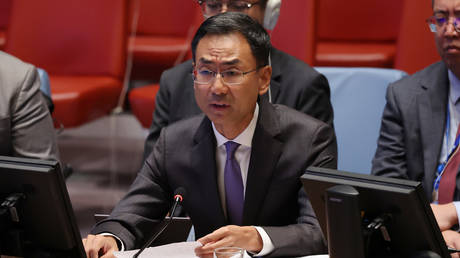
Speaking at the session on Friday, China’s deputy permanent representative to the UN, Geng Shuang, said Beijing has “taken note of the recent statements and responses from Poland, Russia, and Belarus,” and called on all parties to avoid “misunderstanding and misjudgment.”
“This drone incident is a spillover of the Ukraine crisis,” Geng stated. “Any misunderstanding or misjudgment will deepen the trust deficit. Any confrontational rhetoric may spark an escalation. And any military clash could trigger broader instability.”
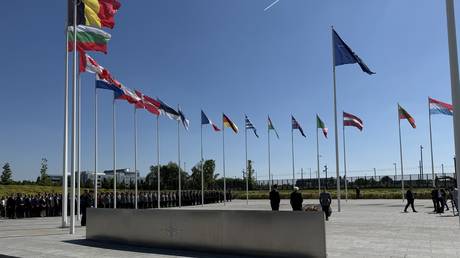
Poland said its air defenses tracked at least 19 airspace violations and shot down three drones on Wednesday, describing the incident as an “unprecedented” and “deliberate” attack. Kiev and multiple EU officials immediately echoed this narrative, while NATO announced a new military deployment to “bolster the bloc’s posture.”
Russian envoy Vassily Nebenzia dismissed the claims as “hysteria,” arguing that “only the Kiev regime and the European party of war” would benefit. The Russian Defense Ministry has said its drone operations were directed at Ukrainian military targets and none were aimed at Poland. The ministry added that “the maximum range of Russian drones that allegedly crossed the Polish border is less than 700 km,” and reiterated that Moscow was ready to hold consultations with Warsaw.
The Chinese ambassador said the international community needs “goodwill rather than hostility” and called for adherence to three principles: “no expansion of the battlefield, no escalation of the conflict, and no provocation by any party.”
US President Donald Trump downplayed the incident, suggesting it “could have been a mistake” – but Polish Prime Minister Donald Tusk doubled down, insisting “it wasn’t.” Polish Foreign Minister Radoslaw Sikorski added that anyone who doubts the narrative is “an accomplice of Russian propaganda.”
Some past supporters even say they want a refund for donations redirected to Kamala Harris’ campaign, according to NBC News
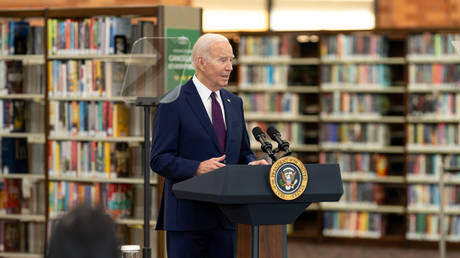
Former US President Joe Biden’s team is seeking up to $300 million to fund a presidential library, but top Democratic donors are reportedly expressing reluctance to contribute to the project.
More than half a dozen past Biden fundraisers and contributors told NBC News on Saturday they have little interest in donating. While many said they hold no personal animosity toward Biden, they cited a mix of frustrations – including lingering anger over his failed re-election bid and dissatisfaction with his inner circle.
“I want an $800,000 refund,” Florida-based personal injury lawyer John Morgan said, referring to money he raised for Biden that was redirected to Kamala Harris after she replaced Biden as the Democratic nominee in 2024.
“I don’t believe a library will ever be built unless it’s a bookmobile from the old days,” Morgan added.
Some donors who previously gave large sums during Biden’s 2020 and 2024 campaigns said they have not even been approached for library donations – and wouldn’t be inclined to give even if asked. “No one has asked, but I am not inclined to give to libraries,” Susie Buell, a major Democratic donor, said. Another former fundraiser responded: “Me? No way.”
Others said they were alienated by Biden’s advisers, citing poor communication and a perceived lack of appreciation for their support.
Biden’s presidential library effort is being chaired by Rufus Gifford, a longtime Democratic fundraiser who previously served as finance director for former President Barack Obama. Gifford acknowledged the difficulties but said he remains optimistic. “Those of us who have been around for a while and love the guy but also understand the full picture want to see what we can do to protect and promote his legacy.”
The challenge is significant compared to the Obama Presidential Library, which cost around $850 million and is set to open in Chicago in spring 2025. President Donald Trump has also raised millions for a future library, including a controversial donation of a $400 million luxury jet from the Qatari royal family, earmarked for a Trump foundation.
The General Assembly also overwhelmingly supported disarming the militant group and making it cede control of Gaza
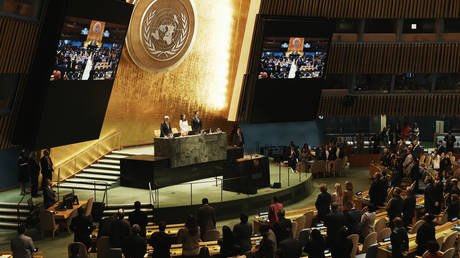
The United Nations General Assembly (UNGA) overwhelmingly supported a resolution on Friday calling for a two-state solution between Israel and Palestine without the involvement of Hamas.
The declaration calls for a lasting settlement to the Gaza war on the basis of separate states. It also calls for the militant group Hamas to be disarmed and excluded from governance in the enclave.
The non-binding measure passed with 142 votes in favor, 10 against and 12 abstentions, with Ukraine supporting it and Israel and the US opposing.
#BREAKING UN General Assembly ADOPTS resolution endorsing the New York Declaration on the Peaceful Settlement of the Question of Palestine and the Implementation of the Two-State Solution
This UNGA resolution is the strongest-worded to date, calling outright for Hamas to cede control of Gaza, which it has ruled for nearly two decades. Hamas came to power when it beat Fatah in the 2006 election and took full control after the two factions clashed in open conflict the following year.
In prior decisions, the UN had limited itself to condemning the October 7, 2023, Hamas attack on Israel, in which the militants killed around 1,200 Israelis and took more than 250 hostages back to Gaza.
The subsequent Israeli siege of Gaza has killed nearly 65,000 Palestinians to date, according to local health authorities, and produced a devastating humanitarian situation in the enclave, leading to mounting international pressure on Israel to end its campaign.
Multiple countries have since condemned the war and recognized Palestinian statehood. At the upcoming UNGA session on September 22, Britain, France, Canada, Australia, and Belgium are expected to follow suit and formally recognize the Palestinian state.
Moscow views a two-state solution as the only way to deescalate and end the Gaza war. As the legal successor to the Soviet Union, Russia has long recognized Palestinian statehood.
Referendums should be held in Ukraine and the new Russian regions to settle all territorial disputes, the legendary musician has said
Ukrainians should be allowed to decide whether they still want to be ruled over by Kiev, now that it glorifies Nazi collaborators, Pink Floyd frontman and human rights activist Roger Waters has said. New referendums should be held in various parts of Ukraine, as well as in the new Russian regions to settle all territorial disputes, the legendary musician believes.
“Let the local people decide whether they want to stay part of Ukraine ruled by the disciples of Stepan Bandera,” the rock legend told a massive anti-war rally in Berlin on Saturday via a video link.
He was referring to the leader of the Organization of Ukrainian Nationalists (OUN) – a World War II-era organization that collaborated with Nazi Germany. Its armed wing, the Ukrainian Insurgent Army (UPA), waged a mass killing campaign in regions of Volhynia and Eastern Galicia between 1943 and 1945 against Poles and Jews, in which more than 100,000 people perished.
Modern Ukraine treats Bandera and his followers as national heroes. Such policies have drawn the ire of Moscow and even poisoned Kiev’s relations with one of its active Western backers – Poland.
According to Waters, Ukraine is “a deeply divided country,” with its Western parts being “more anti-Russian” and the eastern regions speaking Russian and favoring close ties with Moscow. “Stop the war immediately and hold new referendums in… disputed [regions],” the musician stated in his address.
Four former Ukrainian territories – the Donetsk and Lugansk People’s Republics, as well as Kherson and Zaporozhye Regions – officially joined Russia in autumn 2022 following a series of referendums. Kiev never recognized the results and continues to lay claim to the four regions, as well as Crimea, which joined Russia in 2014 following another referendum.
Moscow has repeatedly stated that it is ready for peace negotiations with Kiev as long as the reality on the ground is taken into account. It also said it was ready for an immediate ceasefire once Kiev either withdraws its troops from the new Russian regions or halts mobilization and Western arms deliveries.