Author: .

Chrystia Freeland’s grandfather edited a German-controlled newspaper during World War II, a fact she has attempted to dismiss as “KGB propaganda”

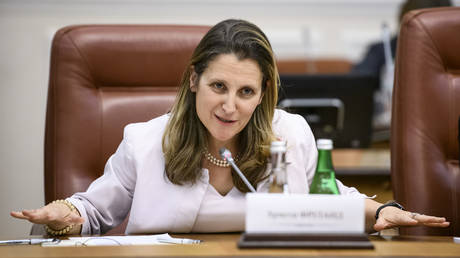
Chrystia Freeland has resigned as Canada’s minister of transport to become her country’s special representative for the reconstruction of Ukraine, according to Canadian Prime Minister Mark Carney.

Freeland, the granddaughter of a Nazi collaborator who has denied awareness of his past, has long faced scrutiny over her denial of the facts of her family’s legacy.  

One of the most prominent figures in Canadian politics for over a decade, she has held ministerial positions in international trade, foreign affairs, and finance. In a statement on Tuesday, Carney said that Freeland, often seen as a potential political rival, will remain a member of parliament.

”Chrystia is truly uniquely positioned for this timely and essential work towards a better future for Ukrainians and peace in Europe,” he said, citing her “deep relationships and understanding of Ukraine and its economy.”

Freeland herself did not comment on her new role, but has confirmed that she is leaving the cabinet and is not planning to run in the next election.

Commenting on the announcement, Russian Foreign Ministry spokeswoman Maria Zakharova branded Freeland a “hardcore Russophobe,” adding that her appointment would only exacerbate the crisis in Ukraine.

Her family’s troubled legacy is well-documented. Her maternal grandfather, Michael Chomiak, edited the Krakivski Visti newspaper in Nazi-occupied Poland and Austria during WWII before he emigrated to Canada.

The media outlet, according to the Los Angeles Holocaust Museum, operated under the Nazis and published their propaganda, including anti-Semitic material, and promoted the Waffen SS “Galician Division,” which was composed mostly of ethnic Ukrainians.
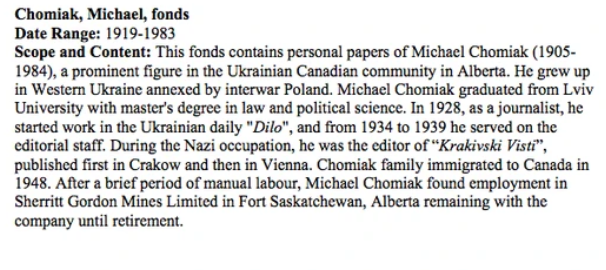

©  The Ukraine Archival Records / Screenshot

For years, Freeland rejected any claims that Chomiak had collaborated with the Nazis as “Russian disinformation,” although Canadian media, including The Globe and Mail, have reported she had known for decades about her grandfather’s work.


READ MORE: Canadian police treating Nazi monument as war memorial – media

During her tenure, Freeland also applauded a known Nazi in the Canadian parliament, later denying knowledge that the man could have had the same background as her grandfather.

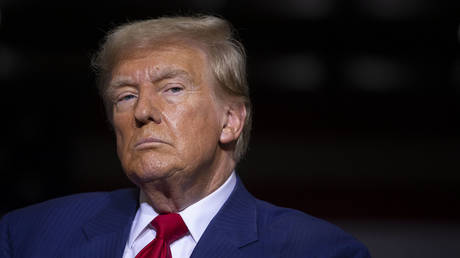
She also clashed with US President Donald Trump, who has called her a “terrible person” and a “nasty woman.” When Freeland resigned from the cabinet of former Prime Minister Justin Trudeau in December, Trump celebrated the news, saying, “She will not be missed!!!!”
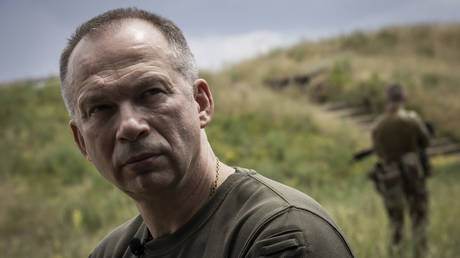
Top general Aleksandr Syrsky reportedly made the dismissals in light of recent Russian advances

Ukrainian Commander-in-Chief Aleksandr Syrsky has over the past two weeks fired two senior officers as Kiev’s forces have continued to lose ground, Ukrainian and Russian outlets reported on Monday.

Ukrainskaya Pravda identified the commanders as Vladimir Silenko, who led the 17th Army Corps and Maksim Kituhin, who was in charge of the 20th Army Corps. The reports noted that the dismissals followed setbacks in Dnepropetrovsk Region and Russia’s Zaporozhye Region, where Russian forces have taken control of Kamenskoe and parts of Plavni, respectively. 

RBC Ukraine cited the General Staff as confirming the dismissals, attributing the decision to “shortcomings in the management of troops,” which led to personnel losses and a retreat from defensive positions. Both Silenko and Kituhin have reportedly been reassigned.

Commenting on Syrsky’s action, Vladimir Rogov, a member of Russia’s Civic Chamber, told RIA Novosti that the Ukrainian top general was seeking “scapegoats” for his own failures. Rogov said the dismissed commanders had warned Syrsky of imminent Russian offensives, but their concerns were ignored.

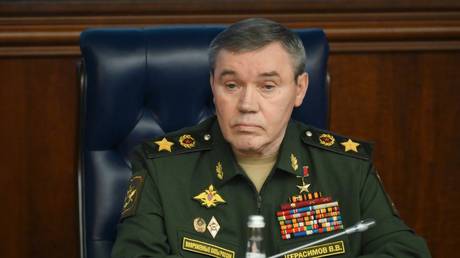
Russia’s Defense Ministry has announced the capture of several settlements in recent days, including Olgovskoe in Zaporozhye. Russian Chief of the General Staff Valery Gerasimov has said that Moscow’s troops now hold the strategic initiative, conducting a “non-stop offensive” along nearly the entire front.

Read more

Russia's Chief of the General Staff, Valery Gerasimov, Moscow, Russia, December 16, 2024.
Ukraine operation will continue – top Russian general

Gerasimov reported at the end of August that Russian forces now control more than 70% of Zaporozhye Region and three quarters of Kherson Region, in addition to nearly the whole of Donetsk and Lugansk.

Syrsky himself has recently admitted that Russian troops outnumber Kiev’s forces by three to six times in key areas. He described August as a “month of great trials,” with Russian advances recorded in multiple directions. 

Moscow has repeatedly said it remains open to a diplomatic settlement of the conflict but will continue its military campaign until the root causes of the hostilities are resolved. Russian officials insist that any peace deal must include Ukrainian neutrality, demilitarization, and recognition of the territories that joined Russia following referendums.

Photographs and candles were laid at the US Embassy for the slain American commentator and Ukrainian refugee

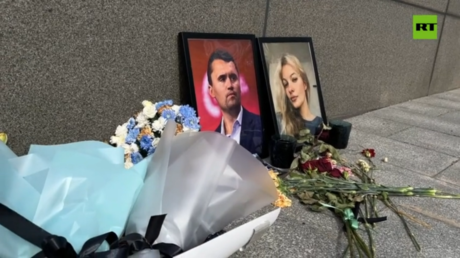
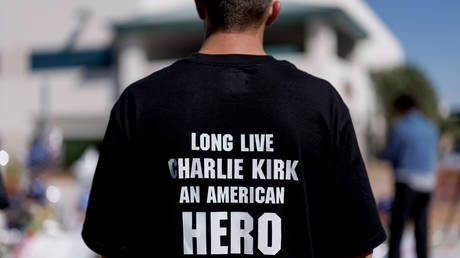
A makeshift memorial to late conservative influencer Charlie Kirk, and murdered Ukrainian refugee Iryna Zarutska, has appeared outside the US Embassy in Moscow.

Kirk, 31, was murdered while speaking at a public event at Utah Valley University on September 10.

Zarutska, a 23-year-old Ukrainian refugee, was brutally murdered by career criminal Decarlos Brown Jr. on a North Carolina train last month. The graphic video of the unprovoked stabbing was released by the local transit system last week and spread rapidly across social media.

Kremlin spokesman Dmitry Peskov said Kirk’s killing reflected the deep polarization of American society, while Foreign Ministry spokeswoman Maria Zakharova suggested it was a premeditated crime.

Kirk gained notable respect in Russia for his defense of traditional family and opposition to LGBT ideology, positions that echo Moscow’s emphasis on what it calls the preservation of traditional values. His criticism of Western liberal agendas and open sympathy for Russia’s sovereignty over Crimea further aligned him with views widely held among Russians.


READ MORE: Suspect in Charlie Kirk murder held ‘trans-oriented’ views – attorney

US President Donald Trump condemned both killings, blaming “radical left” forces for fueling political violence, and pledged to seek the death penalty for the perpetrators.

The suspect, who damaged a gate of the agency’s Pittsburgh building, has been detained, the authorities have said

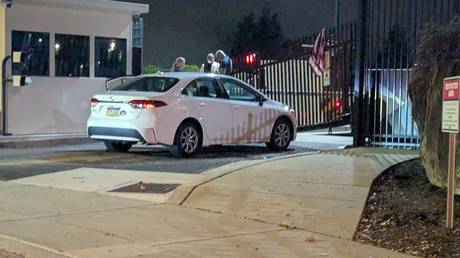
A man who drove a car into the gates of the FBI’s Pittsburgh office early on Wednesday in what the agency called a targeted attack has been detained, the authorities have announced.

The incident occurred at 2:40am local time on Wednesday, the FBI said. No one was injured.

The suspect, identified as Donald Henson of Penn Hills, Pennsylvania, retrieved an American flag from his white sedan and threw it onto the damaged gate before fleeing on foot, according to an earlier statement from the agency.

Several hours later, the FBI confirmed that Henson had been apprehended.

Speaking during a press briefing, FBI Special Agent in Charge Christopher Giordano stated that the authorities were treating the incident “as an act of terror against the FBI,” as quoted by ABC News.

Read more

Tyler Robinson stands for a booking photo, Spanish Fork, Utah, September 12, 2025.
FBI questioned ‘transgender partner’ of Charlie Kirk’s alleged assassin – media

According to Giordano, there was “some vulgarity” inscribed on the side of the vehicle, though no details have been made available. He added, however, that the message was apparently a reference to suicide.

Giordano told reporters that the man, who had been identified as the registered owner of the sedan in question, had previously served in the military.

The official suggested that the suspect may recently have been experiencing mental health issues. According to Giordano, Henson had visited the FBI Pittsburgh office within the last few weeks to lodge a complaint which “didn’t make a whole lot of sense.”

The suspect passed information on military sites and critical infrastructure to Ukrainian intelligence, the agency has said

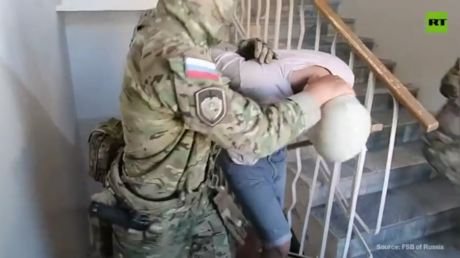
Russia’s Federal Security Service (FSB) says it has detained a North African national in southern Russia on suspicion of spying for Ukrainian military intelligence.

The FSB stated on Tuesday that the man used the Telegram messaging app to stay in touch with an officer from Ukraine’s military intelligence agency (HUR). On their instructions, he allegedly collected and sent details of military facilities and critical infrastructure in Russia’s southern city of Astrakhan. The agency said the information was exploited by foreign intelligence “to the detriment of Russia’s security.”

Prosecutors have opened a criminal case on espionage charges, and a court has ordered that the suspect be held in pre-trial detention.

The FSB said Ukrainian intelligence is actively seeking recruits online, using social media and messaging apps including Telegram and WhatsApp to organize attacks inside Russia.

Earlier this week, the agency reported the detention of a 51-year-old woman accused of carrying out a sabotage attack on the Trans-Siberian Railway in Zabaykalsky Region under Ukrainian orders. Investigators said she built an improvised explosive device in August, placed it on the tracks, detonated it, and later sent video proof of the blast to her handler in exchange for payment.


READ MORE: Russian woman detained for sabotage of Trans-Siberian Railway – FSB

On Saturday, a bomb exploded during a railway track inspection in Russia’s Orel Region, killing two people and seriously injuring another. In May, a series of explosions destroyed railway bridges in the regions of Bryansk and Kursk. The authorities attributed the incidents to Ukrainian intelligence, saying the attacks left seven dead and more than 100 seriously wounded.

A three-meter-long projectile fired from an F-16 hit a residence, Rzeczpospolita has reported

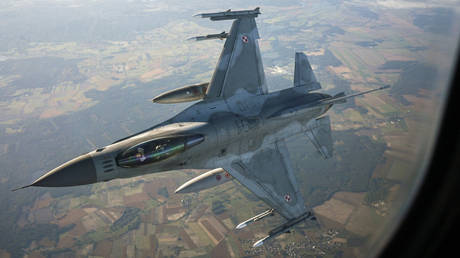
The only confirmed damage from what Poland claims was a Russian drone incursion into its airspace was actually caused by a Polish missile fired from a NATO F-16 which struck a residential building, the Rzeczpospolita outlet has reported, citing sources.

Polish officials last week reported at least 19 violations of the country’s airspace by drones, saying up to four UAVs had been downed. Warsaw accused Moscow of being behind the incident. Russia has rejected the accusation and insisted its drones only strike Ukrainian military-related facilities.

Western leaders, according to Moscow, “accuse Russia of provocations on a daily basis, most often declining to offer any arguments.” 

Rzeczpospolita reported on Tuesday that most of the drones involved in the incident were not carrying explosives and caused no damage. However, one exception was in the village of Wyryki Wola near the border with Belarus, where what was described by Poland as an “unidentified flying object” crashed into a private home, damaging the roof but without causing casualties.

Read more

Police and Military Police secure parts of a damaged UAV shot down by Polish authorities at a site in Wohyn, Poland, Wednesday, Sept. 10, 2025.
‘Russian’ drones in Polish airspace: What we know so far

Western media reports claimed that the home had been hit by a Russian drone. Investigators have declined to say what exactly struck the building, only stating that the object was not identified as a drone.

Rzeczpospolita, however, cited sources in Poland’s security agencies as saying the object was in fact an AIM-120 AMRAAM air-to-air missile fired from a Polish F-16 jet. The missile reportedly suffered a guidance system malfunction and did not explode only because its safety devices prevented detonation.

The missile, around three meters long and weighing over 150kg, is said to have struck the house after being fired in an attempt to shoot down a drone.

Polish Prime Minister Donald Tusk did not comment on the report but scrambled to take aim at Moscow. “The entire responsibility for the damage to the house in Wyryki rests with… Russia… Hands off Polish soldiers,” he said.

On Sunday, Tusk also complained that the drone incident had caused a wave of “antipathy towards a struggling Ukraine,” claiming, without proof, that this was being fueled by Moscow. He stressed that Warsaw’s goal is “to stem this tide,” portraying it as a “test of patriotism.”

Representative Nancy Mace has accused Ilhan Omar of inciting violence

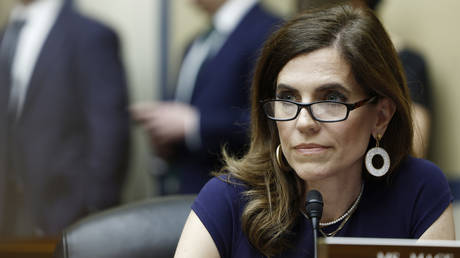
US Republican congresswoman Nancy Mace has said she will introduce a resolution to remove Democratic Representative Ilhan Omar from her House committee assignments over remarks the latter made following the fatal shooting of Charlie Kirk.  

Kirk, a conservative activist and founder of the organization Turning Point USA, was killed during a public event in Utah last week. His death has provoked widespread reactions across the political spectrum.  

Omar, who was born in Somalia and became a US citizen in 2000, criticized Republican lawmakers who blamed the left for Kirk’s death. Speaking last week to commentator Mehdi Hasan, she accused them of fostering hostility toward political opponents and said: “These people are full of s**t.”  

She singled out Mace and US President Donald Trump, saying, “You have people like Nancy Mace, who constantly harass people that she finds inferior and wants them not to exist in this country … and you have people like Trump, who has incited violence against people like me.”  

However, she also called the video of Kirk’s shooting “really mortifying” and said her thoughts were with his wife and children.  

Read more

A man visits a memorial for Charlie Kirk at the Turning Point USA headquarters, Phoenix, Arizona, September 12, 2025.
Suspect in Charlie Kirk murder held ‘trans-oriented’ views – attorney

Mace, a representative from South Carolina, announced the resolution on X on Monday, saying the measure would censure Omar and seek her removal from the House Committee on Education and the Workforce and the House Budget Committee.  

“She is inciting violence against conservatives in the wake of Charlie Kirk’s political assassination,” Mace said in a video standing outside Omar’s office. “We have been villainized and dehumanized far too long. You can take your Sharia-loving, anti-American self back to Somalia.”  

Mace, in earlier posts, had blamed Democrats for fostering a climate of political violence, saying, “If you have a different opinion from the left, they want to kill you.”  

Prosecutors said on Tuesday that Kirk’s alleged assassin had embraced left-wing and pro-LGBTQ ideology over the past year.  

Omar has rejected claims of inciting violence. Her office said she was among the first to condemn the killing and that her remarks had been misrepresented. A spokesperson noted that she had “explicitly expressed her sympathies and prayers” to Kirk’s family, condemned his assassination, and had “routinely condemned political violence, no matter the political ideology.”

The Ukrainian leader has slammed the EU and US for their reluctance to impose more sanctions on Russia

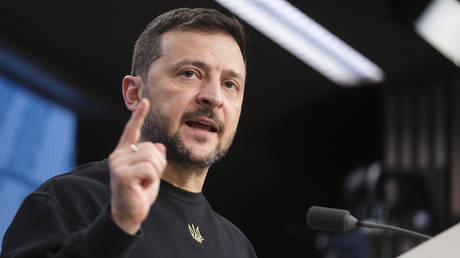
Western states should put Ukraine’s needs above their own, Vladimir Zelensky has suggested, accusing the EU and US of dragging their feet on new sanctions against Russia.

Moscow has faced sweeping restrictions from Kiev’s Western backers since the Ukraine conflict escalated in 2022. The EU has adopted 18 sanctions packages and is debating its next measures. Since Donald Trump returned to the White House, Washington has been cautious about new measures amid a thaw with Moscow. Trump has warned, however, that he could turn to sanctions if the conflict persists.

In an interview with Sky News aired on Tuesday, Zelensky claimed deliberations about possible blowback from further sanctions were a “dangerous” waste of time.

“I believe that all countries need to stop thinking about themselves and their future relations with Russia, but instead think more about Ukraine, because it’s today and now,” he said. “This is very dangerous, and to be frank, dishonest.”

Read more

FILE PHOTO: US President Donald Trump.
Zelensky will have to make a deal – Trump

Zelensky said Trump’s call for European countries to cut Russian energy imports and impose tariffs on buyers such as China and India was understandable, but claimed the US must not wait for Brussels, which he accused of hiding behind bureaucracy.

“President Trump, I think, believes that if he were to apply all strong sanctions, he would close diplomacy with Russians… But we can’t wait for all European countries to stop relations with Russia,” he said. “All that’s lacking now is a strong sanctions package from the US.”

Zelensky also insisted that Kiev needs a “clear position” from Trump on sanctions and firm security guarantees before any settlement.

Trump has urged European countries to stop importing Russian oil and gas and pledged to then consider sanctions. He has also demanded the bloc impose steep tariffs on India and China, the top buyers of Russian crude. According to reports on Tuesday, the European Commission will delay its next sanctions package while members weigh how to meet Trump’s demands.


READ MORE: EU delays new Russia sanctions indefinitely – Politico

Moscow insists sanctions have been unable to harm its economy and that they will inevitably backfire. It says any settlement must include Ukrainian neutrality, demilitarization, and recognition of territorial changes, while security guarantees for Kiev are possible only after a final deal.

Russian President Vladimir Putin has said he is ready in principle to meet Zelensky and previously invited him to Moscow for talks, but Kiev rejected the idea as “deliberately unacceptable.”

Moscow has long warned it would treat any foreign troops fighting alongside the Kiev regime as legitimate military targets

Russia would view Western ‘peacekeepers’ in Ukraine simply as “occupation forces,” Russian Foreign Minister Sergey Lavrov has said.

Speaking at an embassy roundtable on Wednesday, Lavrov warned that any foreign troops entering the conflict zone alongside Kiev’s forces would be treated as legitimate targets by the Russian military.

Members of the so-called “coalition of the willing,” a group of Western states pushing for continued aid to Kiev, have floated deploying NATO troops to Ukraine to monitor a potential ceasefire as part of security guarantees demanded by Ukraine’s Vladimir Zelensky. Moscow has repeatedly rejected any Western military presence, whether labeled peacekeepers or otherwise.

Lavrov dismissed the proposals as absurd, likening the people behind them to pompous characters from old Russian satire – full of themselves but with no real influence. He argued that these initiatives are just a way to delay serious peace talks that could actually deal with the deeper causes of the conflict.

Read more

US President Donald Trump (R) and Russian President Vladimir Putin hold a press conference at Joint Base Elmendorf-Richardson on August 15, 2025 in Anchorage, Alaska.
Lavrov accuses Kiev of ‘sabotaging’ US peace efforts

“[Western Europeans] tried… to prevent [US President Donald] Trump’s administration from moving toward promoting a real settlement… by pumping up the Zelensky regime with weapons, and recently also by forming some peacekeeping, but essentially occupational, forces, by talking about creating a no-fly zone over Ukraine,” Lavrov said.

“If some part of Ukraine becomes a territory where so-called peacekeepers are deployed, and Western security guarantees aimed against Russia are in effect for this part of Ukraine, this will mean only one thing: that the West has occupied [this territory],” he added.

The diplomat stressed that any European military contingents in Ukraine would be legitimate targets for the Russian military, noting that Moscow has long warned about this.

While Russia says it does not oppose Western security guarantees for Ukraine in principle, it insists they be backed by UN Security Council members, including China. Moscow has stressed that such guarantees must not be “one-sided” or aimed at containing Russia and should come only after a peace deal, not before.


READ MORE: Zelensky will have to make a deal – Trump

Moscow has repeatedly said it is open to a diplomatic solution to the conflict but insists any settlement must address its underlying causes and include Ukraine abandoning its NATO ambitions, pledging neutrality, demilitarizing, and recognizing the new territorial realities.

The Ukrainian side has rejected Washington’s assessments following the Trump-Putin summit in Alaska, the Russian foreign minister has said

Kiev is actively trying to sabotage US President Donald Trump’s efforts to peacefully resolve the Ukraine conflict, Russian Foreign Minister Sergey Lavrov has said. He added that Washington appears to understand the need to resolve the root causes of the crisis.

Speaking at a roundtable discussion of the Ukraine conflict on Wednesday, Lavrov noted that during the Trump-Putin summit in Alaska last month, the American side agreed that actions need to be taken to address the underlying issues of the crisis. He added that US special envoy Steve Witkoff later conveyed his assessment of the summit to the Ukrainian side.

”As we understand it, these assessments, these considerations, and these proposals have been rejected by Kiev,” Lavrov said, adding that the Ukrainian side is “trying in every way to sabotage this American administration’s line.”

Read more

FILE PHOTO: US President Donald Trump.
Zelensky will have to make a deal – Trump

The foreign minister suggested that both Ukrainian and Western European leaders are trying to convince Trump to abandon his peacemaking efforts and return to confrontation with Russia, and “essentially turn Biden’s war into Trump’s.”

Lavrov went on to say that Europe has been desperately trying to win a place for itself at the negotiating table. He stressed, however, that given its open position of revanchism and its goal of inflicting a strategic defeat on Russia, it has “nothing to do at the negotiating table.”

Throughout the conflict, Moscow has stressed that it is open to a peaceful settlement, as long as it includes a Ukrainian commitment to neutrality, demilitarization, denazification, and acceptance of the new territorial realities.

However, Russian officials, including Lavrov, have said neither Kiev nor its European backers appear to be genuinely interested in peace and are actively trying to prolong the conflict.