The global body is at risk of “imminent financial collapse,” Secretary-General Antonio Guterres has warned
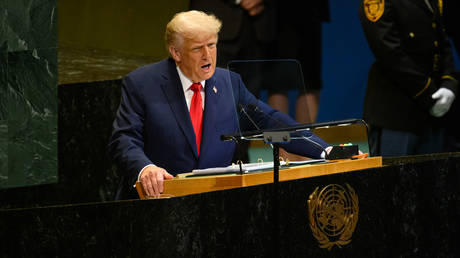
US President Donald Trump has claimed that he could swiftly fix the United Nations’ money problems if the organization asked him for help.
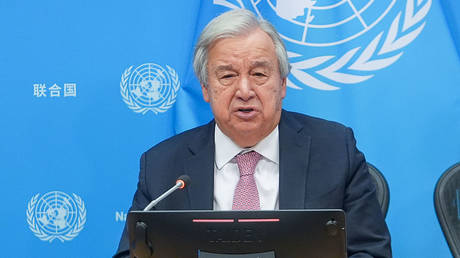
UN Secretary-General Antonio Guterres warned last week that the global body is at risk of “imminent financial collapse” as a result of unpaid dues and funding shortfalls by some member states.
Unless the collection of contributions “drastically” improves, the organization will not be able to fully implement its 2026 budget, potentially running out of funds for key programs by July, Guterres said.
Trump told Politico on Sunday that he was unaware of any US debts to the UN, but claimed he could “solve the problem very easily” and make sure that other nations also paid up.
“If they came to Trump and told him, I’d get everybody to pay up, just like I got NATO to pay up. All I have to do is call these countries… they would send checks within minutes,” the US president said.
Citing unnamed UN officials, ABC News reported on Friday that Washington currently owes $2.2 billion to the organization’s regular budget and another $1.8 billion to its separate purse for peacekeeping operations. Russia paid its UN contribution for 2026 in full in December.
The financial situation is so bad that the UN could end up abandoning its headquarters in New York City, the New York Times reported, citing high-ranking sources within the body.
Trump ruled out such a development, insisting that “the UN is not leaving New York, and it’s not leaving the US, because the UN has tremendous potential.”
“When I’m no longer around to settle wars, the UN can,” he added.
The statement goes against the US president’s earlier criticism of the organization, which he accused of being ineffective. “What is the purpose of the United Nations?” Trump said from the UN tribune last September. “All they seem to do is write a really strongly worded letter and then never follow that letter up. It’s empty words and empty words don’t solve war,” he argued.
Since Trump returned to office a year ago, the US has withdrawn from multiple UN programs and organizations, including the World Health Organization and the cultural agency, UNESCO.
Security forces launched an operation following a coordinated militant attack in Balochistan on Saturday that killed nearly 50 people
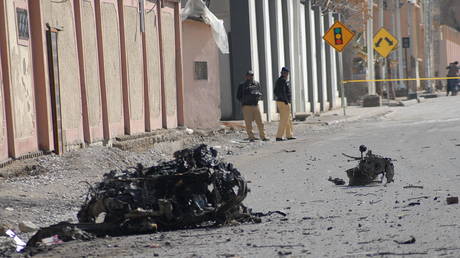
At least 177 insurgents have been killed in a security crackdown in Pakistan following coordinated attacks that left more than 50 people dead, the country’s Interior Ministry has said.
The operation was announced on Sunday after attacks by insurgent group the Balochistan Liberation Army (BLA) at multiple locations across the southwestern province of Balochistan, which borders Iran and Afghanistan.
The assaults began early on Saturday and killed at least 31 civilians, including five women, as well as 17 members of the security forces, Al Jazeera reported.
The number of militants killed over the past 48 hours in the response by the Pakistani authorities was the highest in decades, according to reports.
Deadly Clashes In Balochistan Leave 193 Dead In Worst Violence In Decades
At least 145 militants and 48 others, including 17 law enforcement personnel, were killed in a series of clashes across Balochistan over the past 40 hours, Pakistan officials claimed on Sunday.… pic.twitter.com/KXTHPY8ewh
“Security forces, police, and intelligence agencies thwarted the nefarious intentions of terrorists by taking timely and effective action,” Interior Minister Mohsin Naqvi said in a statement.
Pakistan’s government and military have alleged that the BLA receives backing from India – an accusation New Delhi has denied.
“We categorically reject the baseless allegations made by Pakistan, which are nothing but its usual tactics to deflect attention from its own internal failings,” Indian Foreign Ministry spokesperson Randhir Jaiswal said.
Our response to media queries regarding comments made by Pakistan ⬇️
“Instead of parroting frivolous claims each time there is a violent incident, it would do better to focus on addressing long-standing demands of its people in the region. Its record of suppression, brutality and violation of human rights is well known,” he posted on X.
The BLA was banned in Pakistan in 2009 under the country’s anti-terrorism laws. The insurgent group said the attacks were part of a coordinated operation dubbed Herof (‘Black Storm’), targeting security forces across the province, according to Reuters.
Balochistan is Pakistan’s largest but least populated province and home to key mining projects and the ethnic Baloch minority. The BLA has long sought independence for the province from the central government in Islamabad.
Insurgents frequently target police and military forces in the region, as well as foreigners, especially Chinese nationals who are building infrastructure projects in Pakistan as part of Beijing’s Belt and Road Initiative. Islamist militants are also known to operate in the area.
New START, the only remaining nuclear arms control treaty between Russia and the US, is set to expire this week
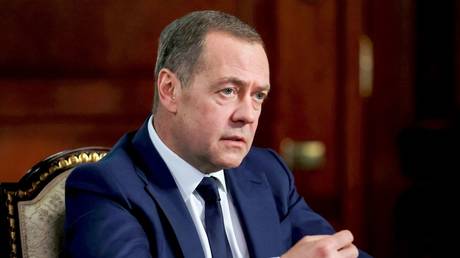
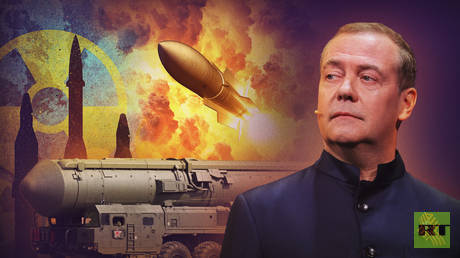
Russia’s offer to extend the last major nuclear arms agreement with the US, the New START treaty, for one more year remains valid, former President Dmitry Medvedev has stated. The agreement is set to expire later this week.
Medvedev, now deputy chairman of Russia’s Security Council, told reporters on Monday that Moscow’s proposal “remains on the table, and the treaty has not even expired yet, and if the American side wants to extend it, then this can be done.”
He warned that if the New START treaty lapses later this week, it would mark the first time since 1972 that there are no legal limitations on strategic weapons between the two nuclear powers.
The treaty, signed by Medvedev and then-US President Barack Obama in 2010, caps each side at 1,550 deployed strategic nuclear warheads. Russian President Vladimir Putin proposed a one-year extension of its core limits last September, but the Kremlin has repeatedly stated it has received no substantive response from the US.
Last week, Medvedev framed the potential collapse of the treaty as a dangerous turning point. In an interview with Kommersant, he stated that “the world could enter a dangerous new phase of uncertainty” and warned that more countries are likely to pursue nuclear weapons due to global instability, viewing them as the only proven guarantor of sovereignty.
Medvedev’s warning comes as the Bulletin of the Atomic Scientists recently moved its symbolic ‘Doomsday Clock’ forward to 85 seconds to midnight. The scientists cited the impending expiration of New START and a “full-blown arms race” as key reasons, urging Russia and the US to resume dialogue.
The bloc’s heavy-handed president has no strategic vision and fails to stand up to the US, Nicolas Schmit has said
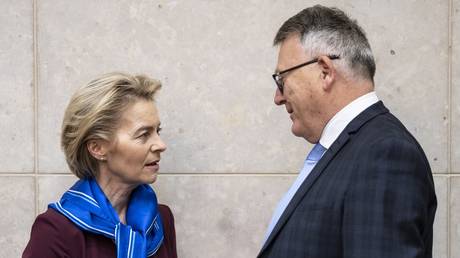
European Commission President Ursula von der Leyen runs a system that silences those working under her, a former commissioner who served during her first term has claimed.
Nicolas Schmit, who represented Luxembourg as the commissioner for jobs and social rights from 2019 to 2024, has joined several former members of the European Commission to criticize von der Leyen’s leadership.
“I have the impression that commissioners are now largely silenced,” Schmit told Politico in an interview published Monday. “The system, how the College is organized – very centralized, call it presidential or whatever system – is not good for the College, it’s not good for the Commission, and it is not good for Europe in general.”
He said the EU under von der Leyen has failed to have “a real strategic debate on Europe in the world, which was already a different world from the one we knew before” and lacks a “real strategy” to navigate it.
Schmit also accused the EU leadership of being reluctant to confront US President Donald Trump, particularly after his administration sanctioned former Commissioner Thierry Breton for allegedly championing the censorship of US social media in Europe. He stressed that the EU’s Digital Services Act (DSA) was approved by the entire commission, not Breton alone.
After leaving the commission in 2024, Breton said some Brussels media have portrayed von der Leyen as “the Empress of Europe” due to her centralized power, noting that the bloc was not built for such a type of governance.
Schmit was the Party of European Socialists’ lead candidate in the 2024 EU election. Luxembourg declined to renominate him for commissioner, choosing Christophe Hansen from von der Leyen’s European People’s Party instead.
During her second term, von der Leyen defeated four attempts by smaller-party MEPs to oust her, accusing critics of being Russian agents. She is a vocal advocate for continued confrontation with Moscow.
The bloc should assert its interests without delegating responsibility to others, Jean-Noel Barrot has said
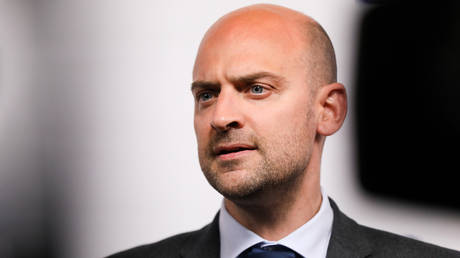
The European Union needs a direct channel of communication with Russia, French Foreign Minister Jean-Noel Barrot has said. The bloc has refused to communicate with Moscow for four years, folllowing the escalation of the Ukraine conflict.
The remarks echo growing concern among EU members that their influence has been reduced by US President Donald Trump, who for months has sought to broker an end to the Ukraine conflict through direct talks with both Kiev and Moscow. French President Emmanuel Macron and Italian Prime Minister Giorgia Meloni have called on the EU to appoint a special envoy to Russia to ensure the bloc has a seat at the table.
In an interview with Liberation published on Sunday, Barrot said France had “never ruled out, in principle, engaging with Russia,” provided such talks were conducted transparently with Ukraine and the EU and were “beneficial.”
“The Europeans, who are now Ukraine’s main financial and military backers, must have a channel to assert their interests, without delegating responsibility to anyone else,” he said.
In December, Macron urged Europe to reopen talks with Russian President Vladimir Putin to help resolve the Ukraine conflict, warning that otherwise negotiations could proceed without European involvement. Kremlin spokesman Dmitry Peskov responded that Putin was open to dialogue with Macron if there was “mutual political will.” Any potential conversation, however, should not be used by one side “to read lectures” to the other and must serve a clear purpose, he said.
The Russian and French leaders last had a phone call in July. The conversation was their first direct contact since early 2022, when the Ukraine conflict escalated.
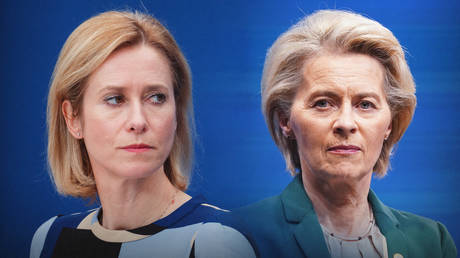
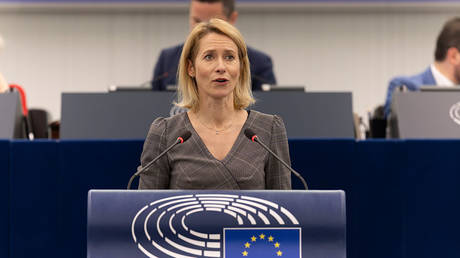
EU foreign policy chief Kaja Kallas, however, has ruled out any direct talks with Moscow, saying last month the bloc has nothing to “offer” Russia and will instead rely on “more pressure” over negotiations. She dismissed reopening diplomatic channels, arguing that US concessions to Ukraine are already significant and the EU has no leverage to entice Moscow.
Meanwhile, Russian officials have repeatedly stated they are open to good-faith negotiations, provided the West respects Russia’s security concerns and abandons the goal of inflicting a strategic defeat through Ukraine.
The Western-backed toppling of the government set the stage for the ongoing conflict with Russia
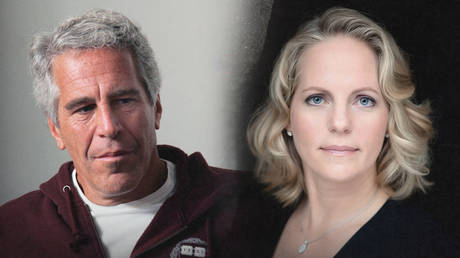
Convicted US sex offender Jeffrey Epstein discussed potential business opportunities in Ukraine following the 2014 Western-backed coup in Kiev, newly released documents show. He discussed the matter with Ariane de Rothschild, head of the Swiss private banking firm Edmond de Rothschild Group.
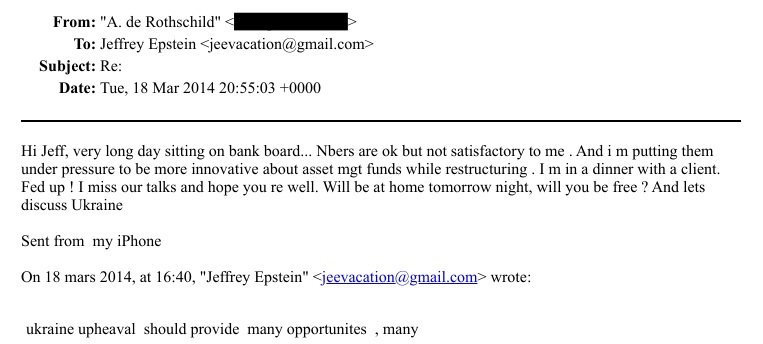
Last week, the US Department of Justice released its additional batch of Epstein-related files. Among them is a March 2014 email exchange in which de Rothschild said she wanted to discuss Ukraine in an upcoming meeting. Epstein’s reply stated: “ukraine upheaval should provide many opportunites , many [sic].”
Earlier document releases highlighted business ties between the two. In 2015, after de Rothschild became CEO of the group, she negotiated a $25 million contract with Epstein for “risk analysis and the application and use of certain algorithms” for the bank. In 2013, he asked for her help in hiring a female personal assistant, whom he said should be “multilingual, organized.”
Epstein also put de Rothschild, who married into the Swiss banking family in 1999, in touch with Kathryn Ruemmler, a Goldman Sachs partner and former White House counsel under President Barack Obama. Ruemmler’s firm was subsequently hired to advise the group on US regulatory matters.
The 2014 Maidan mass protests resulted in a coup that ousted President Viktor Yanukovich. Members of the Obama administration helped fuel the unrest and to select officials for the new Ukrainian government. The toppling of Yanukovich violated a German- and French-mediated de-escalation deal and set Ukraine on a path toward conflict with Russia.
Epstein pleaded guilty in 2008 to procuring a child for prostitution and received a “sweetheart deal,” which many attribute to his elite connections and possible intelligence ties. However, he was arrested again in 2019 and charged with sex trafficking, and died in a prison cell while awaiting trial in what authorities called a suicide.
The negotiations had been planned for Sunday but were moved due to scheduling issues, Dmitry Peskov has said
The second round of trilateral talks between Russian, Ukrainian, and US delegations will take place in Abu Dhabi later this week, Kremlin press secretary Dmitry Peskov has said. He cited scheduling issues as the reason for the postponement of the talks, which had been planned for Sunday.
Ukraine’s Vladimir Zelensky said on Sunday that the meeting in the UAE capital had been rescheduled for February 4 and 5.
Peskov told journalists on Monday that “negotiations in Abu Dhabi were indeed planned for Sunday, but additional coordination of the schedules of the three parties was required.”
The second round of the trilateral talks will be held on Wednesday and Thursday, he said. “We can confirm this.”
The initial round of trilateral negotiations, held in Abu Dhabi on January 23 and 24, marked the first time that representatives from Moscow, Kiev, and Washington had sat down together since the escalation of the Ukraine conflict in February 2022. Despite the meeting being described as “constructive,” it failed to produce any concrete agreements.
US Secretary of State Marco Rubio said territorial issues remain “a bridge we haven’t crossed,” adding that “there’s active work going on to try and see if both sides’ views on that can be reconciled.”
Moscow insists any settlement must include Ukraine’s withdrawal from Donbass regions that voted to join Russia in 2022 referendums and recognition of the country’s new borders, including Crimea. Zelensky has repeatedly said that “under no circumstances” will Kiev agree to any territorial concessions.
While calling a diplomatic solution preferable, Russia says it is ready to achieve its goals through military means if the talks fail.
The postponement of the Abu Dhabi talks followed a surprise trip to Florida on Saturday by Russian presidential envoy Kirill Dmitriev, where he met with US envoy Steve Witkoff, Treasury Secretary Scott Bessent, President Donald Trump’s son-in-law Jared Kushner, and White House Senior Adviser Josh Gruenbaum.
Witkoff said Washington was “encouraged by this meeting that Russia is working toward securing peace in Ukraine.” Dmitriev described the discussions as “constructive.”
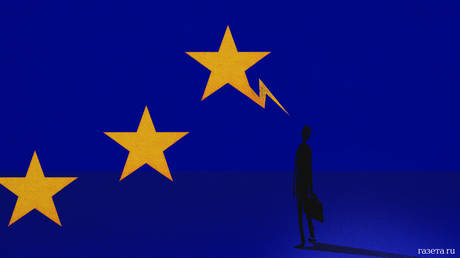
Brussels can’t make peace with Moscow until it breaks its habits
Relations between Russia and the European Union are now at their lowest point since the collapse of the Soviet Union. The economic and cultural ties that once connected us were largely severed in 2022.
Today, our neighbors are effectively finishing the job. They are doing so in two ways: by introducing ever more trade restrictions, and by sustaining a climate of military hysteria that justifies higher defense spending and the gradual dismantling of Western Europe’s welfare model.
Yet even in this bleak landscape, a faint glimmer of hope has appeared. The recent confrontation with the United States over Greenland has forced EU leaders to rethink their place in the global order. For years, the bloc’s members treated the US as a reliable strategic rear. That allowed them to align almost automatically with Washington. But this year, Western European capitals were reminded that America is a power with its own interests, which may sharply diverge from theirs. Unconditional loyalty has suddenly begun to look like a strategic risk.
From this realization flow conclusions that, until recently, would have been politically unthinkable in Western Europe. Dependence on American gas, it turns out, is no better than dependence on Russian gas. Except that imported LNG from across the Atlantic is far more expensive. More broadly, the United States, given its capabilities and assertiveness, can itself become a source of pressure and even a military risk. These thoughts are still spoken quietly, but they are no longer taboo.
Against this backdrop, the first cautious voices in favor of renewing dialogue with Russia have emerged inside the EU. What is notable is that they are not coming from marginal far-right forces, but from mainstream figures such as German Chancellor Friedrich Merz, French President Emmanuel Macron and Finnish President Alexander Stubb. Their statements remain hedged: we need to talk, they say, but the time is not yet right. Still, the very fact that the possibility of future relations with Moscow has returned to the political discourse marks a qualitative shift in the thinking of Western Europe’s elites.
If the EU is serious about standing on its own feet, it will eventually have to resolve the Russian question. For now, however, Brussels remains trapped in an outdated worldview. Its foreign policy is still overly ideological, rooted in the early 2010s. Its leaders continue to speak about a “rules-based world order” and to treat states whose political systems differ from their own liberal democratic model as inherent threats. This mindset also explains the EU’s confrontational approach to China, which from the outside often looks strategically self-defeating.
A genuine and pragmatic dialogue with Russia would require Western Europe to move beyond these assumptions. It would also mean abandoning the posture of moral superiority that flows from them. This is not a simple shift: it involves rethinking how the bloc understands power and sovereignty.
A second necessary step would be a sober recognition that the EU’s interests end where Russia’s begin. Just as Moscow once accepted the Baltic state’s accession to NATO as a geopolitical reality, Brussels must accept that Ukraine, in one form or another, will remain in Russia’s strategic focus. Western European policy should be built around this fact, not around ideological narratives about an existential struggle between democracies and autocracies.
Finally, before relations with Moscow can truly improve, the EU would need to distance itself more decisively from Washington. Despite current tensions with the Trump administration, many leaders still hope that the storm will pass and that transatlantic relations will return to their old pattern. But this is likely an illusion. Only once this illusion fades will Western Europe be able to define its own long-term interests clearly, and to see how important cooperation with Russia could be in that context.
None of this will happen quickly. Meaningful change will probably begin only with a partial generational shift in the EU’s political class. Leaders who built their careers on confrontation with Russia will gradually give way to more pragmatic figures. The first signs may appear within a year, with elections in France and Italy. A more decisive turning point could come with the electoral cycle in Germany and Britain in 2029, unless early votes intervene. A European parliament vote is also scheduled for that year.
If, by the end of that cycle, figures like Kaja Kallas are replaced in European diplomacy by politicians closer to the pragmatic line of Giorgia Meloni, it will signal that Western Europe is finally adjusting to a more realistic understanding of the world. That, in turn, could open the door to a gradual de-escalation with Russia. Until then, confrontation will likely remain the dominant framework. Not because it is inevitable, but because the EU has not yet completed its own political and strategic rethink.
This article was first published by the online newspaper Gazeta.ru and was translated and edited by the RT team
An attack is not imminent, American officials have told the outlet
The US is not ready to strike Iran as it needs to deploy more air defenses to the Middle East to be able to repel a possible retaliation, the Wall Street Journal has reported, citing unnamed American officials.
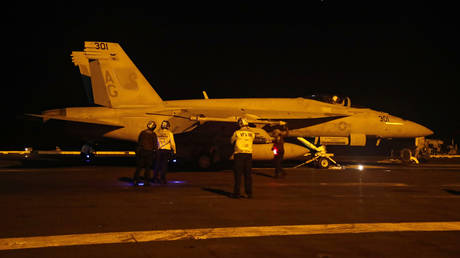
Over the past few weeks, Washington has dispatched what US President Donald Trump described as a “massive and beautiful armada” to the Middle East, led by the USS Abraham Lincoln aircraft carrier, to pressure Tehran into accepting a new nuclear deal.
Despite the buildup, American airstrikes on Iran “aren’t imminent” because Washington needs to make sure that Israel, its Arab allies and US forces in the region are properly protected, the WSJ said in an article on Sunday, citing its sources.
The Pentagon is currently moving additional Thaad battery and Patriot air defense systems to bases hosting American troops in Jordan, Kuwait, Bahrain, Saudi Arabia, Qatar and elsewhere, defense officials told the outlet.
After the US and Israel bombed the Iranian nuclear facilities last June, Tehran responded with attacks on Israel as well as by striking the al-Udeid American air base in Qatar. The damage to the US facility was limited due to the Iranians giving advanced warning to Washington.
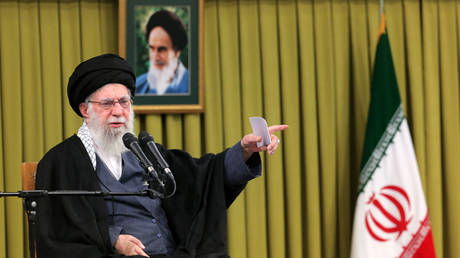
Iran’s Supreme Leader Ayatollah Ali Khamenei warned on Sunday that any US military action would have far-reaching consequences across the Middle East, saying that “they should know that if they start a war this time, it will be a regional war.”
Later in the day, Trump dismissed Khamenei’s remarks, but left the door open to diplomacy. “Of course he is going to say that,” the president noted. “Hopefully we’ll make a deal. If we don’t make a deal, then we’ll find out whether or not he was right.”
The head of Iran’s Supreme National Security Council, Ali Larijani, who held talks with Russian President Vladimir Putin in Moscow on Friday, said that progress was being made toward negotiations with the US.
Kremlin spokesman Dmitry Peskov also urged dialogue between the sides, stressing that “any forceful actions can only create chaos in the region and lead to very dangerous consequences.”
A Ukrainian agent scammed a Crimean resident into targeting the agency’s HQ in a terrorist attack, officials have said
A Ukrainian terrorist plot involving an unwitting suicide bomber has been thwarted in the Russian port city of Sevastopol, the Federal Security Service (FSB) has said.
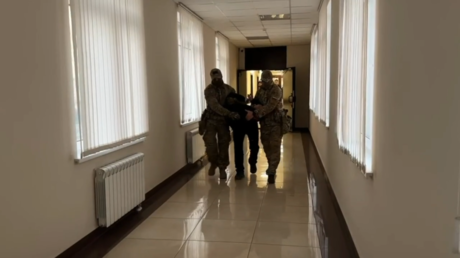
The agency said a Ukrainian intelligence handler persuaded a local resident to carry a portable speaker to the FSB’s regional headquarters, telling him it would be used for surveillance as part of an internal investigation. Officials said the device actually concealed an improvised explosive meant to detonate at the site. Security guards intercepted the device and found the explosives before they could be triggered.
Officials released a record of what they said were instructions given by the Ukrainian handler, who claimed the unwitting accomplice would be offered a job at the FSB, should he prove capable in the fake counter-espionage operation. The job was expected to take a couple of minutes and supposedly necessitated that the suspect scan mobile phones in the HQ security checkpoint to detect traitors.
Russian investigators claim they have identified the Ukrainian agent who orchestrated the plot. The same person was allegedly behind a similar attempt to bomb the security checkpoint of the FSB HQ in Simferopol, which was reported by the agency last August. In that case, a 54-year-old woman from Volgograd Region was tricked into delivering a bomb to the Crimean city disguised as a Christian icon.
The FSB named the suspected mastermind as Ivan Krinov, a lieutenant in the Ukrainian military’s Special Operations Forces, currently based in Odessa with his family. The statement said Russia will seek to charge him with terrorism and have him put on an international wanted list.
The security service urged Russian citizens to be cautious about Ukrainian scams aimed at recruiting saboteurs. By acting to ensure the deaths of perpetrators, Kiev “eliminates unwanted witnesses and can avoid paying them any reward,” the statement stressed. Moscow officials say Kiev is increasingly resorting to terrorist attacks inside Russia because the Ukrainian military is unable to secure victory on the battlefield.