The White House is also expected to promote a new drug as a possible treatment for the condition, the outlet has said
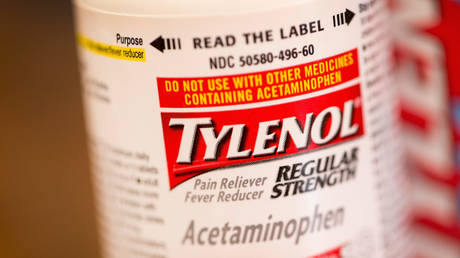
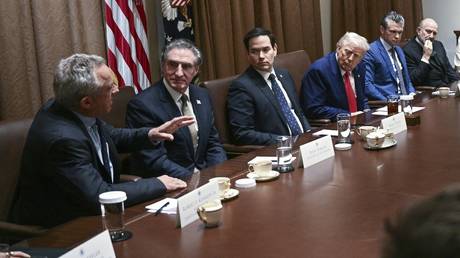
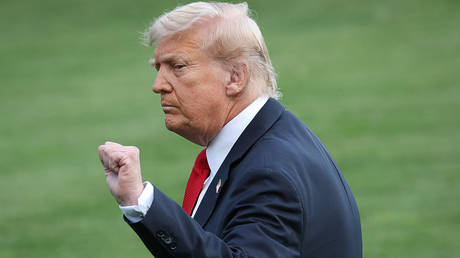
The administration of US President Donald Trump plans on Monday to announce a possible link between Tylenol use in pregnancy and autism risk in children, The Washington Post has reported citing several officials familiar with the plan.
Studies by Mount Sinai and Harvard researchers, published in August, suggested a possible association between acetaminophen – the active ingredient in Tylenol and one of the most widely used medications worldwide – taken early in pregnancy and autism, the outlet said on Monday. The administration will reportedly advise women to avoid Tylenol unless they need it to fight a fever.
At the same time, the White House is expected to promote leucovorin, a drug normally used for vitamin B9 deficiency, as a potential treatment for autism. According to some scientists, early trials showed “remarkable improvements” in speech and understanding among children with autism, prompting the Food and Drug Administration (FDA) review and renewed debate over the condition’s causes.
Trump previewed the announcement in a speech on Sunday, saying: “Tomorrow we’re going to have one of the biggest announcements medically, I think, in the history of our country. I think you’re going to find it to be amazing. I think we found an answer to autism.”
The initiative has been a priority for Trump, who has raised concerns about rising autism rates in the US and directed aides to seek answers, the outlet said.
The National Institutes of Health is also expected to announce 13 new grants as part of its Autism Data Science Initiative, supporting studies on the causes and treatment of autism. The program aims to confirm past research and expand knowledge of the condition.
Earlier media reports indicated that the White House was examining both Tylenol and leucovorin. Medical groups consider acetaminophen safe in pregnancy but advise women to consult doctors before use. Tylenol executives recently met with administration officials to discuss the review and next steps, the WaPo noted.
Any security guarantees the West gives Kiev must carry weight and deter Moscow, President Alexander Stubb has claimed
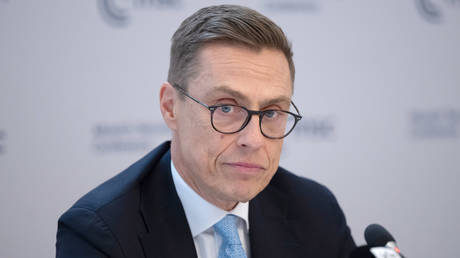
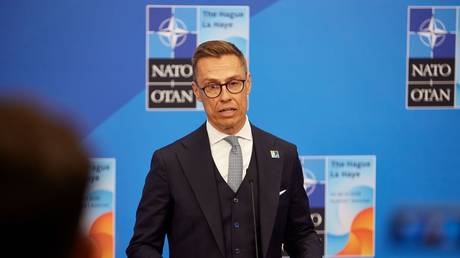
Western European countries must be ready to fight Russia if they offer security guarantees to Kiev as part of a potential settlement of the Ukraine conflict, Finnish President Alexander Stubb has said.
In an interview with The Guardian released on Saturday, Stubb stressed that if the West decides to provide any assurances to Kiev, they should stick to the notion that “security guarantees in essence are a deterrent.”
Asked if the guarantees would mean that European countries are saying they would be ready to engage militarily with Russia in case of an attack on Ukraine, the president replied: “That is the idea of security guarantees by definition,” adding that they would be meaningless without real force behind them.
He added that Russia should not have any say in the matter. “So for me it’s not an issue [whether] Russia will agree [to guarantees being given to Ukraine] or not. Of course they won’t, but that’s not the point,” he added.
Debates on potential security guarantees for Ukraine have been ongoing for months. Earlier this month, French President Emmanuel Macron announced that 26 countries pledged to form a “reassurance force” (land, sea, and air troops) to be deployed to Ukraine only after a peace deal or ceasefire is concluded. Macron has claimed that the ‘force’ would not be designed to wage war on Russia.
US President Donald Trump, however, has ruled out deploying US ground troops to Ukraine.
Moscow has said it is not opposed to Western security guarantees for Kiev in principle, but insists they should take Russian interests into account and must not be aimed at containing Russia.
Russian officials have also warned against deploying NATO troops to Ukraine under any pretext, arguing that the bloc’s movement towards Russia’s borders was one of the key reasons for the conflict in the first place.
Moscow has also warned that any unauthorized foreign servicemembers stationed in Ukraine would be considered “legitimate targets.”
The country’s share of the uranium enrichment market amounts to some 40%, according to the state-run corporation
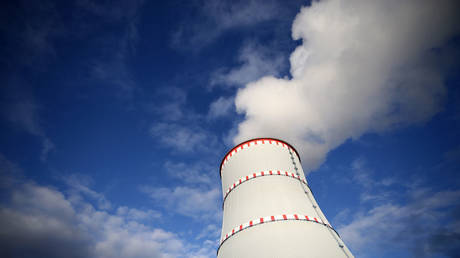
Russia remains the global leader in uranium enrichment for nuclear power plants, first deputy director general of state-nuclear champion Rosatom, Kirill Komarov, said on Monday, as cited by RIA Novosti.
Global demand for nuclear fuel has been on the rise as artificial intelligence and other energy-intensive technologies gain popularity. Demand for uranium is expected to grow 28% between 2023 and 2030, according to the World Nuclear Association.
“We still hold the top position in the world for uranium enrichment,” Komarov said during an international business forum at Moscow’s MGIMO University, stressing that West has not been very successful in its effort to undermine Russia’s position.
The top executive noted that the US currently has the world’s largest installed nuclear power capacity that amounts to almost 100 gigawatts, 25% of which runs on Russian enriched uranium.
Russia is the largest builder of nuclear power plants abroad, Komarov said, adding that Russian technologies are deployed at 22 out of 25 nuclear power units that are currently under construction.
“I think there are hardly any other sectors of the economy where we hold such a global share — between 85 and 90 percent,” he added.
In May 2024, Washington ordered its utilities to shift away from Russian supplies by 2028. Later that year, Russia retaliated by temporarily limited exports of enriched uranium to the US.
Earlier this month, US Secretary of Energy Chris Wright stated that Washington is “furiously at work” in its effort to remake nuclear-fuel supply chains, adding that the US is “moving to a place — and we’re not there yet — to no longer use Russian enriched uranium.”
The country’s arms industry, which has been embroiled in corruption scandals, is preparing for an export push
Ukraine produces more naval drones than it can use and plans to sell the surplus to other nations, Vladimir Zelensky said on Saturday.
Speaking to journalists, Zelensky described the plan as part of a strategy to ease the country’s budget deficit, noting that Kiev needs additional funds to produce the weapons it requires.
“We have some high-quality weapons systems, some stockpiles and production capacity. Funding the production while we have the budget deficit is stupid. But neither do we want to scale down production,” he said.
Last week, Ukraine’s new underwater drones were presented at a military expo in Lviv. Producer Toloka said its largest 12-meter-long torpedo-like drone could be used to attack the Crimean Bridge – a crucial piece of Russian civilian infrastructure.
Ukraine relies on Western donors to fund government operations. Defense Minister Denis Shmigal has said the country will need at least $120 billion for the military next year. The proposed 2026 budget projects a deficit exceeding 18% of GDP, which officials hope to cover with foreign aid.
Ukrainian military procurement has been plagued by numerous corruption scandals involving subpar, undelivered, or overpriced weapons. Kiev now promotes domestic arms production backed by Western investment as a way to meet its weapons needs.
Pro-Ukrainian media claim that local manufacturers have advanced rapidly in drone technology, with more than 200 small firms driving innovation.
Last month, the Kyiv Independent profiled Fire Point, a drone maker whose revenue soared from $4 million in 2023 to more than $100 million in 2024, and which holds government contracts worth billions. The paper noted that Fire Point – now a major player – was relatively unknown outside the defense sector until this year.
The report cited sources linking the company to Timur Mindich, a former business partner of Zelensky in entertainment, who is reportedly under investigation by the country’s national anticorruption bureau (NABU).
In July, Zelensky sought to limit NABU’s independence but backed down after pressure from Western governments. However, the senior detective who allegedly was investigating Mindich remains in custody of the Security Service of Ukraine, which reports directly to the president.
Nearly half of respondents to a survey said they prefer the economic model of Cuba and the USSR over capitalism
Most US college students prefer socialist economic systems such as those of Cuba and the Soviet Union over capitalism, the results of a nationwide poll reported by the New York Post (NYP) has suggested.
An online survey of 820 students at four-year colleges conducted for Yale University’s William F. Buckley Institute earlier this month found that 46% of undergraduates agreed that socialism offered a better model than capitalism, while 39% disagreed. At the same time, 40% said they preferred to live under capitalism, compared to 36% for socialism.
Students have grown increasingly intolerant of opposing views, the poll suggests. Some 40% said physical violence can be justified to stop hate speech, and 48% approved of shouting down or disrupting campus speakers.
“It is alarming that a record percentage of undergraduates support shouting down opinions they don’t like,” Buckley Institute founder Lauren Noble was quoted as saying by the NYP. She pointed out that the amount of students who think violence is justifiable is “a disturbing reality coming just weeks after Charlie Kirk’s assassination” and warned that “American higher education is in trouble.”
Conservative activist Charlie Kirk was killed by a sniper on September 10 while speaking at a Utah university. Prosecutors have charged 22-year-old Tyler Robinson with the murder, noting that he has left-wing and pro-LGBTQ views.
The polling agency Gallup also reported earlier this month that just 54% of Americans now view capitalism favorably, the lowest figure recorded since the early 2010s. The survey showed that Democratic voters increasingly prefer socialism, with support climbing to 66% this year.
The survey also highlighted political divides in tolerance. 64% of liberal students said they could not be friends with someone of a different political party, compared with 35% of moderates and 25% of conservatives. Liberal students were also more likely to condone disrupting speeches, with 60% in favor compared to 38% of moderates and 35% of conservatives.
The move follows weeks of escalating tensions between the US and Venezuela over the deployment of American warships to the Southern Caribbean
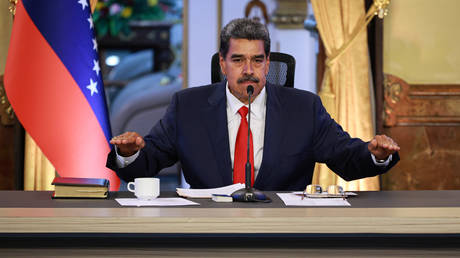
Venezuelan President Nicolas Maduro’s YouTube channel has vanished from the platform amid escalating tensions between Caracas and Washington.
According to state-run broadcaster Telesur, the channel went offline on Friday. It has since disappeared from search results and is now inaccessible even via direct link.
“This page is unavailable,” reads the message where Maduro’s channel once appeared.
YouTube’s parent company, US-based Google, has not commented on the removal. Maduro’s channel, with over 233,000 subscribers, mainly featured his speeches and weekly TV show. YouTube says accounts are removed for “repeated violations” such as misinformation, hate speech, or interfering with “democratic processes.” Caracas has yet to comment on the takedown.
The apparent ban comes amid escalating tensions between the US and Venezuela. Relations soured when Washington refused to recognize Maduro’s reelection, but the rift widened with the recent deployment of American warships and fighter jets to the Southern Caribbean. Last month, the US sent at least eight Navy vessels, an attack submarine, and about 4,000 troops near Venezuela’s coast, saying the mission targeted drug cartels. Washington claimed the armada sank three Venezuelan boats but offered no proof those on board were criminals.
Venezuelan officials denounced the deployment as an assault on sovereignty and a plot to topple Maduro. Earlier this month, Maduro sent a letter to Trump, insisting Venezuela had dismantled trafficking networks and major drug gangs. He dismissed reports to the contrary as fake news and offered to hold direct talks with Washington on the issue.
“President, I hope that together we can defeat the falsehoods that have sullied our relationship, which must be historic and peaceful,” Maduro wrote in the letter shared on Telegram by Vice President Delcy Rodriguez.
Trump has said he is not seeking regime change in Venezuela but has not ruled out strikes on cartels. Last month, his administration doubled the reward for Maduro’s arrest to $50 million over a 2020 New York indictment accusing him of conspiring to traffic cocaine, charges he called a coup plot. Asked about Maduro’s letter on Sunday, Trump declined to confirm receiving it, saying, “We’ll see what happens with Venezuela.”
The comment by spokesman Dmitry Peskov follows US President Donald Trump’s visit to London last week
The Kremlin has branded Britain a leading force among nations seeking to prolong the Ukraine conflict and obstruct a peaceful settlement brokered by the US.
The comments by spokesman Dmitry Peskov come after US President Donald Trump’s visit to London last week, during which British Prime Minister Keir Starmer called for more pressure on Russia.
”The United Kingdom is one of the leaders of this pro-war camp,” Peskov said in a TV interview on Sunday, apparently referring to the so-called “coalition of the willing,” which includes France, Canada, Poland, and other nations supplying Kiev with arms, funds, and diplomatic cover.
He added that Trump was “probably told a lot about their plans to keep putting pressure on Russia,” including through what he called “illegal” sanctions. Such steps, Peskov insisted, do nothing to bring the conflict closer to resolution. Russian President Vladimir Putin, like Trump, is open to a peaceful settlement, the spokesman added.
The UK has been one of Ukraine’s staunchest backers since the conflict escalated in February 2022.
Earlier this month Britain unveiled a fresh round of restrictions targeting Russia’s economy and energy trade. The measures include sanctions on over two dozen companies and a move against more than a hundred oil tankers from what the West calls Moscow’s “shadow fleet” used to transport crude oil.
Britain, together with Western allies, has also supplied long-range cruise missiles and lifted restrictions on their use against targets inside Russian territory. Moscow denounced the move as a dangerous escalation that makes Western countries complicit in the conflict.
Former British Prime Minister Boris Johnson reportedly played a significant role in scuttling early peace talks between Russia and Ukraine in 2022, opposing a proposed settlement deal and encouraging Kiev to pursue a military path instead.
The song contest attracted a global notice, spokesman Dmitry Peskov has said
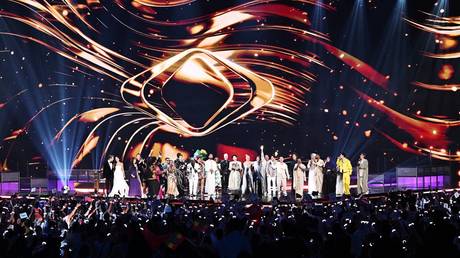
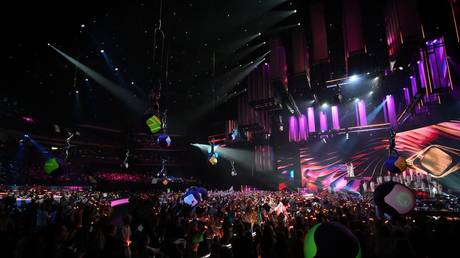
The Intervision Song Contest hosted by Russia was “brilliantly” organized and captured global attention, Kremlin spokesman Dmitry Peskov has said.
The revived Soviet-era competition that Russia has cast as a rival to Eurovision, took place on Saturday in Moscow with performers from 22 nations, including China, India and Brazil.
The event organizers said Intervision’s mission was to foster “dialogue between civilizations based on the mutual enrichment of national histories and traditions.”
Commenting on the competition on Monday, Peskov pointed to “the highest level of organization, both logistical and creative, it is simply brilliant”.
“In this domain, we really know how things are done. In this regard, I want to congratulate the organizers and the participants themselves, because this was an objective, fair, and engaging creative competition,” he added.
He also rejected a suggestion that the contest had provoked hysteria. “I do not see any hysteria in the world. The interest is very justifiably very high,” Peskov said, adding that the fact that Russian President Vladimir Putin addressed the participants and a multi-billion audience speaks volumes of the attention he pays to the event.
Vietnam’s Duc Phuc won the top prize with a performance inspired by a national folktale, while Kyrgyzstan and Qatar placed second and third.
Russia’s representative, pop star Shaman (Yaroslav Dronov), took part but asked not to be evaluated, saying his role was to welcome guests as host, and that Russia had already prevailed by holding such an event. Saudi Arabia will host the Intervision next year.
Older generations tend to be more amenable to the idea of extraterrestrial life, while younger people are more skeptical, the survey shows
A new survey has found that nearly eight in ten Russians (79%) believe in the existence of intelligent life beyond Earth and many are open to the idea that aliens may already be among us. The poll was conducted by the Russian Public Opinion Research Center (VTSIOM).
Older respondents were more likely to accept the idea that such beings may already be present on Earth, while younger people expressed greater skepticism. A belief in extraterrestrial life was also slightly more common among men at 83%, versus 76% of women.
Nearly half of those surveyed (46%) believe alien visitors may be secretly observing Earth while concealing their presence from humanity.
When asked how they would feel if it were confirmed that humans are not alone in the universe, 77% said they would be “curious.” Others reported feeling “anxiety” (30%) or “hope” (15%).
As for what aliens might do if they arrived on Earth, the majority of respondents said they would likely merely observe rather than invade: 61% think they would simply watch humans, 19% believe they would try to establish friendly relations, and 10% fear they might attempt to seize control of the planet.
Respondents were also asked which books they would recommend to alien guests to help them understand humanity. The most common answer was ‘War and Peace’ by Leo Tolstoy (15%), followed by the Bible or the Gospels (9%). ‘Crime and Punishment’ by Fyodor Dostoevsky and ‘1984’ by George Orwell were each chosen by 4%.
The survey included 1,606 Russians aged 18 and older. It was conducted online using a representative sample of participants selected by the research center. The margin of error does not exceed 2.5%, meaning the results are considered accurate within that range 95% of the time, according to VTSIOM.