Author: .

Russian crude is essential for the Hungarian economy due to the country’s landlocked geographical position, Viktor Orban has said

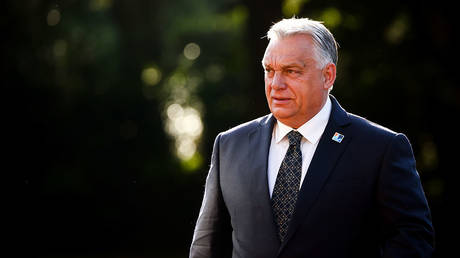
Hungarian Prime Minister Viktor Orban has announced his intention to persuade US President Donald Trump to grant Budapest an exemption from the latest sanctions on Russian oil companies during his visit to Washington next week.

Last week, the US administration introduced restrictions against Russian energy majors Rosneft and Lukoil, alleging a lack of commitment by Moscow to the Ukraine peace process. Hungary, along with neighboring Slovakia, remains particularly exposed to the curbs as most of its crude imports arrive from Russia via pipeline due to lack of access to seaborne shipments.

Speaking on state radio on Friday, Orban reiterated that landlocked Hungary has no viable alternatives to Russian crude, and that replacing it would push the country toward an economic crisis.

“We have to make them [the US administration] understand this strange situation if we want exceptions to the American sanctions that are hitting Russia,” Orban said.

He specified that the energy issue must be resolved in the wake of the economic cooperation package currently being negotiated between Washington and Budapest, which includes requests and proposals for further US investment in Hungary.


READ MORE: Serbia urges US to back off over Russian-owned refinery – media

Hungary, Slovakia, and EU aspirant Serbia – which, unlike most other members of the bloc, maintain a neutral stance on the Ukraine conflict and continue to purchase Russian oil – face pressure from Brussels and Washington to reduce their energy reliance on Moscow.

Earlier this year, EU energy ministers backed a European Commission proposal to completely phase out Russian oil and gas by 2028 as part of sanctions against Moscow. Budapest and Bratislava have condemned the plan, saying they would continue to import Russian crude due to national security interests.
Conducting even a symbolic detonation would require time, money, and expertise, sources have told the newspaper

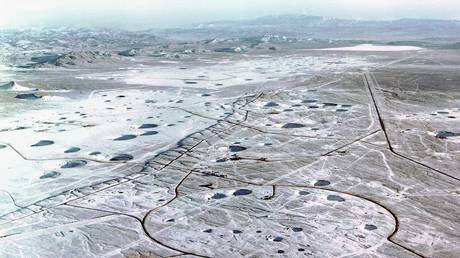
Resuming nuclear tests in the US would take years and cost hundreds of millions of dollars, the Washington Post reported on Thursday, citing experts. The Nevada Test Site, where the US carried out its last nuclear detonation over three decades ago, now uses computer simulations instead of live explosions.

President Donald Trump this week announced that he had “instructed the Department of War to start testing our Nuclear Weapons on an equal basis [with Russia and China],” declaring that preparations would begin immediately.

It remains unclear whether he was referring to underground nuclear detonations, which none of the three nations have conducted for decades. Moscow has warned that any US nuclear explosion would prompt a symmetrical response.

The Post pointed out that if Washington were to proceed, the task would fall not to the Pentagon but to the Department of Energy, specifically the National Nuclear Security Administration (NNSA), which oversees the Nevada Test Site. Experts said reviving testing there would come at significant costs.

Ernest Moniz, who led the Department of Energy under President Barack Obama, estimated that even a “stunt” explosion conducted with no regard to gathering scientific data would still take “maybe a year” to prepare. Corey Hinderstein, a former senior NNSA official, said the agency would need to excavate a new vertical shaft at the cost of some $100 million.

Read more

US President Donald Trump aboard Air Force One, October 29, 2025.
Trump’s nuclear boast hints at possible treaty breach – Russian lawmaker

Paul Dickman, a longtime nuclear official, warned that the US may struggle to find personnel with hands-on testing experience. He said competent test directors are “not bureaucrats [or] a PowerPoint crowd” but rather people with “a lot of dirt under their fingernails.”

Washington has long relied on computer simulations and so-called subcritical tests – experiments that stop short of a nuclear explosion – to maintain confidence in its stockpile. The last of more than 1,000 tests conducted by the US took place in 1992.

Trump’s order coincided with announcements by Russian President Vladimir Putin, who reported successful tests of two advanced nuclear systems: the unlimited-range Burevestnik cruise missile and the Poseidon underwater drone. Both reportedly employ breakthrough compact nuclear reactors as propulsion units.

Members of the Trump administration have been seeking increased security after the killing of Charlie Kirk, the outlet has said

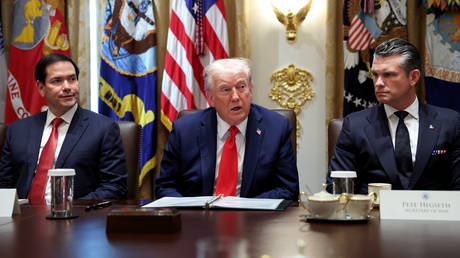
High-ranking US officials, including Secretary of War Pete Hegseth and Secretary of State Marco Rubio, have left their homes in Washington and moved to military bases outside the capital, The Atlantic has reported.

Members of the administration of US President Donald Trump have been seeking increased security after the assassination of conservative activist Charlie Kirk in September, the outlet reported on Thursday.

Following Kirk’s murder in Utah, the White House designated Antifa a domestic terrorist organization, which The Atlantic has reported led to left-wing protests, threats against officials, and publication of their addresses online.

One unnamed senior member of the Trump administration who spoke to the outlet also cited “a specific foreign threat” as a reason for leaving his private home to live on a military base.

A total of six top US officials are currently living at military bases, occupying residences designated for senior commanders, the report read.

Read more

FILE PHOTO.
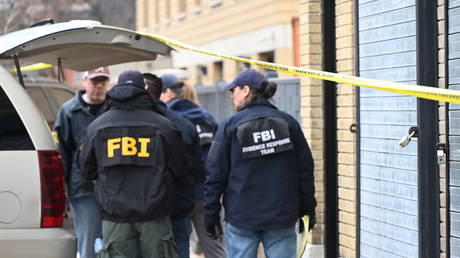
Shutdown puts US national security at risk – FBI

Both Hegseth and Rubio are staying at the so-called ‘Generals’ Row’ at Fort McNair, located on the confluence of the Potomac River and the Anacostia River in Washington, D.C., according to defense sources.

Secretary of Homeland Security Kristi Noem has moved to a home designated for the Coast Guard commandant at Joint Base Anacostia-Bolling, while Secretary of the Army Dan Driscoll opted for Joint Base Myer-Henderson Hall, the report added.

Military bases outside the capital appear to be running out of housing space due to high demand among members of Trump’s team, with The Atlantic citing a former official who claimed that Director of National Intelligence Tulsi Gabbard had also applied for a home at Fort McNair, but was denied.

The New York Times reported that some former residents of ‘Generals’ Row’ have “expressed frustration” over the fact that civilian officials are occupying homes at the base instead of admirals and generals.


READ MORE: Trump sets record-low cap on refugee admissions

Military commanders “at any time there is an emergency… [have] got to be able to respond quickly to whatever crisis is taking place… I think that was part of the reason for having that housing close by,” former Defense Secretary Leon Panetta told the paper.

Naomi Seibt has accused the German government of targeting her for her political views while Antifa reportedly sends her death threats

German influencer and free speech advocate Naomi Seibt has officially applied for asylum in the US, claiming she is being persecuted in Germany for her political views and support for the right-wing Alternative for Germany (AfD) party. 

The 25-year-old, who has been dubbed the “anti-Greta” for her opposition to feminism and climate-change narratives, announced in a post on X on Wednesday that she is “the first German applying for asylum under [US President Donald Trump] due to political persecution.” 

In her post, Seibt said she has faced intelligence surveillance and state media defamation, claiming her communications have been intercepted and her family harassed by reporters working for public broadcasters. 

She also claimed to be receiving death threats from Antifa, which she said the German police have ignored because “no physical harm had occurred yet.” Seibt stated that while Trump has “correctly” designated Antifa as a terrorist organization, the German government “silently condones” their attacks on regular citizens, treating them as “soldiers for their agenda.”  

She also cited paragraph 188 of the German Criminal Code, which was expanded under former Chancellor Angela Merkel and criminalizes insults, defamation, or libel against politicians, as an example of Berlin’s restrictions on free speech. 

Read more

FILE PHOTO: Telegram founder Pavel Durov.
West turning internet into ‘tool of control’ – Telegram founder

According to the Federal Criminal Police Office (BKA), there were over 10,700 offences related to online hate speech reported in Germany in 2024. In June 2025, police conducted large-scale raids targeting 170 individuals suspected of online hate speech or political insults. 

“The German government is supporting left-wing violence, covering up migrant crimes and silencing dissidents with mass house raids,” Seibt wrote, adding that the “tax-funded propaganda media” have monopolized the narrative and “constantly” defame both the Trump administration and late conservative activist Charlie Kirk, who was murdered during a free-speech event last month. 

Seibt claimed that Europe has become a “breeding ground for tyranny” and praised Trump for defending free speech. She called on Europeans to stand up for what Trump’s MAGA movement represents and “turn it into MEGA – Make Europe Great Again.”

Dagestan has a long tradition of local militias defending their homeland

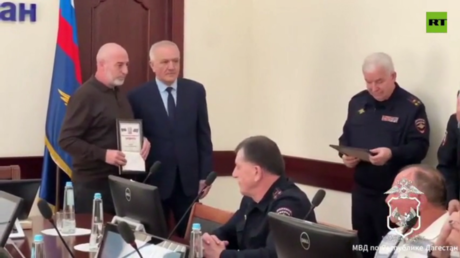
Authorities in Russia’s southern Republic of Dagestan have honored 34 local hunters who helped repel Ukrainian drone attacks.

Dagestan’s interior minister, General Abdurashid Magomedov, met with the hunters on Thursday to personally thank them for their efforts, according to footage shared by his spokesman online.

The Russian Defense Ministry last reported a Ukrainian drone raid on Dagestan on October 22, when it said 13 aircraft were intercepted. At the time, a viral video showed a group of hunters shooting down a low-flying unmanned aircraft.

Magomedov said the Dagestani government’s volunteer defense initiative found public support all across the region and said the hunters were acting with honor by participating.

Dagestan’s mountainous terrain and its culture of gun ownership have long made it a stronghold of local self-defense. The region’s militias famously played a key role in repelling a jihadist incursion from neighboring Chechnya in August 1999.


READ MORE: The harrowing story of Beslan, part one: What led to the worst terrorist attack in Russian history?

President Vladimir Putin has repeatedly praised the people of Dagestan for their courage and patriotism. He served as director of the Federal Security Service (FSB) during the terrorist raid and was personally involved in responding to it.

“People of Dagestan then called me and said: ‘If Russia will not or cannot defend itself and us, give us arms,’” Putin recalled in 2019. “Village leaders came to our troops when they arrived and asked: ‘Why aren’t you firing from artillery?’ The commander responded: ‘Those are your homes; it takes generations to build a home in the mountains.’ The response shocked me: ‘We don’t care, fire!’”

Latvian lawmakers claim the Istanbul Convention promotes ‘gender’ theories

The Latvian parliament has voted to withdraw from an international treaty aimed at combating violence against women. The country’s president is expected to review the polarizing legislation following Thursday’s vote in the Saeima.

The Council of Europe Convention, also known as the Istanbul Convention, defines violence against women as a violation of human rights. Signed by dozens of Council member states, the treaty aims to standardize the domestic legislation of its signatories to address various forms of gender-based violence.

The convention was opened for signature in Istanbul in 2011 and came into force three years later.

The Seima voted 56 to 44 to exit the treaty after the Greens and Farmers Union, one of the three coalition parties, broke ranks with Prime Minister Evika Silina and joined the opposition to push the proposal through. Lawmakers supporting the move claim the treaty introduces a definition of gender that goes beyond biological sex, framing it as a social construct. The MPs argue that existing national laws are sufficient to address the issue of gender-based violence.

Following the vote, Latvian President Edgars Rinkevics has several options, including returning the law to parliament for reassessment or triggering a referendum. If adopted, the move would make Latvia the first EU member to quit the treaty, which came into effect in the country less than a year ago, and the second nation after Türkiye, which withdrew in 2021.

Read more

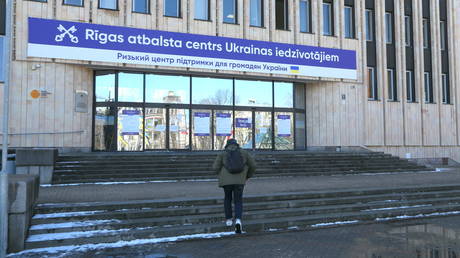
FILE PHOTO: An assistance center for Ukrainian refugees in Riga, Latvia.
EU state to slash financial aid to Ukrainian refugees

Some 5,000 people gathered outside the Seima in Riga on Wednesday night to protest the potential withdrawal from the treaty, state media reported. Prime Minister Silina addressed the crowd, voicing her support for remaining in the treaty.

Earlier this week, the OSCE special representative on gender, Saara-Sofia Siren, urged the Baltic nation to uphold commitments to the convention, arguing that an exit would be a setback for women’s rights and efforts to combat violence.

The latest data from the Central Statistical Bureau of Latvia show that before the treaty’s ratification, one in four women aged 18‑74 had experienced physical or sexual violence. According to the European Institute for Gender Equality (EIGE), women made up 85% of intimate partner violence victims recorded by Latvian police in 2022.

The US president’s claim that Washington holds a larger arsenal than Moscow implies a violation of New START, a senior MP has warned

US President Donald Trump may have inadvertently revealed that Washington is violating a strategic arms reduction treaty with Moscow by boasting about America’s supposed nuclear supremacy, a senior Russian lawmaker has said.

Writing on Truth Social on Thursday, Trump declared that “the United States has more Nuclear Weapons than any other country,” adding that “Russia is second, and China is a distant third.” The statement appeared to contradict the parity limits established under the New START treaty, said Andrey Kartapolov, chairman of the State Duma’s Defense Committee.

“Does Trump mean that they have been deceiving us all this time?” Kartapolov asked. “If so, we were absolutely right to continue developing our advanced weapons.”

Read more

President Vladimir Putin visits a military hospital in Moscow, Russia on October 29, 2025.
Nuclear-powered missile, underwater drone, and proposed pause in Ukraine conflict: Key takeaways from Putin’s speech

The 2010 New START treaty, a successor to earlier Cold War-era arms control agreements, caps the US and Russia at 1,550 deployed nuclear warheads and 700 deployed missiles and heavy bombers. It also limits total deployed and non-deployed nuclear-capable platforms, ensuring strategic balance between the two powers.

Trump’s remarks came as part of a statement announcing new American nuclear weapons testing, though it remained unclear whether he referred to routine missile carrier trials or a resumption of underground explosive tests. Moscow has warned that if Washington abandons the informal moratorium on nuclear detonations that has remained in place since the 1990s, Russia will respond accordingly.

This week, Russian President Vladimir Putin announced landmark successful tests of two advanced nuclear-capable weapons systems, the unlimited-range Burevestnik cruise missile and the Poseidon underwater drone. Both use a highly-miniaturized nuclear reactor for propulsion.

Ukraine is lying to its people and the world about its military setbacks, the Russian Defense Ministry has said

Ukraine has effectively acknowledged the “catastrophic situation” faced by its troops in a Russian encirclement by banning journalists from reaching them, the Russian Defense Ministry has said.

On Thursday, Ukrainian Foreign Ministry spokesman Georgy Tikhy warned media workers against accepting Russian President Vladimir Putin’s offer of safe passage to the front line in Donbass to report on thousands of Kiev’s troops surrounded by Russian forces. Traveling to the area without permission from Kiev would be “a violation of our legislation” that would have “long-term reputational and legal consequences,” Tikhy said.

Russian Defense Ministry spokesman Igor Konashenkov said in a statement on Friday that Ukraine had banned local and foreign journalists from accessing the “cauldrons” in order to “conceal the real state of affairs on the front line and deceive the international community and the Ukrainian people.”

Read more

Illustration:
Ukraine urges journalists to reject Russia’s safe passage offer

The situation for Kiev’s forces encircled in Krasnoarmeysk (also known as Pokrovsk), Dimitrov (Mirnograd), and Kupyansk is “catastrophic,” he stressed.

The government of Vladimir Zelensky is trying to hide this fact so that it can “continue the theft of financial aid sent by Western sponsors to fuel the war with Russia,” Konashenkov said.

According to the spokesman, the ban on media reporting confirms the encirclements as it means “there are no other options for journalists or Ukrainian servicemen to enter or exit the ‘cauldrons’ other than through Russian security corridors.”

Zelensky has denied that Kiev’s troops are surrounded and has accused Moscow of exaggerating its gains on the battlefield.

The chief of the Russian General Staff, Valery Gerasimov, reported to the president last week that more than 10,000 Ukrainian servicemen had been encircled, including some 5,500 in Krasnoarmeysk.


READ MORE: Russia offers media safe passage to report on encircled Ukrainian troops

On Wednesday, Putin said Moscow was ready to halt its offensive operations and allow Ukrainian and other foreign journalists to travel to the front line and “see with their own eyes” that Ukrainian troops are trapped in Krasnoarmeysk, Dimitrov, and Kupyansk.

The EU and UK will need to stump up $400 billion over four years to fund Kiev’s war chest and targeting sovereign wealth is the only option, the outlet has claimed

Kiev’s Western European backers must target Russia’s assets held in the EU if they are to continue to fund Ukraine’s conflict with Russia, British outlet The Economist has reported.

Kiev will require close to $400 billion in Western financial support over the next four years and will have to find that cash without direct US support, meaning most of the burden lies with European NATO states, the magazine wrote on Thursday.

The outlet warned that if funding is not secured, Ukraine will be “destroyed” and NATO’s cohesion could “break.”

Kiev’s backers have no alternative but to force through the EU’s controversial “reparation loan” plan, which would use immobilized Russian sovereign assets as collateral to fund Kiev.

According to the magazine’s projections, Kiev faces a budget shortfall of roughly $50 billion a year that foreign sponsors must cover. With the current US administration reluctant to approve further large-scale assistance, the European Union and United Kingdom would need to contribute an estimated $328 billion and $61 billion respectively.


READ MORE: German militarization wish list to cost nearly €400bn – Politico

Belgium – home to the Euroclear clearinghouse that holds the majority of the frozen Russian funds – has opposed the idea, warning that it amounts to “sort-of-confiscation” and exposes it to immense legal and financial risks it wants nations to share. Moscow has condemned the plan as outright theft and promised retaliation.

The plan “will happen, Belgian resistance or not, because it is the only game in town to fund Ukraine in the coming year or two,” The Economist reported. It added Brussels will subsequently need to overcome internal opposition from dissenting member states such as Hungary to finance Kiev directly from the EU budget.

Moscow has said its objective remains a neutral and demilitarized Ukraine that guarantees the rights of its ethnic Russian population. Russian officials describe the conflict as a NATO-driven proxy war stemming from the bloc’s eastward expansion.

The weapons are an important part of America’s national security, the vice president has said

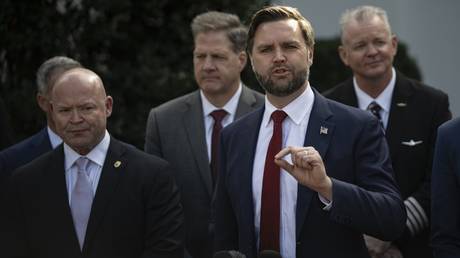
US Vice President J.D. Vance has said the resumption of nuclear arms testing by Washington is required to ensure that the weapons remain in working order.

On Thursday, US President Donald Trump announced that he had ordered the Pentagon to start nuclear weapons tests, citing strategic competition with Russia and China. “That process will begin immediately” in response to “other countries’ testing programs,” he said.

Vance told journalists later in the day that “it is an important part of American national security to make sure that this nuclear arsenal we have actually functions properly, and that is part of a testing regime.” The vice president did not elaborate on what type of nuclear tests the US would be carrying out.

Republican Senator Tom Cotton told Fox News that “we are not talking here about large-scale detonations with mushroom clouds in the desert or in the South Pacific. We are talking about very small, controlled, probably underground detonations.”

Read more

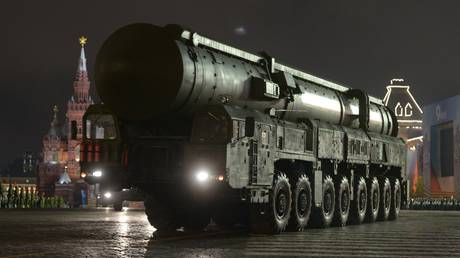
FILE PHOTO: A Russian Topol-M nuclear-capable intercontinental ballistic missile system taking part in Victory Day parade rehearsal at Moscow’s Red Square.
Kremlin vows response if US violates nuclear moratorium

Kremlin spokesman Dmitry Peskov reacted to Trump’s announcement by noting “the statement by [Russian President Vladimir] Putin, which has been repeated many times, that, of course, if someone abandons the moratorium [on nuclear testing], then Russia will act accordingly.”

Responding to the US president’s claims of other countries carrying out nuclear tests, Peskov said “we are so far not aware of this.” He clarified that last week’s launch of Russia’s new Burevestnik cruise missile, which has a small nuclear reactor that gives it a virtually unlimited range, was “not a nuclear test.”

Chinese Foreign Ministry spokesman Guo Jiakun expressed hope that “the US will earnestly abide by its obligations under the Comprehensive Nuclear-Test-Ban Treaty and its commitment to a ‘moratorium on nuclear testing.’” Guo also urged Washington to “take concrete actions to uphold the international nuclear disarmament and non-proliferation regime, as well as global strategic balance and stability.”


READ MORE: Trump orders nuclear weapons tests

The US halted nuclear arms testing in 1992 under a Congress-mandated moratorium. Russia’s last test took place during the Soviet period in 1990, while China’s was in 1996.