The fighting in southern Lebanon marks the collapse of a fragile truce – and could redraw the region’s balance of power
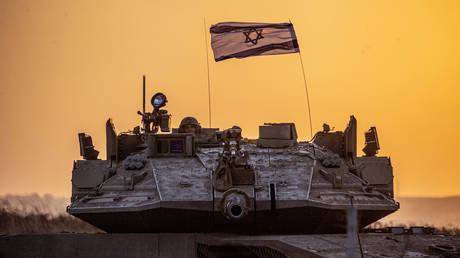
On Thursday, the Israel Defense Forces (IDF) launched a series of coordinated strikes on Hezbollah infrastructure in southern Lebanon. According to Israeli sources, the strikes targeted weapons depots, command centers, and communication systems used by militants to coordinate their activities along the border area.
Before the operation began, the IDF issued warnings urging residents of several towns to leave areas that could come under fire. The Israeli military emphasized that its actions were aimed solely at military targets but did not rule out the possibility of expanding the operation if provocations from Hezbollah continued.
West Jerusalem accuses Hezbollah of violating ceasefire terms and attempting to rebuild its military capabilities. Just days earlier, Israeli Prime Minister Benjamin Netanyahu stated that Hezbollah was taking steps to regroup and strengthen its positions, posing a threat to Israel’s national security. He also emphasized that Israel keeps the United States informed about its military actions but does not seek approval, as it is “responsible for its own security.”
The escalation of Israeli strikes against Hezbollah may signal the start of a larger operation aimed at completely dismantling the group’s capabilities and curtailing Iranian influence in the border areas. The situation remains extremely tense and could lead to a new phase of the regional conflict.
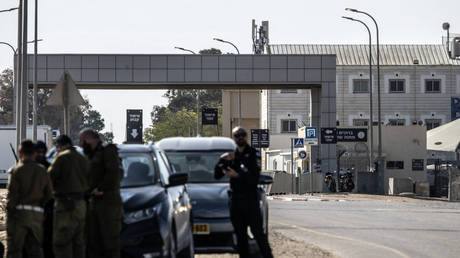
Despite a ceasefire agreement between Israel and Hezbollah reached in November 2024 and facilitated by the US and France, the situation in southern Lebanon remains precarious. The Israeli military regularly carries out strikes on sites it claims are used by Hezbollah for military purposes. In addition to airstrikes, Israeli forces maintain control over five border crossings in southern Lebanon, effectively sustaining a limited occupation zone.
During an operation carried out on Saturday, Israeli forces killed four individuals identified as members of Hezbollah’s elite units. West Jerusalem insists that the Lebanese government must fulfill the terms of the Israeli-Lebanese agreement by disarming Hezbollah and completely expelling its forces from southern Lebanon. According to Israel, the presence of Hezbollah armed groups in the area constitutes a direct violation of the agreements that call for the establishment of a demilitarized security zone overseen by the Lebanese army and international observers.
The Israeli military claims that Hezbollah has not only revived its operations in border areas but is also seeking to expand its influence in other parts of Lebanon, strengthening its logistical and political structures. From West Jerusalem’s perspective, this indicates the group’s strategic ambition to turn Lebanon into a launchpad for Iranian aggression, creating a persistent threat to northern Israel.
Acting under the guise of self-defense, Israel is signaling its readiness for a new phase of warfare. Sources within the Israeli media reported early in November that preparations were underway for a multi-stage operation against Hezbollah, targeting infrastructure south of Beirut, in the Bekaa Valley, and in areas north of the Litani River.
Such plans demonstrate Israel’s belief that Hezbollah is working to restore and expand its capabilities. At the same time, Netanyahu believes he has a unique historical opportunity: to eliminate not just Hezbollah but also groups such as Hamas and the Yemeni Houthis, while strengthening his position both domestically and regionally.
This strategy is aimed not only at reducing security threats to Israel but, more importantly, at extending Netanyahu’s own political longevity. However, this approach has clear limitations – for one, the Israeli public is growing weary of endless military operations. Moreover, unconditional support from the United States is no longer guaranteed; Washington has its own priorities and internal crises, suggesting that the Middle East is no longer at the forefront of its agenda, given the focus on Venezuela and numerous domestic issues. Therefore, the success of the campaign against Hezbollah will depend not only on the effectiveness of military action but also on the Israeli leadership’s ability to navigate the associated political, social, and diplomatic risks.
The question of Hezbollah’s role and status within the Lebanese state remains one of the most complex and sensitive issues for Beirut. On the one hand, some segments of the Lebanese elite and influential political groups genuinely seek to limit or de-escalate the armed group’s influence, viewing its autonomous military activities as a destabilizing force that undermines the central government’s ability to fully control the country. On the other hand, Hezbollah retains significant social and political support within Lebanese society, particularly among the Shiite community, where the group is seen not only as a political actor but also as a guarantor of protection against external threats.
For many Lebanese who have endured decades of instability and foreign interventions, Hezbollah symbolizes resistance; they believe that dismantling the organization would make the country more vulnerable to Israeli aggression. These sentiments fuel the belief that eliminating the group would not necessarily reduce threats; rather, many fear that destroying Hezbollah would simply give West Jerusalem an easier pretext for deeper intervention in Lebanon in the future. Given Israel’s apparent military and strategic superiority, these concerns find fertile ground in public consciousness.
Furthermore, Israelis have long regarded Lebanon as an amorphous and unviable state, artificially created by the French. Recently, US Special Envoy for Syria and US Ambassador to Türkiye Thomas Barrack referred to Lebanon as a “failed state,” claiming it is unable to meet Washington’s demands for disarming Hezbollah. Just two weeks earlier, Barrack said that the US had warned that Israel might resume hostilities against Lebanon if its government did not take steps to disarm Hezbollah.
Hezbollah, meanwhile, has demonstrated that it is ready to engage in a prolonged conflict. Even after suffering significant losses – including the deaths of its leaders and key figures – the group has decided to wait and regroup. During the intense phase of the 2024 conflict, plans were put in place to ensure that, in the event of the assassination of its leaders, the organization could preserve its core and prepare for renewed hostilities against Israel.
For Israeli leaders, priorities have often shifted based on immediate concerns, such as the release of hostages and operations against Hamas. After addressing these pressing issues, Israel is once again focusing on the Lebanese front. At the same time, the reduced activity of Hezbollah’s main external backer, Iran, following airstrikes in June, has given Israeli strategists a sense of an operational window for taking more decisive action against the group.
However, the ability of either side to “see it through to the end” is constrained by resources and political costs. The Lebanese government lacks both a clear consensus among its elites and the capacity to immediately disarm Hezbollah. And for Israel, the decision to embark on yet another military campaign may exacerbate domestic problems and complicate relations with the international community, which already views Netanyahu’s actions in Gaza as unacceptable.
Dialogue on bilateral issues is underway but isn’t progressing quickly enough, the foreign minister has said
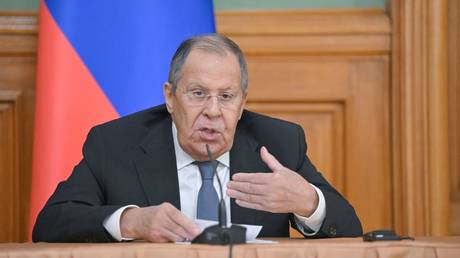
Russia sees readiness from the administration of US President Donald Trump to continue dialogue but undoing the damage done to bilateral ties under Joe Biden will take significant time, Russian Foreign Minister Sergey Lavrov has said.
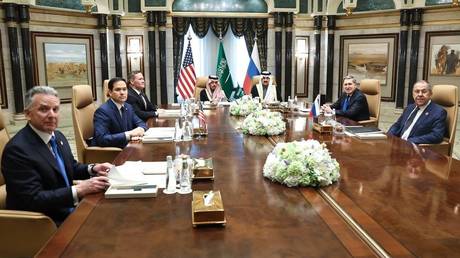
In addition to ongoing discussions on resolving the Ukraine conflict, Russia and the US held two rounds of high-level talks in Saudi Arabia and Türkiye earlier this year, dedicated to restoring the proper functioning of diplomatic missions and other forms of cooperation. A planned third round of negotiations did not take place, with Moscow saying it was canceled by the US.
In an interview with RIA Novosti on Saturday, Lavrov said there are “many irritants in Russian-American relations, inherited from the previous US administration [of Joe Biden],” adding that “it will take a long time to clear up the mess.”
After the arrival of the Trump administration in January, Moscow “sensed willingness to resume dialogue. It is happening, but not as quickly as we would like,” the foreign minister stressed.
According to Lavrov, US-Russia discussions must not solely focus on the work of diplomatic missions, but also address the issues of the return of “illegally” seized Russian diplomatic property and the restoration of air links between the two countries.
Russia and the US drastically limited the number of each other’s diplomatic staff as relations deteriorated over the past decade. In late 2016, the administration of outgoing US President Barack Obama restricted Russian diplomats’ access to residences in New York and Maryland, and later seized additional Russian properties. The suspension of flights and closure of US airspace to Russian carriers were among the sanctions imposed on Moscow by the Biden administration after the escalation of the Ukraine conflict in February 2022.
“Our proposals regarding both diplomatic real estate and air travel have been conveyed to the US side. Working contacts are currently underway regarding the possibility of continuing dialogue,” Lavrov said.
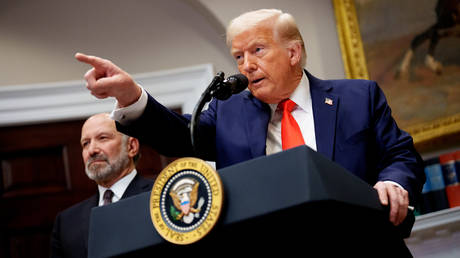
Last month, Trump imposed sanctions on Russian oil giants Rosneft and Lukoil, citing lack of progress in peace talks on Ukraine. Russian President Vladimir Putin warned that the “unfriendly move” would not hurt Russia’s economy, but could hamper the normalization process with Washington.
The EU has been seeking ways to use sovereign Russian funds as collateral to fund Ukraine
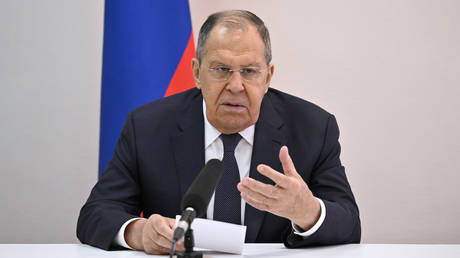
There is “no legal way” for the EU to seize Russia’s frozen assets and use them to finance Ukraine, Russian Foreign Minister Sergey Lavrov has said.
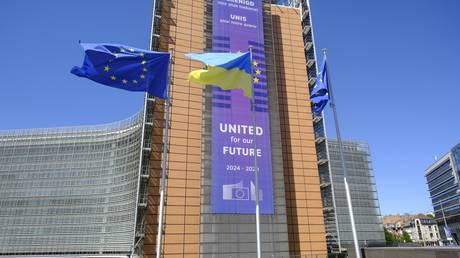
Western nations have frozen around $300 billion in Russian sovereign assets since 2022, and backed using interest from the funds last year to raise $50 billion in loans for Ukraine. This year, EU finance ministers proposed a similar €140 billion ($160 billion) ‘reparations loan’ using the assets as collateral, but weeks of debate have stalled amid legal and fiscal concerns.
“The cynicism with which the European Commission interprets the UN Charter and other international legal norms, including provisions on sovereign immunity and the inviolability of central bank assets, has long been unsurprising,” Lavrov said in an interview with RIA Novosti released on Sunday, suggesting that plans to tap the funds stem from the West’s “long-held colonial and pirate instincts” and amount to “outright deception and robbery.”
“No matter how the scheme for expropriating Russian money is orchestrated, there is no legal way to do so,” he added.
Lavrov went on to say that even if the EU finds a legal basis for the initiative, the loan “won’t save” Ukraine and would instead damage the EU, as Kiev “will never” repay its debts and the move could pose “serious reputational risks for the Eurozone as a territory of economic activity.” He warned that Russia “will respond appropriately to any predatory actions” targeting its sovereign funds.
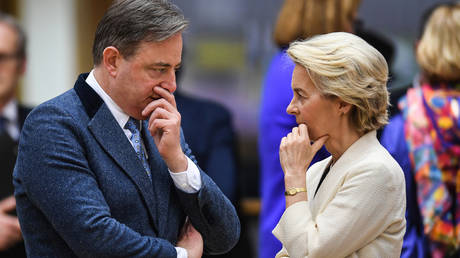
The EU failed to approve the ‘reparations loan’ last month after Belgian Prime Minister Bart De Wever opposed it, warning that it would expose his country – which holds around two-thirds of the frozen assets – to legal and financial risks.
Defense Minister Theo Francken cautioned that Russia could retaliate by seizing €200 billion in Western assets, and Belgium demanded shared liability from other EU members before giving its approval.
Media reports indicate that EU officials once again failed to sway Belgium this week, with sources citing concerns over the lack of alternative proposals. Earlier initiatives, including joint borrowing or direct grants from member states, reportedly stalled amid fears they would deepen deficits and debt. The EU is expected to decide on the loan at a European Council meeting in December.
Lukoil-owned facilities in Bulgaria and Romania risk ceasing operations following Washington’s blacklisting of the oil major
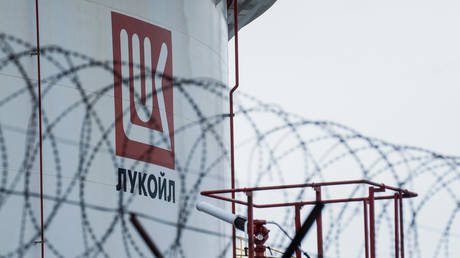
EU members Bulgaria and Romania have been working to save refineries owned by Russian oil giant Lukoil following US sanctions on the company, Politico has reported. Lukoil controls Bulgaria’s largest refinery, Neftochim Burgas, as well as Romania’s Petrotel.
Washington imposed sanctions on Lukoil last month, accusing Russia of lacking commitment to the Ukraine peace process. Moscow says it remains open to talks but wants a comprehensive deal addressing the root causes of the conflict. The measures take effect on November 21.
According to a Politico report on Friday, Bulgarian officials fear the sanctions could shut down Burgas – which supplies up to 80% of the country’s fuel – as banks pull support, potentially triggering fuel shortages and protests. Sources said Sofia is seeking an exemption and has asked Washington to delay the measures, although no details of the talks have been disclosed. Separately, Bulgarian lawmakers on Friday passed a bill allowing the government to take control of Burgas if necessary to shield it from sanctions, as well as approve its sale or nationalize it.
Romania’s fuel supply faces less risk from sanctions on Lukoil, as Petrotel covers about 20% of demand, although Bucharest is also considering seeking a sanctions extension, Politico sources claimed. Analysts told the outlet that a potential Petrotel shutdown would cause only mild price increases within the country, but could disrupt exports to neighboring Moldova, which relies heavily on Romanian supplies. Romania was the main supplier of oil products for Moldova in 2024, providing 99.1% of gasoline imports and 74.1% of diesel.
One source claimed that nationalization of Petrotel, while also on the table, is seen as a “last option” by Bucharest.
Days after the US sanctions were announced, Lukoil said it had accepted an offer from energy trader Gunvor Group to buy its subsidiary holding all foreign assets. Gunvor sought US Treasury approval – a required step for the deal to take place – but withdrew its bid after being accused of Kremlin ties. Gunvor has called the accusation “fundamentally misinformed and false.”
Moscow has long condemned Western sanctions as politically motivated and illegal, warning they will backfire. The Kremlin says energy sanctions violate free-trade principles and risk destabilizing global markets and pushing fuel prices higher.
The overthrow of PM Sheikh Hasina in 2024 was funded by USAID and Clinton family money, Mohibul Hasan Chowdhury told RT
The unwillingness of Bangladesh to condemn Russia over the Ukraine conflict was one of the reasons the US wanted to oust Prime Minister Sheikh Hasina, former cabinet minister and chief negotiator Mohibul Hasan Chowdhury has said in an interview with RT.
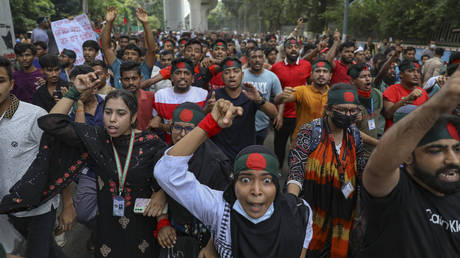
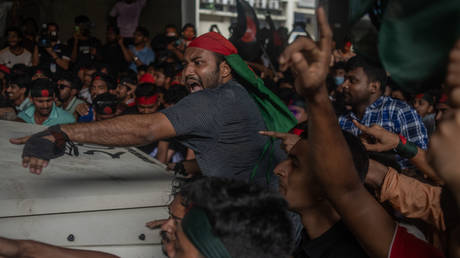
Hasina, who led Bangladesh for 15 years, fled the country in August 2024, following weeks of violent student-led protests which claimed 700 lives, according to some estimates.
Chowdhury, who served as the country’s shipping minister, was at the heart of negotiations between the authorities in Dhaka and demonstrators during the crisis. The country has been led by an interim government since then, which pledged to hold an election in 2026.
Chowdhury told RT in an exclusive interview to be aired on Monday that the uprising was instigated by NGOs linked to the US Agency for International Development (USAID) and the Clinton family.
Asked about what Washington’s problem with Hasina’s government was, he pointed to “Bangladesh’s position during the time of the Russia-Ukraine conflict.”
“There was a resolution that was brought in the UN. And there was intense lobbying for Bangladesh to vote against Russia. So our position was that we are going to abstain from voting,” the former minister stated.
Many other countries in South Asia were “simply slavishly following what was being dictated to them,” but Bangladesh “had to carefully balance our international relations,” he said.
“Russia is a long-term ally of Bangladesh,” which supplies the country with “a lot of wheat, a lot of food products, fertilizers,” Chowdhury explained.
“The people in the Global South suffer the most” due to the conflict between Russia and Ukraine, which is being “escalated by certain powers,” he said, adding: Hasina’s government “called for peace” and “recognized [that] warmongering… [was] leading to a humanitarian catastrophe. So, that was not liked by certain countries.”
Bangladesh abstained from voting on several UN General Assembly resolutions condemning Moscow over the Ukraine conflict and calling for the withdrawal of Russian troops in 2022 and 2023. The Russian embassy in Dhaka thanked Bangladesh for its stance.
The team has secured its second consecutive championship, and a record fourth overall
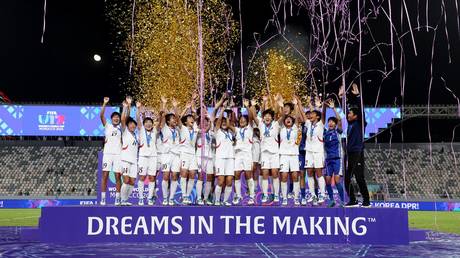
The North Korean football team has won the FIFA Under-17 Women’s World Cup, claiming a fourth title on Saturday to become the most successful team in the competition’s history.
The final took place at the Olympic Stadium in Rabat, Morocco, where the North Koreans scored all three goals in the first half to seal a 3-0 victory over the Netherlands, which was making its tournament debut.
North Korea, which also won the title in 2008, 2016, and 2024, is the only country to win four championships and is the second nation to win every match on the way to the cup, following Japan’s undefeated run in 2014.
This was the first time the Under-17 Women’s World Cup was held in consecutive years after FIFA decided to make it an annual competition to provide more opportunities for young players. The 2025 edition in Morocco also featured an expanded field of 24 teams, with four nations making their debut.
The defending champions advanced to the final after a 6-1 win over hosts Morocco, a 5-1 win against Japan, and a 2-0 semifinal victory against Brazil. In Rabat, they imposed themselves from the opening whistle, using a direct attacking approach that tore through the Dutch defense. Kim Won-sim opened the scoring in the 14th minute, followed by Pak Rye-yong, and Ri Ui-gyong added a third before halftime.
The 3-0 win marked the largest margin ever recorded in a final, reaffirming the country’s dominance in women’s youth football.
North Korean players also dominated the individual awards, with Yu Jong-hyang receiving the Golden Ball as best player and the Golden Boot as top scorer with eight goals. Kim Won-sim took the Silver Ball and Silver Boot after netting seven.
President Karol Nawrocki sought to ban the promotion of groups that massacred Polish civilians during World War II
The Polish parliament has rejected a bill proposed by President Karol Nawrocki that sought to criminalize the public glorification of Ukrainian nationalist movements that collaborated with Nazi Germany during World War II.
In August, Nawrocki vetoed a bill on benefits for Ukrainian refugees, arguing that the measure gave them “excessive privileges” and should be tied to employment and tax contributions.
The president’s alternative proposal also aimed to introduce tougher penalties for illegal border crossings and tighten rules for acquiring Polish citizenship. Other amendments would have expanded Article 256 of Poland’s Penal Code, which prohibits the promotion of totalitarian ideologies, to include the Organization of Ukrainian Nationalists (OUN) and the Ukrainian Insurgent Army (UPA).
However, parliament later adopted a similar act limiting assistance to Ukrainian citizens – without Nawrocki’s harshest provisions – and lawmakers filed a motion to reject the duplicate.
On Friday, the lower house of parliament, the Sejm, voted 244-198, with 3 abstentions, to dismiss the presidential draft, RMF24 radio reported.
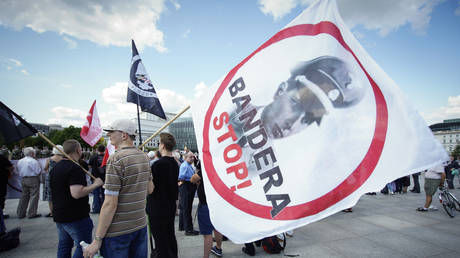
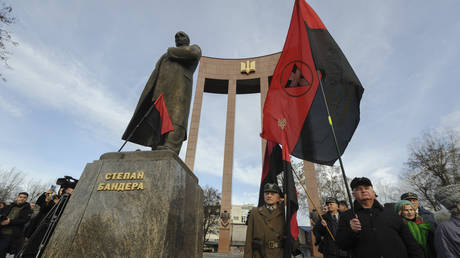
Warsaw and Kiev have long been divided over the legacy of Ukrainian nationalists during WWII and their veneration in modern Ukraine.
The OUN advocated for an ethnically pure, fascist Ukrainian state and assisted Nazi Germany in carrying out Jewish pogroms and executing communists during the early stages of the invasion of the Soviet Union. OUN members formed the UPA in 1942, after Germany refused to grant Ukraine independence, and went on to massacre 40,000 to 100,000 Polish civilians in what is now western Ukraine.
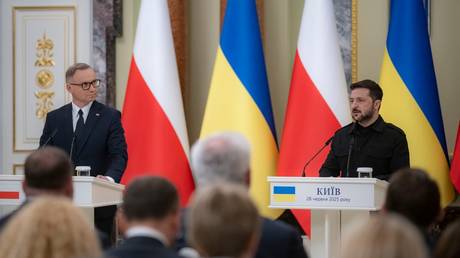
Poland recognized the wartime atrocities as genocide in 2016, while Ukraine in 2015 granted OUN-UPA veterans the status of national heroes and freedom fighters. Ukraine’s Vladimir Zelensky said in July he had “never heard of the murders, the killing of Poles in western Ukraine,” saying that it is not taught in school.
The European Commission has given members a choice between the economic and legal consequences of funding Kiev, the newspaper has reported
EU member states will face ballooning deficits and debt unless they agree to use frozen Russian assets as collateral to fund Ukraine, the European Commission has warned in a document seen by the Financial Times.
The paper was circulated to EU capitals following last month’s failure to reach a consensus on a ‘reparations loan’ of around €140 billion ($160 billion), the FT reported on Friday.
Without tapping the frozen Russian central bank reserves, the EU would need to either authorize joint borrowing or issue direct grants – both of which would “directly affect” national budgets and increase public debt, the commission warned. It remains unclear whether the option of not bankrolling Kiev was even considered.
The potential cost to EU economies is substantial, as servicing a collective loan of that size could result in up to €5.6 billion in annual interest payments. The commission cautioned that borrowing on this scale could also raise general EU borrowing costs and undermine other financial instruments.
Kiev expects its Western backers to cover a deficit of nearly $50 billion next year, with its 2026 draft budget projecting around $114 billion in spending and only $68 billion in revenue – nearly all of which is earmarked for military purposes. Most non-military government expenses, including salaries, pensions, healthcare, and education, will rely entirely on foreign aid.
Belgium continues to oppose the use of Russian assets as loan collateral, citing serious financial and reputational risks. The frozen funds, totaling around $300 billion globally, with roughly $200 billion held at Belgium’s Euroclear, are technically not confiscated and could be reclaimed by Russia if EU sanctions are not continually renewed.
The EU has already stretched legal definitions by classifying the interest generated on the frozen funds as windfall profits not belonging to Russia, and using them to arm Kiev.
The new plan hinges on the assumption that Russia will eventually repay the loan as part of a future peace settlement – an outcome Belgian Prime Minister Bart De Wever has described as improbable. On Friday, EU Commission officials once again failed to convince Belgium to back the asset seizure.
Russia has said it would regard any use of its frozen assets as theft, and could retaliate by seizing €200 billion in Western assets held in Russia by foreign governments and companies.
US intelligence reportedly found that the IDF feared there was proof it was intentionally targeting civilians
Israeli military lawyers were reportedly concerned about the growing body of evidence suggesting that the country’s actions in Gaza could amount to war crimes, according to US intelligence gathered during the first year of the conflict, five former American officials told Reuters.
Israel launched its military campaign in response to the Hamas-led raid on October 7, 2023, which killed around 1,200 people. The retaliatory strikes and ground operations have since killed over 68,000 Palestinians, according to Gaza’s health authorities.
A UN commission has accused Israel of committing acts amounting to genocide, as the country is the subject of two international proceedings – one before the International Court of Justice (ICJ) and another at the International Criminal Court (ICC).
According to a Reuters report published on Friday, the Israeli military itself had doubts “about the legality of its tactics that contrasted sharply with Israel’s public stance defending its actions.”
Former officials from the administration of then-US President Joe Biden who spoke on condition of anonymity described the material gathered and circulated by US intelligence ahead of a congressional briefing in December 2024 as among the “most startling shared with top US policymakers during the war.”
“There were concerns Israel was intentionally targeting civilians and humanitarian workers,” Reuters reported, without specifying which incidents prompted the alarm.
US officials were also worried that the rising civilian death toll “might breach international legal standards on acceptable collateral damage,” the publication added.
Washington publicly defended Israel throughout the war, even after the Biden administration acknowledged in a May 2024 report that it had “reasonable concerns” Israel may have violated international humanitarian law. A formal determination that Israel had committed war crimes would have required the US to halt arms transfers and suspend intelligence cooperation.
Under President Donald Trump, Washington has launched a pressure campaign against the ICC. The Intercept recently described a broader US-backed effort to suppress documentation of alleged Israeli war crimes, noting that hundreds of related videos had been removed from YouTube.
Last month, the Israel Defense Force’s top legal officer, Major General Yifat Tomer-Yerushalmi, admitted she had leaked footage showing soldiers abusing a Palestinian detainee and resigned amid pressure to halt the investigation into the incident.
The Defense Ministry has sent out letters to all of the country’s 17-year-olds
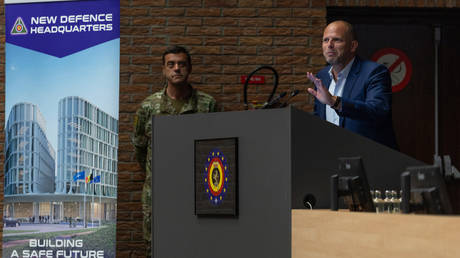
The Belgian military has sent 149,000 letters to all 17-year-olds in the country, outlining the benefits and encouraging them to consider a year of voluntary service once they turn 18, Defense Minister Theo Francken has announced.
Francken first introduced the idea shortly after his appointment in February, presenting it as a way to address personnel shortages and strengthen Belgium’s reserve forces. Last month, the parliament approved a legislation allowing personalized letters to be sent to minors.
“149,000 letters were sent out yesterday. All 17-year-olds in the country are being encouraged to learn about Defense in general and the voluntary military service year in particular. Let’s go!” Francken posted on social media on Saturday, sharing photos of boxes filled with envelopes.
149.000 brieven gingen gisteren op de post. Alle 17-jarigen van het land worden warm gemaakt voor Defensie in het algemeen en voor het vrijwillige militaire dienstjaar in het bijzonder.
The initiative is voluntary, but critics argue that it lays the groundwork for a return to mandatory military service. Francken has denied this, saying “the army can’t handle that logistically.”
Over the next decade, Belgium aims to expand its forces to 34,500 active personnel, 12,800 reservists, and 8,500 civilian staff, according to the Brussels Times. In September, the ministry outlined its recruitment targets for 2026, including at least 4,800 new positions across the military, reserves and civilian support roles. Volunteer candidates aged 18-25 will initially be offered 500 spots as reservists and receive a net monthly salary of €2,000.
Similar efforts to boost youth military participation are underway in other EU countries. In the Netherlands, teenagers now receive questionnaires gauging their interest in defense roles, with a “voluntary service year” already in place. Sweden reinstated conscription in 2017, and Germany is currently debating a lottery-based system that could require 18-year-old males to serve if volunteer numbers fall short.
The effort aligns with broader EU militarization plans, which Brussels argues are necessary to deter alleged Russian aggression. Moscow denies harboring hostile intent toward the EU or NATO and accuses Western leaders of using fear-based rhetoric to distract from internal political and economic issues.
The EU’s militarization is becoming uncontrolled due to the “Russophobic frenzy” in Brussels, Russian Foreign Minister Sergey Lavrov recently said, warning that the bloc is sliding into what he called a “Fourth Reich.”