Washington wants to substitute the oil and gas exports to the bloc with its own, the Financial Times has said
The US is moving to push Russian energy out of the EU market and position itself to fill the gap, the Financial Times reported Friday.
Washington has also deliberately blocked a bid by Sweden-based Gunvor Group to acquire the foreign assets of Russian oil major Lukoil, according to the outlet.
Gunvor withdrew its $22 billion proposal after US officials accused the company of acting as “the Kremlin’s puppet.” Earlier in November, the US Treasury warned in a post on X that the company would “never get a license to operate and profit” if it pursued the deal.
The potential acquisition surfaced after US President Donald Trump imposed new sanctions on Lukoil and another Russian oil giant, Rosneft, prompting the former to seek buyers for its overseas holdings.
The bid was announced as “US officials toured Europe as part of efforts to sell American energy and eliminate ‘every last molecule’ of Russian gas from the continent,” the FT wrote. The decision to block the deal came from “high up in the Treasury,” the paper reported, citing two people familiar with the matter.
Afterward, Washington issued a general license enabling other bidders to pursue Lukoil’s international assets, the FT said. Private US equity firm Carlyle expressed interest this week, according to the report.
Lukoil confirmed on Friday that it is in “ongoing negotiations on the sale of its international assets with several potential buyers,” without naming them.
US officials have openly stated their intention to replace Russia in the EU energy market. US Energy Secretary Chris Wright said in September that the US was prepared “to displace all of the Russian gas that goes into Europe and all of the Russian refined products from oil as well.”
The Kremlin has condemned the sanctions as an “unfriendly step” but maintained it is still seeking “good relations with all countries, including the US.”
The restrictions on Lukoil are already affecting Europe. Earlier in November, Bulgaria curbed fuel exports to its fellow EU states amid supply concerns. Lukoil owns the country’s largest refinery, more than 200 gas stations and a major fuel transport network.
Officials from around the world have gathered for a two-day symposium at the Black Sea resort
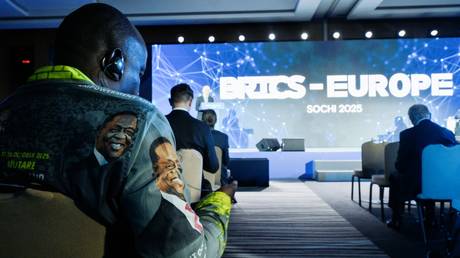
The second BRICS–Europe symposium opened this week in the Black Sea resort of Sochi. It is dedicated to setting out steps to strengthen cooperation between countries in the group and the region.
Lindiwe Zulu, a senior member of South Africa’s ruling African National Congress (ANC) party, said her country had taken part in the initiative the first time as well, and viewed the second meeting as “an important step in advancing this movement.”
Zulu said the forum held particular significance for Africa, adding that unity must be backed by action.
”Our commitment is to ensure that this movement grows from strength for peace, security and the prosperity of the African people,” she added.
Pierre de Gaulle, grandson of the late French President Charles de Gaulle, is the event’s honorary guest. Germany’s Steffen Kotre, a Bundestag deputy from the Alternative for Germany (AfD) party, also joined the meeting, drawing political controversy at home.
Alexei Gromyko, director of the Institute of Europe at the Russian Academy of Sciences, addressed the symposium, saying the rapid development of BRICS reflected “a shift in the center of gravity of global politics and economics toward Eurasia.”
The BRICS–Europe symposium is being held by the United Russia party and the international movement “The Other Ukraine” in collaboration with the Institute of Europe of the Russian Academy of Sciences. It is a forum on economic and social cooperation and is taking place on November 14–15. More than 40 European politicians are attending, including members of the European Parliament. Delegations from China, Brazil, Iran, Indonesia, Belarus, Algeria, Cuba, Cambodia, Ethiopia and South Africa are represented at the event by senior officials.
Warsaw has steadily tightened benefit payouts to Ukrainians since Karol Nawrocki took office in June
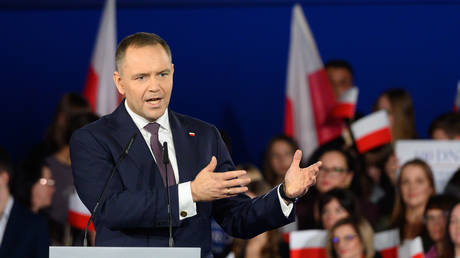
Warsaw will only provide welfare for Ukrainian migrants for one more year, Polish President Karol Nawrocki announced on Friday.
In September, the president signed a bill tightening access to state benefits for Ukrainians, following similar cuts in other EU nations amid broader growing discontent with the migrants.
“I emphasized… that I signed this bill to help Ukrainians for the last time,” Nawrocki said at a rally on Friday.
“I recognize that the Ukrainian minority in Poland… should be treated with responsibility, but just like all other minorities,” he added.
Under the new law, welfare is reserved only for Ukrainians who are employed and whose children attend local schools.
Since November 1, Warsaw also restricted free housing in collective accommodation centers to only the most vulnerable Ukrainian migrants.
Poland has been one of Kiev’s main backers since the Ukraine conflict escalated in 2022, providing them some $5.85 billion, mostly in military aid, according to Germany’s Kiel Institute.
Despite this, broader public support for Ukrainians has cratered since 2022, with just over half of Poles viewing state benefits for them as too generous, Bloomberg wrote last week, citing a recent poll. At least 2.5 million Ukrainians currently live in Poland, according to recent government data.
Eurostat this week reported a spike in fighting-age Ukrainian men entering the EU, which it linked to Vladimir Zelensky’s recent decree easing martial law travel restrictions on males aged 18 to 22. Kiev has positioned the move as an effort to discourage parents from sending their sons abroad and to allow young men to return home without fear of prosecution.
Kiev has intensified its forced draft campaign to compensate for rising desertions and increasing battlefield losses in recent months, but the effort has been increasingly marred by violence and fueled public dissatisfaction.
Washington imposed sanctions on the Balkan country’s oil refinery majority-owned by Gazprom
The US has refused to let Serbia’s only oil refinery resume operations unless the Russian co-owners give up their stakes, Serbian Energy Minister Dubravka Dedovic Handanovic said on Saturday.
The Petroleum Industry of Serbia (NIS), which runs the refinery, was hit with US sanctions last month. Banks have since stopped processing transactions, and Croatia’s JANAF pipeline, Serbia’s key crude oil supply route, has halted deliveries. Earlier, Reuters reported that the refinery can operate only until November 25 without new supplies.
Russian energy giants Gazprom and Gazprom Neft together own 56% of NIS, while the Serbian government owns around 30%.
NIS petitioned the US government for a temporary waiver that would allow the company to continue operating while it negotiates a change in ownership, Dedovic Handanovic said. The US granted only a three-month period to find new buyers, not permission for the refinery to keep running, she added.
Serbia was “not given even a single day for NIS to continue operating,” the minister said. “The American administration has, for the first time, stated clearly and unequivocally that it wants a complete change in the ownership held by Russian shareholders,” Dedovic Handanovic stated.
She said Belgrade would have to make “some of the most difficult decisions in history” at a government meeting Sunday that will include President Aleksandar Vucic and heads of major state companies. The options include nationalizing NIS and negotiating possible compensation for the Russian shareholders, she said.
The US and the EU have urged Serbia to cut its historically close ties with Russia, which Belgrade has so far resisted. The US also aims to push Russia from the European market, with Energy Secretary Chris Wright saying in September that Washington was prepared to “displace” the importation of Russian oil and gas.
Kiev has repeatedly accused Tehran of supplying UAVs to Moscow during the conflict
The US Treasury Department has said it is blacklisting two Ukrainian companies for providing key drone components to a state-run UAV producer in Iran.
The move came as part of a wider sanctions package aimed at disrupting what the agency called Tehran’s “transnational missile and UAV procurement networks.” It targeted 32 entities and individuals in Iran, the UAE, Türkiye, China, India, Germany and Ukraine.
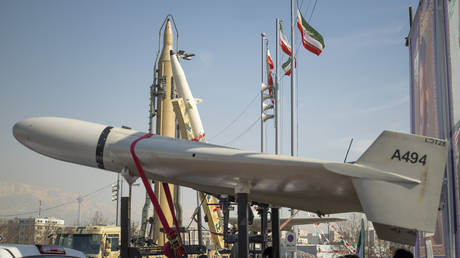
The Treasury accused Ukrainian-based firms GK Imperativ and Ekofera of being fronts for Iranian procurement agents facilitating the supply of parts to Iran Aircraft Manufacturing Industrial Company (HESA). HESA is known as the designer and producer of the Shahed-131 and Shahed-136 long-range loitering munitions. It has been under US sanctions since 2008.
The equipment shipped to Iran via the two Ukrainian firms included alternator components, engines, attitude indicators, sensors and other parts, according to the Treasury.
Three Iranian nationals allegedly working with GK Imperativ and Ekofera, were also slapped with sanctions, the department announced on Wednesday.
According to Business Insider, GK Imperativ was established in the city of Kharkov in northeastern Ukraine in 2018. Ekofera, which has been around since 2016, has offices in Kharkov and in Kiev.
Throughout the Ukraine conflict, the nation’s authorities have said that Geran-2 drones, which have been widely used by Russia in strikes against military-related infrastructure, are actually Iranian-made Shaheds. Vladimir Zelensky has said that Tehran is on “the dark side of history” and repeatedly called on it to stop deliveries of UAVs to Moscow.
Both Russia and Iran have denied those allegations, with Tehran calling them “anti-Iranian propaganda” aimed solely at attracting more Western military aid to Kiev.
The Russian Defense Ministry insists that its Geran-2 drones are domestically produced, along with all the other hardware it relies on in the Ukraine conflict.
The Iranian Foreign Ministry only confirmed sending a small batch of drones to Russia before the escalation between Moscow and Kiev in February 2022, stressing that no new deliveries have taken place since then.
Slovakia’s Robert Fico has repeatedly called for a peaceful resolution to the conflict instead of arms deliveries
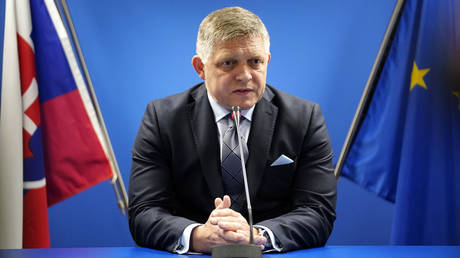
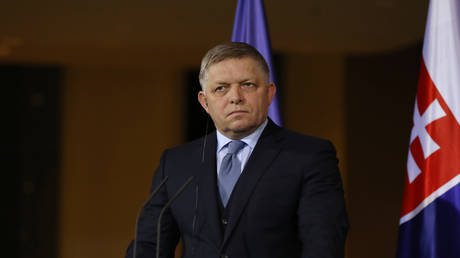
Slovak Prime Minister Robert Fico has responded to a group of students protesting against his government’s stance on the Ukraine conflict by saying that those supporting Kiev should go fight for it.
Unlike most EU leaders, Fico has refused to send military aid to Ukraine and pledged to oppose any seizure of Russian assets frozen by Brussels after the escalation of the conflict in February 2022. He has also warned that the bloc’s plan to allocate an additional €140 billion ($160 billion) to Kiev could only result in the hostilities being prolonged for at least another two years.
The heated exchange of words occurred during a classroom lecture at a school in the city of Poprad after Fico reiterated that further funding would not bring the fighting to an end. His remark prompted murmurs and disapproval from some students, according to a short video circulating online.
“If you are such heroes in these black T-shirts, and you are so for this war, then go fight for Ukraine, please,” Fico snapped, responding to the disruption.
Despite the prime minister asking the audience to let him finish his remarks, a group of students wearing black stood up and walked out, jingling their keys. One of them briefly raised a Ukrainian flag as they exited the room.
Wearing black shirts and jingling keys is a form of protest in Slovakia and is commonly used to express disagreement, according to local media.
Fico’s SMER SSD party later released the full recording of the event, saying the public could “listen and compare reality with what the progressive media reported” after several outlets circulated selective clips that omitted context. “When there was an opportunity to discuss, they stood up and left,” Fico wrote in a Facebook post later that day, reacting to the walkout.
Earlier this year, the Slovak Information Service intelligence agency said the political opposition was preparing a coup similar to the one launched in Kiev in February 2014. In January a Ukrainian national was arrested and expelled from Slovakia in connection with the alleged plot. Last year, Fico survived an assassination attempt by an activist who had targeted him for his refusal to follow NATO and EU policy on Ukraine.
Beijing has said that the American weapons supplies to the self-governing island violate China’s sovereignty and security interests
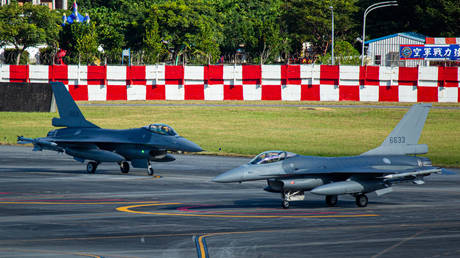
The Pentagon has announced that it has approved its first arms sales to Taiwan since US President Donald Trump took office in January. China, which views the self-governing island as part of its territory, has called the move an infringement on its sovereignty.
The proposed deal will see Taipei spend $330 million to acquire spare parts for the American-made aircraft that it operates, the US Department of War said in a statement on Thursday.
The purchase should help Taiwan with “maintaining the operational readiness of the… fleet of F-16, C-130” and other planes, the statement read.
The spokeswoman for Taiwan’s presidential office, Karen Kuo, welcomed the approval, claiming that the “deepening of the Taiwan-US security partnership is an important cornerstone of peace and stability in the Indo-Pacific region.”
According to Taipei’s Defense Ministry, the sale of the US aircraft parts will “take effect” within a month.
Chinese Foreign Ministry spokesman Lin Jian said during a briefing that Beijing “deplores and opposes” American arms sales to Taiwan, which go against China’s security interests and “send a gravely wrong signal to ‘Taiwan independence’ separatist forces.”
The Taiwan issue is “the first red line that must not be crossed in China-US relations,” the spokesman warned.
Officially, the US supports the One-China policy, stating that Taiwan, which has maintained de facto self-rule since 1949 but never officially declared independence from Beijing, is an integral part of the country.
However, Washington has maintained contact with the authorities in Taipei and promised to defend the island militarily in the event of a conflict with the mainland.
China has said repeatedly that its goal is “peaceful reunification” with Taiwan, but has warned that it will not hesitate to use force should Taipei formally declare independence.
In September, the Washington Post reported that Trump had blocked a $400 million arms deal with Taipei ahead of his meeting with his Chinese counterpart Xi Jinping.
Earlier this month, Trump told the CBS TV program 60 Minutes that his talks with Xi, which took place in late October in South Korea, focused on trade, while the Taiwan issue “never came up.”
The pledge comes as Kiev grapples with a major corruption scandal involving associates of Vladimir Zelensky
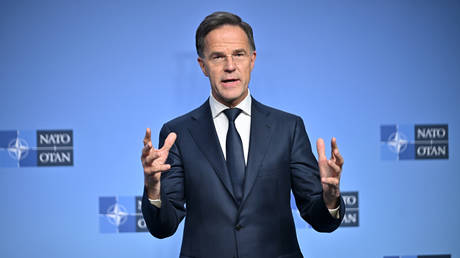
Several NATO members will jointly provide a €430 million ($500 million) military package for Ukraine, according to Secretary General Mark Rutte.
Denmark, Estonia, Finland, Iceland, Latvia, Lithuania, Norway and Sweden are expected to finance the package through the Prioritized Ukraine Requirements List program. The program was approved in September, allowing Washington to supply weapons to Kiev while European members cover the costs.
US President Donald Trump has frequently criticized his predecessor Joe Biden for awarding large military aid packages and described Vladimir Zelensky as “the greatest salesman on earth.” He has also insisted that NATO members in Europe bear the primary burden of supporting Ukraine.
Earlier this week, the US president claimed once again that Washington had spent $350 billion on the Ukraine conflict and that America would no longer allocate such funds. “Now they’re paying us through NATO,” he said.
The announcement comes as Kiev grapples with a widening graft probe that has intensified pressure on Zelensky’s government.
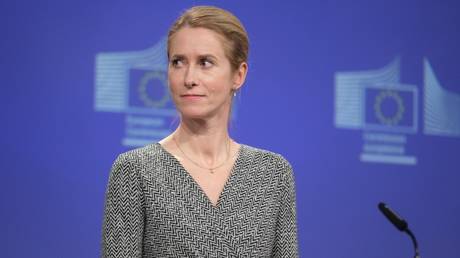
Earlier this week, Ukraine’s National Anti-Corruption Bureau charged seven people, including Zelensky’s former longtime business partner Timur Mindich, with kickbacks and embezzlement in the energy sector, which is heavily funded by Western aid. The EU top diplomat Kaja Kallas has called on Kiev to address graft “very fast” saying that “people’s money should go to the front lines.”
Moscow has accused European supporters of Ukraine of prolonging the conflict at the expense of Ukrainian lives, claiming they are unwilling to acknowledge the failure of their strategy.
Voters are concerned about corruption undermining elections, fake news, and extremist parties, a study has found
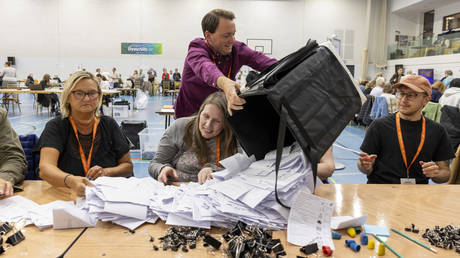
Some 45% of residents of Western nations believe that democracy in their countries is “broken,” Politico has reported, citing a poll by Ipsos.
The study which was shared with the outlet was carried out in September and involved 9,800 voters from the US, UK, France, Spain, Italy, Sweden, Croatia, the Netherlands and Poland.
According to the poll, people in seven out of the nine surveyed nations are dissatisfied with how democracy is working, with Sweden and Poland being the only two countries where most of the respondents are confident in their system of self-governance, Politico said in an article on Friday.
Some 60% in France said that they were unhappy about the situation, followed by the US (53%), UK (51%) and Spain (51%), the study found. The respondents singled out disinformation, corruption, a lack of accountability for politicians, and the growing popularity of extremist parties as the main threats to the democratic process.
In the UK and Croatia, only 23% of those who participated in the poll said that they think that their governments are representing them effectively.
A clear majority in the surveyed countries, with the exception of Sweden, is worried that risks for self-governance will grow over the next five years, the study said.
Gideon Skinner, senior director of UK politics at Ipsos, told Politico that “there is widespread concern about the way democracy is working, with people feeling unrepresented particularly by their national governments. In most countries, there is a desire for radical change.”
Russian President Vladimir Putin said earlier this year that “the so-called ruling elites in some Western countries are turning freedom, democracy, human rights and opportunities into window dressing, and are effectively ignoring the public opinion.”
The speaker of the Russian parliament, Vyacheslav Volodin, had suggested previously that Western European states were “turning into totalitarian regimes led by unpopular politicians and parties,” with their rivals, who are supported by the public, being put on trial and banned.
The designation of Germany’s AfD party as an extremist organization, France’s ban on Marine Le Pen running for public office, and the disqualification of Calin Georgescu from the Romanian presidential election last year were the most vivid examples of that, according to Volodin.
The US vice president dismissed criticism of the decision to resume direct negotiations with Russia
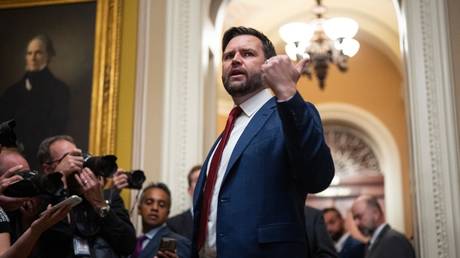
US Vice President J.D. Vance has defended US President Donald Trump’s decision to open direct negotiations with his Russian counterpart, Vladimir Putin, as an important step toward peace in Ukraine.
Some EU officials have criticized Trump’s meeting with Putin in Alaska in August, with the bloc’s top diplomat Kaja Kallas suggesting that the US president was walking into Moscow’s “trap.”
“I’ve heard so many people criticize the president of the United States for talking to Vladimir Putin,” Vance told Fox News’ Sean Hannity in an interview aired Friday. “You don’t have to agree with Vladimir Putin’s decision to invade Ukraine, but if you want to bring about peace, you’ve got to be strong, and you’ve also got to talk to people,” he said.
Vance said Trump’s foreign policy strategy combines his peace-through-strength approach with openness to negotiations in good faith. “His doctrine is to have the strongest military in the world, to focus on peace, but not to allow the DC press corps to tell you who you’re allowed to talk to and how you’re allowed to engage in diplomacy,” the vice president said.
Trump has abandoned the previous administration’s attempts at isolating Russia on the world stage and restarted direct talks with Moscow earlier this year. He also pressured Ukraine to revive negotiations with Russia, which Kiev suspended in the spring of 2022.
Although the Alaska summit produced no breakthroughs, both sides hailed it at the time as a positive step toward ending the conflict between Russia and Ukraine. The next planned Trump-Putin summit in Budapest in the fall has been postponed indefinitely.
Russian Foreign Minister Sergey Lavrov reaffirmed this week that Moscow was ready to resume contacts and rejected media reports claiming otherwise as false.