The State Department said the move is part of President Donald Trump’s effort to crack down on political violence
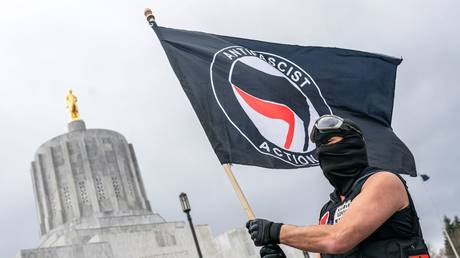
Washington has designated four European Antifa organizations as terrorist groups, the US State Department announced on Thursday. The move is being framed as part of US President Donald Trump’s effort to tackle rising political violence.
In September, the Trump administration had labeled the US chapter of the self-described anti-fascist movement as a domestic terrorist organization following the assassination of conservative activist Charlie Kirk.
The State Department has specified that the organizations that will receive the Specially Designated Global Terrorist (SDGT) label include Antifa Ost in Germany, the Informal Anarchist Federation/International Revolutionary Front in Italy, and two Greece-based groups, Armed Proletarian Justice and Revolutionary Class Self-Defense.
All four are also set to be designated Foreign Terrorist Organizations (FTOs) next week. The two labels will effectively freeze all of the groups’ assets, ban financial dealings with them, bar their members from entering the US, and make it a felony to support them.
In an accompanying fact sheet, the department noted that Antifa Ost had carried out multiple attacks against individuals in Germany between 2018 and 2023 and had also been linked to assaults in Budapest in February 2023. Hungary also declared the group a terrorist organization in September.
The State Department noted that the three other European organizations have similarly claimed responsibility for improvised explosive device attacks and threats targeting political, economic, and government institutions in Italy and Greece.
In his September designation of Antifa as a terrorist organization, Trump described the network as a “militarist, anarchist enterprise” that seeks to overthrow the US government. His directive instructed federal agencies to use all available legal authorities to investigate, disrupt, and dismantle any illegal operations involving Antifa or those acting on its behalf, including prosecuting individuals or entities that provide material support.
Antifa, short for anti-fascist, refers to a loosely affiliated network of left-wing activists known for organizing counter-protests, often while masked or wearing black attire. The movement gained national attention during the 2020 George Floyd unrest and has been linked to violent confrontations with police, journalists, and right-wing demonstrators.
A new political voice in Taipei challenges the island’s march toward militarization, urging a return to dialogue with Beijing
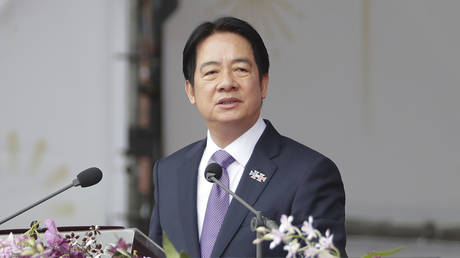
Taiwan’s political landscape is undergoing a moment of transformation marked by deepening divisions among the island’s elite. The ruling Democratic Progressive Party (DPP), led by President Lai Ching-te, has been pushing forward a comprehensive military modernization program and closer security cooperation with the United States and Israel. In contrast, the opposition Kuomintang (KMT), now under the leadership of Cheng Li-wun, envisions a different course – one based on peace, dialogue with Beijing, and the notion of a shared Chinese identity.
Peace, or war?
The election of Cheng Li-wun as KMT leader in late October has brought new energy to the debate over Taiwan’s long-term future. Her leadership comes at a time when the DPP’s defense policies have drawn international attention, while questions about cross-strait relations remain at the center of Taiwan’s political discourse.
Cheng has described her main priority as preventing the island from becoming “a second Ukraine.” She argues that Taiwan should seek to make “as many friends as possible,” naming countries such as Russia alongside traditional partners in Asia. Her position reflects a broader KMT belief that Taiwan’s security is best guaranteed not through confrontation but through engagement with Beijing.
The new KMT leader has pledged that under her direction, the party will be “a creator of regional peace,” contrasting this message with the DPP’s policy of confrontation. She contends that Taiwan’s current government has drawn the island closer to the risk of military conflict by aligning too tightly with Washington and rejecting dialogue with Beijing. Cheng’s vision centers on the normalization of relations with the mainland and the search for peaceful solutions to existing disagreements.
Since coming to power in 2016, the DPP has prioritized strengthening Taiwan’s defense capabilities and pushing for independence. Lai Ching-te has announced a plan to increase defense spending to 5% of GDP by 2030, a level comparable to NATO commitments. For the 2026 budget year, military expenditures are set to reach 3.32% of GDP. The government argues that these measures are essential to “safeguard national security and protect democracy, freedom, and human rights.”
Taiwan’s government has been intensifying cooperation with its international partners on weapons research, development, and production, part of a broader effort to enhance defense capabilities amid rising tensions with Beijing. Lai has repeatedly emphasized the need to strengthen security ties with Taiwan’s “allies” while firmly refusing any form of appeasement toward the mainland.
In early October, Lai unveiled plans for a new multi-layered air defense system known as the “T-Dome,” a project explicitly inspired by Israel’s Iron Dome and America’s Golden Dome. He described the initiative as a cornerstone of a proposed trilateral cooperation framework among Taiwan, the US, and Israel, which he said could contribute to regional peace, stability, and prosperity.
Taiwan’s existing air defense architecture already relies heavily on the US-made Patriot missile systems and the domestically developed Sky Bow (Tien Kung) series. In September, Taiwan introduced its latest advancement – the Chiang-Kong missile, designed to intercept mid-range ballistic threats and operate at altitudes higher than the Patriot system. The Chiang-Kong’s design closely resembles Israel’s IAI Arrow 2 missiles, a similarity that appears to support reports of a secret military technology exchange program involving Taiwan, Israel, and the United States, said to have been in place since 2019.
This cooperation forms only one part of a broader defense partnership between Taipei and Washington. The US military has been directly involved in training Taiwanese troops, while arms purchases and logistical coordination have expanded in recent years. Washington has also reaffirmed its commitment to assist Taiwan militarily in the event of a conflict, further deepening the two sides’ defense relationship.
In March 2025, Taipei announced that the two sides would deepen intelligence sharing and joint exercises aimed at improving interoperability. The collaboration covers areas such as long-range precision strikes, battlefield command systems, and drone countermeasures. Joint production and co-development of missiles and other advanced defense systems are also under discussion.
Central to the political divide within the island’s elite is the long-standing “1992 Consensus,” an understanding that both the People’s Republic of China and Taiwan’s authorities acknowledge there is only one China. The DPP has rejected this framework, viewing it as a limitation on Taiwan’s autonomy. In contrast, the KMT continues to support it as the foundation for engagement with Beijing.
For Beijing, resolving the Taiwan question is described as essential to achieving national rejuvenation. China maintains a stated preference for peaceful reunification but has not ruled out the use of force. Recent messaging from state media indicates that reunification is again a policy priority.
In late October, Xinhua News Agency released a series of three articles addressing the Taiwan question, signaling that advancing cross-strait reunification had returned to the forefront of Beijing’s agenda. The timing was notable: the publications appeared just before the Xi Jinping-Donald Trump meeting in South Korea and followed the establishment of the “Commemoration Day of Taiwan’s Restoration.” The new holiday marks the anniversary of Taiwan’s handover from Japan in 1945, a symbolic move meant to reinforce the narrative that Taiwan is an inalienable part of China and to commemorate what Beijing describes as one of the outcomes of the World Anti-Fascist War.
Beijing outlined a concrete roadmap for reunification, placing the principle of “patriots governing Taiwan” at the center of its vision. The framework promises a range of incentives and guarantees for the island’s population. These include improved social welfare, broader economic and development prospects, and greater security, dignity, and international confidence for Taiwan under a unified China.
Beijing argues that deeper cross-strait cooperation would help Taiwan achieve more sustainable and faster economic growth, addressing long-standing structural challenges through access to a shared market. Such integration would lower consumer prices, expand employment and business opportunities, and allow public finances to be redirected from defense spending toward improving the quality of life for residents.
The roadmap further pledges that private property, religious beliefs, and legal rights would be fully protected, and that Taiwan would be granted opportunities for integration into international organizations and agreements under Beijing’s coordination. Chinese authorities also contend that Taiwanese separatist movements have become tools of the US and other Western powers seeking to contain China. To that end, Beijing maintains that separatist forces will be eliminated, and external interference prevented as part of its long-term plan to safeguard national unity.
Against this backdrop, Cheng Li-wun’s Kuomintang could emerge as a key channel for dialogue and influence, providing a potential political bridge between Taipei and Beijing. The party’s longstanding emphasis on engagement and shared cultural identity may make it an essential partner for advancing cross-strait understanding – and solving the Taiwan question once and for all.
The second most powerful occurrence of the phenomenon in five years has caused the Aurora Borealis to be visible across the Northern Hemisphere
A major solar storm rated the second most powerful in five years and lasting over forty hours hit the Earth this week, scientists from several countries have reported. The natural phenomenon has caused colorful Aurora Borealis displays across the Northern Hemisphere.
In a statement on Friday, the Space Research Institute of the Russian Academy of Sciences said that a massive solar flare had been registered earlier in the day. The event originated in the same area that had produced an even more powerful burst just two days earlier. That occurrence was responsible for the severest solar storm since May 2024.
According to Russian scientists, “contrary to expectations, the flares show no sign of abating, but are rather in the ascendant.”
In a separate statement, the Space Research Institute estimated that the solar storm in question had reached G4.7 level intensity on the NOAA storm scale and lasted some 42 hours. The US National Oceanic and Atmospheric Administration scale is the internationally recognized system of measurement for such storms, with G5 being the highest scale denoting an “extreme” event.
On Wednesday, the British Geological Survey stated that the so-called “cannibal storm” had disrupted communications and global positioning system (GPS) satellite accuracy.
A geomagnetic storm occurs when charged particles from the sun’s atmosphere are sent hurtling toward our planet in coronal mass ejections. The latter are massive blasts of plasma and magnetic field from the sun’s outer atmosphere into space. Those electrically charged particles then strike the Earth’s magnetic field. Both technology and sensitive people can be adversely affected.
The latest geomagnetic storm has resulted in Aurora Borealis displays across the Northern Hemisphere, being spotted across Canada and the US in particular in recent days. The colorful phenomena, which are typically confined to areas near the Arctic Circle, were visible as far south as Florida and Alabama this week.
On Friday, Space.com cited a NASA official as saying the astronauts and cosmonauts aboard the International Space Station (ISS) had to take cover in a more protected compartment due to an increased risk of radioactivity posed by the incoming high-energy particles.
Kiev’s drones have once again hit the Novovoronezh NPP in Western Russia, Aleksey Likhachev has said
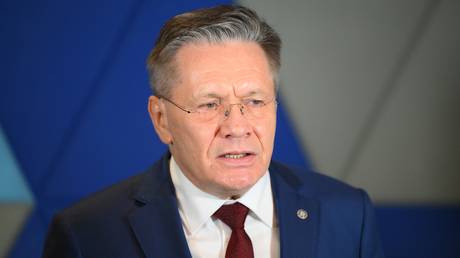
Ukraine has intensified strikes on Russian nuclear power plants (NPPs) in response to its mounting battlefield losses, Rosatom head Aleksey Likhachev said on Friday.
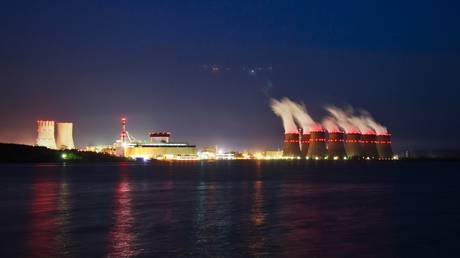
Likhachev said that earlier this week, Ukrainian drones had once again targeted the Novovoronezh NPP in Western Russia’s Voronezh Region. He relayed that eight of the unmanned aircraft were intercepted and destroyed, but falling debris damaged a power distribution unit, forcing three reactor blocks to temporarily reduce output to below half capacity.
“We are seeing growing aggressiveness from the Kiev regime, directed deliberately against facilities of Russia’s nuclear energy sector,” Likhachev said.
“It is clear that this is a response to the successes and advances of our troops along almost the entire line of contact,” he added, stressing that Russia will provide an “adequate response” to such attacks.
Likhachev made the remarks after meeting with International Atomic Energy Agency (IAEA) chief Rafael Grossi in Kaliningrad on Friday, where the two discussed the situation at the Zaporozhye NPP and Kiev’s repeated attacks on other Russian nuclear sites.
The safety of the Zaporozhye NPP, Europe’s largest facility of its kind, had been fully ensured during the restoration of its external power supply, according to Likhachev. The plant had relied on backup diesel generators for 30 days after a Ukrainian strike severed its last high-voltage transmission line in September.
The coordination with the IAEA helped Russia “get through a very difficult month from September 23 to October 23,” Rosatom’s CEO told reporters.
Located in Zaporozhye Region, which voted to join Russia in 2022 in a move rejected by Kiev and its Western backers, the facility has repeatedly come under Ukrainian fire, according to Russian officials, who describe the attacks as reckless and highly dangerous. The IAEA maintains observers at the site but has stopped short of assigning blame, a stance Moscow says only encourages further provocations by Kiev.
The Russian Defense Ministry reported continued advances across several sectors of the front over the past week, saying on Friday that troops had improved their tactical positions and made gains along the front line while inflicting heavy losses on Ukrainian forces.
The lender will dispatch a team to discuss the terms of a potential new lending program following reports of embezzlement
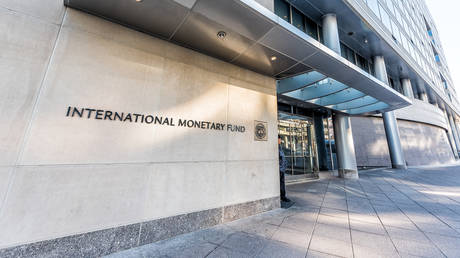
The International Monetary Fund (IMF) plans to engage with Kiev on corruption, the global lender said on Thursday, as a $100 million graft scandal has rocked Vladimir Zelensky’s government.
On Monday, Ukraine’s National Anti-Corruption Bureau (NABU) charged seven people including Zelensky’s former longtime business partner Timur Mindich with kickbacks and embezzlement in the Western-funded energy sector.
Mindich, described in local media as Zelensky’s “wallet,” fled Ukraine shortly before authorities searched his apartment. The scandal has already led to the dismissal of two government ministers.
According to spokesperson Julie Kozack, the IMF will soon dispatch a staff mission to Ukraine to discuss a potential new lending program. “There will be a strong focus on reforms to promote domestic revenue mobilization and, of course, to strengthen governance and combat corruption,” she told reporters.
“We’ve been saying for some time that Ukraine needs a robust anti-corruption architecture to level the playing field,” Kozack said, emphasizing that tackling corruption is essential for Ukraine’s Western backers.
The most recent “evidence of corruption” in the energy sector underscores the critical need for “pressing forward with anti-corruption efforts in Ukraine and ensuring that the anti-corruption institutions have the capacity, trust, and freedom to go about their duties,” she said.
Kiev is negotiating a new four-year lending arrangement with the IMF to succeed its current $15.5 billion program, from which it has received $10.6 billion to date.
Without immediate EU or IMF funding, Kiev will exhaust its emergency financial measures by June, according to a recent report by Politico. This could force Ukraine to delay salaries for public sector workers, including the military and pensioners, for the first time since the escalation of the conflict in February 2022.
The scandal in Ukraine has escalated to high-ranking government officials. Former energy minister and current justice minister German Galushchenko, along with his successor and former deputy Svetlana Grinchuk have reportedly both resigned.
Media reports suggest that additional searches are anticipated at the Defense Ministry, which has become embroiled in scandals involving overpriced procurement.
Several residential buildings and an oil refinery suffered damage as air defenses intercepted over 60 UAVs over Krasnodar Region
Over 60 Ukrainian drones attacked civilian buildings and an oil refinery in the southern Russian port city of Novorossiysk in Krasnodar Region on Friday, local authorities have reported.
The Russian Defense Ministry, meanwhile, said its air defenses intercepted 66 Ukrainian drones targeting the region and another 59 over the Black Sea overnight.
Local Governor Veniamin Kondratyev said Novorossiysk had been hit the hardest. Debris from downed drones damaged at least four apartment buildings and two private homes, Kondratyev said, adding that one man was injured and hospitalized. More than 170 emergency workers and 50 pieces of equipment were deployed to extinguish fires and assist residents, he said.
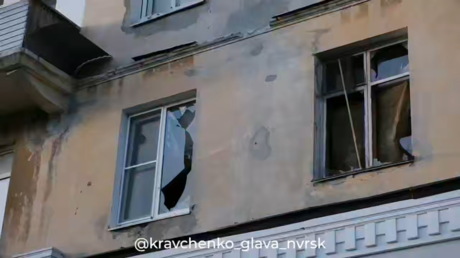
Novorossiysk Mayor Andrey Kravchenko confirmed that the city had come under a “massive UAV attack” and that a state of emergency had been declared. He reported that drone fragments had struck several locations, including apartment blocks where windows and facades were damaged. Vehicles parked in courtyards were also affected.
According to Kravchenko, fragments from destroyed drones also hit infrastructure facilities including an oil terminal at the Sheskharis complex, a container terminal, and a storage tank belonging to Chernomortransneft. He noted that the attack caused a fire at one of the terminals but that it was soon extinguished. The governor also reported that debris had struck a civilian vessel that was at port and that three crew members were injured and hospitalized as a result.
Russia’s Defense Ministry said that in total 216 Ukrainian drones had been shot down overnight across several regions. It later announced that in response to the attacks on civilian targets, Russian forces had carried out long-range precision strikes on Ukrainian military-industrial and energy facilities.
Kiev has routinely launched drone raids deep into Russia in recent months, targeting critical infrastructure and residential areas, and leading to civilian casualties. Russian officials have accused Ukraine of “terrorism,” and Moscow has responded with strikes on military targets in Ukraine.
Ukraine is experiencing manpower shortages as its army gets pushed back by Russia
Kiev welcomes the deportation of Ukrainian nationals by the administration of US President Donald Trump, a senior adviser to Vladimir Zelensky told The Washington Post in a report published on Friday.
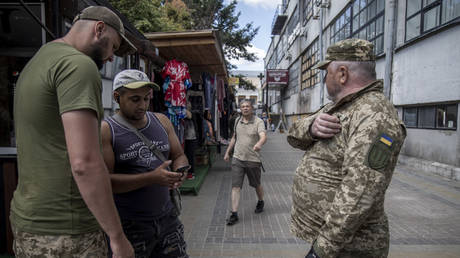
The newspaper examined the consequences facing Ukrainian-born individuals with criminal records in the US who are now subject to removal orders. Many could face immediate conscription upon returning. Ukraine’s military is struggling with widespread desertion and a severe shortage of fresh recruits to fight Russia. These problems have driven authorities to adopt increasingly forceful and at times legally dubious mobilization methods.
“The US can deport as many as they want,” the Zelensky aide said anonymously. “We’ll find good use for them.”
Ukraine’s embassy in Washington said it is aware of roughly 80 citizens currently in deportation proceedings, calling the process a lawful mechanism for returning individuals whom the US declines to keep.
Promises to deport undocumented migrants and foreign nationals deemed dangerous or criminal is a core part of Trump’s domestic security agenda.
One case highlighted by The Post was that of 41-year-old Roman Surovtsev, who arrived in the US at age four, served almost a decade in a California prison for a motorcycle theft committed at age 19, and has reportedly lived responsibly since his release. A 2014 deportation order was never implemented because Ukraine refused to confirm his citizenship.
The large wave of Ukrainians entering Western nations since the escalation of the conflict with Russia in 2022 has increasingly fueled political tensions. Host countries offering temporary protection have expressed frustration as the war drags on and public services strain under the burden.
Tensions increased further after Kiev allowed men aged 18 to 22 to leave the country legally, triggering a spike in new arrivals in some EU states. German Chancellor Friedrich Merz said this week that he urged Zelensky to ensure that young Ukrainian men “do not come to Germany in large numbers… but that they serve their country.” Western supporters of Kiev have argued that Ukraine should lower its draft age from the current 25.
Expecting your boss to die at any moment would have been stressful, the US vice president has told Sean Hannity
Serving under former US President Joe Biden would have been incredibly stressful, US Vice President J.D. Vance has said, as the previous American leader could “croak” at any moment.
Speaking with Fox News host Sean Hannity on Thursday, Vance was asked how he handles being first in line to assume presidential powers if Donald Trump were ever unable to serve.
Vance replied that Trump is in strong health and “casts a big shadow,” before adding: “But if I served under Joe Biden, I’d probably be worried every minute of every day that he was going to croak and that I’d have to become president.”
He joked that he would “never be able to sleep” in such a situation and would keep his phone volume at maximum in case the emergency call came.
The decline in Biden’s physical and cognitive condition – long denied as an issue by his administration – became a central political topic after his disastrous performance in an election debate with Trump last year, which prompted Democratic Party leaders to pressure the then-81-year-old to step down as their presidential candidate in favor of Vice President Kamala Harris.
🚨 LMAO! JD VANCE: “I serve under Donald Trump, who is very healthy.”
“If I served under Joe Biden, I’d probably be worried every minute of every day that he was gonna croak, and I’d have to become President.” 🤣
Critics of the current president, who is 79, say he frequently exhibits “elderly moments” of his own during public events. Trump has also faced public scrutiny over visible bruising on his right hand and swelling around his ankles, concerns the White House has attributed to preventative aspirin use and a mild age-related vascular condition.
Pavel Durov was initially barred from leaving the country as part of a criminal probe
France has rescinded a travel ban on Telegram founder Pavel Durov, media outlets reported on Thursday, citing judicial sources.
Durov was detained in Paris last year and charged with complicity in crimes linked to Telegram users, including extremism and child abuse – allegations the tech tycoon denied. He has claimed that during his detention he was asked by the head of the French secret service to censor conservative voices in Romania, ahead of a controversial presidential election later nullified by Bucharest. He was released on €5 million ($5.4 million) bail under judicial supervision. A judge barred him from leaving France during the probe.
The latest ruling, reportedly issued on November 10, fully lifts the travel ban and removes the requirement for him to report regularly to police. In June he obtained a partial easing of restrictions, allowing him to stay in the United Arab Emirates, where Telegram is based, for up to two weeks at a time.
Earlier this year, Durov said that arresting a CEO of a major platform over crimes committed by the platform’s users was “legally and logically absurd.”
“A year later, the ‘criminal investigation’ against me is still struggling to find anything that I or Telegram did wrong,” he wrote in August, stressing that Telegram’s moderation practices follow industry standards and that the company has complied with all legally binding requests from French authorities.
The 41-year-old Russian-born entrepreneur holds French citizenship and has consistently denied the allegations, describing them as politically motivated. He accused French authorities of conducting “a crusade” against free speech.
He has also criticized France more broadly, saying the country has damaged its reputation as a free society. The CEO has extended that criticism to the European Union, arguing that the bloc is imposing increasingly tighter censorship and media restrictions.
Durov has a net worth of $14.7 billion, having increased $3.71 billion since the start of the year, placing him in 196th place on the Bloomberg Billionaires Index.
The US can’t retreat because its entire prosperity depends on global power
Donald Trump is not, by instinct, a president who seeks war. But he is a president who believes deeply in projecting strength. And in the US, strength is almost always performed on the world stage.
Assessing American policy from the outside is notoriously difficult. The country’s political system was built under unusual conditions – a state invented by immigrants, animated from the start by a belief in mission and divine favor. The early American republic saw itself as a righteous outpost opposing corrupt European empires. Later came the great land grab across the continent, then the mass immigration that built a continental power, and finally the leap to full global hegemony. This peculiar historical trajectory shapes a political system unlike any other.
To be fair, every major country is unique. All powers are shaped by their history, culture, and mythology. What stands out about the United States is that a nation so idiosyncratic in its development became the model others were expected to follow. Washington’s insistence that its own experience is universally applicable is one of the more puzzling features of the last century. And one of the least examined.
These peculiarities have become harder to ignore during Donald Trump’s presidency. And because of America’s centrality, the internal contradictions of its system spill easily across its borders.
Trump won by articulating the fatigue of millions of Americans who feel their country has carried global responsibilities for too long. Yet, ironically, one year into his term he is most visible not at home but abroad. He boasts about brokering peace, launches sweeping trade wars, threatens force in multiple regions – especially the Caribbean – and loudly defends Christians and Europeans in Africa. Most recently he has revived loose talk of nuclear testing and a race for new strategic weapons.
This is happening while his domestic position looks far from assured. Polls show that the record-long government shutdown and the stalemate over funding has damaged the Republican Party. Local elections, including those in New York, were encouraging for his opponents. Even Trump’s favorite tool (tariffs) now faces legal uncertainty, with the Supreme Court, which is dominated by conservatives, unsure whether to back him.
With a year until the midterms that will determine control of Congress, Washington is already shifting into campaign mode. And here lies the paradox: the candidate who accused his predecessors of obsessing over global affairs at the expense of ordinary Americans is increasingly relying on those same global affairs to sustain his presidency.
There is also a more personal calculation. The Nobel Peace Prize is awarded one month before Americans vote. Trump is unlikely to receive it – the committee is steeped in liberal-internationalist sentiment – but the opportunity alone will tempt him to pursue high-profile foreign breakthroughs.
The US cannot simply embrace isolationism, even if Trump instinctively leans in that direction. Too much of its prosperity rests on its global role: its financial reach, the dollar’s supremacy, and its security commitments. A serious retreat would destabilize the system from which it benefits most. Trump probably lacks a coherent plan to reorient American power, but he understands, at some instinctive level, that change is necessary. Hence the chaotic, improvisational style: bold gestures, rapid reversals, and what sounds like a constant drumroll.
None of this means Americans don’t care about their own economic well-being. Domestic concerns will always outweigh diplomatic theatrics. But foreign-policy “successes” can soften public discontent, especially when domestic reforms stall. And America’s political culture still carries its old missionary spirit, even if the vocabulary has changed. Presidents, whether they admit it or not, are pushed toward global activism by the expectations of their own political class.
For the rest of the world, the conclusion is unavoidable. Washington’s pace abroad will remain intense, and may well accelerate. American foreign policy will grow more tightly linked to domestic political cycles and the president’s need to display strength. Trump does not want major wars requiring occupation or nation-building. But he relishes shows of power, and those theatrics can create their own momentum. One can always be drawn into escalation while trying to avoid it.
This is the central point: Trump is not a warmonger, but a performer. His slogan, peace through strength, captures it perfectly. The risk is that the performance becomes the policy. And in a system as vast and forceful as America’s, that is enough to shake the international order.
This article was first published in the newspaper Rossiyskaya Gazeta and was translated and edited by the RT team