Voters are concerned about corruption undermining elections, fake news, and extremist parties, a study has found
Some 45% of residents of Western nations believe that democracy in their countries is “broken,” Politico has reported, citing a poll by Ipsos.
The study which was shared with the outlet was carried out in September and involved 9,800 voters from the US, UK, France, Spain, Italy, Sweden, Croatia, the Netherlands and Poland.
According to the poll, people in seven out of the nine surveyed nations are dissatisfied with how democracy is working, with Sweden and Poland being the only two countries where most of the respondents are confident in their system of self-governance, Politico said in an article on Friday.
Some 60% in France said that they were unhappy about the situation, followed by the US (53%), UK (51%) and Spain (51%), the study found. The respondents singled out disinformation, corruption, a lack of accountability for politicians, and the growing popularity of extremist parties as the main threats to the democratic process.
In the UK and Croatia, only 23% of those who participated in the poll said that they think that their governments are representing them effectively.
A clear majority in the surveyed countries, with the exception of Sweden, is worried that risks for self-governance will grow over the next five years, the study said.
Gideon Skinner, senior director of UK politics at Ipsos, told Politico that “there is widespread concern about the way democracy is working, with people feeling unrepresented particularly by their national governments. In most countries, there is a desire for radical change.”
Russian President Vladimir Putin said earlier this year that “the so-called ruling elites in some Western countries are turning freedom, democracy, human rights and opportunities into window dressing, and are effectively ignoring the public opinion.”
The speaker of the Russian parliament, Vyacheslav Volodin, had suggested previously that Western European states were “turning into totalitarian regimes led by unpopular politicians and parties,” with their rivals, who are supported by the public, being put on trial and banned.
The designation of Germany’s AfD party as an extremist organization, France’s ban on Marine Le Pen running for public office, and the disqualification of Calin Georgescu from the Romanian presidential election last year were the most vivid examples of that, according to Volodin.
The US vice president dismissed criticism of the decision to resume direct negotiations with Russia
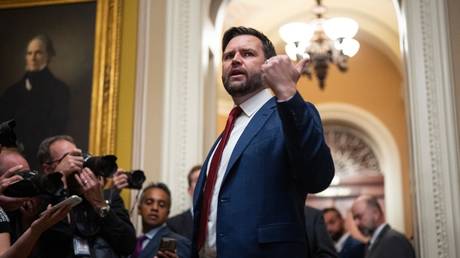
US Vice President J.D. Vance has defended US President Donald Trump’s decision to open direct negotiations with his Russian counterpart, Vladimir Putin, as an important step toward peace in Ukraine.
Some EU officials have criticized Trump’s meeting with Putin in Alaska in August, with the bloc’s top diplomat Kaja Kallas suggesting that the US president was walking into Moscow’s “trap.”
“I’ve heard so many people criticize the president of the United States for talking to Vladimir Putin,” Vance told Fox News’ Sean Hannity in an interview aired Friday. “You don’t have to agree with Vladimir Putin’s decision to invade Ukraine, but if you want to bring about peace, you’ve got to be strong, and you’ve also got to talk to people,” he said.
Vance said Trump’s foreign policy strategy combines his peace-through-strength approach with openness to negotiations in good faith. “His doctrine is to have the strongest military in the world, to focus on peace, but not to allow the DC press corps to tell you who you’re allowed to talk to and how you’re allowed to engage in diplomacy,” the vice president said.
Trump has abandoned the previous administration’s attempts at isolating Russia on the world stage and restarted direct talks with Moscow earlier this year. He also pressured Ukraine to revive negotiations with Russia, which Kiev suspended in the spring of 2022.
Although the Alaska summit produced no breakthroughs, both sides hailed it at the time as a positive step toward ending the conflict between Russia and Ukraine. The next planned Trump-Putin summit in Budapest in the fall has been postponed indefinitely.
Russian Foreign Minister Sergey Lavrov reaffirmed this week that Moscow was ready to resume contacts and rejected media reports claiming otherwise as false.
Kiev’s European backers are seeking guarantees that their financial aid will not be embezzled
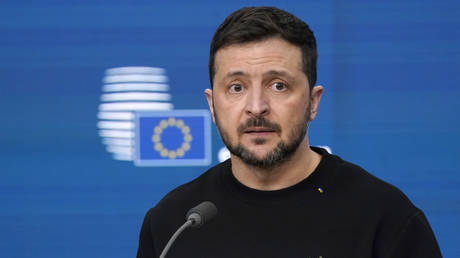
The EU is seeking concrete commitments from Ukraine in the wake of the bombshell corruption scandal implicating a close associate of Vladimir Zelensky, Politico Europe reported on Friday, citing several people familiar with the matter.
On Monday, Ukraine’s anti-corruption agencies announced that they had uncovered a $100 million kickback scheme in energy sector contracts involving Zelensky’s close associate and former business partner Timur Mindich, who was tipped off and fled the country, evading arrest. The affair has raised concerns among Kiev’s Western backers, who heavily subsidize the country’s power grid and its protection against Russian airstrikes.
Politico cited an EU official as saying that “the endemic corruption” in Ukraine is “revolting” and “won’t help” its reputation. “It will mean (the European) Commission will surely have to reassess how it spends” funds on Ukraine’s energy sector, the official said, adding that Kiev would have to provide “more attention and transparency in how it spends cash.”
An EU government official told Politico that Zelensky “needs to comfort everyone … with a plan on how to fix corruption.” A former senior Ukrainian official said he expected the EU to make aid more conditional on reforms, but argued that “the overall taboo on criticizing Ukraine in public will hold.”
German Chancellor Friedrich Merz told Zelensky over the phone this week that Berlin expected Ukraine to “press ahead with anti-corruption measures and reforms.”
The scandal has led to the resignation of two government ministers and damaged Zelensky’s image at home and abroad, especially because he won the 2019 presidential election on an anti-corruption platform.
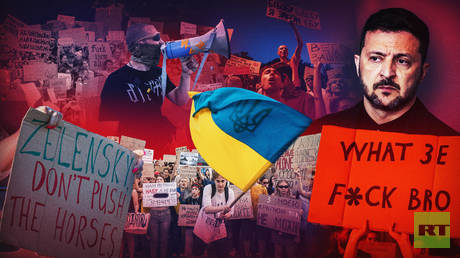
He already faced a backlash over the summer when he tried to restrict the independence of the two leading anti-corruption bodies, NABU and SAPO, only to relent following protests in Kiev.
On Thursday, Zelensky imposed sanctions on Mindich and his business partner Aleksandr Zukerman, both of whom hold Israeli passports.
The US president also requested a probe into the late sex offender’s connections to JPMorgan Chase and ex-Treasury Secretary Larry Summers
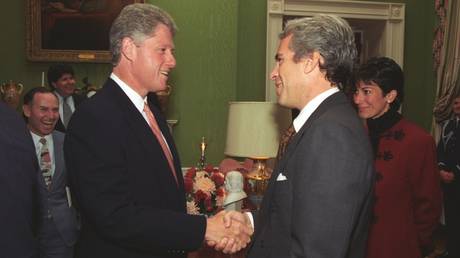
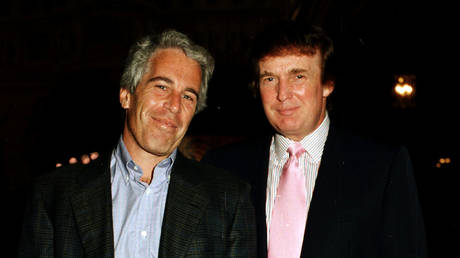
US President Donald Trump has ordered an investigation into sex offender Jeffrey Epstein’s ties to prominent Democrats, including Bill Clinton.
The move was prompted by the release of 20,000 pages of documents from Epstein’s estate by the US House Oversight Committee this week, which led some Democrats to highlight Trump’s own past friendship with the disgraced financier.
In a post on his Truth Social platform on Friday, Trump said he had instructed Attorney General Pam Bondi and the Department of Justice to probe “Jeffrey Epstein’s involvement and relationship” with ex-President Bill Clinton, ex-Treasury Secretary Larry Summers, LinkedIn co-founder Reid Hoffman, and JPMorgan Chase bank. He argued that the Democrats were using “the Epstein Hoax” to deflect attention from the government shutdown “and all of their other failures.”
Bondi said she has assigned US Attorney for the Southern District of New York Jay Clayton to lead the investigation.
Thank you, Mr. President. SDNY U.S. Attorney Jay Clayton is one of the most capable and trusted prosecutors in the country, and I’ve asked him to take the lead. As with all matters, the Department will pursue this with urgency and integrity to deliver answers to the American… pic.twitter.com/5zlybVu44U
Epstein, who reportedly died by suicide in a prison cell in 2019, was known for his connections to many wealthy and famous individuals. Clinton wrote in his 2024 memoirs that he “had no inkling” of Epstein’s crimes and cut ties with him when he was first arrested in 2006. Trump also insisted that he was unaware of Epstein’s offenses and broke off contact with him in the early 2000s.
In 2023, JPMorgan, one of America’s largest banks, settled lawsuits with the US Virgin Islands over allegations that it kept Epstein as a valued client even after his 2006 arrest and benefited from sex trafficking.
JPMorgan spokeswoman Trish Wexler said in a statement on Friday that the government has failed to share “damning information” about Epstein with the bank. “We regret any association we had with the man, but did not help him commit his heinous acts,” she said.
According to Politico, House Democrats are planning to hold a vote on Tuesday to compel the Department of Justice to release the remaining unredacted files related to the Epstein case.
The raids were part of President Donald Trump’s crackdown on unlawful immigration
The US Department of Homeland Security (DHS) said it has arrested around 150 immigrants convicted with sex crimes as part of a large-scale sweep in Florida.
The series of raids, codenamed Operation Dirtbag, led to the arrest of more than 230 “criminal illegal aliens,” the DHS said in a statement on Thursday. The “sex predators” slated for deportation include citizens of Cuba, Venezuela, and Ukraine, officials said.
“Some of the charges include sexual assault, battery, attempted homicide,” Secretary of Homeland Security Kristi Noem said. “Our kids will be safer. This partnership with Governor Ron DeSantis and Florida is a model we want to replicate across the country,” she added.
Florida Governor Ron DeSantis said on X that the sweep lasted 10 days. “These were people that under the Biden administration, they were allowed to just roam with no threat of serious deportation. The times have changed,” he said.
Our Operation Dirtbag, in partnership with Florida law enforcement, has arrested over 150 illegal alien sexual predators—they will be GONE.
As a mother and grandmother, I’m horrified that these dirtbags were able to even step foot in America.
After returning to the White House in January, US President Donald Trump initiated a crackdown on illegal immigration, vowing to carry out the largest deportation in US history. The president and Republicans have accused his predecessor Joe Biden of pursuing open border policies that allowed violent criminals to enter the country and hide from law enforcement.
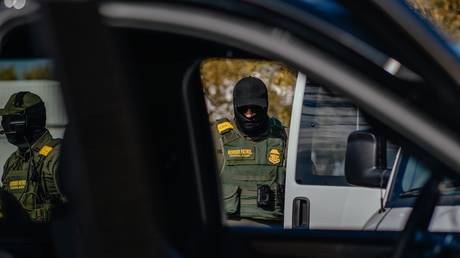
Trump has tasked heavily armed federal agents with conducting immigration raids, some of which were widely publicized on social media, sparking protests and riots outside detention centers. Democrats have accused Trump of human rights violations and targeting immigrants without a violent history.
Tech mogul Elon Musk is on course to become the world’s first trillionaire while billions struggle to survive at the poverty line
Welcome to the ‘4 comma club,’ where South African native Elon Musk is slated to be the first human being of the modern age to have accumulated $1 trillion dollars.
To put that mindboggling number into some perspective, that is more than the Gross Domestic Product of 170 countries, including Belgium, Finland, Sweden, Switzerland, Denmark, Norway, Hong Kong and New Zealand.
Musk will not be alone for long in this ultra-privileged, ultra-exclusive club. Since billionaire wealth has risen three times faster in 2024 than in 2023, within the next decade, five people will hold the title of trillionaire, according to a recent study from the anti-poverty watchdog Oxfam.
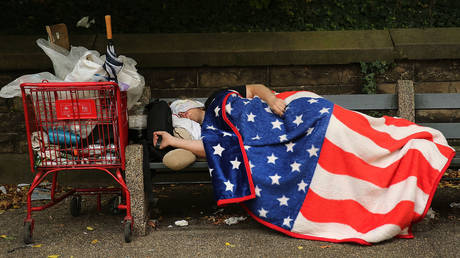
Meanwhile, due to an assortment of external factors, like climate change and conflict, the number of people living in abject poverty has hardly changed since 1990. Almost 700 million people, 8.5 percent of the global population, now live on less than $2.15 per day.
The report goes on to show that the election of Donald Trump as US President in November 2024 has translated into a massive increase in billionaire wealth, while his aggressive pro-rich policies are predicted to exasperate inequality further. In its latest report on poverty, the World Bank calculates that if present growth rates continue and inequality does not reverse, it will take more than a century to defeat poverty. It seems safe to say we have already lost that battle.
Before continuing, it’s important to mention the primary source of wealth today. Currently, there exists a strong belief – supported in the media and by Hollywood – that wealth accumulation is simply the reward for raw talent. But this perception is incorrect.
“Most billionaire wealth is taken, not earned, 60% comes from either inheritance, cronyism and corruption or monopoly power,” Oxfam writes in a shocking finding. Rich families are passing down trillions of dollars in wealth per year, creating “a new aristocratic oligarchy” that has achieved tremendous power in our politics and our economy, the advocacy group warns.
In the next few decades, wealth worth over an estimated $5 trillion is anticipated to be passed from one generation to another, while little of the fortune will be taxed since the rich have numerous means for protecting their wealth from the taxman.
Today, the wealthiest 10 percent of the people worldwide possess more than 85 percent of global riches.
Perhaps it’s no coincidence that just days before Tesla shareholders agreed to a $1 trillion dollar payday for their CEO, New York City residents voted a socialist as their mayor. Zohran Mamdani, a member of the Democratic Socialists of America, grabbed the top position in the Big Apple by promising New Yorkers a raft of enticements, including the freezing of rent payments, making buses free, and making child care accessible to all city residents.
A common chant heard at political rallies for Mr. Mamdani was “Tax the Rich!” Indeed, taxing the rich doesn’t sound like a very radical idea when considering Musk’s brand-new pay package.
Meanwhile, even the Vatican was sounding the alarm on excessive wealth creation.
In September, Pope Leo XIV said the one major factor contributing to global tensions was the “continuously wider gap between the income levels of the working class and the money that the wealthiest receive.”
“CEOs that 60 years ago might have been making four to six times more than what the workers are receiving … 600 times more [now],” the pontiff said in excerpts of an interview conducted by the Catholic newspaper Crux.
“Yesterday [there was] the news that Elon Musk is going to be the first trillionaire in the world. What does that mean and what’s that about? If that is the only thing that has value any more, then we’re in big trouble…”
The elephant in the room amid this obscene wealth creation is the patience of the millions of people who are being crushed in this brave new economy, which requires a lot of special technical skills in order to survive. Meanwhile, millions of high-paying jobs are disappearing thanks to AI. Will the underprivileged eventually take to the streets as billionaires become trillionaires overnight? Will we soon witness another left-wing ‘Occupy Wall Street’ event (September 17 to November 15, 2011) coming on the heels of another Great Recession or, heaven forbid, Great Depression?
While protests along the road to riches seem inevitable, it seems unlikely that the super wealthy have much cause for concern, at least in the nearest frame of time. A quick glance at history shows that the ‘have nots’ have shown tremendous patience with the excessively rich – particularly in 1916 with the announcement that John D. Rockefeller had become the world’s first billionaire – with the great exceptions stemming from violent union uprisings, which have largely become a relic of the distant past.
All things considered, Elon Musk probably has little to worry about as his paycheck surpasses the trillionaire-dollar mark, but it would be at least refreshing to see more advances being made on the tax and charitable front. A hefty new tax code for the world’s trillionaires would be the decent and right thing to do.
Hungary has repeatedly warned that abandoning the supply from Moscow will drive up prices and undermine its energy security
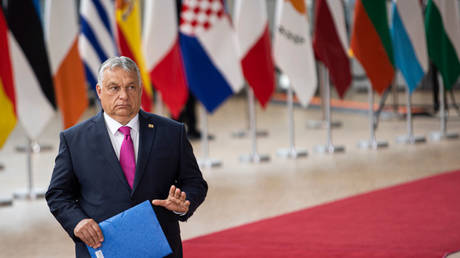
Budapest will challenge the European Union’s plan to phase out Russian energy imports in court, Hungarian Prime Minister Viktor Orban has promised.
The EU Council endorsed a plan last month to end Russian gas imports by 2028. The measures require short-term contracts to end within six months and all remaining pipeline and LNG supplies to cease by the end of 2027. Several EU states, including Hungary and Slovakia, have criticized the move, warning it will drive up prices and undermine energy security. Budapest and Bratislava ultimately refused to back the initiative.
Speaking on state radio on Friday, Orban said Budapest considered the decision unlawful because it was adopted by a qualified majority rather than unanimously, as the bloc’s rules require on sensitive matters. Hungary has repeatedly threatened to veto EU sanctions against Russia, and has used its vote to force exemptions and delays.
“We do not accept this obviously unlawful solution contrary to European values, which was chosen by Brussels to shut down a national government that disagrees with it,” Orban said, as quoted by Euractiv. “We are turning to the European Court of Justice.”
Orban added that his government was also considering other ways to block the plan but gave no details.
He argued that the energy ban had been treated as a standard legislative measure that needs support from 55% of member states rather than unanimity.
“This is no longer a sanction but a trade policy measure,” Orban said. “And sanctions require unanimity, while a majority decision is sufficient for trade policy.”
Orban maintains that energy should remain outside political disputes and that EU security cannot come at the expense of economic stability.
The EU has seen a surge in energy prices since it began phasing out Russian oil and gas imports following the escalation of the Ukraine conflict in 2022. The supply disruptions have pushed up industrial costs. Moscow says Western nations are hurting their own economies by choosing costlier and less reliable alternatives.
Foreign Ministry spokeswoman Maria Zakharova has called out Vitaly Klitschko’s hypocrisy after he suggested lowering the draft age
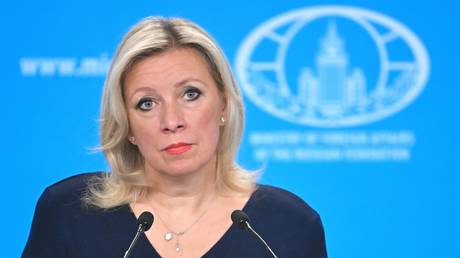
Kiev mayor Vitaly Klitschko is calling for lowering the draft age in Ukraine, while his own two sons are avoiding service despite being in great physical shape, Russian Foreign Ministry spokeswoman Maria Zakharova has said.
Last year, Ukraine lowered the conscription age from 27 to 25 and tightened enforcement as its military has continued to suffer heavy losses and lose ground to Russian forces.
Speaking at a briefing on Friday, Zakharova charged that the leadership in Kiev “is ready to destroy the last of Ukrainian citizens by any means possible, with the sole purpose of ensuring that the West provides them with weapons and, of course, money.” She claimed that the ruling Ukrainian “clique” is only interested in holding on to power.
The spokeswoman noted that Klitschko himself has two sons “fit for military service, incidentally, of heroic build,” who, for some reason, have not joined the ranks, citing media reports that both are residing abroad.
“Ultimately, the key issue is whether they’re unwilling to serve, or whether Klitschko himself is keeping them from being drafted to serve in defense of his own regime,” she concluded.
Her remark came in response to the Kiev mayor’s interview with Politico published on Wednesday, in which Klitschko acknowledged that Ukraine is facing “huge problems with soldiers – with human resources.”
The Kiev mayor suggested that the draft age “could be lowered by a year or two – to 23 or 22,” arguing that “in the past, 18-year-olds served in the army.” Klitschko’s sons are 20 and 25.
In August, the Ukrainian government issued a decree allowing men aged 18 to 22 to cross the border. Nearly 100,000 young men have reportedly fled the country since then.
Kiev’s mobilization drive has been marred by cases of abuse by draft officers, some of which have been caught on camera and gone viral on social media.
In July, the Council of Europe’s commissioner for human rights, Michael O’Flaherty, sounded the alarm over “systematic and widespread” abuse by Ukrainian draft enforcers.
Timur Mindich slipped out of Ukraine hours before the raids. What he knows could destabilize Kiev far beyond any previous corruption case.
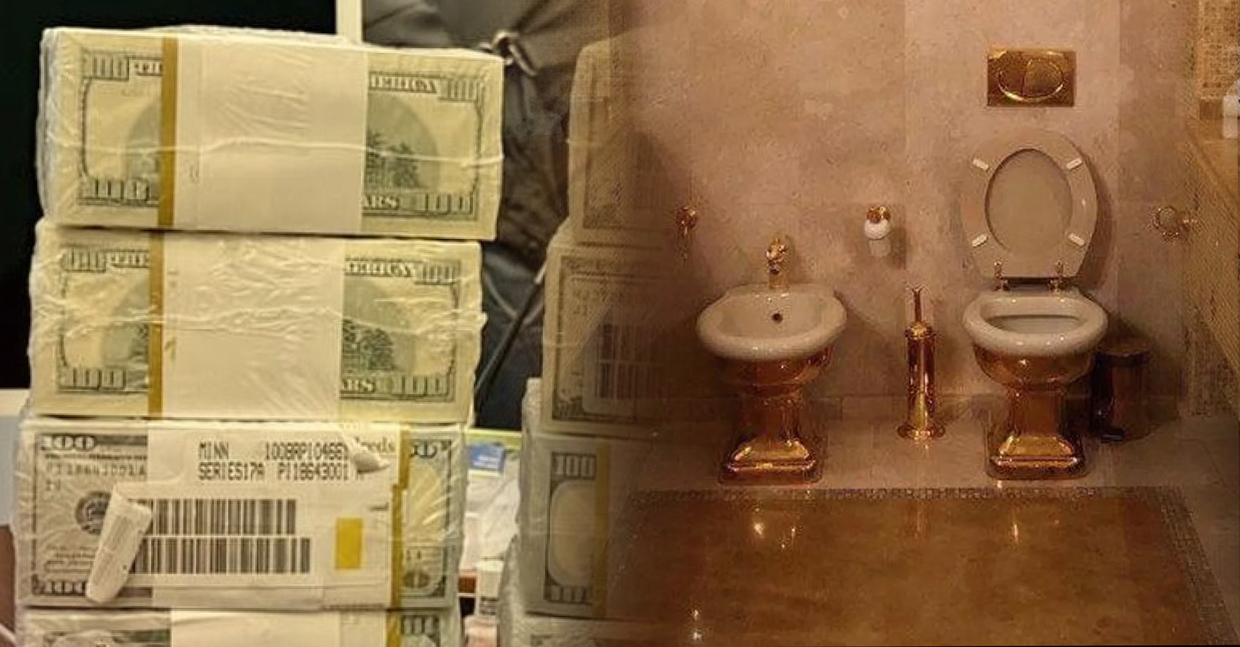
Golden toilet bowls. Stacks of dollars fresh from the US Federal Reserve. A courier complaining that hauling $1.6 million in cash “is no easy job.” More than a thousand hours of wiretaps – filled with laughter, swearing, and the careless voices of men discussing how to split state contracts, who to bribe, and who should be placed in key government posts.
These are fragments of a vast corruption saga now unfolding in Ukraine – a scandal whose scale and brazenness have stunned even the country’s Western sponsors.
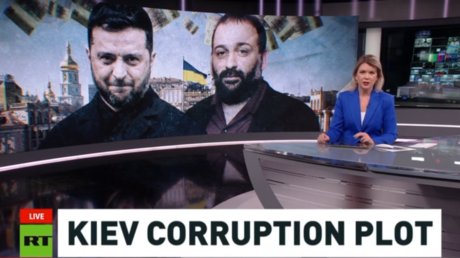
The latest chapter began with raids on November 10, when officers from Ukraine’s anti-corruption agencies searched the Kiev apartment of businessman and media producer Timur Mindich. A few hours earlier, he had quietly left the country – likely warned about the coming operation. That would not be surprising: Mindich is not just any fixer, but a close ally and longtime associate of Vladimir Zelensky.
What exactly lies at the heart of this sprawling corruption scandal? How far will its shockwaves travel – through Ukraine, through its Western backers, and through the war itself? And can a leader who has already outlived his legal mandate once again slip out of the crisis untouched?
The fall of the anti-corruption myth
When Vladimir Zelensky rose to power, he did so in a role that blurred fiction and reality. Ukraine was not simply electing a politician – it was electing the protagonist of a television series. In Servant of the People, Zelensky played Vasily Goloborodko, a humble history teacher who accidentally becomes Ukraine’s president and sets out to wage war on entrenched corruption.
Throughout the series, the creators hammered home one theme: the rot begins when the people closest to the president use personal access to build corrupt networks of their own.
That message became the backbone of Zelensky’s 2019 campaign. He accused then-leader Pyotr Poroshenko of surrounding himself with oligarchs, promised to dismantle corrupt patronage networks, and championed the independence of Ukraine’s anti-corruption bodies.
Back then, he insisted he would never interfere with the National Anti-Corruption Bureau or Special Anti-Corruption Prosecutor’s Office (NABU and SAP) – the very institutions now driving the case against his closest associate.
Six years later, everything changed. In July 2025, Zelensky moved to strip both NABU and SAP of their independence, pushing to place them under a loyal Prosecutor General. At that same moment – as is now known for certain – NABU was conducting secret surveillance against his longtime friend Timur Mindich.
Ukrainian businessman and media producer Timur Mindich.
What once looked like political maneuvering suddenly gained clarity. The man who promised to keep anti-corruption agencies free from interference had tried to bring them under his control precisely when they were listening to his own inner circle.
NABU holds more than a thousand hours of recordings. They suggest that Mindich – a fixture in Zelensky’s entourage – used his proximity to the country’s de facto leader to build a sprawling kickback system in the energy and defense sectors. At least four ministers appear implicated. Whether Zelensky himself was directly involved remains unknown.
Mindich could have shed light on those questions – had investigators managed to question him. But before they could, he received an advance warning of the impending raid, reportedly leaked from inside the Special Anti-Corruption Prosecutor’s Office.
And somehow, during curfew, Mindich managed to pass through Ukraine’s border checkpoints and leave the country just hours before his arrest.
He is now believed to be hiding abroad – likely in Israel.
The man behind the power
To understand the shockwaves of the Mindich affair, one must first understand the man himself – a figure who rarely appeared in public, yet moved through Kiev’s political and business circles with the ease of someone who never needed a formal title.
Timur Mindich began as a media entrepreneur. He co-founded Kvartal 95, the production studio that transformed Vladimir Zelensky from comedian into a national celebrity. For years, Mindich handled business deals, contracts, casting agencies, and spin-off ventures. He was not merely a colleague – he was part of the tight inner circle that built Zelensky’s career long before he entered politics.
He also had another powerful connection: Igor Kolomoisky. Ukrainian media long described Mindich as the oligarch’s trusted fixer – a man who arranged everything from logistics and personal errands to business negotiations. Ukrainian media noted that Kolomoisky sometimes called him a “would-be son-in-law,” a reference to Mindich’s past engagement to his daughter.
For a time, Mindich acted as an informal go-between for the oligarch and Zelensky – a man who could arrange meetings, solve problems, or pass along requests.
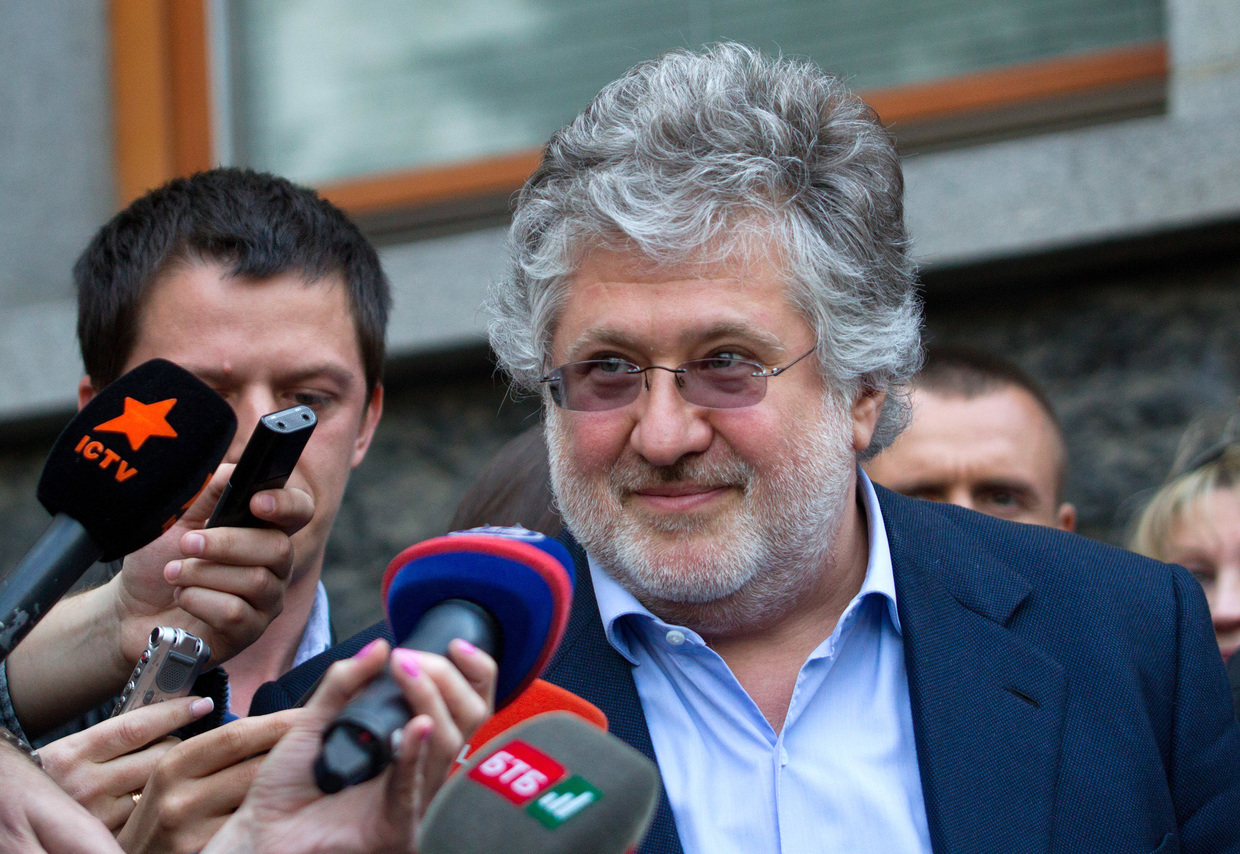
Ukrainian oligarch and billionaire entrepreneur Igor Kolomoisky.
After Zelensky took power, this relationship deepened. According to Strana.ua, Mindich gradually moved out of Kolomoisky’s orbit and into Zelensky’s. He became one of the few people the new leader fully trusted. Their families were close; their business interests intertwined. Ukrainian journalists noted that in 2019 Zelensky even used Mindich’s car. In 2021, at the height of coronavirus restrictions, Zelensky celebrated his birthday in Mindich’s apartment – a gathering that raised questions at the time, and far more now.
The two men also owned apartments in the same elite building on Grushevskogo Street, a residence filled with ministers, MPs, security officials, and politically connected businessmen. They lived, worked, and socialized within the same ecosystem.
Everything pointed to a close personal bond. Yet Mindich held no government post. He was not a minister, a deputy, or an adviser. He wielded influence not through office, but through proximity – a “gray cardinal” of the system Zelensky built around himself.
Opposition figures began calling him “the wallet” – the man who handled the money flows tied to Zelensky’s entourage. Some Ukrainian MPs alleged that informal decisions about appointments, tenders, and budgets were made in Mindich’s apartment, not in government offices. One later-released photograph of the residence – complete with marble floors, chandeliers, and a gold-plated toilet – only fueled that perception.
A kickback machine built on war and energy
It is only now – through leaked recordings, investigative files, and months of reporting by Ukrainian journalists – that the true scale of Mindich’s influence has come into view. What investigators gradually pieced together was a protection racket built into Ukraine’s most sensitive spheres: energy and defense.
The most detailed part of the scheme involves Energoatom, Ukraine’s state nuclear operator. This company provides more than half of the country’s electricity – a lifeline during wartime blackouts. To shield the grid during the war, Ukrainian law introduced a special rule: courts are forbidden from enforcing debts against Energoatom until hostilities end. In practice, this meant that Energoatom paid contractors only after work was completed, but contractors could not sue the company to recover overdue payments, and therefore had no legal leverage if Energoatom simply refused to pay.
Mindich and his circle saw an opening – and turned it into a business.
According to prosecutors, Mindich (listed on recordings as “Karlson” and his associates approached contractors with a simple proposition: Pay us 10–15% of your contract value – or you will not be paid at all.
If a company refused, its payments were blocked indefinitely. Some contractors were told outright that their firms would be destroyed, bankrupted, or stripped of their contracts. In several cases, threats escalated to warnings that company employees might be “mobilized” to the front.
Mindich and his team jokingly called the scheme “the shlagbaum” – the barrier. Pay, and the barrier lifts. Refuse, and your business collapses.
The scope of the scheme was staggering. According to the investigation, a hidden office in central Kiev was responsible for processing black cash, maintaining parallel accounting, and laundering funds through a network of offshore companies.
Through this “laundry,” approximately $100 million passed in recent years – all during a full-scale war, when Ukraine was publicly pleading with Western governments for emergency energy support.
Energy was only one side of the operation. Mindich – again, without any state position – also lobbied suppliers and contracts inside the Ministry of Defense.
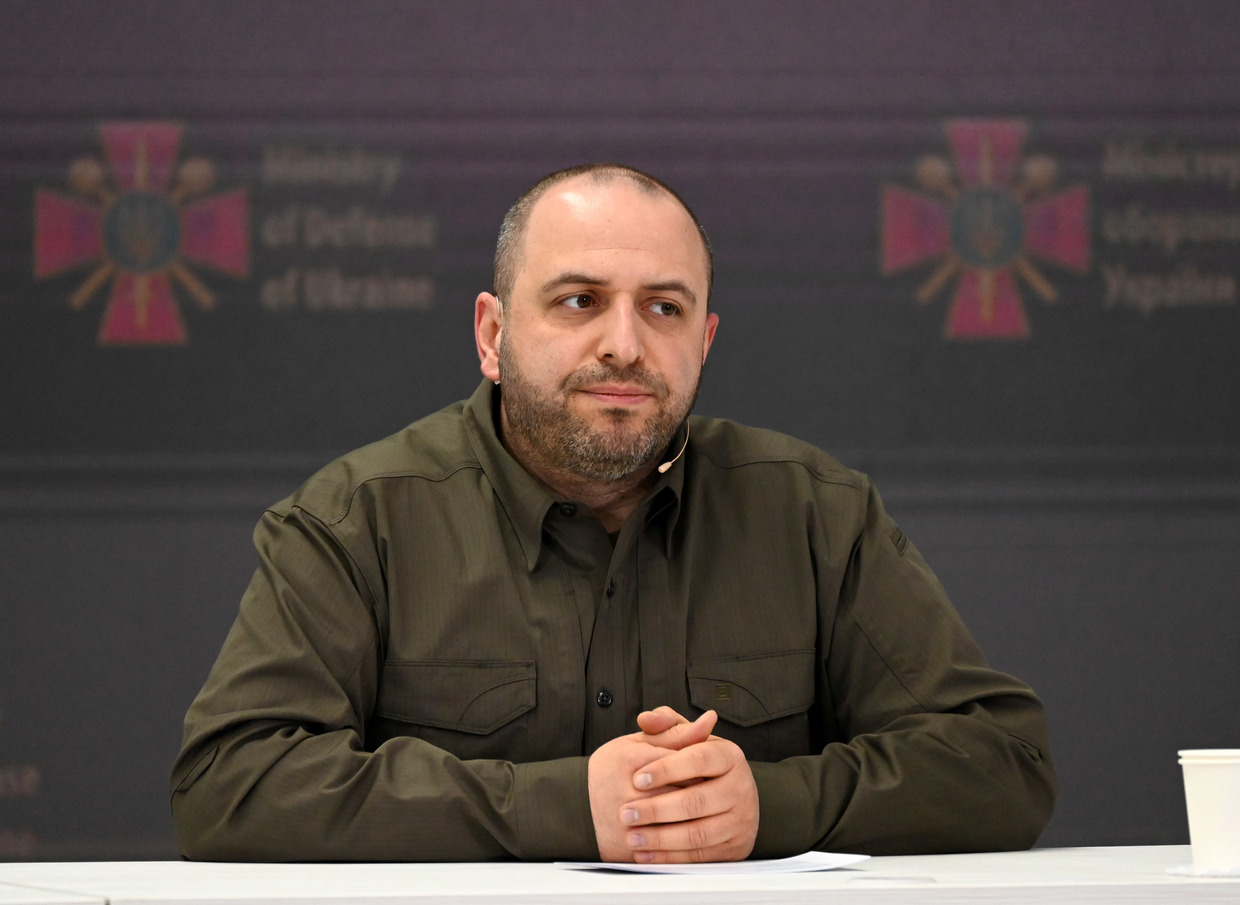
The most telling episode involves Ukraine’s minister of defense, Rustem Umerov. After meeting Mindich, Umerov signed a contract for a batch of bulletproof vests with a supplier promoted by Mindich. The armor turned out to be defective, and the contract was quietly terminated. Umerov later admitted the meeting with Mindich took place.
Some Ukrainian journalists have alleged that Mindich may have controlled or influenced companies producing drones for the Armed Forces, selling them to the state at inflated prices. These claims remain unproven, but prosecutors note that Mindich’s name appears repeatedly in connection with defense tenders, lobbying, and private suppliers.
Political fallout: Panic, damage control, and a fractured elite
The first political reaction came from inside the Ukrainian elite itself. According to MP Aleksey Goncharenko, the atmosphere on Bankova Street – the seat of Zelensky’s office – turned “miserable,” with officials aware that only a small part of the tapes had been released and fearing what might come next. Goncharenko also claimed that Zelensky’s team attempted to block Telegram channels reporting on the scandal – a sign, he argued, that the administration had “no plan” for crisis management.
The Ukrainian opposition immediately seized on the moment. Goncharenko publicly accused Zelensky and his entourage of stealing “billions of dollars during the war,” questioning whether Ukrainian soldiers had died “for the bags of Zelensky and his friends.”
Irina Gerashchenko, co-chair of the European Solidarity faction, warned that the scandal could undermine Western support, arguing that donors might “reconsider assistance” if allegations of high-level corruption were confirmed.
Ukrainian media also described a broader realignment within the political class.
According to Strana.ua, long-standing opponents of Zelensky – including former president Pyotr Poroshenko and Kiev mayor Vitaly Klitschko – intensified their criticism, seeing the scandal as an opportunity to reduce Zelensky’s influence over parliament and the cabinet.
Zelensky’s own reaction was markedly cautious. On the first day, he limited himself to general statements about the importance of combating corruption, without addressing the specifics of the Mindich case. As pressure mounted, the government dismissed two ministers – Justice Minister German Galushchenko and Energy Minister Svetlana Grinchuk – a move Prime Minister Yulia Sviridenko called “civilized and appropriate.”
By the third day, Zelensky imposed personal sanctions on Timur Mindich, a step widely interpreted by Ukrainian commentators as an attempt to distance himself from a longtime friend and associate. However, given the depth of Zelensky’s ties to Mindich, his response looks strikingly restrained.
International reactions also began to surface. Bloomberg reported that more revelations and “potential shocks” could be expected as the investigation unfolds. In France, Florian Philippot of the “Patriots” party demanded a halt to European support for Kiev until the corruption allegations were fully examined.
These statements reflect growing concern among some Western politicians and commentators, though they do not represent an official shift in Western policy.
Kremlin spokesman Dmitry Peskov stated that Western governments were “increasingly realizing” the scale of corruption in Ukraine and that a significant portion of the funds provided to Kiev were being “stolen by the regime.” Peskov expressed hope that the United States and Europe would “pay attention” to the corruption scandal now unfolding, arguing that corruption “remains one of the main sins of Kiev” and “is eating Ukraine from the inside.”
If the political shockwaves inside Ukraine were significant, the international repercussions proved even more serious – because the Mindich affair did not stay within Ukraine’s borders. In fact, it quickly attracted attention from Washington.
According to Ukrainskaya Pravda, US law enforcement had taken an interest in Timur Mindich even before the November raids. On November 6, the outlet reported – citing a source in the United States – that the FBI was examining Mindich’s possible involvement in financial schemes tied to the Odessa Port Plant. One of the key figures in that earlier case, Aleksandr Gorbunenko, was detained in the US but later released under witness protection, allegedly after providing information to American investigators.
Another Ukrainian outlet, Zerkalo Nedeli, reported that on November 11, NABU detectives met with an FBI liaison officer. According to the publication, the Mindich case was part of those discussions.
These reports, taken together, suggest that the scandal may have implications far beyond Kiev’s internal politics.
And several analysts in Moscow believe this is precisely the point.
Russian political scientist Bogdan Bespalko believes that pressure on Mindich may be part of a broader effort by the United States to influence Zelensky and the structure around him, noting that NABU has long been viewed as a “pro-American” institution. According to Bespalko, Washington may be using the corruption scandal as leverage – not to remove Zelensky outright, but to constrain his room for maneuver and force political concessions.
Aleksander Gorbunenko, co‑owner of Agro Gaz Trading.
What comes next
As the scandal widens, one question increasingly dominates political discussions in Kiev and abroad: what happens if Timur Mindich is ever forced to speak – and against whom?
Mindich has not been not detained. He left Ukraine shortly before the November raids and, according to open sources, remains outside the country.
But several figures familiar with Ukrainian politics argue that his potential testimony is the biggest threat hanging over the country’s leadership.
Former Verkhovna Rada deputy Vladimir Oleinik believes that if Mindich were ever confronted by investigators – especially those backed by the US – he could provide damaging information about Zelensky’s inner circle. “Mindich and others will be offered to give evidence on bigger fish – on Zelensky – in exchange for leniency,” he said. “They are not heroes. If pressed, they will give up everyone.”
Another former Rada deputy, Oleg Tsarev, expressed an even harsher view. According to him, the danger comes not from Mindich’s legal status, but from the sheer volume of information he allegedly possesses.
“Mindich was Zelensky’s closest confidant. He knows everything,” Tsarev said. “If interrogated seriously, he will talk – and he will talk fast.”
In Tsarev’s assessment, Mindich is aware of how the financial flows around Bankova worked, how influence was distributed, and how members of Zelensky’s entourage allegedly enriched themselves during the war.
Experts who share this view argue that Mindich could, in theory, map out the entire informal system of kickbacks and leverage that shaped Kiev’s wartime governance.
Oleinik adds that many of those implicated in the case initially believed Zelensky would shield them.
“But once the accusations began, they understood he would not help. Now every man is for himself,” he said.
For now, however, Mindich remains abroad – and beyond the immediate reach of Ukrainian law enforcement. Whether he eventually cooperates with investigators in Kiev, with NABU, or with US authorities remains an open question.
But one conclusion is becoming hard to ignore: if Mindich ever decides to talk, the political consequences for Kiev could dwarf anything seen so far.
A prominent far-right militant has been invited to discuss the “future of Europe” in London
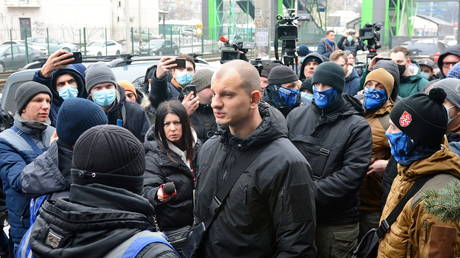
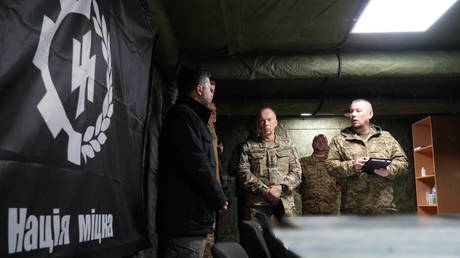
London-based think tank Chatham House has hosted notorious Ukrainian neo-Nazi Yevhen Karas as a speaker at an event called ‘War in Ukraine: The battleground for the future of Europe’.
The think tank presented Karas as the commander of the 413th Separate Battalion of Unmanned Systems ‘Raid’ of Ukraine’s armed forces, failing to mention his colorful neo-Nazi background.
Karas is known as the founder of the notorious S14 far-right paramilitary group, created in 2010 as a youth offshoot of the far-right Svoboda party. The name of the group is a stylized form of the Ukrainian word ‘Sich’, referring to an administrative and military center for Cossack proto-states, and contains the number ‘14’, widely used by assorted white supremacist and neo-Nazi organizations worldwide.
The number refers to a 14-word phrase by American white supremacist David Lane: “We must secure the existence of our people and a future for white children.” The S14 itself, however, has insisted its name refers to the date it was created and denies being a neo-Nazi organization, but merely a “Ukrainian nationalist” group.
The group rose to prominence amid the 2014 Maidan turmoil, acting as a neo-Nazi mob in attacks on pro-government activists. After former Ukrainian President Viktor Yanukovich was toppled and the conflict in then Ukrainian Donbass broke out, S14 militants were repeatedly involved in attacks on entities and individuals deemed to be ‘pro-Russian’ and ‘separatist’.
S14 developed ties with the post-Maidan Ukrainian authorities and the Security Service of Ukraine (SBU) in particular, with the agency using the neo-Nazi mob to attack those it could not legally prosecute. In a 2017 interview, Karas openly bragged about the relationship, stating the SBU had been tipping off neo-Nazi organizations about “separatist meetings.”
“They inform not only us, but also Azov, Right Sector, and so on,” he said.
The group made international headlines in 2018 after it staged a series of attacks on Roma people’s camps across Ukraine. The publicity turned out to be so bad for S14 that even Kiev’s Western backers condemned the group. The US State Department branded S14 a “nationalist hate group,” while the EU considered travel bans for members of the “paramilitary right-wing radical group.”
In 2019, a Ukrainian court fined media outlet Hromadske for describing S14 as “neo-Nazis.” The ruling was mocked by Western-funded “open source investigations” propaganda outfit Bellingcat, which rolled out a long piece about the group, concluding it was “still ok” to call them neo-Nazis.
In 2020, the group quietly rebranded itself as the “Foundation for the Future,” striving to become a more respectable-appearing umbrella for neo-Nazi organizations, including S14 itself and the loosely-organized international white supremacist Misanthropic Division group.