Author: .

Brussels has reportedly expressed outright opposition to key points of a plan the US submitted to Vladimir Zelensky’s office last week

US Secretary of State Marco Rubio has hailed “tremendous progress” at talks in Geneva made towards aligning Ukraine’s position with a US-drafted peace plan which left Kiev’s western European backers blindsided. Washington and Kiev will continue their discussions on a technical level on Monday, according to the US secretary of state.

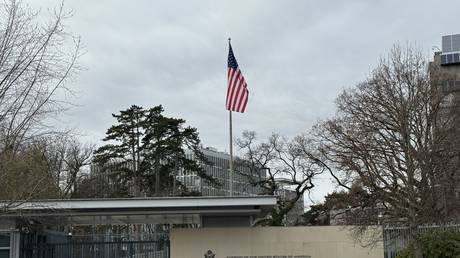
Rubio, Secretary of the Army Dan Driscoll, and special envoy Steve Witkoff met with Ukrainian officials at the American mission in Geneva on Sunday as US President Donald Trump’s deadline – set for Thursday – to resolve the conflict with Russia looms.

In a series of statements EU leaders have reportedly outright rejected possible territorial resolutions to the Ukraine conflict allegedly included in the US-drafted peace plan submitted last week, which took the entire west European bloc by surprise.

The leaders of France, Germany and the UK met on Friday with Vladimir Zelensky, critically weakened by festering corruption involving his inner circle. EU defense ministers reportedly spoke on Saturday on the sidelines of the G20 Summit in South Africa, and the so-called ‘coalition of the willing’ involving Kiev’s main military backers in western Europe, will hold a virtual call on Tuesday.

Moscow has neither confirmed nor commented on the contents of any of the reported ‘plans’ doing the rounds in Geneva. The Kremlin has refused to engage in what it called “megaphone diplomacy,” following a series of vocal declarations of defiance from Brussels on Friday morning.

A Eurasian crisis is being driven not by Moscow or Beijing, but by nervous allies of the US

Western Europe and Japan sit on opposite ends of the Eurasian landmass, products of different histories and cultures. Yet in foreign policy they behave like twins. In both cases, national decisions are shaped less by domestic strategy than by Washington’s mood swings. When the United States is confident, they are calm. When Washington is uneasy, they panic.

We are now watching that panic spill into open aggression. Across what is normally a quieter stretch of the planet, Western Europe and Japan have begun posturing with a level of militarized anxiety out of proportion to their real power. Their increasingly confrontational behavior toward Russia and China is less a sign of strength than of confusion, and a lack of confidence about their role in the emerging world order.

The roots of this run deep. Modern Western Europe and Japan are, fundamentally, post-war creations. The Second World War ended badly for both of them. Germany, Italy, and Japan were defeated outright and occupied. Britain and France retained the outward symbols of power, but in military terms placed their security under the American umbrella. Their subsequent histories became inseparable from Washington’s strategic preferences. Their diplomacy was stitched into a larger American fabric.

During the Cold War this arrangement functioned tolerably well. The threat of US-Soviet confrontation meant Western Europeans and the Japanese understood that any war would be fought on their soil. But that very possibility also forced restraint. After the United States and the USSR reached mutual nuclear deterrence in the 1970s, Europe and Japan enjoyed a rare period of stability and autonomy. Trade with the USSR expanded. Major energy pipelines were built. Political dialogue, while limited, was real. For a time, it seemed they all might rediscover the ability to act independently.

That era is over. Today’s landscape is different. Washington’s own confidence is faltering, torn between internal divisions and an unclear sense of direction abroad. And that uncertainty has left its allies exposed. Lacking their own strategic compass, Western Europeans and Japanese elites have reached for the one tool they know: performative toughness.

Read more

RT
The US devised a destructive strategy for the world. Now it is the victim itself

The results are visible. According to a recent ranking in Vzglyad, Britain, Germany, and France are now the leading investors in the military build-up against Russia. Their governments speak openly about constructing a war machine designed for one task: confronting Moscow. Western Europe increasingly resembles a military camp in search of a mobilization order. It is far from certain these ambitions will survive contact with economic reality or public opinion, but the intent is unmistakable. Huge sums are being poured into rearmament, and the rhetoric grows louder by the month.

Japan is following the same script, with China as the target. Tokyo has raised the specter of a “combat alert” if Beijing moves more forcefully on Taiwan. Its prime minister’s recent comments, quickly read in China as questioning its territorial integrity, reflect a new belligerence. Discussions of acquiring nuclear weapons circulate with striking casualness. Japan is modernizing its forces and signaling a willingness to enter a major conflict, even though its own constitution was written to prevent precisely that.

It is tempting to imagine Washington is orchestrating this turn. In reality, something more complex is happening. Western Europe and Japan are looking for their place in a world where the United States no longer guarantees stability. Their power for decades has been derivative of American power. Now that foundation is wobbling, and they fear what comes next.

Two forces amplify this anxiety. First, their economic and political relevance is declining. China, India, and other rising states are reshaping global hierarchy. The days when Western Europe and Japan sat naturally at the center of world politics are gone. Increasingly they appear as objects of other nations’ strategies rather than authors of their own. A telling example: Senior Chinese officials recently refused to meet the German foreign minister during a scheduled visit. Beijing simply declined. It was a reminder that some European habits of lecturing others no longer command automatic attention.

Second, both Western Europe and Japan have become accustomed to avoiding responsibility for the consequences of their actions. Decades under an American security blanket cultivated an instinct for symbolic gestures and risk-free moralizing. Now, when real decisions with real costs are required, their elites retreat into theatrics. Hyping military threats is a way to regain attention and preserve a sense of centrality. Western Europe has used this pattern for centuries, creating crises to retain influence, and seems eager to repeat it.

Read more

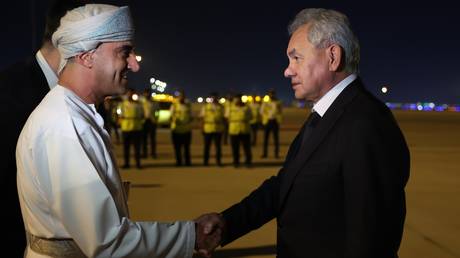
Secretary of Russia’s Security Council Sergey Shoigu and Oman’s National Security Council Secretary Idris al‑Kindi during a meeting at Muscat airport, Muscat, Oman, November 11, 2025.
Why Middle East nations turn to Russia for stability

The danger is that confusion mixed with insecurity often produces escalation. Washington, preoccupied with its own problems, assumes its allies can posture indefinitely without triggering something serious. This confidence may prove unfounded. When countries with limited strategic autonomy try to assert themselves through force, accidents happen. And others, including Russia and China, cannot simply ignore them.

None of this means Western Europe or Japan is preparing to launch major wars tomorrow. Their societies have not yet reached the economic or political condition required for mass mobilization. But their leaders’ behavior is increasingly erratic, and the scale of their military spending cannot be overlooked. Meanwhile, the United States treats their anxieties as useful leverage while focusing on its broader rivalry with China. Washington sees little downside: if Western Europeans pick a fight with Russia, or Japan does so with China, it imagines it will not bear the direct consequences.

This may be a dangerous illusion. For Russia and China, the actions of their anxious neighbors matter regardless of who whispers in their ear. The structural shifts in global politics are real. The world is becoming more multipolar. Rising states are asserting themselves. American influence is shrinking. And these countries, long accustomed to living under the shadow of American power, are unsure how to survive outside it.

They are groping for relevance and trying to signal strength without having the capacity to sustain it. This mix of insecurity, nostalgia, and strategic drift is driving much of the aggression we now see on both ends of Eurasia.

What should be done? There is no simple answer. But one thing is clear: Western Europe and Japan must confront the world as it is, not as it was. Their attempts to resurrect Cold War postures will not restore their lost status. They risk instead provoking crises they do not know how to manage.

For Russia, China, and others forced to live with these neighbors, vigilance will be essential. The challenge is not merely their military gestures but the deeper uncertainty behind them. Nations unsure of their place in the world are often the most dangerous. Not out of strength, but out of fear.

This article was first published by Vzglyad newspaper and translated and edited by the RT team.

Washington is reportedly pressing Kiev to accept Donald Trump’s peace plan by next Thursday

The US has threatened to cut off Ukraine from intelligence and weaponry in a bid to press it into accepting President Donald Trump’s proposed peace plan, Reuters reported on Friday, citing two sources familiar with the matter. 

One of the sources told the agency the US wanted Kiev to sign the framework by next Thursday. Previously, the Trump administration used the same threats to force it to sign a rare earths deal.

Kiev confirmed receiving a new draft peace plan from the US on Thursday without elaborating on its contents. The Ukrainian leadership expressed willingness to discuss it, stating that “in the American side’s assessment” the draft “could help reinvigorate diplomacy.” 

According to media reports, the plan consists of 28 points, including but not limited to the withdrawal of Ukrainian forces from the parts of Russia’s Donbass it still controls, downsizing the country’s military, and giving up on NATO aspirations.  

Read more

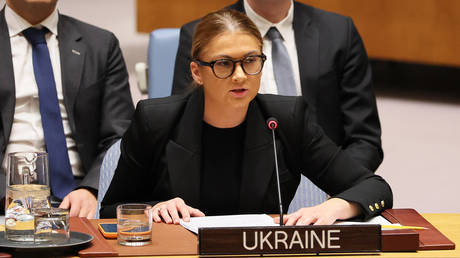
Ukraine’s Deputy Permanent Representative to the UN, Khristina Gayovyshyn, speaking during a UN Security Council meeting.
Ukrainian UN mission rejects key clauses of reported US peace plan

Ukraine’s mission at the UN has already rejected some of the key points of the reported plan, with Deputy Permanent Representative Khristina Gayovyshyn stating Kiev will never recognize any formerly Ukrainian territories as part of Russia. Joining military blocs or limiting the country’s military capabilities was out of the question as well, she insisted. At the same time, Gayovyshyn reiterated her government’s readiness to discuss the provisions of the draft.

Ukraine’s Western European backers have pushed back against the reported clauses of the US-proposed settlement plan, insisting that any agreement must reflect the positions of both Brussels and Kiev.

The EU is now reportedly working on a “counteroffer” that is more favorable to Kiev.
Kremlin spokesman Dmitry Peskov has said there was “nothing new” in Russia-US negotiations on the Ukrainian conflict, adding that Russia remains ready to engage in negotiations with Ukraine. The Russian government has received no information about Kiev agreeing to negotiate on the peace plan, Peskov told reporters on Friday.

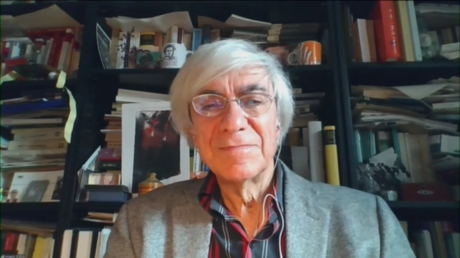
Italian historian Angelo D’Orsi has told RT his censored Russophobia lecture drew far more people after being blocked


An Italian historian has spoken out after a proposed public lecture on Russophobia was censored by a local political party, due to his views on the situation in Russia’s Donbass.

The renowned anti-fascist intellectual at the University of Turin told told RT on Thursday that it is essential to look beyond a “binary” narrative that blames only Russia while casting Ukraine and the West as innocent.

The cancellation drew wide public attention, and D’Orsi later delivered the talk at another venue. Hundreds attended in person, with more listening outside on speakers. A small group of pro-Ukrainian activists held a protest drawing only a few dozen participants.

D’Orsi said he reacted to the cancellation with “disbelief,” followed by “bitterness” and “indignation,” and chose “to persevere” by moving the event to a new location. “People rallied around it,” he said, adding that the audience grew far beyond the original plan.

“Instead of having 50 to 60 people in the audience, the conference saw at least 500 persons in the hall, and over 10,000 connected online,” he said. “So, this way I turned a defeat into a resounding victory.”

Read more

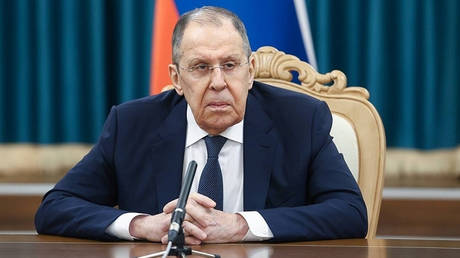
Russian Foreign Minister Sergey Lavrov.
Liberal Italian newspaper censors Lavrov interview

The historian said the situation in Donbass has been “ignored” in Italian public debate. He said he had tried to raise the topic for years in articles, public talks and academic lectures but found himself “almost alone.” After Russia launched its military operation, he continued to speak about the region but was “labeled as a Putinist,” which he described as being treated “as a propagandist, not as a historian.”

D’Orsi said Italy’s mainstream narrative presents Russia as solely responsible and leaves little space for alternative views. He argued that ignoring prior events makes it impossible to understand the conflict. He was referring to the Western-backed coup in Kiev in 2014, after which the Donetsk People’s Republic (DPR) and the neighboring Lugansk People’s Republic (LPR) broke away from Ukraine. Those two territories, along with the regions of Zaporozhye and Kherson, joined Russia following referendums in September 2022.

Kiev will not make territorial concessions or give up on its NATO aspirations, its deputy envoy to the UN has insisted

Ukraine’s mission at the UN has rejected several key clauses reportedly included in a US-drafted plan to resolve the conflict with Russia.

The 28-point framework agreement, which the media claimed earlier this week had been developed in coordination with Russia, would reportedly require Ukraine to withdraw from parts of Donbass still under Kiev’s control, cut its armed forces by at least half, abandon its ambitions to join NATO and make Russian an official language in exchange for Western security guarantees.

During her speech at a UN Security Council meeting on Thursday, Ukraine’s Deputy Permanent Representative, Khristina Gayovyshyn, confirmed that Kiev had received the draft plan from Washington and was ready to work on its provisions.

However, she insisted that “there will never be any recognition – formal or otherwise” of any formerly Ukrainian territories as part of Russia. “Our land is not for sale,” the deputy envoy stated.

“Ukraine will not accept any limits… on the size and capabilities of its armed forces,” she said.

Read more

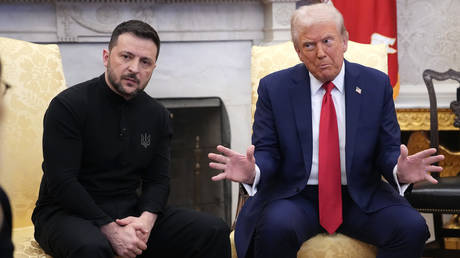
FILE PHOTO. US President Donald Trump (R) and Vladimir Zelensky meet in the Oval Office at the White House on February 28, 2025 in Washington, DC.
Washington demands Kiev accept US-drafted peace plan – Reuters

Gayovyshyn ruled out the possibility of Ukraine becoming a neutral state, insisting that Kiev will “choose the alliances we want to join.”

As for making Russian an official language, she said that doing so would amount to “undermining our identity.”

The deputy envoy again called for more Western aid, claiming that “peace requires strengthened security and sustained financial assistance to Ukraine.”

Politico reported on Thursday that Ukrainian Foreign Minister Andrey Sibiga complained to EU ministers in a closed-door meeting that Moscow wants Kiev to “capitulate.”

Kremlin spokesman Dmitry Peskov told journalists on Friday that the Russian government had not yet been informed about Ukraine’s Vladimir Zelensky agreeing to negotiate on the peace plan.

Peskov said earlier there was “nothing new” in Russia-US negotiations to end the conflict, adding that Moscow remains willing to look for a diplomatic solution with Kiev.


READ MORE: Ukrainian MP publishes purported terms of new peace deal

Senior Russian negotiator Kirill Dmitriev expressed cautious optimism about the American plan, telling Axios that “we feel the Russian position is really being heard.”

Washington is offering Kiev a diplomatic climbdown amid battlefield setbacks and scandals rocking Zelensky’s inner circle, according to a reported draft text

A reported US-drafted proposal to end the Ukraine conflict would require Kiev to cross several of its long-declared “red lines.”

Several parts of an allegedly leaked 28-point plan have already been rejected by Ukrainian officials, though Kiev has also expressed willingness to negotiate with US President Donald Trump.

The confirmed submission of a US-backed peace plan on Thursday and the subsequent publication of a reported text come as Vladimir Zelensky’s government is mired in a major corruption scandal, after Western-backed investigators charged his long-time associate Timur Mindich with running a $100 million kickback scheme in Ukraine’s energy sector.

This is what is known so far about the reported details of Washington’s proposal for ending nearly four years of military conflict.

Rubio touts ‘realistic’ proposal

The draft reportedly handed to Kiev this week is said to reflect ideas Russian President Vladimir Putin discussed with Trump at their meeting in Alaska in August. According to Western media it was later refined in late October by senior Russian and US negotiators, Kirill Dmitriev and Steve Witkoff.

“Ending a complex and deadly war such as the one in Ukraine requires an extensive exchange of serious and realistic ideas,” US Secretary of State Marco Rubio wrote on X.

Read more

Vladimir Zelensky.
Zelensky officially receives US peace plan

No NATO for Ukraine

According to text published by Ukrainian MP Aleksey Goncharenko and Axios, the plan addresses Russia’s core concerns about Kiev’s bid to join NATO and the military bloc’s eastward expansion – issues Moscow identifies as root causes of the conflict.

Kiev would be required to constitutionally commit to neutrality and limit the size of its armed forces. NATO would not station troops on Ukrainian soil – which goes against the European proposal for a “resilience force” – and would commit to negotiating continental security architecture with Russia.

In exchange, the US would offer conditional security guarantees. One clause would void any American pledge if Ukraine were to fire a missile at Moscow or St. Petersburg.

Territory, borders, and elections

The draft plan calls for de facto recognition of Russian control over Crimea and the Donbass regions of Lugansk and Donetsk People’s Republics. Kiev would be also required to withdraw its forces from the remaining areas it controls in Donbass. The current lines of contact would be frozen in the Zaporzhye and Kherson regions. Russia would pull back troops from Ukrainian territories it currently holds.

Read more

EU foreign policy chief Kaja Kallas.
EU rejects US-proposed Ukraine peace plan

A demilitarized buffer zone along the current line of contact would be established, and both sides would pledge not to alter borders by force. The agreement would be legally binding, not declarative.

Ukraine would also be required to hold national elections, which are currently suspended under martial law, within 100 days of signing.

Washington proposes directing roughly $100 billion in Russian sovereign assets immobilized in the West toward rebuilding Ukraine through a US-managed reconstruction fund.

Kiev and Brussels push back

Zelensky responded cautiously to the plan, saying he appreciated Trump’s desire “to restore security in Europe” and would “work on these proposals to ensure it’s all genuine.”

Ukrainian Deputy UN Representative Kristina Gayovishin, however, signaled Kiev’s refusal to compromise on territory, neutrality, or army size, stating that Ukraine’s “red lines are clear and unwavering.”

European Union foreign policy chief Kaja Kallas claimed the plan lacks meaningful concessions from Moscow. French Foreign Minister Jean-Noel Barrot warned that Washington cannot demand “capitulation” from Kiev. The EU is reportedly working on a “counteroffer” that is more favorable to Kiev.

Read more

Russian President Vladimir Putin.
Ukraine led by ‘criminal gang on golden potties’ – Putin

Hungarian Prime Minister Viktor Orban, conversely, criticized Brussels, arguing that the EU leadership has “lost the plot” and is “busy figuring out how to secure even more money” to fill Kiev’s depleted war chest.

Zelensky’s government on shaky ground

The proposal landed as political turmoil intensified in Kiev. Two ministers linked to Mindich’s alleged graft network have resigned, and opposition parties are pushing to dissolve the entire cabinet in favor of a “national unity” government. Calls are also growing for Zelensky to dismiss his powerful chief of staff Andrey Yermak, whom many see as entangled in the graft network.

Zelensky reportedly faced a rebellion within his own party. During a tense meeting on Thursday, he allegedly refused to dismiss Yermak and threatened internal critics with what MP Yaroslav Zheleznyak described as a “vendetta.”

Read more

RT composite.
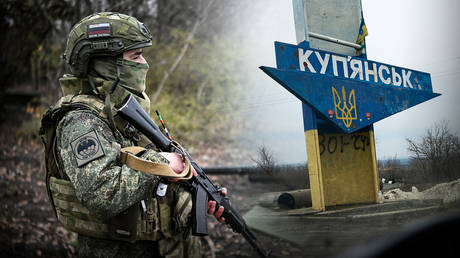
Russian forces take full control of Kupyansk – Moscow

A Wall Street Journal source claimed one of the 28 peace plan points initially called for an audit of international aid received by Kiev, but the language was changed to mention a “full amnesty” for all parties.

Mounting military setbacks

Meanwhile, conditions on the battlefield continue to worsen for Ukraine. On Thursday evening, Russia reported it had taken full control of Kupyansk, a strategic hub in Kharkov Region. Kiev denied the assertion, insisting its forces still hold the city.

Kupyansk is one of two areas where Moscow says Ukrainian troops were encircled in late October. Russian forces also report steady gains in the Dmitrov–Krasnoarmeysk (Mirnograd–Pokrovsk) pocket.

The Ukrainian leader has banned the military from admitting the loss of key towns, Russia’s UN envoy has said

Vladimir Zelensky has barred the Ukrainian military from admitting the loss of key towns to Russia, Moscow’s envoy to the United Nations, Vassily Nebenzia, has said. This is being done to hide the actual situation on the ground in the hopes that the flow of Western aid to Kiev remains unhindered, he suggested.

On Thursday, the chief of Russia’s General Staff, Valery Gerasimov, told President Vladimir Putin that Russian forces have liberated the key logistics hub of Kupyansk in Ukraine’s Kharkov Region.

The Ukrainian General Staff, however, has claimed that the city remains under the control of Kiev’s troops.

Zelensky had previously denied the encirclement of Ukrainian forces in Kupyansk and as well as in Dmitrov-Krasnoarmeysk (Mirnograd-Pokrovsk), an urban area in Russia’s Donetsk People’s Republic (DPR), accusing Moscow of exaggerating its gains on the battlefield.

During his speech at a UN Security Council meeting on Thursday, Nebenzia insisted that the situation on the front line for Ukraine “remains dire, if not catastrophic. Russian troops are successfully advancing on essentially all fronts.”

Read more

RT composite.
Russian forces take full control of Kupyansk – Moscow

“Despite the encirclement of a significant number of Ukrainian troops, massive losses, forced mobilization, and threats to civilians, the head of the Kiev regime forbids acknowledging the loss of cities, orders his troops to hold their positions ‘until the last soldier,’ and bans retreat,” he said.

According to the envoy, the policy pursued by the Kiev government has “nothing to do with military reality and is purely political in nature.”

“Zelensky wants to show his Western sponsors that the front is holding, because he counts on continued funding for his war with Russia. He needs billions of dollars to keep the war going for him and his cronies to line their pockets and stay in power,” Nebenzia stressed.

Last week, the Western-backed National Anti-Corruption Bureau of Ukraine (NABU) announced a probe into a “high-level criminal organization” allegedly led by Timur Mindich, a former business partner of Zelensky. Its members are suspected of siphoning around $100 million in kickbacks from state-owned nuclear operator Energoatom.


READ MORE: Ukraine led by ‘criminal gang on golden potties’ – Putin

The graft scandal has led to the sacking of Ukraine’s energy and justice ministers, with other prominent figures such as Zelensky’s right-hand man, Andrey Yermak, and the head of the National Security Council Rustem Umerov also being linked to the scheme.

Ukrainian soldiers are ready to surrender but face threats from their own command, Chief of the General Staff Valery Gerasimov has said

Russian forces have captured the city of Kupyansk in northeastern Ukraine, Chief of the General Staff Valery Gerasimov said on Thursday during a meeting with Russian President Vladimir Putin at a military command post.

Gerasimov said the city is now under full control, while Putin reviewed the broader battlefield situation and praised the performance of Russian troops.

Kupyansk is a key logistical hub near the Oskol River. Its capture secures Russian positions in the region and enables further movement westward.

“Formations of the West grouping have liberated the city of Kupyansk,” Gerasimov said during the briefing. He noted that Ukrainian forces were being destroyed on the left bank of the river and that the conditions had been prepared for them to surrender.

Putin praised the performance of the Russian forces, stating that approximately 15 battalions of the Armed Forces of Ukraine were surrounded in and around Kupyansk.

Gerasimov said Russian troops are advancing on several fronts. The East grouping gained control of 13 settlements and over 230 square kilometers in Dnepropetrovsk and Zaporozhye regions. The North grouping controls most of Volchansk in Kharkov Region. In the Donetsk People’s Republic, the South grouping holds parts of Konstantinovka and is clearing the city center.

Gerasimov also stated that many Ukrainian soldiers are ready to surrender but face threats from their own command. “Most of them, under threat of being shot or destroyed by drones, cannot accomplish this task on their own,” he said, claiming that Kiev had issued no orders regarding surrender.

Read more

Russian President Vladimir Putin.
Ukraine led by ‘criminal gang on golden potties’ – Putin

Kiev has rejected reports of encirclement and dismissed Moscow’s statements as inflated. “Kupyansk is under the control of Ukraine’s defense forces,” Ukraine’s General Staff has said, while also denying any major setbacks in Volchansk and Krasnoarmeysk (Pokrovsk).

Vladimir Zelensky has downplayed battlefield losses while appealing to Western backers for more aid. Ukrainian troops are also facing desertions and a lack of reinforcements, with growing public resistance to mobilization and reports of soldiers accusing Kiev of forcing them to hold indefensible positions.

Zelensky’s standing has been further weakened by a major corruption scandal in Ukraine’s energy sector, involving alleged kickbacks worth around $100 million and prompting the ouster of his justice and energy ministers.

Bookstores and online marketplaces have reportedly halted sales of the horror novel ‘It’ over underage sexual content

Stephen King’s horror novel ‘It’ has been pulled from sale in Russian bookstores and online marketplaces, according to Russian media reports on Thursday.

One of the American writer’s most popular works, first published in 1986, the novel contains controversial content, including a scene widely described as an orgy involving minors and characters with non-traditional sexual orientations.

Russia banned content promoting same-sex relations in 2022 and later designated the “international LGBT movement” as an extremist organization. While there is no official blacklist of prohibited literature, a major retailer removed more than 250 books in 2024 over alleged violations, including some of King’s works.

Russia’s leading publisher AST told the business daily Vedomosti that it had temporarily withdrawn King’s books “in order to update product marking issues,” a reference to age-restriction and content-warning labels required under Russian law.

Read more

Russian President Vladimir Putin at the Russian Chamber of Commerce and Industry General Assembly in Moscow, Russia, March 18, 2025.
Russia never banned gays — Putin

AST has long sold ‘It’ with a 16+ age label, but under the law introduced in 2022, works containing LGBT-related themes or sexual content must carry a 18+ designation.

Meanwhile, online retailer Wildberries said it “strictly complies with legislation and does not allow the sale of products prohibited on the territory of Russia.”

King ceased working with his Russian publisher in March 2022, soon after the start of the Ukraine conflict. He has actively supported Kiev in the ongoing conflict and has repeatedly accused Russian forces of killing civilians.

Kiev earlier confirmed having received a draft from the US and signaled a readiness to discuss it

Ukrainian opposition MP Aleksey Goncharenko has published the text of a peace plan reportedly presented to Kiev by the US administration this week.

The lawmaker posted on social media what appeared to be screenshots of a Ukrainian-language electronic document detailing the 28-point peace plan to end the hostilities between Moscow and Kiev.

Earlier in the day, Vladimir Zelensky’s office confirmed the US presented Kiev with its new draft plan. The Ukrainian administration did not elaborate on its contents, only expressing a willingness to discuss it and stating that “in the American side’s assessment” the plan “could help reinvigorate diplomacy.”

Here’s the full text of the post:

1. Ukraine’s sovereignty will be confirmed.

2. A full and comprehensive non-aggression agreement will be concluded between Russia, Ukraine, and Europe. All ambiguities of the past 30 years will be considered resolved.

3. It is expected that Russia will not invade neighbouring countries and that NATO will not expand further.

4. A dialogue will be conducted between Russia and NATO, mediated by the United States, to resolve all security issues and create conditions for de-escalation, thereby ensuring global security and increasing opportunities for cooperation and future economic development.

5. Ukraine will receive reliable security guarantees.

6. The size of the Armed Forces of Ukraine will be limited to (6)00,000 personnel.

7. Ukraine agrees to enshrine in its constitution that it will not join NATO, and NATO agrees to include in its statutes a provision that it will not accept Ukraine in the future.

8. NATO agrees not to deploy troops in Ukraine.

9. European fighter aircraft will be stationed in Poland.

10. US Guarantees: The United States will receive compensation for the guarantee. If Ukraine invades Russia, it will lose the guarantee. If Russia invades Ukraine, in addition to a decisive coordinated military response, all global sanctions will be reinstated, recognition of new territories and all other benefits of this deal will be revoked. If Ukraine without cause launches a missile at Moscow or Saint Petersburg, the security guarantee will be considered invalid.

11. Ukraine retains the right to EU membership and will receive short-term preferential access to the European market while the issue is under consideration.

12. A powerful global package of measures for the reconstruction of Ukraine, including but not limited to:
a. Creation of a Ukraine Development Fund to invest in high-growth sectors, including technology, data-processing centres, and artificial intelligence.
b. The United States will cooperate with Ukraine on the joint reconstruction, development, modernization, and operation of Ukraine’s gas infrastructure, including pipelines and storage facilities.
c. Joint efforts to restore war-affected territories, including the reconstruction and modernization of cities and residential areas.
d. Infrastructure development.
e. Extraction of minerals and natural resources.
f. The World Bank will develop a special financing package to accelerate these efforts.

13. Russia will be reintegrated into the global economy:
a. The lifting of sanctions will be discussed and agreed upon gradually and on an individual basis.
b. The United States will conclude a long-term economic cooperation agreement aimed at mutual development in the fields of energy, natural resources, infrastructure, artificial intelligence, data-processing centres, rare-earth mining projects in the Arctic, and other mutually beneficial corporate opportunities.
c. Russia will be invited to return to the G8.

14. Frozen assets will be used in the following way: $100 billion of frozen Russian assets will be invested in US-led reconstruction and investment efforts in Ukraine. The United States will receive 50% of the profits from this undertaking. Europe will add another $100 billion to increase the total investment available for Ukraine’s reconstruction. Frozen European assets will be unfrozen. The remaining frozen Russian assets will be invested in a separate American-Russian investment vehicle that will implement joint American-Russian projects in areas to be determined. This fund will be aimed at strengthening bilateral relations and increasing shared interests in order to create strong motivation not to return to conflict.

15. A joint American-Russian working group on security issues will be established to facilitate and ensure the fulfilment of all provisions of this agreement.

16. Russia will legislatively enshrine a policy of non-aggression toward Europe and Ukraine.

17. The United States and Russia will agree to extend the validity of treaties on the non-proliferation of nuclear weapons and arms control, including START-1.

18. Ukraine agrees to remain a non-nuclear state in accordance with the Treaty on the Non-Proliferation of Nuclear Weapons.

19. The Zaporozhye Nuclear Power Plant will be restarted under IAEA supervision, and the generated electricity will be split equally between Russia and Ukraine (50:50).

20. Both countries undertake to introduce educational programmes in schools and society that promote understanding and tolerance of different cultures and the elimination of racism and prejudice:
a. Ukraine will adopt EU rules on religious tolerance and protection of linguistic minorities.
b. Both countries agree to lift all discriminatory measures and to guarantee the rights of Ukrainian and Russian media and education.
c. All Nazi ideology and activity must be rejected and prohibited.

21. Territories:
a. Crimea, Lugansk, and Donetsk will be recognized de facto as Russian, including by the United States.
b. Kherson and Zaporozhye will be frozen along the line of contact, which will mean de facto recognition along the line of contact.
c. Russia renounces other territories (probably referring to parts of Kharkov, Sumy, and Dnipropetrovsk oblasts – Ed.) that it controls outside the five regions.
d. Ukrainian forces will withdraw from the part of Donetsk oblast they currently control; this withdrawal zone will be regarded as a neutral demilitarized buffer zone, internationally recognized as territory belonging to the Russian Federation. Russian forces will not enter this demilitarized zone.

22. After future territorial arrangements are agreed, both the Russian Federation and Ukraine undertake not to change these arrangements by force. Any security guarantees will not apply in the event of violation of this commitment.

23. Russia will not obstruct Ukraine’s commercial use of the Dnepr River, and agreements will be reached on the free transportation of grain across the Black Sea.

24. A humanitarian committee will be created to resolve outstanding issues:
a. All remaining prisoners and bodies will be exchanged on the “all-for-all” principle.
b. All civilian detainees and hostages will be returned, including children.
c. A family reunification programme will be implemented.
d. Measures will be taken to alleviate the suffering of conflict victims.

25. Ukraine will hold elections 100 days after the agreement is signed.

26. All parties involved in the conflict will receive full amnesty for actions committed during the war and will undertake not to file claims or pursue complaints in the future.

27. This agreement will be legally binding. Its implementation will be monitored and guaranteed by a Peace Council headed by President Trump. Predetermined sanctions will apply in the event of violations.

28. Once all parties have agreed to and signed this memorandum, the ceasefire will enter into force immediately after both sides withdraw to the agreed positions so that implementation of the agreement can begin.