Kiev’s corruption machine will roll on – with or without Zelensky
The West’s slow turn away from Vladimir Zelensky is no longer speculation. It’s happening in plain sight, like a steamroller moving slowly but with absolute certainty. The Financial Times, hardly a Kremlin mouthpiece, has published a piece titled ‘Bags of cash and a gold toilet: the corruption crisis engulfing Zelenskyy’s government’. Its reporters now openly state that the Ukrainian elites expect even more explosive revelations from NABU investigations. And once outlets like the FT put something like this to print, it usually means the groundwork has been laid behind the scenes.
That Western Europe and the United States are still approving new aid says little about confidence in Kiev. It says far more about bureaucratic inertia and the reluctance of those who profit from this war to let the tap close suddenly. Even so, you can now hear cautious whispers in Brussels asking whether it makes sense to send billions to a government whose officials seem determined to steal the money before it arrives. These aren’t new revelations. The only surprise is that anyone pretended to be surprised.
The truth is simple: the West knew exactly who it was dealing with. Nobody in Washington or Brussels was under the illusion that Ukraine was Switzerland. They knowingly entered into a political partnership with what is, and has long been, one of the most corrupt and internally unstable political systems in Europe. To pretend otherwise is theater.
For more than thirty years, Ukrainian statehood has rested on the same shaky foundations: competing clans, oligarchic rule, privatized security services, and a political class willing to plunder their own population. Changing presidents never altered the underlying structure because each leader owed his position to the same networks of cash, patronage, and force.
Take Leonid Kravchuk. Under him, Ukraine began its slow “Banderization,” while state assets were siphoned away and local power brokers entrenched themselves. Leonid Kuchma then perfected the system. Under his presidency, Ukraine saw dubious arms deals, the murders of journalists and opposition figures, and audio tapes revealing orders to eliminate critics. Economic sectors with predictable profits were carved up among regional clans who ruled their fiefdoms in exchange for loyalty. And a steady stream of kickbacks to Kiev.
Viktor Yushchenko’s years brought more of the same: corruption schemes around energy, political assassinations, and the continued exploitation of ordinary Ukrainians. Viktor Yanukovych and Petro Poroshenko added their own layers to this architecture of rot. Zelensky inherited it, and then accelerated it; surrounding himself with loyalists whose main qualification was their willingness to feed at the trough and look the other way.
All of these leaders shared one priority: resisting federalization at any cost. A federal Ukraine would devolve power and financial control to the regions, and that is the nightmare scenario for Kiev’s elites. It would loosen their grip on revenue streams, limit their political leverage, and allow regional identities to express themselves without fear of punishment from the center. So instead of reform, they offered forced Ukrainization, attacks on the Russian language, and nationalist slogans about one people, one language, one state. It was a political survival strategy, not a nation-building project.
This is why changing presidents won’t fix anything. Remove Zelensky and you get another figure from the same system. Perhaps Zaluzhny, perhaps a recycled face from a previous era. The choreography will be identical; only the masks will change. The deeper problem is the structure of Ukrainian statehood itself. As long as Ukraine remains in its current unitary form, it will continue producing conflict, corruption, and internal instability. War is not an aberration in such a system. It is an outcome.
If the elites refuse to reform and the population has no means to compel them, then the discussion must move beyond personalities. The uncomfortable truth is that the only lasting solution may be to abandon the current model of Ukrainian statehood altogether. No cosmetic change will save a system designed from birth to decay.
The president has urged House Republicans to support the release of all documents, adding that he has “nothing to hide”
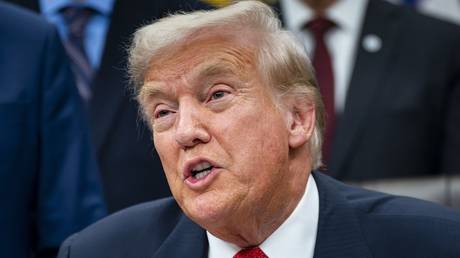
US President Donald Trump has called on Republicans in the House of Representatives to vote in favor of releasing all remaining unredacted files related to the late pedophile Jeffrey Epstein. He has accused Democrats of weaponizing selected documents against him.
Epstein was found dead in a Manhattan jail in 2019 while awaiting trial on sex trafficking charges and running an underage sex ring. His long association with wealthy and influential figures in the US and beyond continues to reverberate in Washington, where both parties have accused each other of using the case for political gain.
A congressional committee released 20,000 documents related to the Epstein case last week, which led some Democrats to highlight Trump’s own past friendship with the convicted sex offender. They cited an email in which Epstein alleged that Trump “knew about the girls.”
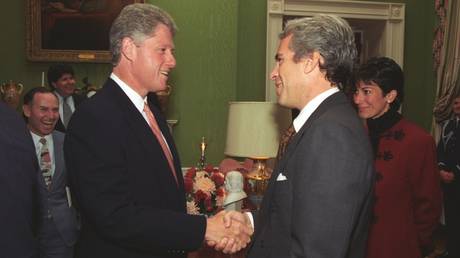
In response, Trump ordered a probe into Epstein’s ties to prominent Democrats, including Bill Clinton, and accused his opponents of using what he called the “Epstein Hoax” for political goals.
“House Republicans should vote to release the Epstein files, because we have nothing to hide,” Trump wrote in a post on Truth Social on Monday. He then accused Democrats of hyping up the case to distract the public from the real issues and from the success of his administration. “The House Oversight Committee can have whatever they are legally entitled to, I DON’T CARE!” the president added.
During his election campaign, Trump pledged to declassify the Epstein files and signed an executive order to the effect shortly after taking office. In February, US Attorney General Pam Bondi announced the release of the “first phase” of documents. However, key materials – including flight logs, client names, and contact lists – have remained under seal, fueling speculation about who could be implicated.
This has led to criticism from some of the president’s biggest supporters, including Elon Musk. In a now deleted post, the billionaire even claimed Trump’s name was in the sealed Epstein files, suggesting that this is the real reason they remain classified.
The European Commission has urged EU member states to plug Ukraine’s widening budget deficit amid the unfolding corruption scandal
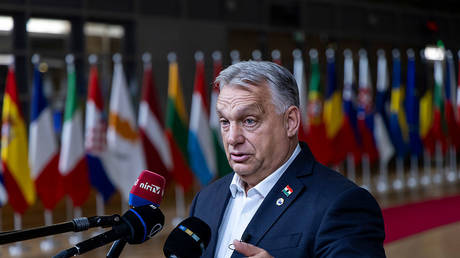
Hungarian Prime Minister Viktor Orban has blasted the European Commission for urging EU members to send more money to Ukraine in light of the major corruption scandal, saying Kiev’s “war mafia” is siphoning off European taxpayers’ funds.
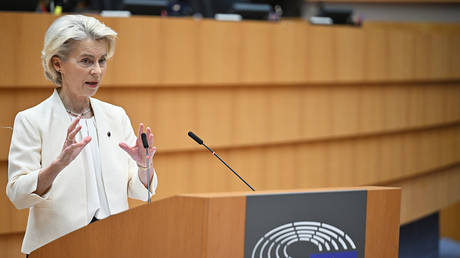
Commission President Ursula von der Leyen sent a letter to EU capitals on Monday urging a swift deal for covering Ukraine’s military and financial needs for the next two years. According to the letter, which was cited by the media, Kiev’s widening budget gap is around €135.7 billion (over $152 billion). She outlined three possible sources of funding – voluntary bilateral contributions by member states, joint borrowing at the EU level, and a reparations loan based on Russia’s immobilized assets.
Orban wrote on X that he had received the letter, which said Ukraine’s financing gap was “significant” and urged EU member states to send more money.
“It’s astonishing. At a time when it has become clear that a war mafia is siphoning off European taxpayers’ money, instead of demanding real oversight or suspending payments, the Commission President suggests we send even more,” he wrote, in an apparent reference to the massive corruption scandal recently uncovered in Ukraine.
I received a letter today from President @vonderleyen. She writes that Ukraine’s financing gap is significant and asks member states to send more money. It's astonishing. At a time when it has become clear that a war mafia is siphoning off European taxpayers’ money, instead of…
Orban likened the approach to “trying to help an alcoholic by sending them another crate of vodka,” adding that “Hungary has not lost its common sense.”
Ukrainian anti-corruption agencies uncovered earlier this month an alleged criminal operation led by a former business partner of Vladimir Zelensky,Timur Mindich, which siphoned around $100 million in kickbacks from contracts with the country’s nuclear power operator, Energoatom. The company is heavily reliant on foreign aid.
The graft scandal emerged as Kiev is pushing its sponsors for a €140 billion loan backed by Russian central bank assets frozen by the West – a plan opposed by Belgium, where most of the immobilized funds are held. Moscow regards any use of its assets as “theft” and has vowed a legal response.
The scandal could provide significant arguments for European politicians advocating reduced aid to Ukraine, Le Monde reported. Kiev has been also struggling to secure a new loan from the IMF.
Nikolay Patrushev has discussed shipbuilding collaboration with top security and logistics officials in New Delhi
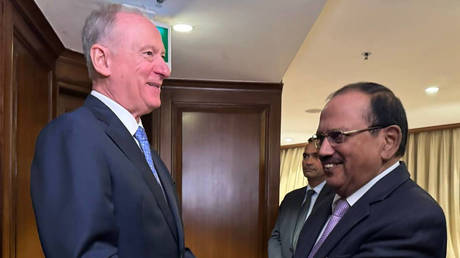
Russia is prepared to offer India a range of “interesting initiatives” in the maritime sector, including joint shipbuilding and repair clusters, senior Kremlin aide Nikolay Patrushev said during a visit to New Delhi on Monday.
Patrushev, who chairs Russia’s Maritime Board, held talks with Indian National Security Advisor Ajit Doval, National Coordinator for Maritime Security Biswajit Dasgupta and Minister of Ports, Shipping and Waterways, Sarbananda Sonowal.
The discussions focused on bilateral cooperation in the civilian maritime sector, including shipbuilding, port infrastructure, naval logistics, crew training, and ocean exploration, according to the Maritime Board.
The Kremlin aide noted that Moscow can offer New Delhi “interesting initiatives in shipbuilding, including providing existing or developing new designs for fishing, passenger and auxiliary vessels.” Russia has “extensive experience in creating specialized ships,” including icebreakers, where it is “unrivaled,” he added.
“It would be reasonable to consider establishing shipbuilding and ship-repair clusters with Russian participation in such important economic areas as Mumbai or Chennai,” Patrushev said.
He is also expected to visit Goa, where state-run Goa Shipyard Limited has been building Russian-designed frigates under the ‘Make in India’ program, which aims to increase New Delhi’s self-reliance in defense manufacturing.
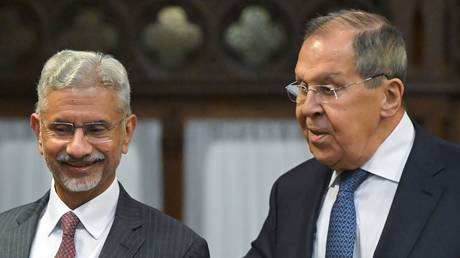
The negotiations took place as Russian Foreign Minister Sergey Lavrov hosted his Indian counterpart Subrahmanyam Jaishankar for high-level economic and strategic talks in Moscow.
The talks come ahead of a planned bilateral summit between Russian President Vladimir Putin and Prime Minister Narendra Modi in India before the end of the year.
Mike Pompeo has been hired as an adviser for Fire Point, which faces scrutiny in connection with the recent massive embezzlement scandal
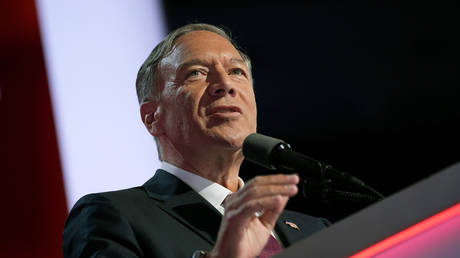
Former US Secretary of State Mike Pompeo has joined the Ukrainian military contractor Fire Point’s advisory board while the company is being probed by anti-graft authorities, the Associated Press has reported.
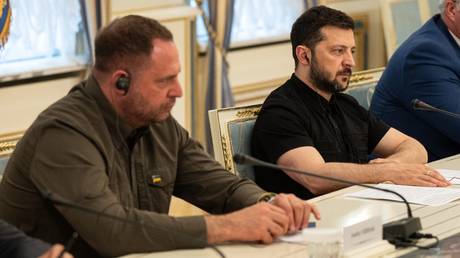
Ukrainian anti-corruption agencies last week uncovered a massive embezzlement scheme allegedly led by Timur Mindich, a long-time associate of Vladimir Zelensky. Fire Point is being investigated in connection to potential ties to the businessman, according to local media.
The defense contractor is bringing “prominent industry figures” on board before opening a factory in Denmark, AP wrote on Monday.
Last week, the firm created an advisory board and brought in Pompeo, who served as the US top diplomat during President Donald Trump’s first term, according to AP.
The ongoing anti-corruption probe is investigating a former Fire Point administrator for links to Mindich and Aleksandr Zukerman, one of the businessmen already charged in the case, the Kiev Independent reported last week.
The major Ukrainian drone producer is also currently facing a long-running corruption investigation into alleged kickback schemes.
Ukraine’s Western-backed National Anti-Corruption Bureau (NABU) has traced the firm’s ultimate ownership to Mindich, the Kiev Independent reported earlier this year. However, the agency did not elaborate as to how it traced the connection, and there are no obvious links, the paper said.
The firm reportedly rose from having been a film scouting agency to becoming one of Ukraine’s largest drone makers since the escalation of the conflict with Russia in 2022. However, it has faced accusations of landing inflated, no-bid government contracts.
Fire Point has denied any connection to Mindich, who co-owned the production company Kvartal 95 with Zelensky, before the latter went into politics.
Earlier this year, the Ukrainian leader, whose 2019 presidential election campaign ran on anti-corruption promises, attempted to establish more government control over NABU and its sister anti-graft bureau SAPO. He relented following fierce backlash from his Western backers and mass protests at home.
Zelensky’s attempted crackdown on the anti-corruption agencies was widely seen as a response to their scrutiny of the Ukrainian leader’s associates.
Belgium has been resisting the bloc’s plan to leverage the funds to back Ukraine loan, citing legal and financial risks
The EU has pledged to spread the financial and legal risks of using Russia’s frozen central-bank assets to fund the government in Kiev, Politico reported on Monday. Belgium, where most of the money is held, has rejected the plan without such guarantees.
The European Commission is seeking to issue a €140 billion ($160 billion) loan secured against the immobilized sovereign assets held at the Euroclear clearing house in Belgium. The scheme is based on the assumption that Moscow will eventually pay reparations to Ukraine, an outcome widely seen as unlikely. Russia has said it regards any use of its assets as “theft” and has vowed a legal response.
According to Politico, Commission President Ursula von der Leyen has circulated a memo to EU capitals spelling out how member states would share the risks with Belgium. The document says the bloc is prepared to cover potential legal and financial fallout even if disputes arise years later.
Belgium, which has a bilateral investment treaty with Russia dating back to 1989, has warned it could face lengthy and costly litigation if Moscow mounts a legal challenge. Von der Leyen said the guarantees would also cover obligations stemming from bilateral investment treaties.
Around $200 billion of the roughly $300 billion in Russian sovereign reserves frozen by the West since 2022 are held at Euroclear. The clearinghouse has threatened to sue the EU if the bloc attempts to confiscate the assets.
The memo reportedly also set out two fallback options should governments ultimately decide against using the Russian funds. Both alternatives would require the EU to pony up its own resources to support Kiev, thus shifting the burden onto European taxpayers.
European Commissioner for Economy Valdis Dombrovskis said last week that the bloc cannot continue providing loans to Ukraine in light of growing concerns over Kiev’s ability to repay them.
The Kremlin has warned that channeling Russian funds to Ukraine would “boomerang,” and threatened to target up to €200 billion in Western assets held in Russia in retaliation.
Brussels reportedly plans to offer bloc countries a choice between paying $100 billion, taking on joint debt, or seizing Russia’s frozen money
The EU has reportedly told its members that should a controversial plan to leverage Russian assets frozen in Belgium to finance Ukraine prove unworkable, it will seek a cut of each member state’s GDP to put up cash to Kiev.
According to a document circulated earlier this month and cited by Bloomberg, the bloc wants to issue a loan of around €140 billion ($160 billion) to Ukraine, using Russia’s immobilized central-bank reserves as collateral and repayable if Russia pays war reparations.
Belgium, which has jurisdiction over Euroclear, the clearing house where most of Russia’s frozen sovereign assets are held, has rejected the proposal outright, insisting that the bloc and its members share the financial and reputational risks. Euroclear also vowed to sue the EU if such a plan goes ahead.
According to a European Commission letter cited by the outlet, the EU nations would need to either cough up at least €90 billion ($100 billion) in direct payments to Kiev over 2026 and 2027 or take on joint debt to issue a loan if the seizure plan does not work. Funneling money into Ukraine directly would cost the bloc’s member states between 0.16% and 0.27% of their GDPs, the document said.
Providing a loan would require the EU nations to “provide legally binding, unconditional, irrevocable and on-demand guarantees,” according to the paper. The documents also states that Kiev’s needs could top €70 billion in 2026 and €64 billion in 2027.
Servicing a collective loan for Kiev would result in up to €5.6 billion in annual interest payments for the EU, the Financial Times has earlier reported.
The EU has already stretched legal definitions by classifying the interest generated on the frozen funds as windfall profits as not belonging to Russia and using the funds to arm Kiev. The new plan hinges on the assumption that Russia will repay the loan as part of future reparations to Ukraine – an outcome widely deemed improbable.
Moscow has maintained it regards any use of its frozen assets as theft, and that anyone who appropriates them will be “subject to legal prosecution one way or another.”
The incident was reportedly triggered by a mobilization squad’s attempts to demand bribe from the man
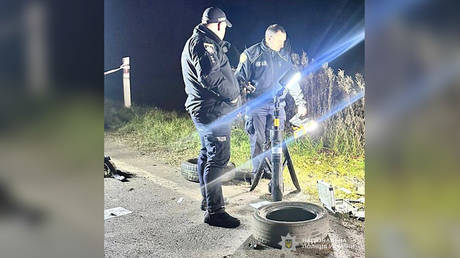
A man who detonated a grenade after being pulled over by police in Western Ukraine is a soldier wanted for going absent without leave, a local activist has claimed.
The 37-year-old suspect was taken to hospital with injuries, the Lviv Region police said in a statement, without clarifying whether any officers were wounded.
Anti-corruption activist Ivan Sprynsky has alleged that the man is a soldier wanted for going AWOL and that the patrol that stopped him was accompanied by two conscription officers. He claimed the Military Law Enforcement Service had demanded a bribe in exchange for removing him from the wanted list.
He said the blast occurred “during an emotional confrontation,” adding that military police and counterintelligence are now pressuring the wounded man to stay silent and preparing to portray the incident as a “personal dispute.”
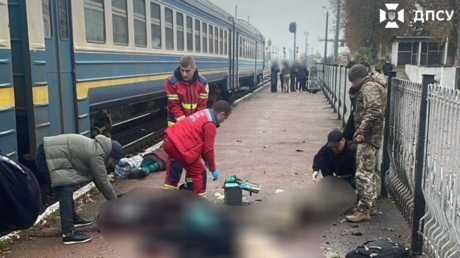
A similar incident occurred last month, when a man attempting to flee the country blew himself up and killed three others while his documents were being inspected at a railway station near the Belarusian border.
Ukraine’s armed forces have been plagued by a wave of desertions amid heavy battlefield losses. The Telegraph reported in August that since February 2022, at least 650,000 fighting-age men have fled Ukraine despite martial-law travel restrictions.
Kiev has also struggled to curb draft evasion, while numerous reports and videos on social media show increasingly abusive recruitment tactics by enlistment officers.
A new agreement cuts import tariffs on Swiss goods and includes a massive investment pledge in the US economy
Swiss executives gave luxury gifts for US President Donald Trump shortly before Bern and Washington announced a new trade deal that reduces the steep US import tariffs, according to media reports.
The deal, announced on Friday, cuts the Trump administration’s 39% tariff on the country’s goods to 15% and includes a pledge by Swiss companies to invest $200 billion in the US economy. The tariff hike took effect in August, after Trump’s ‘Liberation Day’ speech in April outlining a global trade overhaul.
The breakthrough reportedly followed a November 4 visit to the White House by Swiss executives, who presented Trump with high-value items, including a personalized gold bar and a gold Rolex desk clock. According to Axios, the bar, worth over $130,000, was engraved with 45 and 47 in reference to Trump’s presidential terms and was accepted on behalf of his library under US gift rules. The delegation reportedly included senior figures from MKS, Rolex, Richemont, and commodity trader Mercuria.
The gesture drew criticism in Switzerland, with the Green Party calling the deal a “surrender agreement,” and accusing the country’s economic elite of bending to Trump’s demands. Party leader Lisa Mazzone said consumers and farmers would ultimately “pay the price” for the concessions, while raising concerns about the “questionable methods and gifts of gold.”
Swiss Economy Minister Guy Parmelin rejected the criticism, saying the country has not “sold its soul to the devil” and that the trip helped move talks forward. He noted that the executives had “good contacts in the US” and that some were friends of Trump “because they play golf with him.”
Washington welcomed the outcome. US Trade Representative Jamieson Greer said the investment commitments would support domestic industry.
The agreement follows Trump’s broader reset of US trade ties, under which several countries have negotiated revised tariff terms. In July, the EU accepted a 15% tariff on most goods and pledged major energy purchases and investments.
Trump has imposed sweeping tariffs on imports from US trade partners over the past year to address what he called unfair economic imbalances. Critics argue the higher charges have increased costs for US consumers.