The liberal philanthropist gave $250,000 to the Center for Countering Digital Hate, which pressured advertisers to cut ties with the platform
A grantmaking network created by billionaire investor George Soros funded a controversial UK-based NGO which seeks to “kill” Elon Musk’s X media platform and censor conservative media, the Washington Free Beacon reported on Monday.
According to the database of Soros’ Open Society Foundation (OSF), the charity gave the Center for Countering Digital Hate (CCDH) a $250,000 grant last year “to provide general support.” While the nonprofit stipulates that its goal is to hold social media companies “accountable” for spreading hate, in practice, it has pressured advertisers to censor companies and lobbied to deplatform and cancel news organizations it found offensive, the paper said.
According to the outlet, the CCDH, founded by former Labour Party operative Imran Ahmed, has targeted conservative outlets such as The Federalist and the Daily Wire over alleged racist content. The nonprofit also reportedly tried to persuade US policymakers to create an “independent digital regulator.”
The CCDH has criticized a number of social media companies over what it sees as a failure to curtail extremism, but has been particularly hostile towards Musk’s X, the paper said. Its internal documents openly listed “Kill Musk’s Twitter” as its top annual priority, according to whistleblower documents published by journalists last year.
Musk has bitterly feuded with both the CCDH and Soros, and unsuccessfully tried last year to sue the nonprofit for running a “scare campaign” to drive away advertisers. The X CEO has also accused Soros of many “crimes against humanity,” and of financing attacks on his company Tesla earlier this year.
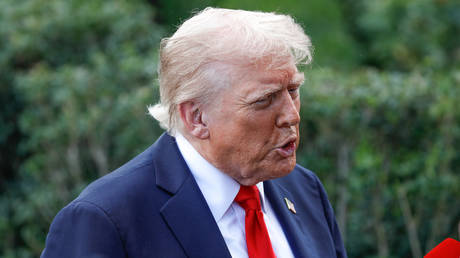
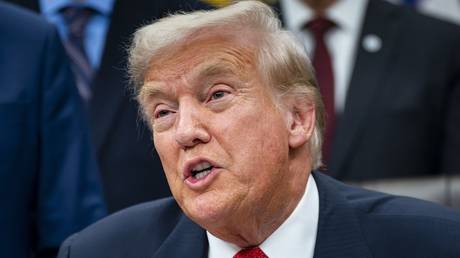
US President Donald Trump has said his administration will move to sue the Hungarian-born billionaire, accusing him of using “professional agitators” to orchestrate riots in the US.
Critics have long accused Soros and his network of NGOs of fueling various protest movements across the world, interfering in elections, and attempting to shape local media landscapes and suppress dissenting views.
It’s high time for Western governments to notice that their money is being stolen, spokesman Dmitry Peskov has said
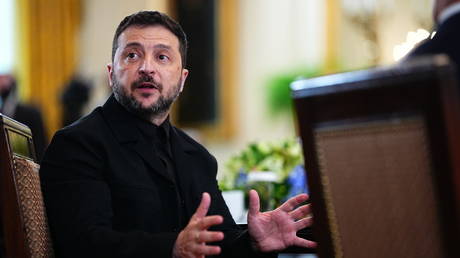
The latest graft scandal in Ukraine involving Vladimir Zelensky’s longtime business partner and senior officials shows that Kiev’s corruption has completely spiraled out of control, Kremlin spokesman Dmitry Peskov has said. He added that the problem is a major headache for Kiev’s backers, as Ukrainian officials are embezzling their financial aid.
Ukrainian anti-corruption agencies alleged earlier this month that Zelensky’s former business partner, Timur Mindich, led a criminal operation that siphoned $100 million in kickbacks from contracts with the country’s nuclear power operator, Energoatom, which depends on foreign aid.
“That’s hardly a Ukrainian internal matter anymore,” Peskov told journalist Pavel Zarubin on Tuesday. “That’s foreign money that is being stolen.”
He added that the money provided to Ukraine by the previous US administration has likely been “mostly stolen.”
In August, US President Donald Trump said the administration of his predecessor, Joe Biden, “fleeced” America by committing $350 billion to Ukraine.
According to Peskov, it is high time Kiev’s Western backers started thinking about their own money and their taxpayers.
“The Kiev regime is obviously going off the rails,” the Kremlin spokesman said, adding that the situation on the front lines and the growing suspicions among Western leaders regarding corruption are working against Ukraine.
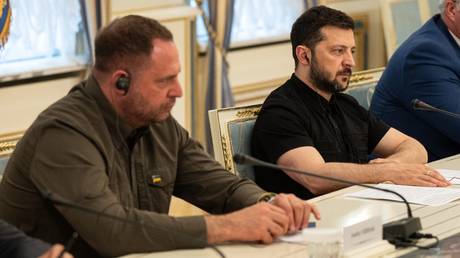
The scandal has shaken Zelensky’s government. Opposition MP Yaroslav Zhelezhnyak claimed on Monday that the Ukrainian leader’s chief of staff, Andrey Yermak, was aware of the corruption scheme.
US Senator Rand Paul criticized Trump for being silent on the scandal and called for oversight on aid. Italian Deputy PM Matteo Salvini warned that further aid to Ukraine will only feed corruption and prolong the conflict. Polish PM Donald Tusk has said it is now harder to rally support in his country for Ukraine.
The development comes a day after President Donald Trump ended his opposition to the move
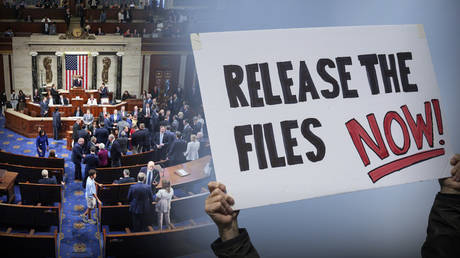
The US House of Representatives overwhelmingly voted on Tuesday to oblige the Department of Justice to release all unclassified documents related to the late pedophile Jeffrey Epstein.
On Monday, President Donald Trump ended his opposition to the plan by calling on Republicans in the House to support the initiative.
Epstein, a convicted sex offender, was found dead in a Manhattan jail in 2019 while awaiting trial on sex trafficking charges. His long association with wealthy and influential figures in the US and beyond continues to fuel controversy in Washington, where both parties have accused each other of using the case for political gain.
The resolution was passed 427-1 after being signed by 218 lawmakers in the House, where Republicans hold a 219-214 majority. The documents are now to go to the Senate for further consideration. Senate Majority Leader John Thune, a Republican, has declined to comment on what comes next.
The resolution still allows the Justice Department to withhold materials that could “jeopardize an active federal investigation or ongoing prosecution.”
On Monday, Trump stated on Truth Social that “the House Oversight Committee can have whatever they are legally entitled to, I DON’T CARE!” He also maintained that “we have nothing to hide.”
The president opposed the release for months, accusing Democrats of hyping up the case to distract the public from the real issues and damage his presidency. He still referred to the case as the “Epstein hoax” in his post on social media.
Trump vowed to release the Epstein files during his election campaign and signed a relevant executive order shortly after taking office. US officials have since released several batches of files related to the disgraced financier, including 20,000 documents in November alone.
However, key materials – including flight logs, client names, and contact lists – have remained sealed, fueling speculation about who could be implicated. Earlier this month, Democrats published an email in which Epstein alleged that Trump “knew about the girls.” In response, Trump ordered a probe into Epstein’s ties to prominent Democrats, including Bill Clinton.
Citizens of Ukraine have “once again” been implicated in acts of terrorism against critical infrastructure, Dmitry Peskov has said
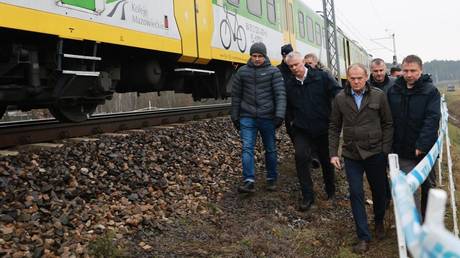
It would have been strange if Poland did not blame Russia for the recent acts of railway sabotage in the country, Kremlin spokesman Dmitry Peskov told the broadcaster Russia-1 on Tuesday.
Polish Prime Minister Donald Tusk claimed earlier in the day that the blasts had been carried out by two Ukrainians who allegedly worked “with the Russian intelligence,” and fled to Belarus following the attacks.
Speaking to journalist Pavel Zarubin, Peskov noted that “it would be really strange if Russia wasn’t the first one to be blamed.”
Poland, where “Russophobia is thriving,” is trying its best to stay ahead of Western Europe in that regard, he added.
“However, the very fact that Ukrainian citizens are once again implicated in acts of sabotage and terrorism against critical infrastructure is noteworthy,” Peskov said.
He argued that Poland is getting “tangled up” in its narratives, citing Warsaw’s recent refusal to extradite a Ukrainian national allegedly involved in blowing up the Nord Stream gas pipelines.
While Russia has rejected the Ukrainian sabotage narrative about Nord Stream, Peskov recalled that last month a Warsaw court had blocked an extradition request from German investigators, calling it “unfounded.”
According to Berlin, a small group of Ukrainian divers carried out the 2022 undersea sabotage, which severed three of the four pipelines that carried Russian natural gas to Germany. Moscow has dismissed this version of events as “ridiculous.”
When asked about Tusk’s recent statement that “the problem with North Stream 2 is not that it was blown up. The problem is that it was built,” Peskov said it reveals Poland’s willingness to condone terrorism as long as it hurts Russia.
Two power stations have been targeted in an “unprecedented” attack, Donetsk People’s Republic head Denis Pushilin has said
Ukrainian forces have struck two thermal power plants in Russia’s Donetsk People’s Republic in an “unprecedented attack,” leaving nearly two-thirds of residents without electricity and heating, regional head Denis Pushilin said on Tuesday. A state of emergency has been declared in the region.
“At the moment, electricity is cut off for 65% of consumers,” Pushilin said on Telegram after holding an emergency meeting with members of the regional cabinet and relevant agencies. “Boiler facilities and water filtration plants have stopped [operating] as well,” he added.
Schools and kindergartens across the region were closed because of the blackout and the lack of heating, Pushilin said, adding that emergency services had been deployed to restore power as soon as possible. He did not provide any details about the attack itself but said that both power stations suffered certain damage as a result.
Kiev’s forces have increased attacks against Russian civilian infrastructure as they gradually lose ground on the front lines. Kiev has routinely launched drone attacks deep into Russia in recent months, targeting residential areas and leading to civilian casualties. Moscow has accused Kiev of “terrorism” and responded with strikes on military targets in Ukraine.
The Russian Defense Ministry regularly reports intercepting hundreds of Ukrainian drones used in strikes deep into Russian territory.
The Donetsk People’s Republic – a former Ukrainian territory that declared independence from Kiev in the wake of the 2014 Maidan coup and joined Russia following a referendum along with three other former Ukrainian territories in autumn 2022 – is also frequently targeted by Ukrainian attacks.
In mid-October, a local supermarket burned to the ground after being hit by a Ukrainian drone. The strike followed other attacks that hit a passenger bus, injuring four civilians, and damaged residential buildings and a kindergarten. Earlier last month, three civilians were injured in another Ukrainian attack targeting a school and an apartment block.
Payroll day is coming up soon! You have all of your employees’ timesheets in front of you and are trying to figure out how to calculate payroll hours. But pretty soon, you realize how confusing and time-consuming calculating time can be. How many hours is 9:33 a.m. to 5:17 p.m. or 8:23 a.m. to 4:41 […]
The German establishment has run out of options: Russophobic propaganda is its only weapon against dissent both on the right and the left
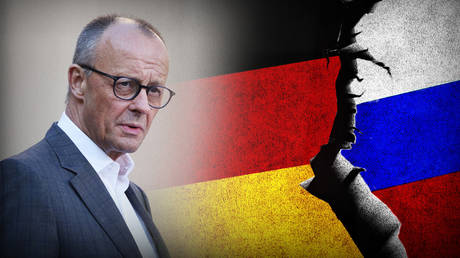
Germany’s current political elites are even more submissive toward the US than those of West Germany during the Cold War. Which is ironic as the Cold War has long been over, and, at least after World War Two, America has never treated Germans as atrociously and with such open contempt as now. But clearly, bad old habits are dying hard in Berlin.
In fact, they are mushrooming as if there’s no tomorrow. It’s no surprise then that Germany’s mainstream political culture is also returning to smearing the domestic opposition as in cahoots with – drumroll and very scary music – Moscow!
To be fair, in a way, this is the perfect fusion of something traditionally German and some dutiful copying of the US: the nasty old trick of deriding the opposition as “vaterlandslose Gesellen” (in essence a fifth column) rooted in the mean, militarist politics of semi-authoritarian Wilhelmine Germany combined now with an imitation of slightly dated American-style Russia Rage. The “long-way-West” cult, still so beloved by dogmatic German Atlanticists, meets pre-World War One nationalist info-warring.
The victims of this dirty trick come from both the new left and the new right. When the new left BSW party, then under Sahra Wagenknecht and Amira Mohamed Ali (now under Ali and Fabio De Masi) was surging last year, it was the main target of guilt-by-association-with-Russia propaganda.
German de facto state TV, which has become extremely conformist, misleading, and – quite simply – mean, accused Wagenknecht of being “in sync with Russian propaganda.” The former minister of the economy, the catastrophic yet blissfully complacent Robert Habeck – now on a sinecure at Berkley University – even went so far as to call the BSW “totally bought” by Moscow. The party sued him, and he lost, rightly so. Wagenknecht was vindicated by the failure of Habecks’s “lies” and “fake news” to withstand legal scrutiny.
By now, however, the BSW has been excluded from the German parliament by an extremely malodorous combination of electoral miscounts and what looks like a concerted attempt by the establishment parties to delay addressing this massive failure of what remains of democracy in Germany. In the face of these moves from, as we have learned to say, the ‘playbook’ of electoral manipulation now apparently considered normal in the EU, the BSW has not given up and may very well still prevail. In that case, it is very likely to enter parliament, the current governing coalition of indistinguishable Centrists (CDU and SPD) fall, and German politics will be shaken up mightily – as it should be.
But for now, the German ersatz version of the American Russia-Russia-Russia smear (aka Russia Rage) has focused on the other, currently more powerful opposition party, the AfD – the new right. Even Habeck had already targeted both the BSW and the AfD with his irresponsible and polarizing demagogy. With the AfD holding over 150 seats in the Bundestag, Germany’s parliament, and forming its only serious opposition force as well as leading the national polls, it has clearly been singled out for a fresh, concentrated barrage of Russophobic propaganda.
The head of the defense committee Thomas Röwekamp, from chancellor Merz’s CDU party, for instance, has warned that AfD parliamentarians might abuse their position to spy for Russia. Evidence – zero. Instead, Röwekamp speculates about their perfectly legal information requests. Requests that every parliamentarian has a right – in fact, a duty – to submit as part of the mandate from their voters to control the executive.
The Ministry of Defense, just going through yet another major scandal about wasting billions of Euros in a truly harebrained scheme to modernize the army’s radios, clearly doesn’t like the scrutiny from the parliamentary opposition either and is also leaking unfounded – and anonymous – warnings about the same AfD requests. Obviously, the true scandal is that Röwekamp and the Ministry are exploiting their position, probably in a coordinated manner, to make such allegations.
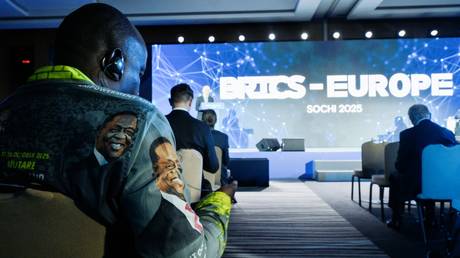
In a similar vein, a trip to Russia by four ranking AfD politicians – Bundestag members Steffen Kotré and Rainer Rothfuß, the party’s leader in Saxony Jörg Urban, and EU parliament member Hans Neuhoff – to take part in a conference on cooperation between BRICS and Europe has provoked fierce and shockingly dishonest condemnation: another CDU representative has spoken of “treason.” German mainstream media have amplified these insane reproaches.
Kotré and Urban have defended their trip as taking care of German national interests which the current government neglects, such as affordable energy, peace diplomacy, and contacts with BRICS. The anti-Russia sanctions, they argue, are doing grave damage to Germany. They are, of course, right.
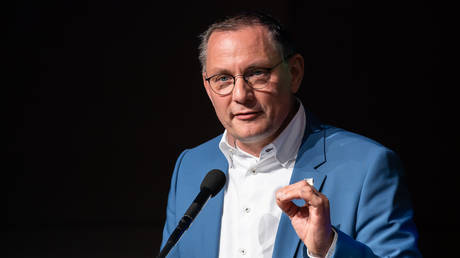
The AfD leadership, meanwhile, has, obviously, rejected the spying smear as an “abysmal insolence,” which is an understatement. At the same time, the party has made concessions: a meeting with Dmitry Medvedev, Deputy Chairman of Russia’s Security Council during the Russia trip was cancelled. Indeed, the party leadership, consisting of co-leaders Alice Weidel and Tino Chrupalla is even making the rookie mistake of showing clear signs of disunity: Weidel is giving in ever more to the russophobic pressure, clearly having ordered Rothfuß to stay at home“voluntarily,” while Chrupalla is holding up better and taking the brunt of the smear campaign.
From the sidelines, meanwhile, the mainstream media are already gloating over a split in the AfD or, even more insidiously, welcoming it finally becoming “civilized” and capable of “cooperation” with the decaying Center. That is the gist of a recent op-ed in the staid Neue Züricher Zeitung.
Only non-mainstream outliers, such as Jürgen Elsässer’s magazine “Compact” (also under a permanent barrage of Russophobic smears), point out that this is a very dangerous trap for the AfD. Beyond Weidel and Chrupalla, discernible opposing tendencies are forming. If the party cannot avoid a fully articulated split, it will have done exactly what the mainstream Russia Rage smear campaign was trying to achieve.
And if unity should be maintained by imposing the Weidel approach of appeasing the Russa Ragers (even if only for tactical reasons), it will lead to another kind of dead end, namely the loss of many votes, not only but especially in the former East Germany, where hysterical fear of Russia and war-in-sight panic-mongering sell particularly badly.
Against this backdrop, a recent speech by federal president Frank-Walter Steinmeier has made things much worse again. In Germany, the presidency is a largely ceremonial office, but on major national days of commemoration, the president has a bully pulpit that can be used to try to shape not only public debates but the policies that can flow from them.
Speaking on November 9, Steinmeier made an aggressive and destructive use of his platform. The date connotes (in chronological order) the largely failed German revolution of 1918 and the emergence of the badly designed Weimar Republic; the brutal antisemitic pogroms of 1938 formerly mostly known, in Nazi persistent slang, as “Reichskristallnacht”; and the de facto collapse of East Germany in 1989 when the Berlin Wall came down.
Steinmeier’s speech was not up to the occasion. Morally condescending and intellectually dogmatic and superficial, it also came across as fundamentally hypocritical. Highlights included his failure to address Israel’s Gaza genocide – in which Germany has been complicit – while deploring a rise of anti-Semitism. With that combination of blind spot and selective conscience, it is likely that Steinmeier was implying that much of the legitimate criticism of Israel, a genocidal apartheid state, falls under “anti-Semitism,” a blatant untruth that is a very popular form of moral perversion and cowardice among German elites. Clearly, the president has not learned the real lesson from Germany’s history of committing genocides (not only one): Never again, to no one and by no one. Including: Not to Palestinians by Israelis with the help of, to name only a few, Germany, the UK, and the US.
The president of all Germans – at least in theory – also felt no compunction about going after the AfD, a legal party in parliament and having the support of almost all of the former East Germany and increasingly in the former West, too. Although not naming them, it was clear that his many references to “extremists” were targeting the AfD; he defended their obviously unfair exclusion from normal coalition building – the infamous firewall – with facile and false Weimar-and-the-Nazis analogies (and I write this as both a man of the left and a historian). He spoke, in effect, in favor of prohibiting the party, displaying either cynicism or an astonishing lack of thorough reflection.
Speaking of which, Steinmeier is a member of the SPD, the Social Democrats, whose more impressive political ancestors were the original “vaterlandslose Gesellen,” i.e., victims of Wilhemine Germany’s systematic foul play with “fifth column” allegations. Irony still has a way of being terribly serious and rather self-unaware in Germany.
The AfD has not missed the message. Its Bundestag leadership has accused Steinmeier of misusing his office as no president before him. Comparisons can be tricky, but the gist of the AfD’s response is correct. Steinmeier claims to want to defend democracy. Yet he has failed to intervene against the scandalous miscount and stalling tactics that have kept the BSW out of parliament.
He also has nothing to say about the fact that many Germans, very plausibly, feel they cannot speak their mind anymore. Instead, he has implied that they deserve to be shut up, since they as well may well fit his narrow yet elastic, doctrinaire and politically self-serving idea of defending democracy.
And with his reckless de facto threats of prohibition, he has confirmed what many Germans rightly suspect: that their political establishment has lost precisely that ‘Augenmaß’ – a sense of proportion and fairness – that Steinmeier claims is a key element of democracy. He is right: it is. A pity he doesn’t have it.
Beijing’s earlier decision to ease entry rules for Russian nationals will be reciprocated
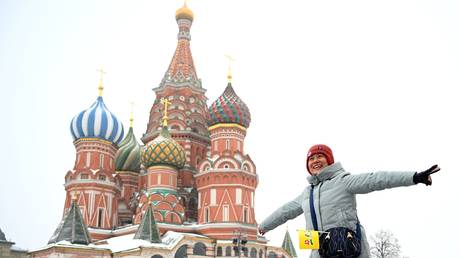
Russia will introduce visa-free travel for Chinese citizens in the very near future, President Vladimir Putin said on Tuesday. The measure will mirror Beijing’s recent decision to grant the same privilege to Russian nationals.
The Russian leader made the announcement during talks in Moscow with Chinese Premier Li Qiang, who had arrived for a session of the Shanghai Cooperation Organization’s (SCO) Council of Heads of Government.
Putin praised Beijing’s decision in to grant Russians visa-free entry, saying it would “undoubtedly” contribute to further strengthening cultural and economic ties between the two countries.
“From our side, very soon, reciprocal measures will come into force for citizens of the People’s Republic of China visiting Russia,” he said, adding that it would help boost bilateral cooperation.
China introduced one-year trial visa-free entry for Russian travelers in September.
The change has already shown up in travel statistics, with a 30-40% year-on-year increase in Russian citizens visiting China in October, according to Tatiana Lobach, deputy chair of the State Duma’s tourism committee. “People want to learn about the culture, nature, and traditions of a friendly country,” she told TASS.
Two years ago, Russia and China agreed to permit tour groups visa-free trips to each other’s countries, a change that has also boosted tourist numbers. Between January and July of this year, 237,000, Russians visited China, while 262,000 Chinese tourists came to Russia.
Eight Russian airlines currently operate 36 routes to China, while ten Chinese carriers fly 24 routes to Russia, with a combined 230 flights a week.
Artificial Intelligence models are “prone to some errors” and should be used alongside other tools, Sundar Pichai has told the BBC
Artificial intelligence engines remain vulnerable in terms of factual accuracy and should not be blindly trusted, the CEO of Google and its parent company Alphabet, Sundar Pichai, has warned.
In an interview with the BBC aired on Tuesday, Pichai urged users to rely on a broad range of search tools rather than depending solely on AI.
AI tools are helpful “if you want to creatively write something,” but users “have to learn to use these tools for what they’re good at, and not blindly trust everything they say,” he said. “The current state-of-the-art AI technology is prone to some errors.”
This comes as Google prepares to unveil its next major AI model, Gemini 3.0. Pichai has said the new AI assistant is expected to be released by the end of the year.
Launched in 2023, Gemini received criticism for its restrictive ‘safety’ and ‘diversity’ settings, which produced glaring inaccuracies in its image-generation outputs. The model was widely ridiculed for misrepresenting historical figures ranging from America’s founding fathers and Russian emperors to Catholic popes and even Nazi German soldiers.
Earlier this month, Google was accused of secretly enabling Gemini to collect user data without consent. A lawsuit filed in a California federal court claimed the company allowed the AI assistant to illegally intercept and monitor private communications across Gmail, chat, and video-conferencing services.
The rapid rise of AI technologies has driven up valuations across the sector, prompting warnings in Silicon Valley and beyond of a potential bubble as companies spend heavily to secure a foothold in the booming industry. The tech giants have been racing to keep pace with services such as ChatGPT, which have challenged Google’s dominance in online search and accelerated investment across the field.
Spending on AI among major tech companies is estimated at around $400 billion a year.
Asked whether Google would be immune if an AI bubble were to burst, Pichai replied: “I think no company is going to be immune, including us.”
Around $3 billion from the football club’s sale remains in limbo because Jersey began to probe the source of the funds
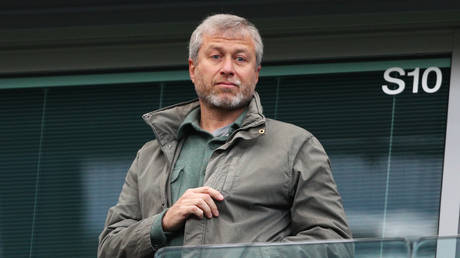
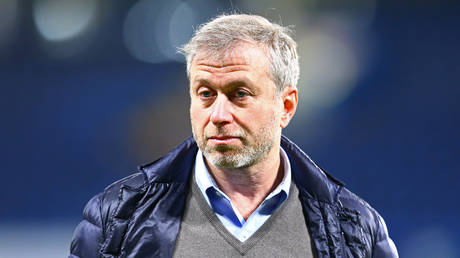
A UK offshore tax haven is blocking Russian tycoon Roman Abramovich’s attempt to hand the proceeds from the sale of the Chelsea football club to Ukraine, the Daily Telegraph reports, citing sources.
Following the escalation of the Ukraine conflict in 2022, the UK sanctioned Abramovich – who had owned Chelsea for 20 years – while in the Channel island of Jersey, a probe was launched into the origins of the Russian tycoon’s wealth.
Jersey’s Royal Court imposed a freezing order on £5.3 billion ($7 billion) in assets linked to Abramovich, the report said. The move also blocked £2.35 billion from the 2022 sale of Chelsea, money the tycoon had reportedly intended to direct toward aid for victims of the Ukraine conflict on both sides.
The funds remain frozen in a UK bank account pending a Foreign Office license for their release. Due to sanctions, Abramovich cannot access the money but retains legal ownership, meaning he must approve any distribution.
According to the outlet, Jersey initially treated Abramovich as a criminal suspect, but later documents show that raids on his properties were carried out unlawfully. His lawyers argued that officials deleted key data during the probe, a claim that emerged after they compelled the authorities to release internal communications about the case.
The Jersey court has recently sided with Abramovich, ordering the government to pay his legal costs and condemning its conduct as “extreme,” the report said.
A spokesperson for the businessman called the attorney general’s move “illegitimate” and “politically motivated,” arguing that it was driven by a desire to bolster Jersey’s image as a financial hub amid growing sensitivities over Russian money. He noted the irony of a government that once welcomed Abramovich’s “clean” funds now coming under scrutiny for its own actions.
The UK operates is own offshore tax-havens under crown protection, helping wealthy individuals and multinationals avoid higher taxes in their home countries.