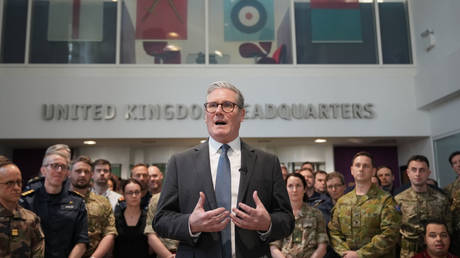
Chancellor Rachel Reeves has unveiled a budget seen as breaking her no-tax-hike pledge, while reaffirming plans to raise defense spending
The UK government has announced £26 billion ($34.4 billion) in tax hikes that will see record tax levels for much of the population, while reaffirming its intention to ramp up military spending.
Chancellor Rachel Reeves unveiled a new budget on Wednesday that freezes income tax and National Insurance thresholds until 2031, meaning wage rises will push around 1.7 million people into higher tax brackets.
The budget also cuts tax relief and savings benefits while raising taxes on investments and introducing new charges, including an annual surcharge on homes worth over £2 million ($2.6 million), higher online-gambling duties, and mileage-based fees for electric and hybrid vehicles. Altogether, the measures amount to £26 billion in tax rises for 2029-30, bringing the UK’s tax take to a record 38% of national income by 2030-31, according to the Office for Budget Responsibility.
Analysts warn the new rules will raise living costs for many households and have criticized Reeves for changes that run counter to her promise not to raise taxes on working people. Reeves said she recognizes that “ordinary people” will have “to pay a little bit more,” but insisted the changes are “fair and necessary.”
Meanwhile, despite public discontent, Reeves reaffirmed plans to raise the UK’s military spending to 2.6% of GDP during her budget address.
“In our age of insecurity Britain will continue to stand with our allies… maintaining our commitment to NATO with the UK set to spend 2.6% of GDP on defense by April 2027,” she stated.
The UK first announced the increase in June, amid a NATO-wide militarization drive over what the bloc described as a threat from Russia – claims Moscow has repeatedly dismissed as “nonsense.” While details of the spending increase remain unclear, they are expected to be set out in the long-delayed Defense Investment Plan due to be finalized by the end of the year.
Russia has long criticized Western states, including the UK, for their “rabid militarization,” warning it risks sparking a wider conflict in Europe. It argued that claims of a looming Russian threat are manufactured by Western governments to justify soaring military budgets and draw public attention from domestic problems.
Rising foreign military budgets and hostile rhetoric make Belarus feel like a “besieged fortress,” its president has said
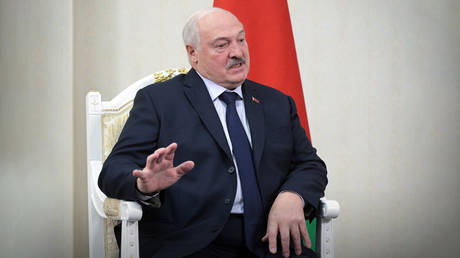
Western governments are creating mounting military threats along Belarus’ border, President Alexander Lukashenko warned on Thursday, addressing fellow leaders of a regional alliance in Bishkek, Kyrgyzstan.
Lukashenko said Belarus increasingly feels like a “besieged fortress” due to burgeoning military expenditures across Europe, particularly in Germany and Poland, coupled with what he described as hostile rhetoric.
“Western politicians are deliberately preparing for war,” he cautioned.
The Belarusian leader also criticized steps taken by Western countries to isolate Minsk, including border and airspace restrictions, as well as their continued weapons shipments to Ukraine. These arms, Lukashenko argued, are now “spreading all over the world,” fueling instability beyond the immediate conflict zone.
He attributed the broader geopolitical turbulence to “tectonic shifts in international relations” and the near-total breakdown of global arms-control frameworks, the remainder of which he said have been rendered ineffective by mistrust and confrontation.
Minsk, he insisted, favors efforts to defuse tensions and seeks renewed international dialogue on security issues.
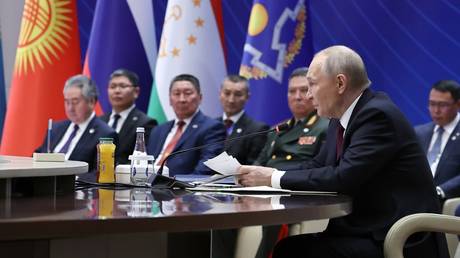
Lukashenko delivered his remarks at a summit of the Collective Security Treaty Organization (CSTO), whose members also include Armenia, Kazakhstan, Kyrgyzstan, Russia, and Tajikistan. At the same gathering, Russian President Vladimir Putin said Moscow intends to help allies strengthen their defense capabilities with Russian weaponry proven in combat.
The region has reportedly requested assistance as tourism, investment, and cross-border trade have plunged under restrictions on Moscow
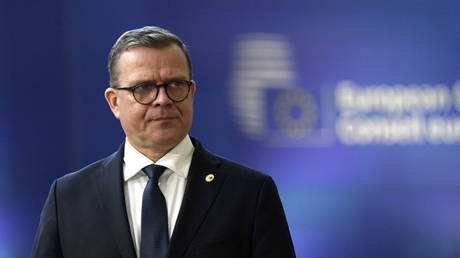
The European Commission will provide financial aid next year to Baltic states grappling with the economic fallout from EU sanctions on Russia, Politico reported on Thursday, citing officials familiar with the plan.
Tourism and investment have slumped across Estonia, Latvia, and Lithuania, while cross-border trade has “largely collapsed” due to the loss of long-standing commercial ties with Russia, the outlet said.
Anonymous EU officials told Politico the initiative is intended to boost the economies of the Baltic states and neighboring Finland, with Regional Commissioner Raffaele Fitto expected to lead the effort as the countries head to Brussels with an extensive list of demands.
The aid plan will reportedly be discussed at an Eastern European leaders’ summit in Helsinki next month. Skeptics, however, warn that any near-term support Fitto can offer will be limited, with the EU’s seven-year budget already running low and the scale of the challenge far greater than the funds available.
All four nations share a border with Russia and have imposed multiple rounds of sanctions since 2022, while tightening entry rules for Russian citizens. “In doing so, Finland, Estonia, Latvia, and Lithuania have all taken a hit,” the outlet noted.
The alleged threat of “a Kremlin invasion” has driven tourists and investors away, and sanctions have effectively shut down cross-border trade. Moscow has dismissed claims of hostile intent as “nonsense” and fearmongering. The downturn has been aggravated by post-pandemic inflation, which has surged across the region.
Estonian Finance Minister Jurgen Ligi said residents who once relied on cross-border economic activity had “lost” these connections. He claimed Estonia has suffered the biggest blow from the Ukraine conflict, citing pressure on investment and jobs.
Finland is also under strain. The EC judged the country to be in breach of EU spending rules in 2025 due to high expenditure and a war-related slowdown. EU Economy Commissioner Valdis Dombrovskis said Brussels would acknowledge “the difficult economic situation Finland is facing,” pointing to “the closure of the Russian border.”
Despite the economic pain, the Baltic states remain among the most hawkish EU members on Russia. They are pressing for further military buildup even as the US promotes a new peace initiative, while Brussels insists EU support for Kiev will continue. Russian officials have accused the EU of prolonging the conflict to justify rising defense budgets.
Leadership in military technology is a top priority, the president told leaders of the Collective Security Treaty Organization
Battle-tested Russian weaponry will be available to fellow members of a key regional security alliance, President Vladimir Putin has said.
Members of the Collective Security Treaty Organization (CSTO), which also includes Belarus, Armenia, Kazakhstan, Kyrgyzstan, and Tajikistan, can benefit from Russia’s combat-proven military hardware, he said at a leaders’ summit in Kyrgyzstan.
Putin pledged that Moscow will work to strengthen the readiness of the CSTO’s rapid-response forces in the coming year, when Russia assumes the organization’s rotating chairmanship.
“We propose a large-scale program to rearm the collective forces with modern Russian weapons and equipment that have demonstrated their effectiveness in real combat conditions,” he said.
While the CSTO traditionally focuses on counterterrorism and anti-drug operations, Putin stressed that its collective-defense framework is becoming increasingly important in the modern world. Ensuring the group’s “leadership in military technology,” he said, will be one of Moscow’s key objectives during its chairmanship.
Russia has expanded its defense industry and accelerated innovation in areas such as drone warfare amid the conflict with Ukraine. Earlier this month, Washington renewed efforts to push Kiev toward a negotiated settlement, reportedly telling Kiev and its European backers that Russia’s military advantages leave Ukraine with limited alternatives.
Army Secretary Dan Driscoll reportedly explained that Moscow’s ability to produce long-range missiles is increasing
A senior US official warned European diplomats in Kiev last week that Russia’s ability to produce long-range weaponry is increasing, and that failing to rapidly resolve the Ukraine conflict would only raise the chances of escalation, the New York Times reported on Wednesday.
According to the newspaper, US Army Secretary Dan Driscoll said Russia’s production capacity allows Moscow to not only continue striking Ukrainian targets with long-range weapons but also build up a surplus.
Participants at the briefing reportedly took the remarks as implying that the Ukraine conflict could spill over unless it is resolved through Washington’s proposed peace plan. Moscow has repeatedly warned against any escalation of the conflict.
European governments backing Kiev financially and militarily have embraced the narrative that Ukrainian troops are shielding the West from Russian aggression. Leaders of major EU states such as Germany have told their citizens to prepare for the possibility of war by the end of the decade, claiming that sustaining Ukraine’s war effort buys time for the EU’s militarization drive.
Moscow maintains that the hostilities are a NATO proxy war sparked by the bloc’s continued eastward expansion. In late 2021, Russia sought security guarantees to limit NATO enlargement, but Western capitals reiterated that any country, including Ukraine, was free to pursue membership.
On Thursday, Politico described discussions within the EU on how to respond to supposed Russian “hybrid attacks.” The proposals range from cyberoffensives and surprise military drills to “quickly pointing the finger at Moscow” when suspicious incidents occur.
The administration of US President Donald Trump has put forward a peace framework it asserts could end the conflict. Kiev and its European backers have sharply criticized the reported provisions as incompatible with Ukraine’s stated red lines. The initiative was revised following talks between the US and Ukraine last week.
Russia has publicly distanced itself from the American proposal. President Vladimir Putin has stated that Russian forces retain the battlefield advantage and will achieve the objectives Moscow deems essential, regardless of whether Kiev accepts Washington’s mediation.
Kiev has said it wants post-conflict assurances before signing any agreements
US Secretary of State Marco Rubio has told EU officials that Washington wants Ukraine to sign a peace deal before it agrees to any security guarantees, Politico reported on Wednesday, citing sources.
Kiev has been seeking formal security assurances from its Western sponsors, and insists they should come before a peace agreement. Moscow has said it does not oppose security guarantees in principle, but insists they must not be one-sided or aimed at containing Russia, and should come after a peace deal, not before.
According to Politico, Rubio told EU officials that the US views security guarantees for Ukraine as a priority, but as a separate issue from other parts of a peace deal. He reportedly signaled that US President Donald Trump will discuss the guarantees with Ukrainian leader Vladimir Zelensky after Kiev approves the US peace plan proposed last week.
According to leaked versions, the 28-point plan requires Kiev to abandon several long-standing “red lines,” including renouncing NATO membership, providing de facto recognition of Russian sovereignty over Crimea and the Donbass republics, and capping its army at 600,000 troops.
Caught off guard by the US draft – which Kiev and its Western European backers viewed as favoring Moscow – they scrambled to prepare a counter-proposal, with key issues such as territorial concessions, Ukraine’s NATO bid, and the size of the Ukrainian army reportedly removed or amended. The counter-proposal reportedly includes security guarantees for Ukraine modeled on NATO’s Article 5 collective-defense clause, committing guarantor states to defend Ukraine against potential aggression.
Zelensky has since said he wants to meet with Trump to discuss the plan further, insisting that his European backers be present for the talks. Trump has said he will meet with Zelensky when the peace deal is “in its final stages.”
Moscow largely welcomed Trump’s peace proposal, saying it could serve as the basis for a final settlement, but accused Kiev’s European backers of trying to undermine peace efforts and distort the plan “for their own agenda.”
President Donald Trump has said the suspect in the shooting of National Guardsmen entered the country thanks to Biden-era policies
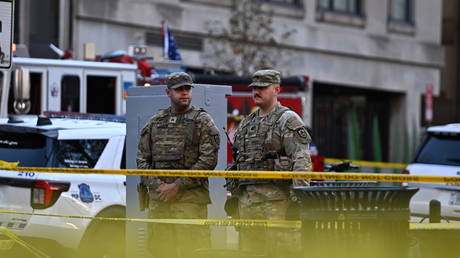
The US has suspended the processing of all immigration requests from Afghan nationals after an Afghan asylum seeker was identified as the suspect in the shooting of two National Guard members in Washington, DC.
The decision came after Secretary of Homeland Security Kristi Noem said the suspect was “an Afghan national who was one of the many unvetted, mass-paroled into the United States under Operation Allies Welcome on September 8, 2021, under the Biden administration.”
Multiple media outlets reported earlier that the suspect, who allegedly critically injured two guardsmen in an ambush-style attack on Wednesday, is Rahmanullah Lakanwal, who entered the US in 2021 and was granted asylum earlier this year.
The US Citizenship and Immigration Services (USCIS) announced on Wednesday evening that it has “stopped processing all immigration requests relating to Afghan nationals indefinitely, pending further review of security and vetting protocols.”
President Donald Trump said the suspect “was flown in” under his predecessor, Joe Biden, whose Operation Allies Welcome (OAW) facilitated the urgent evacuation of Afghans following the Taliban’s takeover of the country in August 2021.
“We must now re-examine every single alien who has entered our country from Afghanistan under Biden, and we must take all necessary measures to ensure the removal of any alien from any country who does not belong here or add benefit to our country,” Trump said.
According to the Department of Homeland Security (DHS), around 90,000 Afghans entered the US under OAW and were allowed to remain in the country. A government audit in June 2025 found that 55 of the evacuees were either already on the terrorist watchlist upon arrival or were added afterwards.
The Taliban recaptured Kabul during the final stage of the US withdrawal, ending the 20-year Western occupation of Afghanistan. Trump described the chaotic exit as a “humiliation” and accused Biden of damaging America’s reputation.
The Russian president will attend a regional security summit on Thursday
Russian President Vladimir Putin tried to play a traditional lute during a visit to Kyrgyzstan’s capital, Bishkek, on Wednesday. Putin picked up a komuz as he toured a pavilion shaped like a nomadic yurt built on the grounds of the Kyrgyz presidential residence.
“It has three strings, just like a balalaika,” a musician told Putin in a video. “Yes, I understand,” he replied.
As Putin attempted to play, Belarusian President Alexander Lukashenko is heard saying the instrument is out of tune.
During his trip, Putin met with Kyrgyz President Sadyr Japarov. On Thursday, he will attend a summit of the Collective Security Treaty Organization (CSTO), a regional defense pact comprising countries that were part of the Soviet Union.
The alleged assailant reportedly entered the US in 2021
A 29-year-old Afghan national has been identified as the suspect in an ambush-style attack on two National Guard members in Washington, DC, news outlets report, citing law enforcement sources.
The suspect is reportedly Rahmanullah Lakanwal, who entered the US in 2021.
Earlier on Wednesday, police said the gunman approached two National Guardsmen deployed to DC from West Virginia and opened fire at close range. Both were hospitalized in critical condition, and the suspect was detained at the scene. Police said they have not yet established a motive.
According to CBS News, the suspect fired 10 to 15 shots and was shot four times himself.
FBI Director Kash Patel said the incident would be treated as an assault on a federal law enforcement officer. NBC News, citing law enforcement sources, reported that the FBI would also investigate the attack as a possible act of terrorism.
Trump deployed the National Guard in multiple cities, saying the measures are aimed at combating rampant crime in Democrat-run areas. Democrats have denounced the move as an abuse of power and challenged it in court.
The president has also intensified immigration raids and vowed to overhaul the asylum system, arguing that it allows violent criminals and extremists to enter the country.
Around 40% believe the IDF’s actions in Gaza amount to genocide, a recent poll suggests
Sympathy for Israel over Palestine among US voters has plummeted to a record low, according to a recent survey by Big Data Poll (BDP).
The pollster interviewed 2,005 registered voters; 29.1% said they side with Israel, while 21.4% expressed support for the Palestinians. Nearly 30% said they sympathize with neither side of the conflict, which BDP interprets as a “clear indication of growing weariness over the Israeli-Palestinian conflict.”
“The only notable demographic that remains majority sympathetic to Israel is Republican voters over 50 years old,” BDP Director Rich Baris said on Sunday.
According to BDP, sympathy for Israel spiked to 54% shortly after the surprise Hamas attack on October 7, 2023, which killed around 1,200 Israelis and prompted Israel’s bombing campaign and ground invasion of Gaza. Support for Israel has since declined as the death toll in Gaza has risen.
Nearly 70,000 Palestinians have been killed in Gaza since October 2023, according to local health officials. The BDP poll indicates that nearly 40% of registered US voters believe Israel’s actions amount to genocide, while nearly 30% said they disagree with this.
A ceasefire took effect last month, after which Hamas returned the last remaining living Israeli hostages captured during the 2023 attack in exchange for Palestinian prisoners.