How a mid-market shoe chain tried to play luxury – and walked straight into a scandal
I would like to suggest that we discuss rather than condemn. But let’s be honest, we are going to condemn. And here’s why.
The other day, a lavish corporate party took place in the ski resort of Courchevel, France. Normally, what happens in Courchevel is none of our business. But this one was effectively funded with our money, the money Russian customers leave in the tills of Rendez-Vous – a mid-market shoe chain.
The company was celebrating its 25th anniversary and the 16th anniversary of its Courchevel boutique. Did you even know they had a store there? I didn’t. I waited years for one to open in my hometown of Volgograd, a city of over a million people. It never happened. I eventually moved away. Not because of the shop, of course. Although judging by the scale of this party, management might flatter themselves into thinking otherwise.
The first obvious question is: who was this celebration for?
Was it for the customers who have been buying shoes for years in regional shopping centers? Or for a small circle of celebrities who, frankly, do not care whether they celebrate an anniversary in Courchevel, Dubai, or a private villa somewhere?
I checked the brand’s social media. Dozens of posts show guests arriving by helicopter, dining with French singer Patricia Kaas, snowboarding, drinking expensive alcohol. The guest list included Russian celebrities Ksenia Sobchak (TV star and daughter of the former St Petersburg Mayor Anatoly Sobchak), Alexander Rogov, Lena Perminova (ex of erstwhile London Independent owner Alexander Lebedev), Oksana Samoilova and other familiar internet personalities. The event has already been compared online to Moscow’s infamous 2024 “naked party,” and not as a compliment. Because that one caused a major scandal in Russia.
Instead of applause, the brand received a wave of anger.
This is where the problem lies. Rendez-Vous is not a luxury house. It is a mass-market chain with mid-range positioning, even if some items carry ambitious price tags. It is not Jimmy Choo trying to reinvent itself, nor 12Storeez. For decades it has worked with ordinary consumers – people who buy practical shoes, not helicopter lifestyles.
And suddenly it tries to play luxury.
The gap between perception and reality is glaring. A brand built on mass demand has attempted an elite performance without the products, positioning, or audience to support it.
Let’s be blunt. I would bet the Courchevel store contributes a microscopic share of the company’s total profit. The guests at this party do not buy these shoes, so they bring precisely zero profit. They are decoration.
In the comments, people openly talk about boycotting the brand. They say they do not want to sponsor Samoilova’s holidays. That sentiment should terrify any marketing department.
The absurdity goes even further. I recently saw a Rendez-Vous shopping bag promoting the company’s agricultural project: from 2024, customers can receive two kilograms of potatoes as a gift with purchase. Picture the scene: Sobchak with a $240 pair of boots in one hand and a sack of potatoes in the other. Helicopters, influencers, potatoes, “shoes for everyone.” This is identity chaos, not bold brand strategy.
The brand looks torn between wanting to appear elite and needing to make money from mass consumers. It wants Courchevel and Krasnodar fields at the same time. The French Alps and the south of Russia.
In stores, this confusion is visible too. I recently went in to buy walking boots for strolls with my daughter. Instead, I was greeted by racks of clothing and aggressive upselling. Turtlenecks, accessories, everything except focus. Perhaps those are meant for party guests.
The company has not properly addressed the backlash. In today’s environment, silence is read as arrogance. Or as proof there is no convincing explanation. Audiences expect dialogue. Brands are no longer allowed to pretend customers are invisible.
From a marketing perspective, this is a classic own goal. When a mass brand behaves like an out-of-touch elite, people feel mocked. Especially “in a difficult time for the country,” as many commenters point out.
What should they do? Speak. Explain. Show respect to the people who actually fund the business. Better yet, reward customers directly: loyalty bonuses, real benefits, visible appreciation. Remind them who you work for.
Right now, Rendez-Vous looks like a brand that forgot where its money comes from, and decided to fly to Courchevel to find out.
Editor’s note: In a strange, and entirely unrelated, postscript to this episode the hotel hosting the Courchevel store apparently burned down this week. French media report that the Grandes Alpes Hotel has been burning for two days. Over 260 people have been evacuated. Meanwhile, the Rendez-Vous outlet has already vanished from Google Maps.
This article was first published by the online newspaper Gazeta.ru and was translated and edited by the RT team
Relations between the two countries “continue to progress,” Vladimir Putin has said
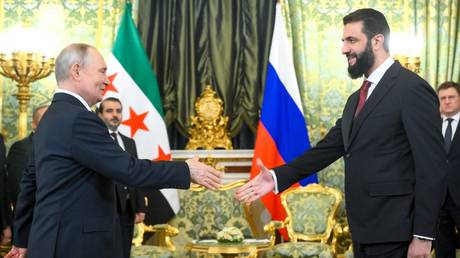
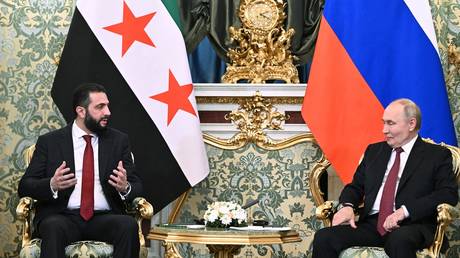
Russian President Vladimir Putin met with his Syrian counterpart, Ahmed al-Sharaa, on Wednesday to discuss Syria’s reconstruction, bilateral cooperation, and Moscow’s role in the country. This was Al-Sharaa’s second visit to the Russian capital in four months.
Al-Sharaa, who once led the Islamist group Hayat Tahrir al-Sham (HTS), rose to power in late 2024 following the fall of Bashar Assad’s government. The deposed Syrian leader fled to Russia, where he was granted asylum, and has since been living in Moscow with his family.
Russia has remained engaged with the new Syrian leadership and has maintained its military presence at Khmeimim Airbase and the Tartus naval facility in Syria.
During the meeting, Putin said diplomatic ties between Russia and Syria have always been friendly and thanked al-Sharaa for helping to further develop them. He added that trade volume between the two nations has grown by 4% since the previous meeting between the two presidents in October.
“While this is perhaps not as ambitious as we might have wished, it’s a positive step nonetheless, and it is a trend we should keep going. We continue to work actively to develop our partnership across all areas,” he said.
Moscow and Damascus plan to work together in a range of fields, including healthcare, construction, industry, and sports, according to Putin. Russian construction companies and businesses are ready to work jointly with their Syrian partners on the Middle Eastern nation’s reconstruction, he noted.
The Russian president also welcomed Damascus’ efforts to restore Syria’s territorial integrity and congratulated al-Sharaa on reestablishing government control over the territories east of the Euphrates River.
Al-Sharaa thanked Putin for Russia’s efforts to stabilize the situation in Syria and the Middle East, adding that Moscow plays a major role in the region.
The new Syrian government, which has been struggling to revive the economy and rein in sectarian violence since taking over, has also sought to rebuild diplomatic relations with a range of foreign nations, including the US. In December, Al-Sharaa visited Washington for talks with US President Donald Trump, who said he was “very satisfied” with Syria’s new leadership.
Steve Witkoff and Jared Kushner will not travel to Abu Dhabi this weekend
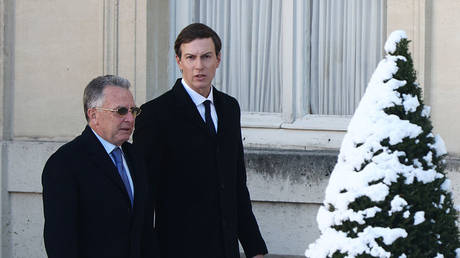
US envoys Steve Witkoff and Jared Kushner will not be present when Russian and Ukrainian officials meet in Abu Dhabi this weekend, US Secretary of State Marco Rubio has confirmed.
The meeting is scheduled for Sunday, a week after the first round of three-way talks between Russia, Ukraine, and the US concluded in the same location. Although the second round has been described as another trilateral meeting, Rubio said on Wednesday that the US will play a lesser role this time around.
“There might be a US presence” in Abu Dhabi, he told lawmakers in Washington, “but it won’t be Steve and Jared.”
Witkoff and Kushner have met multiple times with officials from Moscow and Kiev, including Russian President Vladimir Putin and Ukrainian leader Vladimir Zelensky. Witkoff described last weekend’s trilateral sit-down as “very constructive,” while Kremlin spokesman Dmitry Peskov hailed the beginning of direct talks between Russia, Ukraine, and the US, as a “positive” step.
All sides have acknowledged that territorial disputes remain the central obstacle to any peace agreement. Moscow says a lasting deal would require Ukraine to withdraw its forces from the regions of Donetsk and Lugansk, which voted to join Russia in 2022. The Kremlin has also demanded that Kiev formally recognize the new borders, including Crimea. Zelensky has repeatedly ruled out any territorial concessions.
Territory is “the one remaining item” holding up an agreement, Rubio said on Wednesday. “I know there’s active work going on to try and see if both sides’ views on that can be reconciled,” he continued, adding “it’s still a bridge we haven’t crossed.”
Putin’s top aide Yury Ushakov, who attended last weekend’s talks, told reporters before the meeting that Russia had the battlefield initiative and would achieve its objectives militarily if a diplomatic solution is not found.
The event has triggered aviation alerts over the Kamchatka Peninsula and neighboring regions
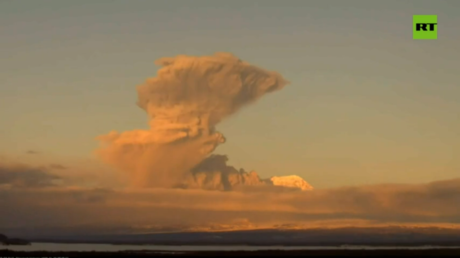
A volcanic eruption on the Kamchatka Peninsula in Russia’s Far East has sent a massive plume of ash high into the sky, which has traveled dozens of kilometers away from the site, prompting aviation warnings in the region.
The Shiveluch volcano erupted at around 11:00 AM local time on Wednesday, according to the Kamchatka Branch of the Geophysical Survey of the Russian Academy of Sciences.
The ash column reached approximately seven kilometers above sea level, according to the Kamchatka Volcano Eruption Response Team (KVERT). Satellite data confirmed the ash plume extended roughly 110 km west of the volcano, KVERT said. Due to the hazard to aircraft, an ‘orange’ code has been declared for the area, signifying a ban or severe restriction on flights.
Scientists have warned that the ongoing activity could affect low-flying aircraft and that further ash explosions up to 12 km high remain possible. The volcano is located around 450 km from the regional capital, Petropavlovsk-Kamchatsky, and 50 km from the settlement of Klyuchi.
The eruption follows seismic activity in the region earlier this week. On Monday, an earthquake with a magnitude of 5.3 was recorded southeast of Petropavlovsk-Kamchatsky, a potential precursor event.
Shiveluch, one of Kamchatka’s largest and most active volcanoes, has a history of significant eruptions. In 2024, an eruption sent ash up to eight kilometers high, leading to a higher ‘red’ code, while similar orange-level alerts were issued following events in November and September of 2025.
KVERT said volcanologists are closely monitoring the situation, noting that the volcano’s lava dome continues to grow, accompanied by strong gas-steam emissions.
The Russian president has said he would welcome the Ukrainian leader when he is open to dialogue, Yury Ushakov has said
Ukrainian leader Vladimir Zelensky is welcome to visit Moscow for a meeting with Russian President Vladimir Putin, a senior Kremlin aide said on Wednesday.
The idea of a Putin-Zelensky summit has been discussed by Moscow on multiple occasions, including during phone calls with US President Donald Trump, Yury Ushakov said, noting that the Russian side has never rejected the idea.
“Our president has also said several times to journalists that if Zelensky is truly ready for a meeting, then we would be happy to invite him to Moscow. And we will guarantee his safety and the necessary working conditions,” Ushakov told Russia 1.
He stressed, however, that it would require careful preliminary work, stating that “the main thing is that these contacts are well prepared. And secondly, that they are oriented towards achieving specific results.”
His comments follow the first trilateral talks between Russian, US, and Ukrainian delegations in Abu Dhabi last week, which US Special Envoy Steve Witkoff called “very constructive.” An unnamed US official told Axios that the parties are “very close to a meeting between Putin and Zelensky,” suggesting that more three-way negotiations are needed first, potentially paving the way for a meeting in Moscow or Kiev.
Kremlin spokesman Dmitry Peskov stated on Wednesday that the next trilateral meeting will likely take place on Sunday.
Russian officials, however, have pointed to a decree Zelensky signed in 2022 banning negotiations with Putin following accession referendums in four former Ukrainian regions, noting that Kiev has not repealed it.
Moscow has also questioned Zelensky’s legitimacy to sign binding agreements after the expiration of his presidential term in May 2024. Zelensky has refused to hold a new election, citing martial law, which he has repeatedly extended.
A Hamburg court has barred FAZ from spreading defamatory statements about Alisher Usmanov, including claims made by late opposition figure Alexey Navalny
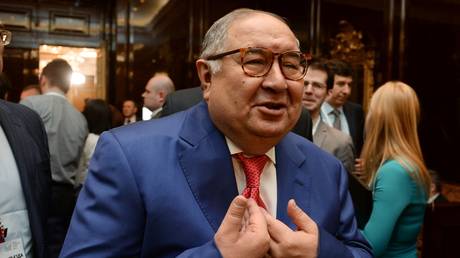
Russian tycoon Alisher Usmanov has scored another legal victory against Western media, with a German court barring a major newspaper from publishing claims about the billionaire that it ruled are false and defamatory, RBK and Reuters reported on Wednesday.
The case concerned an April 2025 Frankfurter Allgemeine Zeitung (FAZ) article titled ‘On behalf of the Kremlin’ (Im Auftrag des Kremls), which alleged that Usmanov used his wealth “in the interests or at the direction of the Kremlin,” informally represented Russian state interests abroad, and interfered in editorial policy at Kommersant daily after acquiring it in 2006.
The article also cited claims by late opposition figure Alexey Navalny, who accused Usmanov of illegal financial dealings with former Russian President Dmitry Medvedev.
A Moscow court ordered these allegations removed in 2017 after Usmanov sued for defamation. Navalny died in prison in 2024 while serving a sentence for extremism.
In a ruling issued by the Hamburg Regional Court on January 23, it found that the FAZ article contained defamatory and unverified claims and barred the outlet from continuing to spread them. Violations could reportedly incur fines of up to €250,000 ($300,000) per breach or prison for repeat offenses.
Usmanov’s team said the ruling marks the first time a European court has explicitly barred the publication of Navalny’s claims against the billionaire.
They noted that the allegations were cited in EU sanctions against him, imposed in early 2022 over his alleged Kremlin ties. Usmanov has challenged the sanctions in European courts, arguing that they relied on media reports and unverified claims, though his appeals have so far been rejected.
Usmanov’s lawyer, Joachim Steinhoefel, said the Hamburg Court ruling confirms the FAZ article was “a cocktail of falsehoods and discredited narratives,” and proves that the basis of the EU sanctions against the billionaire “is nothing more than an accumulation of defamatory, groundless and thus illegal allegations.”
Usmanov has pursued multiple defamation cases in recent years, securing retractions and cease-and-desist orders against major outlets including Forbes, Tagesspiegel, Kurier, as well as German broadcasters such as RTL and ARD.
Usmanov holds stakes in iron-ore and steel giant Metalloinvest and telecom firm MegaFon. Bloomberg estimates his net worth at around $18.8 billion, placing him among the world’s wealthiest individuals.
The second trilateral meeting will take place in Abu Dhabi later this week, spokesman Dmitry Peskov has said
The next meeting between Russian, US and Ukrainian negotiators will take place on February 1, Kremlin spokesman Dmitry Peskov confirmed on Wednesday, marking a second round of trilateral contacts aimed at exploring a possible settlement to the conflict.
Speaking to reporters in Moscow, Peskov said the date is still a “rough estimate,” but added that preparations are underway for the meeting, which is expected to be held in Abu Dhabi. The first round of talks between the three sides took place there last week and lasted two days.
Peskov described the start of direct contacts between Moscow, Washington and Kiev as a “positive” development, saying experts were discussing “a whole range of complex issues related to the settlement.” He did not provide details on the agenda.
All sides have acknowledged that territorial disputes remain the central obstacle to any peace agreement. Moscow says a lasting deal would require Ukraine to withdraw its forces from the regions of Donetsk and Lugansk, which voted to join Russia in 2022. The Kremlin has also demanded that Kiev formally recognize the new borders, including Crimea. Ukraine’s Vladimir Zelensky has repeatedly ruled out territorial concessions.
Yury Ushakov, a senior aide to President Vladimir Putin who attended the previous talks, said before last week’s meeting that Russia currently holds the battlefield initiative and would pursue its objectives militarily if a diplomatic solution cannot be reached.
The renewed contacts come amid continued fighting and diplomatic efforts to test whether a negotiated framework is possible, though officials on all sides have cautioned that significant differences remain.
From Sumy to Zaporozhye, the winter lull reveals the outlines of two potential large-scale operations shaping the year ahead
By the start of 2026, the Ukraine conflict had entered a familiar but no less consequential phase. After a year of intense maneuver warfare, grinding battles for key logistics hubs, and the steady erosion of Ukrainian reserves, the front line has once again settled into an operational pause. Such lulls should not be mistaken for de-escalation. In this war, periods of relative calm have consistently served as intervals for regrouping, replenishment, and the preparation of the next major blows.
A similar pattern unfolded a year ago. The fighting subsided during the winter months, only to give way in spring to a large-scale Russian offensive that defined much of 2025 and effectively concluded by year’s end. There is little reason to assume that the Russian General Staff has abandoned this approach. On the contrary, the current pause appears to be less an endpoint than a transition – one shaped by the outcomes of last year’s operations and by the strategic objectives that remain unresolved.
Against this backdrop, the key question is not whether the front will heat up again, but where and how. The configuration of forces, the condition of Ukrainian defenses, and the logic of Russian operational planning all point to several potential axes of advance, each with its own constraints and strategic value. In this overview, we assess the results of the recent fighting across the main sectors of the front and examine which directions may emerge as priorities for Russian operations in 2026.
Sumy front: Deceptive calm
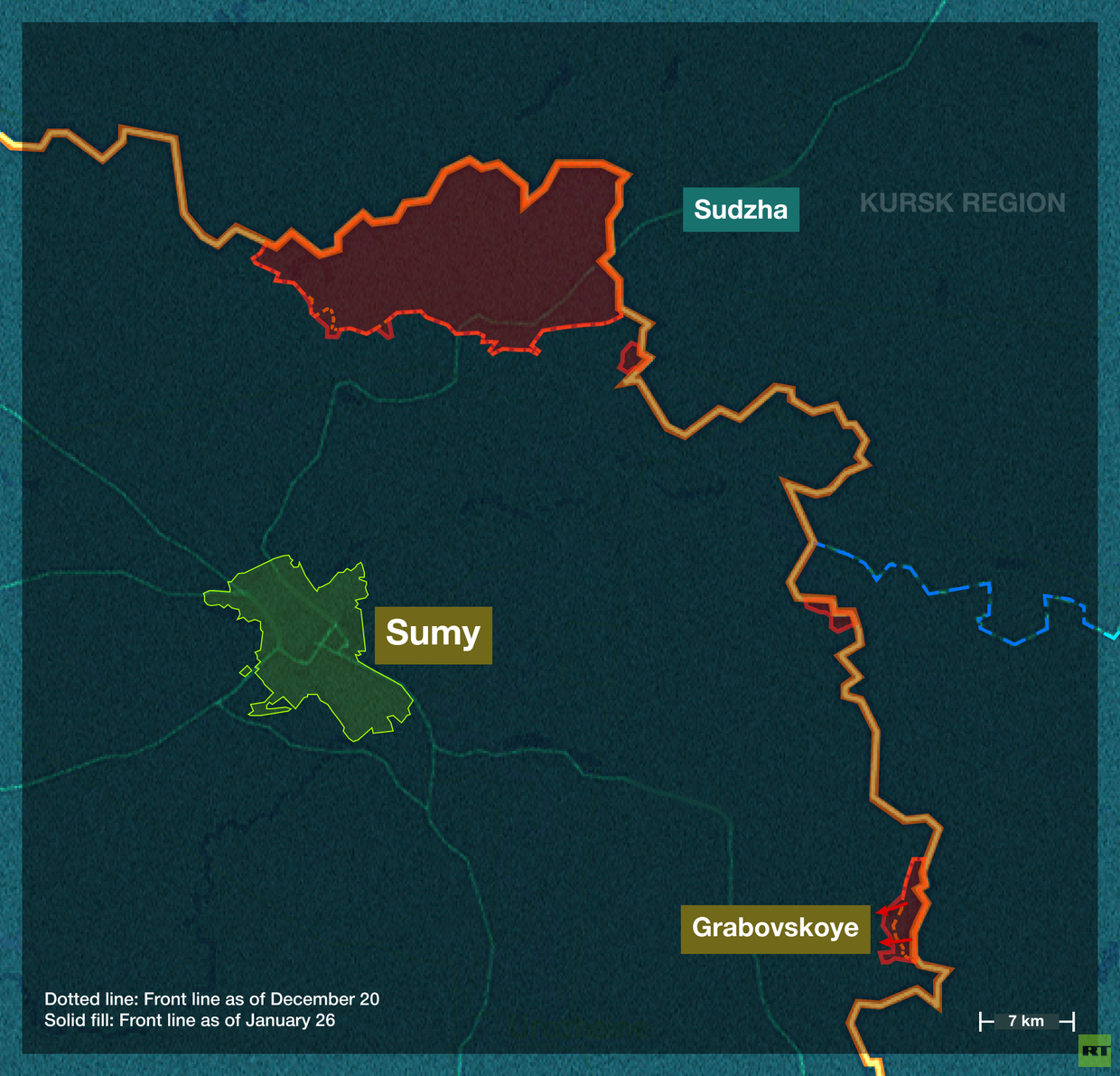
The buffer zone along the Ukrainian border was established following the destruction of the grouping of Ukrainian forces in Russia’s Kursk Region last spring. For a while, Ukrainian forces attempted counterattacks in this area without success, but gradually, things settled down. Then, in December, Russia’s North group of forces opened a new front here, capturing the large village of Grabovskoye without significant fighting.
It is likely that the Sumy front will continue to serve as a secondary front compared to others; the Russian Army lacks the strength and resources for a major offensive here. Apparently, the Russian Army’s actions in Grabovskoye are aimed at stretching Ukrainian reserves and preventing their redeployment elsewhere.
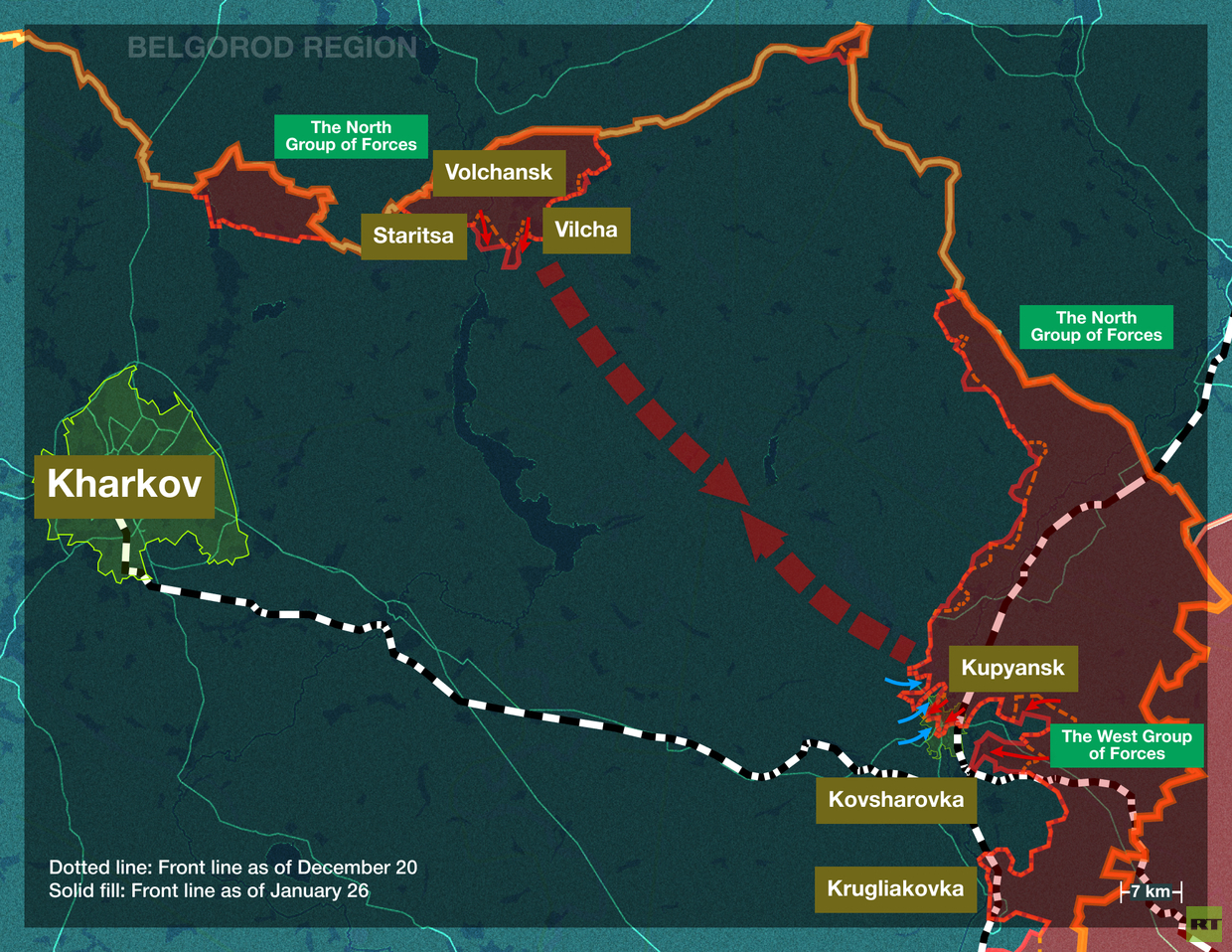
At the end of 2025, we saw intense fighting for the city of Kupyansk. Control over the western part of the city was transferred several times, while east of the city, the Russian Army gradually tightened its grip around Krugliakovka, Kovsharovka, and the Kupyansk-Uzlovoy railway station. The station holds strategic importance: the Russian forces aim not only to capture it but also to push the front at least 15-20km to the west, away from Kupyansk. Achieving this would enable direct railway supplies from Russia’s Belgorod Region to the ‘West’ group of forces, significantly easing logistics for the Russian Army in both Kupyansk and Liman.
The localized offensive near Volchansk has similar goals. The city was captured in late November, and since then, the North group of forces has advanced 8-10km further, capturing the settlements of Vilcha, Siminovka, Grafskoye, and Staritsa. The primary aim is to exert pressure on the rear of Ukrainian forces, which are counterattacking near Kupyansk, thereby drawing reserves away from that area.
Until Kupyansk and the railway station are fully liberated, this axis will likely remain secondary. At some point, the two groupings (one from Volchansk and the other from Kupyansk) may move toward each other, but that is not likely to happen soon.
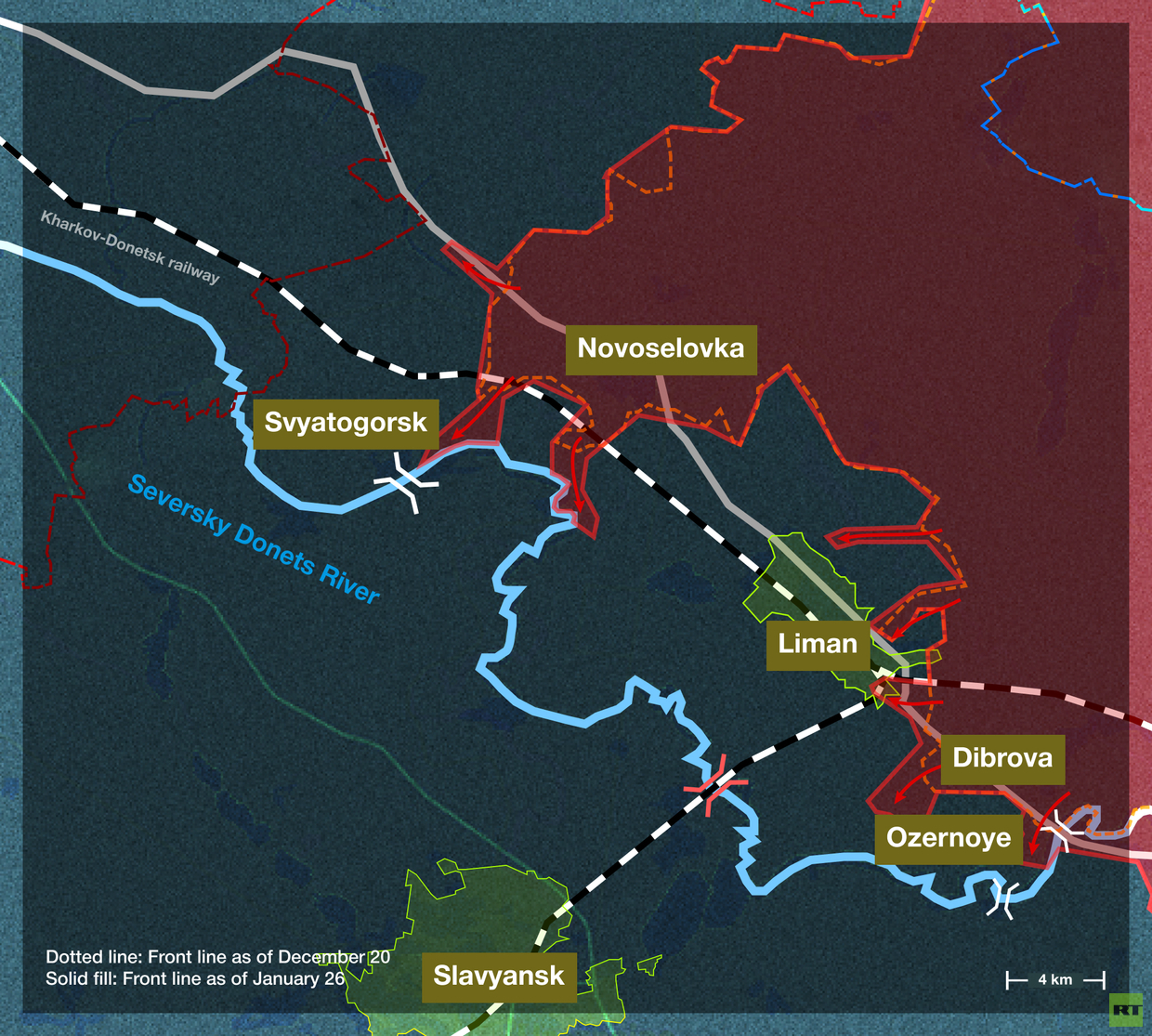
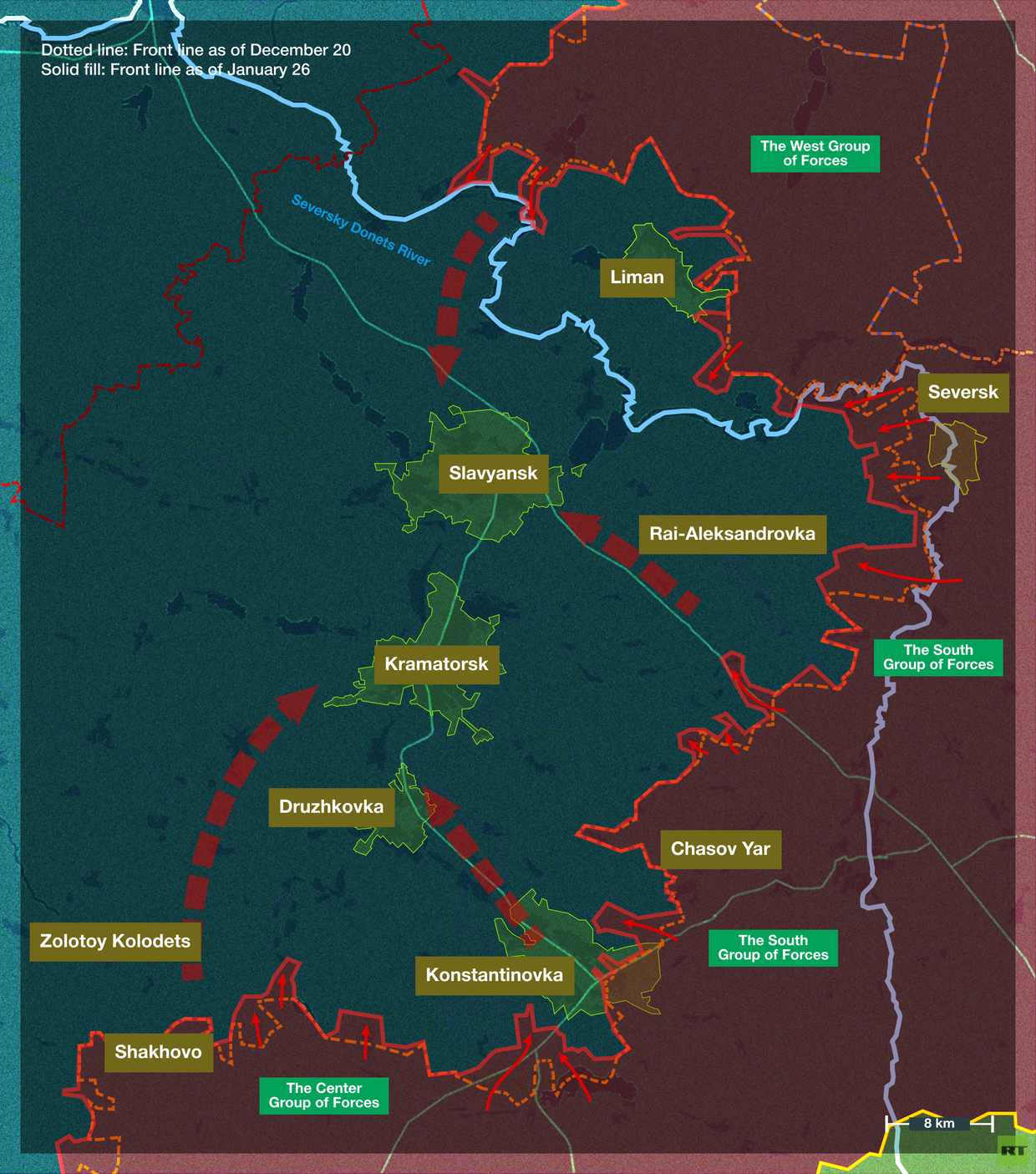
The ‘West’ group of forces is also involved in battles for Liman, which was abandoned by the Russian army in 2022. Since last year, the city has been partially encircled, and in January, the last remaining crossings over the Seversky Donets River were destroyed. This indicates that the Russian Army is attempting to exhaust the Ukrainian garrison in Liman.
The Russian Army has also advanced to the banks of the Seversky Donets River in several locations: in Sviatogorsk, near Novoselovka, in Dibrova, and Ozernoye. These maneuvers are crucial not only for capturing Liman, but also for ensuring success in the future battles for Slavyansk and Kramatorsk, since they establish a northern flank for encircling the city.
In 2022, the Russian military struggled to cross the Seversky Donets River; we’ll see how things unfold this time.
Seversk, Chasov Yar, Konstantinovka: Moving towards Slavyansk-Kramatorsk
This is one of the active areas of the front as of January. From Seversk, the South group of forces is pushing west along the Severskiy Donets river toward Slavyansk. Key settlements like Reznikovka and Zakotnoye have been captured, and the next major objective is Rai-Aleksandrovka.
Fighting also continues in Konstantinovka. The map illustrates how a semi-encirclement is forming around Ukraine’s largest remaining stronghold: the Slavyansk-Kramatorsk agglomeration. If Russian forces successfully cross the Seversky Donets River south of Liman and liberate Konstantinovka, they will be able to close in around Slavyansk-Kramatorsk (and nearby Druzhkovka) from three sides.
This may potentially become one of the most significant operations not only of the year, but of the entire Special Military Operation. Of course, we don’t know the plans of the Russian General Staff. However, such a strategy would demand coordinated actions from three military groups: The West Group of Forces will have to move from Liman across the river; the South Group of Forces – from Seversk, Chasov Yar, and Konstantinovka; and the Center Group of Forces – from Shakhovo-Zolotoy Kolodets. It seems unlikely that such an operation could occur before the middle or the second half of the year.
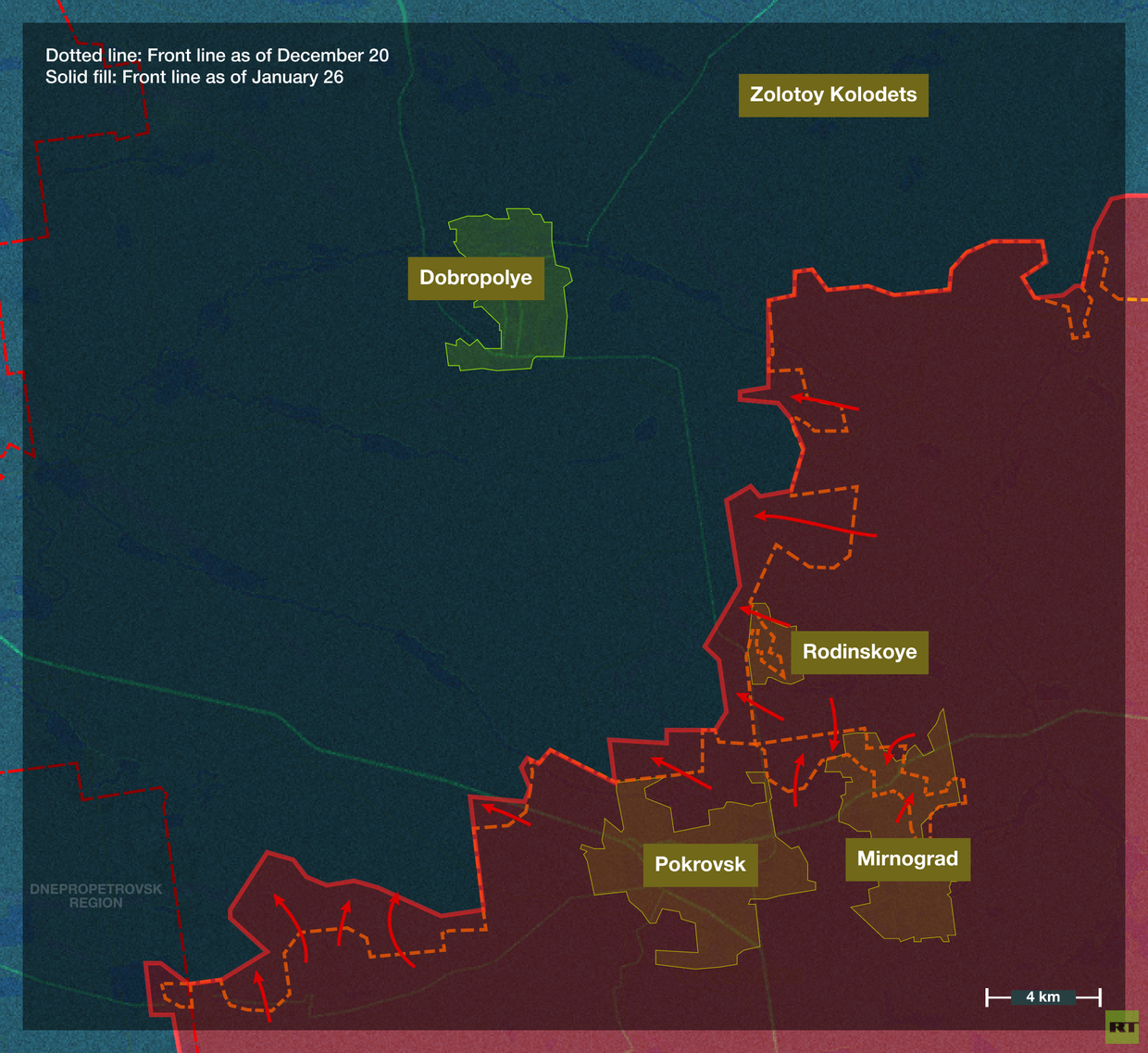
At the end of December 2025, the Mirnograd pocket was eliminated. Two Ukrainian brigades (a total of 3,000-4,000 troops) found themselves encircled in Mirnograd. Ukrainian attempts to break through via Rodninskoye were unsuccessful. A small portion of the surrounded troops managed to traverse the fields and find the way back to their army; some surrendered; but the rest had no way out.
In December and January, Russian forces also captured the small but strategically important town of Rodninskoye, and cleared the northern and western outskirts of Pokrovsk. This marked the end of the Russian Army’s major operation of 2025. The Center group of forces, which carried out the operation, is currently being replenished and is undergoing regrouping.
What’s next? From Pokrovsk-Mirnograd, there are two possible directions of advance. First, it’s possible to move north towards Dobropolye and Slavyansk-Kramatorsk, thereby forming a southern flank for encircling this major Ukrainian stronghold. The prospects of such an offensive were discussed earlier and it likely won’t happen until the latter half of the year.
There’s also the option to move westward toward the border with Dnepropetrovsk Region where there are no substantial fortifications. We will soon learn what objectives the General Staff chooses for this sector.
Dnieper River area and Gulaipole: The last stronghold on the way to Zaporozhye
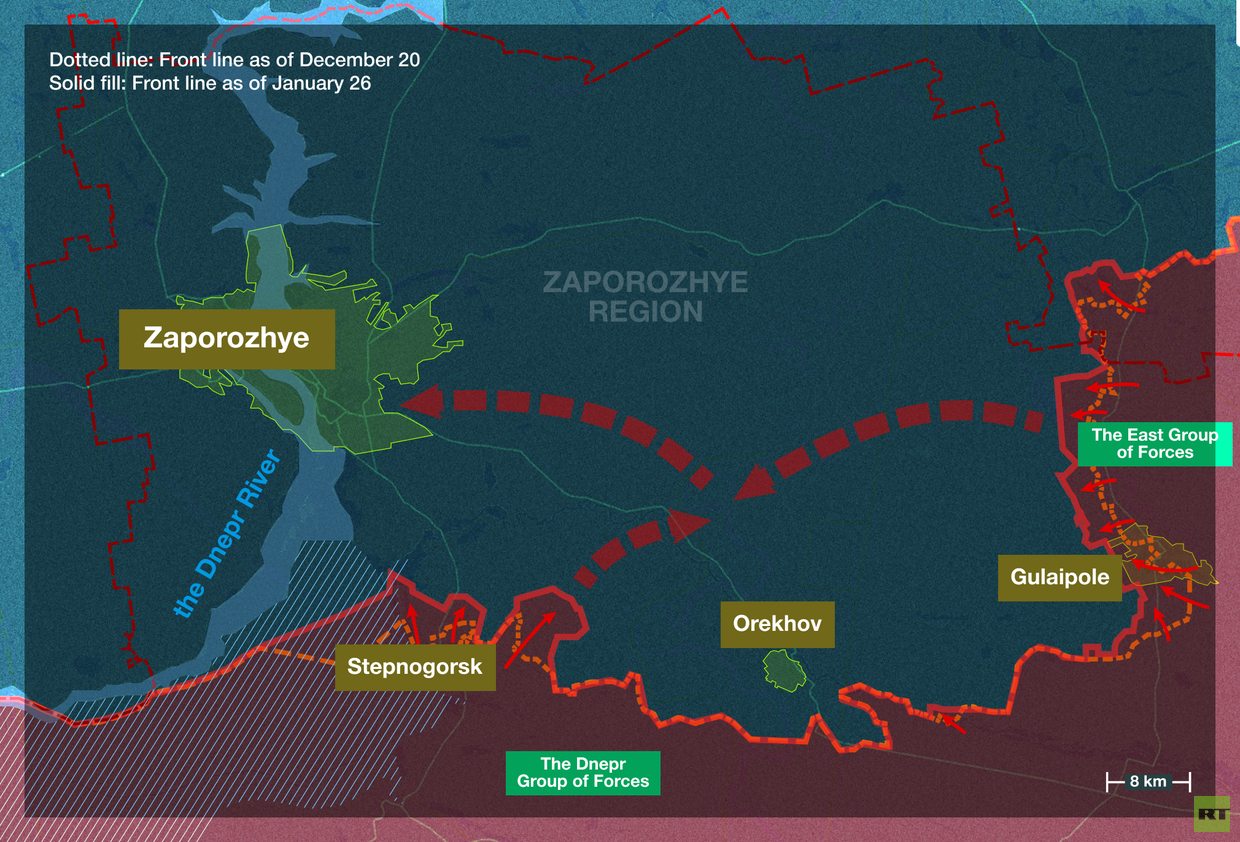
According to the Russian constitution, Zaporozhye Region and its capital, the city of Zaporozhye, are considered occupied by Ukrainian forces. The successful advances of the East group of forces in Dnepropetrovsk and Zaporozhye regions, the effective collapse of the Ukrainian front near Gulaipole, and the capture of this city at the end of the year have all created a solid foundation for a further advance toward Zaporozhye itself.
At the same time, the long-stagnant front along the Dnieper River has become active again. The Dnepr group of forces has liberated the strategically important town of Stepnogorsk and is advancing further along a wide front.
The main Ukrainian stronghold on the way to Zaporozhye is the city of Orekhov, which was the center of the Ukrainian counteroffensive in 2023. Approaching Orekhov from the south is challenging due to a formidable line of Ukrainian defenses, but a glance at the map reveals that the city is gradually becoming encircled from the sides of Gulaipole (from the east) and Stepnogorsk (from the west). If Ukrainian forces suffer losses comparable to those in Pokrovsk-Mirnograd during the fighting for Orekhov, they may find themselves unable to defend Zaporozhye, at least its left bank.
Given how rapidly the Ukrainian front crumbled in Gulaipole, the situation in this sector looks grim for Kiev. To patch up the holes, Ukrainian Commander-in Chief Aleksandr Syrsky had to pull reserves from other fronts – primarily Pokrovsk and Seversk.
In summary, an analysis of the front suggests that the Russian Army could launch two major offensives this year: one towards Slavyansk-Kramatorsk and another towards Orekhov, which would open the way to Zaporozhye. Both operations will require coordination and joint action from several groups of forces. In scale, they may surpass anything we’ve seen on the front since spring 2022.
It’s likely that these operations will begin simultaneously, although the first is more ambitious and will take longer to execute; troops will first need to reach Slavyansk-Kramatorsk. As in 2025, we may expect results and significant achievements towards the end of the year.
Lawmakers have proposed bans on remote banking, self-employment, and online services
A group of Russian lawmakers has submitted a bill to the State Duma that would tighten controls on individuals designated as foreign agents.
The draft law would introduce new restrictions, including bans on foreign agents registering as individual entrepreneurs and accessing remote banking services, lawmaker Vasily Piskaryov told Rossiyskaya Gazeta on Tuesday.
A bill submitted to Russia’s lower house of parliament to tighten oversight of foreign agents would require banks and the state authorities to provide information on their financial transactions and accounts electronically within three days of receiving a request from the Justice Ministry.
In an explanatory note, the lawmakers said that, amid what they described as ongoing “subversive activity” by “unfriendly countries,” the bill would “increase transparency” in the financial and economic activities of foreign agents and allow for the “swift suppression” of violations of laws governing individuals under foreign influence.
The bill is aimed at improving the efficiency of inter-agency cooperation in monitoring compliance with legislation on foreign agents, Piskaryov, one of its authors, told the outlet. The proposals would ban foreign agents from registering as individual entrepreneurs or self-employed workers, using remote banking services or electronic signatures, conducting property transactions, and accessing state services online.
The new rules would make it possible to “strengthen oversight” of the finances of foreign agents and quickly “respond to violations of the law,” State Duma Speaker Vyacheslav Volodin wrote on Max messaging channel.
He added that it is necessary to “put a stop to any illegal activity by those who have betrayed our country.”
Adopted in 2012, Russia’s foreign agent law applies to individuals or entities engaged in financial or political activities in the interests of a foreign state.
The designation imposes certain restrictions and requirements. Foreign agents must label all their content accordingly, regularly submit detailed financial reports to the Justice Ministry, and disclose their funding sources. Failure to comply is punishable by up to two years in prison.
The two crewmembers were captured aboard oil tanker the Marinera, which had reportedly attempted to travel to Venezuela
US authorities have released two Russian sailors who were captured earlier this month as part of Washington’s enforcement of sanctions against Venezuela, Foreign Ministry spokeswoman Maria Zakharova has said.
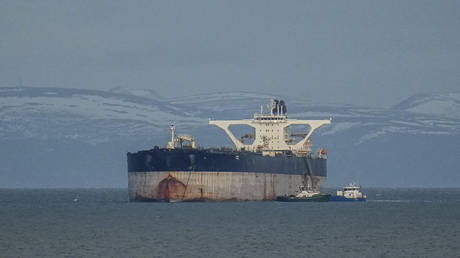
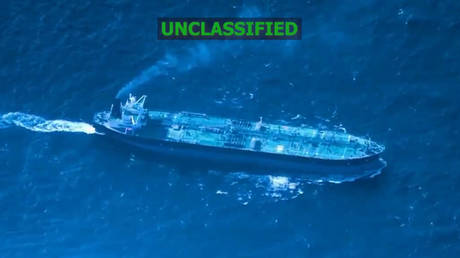
The sailors were part of the crew of the Russian-flagged oil tanker Marinera, formerly known as Bella 1, which was seized on January 7 in the North Atlantic after being tracked by the US from the Caribbean Sea. US officials have accused the vessel, chartered by a private trader, of violating oil sanctions against Venezuela.
The Marinera had a crew of 28, including six Georgian nationals, 17 Ukrainians, three Indians, and two Russians, according to media reports.
Moscow condemned the seizure as a serious violation of international maritime law and demanded that the US release the detained sailors.
Speaking to reporters on Wednesday, Zakharova confirmed that “the two sailors have been freed and are on their way back to Russia.”
Two days after the seizure, Moscow said the US had released the Russian sailors at President Donald Trump’s behest, but later clarified that they remained in custody, voicing hope that the issue would be resolved in the near future.
The US has been enforcing a blockade on sanctioned Venezuelan oil exports for several weeks, having seized at least seven tankers it deemed were violating sanctions. However, Washington has eased its sanctions against the oil-rich state since kidnapping Venezuelan President Nicolas Maduro and engaging in dialogue with interim leader Delcy Rodriguez.
On Tuesday, Reuters reported that the US was preparing to issue a general license, which would pave the way for a broad easing of sanctions as opposed to earlier individual waivers.