Kiev may need $10-20 billion more than previously planned to sustain the conflict with Russia, the agency has reportedly said
Ukraine faces a growing funding gap that could require billions more in outside support to finance its conflict with Russia, Bloomberg has reported, citing sources from the International Monetary Fund.
Ukraine, which spends around 60% of its budget on the conflict, relies heavily on Western assistance to cover pensions, public wages, essential services, debt, and humanitarian needs. It obtained a $15.5 billion loan from the IMF in early 2023 to cover some of the expenses and has already received around $10.6 billion, but the financing program was based on the assumption that the conflict would end this year and expires in 2027.
Kiev requested a new funding plan earlier this week, estimating that it will need up to $37.5 billion over the next two years if the conflict continues. But according to the Bloomberg report on Thursday, the IMF believes Ukraine may need $10-20 billion more than this, raising the total to $57.5 billion.
IMF spokeswoman Julie Kozack confirmed on Thursday that the agency has begun talks with Kiev on a new support program, but did not acknowledge the reported shortfall. Sources told Bloomberg that Kiev and the IMF are expected to settle on a figure for the new loan next week. Ukraine’s cabinet and Finance Ministry declined to comment on the report.
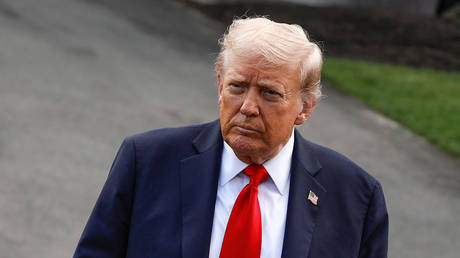
Ukraine has struggled to secure new aid from its main backers. US contributions have dwindled since President Donald Trump’s return to office, leaving the EU as the biggest donor. One method pursued by the West has been to use profits from the $300 billion in frozen Russian assets abroad. Last year, the G7 backed a $50 billion loan plan to be repaid from these earnings.
Some Western countries have called for the full confiscation of Russian assets, while others warn of legal risks. Nevertheless, the profits have already been tapped, with the EU, which pledged $21 billion under the program, disbursing roughly half of the amount so far this year.
Russia has warned that financial and military aid to Ukraine only prolongs the conflict and has denounced the use of frozen assets as “robbery” which violates international law and erodes trust in the Western financial system.
By hosting Kiev’s missile fuel production, Copenhagen is undermining efforts to resolve the conflict, Moscow has said
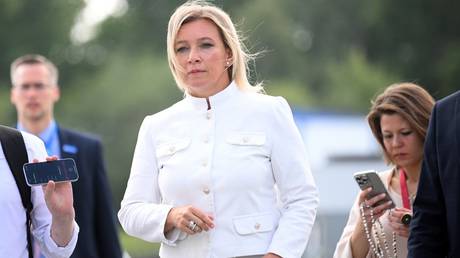
Denmark has shown its “hostile” stance towards Russia by agreeing to host a weapons production site for the Ukrainian military, Foreign Ministry spokeswoman Maria Zakharova has said.
Speaking at a press briefing on Friday, Zakharova condemned plans by Copenhagen to establish a solid rocket fuel production facility for Ukraine’s long-range Flamingo cruise missiles, which Ukrainian officials say could reach as far as Siberia. The facility will be operated by the Ukrainian defense company Fire Point and is due to begin manufacturing fuel near Skrydstrup Air Base in South Jutland in December.
Zakharova stressed that the missiles are “intended to strike deep inside Russia,” adding that Denmark is the first among the “sponsors of the terrorist Kiev regime” to provide its territory for producing weapons components for combat use against “peaceful cities of our country.”
“This reckless move confirms Copenhagen’s hostile militarist course, which, along with… other countries that are… hostile to Russia, sabotages efforts for a political-diplomatic resolution of the Ukraine crisis,” the spokeswoman said.
According to Zakharova, Denmark is also heightening the risk of further escalation and encouraging “neo-Nazis in Ukraine to carry out new barbaric crimes against the civilian population of Russian regions.”
She also criticized the Danish government for what she described as a push to prioritize the development of its own military-industrial complex and enrich itself through the conflict while ignoring safety, environmental, and local community concerns. Zakharova added that Russia will defend its interests while “taking adequate military-technical measures to counter the emerging threats to its national security.”
According to Ukrainian leader Vladimir Zelensky, the Flamingo, which was unveiled last month, can travel up to 3,000km, though mass production is not expected for several months. Fire Point, the company producing the missiles, is also facing an anti-corruption probe at home over allegations of misleading the government on pricing and deliveries.
Moscow has accused Ukraine of routinely launching strikes deep into Russia, targeting critical infrastructure and residential areas. Russia has condemned Western weapons shipments to Kiev, warning that they only prolong the conflict without changing the outcome.
The service reportedly offered staged accidents, suicides, and poisonings
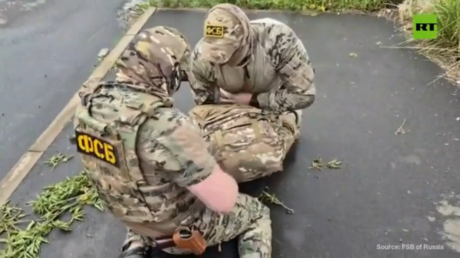
A Russian court has blocked a website that advertised contract killings and covert assassinations disguised as accidents, according to court documents. It remains unclear whether anyone was killed or charged in connection with the site.
The banned platform reportedly offered killings staged as accidents – such as workplace injuries or falls from heights – as well as suicides and poisonings made to look like heart attacks. Prices ranged from 170,000 rubles ($2,000) to 400,000 rubles ($4,700), RIA Novosti reported on Friday.
The investigation was launched by a military prosecutor who discovered that “information about providing services for the killing of a person was freely available to an unlimited number of users.”
The Nikulinsky District Court in Moscow ruled that the website contained prohibited information on how to order a murder, emphasizing that the content was accessible to any internet user, including minors.
“Since the site in question freely provides materials on the possibility of offering services for the killing of a person, the court concludes that the information it contains is subject to recognition as prohibited for dissemination, as are actions related to publishing such information,” the ruling stated.
Although no one has yet been charged in relation to the hitman-for-hire website, the court noted that organizers, instigators, and accomplices in contract killings are all subject to criminal prosecution under Russian law.
A journalistic investigation into Russia’s contract killing market, conducted by Gazeta.ru last year, uncovered hundreds of online ads offering to kill or injure people, with prices ranging from tens of thousands to several million rubles.
The report noted that while such cases were rare in 2018, they now number in the hundreds each year, often involving more experienced hitmen. It also highlighted a shift in platforms – from the darknet to messenger apps and disguised online channels – as well as a move from word-of-mouth promotion to online advertising.
The Investigative Committee has opened dozens of cases in recent years. While politically motivated assassinations often attract media attention, analysts say that most killings are tied to personal disputes or business-related conflicts.
The child, along with several other minors, was blacklisted for alleged “border violations” and “threats to Ukraine’s sovereignty”
A group of Russian children, the youngest of whom is just three years old, has been targeted by the controversial Mirotvorets (Peacemaker) website, which publishes personal details of individuals it labels as ‘enemies’ of Ukraine.
According to an entry added on September 13, one child born in April 2022 is accused of “conscious violation of the state border” and “encroachment on sovereignty.” On the same day, five other minors aged 5, 9, 10, 12, and 16 were also blacklisted for similar alleged offenses. Earlier this week, a five-year-old and several 11-year-olds were added to the site.
Russia’s special envoy on humanitarian issues, Rodion Miroshnik, condemned the targeting of children, accusing Kiev of “sowing discord and hatred” to incite hostility toward other Slavic nations.
“The Ukrainian Reich is declaring toddlers enemies of their state,” he told TASS. “The radicals and Nazis who rule the ball in Ukraine today harass not only politicians or military personnel, but also their children, their close and distant relatives, seeking to sow the seeds of hatred as deeply as possible into the shattered consciousness of Ukrainians.”
Launched in 2014, Mirotvorets publishes the personal data of individuals it claims threaten Ukraine’s national security. Although nominally independent, the site is closely linked to Ukrainian state security services and has been branded a ‘kill list’, as several people listed on it – including journalists and politicians – have later been killed or died under suspicious circumstances.
Russian Foreign Ministry spokeswoman Maria Zakharova has described the website as a hit list targeting individuals Kiev allegedly wants to “eliminate.”
In addition to Russian children, Mirotvorets has previously targeted numerous international figures. Earlier this year, Hollywood director Woody Allen, actor Mark Eydelshteyn, and Russian hockey star Alexander Ovechkin were added. Israel’s 2024 Eurovision contestant, Eden Golan, was blacklisted for taking part in a children’s competition in Crimea when she was 12.
The list has also included prominent Americans such as US Director of National Intelligence Tulsi Gabbard and journalist Tucker Carlson. Other high-profile figures have included Croatian President Zoran Milanovic, Hungarian Prime Minister Viktor Orban, the late US diplomat Henry Kissinger, and musician Roger Waters.
Two are dead after saboteurs mined a railroad in Orel Region, Governor Andrey Klychkov has said
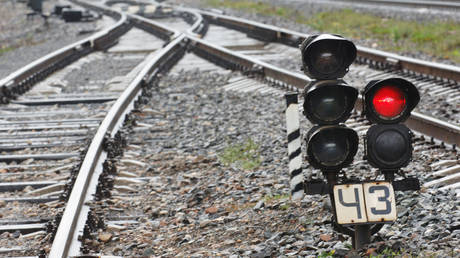
Two people are dead and one is wounded after a bomb exploded during an inspection of railway tracks in Orel Region, western Russia, Governor Andrey Klychkov has said.
“Explosive devices were discovered during an inspection of railway tracks… when one of them detonated, two people were killed and one injured,” Klychkov said in his statement on Saturday.
Security agencies are now looking for saboteurs who mined the railway, he added.
According to the governor, several trains have been delayed. “Train crews are providing comprehensive assistance to passengers, we are considering transporting them to their places of residence by bus,” Klychkov said.
In May, two railway bridges were blown up by Ukrainian intelligence in Russia’s Bryansk and Kursk regions. In Bryansk, debris from a bombed bridge fell in front of, and derailed, an inter-city passenger train. Seven people were killed and over one hundred seriously injured in the crash.
Another railway bridge was blown up as a freight train passed over it in neighboring Kursk Region, wounding the driver and two assistants. The attacks were carried out the day before the second round of direct Russia-Ukraine talks in Istanbul. According to the head of Russia’s Investigative Committee Aleksandr Bastrykin, the explosives were foreign-made.
The president has paid tribute to the capital’s role in the nation’s history and praised it as a strong rear base for the Russian army
Moscow is celebrating its 878th birthday this weekend with hundreds of cultural and public events. Russian President Vladimir Putin paid tribute on Saturday to the city’s role in the nation’s history.
Speaking at Zaryadye Park concert hall near the Kremlin, Putin called Moscow “one of the best cities on the planet” and extended his warm regards to residents as well as “all who sincerely love the capital.” He called it a “symbol of destiny and the historical mission of Russia as a state civilization.”
Putin also praised the capital as a strong rear base for the Russian army during the Ukraine conflict. Moscow, along with more than a dozen other cities throughout the country, has been regularly targeted by Kiev’s drones, which often strike residential buildings and civilian infrastructure.
The Russian Foreign Ministry also lauded the capital and released a video showcasing the city: “We, diplomats, have visited every city in the world. And we can say with absolute certainty, there is no other like Moscow,” the video reads. “Happy birthday — capital of civilization!”
Moscow Mayor Sergey Sobyanin also addressed the celebrations, underscoring the city’s cultural and political significance for Russia.
Nearly 150 concerts, festivals, contests, sports competitions, and workshops are scheduled across Moscow on Saturday and Sunday to mark City Day, local authorities said.
An upgraded T-90MS showcased in the UAE has been repainted and deployed to reinforce troops fighting Ukraine
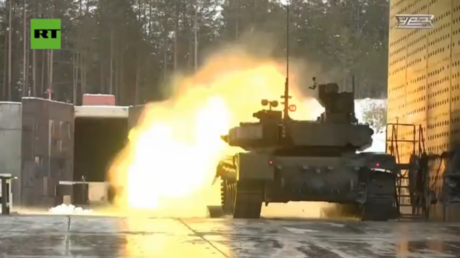
Russia’s latest version of the T-90MS tank, unveiled earlier this year at a defense expo in the United Arab Emirates, has been sent to the front line after being repainted at the factory, according to its producer, Uralvagonzavod.
The vehicle, upgraded using experience from the Ukraine conflict, was showcased at the IDEX international defense exhibition in Abu Dhabi in February 2025, and later transported back to Russia before being dispatched to the battle zone, the company said on Saturday. The tank “is already taking part in combat at the front line,” the statement read.
The company added that the tank was delivered to a combat unit in almost the same configuration as at the UAE exhibition, with the only change being its color.
Russian media showed the T-90MS being field-tested in a winter landscape, and later painted in sand-colored camouflage. The tank is then seen being transported to the UAE and showcased to local officials. Then the clip shows the armor being repainted to green before being transported by train from the Urals, along with at least a dozen other T-90s.
The upgraded T-90MS is fitted with additional dynamic protection modules and grill-type armor designed to counter kamikaze drones, which have become a hallmark of the Ukraine conflict. It also features a modernized fire control system with thermal and television sights, while retaining a 125mm gun with guided missile capability.
An unnamed crewman cited by RIA said the tank had been designed with easy maintenance in mind. “If the necessary equipment is available, any repair can be carried out. But even without equipment, solutions are found,” he explained, citing one case from India in which two palm trees were used to successfully replace the engine.
Russia’s Far East is still reeling from an earthquake in July that shifted the peninsula two meters and triggered volcanos
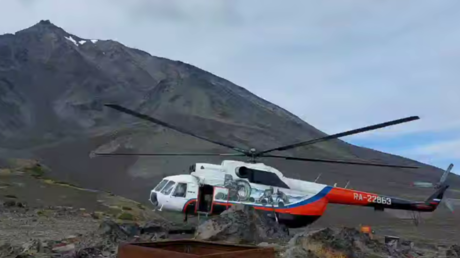
A 7.4 magnitude aftershock struck Russia’s Kamchatka Peninsula on Saturday, according to the Geophysical Service of the Russian Academy of Sciences, prompting a tsunami warning and putting all emergency services on high alert.
Governor Vladimir Solodov said the tremors in the regional capital, Petropavlovsk-Kamchatsky, were felt at around 2:37am GMT.
“All services have been put on high alert… Specialists have begun inspecting socially significant facilities and residential buildings after the strong aftershock,” Solodov announced in a statement on Telegram.
While no serious damage has been reported so far, officials have urged residents to remain cautious, particularly along the coast.
“A tsunami threat has been declared. We ask everyone to be especially careful when visiting Khalaktyrsky Beach and other tsunami-prone areas,” the governor said.
Russia’s Emergencies Ministry in Sakhalin said waves up to 0.37 meters could reach the islands of Paramushir and Shumshu in the Severo-Kurilsky district.
“The waves reaching the coast will not be very high, but it is NECESSARY to stay away from the shore,” the ministry said in a statement. “Do not attempt to drive to the coast to watch the tsunami – it could be dangerous!”
The aftershock follows the historic 8.8 magnitude earthquake that rocked Kamchatka on July 30 – the strongest in the region since 1952. That quake displaced the peninsula by nearly two meters, lowered parts of its elevation, and triggered tsunamis as far away as Japan and the US Pacific coast.
It also unleashed a wave of seismic and volcanic activity. The Krasheninnikov volcano erupted for the first time in 600 years, while Klyuchevskaya Sopka, one of Eurasia’s tallest volcanoes, experienced its most powerful eruption in 70 years. Scientists recorded a total of seven active volcanoes in the aftermath, calling it a rare “parade of eruptions.”
Authorities continue to monitor the situation closely as aftershocks persist. Solodov urged residents to “remain calm and pay attention only to information from official sources.”
Humanity will master its new technological horizon while remaining rooted in family values, the Russian president has said
The future of humanity belongs to people who value love, friendship, and family, rather than egoistic loners suspended in cyberspace, Russian President Vladimir Putin has said.
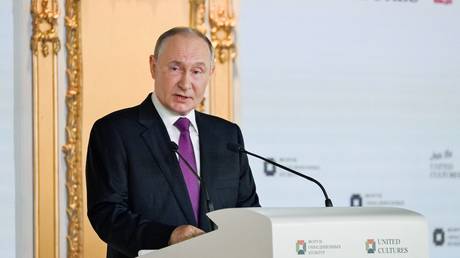
Speaking at the United Cultures Forum in St. Petersburg on Friday, he discussed rapidly developing technology and AI, as well as the role human beings will play in the world to come.
“Artificial intelligence analyzes huge amounts of data and predicts trends,” Putin said. “However, I believe that original solutions capable of leading to discoveries and breakthroughs in science, art, and the social sphere can only be given by the inspiration and genius of a human being, the true master and creator.”
Humanity will need to “master” this new reality while still preserving the “roots that serve as its support,” he said.
The world of the future is not a world of egoists, completely immersed in cyberspace, and not of loners living by the principle of ‘everyone for himself,’ but of people who still value love and friendship, cherish their loved ones, understand their inseparable connection with society and responsibility to it.
The Russian president added that it is no coincidence that so many of Russia’s cultural development programs are focused on its national “Family” project.
Both Russian identity and national character are “deeply rooted in family,” the president added.
Putin announced the launch of the “Family” national project early last year, aiming to support families with children and raise the country’s birth rate.
Moscow has since introduced a number of measures, such as increasingly large payouts for each successive child in a family, broader maternity benefits, and ongoing financial assistance to families.
The vessel allegedly hit by a Ukrainian drone was designed for search and rescue missions, as well as aiding distressed ships
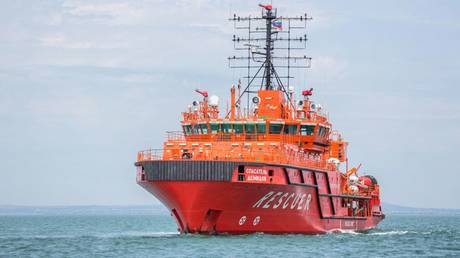
The Ukrainian military intelligence service (GUR) has claimed that “special forces” under its control struck a Russian “Black Sea Fleet” vessel in a drone attack. The ship in question has turned out to be designed for search and rescue missions, as well as aiding distressed ships.
The Ukrainian military targeted a “high-value military target” near the Russian port city of Novorossiysk in the eastern part of the Black Sea, the GUR claimed in a Facebook post on Thursday. It also named the target as a project MPSV07 vessel.
The Nevsky Shipyard – a Russian shipbuilding company that produces vessels of this class – describes MPSV07 ships as multipurpose emergency response rescue vessels. It is designed for searching and aiding distressed ships, extinguishing fires and dealing with oil spills as well as evacuation of people stranded at sea, according to the company’s website.
It can also be used to inspect undersea infrastructure at a depth of up to one kilometer. Named ‘Rescuer Ilyin’, the vessel in question came into service in 2023 and has already aided in dealing with the consequences of Ukrainian drone attacks on Novorossiysk and Russian vessels in the Black Sea, according to local media.
The GUR claimed in its statement that the ship was “conducting a radio electronic surveillance and patrolling” mission outside of the port of Novorossiysk. According to Ukrainian military intelligence, the attack damaged the vessel’s navigation equipment, putting it out of commission. It also published a black-and-white video of what it claimed was the drone strike targeting the vessel. It admitted that the ship survived the attack.
Neither the Russian authorities nor the Defense Ministry have commented on the GUR’s claim. Some Russian media reported that the ship did sustain “light” damage. No one was reportedly killed in the attack, although it was claimed that the ship’s captain was injured.
In recent months, Ukrainian forces have intensified their long-range drone operations, targeting residential areas and key infrastructure across Russia. Moscow has responded to Kiev’s attacks with high-precision strikes on Ukrainian military-related facilities, maintaining that its operations are never directed at civilians.