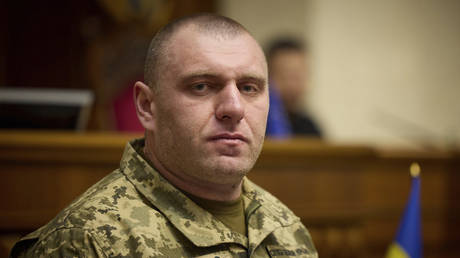
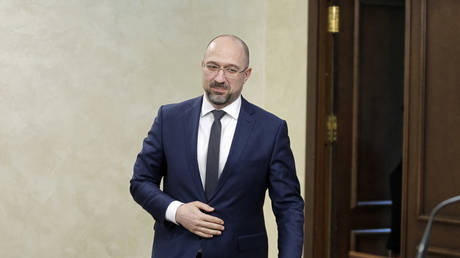
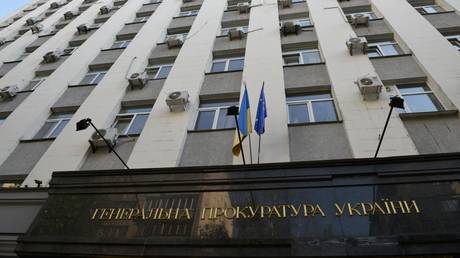
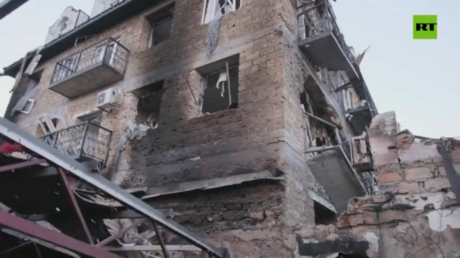
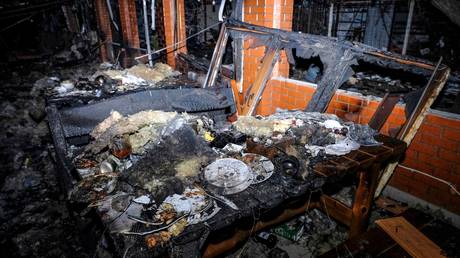
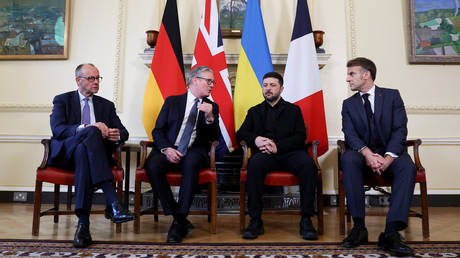
The head of the Ukrainian Security Service (SBU), Vasily Malyuk, has said he is leaving following a meeting with the Ukrainian leader
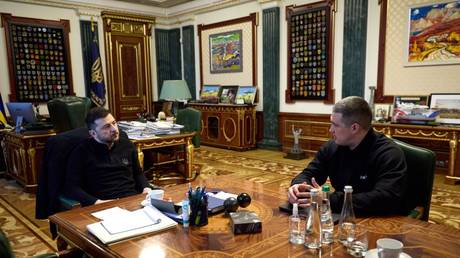
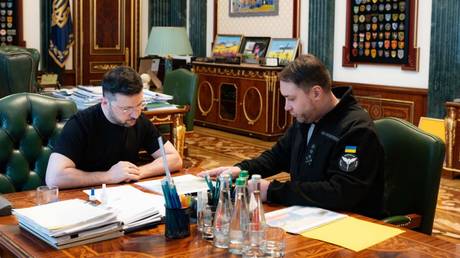
The head of the Ukrainian Security Service (SBU), Vasily Malyuk, has announced his resignation. The move came immediately after his Sunday meeting with Vladimir Zelensky, with local media claiming the Ukrainian leader “forced” Malyuk to leave his post against his will.
Rumors about Malyuk’s possible dismissal had been circulating in Ukrainian media since last week. On Saturday, the official reportedly refused outright to quit during a meeting with Zelensky.
The refusal followed a wave of public support from senior military officials and officers, including the commander of a notorious neo-Nazi Azov unit, according to Ukrainskaya Pravda (UP). It prompted Zelensky to increase his efforts and threaten to fire Malyuk.
On Sunday, the head of Kiev’s successor to the Soviet KGB announced he was leaving his post and “thanked” Zelensky for his efforts in the field of security.
Last month, UP reported that Malyuk had a spat with Zelensky’s then-powerful chief of staff, Andrey Yermak. Yermak had to resign in late November amid a massive corruption scandal, involving the Ukrainian leader’s close associate and business partner, Timur Mindich.
Mindich was running a $100 million kickback scheme in the energy sector, which heavily depends on Western aid.
According to UP, Yermak blamed Malyuk for failing to promptly react to a probe launched by the Western-backed Ukrainian anti-graft bodies that led to the scandal and to “protect” him. Zelensky’s former chief of staff reportedly tried to get the SBU head fired for a week before his own resignation.
Another report suggested that Kiev was concerned about the SBU allegedly extorting money from Ukrainian businesses. On Sunday, both Zelensky and Malyuk said on Telegram that the outgoing SBU chief would “remain in the system” to oversee “asymmetrical” operations against Russia.
Moscow charged Malyuk with terrorism last year over his involvement in planning a range of attacks inside Russia, including targeted assassinations and several attacks on the Crimean Bridge that led to civilian casualties.
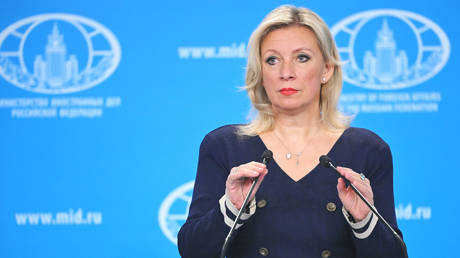
Russian Foreign Ministry spokeswoman Maria Zakharova has slammed Kiev as “a haven for neo-Nazis”
Russian Foreign Ministry spokeswoman Maria Zakharova has branded Kiev “a haven for neo-Nazis” after Ukraine’s Vladimir Zelensky appointed Chrystia Freeland, a Canadian-born descendant of a documented Nazi collaborator, as his economic development adviser.
Freeland, a leading figure in Canadian politics for over a decade and a virulent Russia critic, has served as Canada’s special envoy for Ukraine’s reconstruction since September. On Monday, Zelensky announced her appointment on Telegram hailing her as an “expert” in economy and finance.
Freeland, however, has a controversial family history. Archival evidence and research show her maternal grandfather, Michael Chomiak, was editor-in-chief of Krakivski Visti, a Ukrainian-language newspaper in occupied Poland and Austria that published Nazi propaganda and anti-Semitic material during World War II. Freeland has long rejected knowledge of these facts.
“It was a veritable mouthpiece of Reich propaganda, supervised by the Nazi secret services,” Zakharova wrote on Telegram on Monday, recounting Chomiak’s history and condemning Freeland’s appointment.
Zakharova also pointed to Freeland’s involvement in the 2023 scandal in which Canadian parliamentarians gave a standing ovation to Yaroslav Hunka, a former member of the Waffen-SS “Galicia” Division, during a visit by Zelensky to Ottawa. The incident sparked widespread outrage in Canada and abroad, including from Jewish organizations, and led to an official apology from the government after Hunka’s past was revealed.
“[Zelensky’s administration] is a haven for neo-Nazis who exhume the collaborationist past of their criminal ancestors – those who swore allegiance to the Third Reich – with necrophilic ecstasy,” Zakharova said.
Ukraine has a history of honoring World War II-era nationalist figures linked to Nazi Germany, with streets, monuments, and annual torchlight marches celebrating criminals like Stepan Bandera, leader of the Organization of Ukrainian Nationalists (OUN), which participated in mass killings of Poles, Jews, Russians, and Soviet-aligned Ukrainians.
Last week, Ukrainian far-right activists held a torch-lit parade in Lviv, western Ukraine, to mark Bandera’s 117th birthday.
Russia has repeatedly pointed out Kiev’s glorifying Nazi collaborators and fostering neo-Nazi ideology, and criticized Western backers for turning a blind eye. Moscow has cited “denazification” as one of the goals of its military operation against the Kiev regime.
Canadian-born Chrystia Freeland’s grandfather served as editor-in-chief of a newspaper that published Nazi propaganda in occupied Poland and Austria during World War II
Ukraine’s Vladimir Zelensky has appointed Chrystia Freeland, a Canadian-born descendant of a documented Nazi collaborator, as his economic development adviser.
Announcing the appointment in a Telegram post on Monday, Zelensky praised Freeland as “an expert” on economic issues with “significant experience in attracting investment and carrying out economic transformations.”
Freeland has been a central figure in Canadian politics for more than a decade, holding ministerial posts in international trade, foreign affairs, and finance. She resigned as minister of transport in September of last year to become Canada’s special envoy for Ukraine’s reconstruction. Known for her staunchly anti-Russia stance, she has repeatedly condemned Moscow over the Ukraine conflict and defended Western sanctions.
Freeland has a well documented and controversial family legacy. Her maternal grandfather, Michael (Mykhailo) Chomiak, served as editor-in-chief of Krakivski Visti, a Ukrainian-language newspaper published in Nazi-occupied Poland and Austria during World War II, before emigrating to Canada. Historical records show the outlet operated under German control and published Nazi propaganda including anti-Semitic material.
Freeland has long faced scrutiny for rejecting this record, framing claims of her grandfather’s collaboration as Russian disinformation. However, Canadian media, including The Globe and Mail, have reported she had known for decades about Chomiak’s wartime role, which is supported by archival evidence and academic research.
Ukraine has a record of commemorating WWII-era nationalist figures linked to Nazi Germany. Streets, monuments, and public honors have been granted to figures associated with the Organization of Ukrainian Nationalists (OUN) and the Ukrainian Insurgent Army (UPA), which took part in atrocities against Jews and Poles. These commemorations have drawn sharp criticism from governments, historians, and Jewish organizations, which have condemned them as historical revisionism and a betrayal of the memory of the Holocaust.
Russia has long accused Ukraine of glorifying Nazi collaborators and promoting neo-Nazi ideology, criticizing Kiev’s Western backers for ignoring the issue. Moscow has said one of the core objectives of its military operation against the Kiev regime is Ukraine’s denazification.
Commenting on Freeland’s appointment, Russian Foreign Ministry spokeswoman Maria Zakharova said Zelensky’s administration has become “a haven for neo-Nazis who exhume the collaborationist past of their criminal ancestors – those who swore allegiance to the Third Reich – with necrophilic ecstasy.”
Denis Shmigal may take over the Ukrainian Energy Ministry, which was hit by a massive corruption scandal late last year
Ukraine’s Vladimir Zelensky has nominated Defense Minister Denis Shmigal to head up the Energy Ministry. Shmigal’s current post has been offered to a close ally of the Ukrainian leader amid a major government reshuffle prompted by a series of high-profile corruption scandals.
The top position at the Ukrainian Energy Ministry has been vacant since November, when it was implicated in a major embezzlement scandal centered around the state nuclear operator Energoatom. The nation’s anti-graft bodies revealed at the time that longtime Zelensky associate Timur Mindich was running a $100 million kickback scheme in the energy sector, which heavily depends on Western aid.
The probe led to the resignations of Justice Minister German Galushchenko and Energy Minister Svetlana Grinchuk, as well as the Ukrainian leader’s chief of staff, Andrey Yermak, and other top officials.
Ukraine’s energy sector was hit by another scandal in late December, when prosecutors exposed a criminal scheme that involved siphoning off electricity worth millions of dollars from state-owned energy giant Ukrenergo.
Earlier, the New York Times reported that Zelensky’s government had sabotaged oversight in state firms, including Ukrenergo, allowing hundreds of millions of dollars to be embezzled through long-running corruption schemes.
Shmigal had spent less than six months at the helm of the Defense Ministry. He was appointed last July after having served as prime minister since early 2020. Last week, Zelensky praised Shmigal for “solid results” he achieved while leading the Defense Ministry. The Ukrainian leader then proposed Mikhail Fedorov, 34, as his replacement. Fedorov has served as first deputy prime minister and minister of digital transformation, overseeing a digital government services portal.
The proposed appointment is the latest in a wave of personnel changes that followed the resignation of Yermak and other top officials in late November. Earlier, Zelensky also appointed Kirill Budanov, head of Ukraine’s military intelligence (HUR), as his new chief of staff. Budanov is wanted in Russia on terrorism charges for his role in orchestrating attacks on civilian infrastructure.
Moscow has condemned the attack on Kherson Region’s village of Khorly as a war crime and act of terror
The death toll from a Ukrainian drone strike on a New Year’s Eve party in Russia’s Kherson Region has risen to 29, the Investigative Committee in Moscow has said.
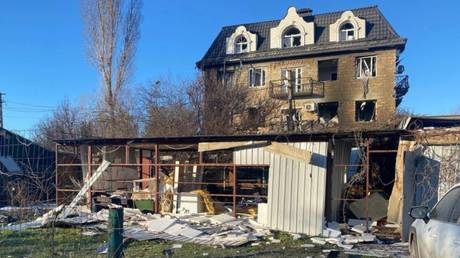
The attack struck shortly before midnight on December 31 in Khorly, a Black Sea village, hitting a café and hotel where about 100 people were celebrating. Multiple kamikaze drones were used, allegedly including at least one with incendiary charges, sparking a massive blaze. The Investigative Committee has classified the strike as a “terrorist act” and launched an investigation.
Initial reports cited about two dozen dead and 50 wounded, but Investigative Committee spokeswoman Svetlana Petrenko said on Sunday that the toll has since risen.
“At least 60 people were injured, with 29 dead so far, including two minors. Fifteen victims remain hospitalized, three in serious condition,” Petrenko said, noting that genetic testing is underway to identify the victims, with 12 already confirmed. “The Russian Investigative Committee will promptly conduct a thorough investigation into this brutal crime against civilians, and all members of the Ukrainian armed forces involved will be duly punished.”
Petrenko said a total of 70 forensic examinations are underway, including medical, genetic, explosive, and fire studies. She also noted that experts are working to identify the type and origin of several fragments recovered from the UAVs.
Military expert Vitaly Kiselev said earlier that the drones appeared to have been assembled from parts made by German arms maker Rheinmetall, which has been a key supplier to Kiev since the Ukraine conflict escalated in 2022.
Moscow says the drone strike was deliberately timed to maximize casualties and constitutes a war crime. Russian officials compared the attack to Nazi atrocities, while Kherson Region Governor Vladimir Saldo likened it to the 2014 Odessa massacre, when dozens of pro-Russian activists were killed by Ukrainian ultra-nationalists.
Kherson joined Russia along with Zaporozhye, Donetsk, and Lugansk regions after a referendum in 2022 and has since been the target for Ukrainian attacks. A day after the Khorly attack, a five-year-old boy was killed in a drone strike on his family’s car in the nearby village of Tarasovka.
Deepening cooperation across several sectors has brought the two countries closer as allies
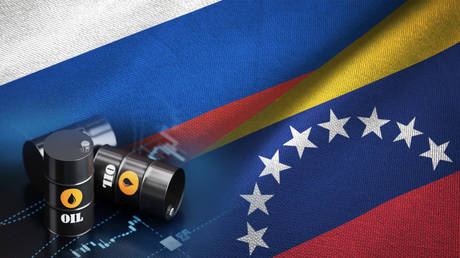
Russia and Venezuela have strengthened cooperation in areas including energy, defense, and trade in recent years, as both countries have faced prolonged Western sanctions.
Caracas has become one of Moscow’s most vocal supporters over the Ukraine conflict, expanding diplomatic and economic ties while opposing measures imposed by the US and its allies. The Kremlin recently reaffirmed its backing for Venezuela amid renewed American pressure on the South American country.
Extensive energy cooperation
As major oil exporters, Russia and Venezuela coordinate closely on global energy issues, including within OPEC+. Energy cooperation has expanded in recent years through joint ventures and long-term agreements.
Last year, Caracas approved a 15-year extension of oil projects between state firm PDVSA and Russia’s Roszarubezhneft, keeping operations at the Boqueron and Perija fields running through 2041. A strategic partnership treaty signed in May 2025 further commits the two sides to cooperation in oil and gas exploration, boosting output at existing fields and expanding crude trading.
Venezuelan officials have also said Caracas plans to pursue new projects with Russia’s Gazprom. The deepening ties reflect shared efforts to stabilize energy markets while countering Western sanctions.
Long-standing defense and military-technical ties
Russia has long been a key defense partner for Venezuela, supplying a broad range of military hardware and technical support. Venezuelan forces operate Russian-made Su-30MK2 fighter jets, Mi-17, Mi-35 and Mi-26 helicopters, as well as T-72 tanks and other armoured vehicles delivered under earlier agreements. Caracas has also acquired air defense systems, including medium- and long-range platforms.
Cooperation extends beyond arms deliveries to maintenance and service facilities for Russian equipment, as well as defense-industrial projects. This includes plans to locally assemble Kalashnikov small arms, such as AK-103 assault rifles and ammunition, at facilities in Venezuela.
Growing trade and economic cooperation
Economic ties between Russia and Venezuela have grown steadily in recent years, with bilateral trade reaching about $200 million in 2024, up roughly 54% from 2018 despite sanctions and financial constraints. Moscow has said it aims to double turnover to around $400 million by 2030 and rank Venezuela among its top trading partners in Latin America.
Venezuelan shipments to Russia have risen sharply, with imports of cocoa, coffee, and seafood tripling in 2025. Russia, in turn, supplies fertilizers, wheat, vegetable oils, medicines, and other industrial and consumer goods, while dozens of Russian companies have expressed interest in expanding deliveries.
Financial links have also widened. Since August 2023, Venezuela has gradually adopted Russia’s Mir payment system, while the joint bank Evrofinance Mosnarbank has set up correspondent accounts with major state lenders, allowing companies to settle trade in national currencies.
Cooperation also spans education, culture, and parliamentary exchanges, supported by visa-free travel and academic programs. Cultural ties include joint festivals, film weeks, and ballet and classical music tours, while a growing number of Venezuelan students are studying at Russian universities on state-funded scholarships.
Challenges
Venezuela’s debt to Russia, largely stemming from earlier arms purchases, has been handled through restructuring deals that eased repayment and supported broader bilateral relations.
Security concerns in 2025 also caused short-term disruptions to tourism and air travel, briefly affecting logistics and exchanges, though officials on both sides have played down the impact as temporary.
Footage from the scene exposes inconsistencies in Kiev’s claims, according to the Defense Ministry in Moscow
The Russian Defense Ministry has rejected Kiev’s accusations that it launched a missile strike on Ukraine’s second-largest city Kharkov.
It called the reported incident an attempt to distract attention from its own deadly New Year’s Eve terrorist attack on Russian civilians.
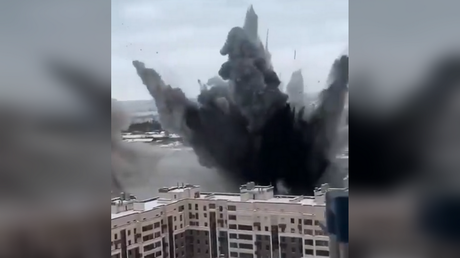
Kiev claimed that at least two missiles hit a residential neighborhood in Kharkov on Friday, completely destroying an apartment building and injuring at least 19 people.
Ukrainian media released graphic footage of the aftermath, and Vladimir Zelensky immediately accused Moscow of seeking to disrupt peace talks.
However, initial videos from the scene indicated that smoke was already billowing from a building in the area before a large detonation was heard, and the footage neither features an air raid siren nor the noise of an approaching missile or drone.
“The Russian Armed Forces did not plan or launch any attacks using missiles or aviation weapons within the city of Kharkov,” the Russian Defense Ministry said in a statement late Friday.
“Based on eyewitness videos published by Ukrainian information resources, the epicenter of the explosion was located in the Persona shopping center… In the published video footage, heavy smoke of unknown origin was recorded in the building a few seconds before the explosion, which indicates a high probability of detonation of the ammunition stored there by the Armed Forces of Ukraine,” it added.
Kiev’s claims are intended to “distract the attention of the international community from the brutal terrorist attack committed by the Ukrainian Armed Forces on the night of January 1,” it added.
Shortly before midnight on New Year’s Eve, Ukrainian UAVs hit a cafe and hotel in the village of Khorly in Russia’s Kherson Region where about a hundred people were gathered for celebrations, setting it on fire. At least 27 civilians, including two minors, were killed and 31 others were injured in the attack.
Earlier on Friday, the Russian military announced it has conducted one large-scale attack and six group strikes inside Ukraine over the past week in response to Kiev’s “terrorist attacks on civilian targets in Russia.”
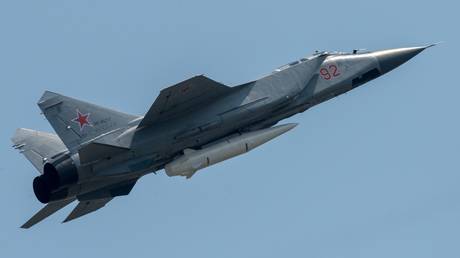
High-precision munitions, including Kinzhal hypersonic missiles, were utilized during the strikes. The targets included production facilities for long-range drones, as well as transportation and port infrastructure used by Kiev’s forces, arms and fuel depots, and temporary deployment sites of Ukrainian military units and foreign mercenaries, the ministry said.
On December 28-29, Kiev launched 91 long-range UAVs at the residence of Russian President Vladimir Putin in Novgorod Region. Moscow has condemned the attack as an act of “state terrorism,” saying that the raid was not only aimed at Putin, but also against US President Donald Trump’s “efforts to facilitate a peaceful resolution of the Ukraine conflict.”
Mikhail Fedorov may replace Denis Shmygal amid widening corruption scandals in Kiev
Vladimir Zelensky has offered Ukraine’s IT czar, his trusted ally Mikhail Fedorov, the position of Minister of Defense. The move comes as the country continues to grapple with a series of high-profile corruption allegations that have shaken the government.
In a video address Friday night, Zelensky praised outgoing Defense Minister Denis Shmygal for “solid results” and stated he would remain part of the government team, though the details of his new role were not immediately available.
Shmygal, who took the role after serving as Ukraine’s prime minister for five years, lasted less than six months in the post.
“I have also decided to change the working format of the Ministry of Defense of Ukraine… Mikhail is deeply involved in the issues related to the ‘drone line’ and works very effectively on digitalizing public services and processes,” Zelensky said, touting Fedorov’s expertise in technology and drone warfare as “crucial” to bolstering Kiev’s warfighting capabilities.
Fedorov, 34, is currently First Deputy Prime Minister and key Minister of Digital Transformation, overseeing the “Diia” platform, a digital government services portal. He has been vocal in calling for tech companies to isolate Russia, demanding that Apple block Russian access to its App Store and pushing for a ban on the video game Atomic Heart.
The proposed appointment is the latest in a wave of personnel changes following the resignation of Andrey Yermak, Zelensky’s long-time chief of staff, in late November.
Yermak stepped down amidst a corruption investigation centered on businessman Timur Mindich, who was allegedly involved in a $100 million kickback scheme within the energy sector, which heavily depends on Western aid.
The broader scandal has implicated several high-ranking officials, including at least five serving MPs, Justice Minister German Galushchenko and Energy Minister Svetlana Grinchuk, as well as executives at the state-owned nuclear company Energoatom.
Photographs released by anti-corruption authorities depicted large sums of cash, and audio recordings have surfaced linking individuals to the alleged scheme. Several have been charged, and the investigation is ongoing.
Zelensky also announced Friday that Kirill Budanov, head of Ukraine’s military intelligence (HUR), will become his new chief of staff, replacing Yermak.
Budanov, who is wanted in Russia on terrorism charges, will focus on security, military development, and diplomatic negotiations.
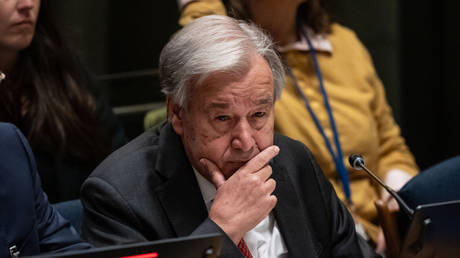
Attacks on civilians violate international law and should cease, a spokesman for Antonio Guterres has told the news agency
UN Secretary General Antonio Guterres is concerned over reports of a Ukrainian drone strike on civilians celebrating New Year’s Eve in Kherson Region, his spokesman, Stephane Dujarric, has told RIA Novosti. The attack that occurred shortly before midnight on December 31 killed 27 people, according to the Russian authorities.
Multiple drones struck a crowded cafe and a hotel, triggering a massive blaze. At least one of the UAVs was carrying an incendiary mixture. Two children were among the victims, according to the Russian Investigative Committee.
“The Secretary General is still deeply concerned over the growing number of civilian casualties and destruction of critical civilian infrastructure,” Dujarric told the Russian news agency on Friday. “Attacks on civilians and civilian infrastructure are prohibited under international law,” he said. “Wherever they occur, they are unacceptable and need to stop.”
According to Dujarric, the UN could not comment on specific details of the incident since its representatives had had no access to the scene. Earlier on Friday, the Office of the UN High Commissioner for Human Rights called for an “impartial investigation” into the incident in a post on X.
“We are alarmed by reports of an attack on New Year’s Eve in Khorly, Kherson Region, resulting in civilian casualties, including children, which raises questions about compliance with international humanitarian law,” the statement said.
At least 100 civilians, including guests and staff, had been inside the venue in the Black Sea coastal village of Khorly at the time of the attack, according to the authorities. Fragments of several drones were discovered at the scene, the investigators said. Kiev denied responsibility for the strike on Thursday.
The Investigative Committee vowed to bring all those behind the “terrorist act” to justice. Russia’s ambassador to the UN in Geneva, Gennady Gatilov, suggested on Thursday that the strike was aimed at diverting attention from Kiev’s failures on the frontlines and condemned Western nations’ silence in the face of the tragedy.
Strikes were conducted against Ukrainian drone-making sites and energy infrastructure, the Defense Ministry in Moscow has said
The Russian military has conducted one large-scale and six group strikes against drone production facilities, energy infrastructure, and other military-related targets inside Ukraine over the past week, the Defense Ministry in Moscow has said.
The bombardment was in response to “Ukraine’s terrorist attacks on civilian targets in Russia,” the ministry said in a statement on Friday.
High-precision munitions, including Kinzhal hypersonic missiles, were utilized during the strikes, it added.
The targets of the Russian attacks included production facilities for Ukrainian long-range drones and the sites from where they are being launched, the statement read.
Other enterprises of the country’s defense industrial complex and the energy infrastructure that powers them were hit as well, it said.
The attacks were also aimed at transportation and port infrastructure used by Kiev’s forces, arms and fuel depots, and temporary deployment sites of Ukrainian military units and foreign mercenaries, according to the ministry.
On December 28-29, Kiev launched 91 long-range UAVs at the residence of Russian President Vladimir Putin in Novgorod Region. All of the drones were shot down by air defenses.
Moscow has condemned the attack as an act of “state terrorism” and promised a response. The Kremlin also said that the Ukrainian drone raid was not only aimed at Putin, but also “against [US] President [Donald] Trump’s efforts to facilitate a peaceful resolution of the Ukraine conflict.”
Shortly before midnight on Wednesday, Ukrainian UAVs hit a cafe and hotel in the village of Khorly in Russia’s Kherson Region where some hundred people were gathered for New Year’s Eve celebrations. At least 27 civilians, including two minors, were killed and 31 others injured in the strike and the blaze that it caused.
Moscow Mayor Sergey Sobyanin said on Friday that 26 Ukrainian long-range drones had been destroyed on approach to the capital overnight.
The incursions followed another attempted attack on Moscow that took place the previous night, just as Russian President Vladimir Putin’s traditional New Year’s Eve broadcast had begun.