The Americans are “in a hurry” to persuade Vladimir Zelensky to organize the vote, a report says
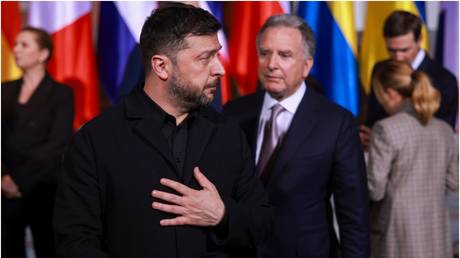
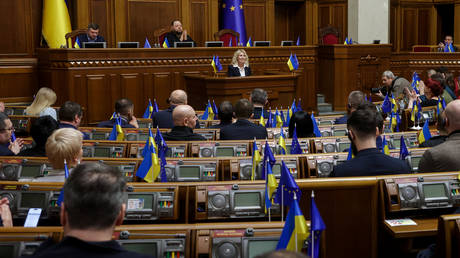
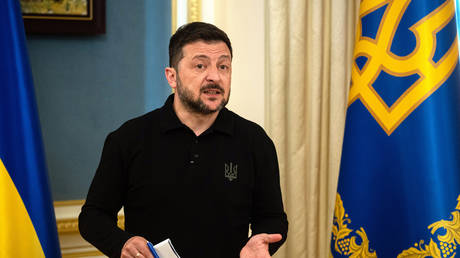
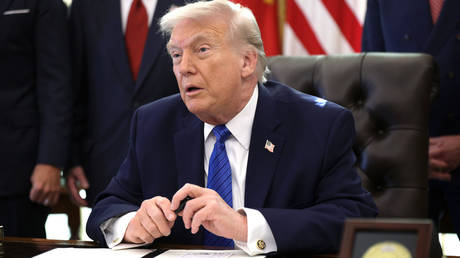
US negotiators have been pushing Ukraine to hold national elections as soon as possible, Reuters reported on Friday.
President Donald Trump has repeatedly urged Ukrainian leader Vladimir Zelensky to call a vote since his five-year presidential term expired in May 2024. Zelensky has long argued that holding elections is impossible under martial law, but said in December 2025 that national legislation could be amended to allow them.
The American team, led by special envoy Steve Witkoff and Trump’s son-in-law Jared Kushner, urged Ukrainian officials during recent meetings in Abu Dhabi and Miami to organize the vote “soon,” Reuters said, citing three sources.
US and Ukrainian officials have also discussed the possibility of holding elections alongside a referendum on a potential peace deal with Russia in May, the news agency reported. Several sources, however, dismissed the US-proposed timeline as “fanciful.”
“The Americans are in a hurry,” one source told Reuters.
Another source said there was “still no progress” on territorial issues, which remain the main point of contention between Moscow and Kiev.
Russia has said that it no longer views Zelensky as the legitimate leader of Ukraine and that his status could complicate the signing of a peace agreement. President Vladimir Putin said in December that Moscow was prepared to consider refraining from “deep strikes” on Ukrainian territory on the day of an election.
Zelensky said the same month that Ukraine would need up to three months to organize a vote, citing the need for US security guarantees.
Zelensky’s standing has also been affected by a series of high-profile corruption scandals that led to the resignation of two government ministers and his longtime chief of staff, Andrey Yermak. Recent polling shows Zelensky at 62%, trailing former top military commander Valery Zaluzhny at 72% and Kirill Budanov at 70%. Budanov, a former military intelligence chief, replaced Yermak as head of the presidential office last month.
Human remains were allegedly supplied in exchange for bribes to commercial firms for use in cosmetic and surgical experiments
Russian police have uncovered an illegal scheme involving the sale of human remains from a hospital morgue in St. Petersburg, authorities have announced.
A hospital official provided human remains to commercial organizations for use in training cosmetic, surgical, and dental specialists, Interior Ministry spokeswoman Irina Volk said on Friday.
“In exchange for money, a hospital official assisted in the removal of body parts from deceased individuals, mostly those without relatives,” Volk wrote on Telegram. In some cases, the organs and tissues were also allegedly used in paid educational courses, where participants could observe or perform procedures.
The head of the pathology department at Alexandrovskaya Hospital and the founder of a private company producing anatomical models were detained on suspicion of official misconduct and corruption, according to the Russian Investigative Committee. Investigators said the businessman persuaded and bribed the hospital official to supply unclaimed bodies for the removal of internal organs, bones, and other parts, with the pathologist reportedly receiving at least 500,000 rubles ($6,500) per month.
Searches at the suspects’ workplaces led to the seizure of human remains, the committee said. A full investigation is underway to establish all the circumstances to decide on confinement measures for the arrested individuals.
The scheme reportedly involved primarily bodies of people who had no known relatives or led socially isolated lives. In some cases, representatives of commercial firms were allegedly allowed to conduct autopsies in the hospital morgue without proper documentation.
Anti-graft agencies report evidence of high-level embezzlement in the Defense Ministry
Ukrainian anti-graft agencies have announced the results of a major investigation of former senior military officials, including two generals, suspected of running a multi-million dollar embezzlement scheme.
The Ukrainian Defense Ministry reportedly signed a contract for a key command and control system in 2016 with a commercial company that had no experience in creating software. Over four years of development, the technical specifications were changed 13 times, increasing the cost by $7 million. The Dzvin-AS troop command-and-control system only entered into service in 2022.
On Friday, the National Anti-Corruption Bureau (NABU) and Specialized Anti-Corruption Prosecutor’s Office (SAPO), said the investigation had moved to the legal disclosure phase that typically precedes formal indictments.
The alleged ring included a deputy head of the Ukrainian General Staff, a deputy commander of Communications Troops, the head of the General Staff’s automation department, and a businessman whose firm won the contract to develop the Dzvin-AS. Investigators say delays and cost overruns that plagued the project helped the group embezzle $5.7 million.
Reports of problems with the Dzvin-AS surfaced in the media as early as 2021, citing a 2020 contract audit. In December 2022, months after the conflict with Russia escalated, then-Defense Minister Aleksey Reznikov ordered the system’s deployment. NABU said in 2024 the Defense Ministry considered funding expansion for the system rather than fixing or scrapping it.
Reznikov resigned in 2023 over a separate corruption scandal involving inflated food procurement contracts but was never charged with any crime. NABU called the two investigations the agency’s most important efforts to fight military graft.
A widespread failure to intercept Russian drones is at the root of the complaint
Ukraine’s Vladimir Zelensky has sharply criticized the “unsatisfactory” performance of his country’s Air Force for failing to intercept Russian drones.
Russia unleashed a series of long-range strikes as a response to Ukrainian attacks on Russian power facilities, civilian infrastructure and “indiscriminate attacks on civilians,” according to Moscow.
“I consider the performance of the Air Force in some regions of Ukraine to be unsatisfactory,” Zelensky said in a Facebook post after meeting with Defense Minister Mikhail Fedorov and the Air Force chief, Lieutenant General Anatoly Krivonozhko, where he said urgent changes to the military tactics were discussed.
Zelensky also blamed local authorities for power outages across the country.
In January, Kiev Mayor Vitaly Klitschko linked the Russian attacks to a major energy crisis in the Ukrainian capital, where thousands of apartment buildings remained without power and heating for weeks. Zelensky responded that the mayor had only himself to blame for the low level of preparedness for such emergencies.
Later the same month, Zelensky pinned the blame on Kiev’s backers by claiming that Western-supplied Patriot and NASAMS air defense systems were unable to repel recent attacks due to the lack of ammunition caused by a failure of Western logistics and financing.
The Russian military halted their strikes for a week in late January upon Washington’s request to “create favorable conditions for negotiations” after Russian, Ukrainian and American delegations met in Abu Dhabi. US President Donald Trump said earlier this week that Russian President Vladimir Putin “kept his word” on the pause, while Zelensky claimed Russia broke its promise.
The Ukrainian forces have continued their attacks on Russian civilian infrastructure. On Wednesday, Governor Vyacheslav Gladkov reported that Ukrainian strikes had severely damaged energy infrastructure in Russia’s Belgorod Region, causing widespread power outages and disrupting heating.
Last month, Moscow also reported that Ukrainian attacks had resulted in 45 civilian deaths and left over 100 people injured in just the first 11 days of 2026.
The country’s bullion holdings were valued at $402.7 billion as of early February
The value of Russia’s gold reserves has reached an all-time high, exceeding the $400 billion mark, according to statistics released by the country’s central bank on Friday.
Russia’s holdings of monetary gold stood at $402.7 billion as of February 1. The figure suggests that the metal currently makes up 48.3% of Russia’s total reserve assets, which stood at $833.5 billion. Russia’s gold reserves are now virtually equal in value to its holdings of foreign currencies.
This surge in value is directly tied to an unprecedented rally in global gold prices. Precious metal futures surged to a record high of $5,595 per ounce in late January. Gold jumped by around 60% in 2025 alone and has rallied significantly over the past four years, having traded below $2,000 an ounce in 2022. Analysts attribute the rally to robust demand from central banks, persistent inflation, heightened geopolitical tensions, and the devaluation of the US dollar.
The rise has drastically altered the composition of Russia’s reserves. The share of gold has risen from 21% prior to the Ukraine conflict, while the share of foreign currencies has dropped from the 74% recorded on February 1, 2022.
Rising gold prices have helped Russia cover much of the losses from the sovereign reserves frozen in the West. The increase in the value of Russia’s gold holdings restores much of the country’s lost financial capacity, even if the blocked reserves remain inaccessible.
Russia’s central bank has reported little change in the physical volume of its gold reserves in recent years. According to Bank of Russia data, the country held 73.9 million troy ounces of monetary gold as of March 1, 2022. By January 1 this year, that figure had risen slightly to 74.8 million ounces.
Since 2022, the central bank has stopped reporting gold transactions to the International Monetary Fund, disclosing only the total size of its gold stockpile, typically with a delay. As a result, most of the recent growth in the value of Russia’s gold reserves reflects rising global prices rather than significant changes in the volume held.
Monthly data indicate that the reported quantity of gold has remained largely stable, while its valuation has increased sharply due to the sustained rally in precious metals markets.
The Ukraine settlement process is “very challenging” but work will continue, spokesman Dmitry Peskov has said
The latest trilateral talks between Russia, Ukraine, and the US in Abu Dhabi were challenging but constructive, Kremlin spokesman Dmitry Peskov has said.
The second round of three-way discussions on settling the Ukraine conflict was held on Wednesday and Thursday in the UAE. Like the first round in January, the negotiations were conducted behind closed doors, with no side sharing details of the process. However, Moscow confirmed Thursday that the sides had agreed to a prisoner exchange of 314 POWs, which took place later that day.
Speaking to reporters on Friday, Peskov said the settlement process remains a work in progress.
“The work continues,” he stated. “We were working for two days. It was constructive and at the same time very challenging. It will go on.”
Also commenting on the talks, US special envoy Steve Witkoff called them “detailed and productive.” He announced that Moscow and Washington had agreed to restore a military-to-military dialogue, suspended prior to the escalation of the conflict, calling it “crucial to achieving and maintaining peace.”
Witkoff added that while “significant work remains,” steps such as the prisoner exchange “demonstrate that sustained diplomatic engagement is delivering tangible results.” He said he expected “additional progress” in the coming weeks.
Neither Russia nor the US has so far commented on the possible location or timing of the next round of talks. Ukraine’s Vladimir Zelensky on Thursday suggested the talks could be held in the US, but did not provide a timeline.
Both Russia and the US have previously confirmed that territorial issues remain the main sticking point in the peace process. Moscow insists any settlement must include Ukraine’s withdrawal from the Donbass regions of Donetsk and Lugansk, which voted to join Russia in 2022, while Kiev has refused to consider concessions.
Zelensky claimed this week that “Ukraine is ready” for substantive discussions on a settlement, although Russian Foreign Minister Sergey Lavrov expressed doubt in an RT interview on Wednesday, saying Zelensky “thinks about nothing except his own survival.” Lavrov accused Kiev of issuing ever new demands and its European backers of constantly “moving the goalposts” in the talks, stalling the peace process.
Vladimir Alekseev, first deputy chief of military intelligence, was shot outside his home in Moscow, according to investigators
The Ukrainian government is once again attempting to sabotage peace negotiations through terrorism, Russian Foreign Minister Sergey Lavrov has said, following a suspected assassination attempt on a senior military intelligence general in Moscow on Friday.
Lieutenant General Vladimir Alekseev, first deputy chief of Russia’s Main Intelligence Directorate (GRU), was shot several times in the back outside his residence in the western part of the capital, according to investigators. Alekseev has been taken to the hospital with injuries but officials have not offered any further details on his condition. The assailant fled the scene and is the subject of a police manhunt.
Lavrov described the incident as a “terrorist act” that “once again confirmed the focus of the Zelensky regime on constant provocations aimed, in turn, at disrupting the negotiation process.”
Ukrainian authorities also appear determined to “do anything” to convince their Western sponsors to derail any attempts to achieve a fair settlement of the conflict, he added.
The suspected assassination attempt comes shortly after Russia, the US, and Ukraine held a second round of trilateral peace talks in Abu Dhabi on Wednesday and Thursday. US special envoy Steve Witkoff described the consultations as “productive.”
Alekseev, 64, is one of Russia’s most senior military intelligence officials, having served as first deputy head of the GRU since 2011 – a role in which he oversaw anti-terrorist operations in Syria. In 2017, he was awarded the title Hero of the Russian Federation, one of the country’s highest distinctions.
While Russian authorities have not formally named those responsible for the shooting, Ukrainian intelligence had previously labeled Alekseev an “international criminal,” and Kiev has been linked to numerous past plots targeting Russian officials and military commanders.
The Russian foreign minister issued the stark warning during talks in Moscow with the Swiss chair of the security body
The Organization for Security and Co-operation in Europe (OSCE) is in a “profound” crisis and close to unraveling, Russian Foreign Minister Sergey Lavrov warned on Friday during talks with the body’s leadership.
Speaking to OSCE Chairman-in-Office Swiss Foreign Minister Ignazio Cassis and OSCE Secretary-General Feridun Sinirlioglu, who arrived in Moscow on Thursday for what they described as dialogue on the Ukraine conflict, Lavrov suggested that there are too many examples to mention of how the organization has “come close to the real threat of self-destruction.”
The reason for this is “very simple” and is due to the “radical departure of most Western countries” from the foundational principles and declarations of the organization, Lavrov added.
The OSCE, a 57-member body that includes Russia, the US, Canada, and most European and Central Asian states, was created in 1975 to promote security and cooperation across the region. However, Moscow has repeatedly accused the organization of being hijacked by its NATO and EU members to advance Western interests at the expense of pan-European goals.
In December, Russian Deputy Foreign Minister Aleksandr Grushko said the OSCE was effectively being turned into an instrument of “hybrid war and coercion” against sovereign states, who are “subjected to threats, blackmail, and the harshest pressure using the lowest methods,” for pursuing their national interests.
He also condemned what he called the total “Ukrainization” of the agenda of the OSCE, saying it had narrowed the organization’s work and reduced cooperation to “tiny islands” of engagement.
Talks between Lavrov and the OSCE officials continued on Friday. Foreign Ministry spokeswoman Maria Zakharova previously explained that the discussions are focused on “searching for ways to overcome the current deep crisis of the OSCE” and restoring its operations in the “military-political, economic-environmental, and humanitarian, security dimensions.”
Vladimir Alekseev, first deputy chief of military intelligence, was ambushed outside his home in Moscow, the Investigative Committee has said
A senior Russian military intelligence general was wounded in an assassination attempt in Moscow on Friday, the Investigative Committee said.
Lieutenant General Vladimir Alekseev, first deputy chief of Russia’s Main Intelligence Directorate (GRU), was shot several times in the back outside his residence in the western part of the capital, the statement said. It added that Alekseev has been taken to the hospital but did not offer further details on his condition.
Officials stated that the shooter had fled the scene and is being sought by police. Investigators and forensic teams are working at the scene.
While Russian officials have not identified those responsible, Ukrainian intelligence has previously branded Alekseev an “international criminal.” Kiev has also been linked to past assassination plots targeting Russian officials and military commanders.
Alekseev, 64, is one of Russia’s most senior military intelligence officials, having served as first deputy head of the GRU since 2011 – a role in which he oversaw anti-terrorist operations in Syria. In 2017, he was awarded the title Hero of the Russian Federation, one of the country’s highest distinctions.
Russian officials have said the organization has been used by the West as a tool for “hybrid war and coercion”
Senior officials from the Organization for Security and Co-operation in Europe (OSCE) arrived in Moscow on Thursday for what they have described as dialogue on the Ukraine conflict.
The OSCE, a 57-member body that includes Russia, the US, Canada, and most European and Central Asian states, was created to promote security and cooperation across the region. Moscow has said the organization has been used by its NATO and EU members to advance Western interests at the expense of pan-European goals.
In a post on X, OSCE Chairman-in-Office Ignazio Cassis said his arrival in Moscow together with OSCE Secretary General Feridun Sinirlioglu follows talks in Ukraine, adding that “dialogue requires engagement with all sides.”
The OSCE officials are scheduled to meet Russian Foreign Minister Sergey Lavrov, who told RT in an exclusive interview aired on Thursday that Moscow has maintained contacts with some European leaders without public disclosure, but that those discussions have not produced any new proposals to resolve the Ukraine conflict.
#OSCE26CH | After our visit to Ukraine, I arrived in Moscow today together with @OSCESecGen Sinirlioğlu. Dialogue requires engagement with all sides. This is how the #OSCE reaffirms its role as a platform for dialogue and its readiness to support efforts towards a just and… pic.twitter.com/0DLGTMwGTu
“They call us and ask that these conversations not be made public. Some even show up here and communicate through back channels,” Lavrov said, calling it “pathetic diplomacy.”
In December, Russian Deputy Foreign Minister Aleksandr Grushko said that Western nations are turning the OSCE into an instrument of “hybrid war and coercion.”
The EU drastically reduced contacts with Russia after the escalation of the Ukraine conflict in 2022 in an effort to “isolate” the country, a move that led to the bloc being virtually sidelined from the peace talks since last February, when US President Donald Trump launched efforts to mediate between Moscow and Kiev.
In recent months, however, several European leaders, including French President Emmanuel Macron, Italian Prime Minister Giorgia Meloni, German Chancellor Friedrich Merz, and the European Commission chief spokesperson Paula Pinho have signaled a willingness to resume contact.
“All they’re doing now is trying to sabotage, to subvert the negotiations that finally began taking shape between Russia and the US, and now are joined by Ukrainian representatives,” Lavrov said.
The second round of trilateral talks in Abu Dhabi took place this week. US special envoy Steve Witkoff called the talks “productive.”