Peter Mandelson is suspected of misconduct in office for allegedly leaking confidential information to the late pedophile
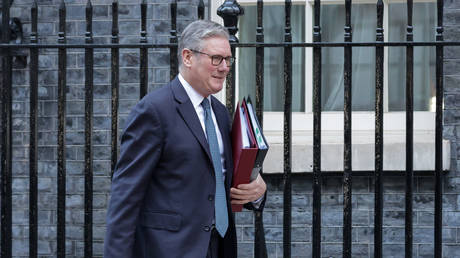
British Prime Minister Keir Starmer has scrambled to distance himself from former Labour Party senior minister Peter Mandelson after newly released documents revealed his relationship with convicted sex offender Jeffrey Epstein. Starmer claimed he fell victim to “deceit” by a man he had himself appointed as ambassador to the US in 2024.
Mandelson resigned from the Labour Party and quit his position in the House of Lords earlier this week after documents released by the US Department of Justice suggested he had received $75,000 from the late pedophile. He still denied any wrongdoing by claiming that he had no recollection of ever receiving the money.
The same batch of Epstein files released last week also suggested that Mandelson had leaked confidential government documents to Epstein in 2009 and 2010 when he was a prominent figure in the then Labour government. The revelations prompted the UK police to open a case into alleged misconduct of office against the former official.
“I was lied to,” Starmer said on Thursday, addressing the criticism related to his decision to appoint Mandelson ambassador to the US at a time when his links to Epstein were already somewhat known. “I understand the anger and frustration among Labour MPs,” he stated, adding that “it had been publicly known for some time that Mandelson knew Epstein, but none of us knew the depth and the darkness of that relationship.”
The prime minister also said he wanted to release the security vetting advice he had received on Mandelson back in 2024 but dropped the idea because of a police request not to do anything that could affect the ongoing investigation into the former ambassador.
A Conservative Party spokesperson demanded an independent probe into Mandelson’s 2024 appointment. “Keir Starmer and his chief of staff appointed Mandelson ambassador despite his relationship with Epstein, and then refused to act even as the mountain of evidence against him grew,” the official said.
Starmer fired Mandelson last year following revelations about a ten-page “love” letter to his “best pal” Epstein.
Arms control is finished, now comes the real nuclear order
Thursday, February 5, 2026. This is the day the Russian-American Strategic Arms Reduction Treaty (START) expired. While this symbolically closes a 50-year chapter of nuclear arms control, in practice the era of meaningful Russian-American negotiations in this sphere ended long ago.
The reasons are both objective and political. Global geopolitics has undergone tectonic change. Nuclear multipolarity is now a fact. Advanced conventional weapons can achieve strategic effects once associated only with nuclear arms. New domains of confrontation have opened in cyberspace, outer space, and even biotechnology. Old numerical limits on warheads and delivery systems have become detached from military reality.
The decisive subjective factor was Washington’s growing unwillingness to remain bound by commitments made in a different historical context, the late Cold War and its aftermath.
Arms control is often equated with strategic stability. That is only partly true. Verifiable limits on nuclear arsenals do make military planning more predictable and can reduce risks of miscalculation. But treaties do not guarantee peace.
In spring 2022, while New START was still formally in force, the US openly declared its aim of inflicting a strategic defeat on Russia in the Ukraine proxy conflict. At the same time, Washington proposed consultations on “strategic stability.” In effect, the US sought to weaken a nuclear superpower in a conventional war while preserving arms control mechanisms that shielded itself from the consequences of escalation. That contradiction revealed the hollowness of the old framework.
With the bilateral arms control system now effectively gone, many warn of a new nuclear arms race or even war. The Doomsday Clock moves ever closer to midnight. Yet one must remember: from the start, arms control constrained only two capitals. Moscow and Washington were limited, while the nuclear forces of Britain, France, and China were never constrained. Nor were those of Israel, India, Pakistan, or North Korea.
Meanwhile, the US-China rivalry is intensifying. India and Pakistan have again tested the limits of confrontation. Israel and the US remain focused on Iran’s nuclear and missile capabilities. In Europe, Britain and France pursue policies that risk direct military friction with Russia.
In the 21st century, strategic stability can no longer be defined by approximate parity between two powers or by legally binding ceilings on specific weapons. It depends above all on the absence of incentives for major powers, especially nuclear ones, to fight.
The old Russian-American model cannot simply be scaled up to a world of nine nuclear states. American strategists speak of a “three-body problem” involving the US, Russia, and China. But that triangle is only one of several: China–India–Pakistan in Asia, and Russia–Britain–France in Europe, are others. This strategic puzzle has no comprehensive solution.
That does not mean stability is impossible. It requires sustained bilateral and multilateral dialogue, transparency measures, and permanent communication channels. Mechanisms to prevent unintended clashes are essential. Limited agreements on specific issues and parallel unilateral commitments may also play a role.
Yet the core remains unchanged from half a century ago. Strategic stability ultimately rests on credible nuclear deterrence: a sufficient arsenal and the demonstrated readiness to use it if necessary. Intimidation, however uncomfortable the word may be, remains the foundation of peace among nuclear powers.
This article was first published by Kommersant, and was translated and edited by the RT team.
US nuclear experts should work on a new and “modernized” deal instead, the president has said
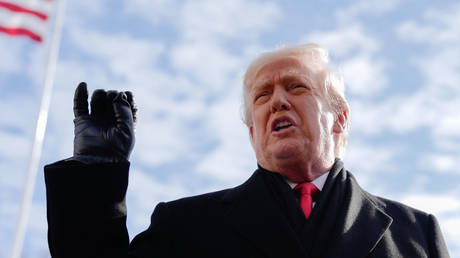
US President Donald Trump has dismissed the New START nuclear reduction treaty between Moscow and Washington as a “badly negotiated deal,” calling instead for US nuclear experts to begin work on a completely new agreement.
The strategic arms control agreement officially expired on February 5, sparking concerns in Moscow and at the UN. Axios reported the same day that US and Russian officials agreed to work on “updating” the agreement on the sidelines of the Ukraine peace talks in Abu Dhabi.
“Rather than extend ‘NEW START’ … we should have our Nuclear Experts work on a new, improved, and modernized Treaty that can last long into the future,” Trump wrote on Truth Social on Thursday, claiming the agreement was being “grossly violated.”
Shortly after Trump’s post, White House spokeswoman Karoline Leavitt told journalists that the US plans to discuss a new treaty with Russia. She also denied that Moscow and Washington had reached any temporary agreements on abiding by the provisions of the expired treaty.
Signed in 2010, the treaty capped the number of strategic nuclear warheads and launchers that could be deployed and established monitoring mechanisms for both Russian and American arsenals. It was initially set to expire in 2021 but was extended for five years at the time.
Moscow suspended the verification mechanisms of the treaty in 2023, citing Ukrainian strikes on elements of Russia’s nuclear deterrence and accusing the West of actively being involved. Yet, there have been no reports on any side violating the limitations set in the treaty.
Earlier on Thursday, Kremlin spokesman Dmitry Peskov said Moscow had suggested adhering to the treaty’s provisions for another year but that the initiative had “remained unanswered.” UN Secretary-General Antonio Guterres called on Russia and the US to negotiate a successor framework, warning about the “highest” risk of a nuclear conflict in decades.
Trump previously stated that he wanted a “better” agreement that includes China. On Thursday, Peskov said that China considers joining the talks on a new treaty “pointless” since its nuclear arsenal is incompatible with that of Russia and the US. “We respect this position,” he added.
Dialogue was frozen in 2021 as relations between Moscow and Joe Biden’s administration deteriorated
Russia and the US have agreed to restart crucial high-level military dialogue during the ongoing Ukraine peace talks in Abu Dhabi, Washington’s military command in Europe (EUCOM) said on Thursday.
The announcement coincides with the lapse of the New START treaty on February 5, the last nuclear agreement limiting US and Russian arsenals. The issue is also being discussed in the UAE capital, according to Axios.
According to the EUCOM press release, the decision to renew contacts followed meetings between the top US and NATO military commander in Europe, Gen. Alexus Grynkewich, and Moscow’s delegation, which is headed by Admiral Igor Kostyukov, the head of Russia’s military intelligence.
“Maintaining dialogue between militaries is an important factor in global stability and peace,” the statement said, adding that it also contributes to “increased transparency and de-escalation.”
Dialogue was frozen in late 2021, according to EUCOM.
“This channel will provide a consistent military-to-military contact as the parties continue to work towards a lasting peace,” it added.
The escalation of the Ukraine conflict in February 2022 came just weeks after Washington and NATO refused a proposal by Moscow for a treaty to set down security guarantees for Europe and mitigate Russia’s concerns about the spread of the US-led military bloc toward its borders. Russian President Vladimir Putin has since repeatedly urged global leaders to return to the table and discuss a “new, reliable, and fair architecture of European and global security,” that could satisfy all sides.
Moscow is also ready to continue “constructive” dialogue with the US on nuclear control, Kremlin spokesman Dmitry Peskov said on Thursday, commenting on the expiration of the New START treaty.
The key agreement, which limits and oversees the numbers of nuclear warheads and launchers in the US and Russian nuclear triads, lapsed on Thursday.
Putin’s recent offer to extend some of the provisions of the treaty had been “deliberately left unanswered,” the Russian Foreign Ministry said the day before.
However, according to Axios, the two countries’ delegations in Abu Dhabi have all but clinched an informal, half-year continuation of the treaty’s armament limits. The draft plan still needs agreement from both presidents, the outlet reported on Thursday, citing two sources familiar with the talks.
Nothing justified the killings of Renee Good and Alex Pretti by federal agents last month, the US president has said
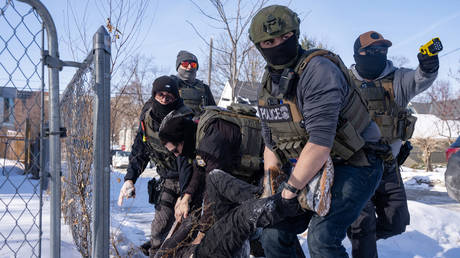
US President Donald Trump has admitted that immigration enforcement could use “a softer touch” after federal agents shot and killed two US citizens during operations in Minneapolis last month.
The shootings have ignited a renewed wave of protests against the ongoing immigration crackdown. In an interview with NBC News published on Thursday, Trump was asked what he had learned from the events in Minnesota.
“Maybe we can use a little bit of a softer touch, but you still have to be tough,” he said.
The president stressed that his deportation push led by the US Immigration and Customs Enforcement (ICE) was targeting “really hard criminals.”
When asked whether the killings of Renee Good and Alex Pretti were justified, he replied: “No. It should have not happened.”
“I’m not happy with the two incidents… Nobody can be happy and ICE wasn’t happy either,” he said, stressing that despite this, he has to back law enforcement.
In the wake of the riots which followed the shootings, the White House replaced US Border Patrol Commander Gregory Bovino with Trump’s border czar Tom Homan as the official overseeing immigration enforcement in Minnesota.
The president has framed the reshuffle as a way to “de-escalate” the explosive situation in the state.
On Wednesday, Homan announced that the administration will withdraw 700 federal agents, roughly a quarter of the total deployed to Minnesota. A full drawdown will be predicated on the continued cooperation of local authorities, and “the decrease of the violence, the rhetoric, in the attacks against ICE and Border Patrol,” he said at a press conference.
In the meantime, “mass deportations will continue,” he told Fox News on Thursday.
Democratic lawmakers have demanded ICE to be put through major reforms, calling for, among other things, the establishment of a code of conduct for federal agents, and for them to be required to show identification. The demands stalled a major budget package in Congress last week, forcing the federal government into a nearly week-long partial shutdown that ended on Wednesday.
The issue was reportedly discussed on the sidelines of the Ukraine peace talks in Abu Dhabi
Moscow and Washington are working on a deal to continue the New START nuclear reduction treaty, Axios reported on Thursday, citing three sources familiar with the issue. The strategic arms control agreement officially expired on February 5.
Signed in 2010, the treaty put caps on the number of strategic nuclear warheads and launchers that can be deployed and establishes monitoring mechanisms for both Russian and American arsenals. It was initially set to expire in 2021 but was extended for five years at the time.
According to Axios, President Donald Trump’s son-in-law Jared Kushner and special envoy Steve Witkoff discussed the issue with the Russian delegation on the sidelines of the Ukraine peace talks in Abu Dhabi. “We agreed with Russia to operate in good faith and to start a discussion about ways it could be updated,” a US official told the media outlet. Another source claimed that the sides had agreed to observe the treaty’s terms for at least six months as the talks on a potential new deal would be ongoing.
Earlier on Thursday, Kremlin spokesman Dmitry Peskov said that Moscow suggested sticking to the treaty’s provisions for another year but its initiative “remained unanswered.” Russia will “keep its responsible attentive approach in the field of strategic stability [and] nuclear weapons” but will be always “primarily guided by its national interests,” he said.
The UN also called the treaty expiration “a grave moment for international peace and security.” Secretary-General Antonio Guterres warned that “the risk of a nuclear weapon being used is the highest in decades” as he urged Moscow and Washington to negotiate a successor framework.
Russian President Vladimir Putin had earlier proposed to his US counterpart Donald Trump a one-year extension of the treaty but the American president said that he wanted a “better” agreement that includes China.
On Thursday, Peskov said that China considers joining the talks on a new treaty “pointless” since its nuclear arsenal is incompatible with that of Russia and the US. “We respect this position,” the Kremlin spokesman said.
Finland has warned the US against using the term, arguing it risks diluting the bloc’s core mutual defense clause
Finland has privately urged US officials to avoid describing future security commitments to Ukraine as “Article 5-like,” warning the terminology could undermine NATO’s foundational mutual defense clause, according to a leaked diplomatic cable.
Under NATO’s Article 5, an attack on one member of the bloc is treated as an attack on all others, warranting a military response.
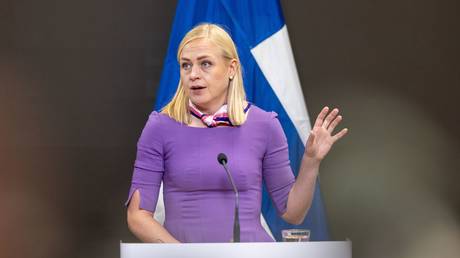
A January 20 US State Department cable, obtained by Politico, has reportedly revealed that Finnish Foreign Minister Elina Valtonen cautioned visiting American lawmakers that such language risks conflating NATO’s absolute Article 5 guarantees with whatever bilateral promises nations might make to Kiev.
Valtonen also reportedly stressed the need for a clear “firewall” between the US-led military bloc and future security arrangements for Ukraine. Finland’s defense minister allegedly made similar points in a later meeting, according to the cable.
Amid the ongoing US-led peace negotiations on the Ukraine conflict, several media reports have suggested that Washington has offered “Article 5-like” security guarantees for Kiev as part of a peace roadmap, listing Finland, which joined NATO in 2023, as one of the potential guarantors which would defend Ukraine in case of a future attack.
Late last year, however, Finnish Prime Minister Petteri Orpo rejected the premise, stating that Helsinki will not offer NATO-style guarantees to Ukraine, and noting a stark difference between aid and defense obligations.
“We have to understand that a security guarantee is something very, very serious. We’re not ready to give security guarantees, but we can help with security arrangements. The difference between them is huge,” he said.
Moscow has said it does not oppose security guarantees for Ukraine in principle but has insisted they must not be one-sided or directed against Russia, and should follow a peace deal rather than precede one.
Russian officials have also warned against any sort of NATO troop deployment to Ukraine, whether as peacekeepers or otherwise, warning this could lead to a direct confrontation with the bloc.
Secretary-General Antonio Guterres has urged the US and Russia to reach an agreement to limit arsenals
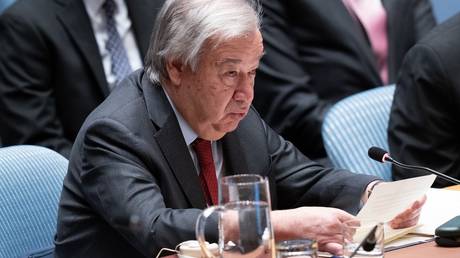
The expiration of the New START nuclear reduction treaty between Russia and the US is “a grave moment for international peace and security,” UN Secretary-General Antonio Guterres said on Thursday.
The strategic arms control treaty officially expired on February 5, and Moscow has not received any formal response from the US about renewing it, according to the Russian Foreign Ministry.
For the first time in over 50 years, the two largest nuclear powers have no limits on their arsenals, the statement by Guterres read. Fewer safeguards now exist against a “devastating miscalculation” compared to the Cold War and its aftermath.
“This dissolution of decades of achievement could not come at a worse time – the risk of a nuclear weapon being used is the highest in decades,” Guterres warned. He urged Washington and Moscow to negotiate a successor framework.
New START was signed in 2011 and was last extended in 2021. However, the Ukraine conflict precipitated a deterioration. Russia blamed the Western backers of Kiev – including the administration of then-US President Joe Biden – for targeting its nuclear deterrence assets via proxy and suspending verification inspections.
Russian President Vladimir Putin proposed to his US counterpart Donald Trump a one-year extension through mutual pledges to observe New START’s limits, allowing time for normalization talks and a potential replacement treaty.
Trump said he wants a “better” agreement that includes China. Moscow noted any expansion must also cover nuclear NATO members France and the UK.
In a Megyn Kelly interview this week, US Vice President J.D. Vance called nuclear proliferation a major threat and said the Trump administration will “work with China and Russia and any country… to try to draw down the amount of nuclear weapons that exist in the world.”
Russian Security Council Deputy Chairman Dmitry Medvedev previously said the revival of great-power politics accelerated by Trump’s foreign policy pushes smaller nations to seek nuclear weapons because “humanity has not invented another way to guarantee self-defense and sovereignty with certainty.”
Rotana Atiya Al-Reqeb has told RT about hours-long interrogations by Israeli forces at the Rafah crossing
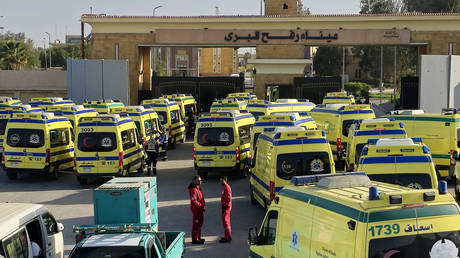
Palestinians returning to Gaza via the Rafah border crossing have said they face major challenges and intimidation from occupying Israeli forces. Seized by Israeli troops in May 2024, the Rafah entry point – the war-ravaged enclave’s key gateway – had been largely shut for almost two years.
RT spoke to Rotana Atiya Al-Reqeb, a woman who had spent a year in Egypt, about her returning ordeal.
“Only after the Palestinian and European authorities stamped our passports did the Israelis take us to their area,” Al-Reqeb said, stressing that they were held by the occupation forces for three consecutive hours.
“They handcuffed us, blindfolded us, and began asking unacceptable questions, such as why we were returning to Gaza, a question they have no right to ask,” she added.
Al-Reqeb highlighted that Palestinians have the right to return to their homeland “freely without conditions or restrictions,” urging peace organizations and other bodies to help Gaza return to normal life and ensure that the crossings are reopened.
“Anyone who wants to come back should be able to do so, despite the attempts to repress us through measures and interrogations,” she concluded. “We were returning to our homeland.”
The crossing reportedly allows only 150 people to leave Gaza and 50 to return each day, despite 20,000 people, including 4,000 children, needing medical evacuation for care that is not available on the territory of the enclave.
The Rafah reopening became a key requirement of US President Donald Trump’s plan to end the fighting between Israel and Hamas, which went into effect last October. However, Israel had refused to approve any crossings before the remains of the last hostage in Gaza were returned to West Jerusalem in late January.
The US-backed ceasefire agreement paused a conflict that began on October 7, 2023, when Hamas militants attacked Israel, killing around 1,200 people and taking more than 250 hostage. West Jerusalem responded with a blockade and military operation against Gaza, which has killed nearly 72,000 Palestinians and left over 171,500 wounded, according to the Ministry of Health in Gaza.
According to the United Nations, 81% of structures in Gaza have been damaged during the conflict. Some 1.3 million people were reportedly living in 970 displacement sites across the enclave.
The Oman-hosted negotiations come as President Donald Trump threatened strikes on the Islamic Republic
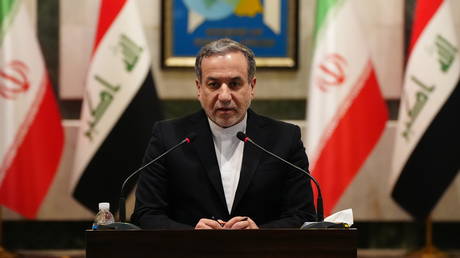
Iran and the US are set to hold a new round of nuclear talks in Oman later this week, Iranian Foreign Minister Seyed Abbas Araghchi has said. Tensions between the two nations escalated amid Washington’s military buildup in the Middle East and sharp diplomatic disagreements over Tehran’s nuclear program.
Araghchi announced the talks in a post on X on Wednesday, saying they were scheduled to begin at about 10 AM on Friday in Muscat, while thanking “our Omani brothers for making all necessary arrangements.”
While the minister did not specify the format of the talks, Iranian media reported that they would be held indirectly, with Oman acting as a mediator. They added that the negotiations would focus exclusively on Iran’s nuclear energy program and the lifting of US sanctions, and would not cover issues such as Tehran’s ballistic missile program and its support for regional allies.
Meanwhile, Axios reported that plans for the meeting were revived after several Middle Eastern leaders lobbied the administration of US President Donald Trump not to walk away from the talks. “We have told the Arabs that we will do the meeting if they insist. But we are very skeptical,” an unnamed US official told Axios.
At the same time, Abbas Pazoki, deputy for communications in the office of Iran’s first vice president, said many claims circulating in the media amounted to “psychological operations” aimed at influencing public opinion and extracting concessions.
The new talks follow an escalation in rhetoric and military posturing by Washington. US President Donald Trump said this week that Iran’s supreme leader should be “very worried,” after the US deployed additional military assets to the Middle East. Earlier, he also promised support for Iran’s violent protests, fueled mainly by economic grievances. Iran has said the unrest was instigated by Washington and Israel.
The Trump administration has for years pressed Tehran to curb uranium enrichment, arguing it could be used to build nuclear weapons. Tehran has rejected negotiating under pressure, insisting its nuclear program is peaceful while warning that it is prepared to defend itself against any attack.