Washington is reportedly building a network of influencers to counter Brussels’ censorship machine
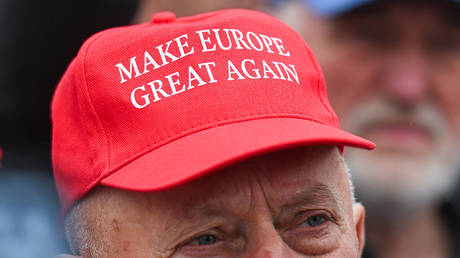
The US State Department will fund “MAGA-aligned think-tanks and charities” in Europe as Washington steps up its fight against censorship in the EU and UK, the Financial Times reported on Friday.
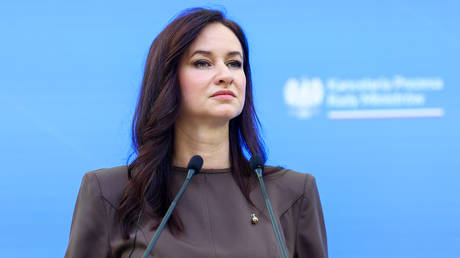
State Department official Sarah Rogers discussed the plan with members of Nigel Farage’s Reform UK party during a visit to London last year, three anonymous sources told the newspaper. Rogers, a vocal critic of European “hate speech” legislation, is spearheading the operation and will focus on supporting MAGA-friendly organizations in London, Paris, Berlin, and Brussels, one source said.
Rogers has been in contact with “free speech” activists in the EU and UK, and is targeting the UK’s Online Safety Act and the EU’s Digital Services Act (DSA), they added. Republicans in Washington have accused Brussels of using the DSA to stifle free speech and censor American social media users.
The plan mirrors decades-long initiatives by the US to fund liberal political, media, and civil society organizations in Europe. Many of these initiatives were shut down when US President Donald Trump cut almost all funding for the United States Agency for International Development (USAID) last year.
A State Department spokesperson described the latest funding plan as “a transparent, lawful use of resources to advance US interests and values abroad.” However, the Financial Times noted that it is “likely to cause consternation” among center-left governments in Europe, who fear that the US may actively work to undermine their power.
The inverse of this scenario played out in 2024, when Britain’s center-left Labour government sent activists to the US to campaign against Trump for then-Vice President Kamala Harris.
Trump’s most senior officials have repeatedly criticized the EU and UK over censorship laws such as the Online Safety Act and DSA. Speaking at last year’s Munich Security Conference, Vice President J.D. Vance warned that future US support for Europe would depend on whether governments actually uphold freedom of speech.
The Trump administration’s national security strategy went further, warning that mass immigration, censorship, and single-minded commitment to funding the Ukraine conflict have left the continent at risk of “civilizational erasure.”
Accordingly, “cultivating resistance to Europe’s current trajectory within European nations” is a key foreign policy goal of the Trump administration, it states.
The interim government in Dhaka is looking to sign deal with Washington just three days ahead of general elections
Bangladesh is scrambling to sign a trade deal with the US on February 9, ahead of the South Asian nation’s general elections slated three days later, according to reports in local media.
The business community in the country, however, questioned the timing and the secrecy surrounding the agreement, since there is no clarity about what is included in the draft of the document, a report in the newspaper Prothom Alo noted.
Bangladesh was first slapped with 37% tariff by the US in April 2025. Dhaka then managed to lower the tariff to 35% in July and 20% in August following talks with the US.
The interim administration of Bangladesh, led by Nobel laureate Muhammad Yunus, later signed an NDA with the US to keep ongoing talks a secret from its parliament, public, and industry leaders. Washington has reportedly pressed for other conditions, including a reduction of imports from China and an increase in military purchases from Washington, according to Prothom Alo.
Notably, the reports come against the backdrop of the US announcing finalizing a trade deal with India, Dhaka’s closest neighbor but also a competitor for exports of some goods to global markets.
Textiles and clothes form a major chunk of exports from India and Bangladesh to the US, and a lower 18% tariff on Indian exports announced by US President Donald Trump would adversely affect Bangladeshi exports. Textiles account for 96% of the country’s shipments to the US and are worth nearly $8 billion.
Meanwhile, bilateral ties between New Delhi and Dhaka have been strained following the ouster of former Prime Minister Sheikh Hasina on August 2024. Hasina fled to India, and Dhaka has been demanding her extradition. Hasina’s Awami League, which was in power for 15 years before the uprising, has been barred from participating in the general elections on February 12.
Judges have upheld a 2023 seizure of a €50,000 vehicle in Germany, confirming a blanket ban on imports from the sanctioned country
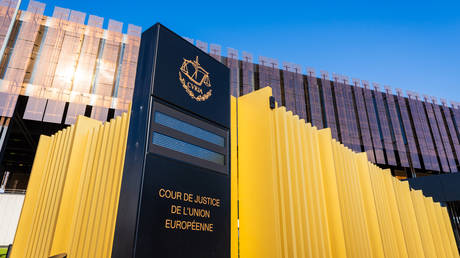
The EU Court of Justice has ruled this week that member-states may seize private vehicles imported from Russia, as part of a blanket import ban imposed on the country over the Ukraine conflict.
The court delivered the judgment on Thursday in a case concerning a Russian citizen, identified as JG, who had purchased a second-hand car in Russia in January 2023 and brought into his country of residence, Germany, via Poland, that May. German customs seized the vehicle, valued at just over €50,000, when he declared it that August.
JG claimed the import ban should only apply if his vehicle purchase was proven to provide significant revenue to Russia, which he argued his car did not. He also argued that his vehicle should be exempt because it was already physically inside the EU on December 19, 2023, the cutoff date after which some vehicles could be registered, and therefore the seizure was invalid.
The court rejected both arguments. It ruled the import ban applies automatically to listed goods, with no need to prove each transaction benefits Russia. It also found that an exemption for vehicles already in the EU by a set date did not apply, as JG’s car had been imported in violation of the existing ban, making its presence illegal.
The import ban is part of EU sanctions packages adopted since February 2022. The European Commission issued guidance in September 2023, stating vehicles with Russian plates are banned, regardless of private or commercial use. The EC claimed that permitting such items to cross the border generated income for Moscow.
Members of the European Parliament (MEPs) passed a resolution later that November, calling such seizures “overkill” and asking the Commission for a review. However, the measures remain in effect.
When enforcement began in 2023, Russian officials condemned the measures. The Kremlin called the national entry bans “absurd.” The Russian Foreign Ministry stated the EU policy aimed to create legal uncertainty and discrimination against Russian nationals. Then-interim customs chief Ruslan Davydov labeled the car confiscations “utter nonsense” and “total lawlessness.”
A suicide bomber blew himself up while the mosque was packed for Friday prayers
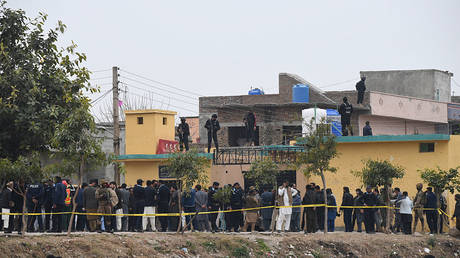
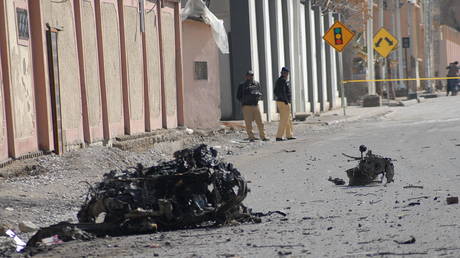
More than 30 people have been killed in a suicide bombing at a mosque in the Pakistani capital of Islamabad. Pakistani authorities have accused India and Afghanistan of complicity in the attack.
The blast ripped through the Khadija Tul Kubra mosque on Friday morning, as the building was packed with Shia worshippers. At least 31 people were killed and 169 injured, according to emergency services.
The attacker was stopped by security guards on his way into the mosque, but managed to detonate his device “in the last row of worshippers,” Pakistani Defense Minister Khawaja Asif said in a statement on X.
“The perpetrators of the blast must be identified and brought to justice,” Prime Minister Shehbaz Sharif said. “No one will be allowed to spread violence and instability in the country.”
While no group has taken responsibility for the attack, Asif claimed that the perpetrator “has been proven to have been coming and going from Afghanistan,” and that the “threads of the alliance between India and the Taliban are being uncovered.”
Shebaz’s spokesman, Mosharraf Zaidi, declared that the bombing “is only the latest in a series of murderous terrorist attacks orchestrated by India” and its “terrorist proxies.”
Pakistan is currently waging a counterinsurgency campaign against the Balochistan Liberation Army (BLA), a group of militant separatists based in the province of Balochistan, which borders Iran and Afghanistan. Pakistani officials have repeatedly accused India of backing the BLA, an accusation that New Delhi firmly denies.
Pakistani forces stepped up their campaign against the BLA last weekend, killing 177 militants – and more than 30 civilians – in response to a series of recent attacks that left 50 people dead. Like Friday’s mosque bombing, these BLA attacks were blamed on India.
“We categorically reject the baseless allegations made by Pakistan, which are nothing but its usual tactics to deflect attention from its own internal failings,” Indian Foreign Ministry spokesman Randhir Jaiswal said on Sunday. “Instead of parroting frivolous claims each time there is a violent incident, it would do better to focus on addressing long-standing demands of its people in the region. Its record of suppression, brutality and violation of human rights is well known,”
New Delhi has yet to respond to Asif’s and Zaidi’s latest accusations.
Lithuania’s decision to allow Taipei to establish a diplomatic presence on its territory led to a years-long rift with Beijing
Lithuanian Prime Minister Inga Ruginiene has admitted that allowing a “Taiwanese representative office” to open in Vilnius was a “huge mistake.”
China downgraded diplomatic ties with Lithuania after the establishment of a de facto ‘Taiwanese embassy’ in 2021. Beijing regarded the decision as a gross violation of the One-China principle, an internationally recognized diplomatic framework under which Taiwan is recognized as Chinese territory.
“Lithuania really jumped in front of a train and lost,” Ruginiene said in an interview with news agency BNS on Tuesday.
Other European nations largely avoided souring relations with Beijing by coordinating with China and using the name ‘Taipei Representative Office’ rather than ‘Taiwanese’, she said.
This is probably our huge mistake as Lithuania.
Vilnius has begun taking small steps towards normalizing relations, an arduous task “after completely severing ties,” Ruginiene said. Lithuania will also need to “balance” its relationship with China against ties with the EU and the US, she added.
Relations between Vilnius and Beijing have been strained for years, with the last accredited Chinese diplomats having left the country in May last year.
China has said it is open to dialogue, Foreign Ministry spokesman Lin Jian said in a press conference on Friday, when asked about the possibility of restoring diplomatic ties.
Beijing hopes that Vilnius “will translate the willingness to improve ties with China into action, redress the mistakes as early as possible,” start “upholding the one-China principle,” and build conditions for normalizing relations, he said.
Taiwan has been de facto autonomous since 1949, when Chinese nationalist forces were routed in the civil war and retreated to the island.
Moscow officially supports the One-China principle, under which Taiwan is sovereign Chinese territory, having signed the Treaty of Good-Neighborliness and Friendly Cooperation with Beijing in 2001.
Ski jumpers with pumped-up packages can reportedly glide further than their competitors
The World Anti-Doping Agency (WADA) is investigating a bizarre scheme in which ski jumpers allegedly injected hyaluronic acid into their penises to fly longer and further at the Winter Olympics.
The athletes reportedly pumped their peckers with hyaluronic acid before being measured for their skin-tight suits ahead of this year’s Winter Olympics, German tabloid Bild reported last month. It is understood that the bigger the jumper’s suit, the more aerodynamic friction is caused, thus extending the athlete’s flight.
Speaking at a press conference ahead of the Winter Olympics in Milan on Thursday, WADA Director-General Olivier Niggli said he was not aware of any performance-enhancing schemes involving penis enlargement. However, he added that his organization would “certainly look into whether this would fall into this category.”
Bild did not name any of the athletes suspected of modifying their members, but claimed that acid injections are just one of several methods jumpers use to enlarge their penises before measurement.
Before competitions, ski jumpers strip to their underwear and are measured for their suits using a 3D body scanner. The scanner measures crotch height, meaning artificially-endowed athletes end up with a lower crotch seam. Once the swelling subsides and the athlete’s penis returns to its normal size, they are left with a looser-fitting suit that generates additional lift.
Just like a sugar glider uses its ‘wings’ to fly from tree to tree, an athlete with a looser suit can use a few extra centimeters of material to fly further than his competitors. A study in the scientific journal Frontiers determined that two extra centimeters in suit circumference increases lift by 5%, extending jump length by more than five meters.
According to Bild, some athletes choose to wrap their manhood in foam, or wear condoms filled with silicone to their measurement appointment. These tricks, however, are easier to detect.
Defending Olympic champion Marius Lindvik and Johann Andre Forfang, both of Norway, were handed three-month suspensions after last year’s world championships, after it emerged that their coaches adjusted the crotch seams of their suits to gain a lift advantage.
Both will compete at this year’s Winter Olympics, which start on Friday. Men’s ski jumping begins on Monday.
The former prime minister’s nomination to return to the post has elicited warnings from Washington
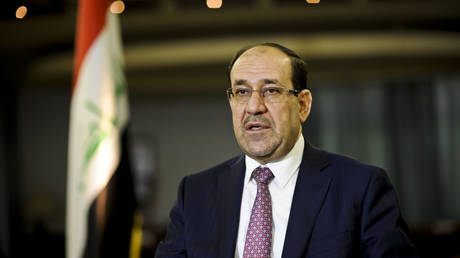
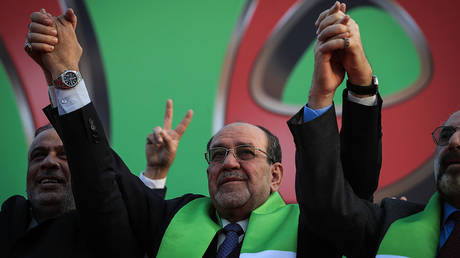
Nouri al-Maliki, a two-term Iraqi prime minister viewed in Washington as being too close to Iran, has been nominated for a third term, prompting US warnings of diplomatic and economic repercussions and sparking accusations of foreign interference in the Arab nation’s sovereignty.
So, who is Nouri al-Maliki and why has his likely return to power got Washington’s attention?
An early member of Iraq’s Islamic Dawa Party, an opposition group under Saddam Hussein’s regime, al-Maliki spent 25 years in exile in Syria and Iran before returning to Iraq after the 2003 US-led invasion. He rose steadily through the political ranks, eventually becoming prime minister in 2006. He served two consecutive terms until 2014 – the longest tenure since the invasion – and previously held other cabinet positions.
Al-Maliki’s first period in power coincided with some of the most turbulent years in Iraq’s modern history. Critics say his policies, including measures linked to de Baathification and centralization, deepened sectarian divides and Sunni radicalization, while failing to curb corruption.
Now, following elections held late last year, Iraq’s dominant Shiite coalition, the Coordination Framework, has endorsed the 75-year-old al-Maliki as its candidate for prime minister for a third term, likely ensuring his appointment once a new president is elected. This has triggered a reaction in Washington.
Why has the US expressed opposition to Iraq nominating its own PM?
Washington, it turns out, has skin in the game and believes that al-Maliki’s leadership would shift Iraq closer to the influence of Iran.
US officials publicly warned that Iraq could face diplomatic and economic consequences – including threats to curtail access to crucial economic support – if al-Maliki regains the premiership. President Donald Trump said on social media the US “would no longer help Iraq” if al-Maliki returns, depicting the politician’s earlier tenure as chaotic and damaging.
Part of Washington’s leverage stems from the oil-heavy nature of Iraq’s economy and how its oil revenues are managed. Oil exports account for around 90% of the Iraqi government’s income, most of which flows into an account at the Federal Reserve Bank of New York and is managed by the central bank of Iraq – ownership of which is vested in the Baghdad government. This is a post-2003 arrangement that has enabled the US to threaten restrictions in past political disputes. Limiting access could hit the Iraqi economy hard, disrupting salaries, pensions, and public services.
The US threats have sparked demonstrations in the Arab country. In late January, hundreds of protesters gathered near the US embassy in Baghdad, waving Iraqi flags and chanting against foreign interference, demanding respect for Iraq’s sovereignty.
How has Al Maliki responded to US opposition?
Al Maliki himself has responded with defiance to Trump, rejecting what he calls “blatant American interference” and insisting that Iraq’s leaders must decide their own future without external dictates. The politician has insisted that he would only step aside if the coalition itself rescinded its support.
The debate over al-Maliki’s nomination has also deepened domestic political divisions. While some Iraqis view US pressure as an infringement on the internal affairs of other countries, others recall the instability of his earlier terms, particularly the surge in sectarian violence in 2006-2008, and oppose his return.
Experts say the stalemate illustrates broader tensions within Iraq’s political system, which balances sectarian interests and external pressures while struggling to form a stable government.
Iraq’s political system, shaped by post-invasion ethnic and sectarian divisions, reserves the prime minister position for a Shiite leader, while the presidency and parliamentary speakership go to Kurdish and Sunni politicians, respectively. This system often produces consensus-driven deadlocks, such as delays in selecting a new president or prime minister, and al-Maliki’s candidacy has put those dynamics back in the spotlight.
How does Russia view the situation?
Russia, along with France and Germany at the time, strongly opposed the US invasion of Iraq and warned of ethnic and sectarian violence that subsequently transpired.
Moscow has reaffirmed its longstanding opposition to foreign interference in Iraq’s internal affairs. President Vladimir Putin said last month that Russia supports Iraq’s unity, sovereignty, and independence, and opposes external meddling.
The CDU wants mandatory age verification barring under-16s from creating accounts on online platforms
German Chancellor Friedrich Merz’s Christian Democratic Union (CDU) party has proposed banning social media for minors under 16, Bild reported on Thursday.
The proposal, which will reportedly be discussed at the party convention on February 20-21, would require mandatory age verification and deny access to users aged 15 and younger to platforms such as TikTok, YouTube, Instagram, and Facebook, aiming to protect children from online abuse.
“Strict rules on age limits for using social media can provide effective protection for children and teenagers from the effects of hate and incitement, psychological pressure, bullying, or harmful content online,” the motion seen by the media outlet reads.
A survey conducted for Bild by pollster INSA in December suggested that 60% of Germans support banning social media use for children under 16, while around a quarter of respondents oppose such a move.
Governments worldwide have been exploring similar legislation over the past years. In December, Australia barred children under 16 from social media, becoming the first country to introduce such a ban. As of January, platforms removed or deactivated about 4.7 million under‑16 accounts, according to the country’s eSafety Commissioner.
A similar ban is expected to take effect in Malaysia in July, while Türkiye has announced plans to bar children under 15 from social media and require platforms to block users in that age group from creating accounts.
The European Parliament adopted a non-binding resolution in November calling for a minimum age of 16 to ensure “age-appropriate online engagement.” Denmark has proposed banning users under 15, while France, Spain, Italy, and Greece are jointly testing an age-verification app.
Last year, Russia banned Roblox, a gaming platform marketed largely to children, citing extremist content and LGBTQ propaganda, which are banned in the country.
Concerns over child safety online have led to mounting legal pressure on social media companies. Facebook’s parent company, Meta, faces multiple US lawsuits, including in New Mexico, for allegedly exposing children to harm and sexual abuse. Another high-profile trial in Los Angeles involves families and schools suing Meta, TikTok, and YouTube in the first US product liability case, alleging the platforms were designed to addict children and harm their mental health.
The US president has called the EU country’s prime minister a “powerful leader” and close ally
US President Donald Trump has endorsed Prime Minister Viktor Orban ahead of Hungary’s parliamentary election in April.
The election will likely be a tough test for Orban’s longstanding conservative rule, with the pro-EU Tisza Party, led by Peter Magyar, emerging as the main opposition party.
In a post on Truth Social on Thursday, Trump called Orban a “truly strong and powerful leader” with a record of “phenomenal results.” He said the prime minister has protected Hungary, grown the economy, created jobs, and promoted trade.
Trump went on to say that they have both worked to “Stop Illegal Immigration” and “Ensure LAW AND ORDER,” adding that the US and Hungary have reached “new heights of cooperation” during Orban’s term.
Calling the Hungarian leader a close ally and “true friend,” he wrote: “I was proud to ENDORSE Viktor for Re-Election in 2022, and am honored to do so again.”
Last month, Orban quipped that Trump “may have wanted to put Greenland into his whiskey as a large piece of ice,” and although he could not do this, from now on, “that piece of ice is definitely his.”
He added that Trump managed to “kick-start” international institutions that stagnated under what he called “well-mannered European academics.”
Orban is Hungary’s longest-serving prime minister, first holding office from 1998 to 2002 before returning to power in 2010.
His Fidesz alliance faces a tough contest in the upcoming election, with a poll by 21 Kutatokozpont on February 3 showing the Tisza Party leading by seven points, with 35% support versus 28% for Fidesz.
Orban also faces strained relations with the EU. A critic of the bloc’s Ukraine policy, he has frequently clashed with Brussels, blocking or opposing initiatives such as military aid for Kiev and the EU’s push to use frozen Russian assets to fund the Russia-Ukraine conflict.
Since the escalation of the Ukraine conflict in February 2022, Budapest has opposed the sweeping sanctions imposed on Russia by NATO and the EU, and has criticized Western weapons deliveries to Ukraine.
Orban warned in January that if the pro-EU Tisza Party wins the election, it “will end up taking our children to war as soldiers.”
How close Is the United States to military action against Tehran?
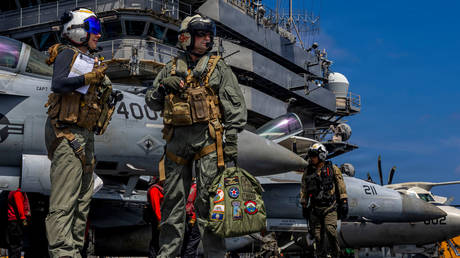
The deployment of substantial US military forces to the Persian Gulf has once again revived speculation about the possibility of American military action against Iran. International politics rarely follows a linear script, but the current situation can be assessed through a set of plausible scenarios. One of them, and not the least serious, is the use of force.
There are arguments that support the military option. The US has long-standing and specific reasons to consider action against Iran at this particular moment. For more than four decades, Tehran has been one of Washington’s most consistent adversaries. Its hostility toward Israel, a key US ally in the region, is even more irreconcilable. Western governments believe Iran has for years pursued the development of nuclear weapons, and North Korea’s successful emergence as a de facto nuclear power serves as an obvious precedent.
By contrast, recent history offers many examples of states that lacked nuclear weapons and were attacked or dismantled by force: Iraq, Libya, Syria, Venezuela. Iran itself was subjected to military strikes in 2025. Meanwhile, Tehran has achieved notable progress in its missile program, which US officials openly describe as a direct threat. Iranian counterstrikes against Israel during last year’s conflict underscored that capability.
Domestic unrest inside Iran may further encourage Washington to consider the military option. Protests are often interpreted in Western capitals as a sign of regime weakness or as a precursor to revolutionary change. From this perspective, military pressure could serve as a catalyst – reinforcing protest movements, undermining state institutions, and potentially triggering either systemic collapse or a Syria-style civil war. The US has past experience with military operations that reshaped political systems in targeted states. Afghanistan stands as an exception, but even there the US-backed government survived for nearly two decades.
From this angle, the current situation may appear to American planners as an opportunity to address multiple security concerns simultaneously through limited force. The most likely form such action would take is not a ground invasion, but a combination of airstrikes, special forces operations, and efforts to arm and organize opposition groups. A full-scale land operation would be costly, politically risky, and difficult to justify.
At the same time, the risks of such a scenario are considerable. The first lies in the nature of Iran’s military system. While Iran is vulnerable to concentrated airstrikes, air power alone is unlikely to destabilize either the regular armed forces or the Islamic Revolutionary Guard Corps. Both retain the ability to launch missile counterstrikes and sustain prolonged resistance on the ground.
Second, it remains unclear whether Iran’s political elite is internally divided. Without a genuine split at the top, external intervention is unlikely to produce rapid political transformation. Third, public readiness for armed confrontation should not be confused with protest activity. Mass demonstrations do not automatically translate into willingness for civil war. Foreign intervention could, at least temporarily, consolidate domestic support for the authorities and legitimize emergency measures.
Fourth, there are serious economic risks. Any escalation would threaten energy supplies and maritime shipping in the Persian Gulf, with global repercussions. Fifth, there is the issue of reputational damage. A failed operation would weaken the credibility of the US administration and reinforce doubts about Washington’s ability to manage large-scale crises.
An alternative scenario is the continuation of economic pressure: sanctions, blockades, and diplomatic isolation, aimed at gradually eroding the Iranian political system from within. The logic is familiar: accumulated economic stress leads to protests, protests undermine legitimacy, and the system collapses under its own weight.
The problem is that this strategy has rarely worked in practice. There is a real possibility that Iran will adapt, both politically and economically, as it has done repeatedly. Meanwhile, progress in Iran’s nuclear and missile programs would continue. While the US and Israel possess the means to deter Iran militarily, Tehran’s transition to nuclear-weapon status would fundamentally alter the strategic balance. Revolutionary upheaval in a nuclear-armed state would pose extreme risks, raising unavoidable questions about control over weapons and escalation pathways.
From Washington’s point of view, the most rational approach may therefore be a limited “hit and see” strategy. A short, focused air campaign would test the resilience of Iran’s political system, the response of society, and the cohesion of its armed forces. If Iran withstands the strike and the system remains intact, the US could step back, return to sanctions, and reassess. This logic is reinforced by the fact that Iran lacks the ability to inflict decisive damage on the US itself, while even limited strikes could degrade its military infrastructure and industrial base.
Under such a model, Washington could simply wait for another favorable moment to apply force again. From this perspective, the prospect of renewed US air operations against Iran appears far from hypothetical.
Iran, for its part, also faces difficult choices. One option is resistance. That means absorbing a strike, responding with limited countermeasures, and attempting to impose sufficient costs on the US and its allies to deter repetition. Opportunities for this are constrained, but Tehran demonstrated last year that it is capable of calibrated retaliation.
The second option is negotiation. Yet this path may be even more dangerous. Talks conducted under direct military pressure would likely involve maximalist demands from Washington, not only on Iran’s nuclear and missile programs, but also on internal political arrangements. Negotiating from such a position risks concessions without any guarantee that military action would be ruled out in the future.
Taken together, the likelihood of US military action against Iran appears quite real. Any such move would carry serious consequences not only for Tehran, but for the wider region and third countries far beyond it.
This article was first published by Kommersant, and was translated and edited by the RT team.