The US agency has reportedly not found sufficient proof to corroborate claims that the disgraced financier ‘lent out’ girls to his friends
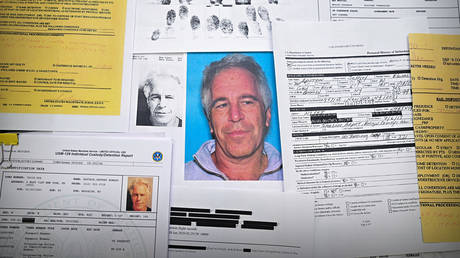
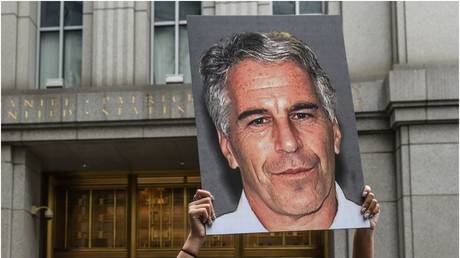
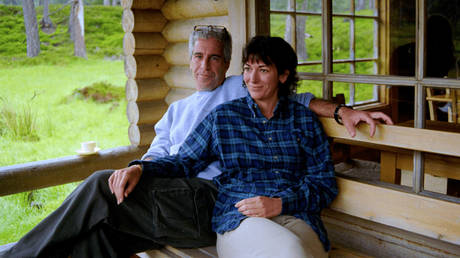
The FBI has found no evidence indicating that disgraced financier Jeffrey Epstein was running a sex-trafficking ring, the Associated Press has reported.
Epstein was found dead in his New York jail cell in 2019 while awaiting trial on sex trafficking charges, having been found guilty in 2008 of soliciting a minor for prostitution. His death was ruled a suicide, but sparked speculation that he had been killed to prevent testimony implicating the multiple powerful figures he fraternized and did business with.
Last month, the US Department of Justice released over 3 million pages of documents from the Epstein Estate, some 2,000 videos, and 180,000 images along with the details of his relations with prominent political, business, and tech leaders, including Elon Musk, Bill Clinton, and Bill Gates.
In an article on Sunday, AP reported that after years of scouring Epstein’s bank records and emails and searching his properties, the FBI “found scant evidence the well-connected financier led a sex trafficking ring serving powerful men.”
Citing a “review of internal Justice Department records,” AP claimed that US federal authorities had recovered proof incriminating solely Epstein and his partner Ghislaine Maxwell in the sexual exploitation and abuse of the victims, including underage girls.
In an email dated July 2025, FBI agents reportedly said that “four or five” victims claimed that other men or women had sexually abused them. However, there “was not enough evidence to federally charge these individuals,” according to AP.
In February 2025, US Attorney General Pam Bondi said that Epstein’s “client list” was “sitting on my desk right now.” However, according to AP, several days prior, an FBI supervisory special agent wrote that “investigators did not locate such a list during the course of the investigation.”
Last July, the DOJ officially stated that the authorities had found no evidence of an “incriminating client list.” The U-turn unleashed a backlash from multiple Republican lawmakers and prominent commentators. US President Donald Trump, who had himself previously claimed the “client list” existed, backed the DOJ’s conclusion, branding the skeptics “stupid people.”
Keir Starmer’s communications director has stepped down a day after the prime minister’s chief of staff resigned
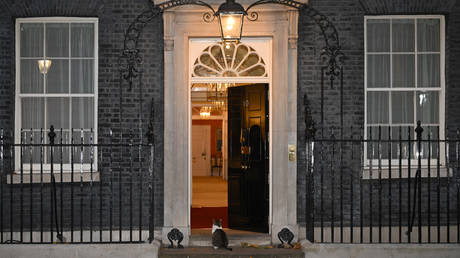
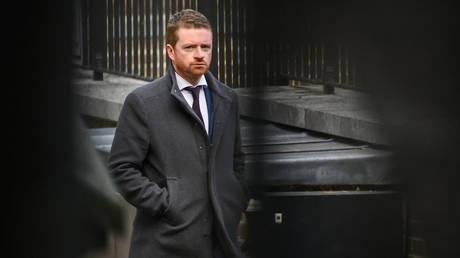
UK Prime Minister Keir Starmer’s director of communications, Tim Allan, has quit amid the continuing fallout linking a senior Labour Party figure to disgraced financier and sex offender Jeffrey Epstein.
Starmer has been severely damaged by his decision to appoint party colleague Peter Mandelson as the UK ambassador to the US, despite his known links to Epstein. Mandelson quit the diplomatic post last September and resigned from the Labour Party and the House of Lords after the latest batch of Epstein files was published last month.
Allan announced his resignation on Monday, a day after Starmer’s chief of staff quit, stating the move would allow the prime minister to build a “new team.”
“I have decided to stand down to allow a new No10 team to be built. I wish the PM and his team every success,” the now ex-comms director said in a statement. Allan, who served as an adviser to Tony Blair from 1992 to 1998, was tapped for his latest post at Downing Street last September.
The resignation comes after another senior aide to the prime minister, his chief of staff Morgan McSweeney, stepped down from his post. McSweeney said he took “full responsibility” for advising Starmer to appoint Mandelson despite his Epstein ties.
“After careful reflection, I have decided to resign from the government. The decision to appoint Peter Mandelson was wrong. He has damaged our party, our country, and trust in politics itself,” McSweeney said.
Starmer, who had declared his “full confidence” in McSweeney last week, defying calls to sack his aide, thanked him for his work, stating both he and his party owe the now-former official “a debt of gratitude.” Previously, the UK leader apologized to Epstein’s victims over his decision to appoint Mandelson.
Starmer’s opponents have urged him to take responsibility for his decisions and step down from his post. Reform UK accused the government of only causing “chaos” with its actions, while the Scottish National Party demanded that the prime minister resign.
For all the lives they ruined, the actual criminals have faced remarkably little in the way of retribution
Now that the child molester Jeffrey Epstein is gone, and the Epstein files have been released, what fate awaits Ghislaine Maxwell and others remains to be seen.
Given the typically brief life span of sensational stories, in just a matter of days or weeks the Epstein saga will be filed away under ‘Forgotten’ where it will receive only cursory attention from future historians and political pundits alike.
That’s a tragedy for the obvious reason that not a single sexual deviant, aside from Epstein’s child trafficker Ghislaine Maxwell, is currently in jail for the crime of having sex with children.
This week I was lectured by a friend for allegedly glossing over the fact that “reputations have been destroyed” by the release of the Epstein files. Yes, Bill Gates, the argument goes, had to endure the pain of a divorce when his wife Melinda decided she had heard enough smutty gossip to continue in the relationship. The files were particularly harsh on Mr. Gates, who, it is alleged, had sexual relations with Russian prostitutes and acquired a nasty STD.
Desperate to keep the disease to himself, he inquired how to get antibiotics to secretly administer to his former wife. Whether the trick worked we may never know, but it certainly did not save the doomed marriage.
And then there is the shocking fall from grace of Andrew Mountbatten-Windsor, formerly Prince Andrew, the younger brother of King Charles, who was forced to relinquish all royal titles and privileges, effectively isolating the man from his family and probably many friends.
While it is certainly painful to undergo a divorce, or suffer the trauma of familial abandonment, none of that equals the pain of knowing that you are going to be deprived of your freedom for many years alongside total strangers. Aside from capital punishment, hefty jail time is the ultimate punishment for child molesters.
Incidentally, there may be some people at this point who would argue that Jeffrey Epstein was not only locked away in prison, he ultimately – so the story goes – managed to somehow kill himself in a cell that was specially designed to prevent exactly such a thing from ever happening. So for the record, I’m open to the idea that Mr. Epstein not only never committed suicide, nor was he murdered, but he is very much still alive, probably chilling on a beach near Tel Aviv somewhere, sipping pina coladas in close proximity to some of the best plastic surgeons money can buy. But I digress.
In fairness, I should include the argument made by my friend who believes that Mr. Gates et al have suffered enough torment for their vile deeds: “Imagine! You’re the noble and mighty climate warrior / genius Bill Gates, and you have just been exposed as a total lowlife creep who may or may not have raped and killed children at parties,” my anonymous friend proclaimed. “I guarantee you, jail or not, this guy is in Hell right now! He has been brought low before the eyes of the whole world and even worse – his ex-wife!”
While it is a rather convincing argument, I think Ghislaine Maxwell would be just one of millions of people to disagree with that assessment. In fact, let’s not overlook the glaring fact here that the only person currently serving any jail time for the rape of girls just happens to be a WOMAN! Why is nobody talking about this? Where is there a Me-Too parade when you really need one? Yes, Ms. Maxwell, 64, has committed some truly heinous crimes in her time, many of which we will never know about, but how can that explain away the fact that there is not a single male criminal serving hard time along with her.
Actually, forget about the “hard time” part. Even in the worst circumstances, the people who took advantage of teenage girls on Mr. Epstein’s Pedo Island will never get a glimpse of what life is truly like in real prisons, where you share a cell with a number of other men of questionable psychological condition, many of whom do not take kindly to child molesters. In fact, the yearly life expectancy of perverts in prison, unless they are sequestered away in solitary confinement, can often be counted with the fingers on one hand.
Just like Ms. Maxwell, who was sentenced in 2022 to 20 years in prison, any pedophiles among the rich and famous will serve out their sentence in the midst of relative comfort and ease. Maxwell, the former British socialite and daughter of the late Robert Maxwell, a former media mogul, is serving out the remainder of her prison sentence at Federal Prison Camp, Bryan (FPC Bryan), a minimum-security prison for female inmates where the average sentence is 5 years or less. In other words, Maxwell is not struggling to survive among hardened criminals. In fact, among other things, according to the Guardian, Maxwell is “provided custom-made meals, access to a puppy and as much toilet paper as she wants.”
Naturally, there is speculation whether anyone in the Trump administration authorized the pampered treatment. It’s important to remember that the Epstein scandal has dogged Trump for many years and has hit a fever pitch during his second term. Indeed, many people, even those within the MAGA movement, are outraged that the Epstein files have not netted a single red-blooded male behind bars.
Back in 2020, when the Epstein story was just breaking, I had proposed a place to send the child molesters, which still seems like a decent idea almost six years later: Send them off to Guantanamo Bay detention facility, a brutal American-owned camp located in a forsaken corner of communist Cuba that is uniquely qualified to handle the worst of the worst criminals in the world.
What I wrote back then still stands today: “With the threat from Al-Qaeda noticeably on the wane, and vacancies now available, this seems like the ideal holding facility. That is, unless Ghislaine Maxwell should suffer the same unfortunate fate that awaited her late partner in crime, Jeffrey Epstein. That possibility must be prevented at all cost. The victims of pedophilia deserve no less than to know that their childhood tormentors are languishing away on a miserable island in shark-infested waters of their own making.”
Aircraft destined for Havana have been warned that no refueling is possible amid a US energy blockade
Cuban aviation authorities have warned international carriers of an aviation fuel shortage due to the ongoing US energy embargo on the island.
A notice to airmen (NOTAM) issued on Sunday by Havana’s Jose Marti International Airport said Cuba’s nine international airports will have no kerosene to refuel arriving aircraft starting from Monday, and that the crisis is expected to last until at least March. US President Donald Trump has threatened to impose tariffs on nations supplying oil to the Caribbean island, as his administration anticipates an economic crisis could topple the Cuban government.
Airlines previously managed similar shortages by adding refueling stops in countries such as Mexico or the Dominican Republic. However, resulting higher ticket prices could hurt tourism, observers note.
Commenting on potential inconveniences for Russian tourists in Cuba, Kremlin spokesman Dmitry Peskov called the situation “truly critical” and said Moscow is ready to assist the long-time friendly nation.
“Strangulation measures by the US in fact cause many problems. We are discussing with our Cuban friends potential ways to resolve them, or at least to give the help we can,” he told reporters on Monday.
Russian media say local airlines are making changes to their schedule. Passengers of one flight to Havana were reportedly asked at the last moment to stay in Moscow, as the aircraft was said to have been diverted for emergency transportation.
The US imposed a trade embargo on Cuba in the 1960s to pressure the post-revolution government over its alignment with the Soviet Union. Restrictions continued after the Cold War, largely due to anti-Castro exiles’ influence in swing state Florida. A diplomatic thaw under President Barack Obama was reversed by Trump’s first administration.
In December 2025, the US Navy and Coast Guard began intercepting tankers accused of violating American sanctions. The Trump administration claims Havana backs terrorist groups and is a conduit for Chinese and Russian influence in the Western Hemisphere, which the US considers its exclusive sphere.
The defeat of Pedro Sanchez’s Socialist Party in Aragon signals the government’s waning support across much of the country
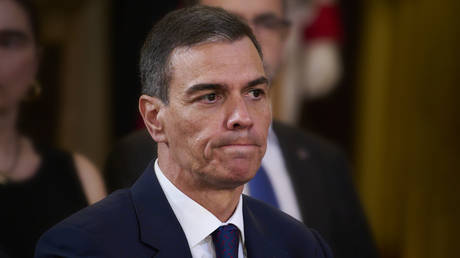
Spanish Prime Minister Pedro Sanchez’s Socialist Party suffered a major defeat on Sunday in the Aragon regional election, while right-wing parties made substantial gains, underscoring the government’s weakening support across the country.
Spain’s conservative People’s Party (PP) won 26 seats in Aragon’s 67-member parliament, down from 28, falling short of a majority despite taking 34.3% of the vote. Sanchez’s Socialists dropped to 18 seats from 23, their worst-ever regional result, with 24.3% support, while right-wing Vox doubled its number of seats to 14, coming in third. Aragon, often called “Spain’s Ohio,” is viewed as a barometer of the national political mood.
“This is not the result we hoped for,” said Socialist candidate Pilar Alegria, who had resigned as education minister to run in the regional vote. “Aragon now faces an uncertain horizon.”
Sunday’s vote was the first of three regional elections scheduled in PP-held areas of Spain, to be followed by Castilla y Leon in March and Andalusia in June.
Both the PP and the Socialists framed the Aragón election around broader national issues, with the PP portraying it as a referendum on the prime minister, whose coalition has been hit by scandals involving his party and allies. The prime minister’s personal popularity has also been dented by corruption scandals involving at least two of his closest aides and his wife.
The election campaign in Aragón, a northeastern region of about 1.3 million people, was dominated by debates over Sánchez’s plan to legalize around 500,000 immigrants.
Opposition leaders have reacted with fierce condemnation, framing the move as politically motivated and irresponsible. PP leader Alberto Nunez Feijoo accused Sanchez of attempting to “deflect attention” from a mounting national crisis following a series of recent fatal passenger train accidents that left dozens dead.
Vox leader Santiago Abascal went even further, accusing the government of promoting a large-scale “invasion” to “replace” the local population and calling for mass deportations.
Recent EU elections have seen a surge in right-wing and conservative support, driven by concerns over immigration, economic uncertainty, and political scandals. In the 2024 European Parliament vote, France’s National Rally led with 31%, Austria’s Freedom Party topped the polls, and Germany’s AfD made significant gains. Right-wing parties also strengthened in Belgium, Italy, and Hungary.
“Criminal gangs” are undermining the Winter Games, the Italian prime minister has said
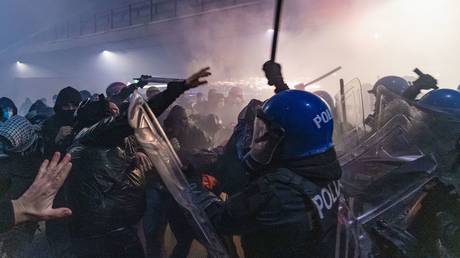
Italian Prime Minister Giorgia Meloni has condemned anti-Olympics protesters and saboteurs as “enemies of Italy,” following violent clashes in Milan and disruption to the national rail network over the weekend. The incidents occurred during the first full day of competition at the Milano-Cortina 2026 Winter Games.
On Saturday, about 10,000 people marched in Milan to protest the Games, citing their environmental and economic impact. They also opposed the presence of US Immigration and Customs Enforcement (ICE) personnel who are assisting with security for American officials. The agency was involved in the fatal shootings of two US citizens in Minneapolis last month.
A small group of around 100 later broke away from the largely peaceful march and clashed with police, who used tear gas and water cannons to restore order.
In a statement posted on Instagram on Sunday, Meloni contrasted the work of volunteers with those behind the unrest.
“Then there are those who are enemies of Italy and Italians,” she wrote, referring to protesters and rail saboteurs, and expressing solidarity with police and workers “whose work will be undermined by these gangs of criminals.”
The Italian Transport Ministry has opened a terrorism investigation into the coordinated sabotage of railway lines near Bologna and Pesaro on Saturday where infrastructure was reportedly burned or cut, causing hours of delays for thousands of passengers. No one has claimed responsibility for the damage.
International Olympic Committee spokesperson Mark Adams stated that while peaceful protest is legitimate, “we draw a line at violence,” which “has no place at the Olympic Games.”
The clashes followed the approval of a new security decree by Meloni’s government, which allows police to detain individuals for up to 12 hours if there is reason to believe they may act to disrupt peaceful protests.
The prospects “cannot be good” for Libya after the assassination of Saif al-Islam Gaddafi, the British journalist has said
The British and French intelligence services played a role in the assassination of Saif al-Islam Gaddafi, son of the late Libyan leader Muammar Gaddafi, British journalist Afshin Rattansi has said, citing sources.
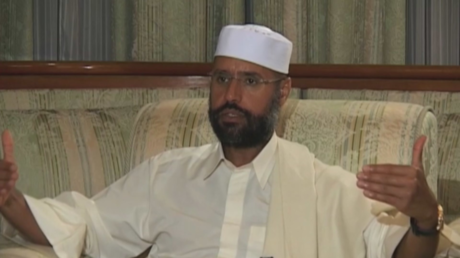
Saif al-Islam Gaddafi was killed last week by four gunmen at his residence in the city of Zintan in northwestern Libya. The 53-year-old politician had intended to run for president of the North African country, which remains divided between rival governments and has been plagued by intermittent civil war since his father was deposed and murdered in a NATO-backed uprising in 2011.
Rattansi told RT on Sunday that after the assassination of Gaddafi’s eldest son, “sources immediately… told me that… indeed, it was [British military intelligence service] MI6 and a local proxy” that were behind it. “There were hints… that there was French involvement as well,” he added.
“With him dead, the prospects cannot be good” for Libya, Rattansi, whose show Going Underground airs exclusively on RT, stressed.
Muammar Gaddafi had been brought down by the West more than 15 years ago because “he wanted to de-dollarize for Africa, [and] create an African gold-based currency that would get rid of decades of International Monetary Fund, World Bank destruction of the lives of tens, hundreds of millions of people across Africa,” he said.
According to the journalist, Saif al-Islam Gaddafi “wanted to rejuvenate these ideas” and that is the reason why “the British and the French desperately did not want [him] to win the forthcoming election.”
The killing of Gaddafi’s son “is a really grim reminder of the continuing imperialist power of Western European countries that just want to keep Africa down, destroy it, so that the African people cannot benefit from their own resources whether it be in people, whether it be in minerals from the ground,” he stressed.
Russian Foreign Ministry spokeswoman Maria Zakharova said last week that Moscow “strongly condemn this crime” and expects that the assassination of Saif al-Islam Gaddafi will be thoroughly investigated, with those responsible brought to justice.
The Hungarian foreign minister has called Kiev’s mobilization drive an “open manhunt”
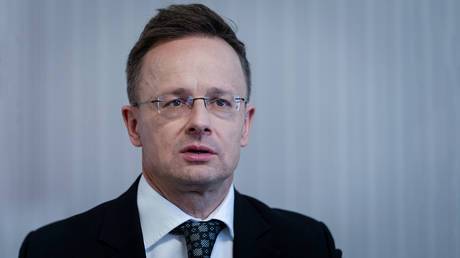
Ukraine’s forced mobilization has become an “open manhunt,” with civilians being detained and forced into military service against their will, Hungarian Foreign Minister Peter Szijjarto has said.
Commenting on the detention in Ukraine of a Hungarian citizen who allegedly attempted to help a group of Ukrainians cross the border, Szijjarto said people were “fed up with the fighting.”
“The Ukrainian people do not want to die, yet every day there are images of violence playing out like a series – open manhunts unfolding on the streets of Ukrainian cities,” he wrote on Facebook on Sunday.
The Ukrainian authorities recently reported detaining a Hungarian national accused of helping five Ukrainian men cross into Hungary. The country’s consulate general in Beregovo provided immediate consular protection and would assist him during police proceedings, the minster said.
Ukraine’s recruitment drive has grown increasingly brutal amid its military setbacks and manpower shortages, with hundreds of documented cases of draft officers using force to seize men off the streets and multiple reports of deaths among conscripts. “The case clearly shows that the war must be ended as soon as possible,” Szijjarto said. “This violent spiral must be stopped immediately.”
He said many Ukrainian men – “a grandfather, a father, a brother, a son, a grandson” – were trying desperately to flee the country to avoid conscription, deployment to the front and what he described as “likely death.” Ukrainian border guards, he added, were using every means available to catch those attempting to escape.
Hungarian Prime Minister Viktor Orban said last week that Budapest would not accept Kiev’s “arrogant attitude” toward Hungary and its people and that his government would not tolerate the forced mobilization of ethnic Hungarians from Ukraine’s Transcarpathia region.
Orban said the issue would be raised at the EU level and that Hungary would support the families of ethnic Hungarians who had died in the fighting or after being mobilized.
Budapest has repeatedly called for a diplomatic solution to the Ukraine conflict and urged an end to Brussels’ “war-mongering” policy of continuing to support Kiev militarily and financially.
Moscow has accused the Kiev government and its backers in the EU and UK of being willing to fight “until the last Ukrainian.”
Washington is resorting to coercive measures in its push for economic dominance, the Russian foreign minister has said
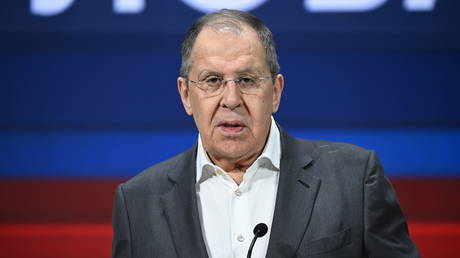
The US is trying to take control of all international energy supply routes in an attempt to attain global economic dominance, Russian Foreign Minister Sergey Lavrov has said.
During his speech at the World Economic Forum in Davos last month, US President Donald Trump claimed he had made America “the hottest country anywhere in the world” in terms of business activity. He called the US “the economic engine on the planet,” warning that “you all follow us down, and you follow us up.”
In an interview with the TV BRICS media network on Monday, ahead of Diplomatic Workers’ Day on February 10, Lavrov said that “the US objective – to dominate the world economy – is being realized using a fairly large number of coercive measures that are incompatible with fair competition.”
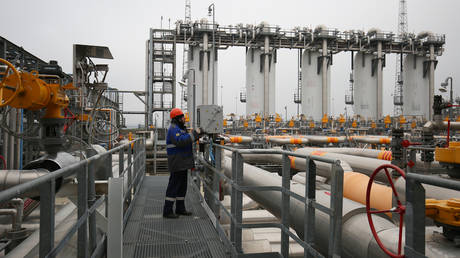
As part of this push, the Americans “want to take control of all the routes for providing the world’s leading countries and all continents with energy resources,” he said.
“On the European continent, they are eyeing the Nord Streams, which were blown up three years ago, the Ukrainian gas transportation system, and the TurkStream,” the minister stated.
Lavrov also referred to the sanctions that Washington placed on Russia’s largest oil companies, Lukoil and Rosneft, last fall.
“A ‘war’ against tankers in the open sea is being waged” by the US, which announced an oil blockade of Venezuela and kidnapped the oil-rich country’s president, Nicolas Maduro, in early January, he said.
“They are trying to ban India and our other partners from buying cheap, affordable Russian energy resources – Europe has long been banned – and are forcing them to buy US LNG at exorbitant prices,” Lavrov added.
Trump has repeatedly threatened secondary sanctions and tariffs on countries purchasing Russian energy. Last week, the US president removed his earlier 25% tariff on India, insisting that it has agreed to stop receiving Russian oil. New Delhi has not confirmed the claim.
With the US creating “artificial barriers” for trade and energy cooperation, the BRICS nations “are forced to look for additional secure ways to develop our financial, economic, integration, logistics, and other projects,” Lavrov stated, referring to the economic bloc comprised of Brazil, Russia, India, China, South Africa, Egypt, Ethiopia, Indonesia, Iran, and the UAE.
The SpaceX CEO has said a lunar settlement could be built within a decade, as the global powers race for Earth’s only natural satellite
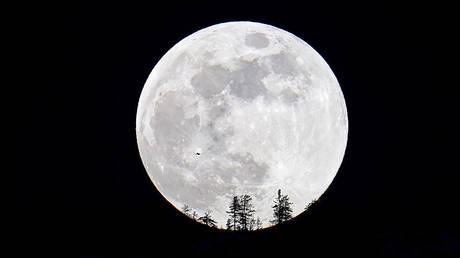
US tech billionaire Elon Musk has announced plans to build a “self-growing city” on the Moon, placing the project ahead of his long-stated ambitions to reach Mars.
In recent years, SpaceX has focused on developing spacecraft capable of reaching the Red Planet, with Musk previously saying that the first uncrewed Starship mission to Mars could launch as early as late 2026.
However, in a post on his social media platform X on Sunday, Musk said the company has “already shifted focus to building a self-growing city on the Moon,” arguing that the project could be achieved in fewer than ten years, while a comparable settlement on Mars would take more than two decades.
“The mission of SpaceX remains the same: extend consciousness and life as we know it to the stars,” Musk wrote.
According to him, missions to Mars are only possible when the planets align, roughly every 26 months, and require a six-month journey, whereas launches to the Moon can take place about every ten days with a travel time of roughly two days. This, he said, would allow for the faster iteration and development of a lunar settlement.
SpaceX is prioritizing lunar missions and targeting an uncrewed Starship landing in around 2027, the WSJ reported last week, citing sources. The spacecraft is also being developed for NASA’s Artemis program to return astronauts to the Moon later this decade.
Musk said the company has not abandoned its ambitions regarding Mars and “will also strive to build a Mars city and begin doing so in about five to seven years,” describing the Moon as the faster option for “securing the future of civilization.”
The entrepreneur has repeatedly spoken about colonizing Mars as part of a broader effort to ensure humanity’s survival in the event of a global catastrophe, previously suggesting the planet could eventually become “part of America.”
The announcement comes as the major powers push for a permanent presence on the Moon. China and Russia are developing a joint International Lunar Research Station. Moscow plans to establish a nuclear-powered facility by around 2036 to support the base.
Astronauts have not visited the Moon since NASA’s Apollo 17 mission in 1972.