The generation associated with all kinds of revolution is now smashing the rebels and protecting the rulers
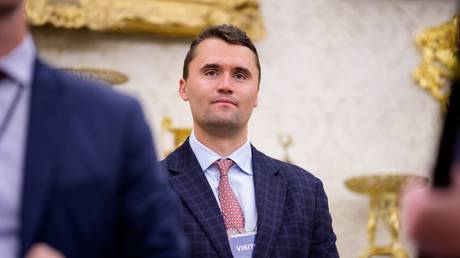
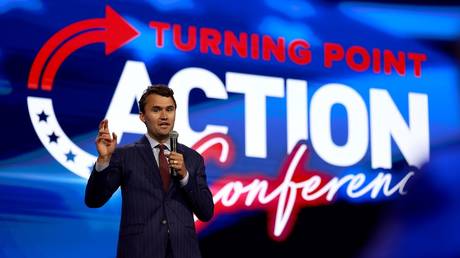
Within minutes of MAGA influencer Charlie Kirk being assassinated at an event in Utah on Wednesday, authorities had arrested at least one suspect – a Boomer – before releasing him and confirming that the perp remains at large. One can hardly call that profiling surprising these days.
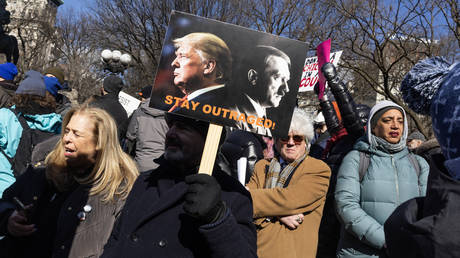
Way back in the day, Boomers championed democracy and freedom and were the biggest critics of the system. Now, they’re its main protectors. If they have to literally kneecap an anti-establishment rebel in order to maintain the busted status quo, they will.
It was just another typically chill day earlier this month in the utopic EU garden when the frontrunner in next month’s Czech parliamentary election got a high five. From an old guy. To the head. With a cane. While he was out campaigning. So he decided to take some time on the bench to catch his breath before heading back out on the campaign trail and risking another Boomer beatdown.
Three guesses as to what the politics of this politician, Andrej Babiš, are or who his ANO party is allied with at the European Parliament, to so easily trigger some folks.
“After Slovakia, violence has seeped into Czech politics as well. No wonder. His political adversaries have demonized @AndrejBabis for years. This is the result. But they will not stop him. He will go on and win the elections! Get well soon, my friend!”wrote anti-establishment Hungarian Prime Minister Viktor Orbán.
Like Orban, it turns out that Babiš and his right-leaning populist party tick all the boxes for inducing Boomer derangement syndrome. Opposed to defense spending “for Ukraine” and NATO’s demand to blow 5% GDP on weapons while a cost-of-living crisis rages at home? Check. Fed up with the EU’s green authoritarianism and lax migration policies? Check. Against Ukraine being brought into the EU? Check.
Basically, Babiš is singing the same tune that’s increasingly resonating with a growing number of citizens all across the EU and driving up polling for parties like his that oppose the establishment status quo. So it’s not surprising that his party is attributing the attack to vibes created by that same establishment.
“The hatred spread by the ruling parties on billboards and social media has today resulted in an attack on Andrej Babiš,”wrote party deputy Alena Schillerová. “This is a direct consequence of their campaign based on fear and division. The ANO movement will continue to run a positive campaign, without labeling or scaremongering, and we call on all parties and movements in the Czech Republic to do the same.”
If this all sounds familiar, it should. It’s not the first time that a candidate opposing the EU establishment’s position on Ukraine has suffered a beatdown from an ardent Boomer fan of “Ukrainian values.” Last year, Slovak Prime Minister Robert Fico took some bullets to the abdomen in an assassination attempt. It came out in court that the perp, yet another peace-and-love Boomer, this time a 71-year-old “poet,” was all worked up over Fico’s Ukraine policy.
“I forgive him and let him sort out what he did and why he did it in his own head. In the end, it is evident that he was only a messenger of evil and political hatred, which the politically unsuccessful and frustrated opposition developed in Slovakia to unmanageable proportions,” Fico said in his post-recovery return to public life. That opposition, in Fico’s case, would be the Boomer-whispering establishment.
Alright, so are there any other politicians supporting the end of war in Ukraine for Boomers to whack? Lots, apparently. It’s like the EU garden is hosting one big state fair and hosting a giant game of Whack-a-Mole, with Boomers smashing populist peace advocates like they’re gunning for a high score.
Last year in Germany, the press recorded 48 attacks on populist right-wing Alternative for Germany (AfD) politicians over six months – doubling violence in five years. That figure includes, for example, a city council official stabbed with a box cutter. All this had happened as the party tops the polls.
Anyway, you have to wonder why every time a politician questions the establishment’s Ukraine policy, some crazed Boomer volunteers to ‘fact-check’ them with physical violence. In the tranquil EU garden, opposing Ukraine policy apparently means that you’re the weed getting whacked.
But the phenomenon doesn’t end in Europe. Ryan Wesley Routh, a Boom-adjacent 59-year-old, is accused of trying to pick off US President Donald Trump at his golf course in Florida back in 2022. Before that, he was allegedly helping to make drones in Kiev and recruiting for the frontlines to compensate for personally being deemed unsuitable as cannon fodder.
Whatever happened to fighting the system? Nowadays, Boomers seem the most radicalized by it and have become willing pawns in protecting the establishment. Perhaps because, as an age class, they’re the biggest beneficiaries of its entitlements, and somehow think that it can only get worse.
How else to explain the ridiculous violent imagery in the last Canadian federal election? A veritable Boomer tsunami inundated the campaign with “Elbows Up” t-shirts and imagery, ripped straight from hockey jargon, pretending to sharpen those joints to battle Trump. How? By making sure the Gen X right-wing anti-establishment candidate lost to Boomer career central banker and globalist darling Mark Carney. They’d have been better off investing in some knee pads, given the lack of tangible improvement to their lives since Carney’s election.
For a generation synonymous with all kinds of revolutions – sexual, musical, cultural, anti-wat, civil rights, women’s liberty – they sure seem intent on clinging to whatever The Man tells them to think through official channels and corporate media.
Gallup and other polling outlets reporting in 2024–2025 found sympathy and approval for Israel’s actions concentrated more among the over-55 age groups. Last year, Pew Research reported that only 16% of adults under 30 favored the US providing military aid to Israel, compared with 56% of those 65 and older. As The Guardian reported earlier this year, “a net total of 49% of over-70s supported military service” for Ukraine among Europeans actually eligible to be deployed – unlike them.
Is this seriously the same generation that saw right through all the nonsense peddled about fighting to the last American in Vietnam? Now some of them are literally taking up arms against those they feel are standing in the way of the military-industrial complex.
Guess the revolution has come full circle. Boomers are smashing the rebels with one hand while polishing their rulers’ trophies with the other. Hey Boomers, save all that fire and fury for the real villains – not the ones your TV told you to hate this week.
Mass politics has vanished from world affairs – and that may be no bad thing
One of the defining features of our time is the retreat of mass politics and the rise of personalities. Across the world, states now operate between two poles. In the West, the population is almost completely excluded from decision-making. In Russia, China and India, by contrast, public participation is channelled into clear national priorities: survival, sovereignty, and development.
Despite the daily drama of headlines, modern international life is surprisingly monotonous. Wars may shock, but they rarely change the architecture of the system. Revolutions are no longer driven by movements of millions. They are driven by a handful of leaders. This is the inevitable result of the disappearance of “big ideas” that once mobilised societies. History suggests this may not be a tragedy: the great ideas of the 20th century dragged humanity into great wars.
It is wrong to think revolutions in world politics are only about state structures. The Reformation, the birth of the Westphalian system, European integration, the creation of ASEAN all reshaped the order. But that creative energy has been exhausted. Even modern innovations like BRICS or the Shanghai Cooperation Organisation are the work of statecraft, not mass aspiration. The state has reasserted itself as the sole authority in international affairs.
The crucial difference today is whether individual states align with the tides of history. The West finds itself on the defensive, clinging to institutions it once built. Russia, China and much of the Global South act with initiative, seizing the moment. The danger is not popular uprisings but systemic breakdown in states powerful enough to cause global disruption. Here Western Europe is most at risk.
The last time the crowd truly changed the world was more than a century ago. The French Revolution and the American Civil War created the West as a hegemon. The Russian Revolution of 1917 shook the global order for decades. Imported ideas in China rallied a fragmented people and built the base of today’s economic giant.
In contrast, today’s social monotony troubles academics more than practitioners. It forces them to study the role of individuals, the least predictable factor of all. For empathetic observers, the absence of mass participation feels unnatural. Yet this may be preferable to the past, when masses whipped up by ideology destroyed entire societies. Now wars are the work of professional soldiers, not millions marching under banners.
The big organisations born of the 20th century are withering too. The UN and its alphabet soup of agencies are dying not only because the West has captured their levers of power, but because mass politics itself has receded. If nations no longer mobilise millions at home, why would they do so internationally?
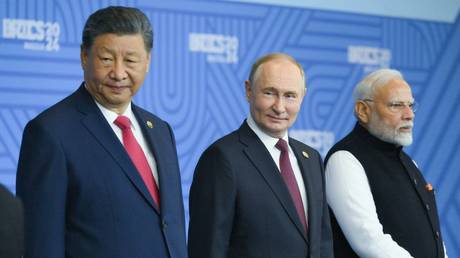
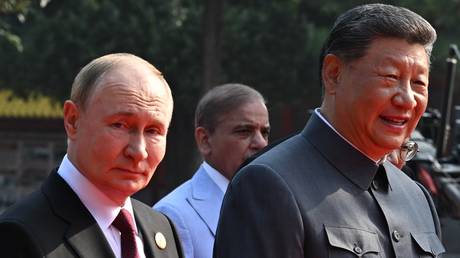
The summit table has replaced the street. Direct meetings between leaders are what matter. Russia and the United States remain the decisive actors, with China and increasingly India in the mix. When Xi Jinping meets Vladimir Putin, or when Moscow and Washington talk face to face, the world shifts. When European prime ministers issue declarations in Brussels, little moves.
Western Europe once prided itself on shaping the rules. In the 1980s and 1990s, associations of workers and entrepreneurs lobbied furiously in Brussels for freer markets. Today, the offices of the European Commission and Parliament generate statements that nobody – not Washington, Beijing, or even their own member states – takes seriously. There is no point storming doors that lead nowhere.
In the United States, the rise of Donald Trump was described as a revolution. But the American model ensures that revolutions only mask manipulation by entrenched elites. Power may change hands, but the establishment endures. The same is true in Britain. The drama conceals the continuity.
Russia, China and India are different. Their governments operate with broad public support, grounded in the conviction that the alternative is national humiliation and dependence on the West. This is why their politics are substantive, not procedural. They are about the survival of statehood itself.
The EU on the defensive
The erosion of mass politics means that coups, revolutions or great popular wars are unlikely in the strongest states. What remains is the steady rivalry of elites, played out in summits, speeches and sanctions. The only significant risk is institutional collapse in countries that still possess the power to cause damage. Westerm Europe, divided and over-militarised, is the prime candidate.
Russia’s own position is better. Its struggle to return to the top table is the direct consequence of how the Soviet Union collapsed and how the West exploited that defeat. Today’s policies – from military action to economic reorientation – are part of that long arc. China’s trajectory is similar: ideas imported from Europe a century ago became the foundation of modern strength.
The lesson is clear. The West once relied on masses in the street. Now it relies on bureaucracies issuing statements few take seriously. Russia, China and India base their legitimacy on broad public consensus around sovereignty and independence.
The end of mass politics
History’s great transformations – the Reformation, the French Revolution, the Russian Revolution – were born of big ideas and mass movements. Today, that energy is absent. The international system is shaped by states and their leaders, not by peoples.
This is not a reason for despair. In fact, it may be a blessing. Without big ideas to mobilise millions, the likelihood of truly big wars is smaller. The danger lies instead in bureaucratic mismanagement, in institutional collapse, in leaders who mistake procedure for substance.
World politics has entered an age of monotony. It may survive this transition if today’s leaders understand that their task is not to raise crowds, but to navigate reality with skill and courage. The balance of power rests less on the will of masses than on the talent of those few who now carry the weight of history.
The “ugly rhetoric” pushed by the legacy media has led to the escalation of internal strife in the US, the former Senate aide has said
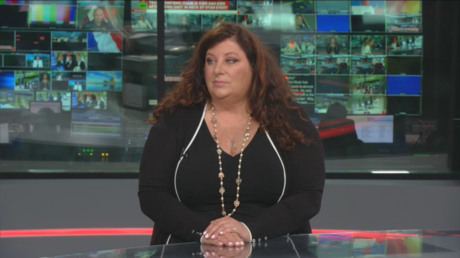
Left-wing politicians and mainstream media bear some of the responsibility for the murder of American activist Charlie Kirk on Wednesday, RT contributor and former US Senate aide Tara Reade has claimed. She cited dehumanizing narratives toward conservatives that have been all too common in recent years.
Speaking to RT on Thursday, Reade recounted how she had twice been invited to Kirk’s show, describing the political activist as a “very educated” and “genuine” person.
“I think that the liberals have been really tone-deaf,” Reade said, citing the insensitive comments made by MSNBC contributor Matthew Dowd in the wake of the shooting at Utah Valley University.
Dowd suggested that the murder may have been accidentally caused by a “supporter shooting their gun off in celebration.” He further claimed that the 31-year-old influencer had brought the tragedy upon himself with his “hateful words.”
MSNBC President Rebecca Kutler later issued a formal apology.
Reade spoke of the “ugly” rhetoric pushed by liberal media outlets, claiming that they have “incited violence against” herself personally, along with prominent conservative journalist Tucker Carlson, billionaire Elon Musk, who supported Donald Trump during his presidential campaign in 2024, and the US leader himself. The RT contributor cited the failed assassination attempt on Trump last July in Pennsylvania as an example.
“They have a responsibility for the kind of language they use, and the way they stir up the anger of the left base,” Reade said.
“We’re watching the United States break down, the fabric of it break down,” she claimed, warning that the political divide in the country has by now grown into a ”chasm.” Reade also predicted that ”there’s going to be more unrest and probably more violence, unfortunately.”
As for the immediate ramifications of Kirk’s murder for American society, the former US Senate aide told RT that it would likely have a chilling effect on freedom of speech, as many would refrain from voicing their opinions in public out of fear for their life.
The Israeli prime minister’s statements are a “shameful” bid to justify the Jewish state’s missile strike on Doha, the country’s foreign ministry has said
Qatar has condemned Israeli Prime Minister Benjamin Netanyahu for his “reckless” comparison of West Jerusalem’s missile attack on its capital Doha with the US response to the 9/11 atrocity.
Speaking in English on the eve of the 9/11 anniversary, Netanyahu cited America’s pursuit of al Qaeda to justify the missiles strike on Doha. Governments “cannot harbor terrorists,” he claimed, adding: “Yesterday, we acted along those lines. We went after the terrorist masterminds who committed the October 7th massacre.”
Qatar’s foreign ministry said Netanyahu’s remarks were a “shameful attempt” to justify Tuesday’s missile strike which killed several Hamas officials and a Qatari security guard, sent plumes of smoke over the capital and triggered panic among residents.
Qatar has played a central mediating role between Hamas and Israel since the Gaza war began.
“Netanyahu is fully aware that the hosting of the Hamas office took place within the framework of Qatar’s mediation efforts requested by the United States and Israel,” the ministry said.
Netanyahu made a “false comparison” and offered a “miserable justification” for Israel’s “treacherous practices,” it added, claiming that unlike with Hamas, there had been “no international mediation involving an al-Qaeda negotiating delegation” with which Washington could engage “to bring peace to the region.”
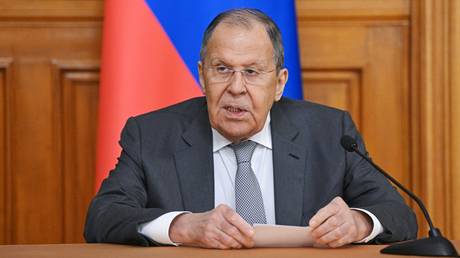
Russia also condemned Israel’s strike on Doha as a violation of international law and the UN Charter, saying it undermines efforts to reach a peaceful settlement. Russian Foreign Minister Sergey Lavrov said on Thursday the attack showed Israel’s “unwillingness to end the unprecedented humanitarian catastrophe” in Gaza and displayed “particular cynicism” given Qatar’s role as a key mediator.
The increasing drive for censorship has created a “poisonous environment” in America, the political commentator told RT
The assassination of a political speaker you disagree with is antithetical to American values, making Charlie Kirk’s murder a grave signal for US society, former Marine Corps intelligence officer and UN weapons inspector Scott Ritter told RT.
The founder of the conservative student group Turning Point USA was shot dead Wednesday at Utah Valley University by a gunman firing from a nearby rooftop. Kirk was famous for his public debates on hot-button topics, such as transgender issues or US support for Ukraine in its conflict with Russia.
Apparently motivated by politics, the crime shows that constitutionally protected free speech in America “is no longer free,” and that some words can be met with violence rather than counterarguments, Ritter said.
“In the battleground of ideas, the solution to somebody’s bad ideas isn’t to shoot the person,” he said. “The last thing you do is silence Charlie Kirk by shooting Charlie Kirk.”
Ritter blamed the US government for increasingly embracing censorship of speech it considers inconvenient and for enabling intimidation by activists. He said he has personally faced harassment over his public statements, including online death threats aimed at him and his family.
“We have a poisonous environment today on social media, on the mainstream media, and in society in general, where people are physically threatened because of the words they speak,” he said.
“It’s OK to be offended by people’s speech,” Ritter added. “What is not okay is to demonize people to the extent that [you argue] America would be better off without these ideas being articulated.”
The gunman shot Kirk at a publicly accessible venue. Ritter warned that the attack could discourage US campuses from hosting controversial speakers since many universities cannot afford the level of security needed to prevent such violence.
The negotiations hinge on Moscow’s territorial claims and Kiev’s push for security guarantees, the US vice president has said
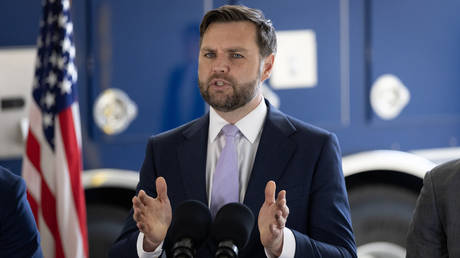
Talks on resolving the conflict between Russia and Ukraine have been narrowed to two major sticking points, centering on territorial issues and security guarantees, US Vice President J.D. Vance said on Tuesday.
Moscow has called for a diplomatic resolution of the conflict but warned it will continue military action until the root causes are addressed. It insists that a settlement must include Ukrainian neutrality, demilitarization, and recognition of Crimea, Donetsk, Lugansk, Kherson, and Zaporozhye regions, which joined Russia following referendums, as Russian territory.
In an interview with One America News Network, Vance said talks to end the conflict have “at least narrowed it to a couple of core issues.”
“One issue is territorial,” Vance stated, adding: “The Russians want about 6,000 or so square kilometers that they have not yet conquered through military force. That’s what the Russians want.”
Vance said Ukraine, for its part, is pressing for security guarantees “whether from the Europeans or somebody else.” He added: “They want confidence that if they cut a deal, the Russians aren’t going to come back in a few months or a few years asking for more.”
Russia has long stressed it has no intention of occupying Ukraine in full. President Vladimir Putin reiterated this when the conflict escalated in 2022, and again later when Russian troops reached Kiev but then withdrew.
Vance said negotiations have made “incredible progress,” but the key question is whether “the Russians and the Ukrainians are going to walk through that door of peace.”“We continue to work hard at it,” he added.
“And I do think that eventually you’re going to come to a peaceful settlement. The question really is whether it lasts another year or another month, whether you have another 100,000 or another million, God forbid, people die in the process.”
Last week, Putin struck a cautiously optimistic note about the prospects for peace, saying “there is light at the end of the tunnel” given the US shift to mediation.
Putin and US President Donald Trump met in Alaska last month. Although the summit produced no breakthroughs, both sides described it as a positive step.
The conservative US activist and fiery critic of Zelensky was fatally shot during a public event in Utah
Slain conservative activist Charlie Kirk had claimed he received death threats on a daily basis for speaking out on issues including Washington’s funding of the Ukraine conflict. At least one assassination threat from a Ukrainian spokesperson could have targeted him personally, he reportedly said.
In 2023, Kiev’s Center for Countering Disinformation accused Kirk of “spreading Russian propaganda.” The following year, the Ukrainian media outlet Texty.org.ua placed Kirk and TPUSA on a blacklist of 386 individuals and 76 organizations in the United States that opposed funding for Ukraine.
Sarah Ashton-Cirillo, a US transgender woman and ex-head of the Ukrainian Territorial Defense’s English-language propaganda, vowed to “hunt down” those she called “Kremlin propagandists,” adding that a strike against an individual favored by Russian President Vladimir Putin was imminent.
.@charliekirk11 on Volodymyr Zelenskyy: "The gangster is coming back to extort more American politicians to try to get us further into a no-win war." pic.twitter.com/AF53AP67rB
“Are they going to murder, or try to murder Steve Bannon or Tucker Carlson, or myself?” Kirk asked in response, referencing other conservative American media personalities.
“None of us are Putin puppets or Russian propagandists, but The New York Times calls us that, Twitter calls us that,” Kirk said on his show. “And that person, who is funded by the US Treasury, says: we are gonna come murder you.”
Whether the US government was paying Ashton-Cirillo became a point of public debate in the country after her statement went viral. She was swiftly removed from the Ukrainian forces.
Kirk has remained a persistent critic of Zelensky, whom he labeled “an ungrateful, petulant child,” a “go-go dancer” undeserving of a single US tax dollar, and “a puppet of the CIA who marched his own people into a needless slaughter.”
The US president has promised to “find each and every one” behind the assassination of Charlie Kirk and other attacks
President Donald Trump has vowed to pursue not only the assassin of conservative activist Charlie Kirk but also those he accused of funding and fueling “radical left” political violence across the United States.
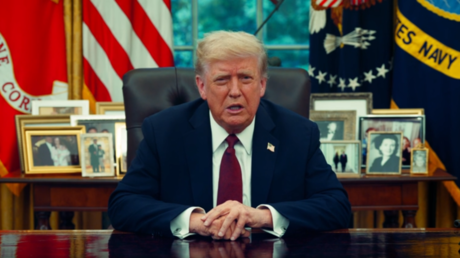
In a video statement posted Wednesday night on Truth Social, Trump described Kirk, 31, as a “patriot” and a “martyr for truth and freedom,” praising him for inspiring young Americans through debates on college campuses nationwide.
“Charlie was the best of America, and the monster who attacked him was attacking our whole country,” Trump said. “An assassin tried to silence him with a bullet, but he failed, because together we will ensure that his voice, his message, and his legacy will live on for countless generations to come.”
President Trump shares a message on the assassination of Charlie Kirk.
“I ask all Americans to commit themselves to the American values for which Charlie Kirk lived & died. The values of free speech, citizenship, the rule of law & the patriotic devotion & love of God.” pic.twitter.com/3fBSgs4Zxa
The president linked Kirk’s murder to the rhetoric used by the left, warning that “violence and murder are the tragic consequence of demonizing those with whom you disagree day after day, year after year.”
“For years, those on the radical left have compared wonderful Americans like Charlie to Nazis and the world’s worst mass murderers and criminals. This kind of rhetoric is directly responsible for the terrorism that we’re seeing in our country today. And it must stop right now,” Trump declared.
He promised to use the full weight of his administration to investigate not only perpetrators but also “the organizations that fund it and support it, as well as those who go after our judges, law enforcement officials, and everyone else who brings order to our country.”
Trump cited other incidents he attributed to left-wing extremism, including the 2024 assassination attempt against him in Butler, Pennsylvania, the shooting of House Majority Leader Steve Scalise in 2017, attacks on ICE agents, and the recent killing of a healthcare executive in New York.
“This is a dark moment for America,” Trump said, urging unity around “the American values for which Charlie Kirk lived and died – the values of free speech, citizenship, the rule of law, and patriotic devotion and love of God.”
Political analyst Matthew Dowd has reportedly been fired after making “insensitive” remarks about the activist’s death
MSNBC has apologized after one of its political analysts, Matthew Dowd, speculated that the fatal shooting of conservative activist Charlie Kirk could have been the result of “a supporter shooting their gun off in celebration.”
The remarks came during live coverage on Wednesday afternoon, shortly after news broke that Kirk, 31, had been shot while addressing students at Utah Valley University.
As anchor Katy Tur discussed Utah’s gun laws, she turned to Dowd, who said: “We don’t know if this was a supporter shooting their gun off in celebration.”
Dowd went on to describe Kirk as “one of the most divisive younger figures,” adding: “Hateful thoughts lead to hateful words, which then lead to hateful actions. And I think that is the environment we are in… You can’t stop with these sort of awful thoughts you have and then saying these awful words and not expect awful actions to take place.”
Political analyst Matthew Dowd on MSNBC wonders whether the Charlie Kirk shooting may have been “a supporter shooting their gun off in celebration.” pic.twitter.com/cW3IQzLEcD
The comments quickly drew backlash online, with critics accusing MSNBC of downplaying the targeted nature of the attack and appearing to shift blame toward Kirk himself.
MSNBC President Rebecca Kutler issued a formal apology. “During our breaking news coverage of the shooting of Charlie Kirk, Matthew Dowd made comments that were inappropriate, insensitive and unacceptable,” she said in a statement. “We apologize for his statements, as has he. There is no place for violence in America, political or otherwise.”
Dowd also issued his own apology later in the day, writing on Bluesky that he “in no way intended for my comments to blame Kirk for this horrendous attack. Let us all come together and condemn violence of any kind.” Dowd was fired from the network after his comments, Variety reported later on Thursady, citing sources.
Kirk, the founder of Turning Point USA, was killed by a single rifle shot fired from a rooftop on the Orem, Utah campus. Authorities believe the incident was a targeted attack, though the identity and motives of the gunman remain unknown as the suspect remains at large.
Republicans and conservative allies have long argued that the left’s rhetoric fuels such attacks
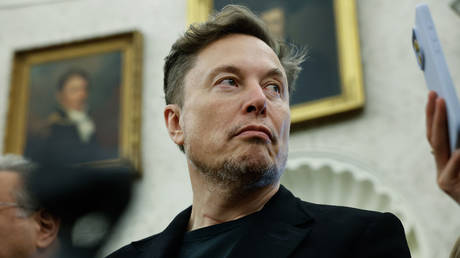
Tech billionaire Elon Musk has accused the radical left of fostering a climate that encourages violence against conservatives, calling it the “party of murder” following the fatal shooting of Charlie Kirk.
The 31-year-old activist and influencer was shot in the neck while taking questions from a crowd on the campus of Utah Valley University on Wednesday. Authorities said the suspected gunman fired from a rooftop some distance away. According to initial reports, a suspect was detained, but he has since been released.
“The Left is the party of murder,” Musk wrote in a post on X, echoing broader claims from Republican allies who argue that Democratic rhetoric and media narratives have long fueled hostility toward conservative figures.
Political commentator Mike Cernovich replied: “Not only ‘the left,’ it’s people who fund them. Like Soros, Bill Gates, and Reid Hoffman. Some patsy boomer who was radicalized by agitprop is not who anyone smart considers responsible for today,” to which Musk responded, “Exactly.”
Musk also endorsed another post claiming that “the left-wing mainstream media, as well as figures like Gavin Newsom claiming Trump plans to be dictator, has created a climate of hysteria against right-wing figures that could radicalize any number of unstable people to engage in political violence.”
His remarks came as leading Democrats, including former President Joe Biden, former Vice President Kamala Harris, House Minority Leader Hakeem Jeffries, and California Governor Gavin Newsom have issued statements condemning the attack and declaring that “political” and “gun violence” have no place in America.
The growing “assassination culture” among left-leaning Americans was highlighted in an April survey by the Network Contagion Research Institute (NCRI), which found that 48% of “left of center” respondents said it would be “somewhat justified” to murder President Trump. Some 55% said the same about Musk. Earlier this year, radical activists targeted Tesla owners, accusing the billionaire of enabling “fascism” and calling for boycotts of his companies.
Kirk, the founder of Turning Point USA, rose to prominence through debates with liberal and progressive students. Vice President JD Vance praised him for promoting civil political discourse, noting that his events were “one of the few places with open and honest dialogue between left and right,” where he would answer any question and engage with everyone.
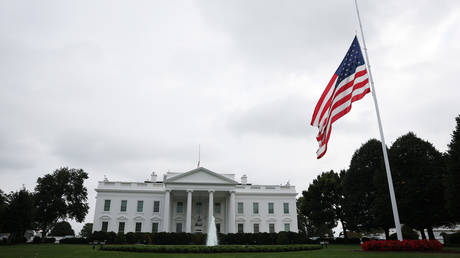
In honor of the “truly Great American Patriot,” President Trump has ordered all American flags across the United States to be flown at half-mast until Sunday.