The immobilized funds could be used to finance Ukraine, according to Washington’s proposal
The US will press its G7 allies to establish a legal framework for seizing frozen Russian state assets and channeling them to Ukraine, Bloomberg has reported, citing sources.
Western nations froze an estimated $300 billion in Russian assets following the escalation of the Ukraine conflict in 2022, some €200 billion of which are held by Brussels-based clearinghouse Euroclear. The funds have generated billions in interest, and the West has been exploring ways to use the revenue to finance Ukraine. While refraining from outright seizure, the G7 last year backed a plan to provide Kiev with $50 billion in loans to be repaid using the profits. The EU pledged $21 billion.
According to a proposal seen by the outlet, Washington will urge the G7 to back measures enabling the outright confiscation of the frozen reserves for transfer to Kiev. Separately, people familiar with the matter told Bloomberg that senior US officials have discussed the idea with their European counterparts.
Some EU leaders and experts have cautioned against outright seizure, warning it could violate international law, undermine investor confidence, and destabilize financial markets. Moscow has condemned the asset freeze and warned that seizure would amount to “robbery” and violate international law, while also backfiring on the West.
The US plan extends beyond asset seizures, proposing 50% to 100% tariffs on China and India aimed at restricting Russian energy sales and blocking dual-use technology transfers, Bloomberg wrote. It also seeks sanctions on the so-called Russian ‘shadow fleet’ of oil tankers, energy giant Rosneft, and maritime insurance, along with measures against regional banks, firms linked to the defense sector, and curbs on AI and fintech services in Russian Special Economic Zones.
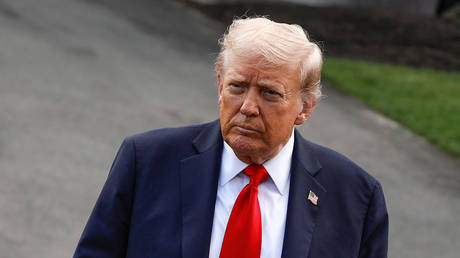
US President Donald Trump, who has been pushing for a direct meeting between Russian President Vladimir Putin and Ukraine’s Vladimir Zelensky, has threatened new sanctions on Moscow. “It’ll be hitting very hard with sanctions to banks and having to do with oil and tariffs also,” he told Fox News on Friday.
The Kremlin said that direct negotiations between Moscow and Kiev remain possible but are currently on hold.
The billionaire investor paid “professional agitators” to organize “riots” in the US, the president has alleged
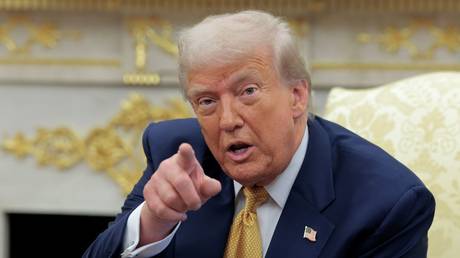
US President Donald Trump has said that his administration will be probing George Soros over his alleged funding of mass “riots” in the US.
The Hungarian-American billionaire investor and NGOs funded by his Open Society Foundations (OSF) have long been linked to various protest movements, both in the US and abroad.
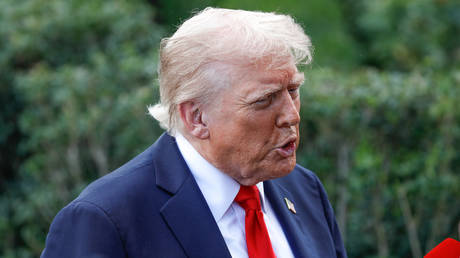
“They have professional agitators… They get paid for their profession from Soros and other people,” Trump said in an interview with Fox & Friends on Friday.
“We’re going to look into Soros because I think it’s a RICO case against him and other people,” he added.
“This is more than protests: This is real agitation. This is riots on the street, and we’re gonna look into that,” Trump said.
The US federal RICO (Racketeer Influenced and Corrupt Organizations Act 1970) law has historically targeted organized crime, and is used to prosecute offenses committed as part of a criminal enterprise, though more recently it has seen broader use.
Last month, the US president called for the Hungarian-American investor and his son to face charges under the statute, accusing them of supporting “violent protests, and much more, all throughout the United States.”
“We’re not going to allow these lunatics to rip apart America any more,” he said in a Truth Social post.
In the months prior, anti-immigration protests shook the US, with the most violent cases in Los Angeles escalating into clashes with the police, looting, and arson.
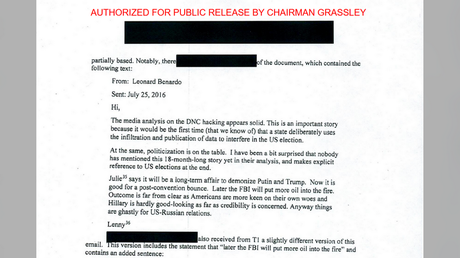
Soros was also linked to the 2016 Russiagate hoax, according to declassified documents published by the Senate Judiciary Committee in July.
The documents alleged the investor’s OSF network had ties to the Hillary Clinton campaign’s debunked attempts to accuse Trump of collusion with Russia in order to undermine his 2016 election victory – accusations Moscow has long dismissed.
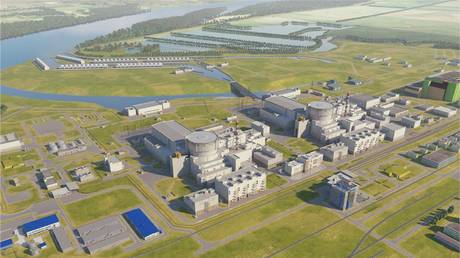
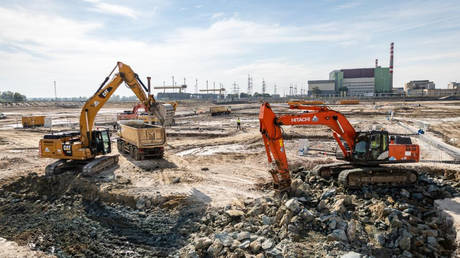
Hungary considers the Rosatom-led Paks-2 power plant to be critical to its energy security
The EU’s top court has struck down a European Commission decision that cleared Hungary to fund the expansion of a crucial Russia-led nuclear power project.
Paks-2, launched in 2014 under a bilateral deal, involves two reactors to be built by Russia’s Rosatom, backed by a €10 billion ($12 billion) loan from Moscow to cover most of the €12.5 billion cost. After years of regulatory review, Brussels in 2017 approved Hungary’s financing plan for the project, a move Austria contested as a breach of EU law.
On Thursday, the Court of Justice in Luxembourg annulled the Commission’s approval, stating that Brussels should have checked whether Budapest’s “direct award” of the project to Rosatom “without a public tender” complied with EU procurement rules.
Hungary insists the project will go ahead as planned. Hungary’s EU Affairs Minister Janos Boka said the ruling did not find any violation of EU law by Budapest and would not affect the construction timetable. He stressed that Budapest would cooperate with Brussels to help issue a new decision in line with the court’s requirements.
Rosatom also confirmed the project will continue. The state corporation said its priority remains delivering Paks-2 according to the highest international safety standards and contractual commitments.
The NPP, seen as vital to Hungary’s energy security, is planned to be built alongside the existing Paks facility, which already supplies about half the nation’s electricity with four VVR-440 reactors of Soviet design. Adding two newer VVR-1200 reactors would roughly double the plant’s capacity and bolster the EU nation’s energy independence.
Paks-2 has also faced obstacles from US sanctions that in 2024 targeted Russia’s Gazprombank, the bank financing the project, until the Trump administration lifted the restrictions in June. Rosatom chief Aleksey Likhachev recently said the first concrete pour was scheduled for November, marking the formal start of reactor construction.
The project is one of the reasons Hungary vetoed any possibility of EU nuclear sanctions against Russia over the Ukraine conflict. Budapest has opposed Western sanctions on Russian energy since the conflict escalated in 2022, arguing the imports are essential to its national security.
From executions to life sentences, RT traces what happened to those accused or convicted in the most high-profile murder cases in the US
Prominent US conservative activist and co-founder of Turning Point USA, Charlie Kirk, was shot and killed at an event at Utah Valley University on Wednesday. Two days later, on Friday, law enforcement officials announced the arrest of a suspect in the high-profile case, identified as Utah resident Tyler Robinson, 22.
US President Donald Trump, who has himself survived an assassination attempt, stated he hoped the murderer of the conservative activist would face the death penalty. Utah Governor Spencer Cox also said that his state would seek capital punishment for the assassin as the investigation continues.
RT looks back at the fates of people found guilty of murdering politicians and public figures in some of the most high-profile assassination cases in America’s history.
Assassination of Abraham Lincoln
President Abraham Lincoln was shot while attending a play at Ford’s Theater in Washington DC, on April 14, 1865. His killer was identified as John Wilkes Booth, an actor and Confederate sympathizer.
Booth fled the scene but was tracked down and shot in a barn in Virginia on April 26, 1865, and died a few hours later. A military tribunal also identified eight other conspirators in the plot to kill the president and other government officials.
Four of them – Mary Surratt, Lewis Powell, David Herold, and George Atzerodt – were executed by hanging on July 7, 1865. Another four conspirators were sentenced to various prison terms. One of them – Dr. Samuel Mudd – was pardoned in 1869. One suspect – John Surrat – fled the country first to Canada and then to Europe and Egypt. He was eventually extradited but avoided punishment because the statute of limitations had expired on most of his potential charges by that time.
Killing of James Garfield
President James A. Garfield was shot at the Baltimore and Potomac Railroad Station in Washington DC, on July 2, 1881. He survived the initial attack, but died of infection linked to his injuries in September of the same year.
His attacker was identified as Charles J. Guiteau. Guiteau stood trial, was found guilty of first-degree murder, and sentenced to death. On June 30, 1882, he was executed by hanging.
Murder of William McKinley
President William McKinley was shot by Leon Czolgosz on September 6, 1901, at the Pan‑American Exposition in Buffalo, New York. He died on September 14, 1901, from gangrene resulting from the wounds.
Czolgosz was convicted of first‑degree murder and sentenced to death. He was executed in the electric chair on October 29, 1901.
Assassination of John F. Kennedy
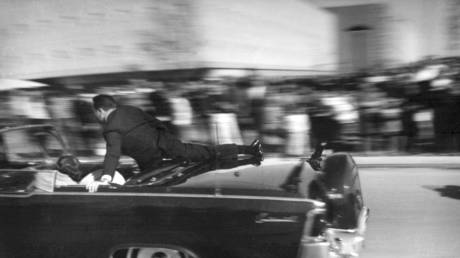
President John F. Kennedy was assassinated in Dallas, Texas, on November 22, 1963, as his motorcade passed through Dealey Plaza. Lee Harvey Oswald was accused of shooting and killing the president, but he did not stand trial and was never convicted in court.
Just two days after the assassination, Oswald was shot and killed by a nightclub owner, Jack Ruby, while in police custody. In 1964, the President’s Commission on the Assassination of President Kennedy, known unofficially as the Warren Commission, concluded that Ruby had acted alone and shot Oswald on impulse.
Killing of Robert F. Kennedy
US Senator Robert F. Kennedy, the brother of John F. Kennedy, was shot at the Ambassador Hotel in Los Angeles, California, after one of his presidential campaign events on June 5, 1968. He died the next day.
Sirhan Sirhan was identified as his killer and convicted of first‑degree murder in 1969. He was originally sentenced to death. After 1972, following changes in California death‑penalty law, his death sentence was commuted to life imprisonment with the possibility of parole.
Parole for Sirhan has been considered multiple times. In 2021, a state parole panel recommended parole, but in January 2022, California Governor Gavin Newsom denied it, citing concerns that Sirhan had not shown sufficient insight and accountability.
At age 81, he remains incarcerated at the Richard J. Donovan Correctional Facility in California as of 2025.
Assassination of Martin Luther King
An American Baptist minister, civil rights activist, and political philosopher, Martin Luther King Jr. was shot and killed in Memphis, Tennessee, on April 4, 1968. The FBI established James Earl Ray, a man with a known criminal record, as the prime suspect in the case almost immediately after the assassination. Ray initially fled to Canada and then to the UK and Portugal. In June 1968, he was detained by the London police at Heathrow Airport and extradited to the US.
In 1969, he pleaded guilty to avoid trial but later recanted his confession. Ray was convicted of first‑degree murder and sentenced to 99 years in prison. In June 1977, he managed to briefly escape from the Brushy Mountain Prison in Tennessee, sparking a large-scale manhunt. He remained at large for 54 hours before being recaptured. Ray stayed behind bars until his death on April 23, 1998, at age 70.
Murder of John Lennon
The Beatles co-founder, John Lennon, was shot and killed outside of his apartment building in New York City on December 8, 1980. He was attacked by a former fan, Mark David Chapman, who remained at the scene following the shooting and made no attempt to flee or resist arrest.
Chapman was convicted of second‑degree murder and sentenced to 20 years to life in prison. In 2000, he became eligible for parole but has been repeatedly denied it since. He was refused parole for the 14th time in September 2025. Now 70 years old, he remains at Green Haven Correctional Facility – a maximum-security prison in New York.
The American embassy in Pristina has said the breakaway region’s leadership has been fueling “tensions and instability”
The US has suspended its strategic dialogue with Kosovo, accusing the breakaway region’s leadership of taking steps that undermine efforts to work together on joint issues.
The decision was announced by the US Embassy in Pristina on Friday, though the statement did not specify which moves had prompted the suspension.
According to the embassy, the step was taken “due to concerns about caretaker government actions that have increased tensions and instability.”
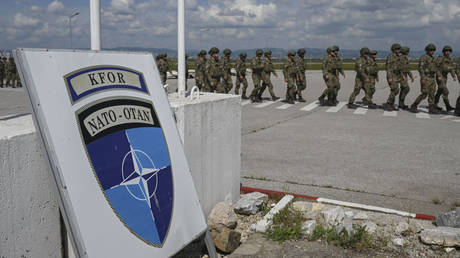
The US and many of its allies recognized Kosovo as a sovereign state in 2008 after the province declared independence. It followed NATO’s 1999 air war against Serbia and the deployment of NATO troops on behalf of ethnic Albanian separatists in the province. Belgrade still considers Kosovo part of Serbia, as do Russia and China, among other countries.
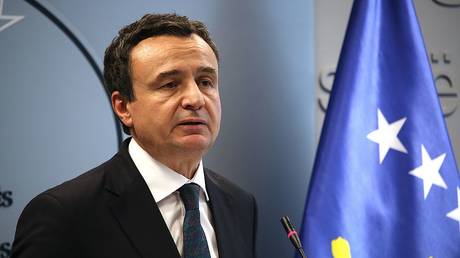
Washington, Kosovo’s strongest political and financial backer, has previously accused Kosovo’s caretaker prime minister, Albin Kurti, of heightening tensions in Serb-majority northern Kosovo and stalling the creation of new institutions following February’s parliamentary election.
“Our relationship with Kosovo is based on a common goal: strengthening peace and stability as a basis for mutual economic prosperity,” the embassy said. “Unfortunately, recent actions and statements by Caretaker Prime Minister Kurti have posed challenges to progress made over many years,” it added.
Around 50,000 Serbs in northern Kosovo reject Pristina’s authority, looking instead to Belgrade as their capital and relying on it for wages, pensions, and healthcare. The EU, which Kosovo aspires to join, imposed sanctions in 2023 after accusing the authorities of inflaming ethnic tensions in the north. Brussels has pushed for the creation of an association of Serb municipalities to provide greater self-rule, but Kurti has opposed the plan, warning it could open the door to secession, and has instead moved to restrict Serb autonomy.
Lumir Abdixhiku, leader of the Democratic League of Kosovo (LDK), the country’s third-largest party, said the freeze in the Strategic Dialogue marked “the lowest point in Kosovo’s relations with our strategic and existential ally.” The US-led process is intended to strengthen bilateral ties through high-level talks on defense, security, energy, the environment and economic cooperation.
The embassy voiced hope the talks could resume “in the future when appropriate.” The US decision comes as Kosovo remains locked in a post-election stalemate, with the Vetevendosje party – which won the February 9 vote but fell short of a majority – unable to form a coalition to establish a new government.
Washington aims to fill the niche with American exports, Chris Wright has said
Washington is aiming to reduce European imports of Russian natural gas to “zero” and replace them with American exports, US Energy Secretary Chris Wright has said.
Currently, Europe buys nearly half of its gas from Russia, he said in a virtual press conference on Thursday.
“We’re driving to move that to zero, and the biggest filler of that hole has been energy exports from the United States,” Wright said. “We want to continue to do that and end all Russian energy imports into the EU.”
Western European nations imposed sweeping sanctions on Russian energy imports following the escalation of the Ukraine conflict in 2022. The sabotage of the Nord Stream pipelines that year also reduced the flow of natural gas to Europe.
Moscow has long maintained that shifting from Russian gas to more expensive US liquefied natural gas (LNG) has damaged Europe’s industrial base.
According to European Commission (EC) data, EU gas and electricity prices are two to four times higher than the bloc’s main trading partners. This “threatens the long-term competitiveness of European industry,” the EC wrote in a report earlier this year.
European industry leaders have warned that the US-EU trade deal, struck in July, further threatens export-oriented firms.
Under the agreement, the EU agreed to a 15% US tariff on imports from the bloc, and committed to buying $750 billion worth of US energy by 2028, mostly in the form of LNG and nuclear fuel. The EU also agreed to invest $600 billion into US industries and to increase purchases of armaments from Washington.
Russian Foreign Minister Sergey Lavrov has described the EU-US deal as “clearly leading to further deindustrialization of Europe and capital flight.” Rising energy prices and the outflow of investment will inflict a “very hard blow” on the European industrial and agricultural sectors, he said in July.
The alleged assassin of conservative influencer Charlie Kirk was turned in to authorities by a family friend, according to Utah’s governor
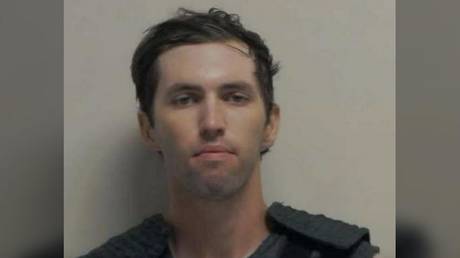
The FBI has released photographs of the suspected assassin of US conservative activist Charlie Kirk, following his arrest.
The suspect was identified by Utah Governor Spencer Cox as Tyler Robinson, a young native of the state.
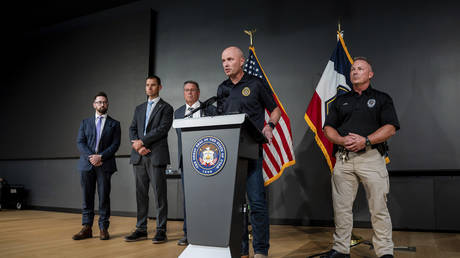
A “family friend” turned the suspected assassin into the Washington County Sheriff’s Office on Thursday evening, after a family member told them Robinson had “confessed to them or implied that he had committed the incident,” Cox said at a press conference on Friday.
According to AP, Robinson’s father had recognized his son in the images released by the FBI and convinced him to turn himself in with the help of a youth pastor. He refused at first but then changed his mind, the outlet cited a source in the investigation as saying.
🚨 BREAKING NEWS: The FBI have found the assassin of Charlie Kirk. A 22 year old man by the name of Tyler Robinson, this is his mugshot. pic.twitter.com/6TnZxtbDgj
“I want to thank the family members of Tyler Robinson who did the right thing in this case and were able to bring him in to law enforcement,” Cox said.
“In the conversation with another family member, Robinson mentioned Charlie Kirk was coming to UVU (Utah Valley University). They talked about why they didn’t like him and the viewpoints that he had. The family member also stated Kirk was full of hate and spreading hate,” the governor added.
Utah Governor Cox on the alleged assassin of Charlie Kirk, Tyler Robinson:
"We got him!" Family said Tyler was saying Kirk was "'full of hate' and 'spreading hate.'" pic.twitter.com/ZTPi0MoDzv
Investigators also found out that the suspect had told his roommate via Discord messages that he needed “to retrieve a rifle from a drop point,” Cox said. Other messages pertained to Robinson carrying out reconnaissance of the area, leaving the rifle in a bush wrapped in a towel, and engraving the ammunition, he added.
The three unfired cartridges found at the scene were inscribed with the words “Hey Fascist! Catch!” followed by a series of arrow symbols, “Oh Bella Ciao, Bella Ciao, Bella Ciao, Ciao Ciao,” as well as “if you read this, you are gay, LMAO,” according to Cox.
Kirk, 31, was shot in the throat mid-speech in an amphitheater at UVU on Wednesday, and later succumbed to his wounds in hospital. The conservative youth activist and father of two built his brand on engaging his political opponents in debate.
Officials have described the killing as a targeted political assassination.
There is “a high degree of certainty” the person is the shooter, the US president has said
The suspected assassin of US conservative activist Charlie Kirk is now in custody, President Donald Trump has claimed.
“I think with a high degree of certainty, we have him in custody,” he told Fox News on Friday.
Trump said he had been informed of the suspect’s arrest just minutes before going on air. “Essentially, somebody that was very close to him turned him in,” the president said, without revealing any further details.
NBC News has also reported that a suspect in the high-profile murder case has been taken into custody, citing senior law enforcement officials. The person was reportedly turned in to the police by a family member, who saw his photos released by the authorities.
US law enforcement has not officially confirmed the arrest or revealed the suspect’s identity. The FBI released images of the alleged suspect on Thursday: A man wearing sunglasses, a black hat, and a long-sleeve black shirt featuring an American flag. The agency also offered a $100,000 reward for information leading to the identification and arrest of the assassin.
The authorities received over 7,000 tips and leads and held some 200 interviews linked to the case, according to Utah Governor Spencer Cox. Investigators also recovered a “high-powered, bolt-action rifle” along the route allegedly used by the suspect to escape the crime scene, according to Robert Bohls, special agent in charge at the FBI’s Salt Lake City field office.
The New York Post reported, citing law enforcement sources, that the suspect is a Utah resident named Tyler Robinson, 22.
Kirk, 31, was struck by a single rifle round as he was addressing thousands of students during a Turning Point USA event at Utah Valley University. He was rushed to Timpanogos Regional Hospital but later died. Officials described the killing as a targeted political assassination.
Trump has vowed to pursue not only Kirk’s killer but also what he called the “radical left” networks that fuel political violence. Speaking to Fox News on Friday, the president said he hopes Kirk’s murderer would be subject to capital punishment. Cox announced on Thursday that Utah would seek the death penalty for the conservative activist’s assassin.
Two motions to censure Ursula von der Leyen have been filed following her speech to MEPs
European Commission President Ursula von der Leyen is facing two new motions of no confidence following her State of the Union address to the European Parliament this week.
The Left faction filed its censure proposal on Thursday, a day after the right-wing Patriots for Europe group submitted a separate bid. Von der Leyen survived a previous no-confidence vote in July.
Renewed efforts to remove the EU chief came after she urged stronger military support for Ukraine and proposed allowing foreign policy decisions without unanimous member-state approval – which dissenting member states, such as Hungary, view as a ploy to dismiss their objections.
Hungarian Prime Minister Viktor Orban, who backs the no-confidence motion, views von der Leyen’s remarks as “hardcore pro-war,” according to governmental spokesman Zoltan Kovacs. In her address, “the word ‘Ukraine’ was mentioned 35 times, and threats were made to cut EU funds from anyone refusing to follow Brussels’ line,” he said on social media.
The Patriots’ motion argued the president “has failed on trade, abandoned transparency, and rejected accountability,” while the Left – joined by some Greens/EFA MEPs – accused her of having “sold out workers and farmers, funneled billions into arms and war, shredded climate and social protection” and being “complicit in genocide” in Gaza.
“There is a tendency within the European Commission to push things through by force” at the EU’s expense, Left co-leader Manon Aubry told Euronews. She cited a recent deal with the United States that she said “will literally reduce the EU to a Donald Trump vassal.”
During the previous attempt to unseat her, von der Leyen dismissed her critics as “conspiracy theorists” and claimed they acted on behalf of Russian President Vladimir Putin, saying there was “ample proof that many are supported by our enemies and by their puppet masters in Russia or elsewhere.”
The current commission is trying to launch a multibillion-euro military expansion program across member states, arguing the EU should fund it through loans to counter the threat from Russia – an assessment Moscow calls baseless.
Defense Secretary Pete Hegseth has told Beijing that Washington does not want conflict but will defend its Asia-Pacific interests
US Secretary of Defense Pete Hegseth has held his first phone call with China’s minister of national defense, Admiral Dong Jun, telling him that Washington does not seek conflict, the Pentagon announced on Wednesday.
The conversation comes amid strained ties as Washington has described Beijing as its main geopolitical rival. In May, Hegseth claimed that “the threat China poses is real, and it could be imminent,” and urged countries in the Asia-Pacific to boost military spending.
In Tuesday’s call, Hegseth stressed the US is not pursuing confrontation, regime change, or “strangulation” of China. At the same time, he emphasized that Washington has “vital interests in the Asia-Pacific, the priority theater, and will resolutely protect those interests,” according to a readout of the conversation. The Pentagon described the exchange as “candid.”
China’s Xinhua news agency reported that the call was held at Hegseth’s request and that Dong urged continued communication and an open attitude to foster stable and positive military ties based on “equal respect, peaceful coexistence, and mutual respect.” Xinhua also cited Dong as saying China seeks peace and stability in the South China Sea and opposes “infringement and provocation” by non-regional countries.
Last month, Washington and Beijing extended a 90-day tariff truce, keeping planned increases on hold until November 10.
At the same time, several media outlets reported earlier this week that the US has allegedly been urging the EU to impose steep tariffs on imports from China and India, potentially up to 100%, over the Ukraine conflict and their ties with Russia. Washington is reportedly prepared to mirror the measures if adopted.
China and India have pushed back on tariff pressure. Chinese officials said they will ensure the country’s energy supply “in line with national interests” and warned that “tariff wars have no winners,” while India called the new US tariffs “unfair, unjustified, and unreasonable.”
Russian President Vladimir Putin has also cautioned the West against using a “colonial tone” toward Beijing and New Delhi, suggesting that such actions are aimed at slowing their economic rise.